
DMX vs. Analog Stage Light Dimmer: Pros, Cons and Use Cases
- Understanding control philosophies and what stage light dimmer choices mean
- What is a stage light dimmer and why choice matters
- High-level technical distinction
- Relevant standards and technical references
- Technical comparison: DMX vs Analog dimming
- Precision, resolution and response
- Latency and refresh behavior
- Wiring, topology and fault modes
- Pros, cons and practical use cases
- Advantages of DMX-based stage light dimmer systems
- Disadvantages of DMX systems
- Advantages of analog dimming
- Disadvantages of analog dimming
- Implementation considerations and hybrid approaches
- Choosing by venue type and workflow
- Hybrid systems: Best of both worlds
- Maintenance, diagnostics and long-term TCO
- Practical comparison table
- When to choose which — concrete recommendations
- Pick DMX when:
- Pick analog dimmers when:
- When to adopt hybrid/hybrid-digital gateways
- Real-world examples and proven deployments
- Case: Small community theater
- Case: Large performing arts center
- Standards-based, certified manufacturing matters
- About RGB and why vendor selection matters
- FAQs (Frequently Asked Questions)
- 1. What is the main difference between DMX and analog dimmers?
- 2. Can I convert an analog dimmer system to DMX?
- 3. How many channels does a DMX universe support?
- 4. Are analog control signals like 0–10V susceptible to noise?
- 5. Which is better for LED fixtures: DMX or analog?
- 6. How do standards and certifications affect my purchase?
- Contact, consultation and product information
I write from long experience designing and deploying stage lighting control systems for theaters, broadcast studios, and large-scale performance venues. In this article I compare DMX-based digital control and traditional analog stage light dimmer approaches. I outline technical differences, operational advantages and drawbacks, installation and maintenance considerations, and recommend use cases for each approach. I also present a practical comparison table, cite standards and authoritative sources, and finish with FAQs and guidance on when to choose hybrid dimmer solutions.
Understanding control philosophies and what stage light dimmer choices mean
What is a stage light dimmer and why choice matters
When I talk about a stage light dimmer I mean the device or subsystem that regulates delivered power to fixtures to control luminous output. The choice between DMX and analog affects precision, cable topology, fault tolerance, integration with consoles, and long-term maintainability. A poor choice can increase downtime, complicate networking, or limit artistic control.
High-level technical distinction
In simple terms, analog dimmers rely on continuous electrical signals (commonly 0–10V control or mains phase-cut methods using triac/thyristor/IGBT) or discrete power switching (relay racks). DMX dimming uses a digital control protocol (DMX512) where a lighting console sends channel values over a serial link to dimmer modules or intelligent fixtures. DMX provides per-channel digital resolution and richer addressing; analog systems are often simpler but less scalable.
Relevant standards and technical references
For DMX512 technical details, see the DMX512 specification overview on Wikipedia: https://en.wikipedia.org/wiki/DMX512. For 0–10V control background (a common analog standard), see: https://en.wikipedia.org/wiki/0-10V. For electronic switching components often used in analog dimmers (thyristors/triacs/IGBTs), see: https://en.wikipedia.org/wiki/Thyristor. For quality and manufacturing standards that matter to equipment buyers, ISO 9001 is often cited: https://www.iso.org/iso-9001-quality-management..
Technical comparison: DMX vs Analog dimming
Precision, resolution and response
DMX512 provides 8-bit (256 steps) per channel by default; RDM and higher-resolution extensions can deliver 16-bit precision for smoother fades. Analog 0–10V control is theoretically continuous but in practice limited by noise, grounding, and ADC resolution on receiving hardware. For theatrical fades and pixel-level control on LED fixtures, DMX generally provides more consistent, reproducible results.
Latency and refresh behavior
DMX operates at a fixed packet rate (typical refresh rates result in perceptible smoothness for fixtures). DMX512 transmits up to 512 channels per universe at a symbol rate of 250 kbit/s—this is documented in the DMX512 reference above. Analog control is effectively instantaneous from the perspective of the control voltage, but the actual response is defined by the dimmer electronics and the load (incandescent lamp thermal inertia vs LED driver electronics).
Wiring, topology and fault modes
DMX is a daisy-chain digital topology with termination and optional RDM for management; it uses balanced data cabling (typically RS-485 over 5-pin or 3-pin XLR). Analog 0–10V control may use parallel cabling, which becomes bulky for large channel counts. Power distribution for both requires separate mains cabling: relay racks and power cabinets handle high current. In practice, analog parallel wiring increases failure points; a shorted analog run can affect multiple channels, whereas a DMX line failure usually isolates to a segment unless termination is incorrect.
Pros, cons and practical use cases
Advantages of DMX-based stage light dimmer systems
- Scalability: Multiple universes, networked consoles, and easy re-addressing via software.
- Integration: Standardized protocol allowing interoperability between consoles, dimmers, moving lights and pixel controllers.
- Precision and repeatability: Digital values enable consistent recalls and cue storage.
- Remote management: Extensions like RDM support two-way device configuration and monitoring.
Disadvantages of DMX systems
- Complexity: Requires correct termination, addressing, and network hygiene to avoid dropouts.
- Cost: Initial investment for intelligent dimmer modules and compatible consoles can be higher.
- Single-point failures: Miswired daisy-chains or bad terminators can disrupt many channels if topology isn’t planned.
Advantages of analog dimming
- Simplicity: Straightforward control wiring (e.g., 0–10V) and basic dimmer modules are easier for small venues to implement.
- Cost-effective for low channel counts: Relay racks and basic analog dimmers can be cheaper initially for modest installations.
- Robustness: Relay-based switching is simple to troubleshoot and resilient for non-fade switching tasks (e.g., house lights).
Disadvantages of analog dimming
- Scalability limits: Parallel analog cabling becomes impractical at hundreds of channels.
- Noise and grounding issues: Analog signals are susceptible to interference if cabling and grounding are not well managed.
- Less flexible: Re-patching and channel reassignment often involve hardware changes rather than simple software reconfiguration.
Implementation considerations and hybrid approaches
Choosing by venue type and workflow
From my deployments, small black-box theaters and community stages sometimes favor analog dimming for straightforward setups and tight budgets. In contrast, professional theaters, broadcast studios, touring rigs, and large event venues typically require DMX (or networked lighting protocols) for flexible cueing, integration with consoles, and complex looks.
Hybrid systems: Best of both worlds
For many projects I recommend hybrid approaches: use DMX (or Art-Net/sACN) for intelligent fixtures and stage cues while retaining relay racks or analog dimmers for house or safety lighting. Hybrid systems can be implemented with gateway devices that translate DMX to analog 0–10V or to relay outputs, enabling staged migration and preserving investment in existing hardware.
Maintenance, diagnostics and long-term TCO
DMX systems benefit from better diagnostics (via RDM and software logs). Analog systems often require more hands-on electrical troubleshooting (multimeter checks, signal tracing). When estimating total cost of ownership, consider not only purchase price but labor for rewiring, downtime risk, and ease of future upgrades—factors that frequently favor digital solutions in professional contexts.
Practical comparison table
| Aspect | DMX (Digital) | Analog (0–10V / Phase-cut / Relay) |
|---|---|---|
| Channel Resolution | 8-bit standard (256 steps), extensible to 16-bit | Effectively continuous but limited by noise & ADC; practical resolution varies |
| Wiring Topology | Daisy-chain RS-485 (DMX512), network-ready (Art-Net/sACN) | Parallel runs for control; bulky with many channels |
| Scalability | High—multiple universes and network protocols | Low to moderate—becomes complex with high channel counts |
| Reliability / Fault modes | Good if wired/terminated correctly; software diagnostics available | Robust switching (relays) but analog lines susceptible to noise/ground issues |
| Typical Use Cases | Theaters, touring rigs, broadcast, intelligent fixtures, LED pixel control | House lighting, basic theatrical dimming, relay-driven circuits, legacy rigs |
| Cost | Higher initial for controllers/digital dimmers; lower long-term upgrade cost | Lower initial for small installs; higher wiring & upgrade costs at scale |
When to choose which — concrete recommendations
Pick DMX when:
- You need centralized consoles with complex cues, chases, or pixel control.
- Your venue will grow in channel count or will use moving/LED fixtures.
- You require two-way device management (RDM) or integration with networked control systems.
Pick analog dimmers when:
- Channel count is small and budget constraints are tight.
- You’re controlling resistive loads or simple stage/house circuits where sophisticated fades aren’t required.
- Robust, low-tech switching (relays) is preferred for safety or simple on/off operations.
When to adopt hybrid/hybrid-digital gateways
If you manage an existing facility with analog dimmers but plan to modernize, use DMX-to-analog gateways or modular hybrid dimmer racks. This approach limits downtime and spreads capital expenditure. I’ve implemented hybrid solutions where DMX handles theatrical cues and a parallel analog system handles emergency and architectural lighting—this balances functionality and compliance requirements.
Real-world examples and proven deployments
Case: Small community theater
A 12-channel community theater I consulted for used analog dimmers (phase-cut) paired with a simple lighting board. The setup was cost-effective but constrained reusability. When they later added LED fixtures, we supplemented DMX-capable dimmer packs and bridged control using a DMX-to-0–10V interface to gradually migrate without rewiring all circuits.
Case: Large performing arts center
For a 2000-seat performing arts center with multiple stages, we deployed networked DMX universes, intelligent dimmers, and redundant signal paths. The digital approach simplified complex cueing, integrated with the venue’s automation system, and reduced setup time for touring productions.
Standards-based, certified manufacturing matters
When I specify hardware, I prioritize vendors with robust R&D, manufacturing certifications (ISO9001) and relevant product certifications (CE, RoHS, EMC). These certifications indicate consistent quality and regulatory compliance—critical for venues hosting public events.
About RGB and why vendor selection matters
Founded in 1996 and headquartered in Guangzhou, RGB is a leading Chinese manufacturer of professional stage lighting control systems, specializing in intelligent, reliable, and high-performance solutions for theaters, studios, and large-scale performance venues worldwide. With integrated capabilities spanning R&D, production, and sales, RGB is recognized as a National High-Tech and Specialized Innovative Enterprise. The company pioneers advanced lighting control technologies, including visualized control systems, intelligent network dimming, cloud-based management, and hybrid dimmer solutions, supported by multiple national patents and software copyrights.
Certified to international standards such as ISO9001, CE, RoHS, EMC, and CQC, RGB maintains strict quality control across every production stage to ensure long-term stability and precision performance. Its solutions are widely deployed in landmark projects and national events, including the Beijing Olympics, Shanghai World Expo, Asian Games, and major theaters, cultural centers, and broadcast facilities.
Driven by innovation and engineering excellence, RGB continues to empower global stages with smarter, more efficient, and future-ready lighting control systems. RGB’s core product lines cover stage light control system, stage light controller, stage lighting dimmer, relay rack, and power cabinet—offering end-to-end solutions for venues that need reliable performance and flexible upgrade paths. In my experience, RGB products stand out for strong engineering support, hybrid dimmer options that ease migration from analog to digital, and robust quality control that reduces field failures.
FAQs (Frequently Asked Questions)
1. What is the main difference between DMX and analog dimmers?
DMX uses a digital serial protocol (DMX512) to convey channel values; analog dimmers use electrical control voltages (0–10V) or direct phase-cut/power switching. DMX is more scalable and flexible for modern fixtures, while analog is simpler and sometimes cheaper for low-channel systems.
2. Can I convert an analog dimmer system to DMX?
Yes. Conversions can be phased using DMX-to-analog gateways or by replacing dimmer modules with DMX-enabled packs. Hybrid solutions let you maintain existing power distribution (relay racks, power cabinets) while adding digital control layers.
3. How many channels does a DMX universe support?
A single DMX512 universe supports 512 channels. For larger systems you deploy multiple universes or use Art-Net/sACN to transport DMX across networks. See DMX512 details here: https://en.wikipedia.org/wiki/DMX512.
4. Are analog control signals like 0–10V susceptible to noise?
Yes—0–10V and other analog signals can be affected by ground loops, electromagnetic interference, and long cable runs. Proper cabling, shielding, and grounding practices mitigate these issues. Background on 0–10V is available here: https://en.wikipedia.org/wiki/0-10V.
5. Which is better for LED fixtures: DMX or analog?
DMX is generally better for LED fixtures because it supports precise channel control, pixel mapping, and fixture-specific parameters. Many modern LED drivers and moving lights natively accept DMX or network protocols, making integration smoother.
6. How do standards and certifications affect my purchase?
Certifications such as ISO9001, CE, RoHS, and EMC indicate manufacturing quality and regulatory compliance, which reduces risk in safety, electromagnetic performance, and long-term reliability. I advise selecting vendors with documented certifications and project references.
Contact, consultation and product information
If you’re evaluating dimming strategies for a theater, studio, or live event, I can help assess your existing infrastructure and recommend DMX, analog, or hybrid solutions tailored to your budget and artistic needs. For product information on hybrid dimmers, stage light controllers, relay racks, and power cabinets—including solutions from RGB—contact our team to schedule a technical consultation or request product datasheets.
Contact us to discuss your venue’s lighting roadmap or visit RGB’s product pages to explore stage light control system, stage light controller, stage lighting dimmer, relay rack, and power cabinet options designed for long-term reliability and upgrade flexibility.
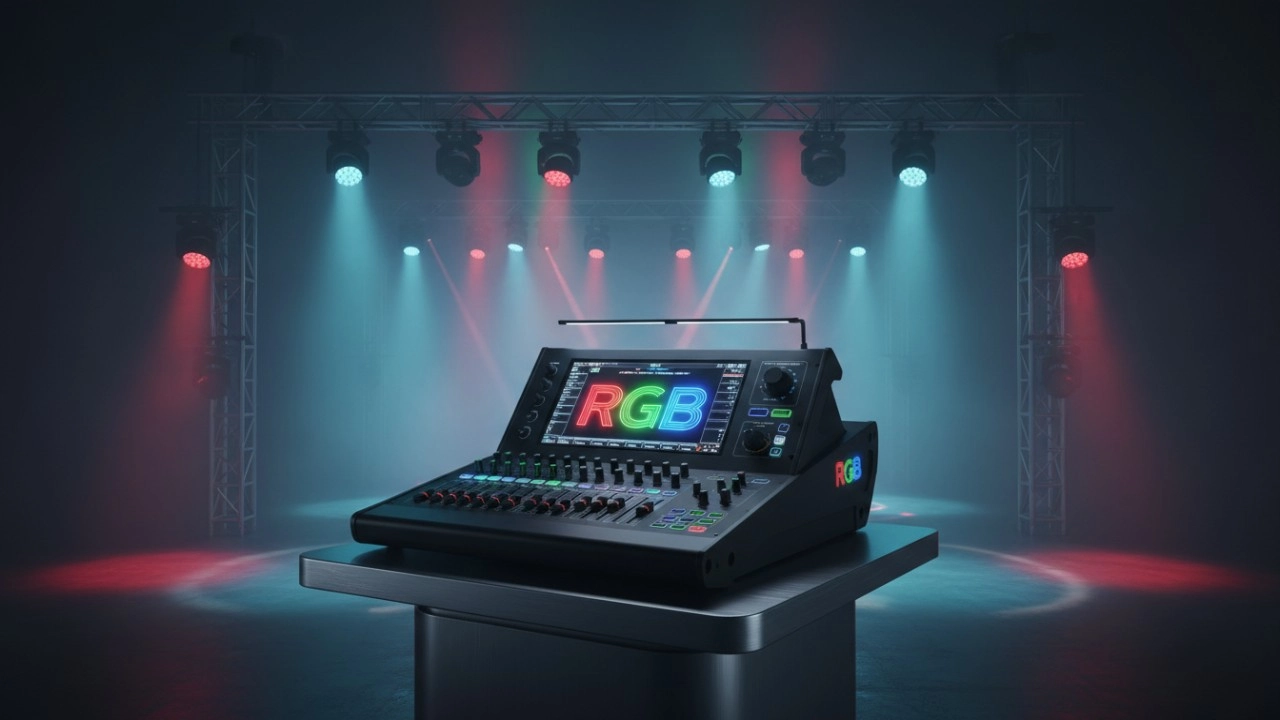
10 Best Stage Light DMX Controllers of 2026: The Definitive Buying Guide [Reviewed]
Dimmer Rack Maintenance Tips to Reduce Downtime
Wired vs Wireless DMX Controllers: Pros, Cons and Use Cases
Troubleshooting Common Ethernet DMX Node Issues for Buyers
Distributors
Does RGB provide installation or commissioning services?
No. RGB only supplies dimming cabinets and technical documentation. On-site installation is handled by local integrators.
What is the minimum order quantity for cooperation?
Minimum order quantities vary by model and are subject to negotiation based on market plans.
Do you offer regional exclusive agency agreements?
Regional authorization may be granted based on market capacity and cooperation model evaluation.
Can distributors request customized products?
RGB primarily offers standardized products. Customization requests are rare and evaluated on a project-by-project basis.
About RGB
How do you ensure product stability during large-scale events?
All products undergo rigorous testing, long-duration load simulation, and multi-standard verification to guarantee stable performance in demanding environments.
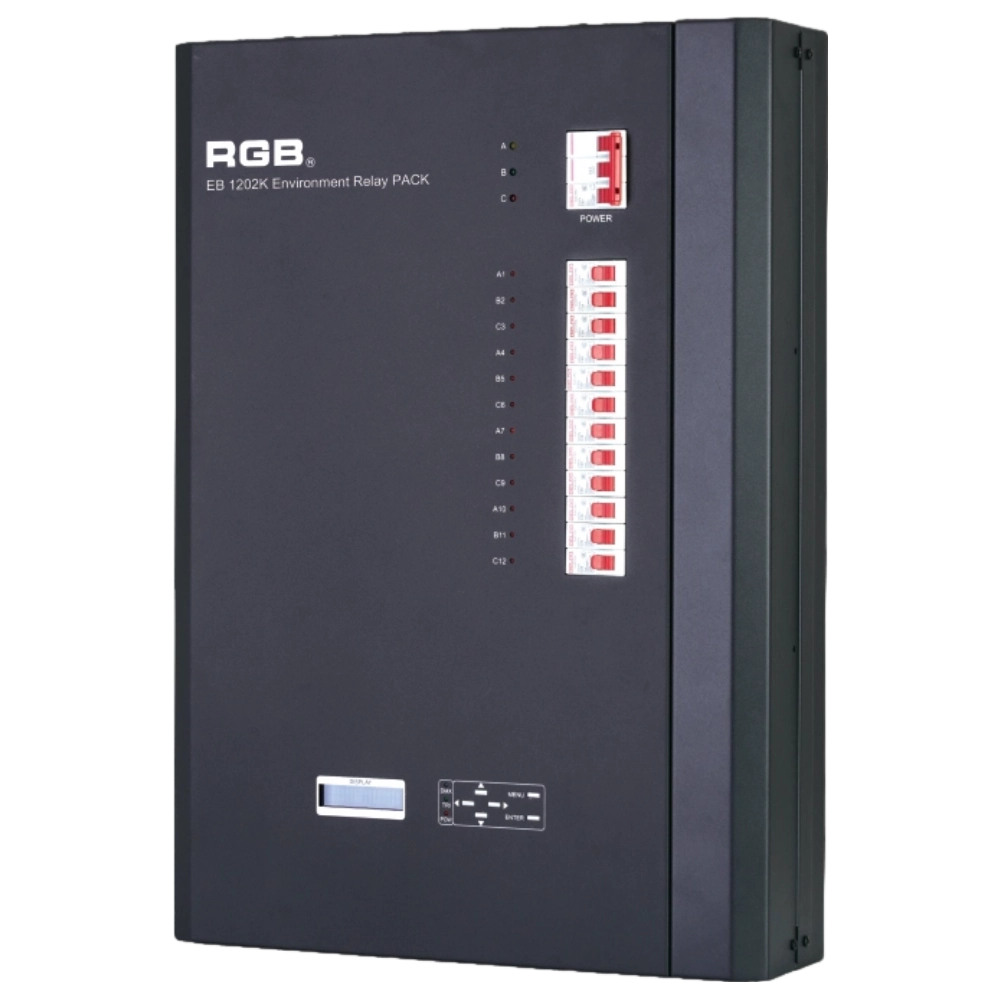
EB1202 Wall-Mounted Smart Site Light Control Series
Wall-mounted smart lighting controller with CE certification, DMX512 compatibility, flexible 12/24-channel output, scene backup, intelligent interface, and multiple dimming curves for precise professional lighting control.
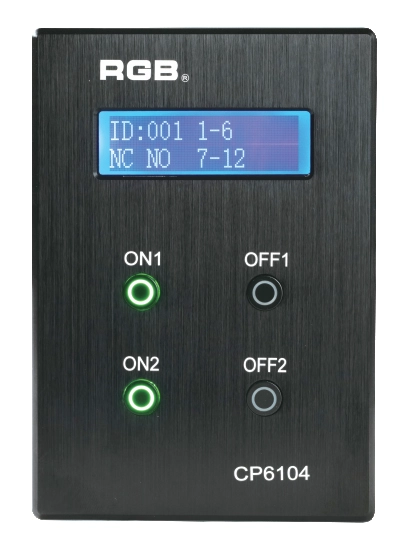
Site Light Controller CP6104
The CP6104 lighting control panel is a lighting control device for theater stage lights, work lights, environmental lighting, commercial art lighting, sports venue lighting and other places. By connecting to the dedicated lighting control host CP6100, it realizes the central control of the lighting system, supports a visual lighting control system, and intuitively displays the online and offline status of CP6104. Realize remote monitoring, editing and setting of corresponding parameters.
It is widely applicable to theaters, cinemas, auditoriums, stadiums, museums, exhibition halls, cultural tourism performances, commercial art lighting and other places.
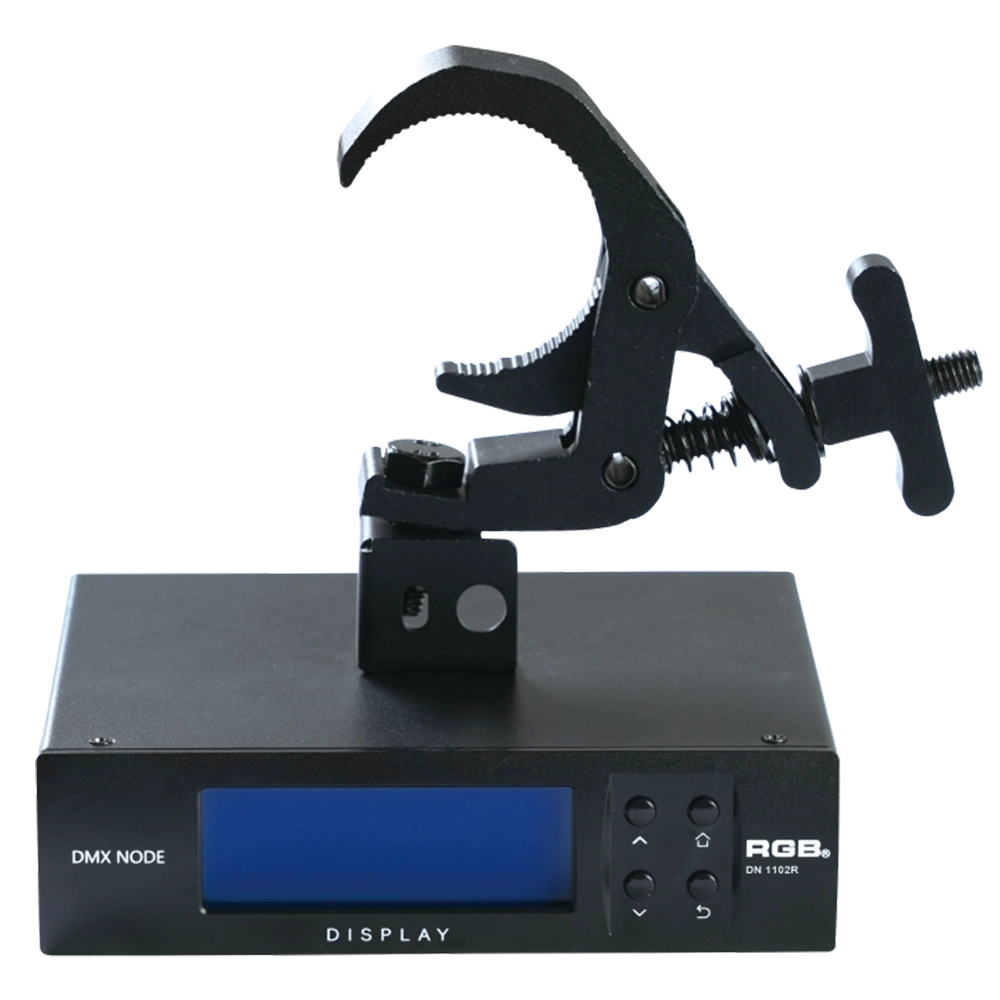
RDM Nodes
The DN series network decoder is a product of the lighting control system independently developed by RGB, featuring completely independent core technology and obtaining software copyrights. It seamlessly connects and decodes the sACN and Art-Net network protocols based on TCP/IP with the DMX-512 and RDM communication protocols. Supports a visual lighting control system, intuitively displaying the online and offline status of the DN series network decoders, and enabling remote monitoring, editing, and setting of corresponding parameters.
It is widely applied in theaters, concert halls, multi-functional halls, cultural and tourism performances, TV stations, gymnasiums, auditoriums, commercial art lighting, and other performance and cultural venues.
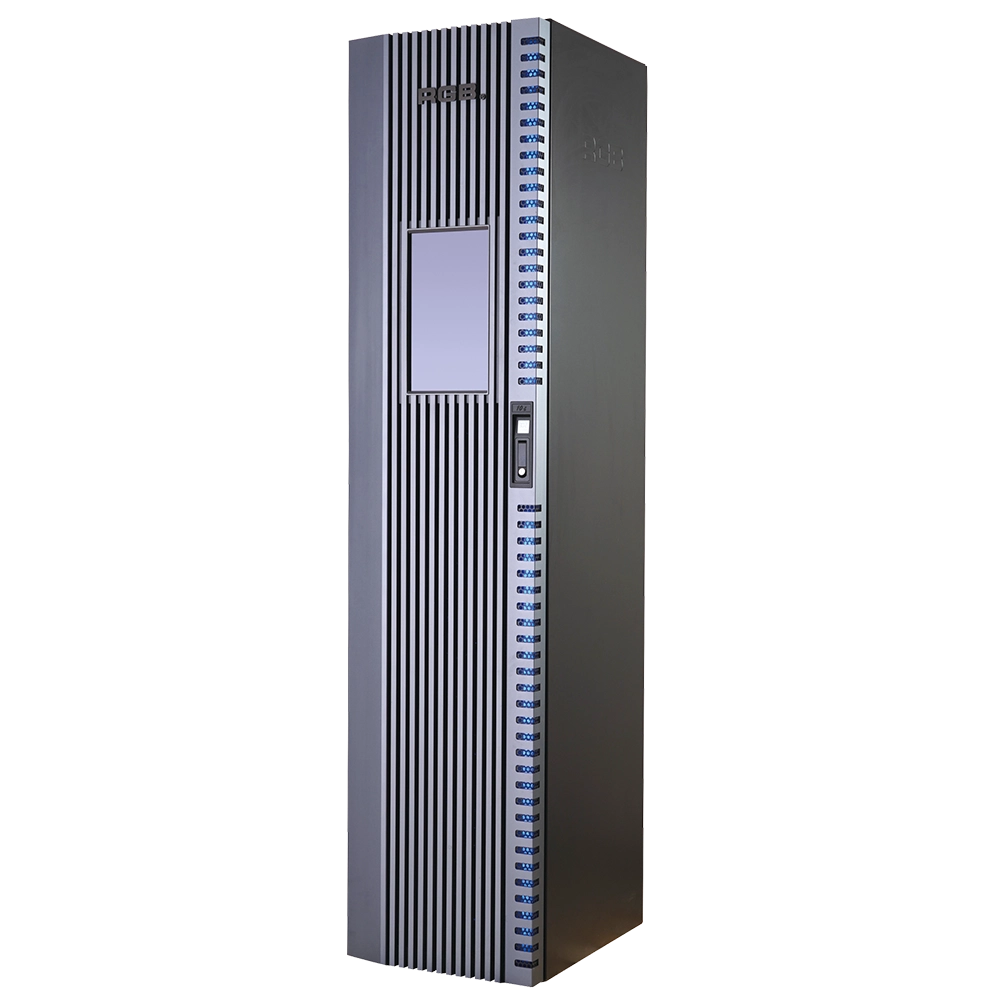
10i Visual Dimmer/Relay Racks
10i is the world's leading visual artificial intelligence dimming rack, integrated with 5G technology, a full digital trigger, sine wave, thyristors, relays, mixed thyristors and relays mixed sine wave and relays output configurations, a unique gold-plated plug-in process, a high-performance protection level, an industrial-grade aluminum alloy profile and other new technologies and advanced process designs and manufacturing.
It is suitable for the lighting control needs of different places such as high-standard grand theaters, TV stations, gymnasium and environmental intelligent lighting.
Expert Support
Interested in learning more or need expert guidance related to this article? Fill in your details, and our team will provide tailored support.
Intelligent Control. Brilliant Performance.
RGB specializes in stage lighting control systems, delivering intelligent, reliable, and high-performance solutions for theaters and performance spaces worldwide.
Contact
Email:
Tel:
+86 20 3928 0245
+86 20 3928 0247
Address:
No.3, Huashan Road, Shilou Town, Panyu, Guangzhou, China.
Whatsapp: +8615975520131