
DMX vs Analog Stage Dimmers: Pros, Cons and When to Use
- Understanding lighting control signals and their operational impacts
- What DMX512 actually is and where it excels
- Common analog dimming standards: 0–10V, 1–10V and mains phase
- How signal choice affects fixtures, wiring, and the stage ecosystem
- DMX vs Analog: technical pros and cons
- Key advantages of DMX
- Key limitations of DMX
- Analog dimming: strengths and weaknesses
- Practical comparisons: cost, reliability, performance
- Installation and wiring cost
- Reliability and maintainability
- Performance comparison table
- When to use DMX, when to use analog, and hybrid strategies
- Choosing DMX: scenarios where I recommend it
- Choosing analog: scenarios where analog still makes sense
- Hybrid solutions and modern best practice
- Standards, safety, and vendor selection
- Why standards and certifications matter
- EMC, RoHS and product lifecycle considerations
- Vendor selection checklist I use with clients
- Real-world examples and deployment tips from the field
- Example 1: Regional theater retrofit
- Example 2: TV studio with strict reliability demands
- Operational tips: commissioning, maintenance and troubleshooting
- About RGB and why vendor choice matters
- FAQs
- 1. Can I run both DMX and analog dimmers from the same controller?
- 2. Is DMX still suitable for LED pixel control?
- 3. How do I decide between 0–10V and mains-phase dimming for a retrofit?
- 4. What are the common failure points in DMX systems?
- 5. Are there safety or regulatory concerns when choosing dimmers?
- Contact and next steps
I work with venue operators, lighting designers, and production engineers to select and deploy stage light controller solutions that balance reliability, flexibility, cost, and long-term maintainability. In this article I summarize how DMX512-based digital control compares to traditional analog dimming (0-10V, 1-10V, and mains-phase control) for stage dimmers, and I provide practical guidance—based on field experience and standards—about when to choose each approach for theaters, broadcast studios, touring rigs, or fixed-install venues.
Understanding lighting control signals and their operational impacts
What DMX512 actually is and where it excels
DMX512 is a unidirectional digital protocol widely adopted for controlling stage lighting and fixtures. It defines how controllers transmit channel levels (0–255) over a serial link. For a technical overview see the DMX512 page on Wikipedia: https://en.wikipedia.org/wiki/DMX512. In practice DMX excels at addressable, per-fixture control, scene recall, and integration with modern stage light controller systems and lighting desks.
Common analog dimming standards: 0–10V, 1–10V and mains phase
Analog dimming methods (notably 0–10V and 1–10V) use a continuous voltage signal to set light level. See more at: https://en.wikipedia.org/wiki/0-10_V_lighting_control. Mains-phase (leading/trailing edge) dimming is still common for tungsten and some LED loads. Analog systems are simple and deterministic: one control line per dimmer circuit, which reduces protocol overhead and is less sensitive to digital communication disruptions.
How signal choice affects fixtures, wiring, and the stage ecosystem
Choosing between DMX and analog impacts connector types, cable runs, termination practices, and how you design the power distribution. DMX uses balanced twisted pair cabling (often XLR-5 or RJ45 for modern devices) with termination and attention to data integrity, while analog control typically uses 2-conductor shielded cable and straightforward grounding. The stage light controller you select must match the signal ecosystem and the fixtures being controlled.
DMX vs Analog: technical pros and cons
Key advantages of DMX
From my projects, DMX provides several clear benefits:
- Addressable control per fixture or per channel—ideal for complex rigs and moving lights.
- Scene and cue recall, easy integration with lighting consoles and visualized control systems.
- Efficient wiring for many channels: a single DMX universe (512 channels) can control hundreds of parameters without a separate run per dimmer.
Key limitations of DMX
DMX also has practical limitations you must plan for:
- DMX is unidirectional: it doesn’t provide device status feedback without extensions (e.g., RDM).
- Maximum refresh rate per universe is finite (practical full-universe refreshes ~40–44 Hz), which matters for high-speed pixel effects; see DMX512.
- Network topology and termination matter—improper cabling causes glitches during performances.
Analog dimming: strengths and weaknesses
Analog dimming shines for simplicity and certain load types:
- Deterministic and low-latency: analog signals are continuous and do not suffer digital packet dropouts.
- Some vintage fixtures and practical install situations (e.g., simple house lighting or followspots) still prefer analog 0–10V systems.
- Analog scales poorly when you need hundreds of individually controlled channels—each circuit requires dedicated wiring back to the controller or distribution rack.
Practical comparisons: cost, reliability, performance
Installation and wiring cost
Analog systems generally have lower per-channel hardware complexity but higher wiring costs for large installs. DMX reduces cable runs for many channels but increases the need for proper termination, surge protection, and occasionally network extenders or fiber links for long runs.
Reliability and maintainability
Reliability depends on engineering discipline. A well-designed power cabinet and relay rack together with a proven stage light controller will outperform ad-hoc systems, regardless of DMX or analog. For mission-critical venues I insist on redundant data paths, proper EMC shielding, and certified manufacturing to reduce risk.
Performance comparison table
When to use DMX, when to use analog, and hybrid strategies
Choosing DMX: scenarios where I recommend it
I typically recommend DMX when:
- You need per-fixture control for moving heads, LED fixtures, or architectural pixel work.
- Your production requires complex cues, crossfades, or visualized control via a lighting desk or software-based stage light controller.
- Long-term scalability and integration with networked control (Art-Net/sACN, RDM) are priorities.
Choosing analog: scenarios where analog still makes sense
Analog dimming remains relevant when:
- You’re controlling simple, high-power theatrical tungsten loads or legacy circuits where a per-circuit voltage makes sense.
- Cost constraints and simplicity outweigh the need for addressable control.
- Low-latency, deterministic control is required and digital network jitter is a concern.
Hybrid solutions and modern best practice
In many real-world venues a hybrid approach is optimal: use DMX (or networked protocols like sACN/Art-Net) for moving lights and LEDs, and maintain analog or relay-based dimmers for high-current house circuits and specialty loads. Modern stage light controller systems often provide mixed outputs (DMX + analog + relay control) so you can unify the control surface while keeping power distribution appropriate to each load type.
Standards, safety, and vendor selection
Why standards and certifications matter
When I advise clients on equipment, I prioritize devices and power cabinets that comply with international standards: for quality management ISO 9001 (https://www.iso.org/iso-9001-quality-management.), and relevant product safety and EMC requirements such as CE and EMC directives (European Commission guidance: https://ec.europa.eu/growth/single-market/ce-marking_en).
EMC, RoHS and product lifecycle considerations
EMC compliance reduces risk of interference that could affect digital control networks; RoHS ensures components meet environmental restrictions (https://ec.europa.eu/environment/waste/rohs_eee/index_en.htm). Choosing a vendor with strong QA and traceable manufacturing reduces downtime in critical events.
Vendor selection checklist I use with clients
- Manufacturing certifications and traceable QA (ISO9001, CE, EMC, RoHS).
- Field-proven deployments in comparable venues (theaters, broadcast facilities, large events).
- Availability of spare parts, local support or reliable remote diagnostics through the stage light controller ecosystem.
- Clear documentation and compliance with industry protocols (DMX, sACN, Art-Net, RDM).
Real-world examples and deployment tips from the field
Example 1: Regional theater retrofit
I worked on a retrofit of a 600-seat proscenium theater where the brief required keeping existing tungsten circuits but adding LED washes and a modern console. We implemented a hybrid solution: retained analog dimmers for fixed house circuits and installed DMX-addressable LED dimmer racks and a stage light controller with Art-Net bridging. The result: preserved legacy infrastructure and gained modern control for the creative team.
Example 2: TV studio with strict reliability demands
For a broadcast studio I recommended redundant DMX paths, networked control using sACN with managed switches, and power cabinets with surge protection and remote telemetry. The design emphasized monitoring and failover because broadcast schedules tolerate minimal downtime.
Operational tips: commissioning, maintenance and troubleshooting
- Always label channels and maintain a current channel map; this pays back during troubleshooting.
- Terminate DMX runs, use proper impedance cabling, and include RDM where device identification and remote configuration matter.
- For analog installs, ensure grounding and shielding to avoid noise; test for voltage drops on long cable runs.
About RGB and why vendor choice matters
Founded in 1996 and headquartered in Guangzhou, RGB is a leading Chinese manufacturer of professional stage lighting control systems, specializing in intelligent, reliable, and high-performance solutions for theaters, studios, and large-scale performance venues worldwide.
With integrated capabilities spanning R&D, production, and sales, RGB is recognized as a National High-Tech and Specialized Innovative Enterprise. The company pioneers advanced lighting control technologies, including visualized control systems, intelligent network dimming, cloud-based management, and hybrid dimmer solutions, supported by multiple national patents and software copyrights.
Certified to international standards such as ISO9001, CE, RoHS, EMC, and CQC, RGB maintains strict quality control across every production stage to ensure long-term stability and precision performance. Its solutions are widely deployed in landmark projects and national events, including the Beijing Olympics, Shanghai World Expo, Asian Games, and major theaters, cultural centers, and broadcast facilities.
Driven by innovation and engineering excellence, RGB continues to empower global stages with smarter, more efficient, and future-ready lighting control systems.
From my consulting perspective, RGB's strengths are:
- Comprehensive product portfolio covering stage light control system, stage light controller, stage lighting dimmer, relay rack, and power cabinet.
- Strong R&D and manufacturing integration that shortens feedback loops and improves product reliability.
- Demonstrated field references across high-profile events, which reduces procurement risk for large-scale venues.
If you need hybrid dimmer solutions, networked lighting control, or a robust relay rack and power cabinet tailored for a demanding venue, RGB's integrated offerings are a practical option to evaluate alongside global manufacturers.
FAQs
1. Can I run both DMX and analog dimmers from the same controller?
Yes. Many modern stage light controller systems provide mixed output types (DMX, 0–10V, relay) or offer gateway modules that translate between protocols. This enables hybrid installations with centralized cueing while keeping power distribution suited to each load.
2. Is DMX still suitable for LED pixel control?
DMX can handle basic pixel effects but may be limited by refresh rate and channel count. For high-density pixel mapping, networked protocols like Art-Net or sACN, or specialized pixel protocols (e.g., SPI drivers) are often preferable. See the DMX512 notes for refresh-rate considerations: https://en.wikipedia.org/wiki/DMX512.
3. How do I decide between 0–10V and mains-phase dimming for a retrofit?
Assess the fixture types, load characteristics, and existing wiring. 0–10V is a predictable low-voltage control suitable for many LED drivers, while mains-phase may be necessary for legacy tungsten loads. Consulting electrical and lighting engineers early prevents incompatibility and reduces rework.
4. What are the common failure points in DMX systems?
Common issues include missing terminations, poor cable quality or topology (daisy chains without proper breaks), ground loops, and connector wear. Incorporating RDM and remote diagnostics can reduce mean time to repair during live events.
5. Are there safety or regulatory concerns when choosing dimmers?
Yes. Always choose dimmers and power cabinets certified to relevant standards (ISO9001 for quality systems; CE/EMC and RoHS for product compliance). Ensure local electrical codes and venue insurance requirements are satisfied. For more on ISO 9001 see: https://www.iso.org/iso-9001-quality-management..
Contact and next steps
If you are evaluating a stage light controller upgrade, retrofit, or new installation, I can help you assess requirements, produce a channel map, and compare vendor proposals. For project inquiries or product details about hybrid dimmers, relay racks, power cabinets, or networked control solutions from RGB, contact our sales team or request a technical datasheet. You can also explore RGB's product line for stage light control system, stage light controller, stage lighting dimmer, relay rack, and power cabinet solutions to see case studies and certification details.
Request a consultation or product quote today to ensure your next production has the reliable, future-ready lighting control it needs.
Stage Dimmer Buying Guide: Choose the Right Dimmer for Your Venue
Top 8 Ethernet DMX Nodes for Theaters and Concerts
Touring Dimmer Rack Buyer's Guide: Choose the Right Unit
Energy Savings with Modern Dimmer & Relay Rack Systems
About RGB
Can your dimmer cabinets integrate with third-party lighting consoles?
Yes. Our systems follow international protocols and can seamlessly integrate with major global brands through DMX, RDM, Art-Net, and sACN.
What types of lighting control systems do you support?
We support sine-wave dimming, SCR dimming, relay control, hybrid dimmer systems, and intelligent network control solutions for theaters, studios, events, and architectural lighting.
What after-sales support do you provide?
We offer technical guidance, remote diagnostics, installation assistance, system upgrades, and global support services.
Distributors
What are the after-sales support methods?
Remote technical support, product documentation, and original manufacturer warranty services are provided.
Does RGB provide installation or commissioning services?
No. RGB only supplies dimming cabinets and technical documentation. On-site installation is handled by local integrators.
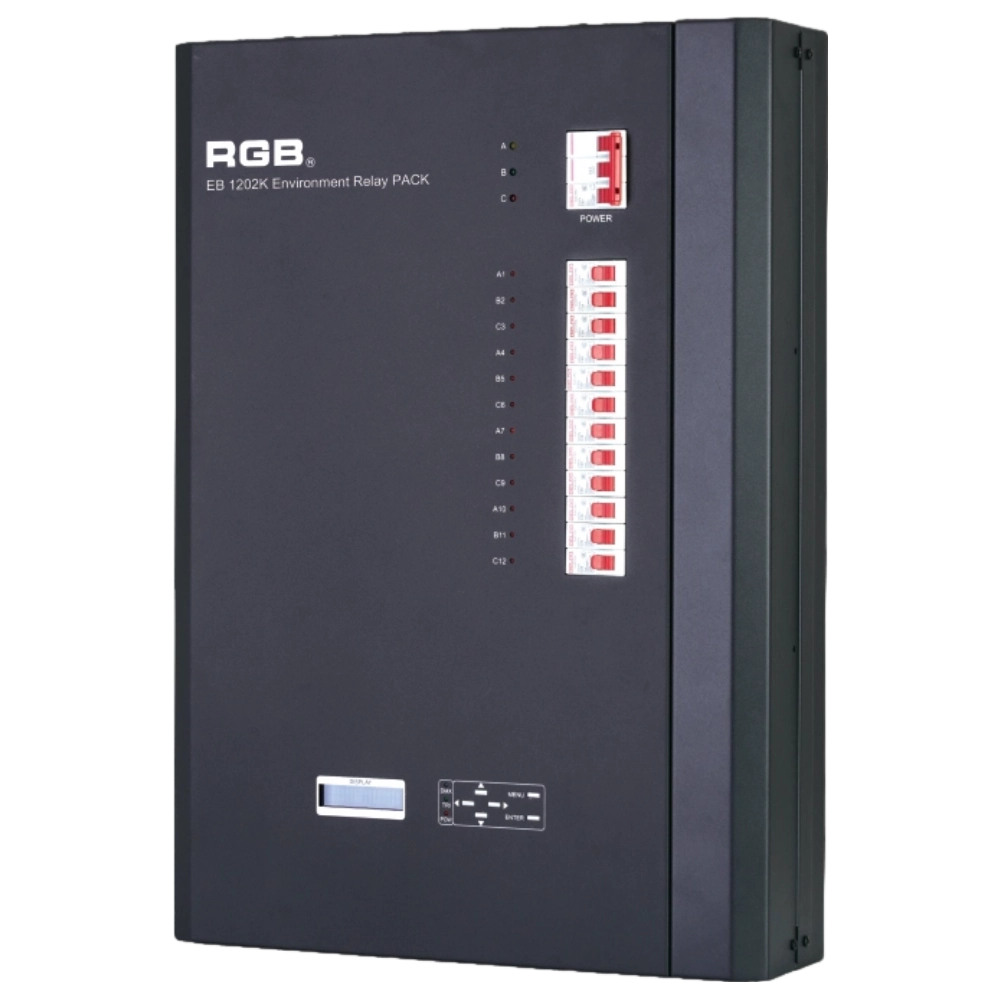
EB1202 Wall-Mounted Smart Site Light Control Series
Wall-mounted smart lighting controller with CE certification, DMX512 compatibility, flexible 12/24-channel output, scene backup, intelligent interface, and multiple dimming curves for precise professional lighting control.
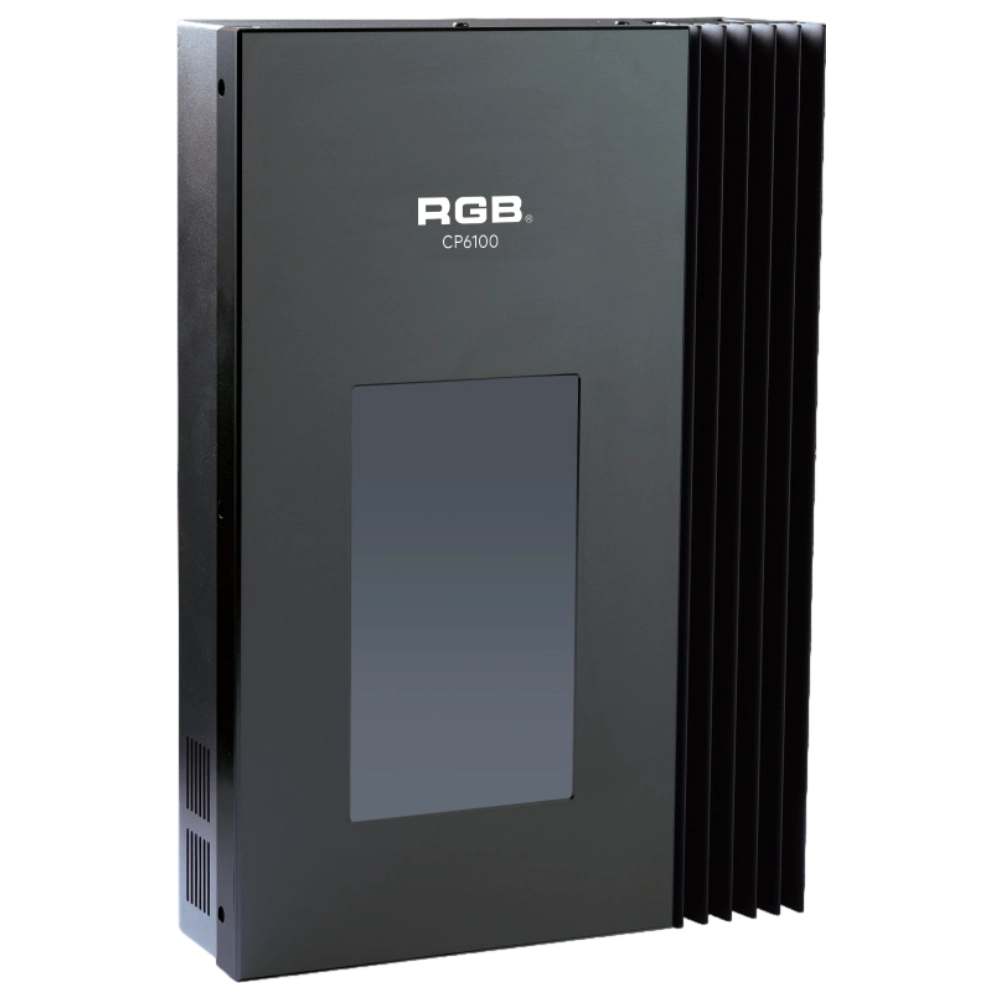
CP6100 Light Control System
The lighting control host is the main control device for theater stage lights, work lights, environmental lighting, commercial art lighting, sports venue lighting, and other places. By connecting the dedicated lighting control panels CP6104 and CP6108, it realizes the central control of the lighting system, supports a visual lighting control system, and intuitively displays the online and offline status of CP6100. Realize remote monitoring, editing, and setting of corresponding parameters.
It is widely applicable to theaters, cinemas, auditoriums, stadiums, museums, exhibition halls, cultural tourism performances, commercial art lighting, and other places.
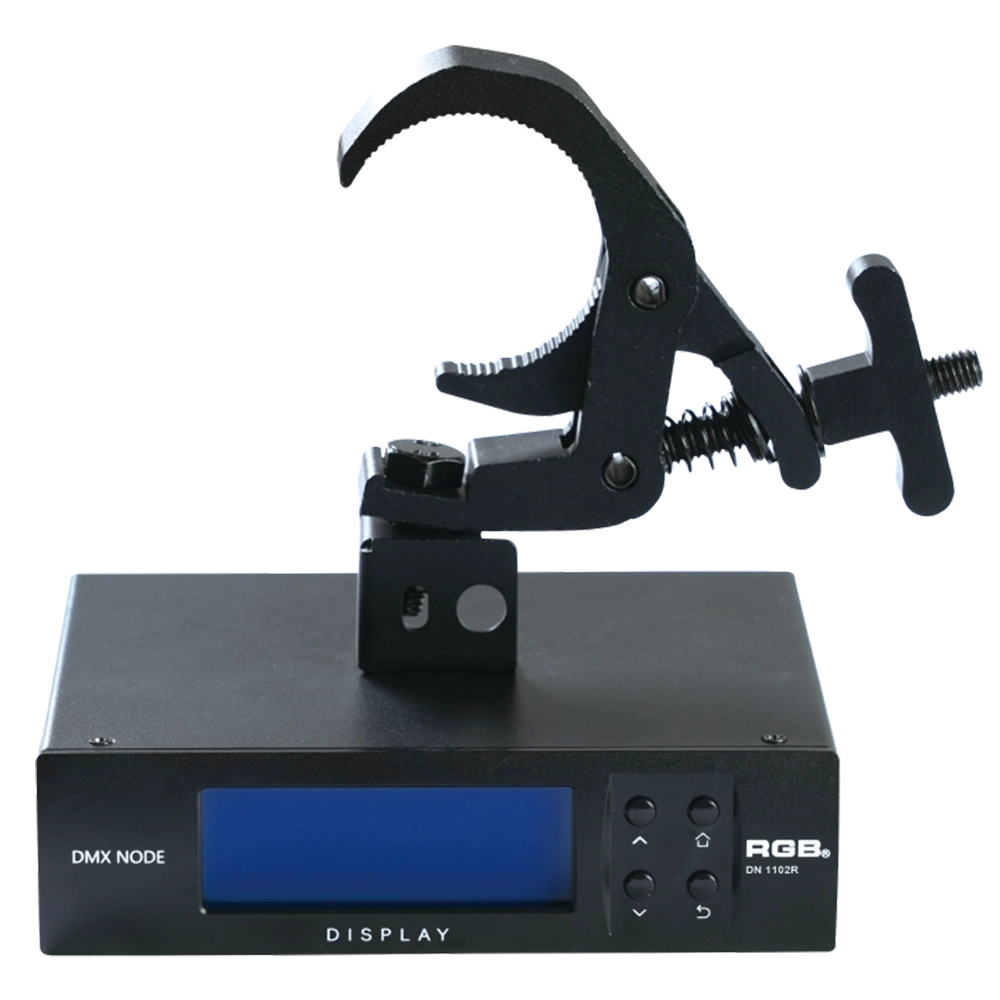
RDM Nodes
The DN series network decoder is a product of the lighting control system independently developed by RGB, featuring completely independent core technology and obtaining software copyrights. It seamlessly connects and decodes the sACN and Art-Net network protocols based on TCP/IP with the DMX-512 and RDM communication protocols. Supports a visual lighting control system, intuitively displaying the online and offline status of the DN series network decoders, and enabling remote monitoring, editing, and setting of corresponding parameters.
It is widely applied in theaters, concert halls, multi-functional halls, cultural and tourism performances, TV stations, gymnasiums, auditoriums, commercial art lighting, and other performance and cultural venues.
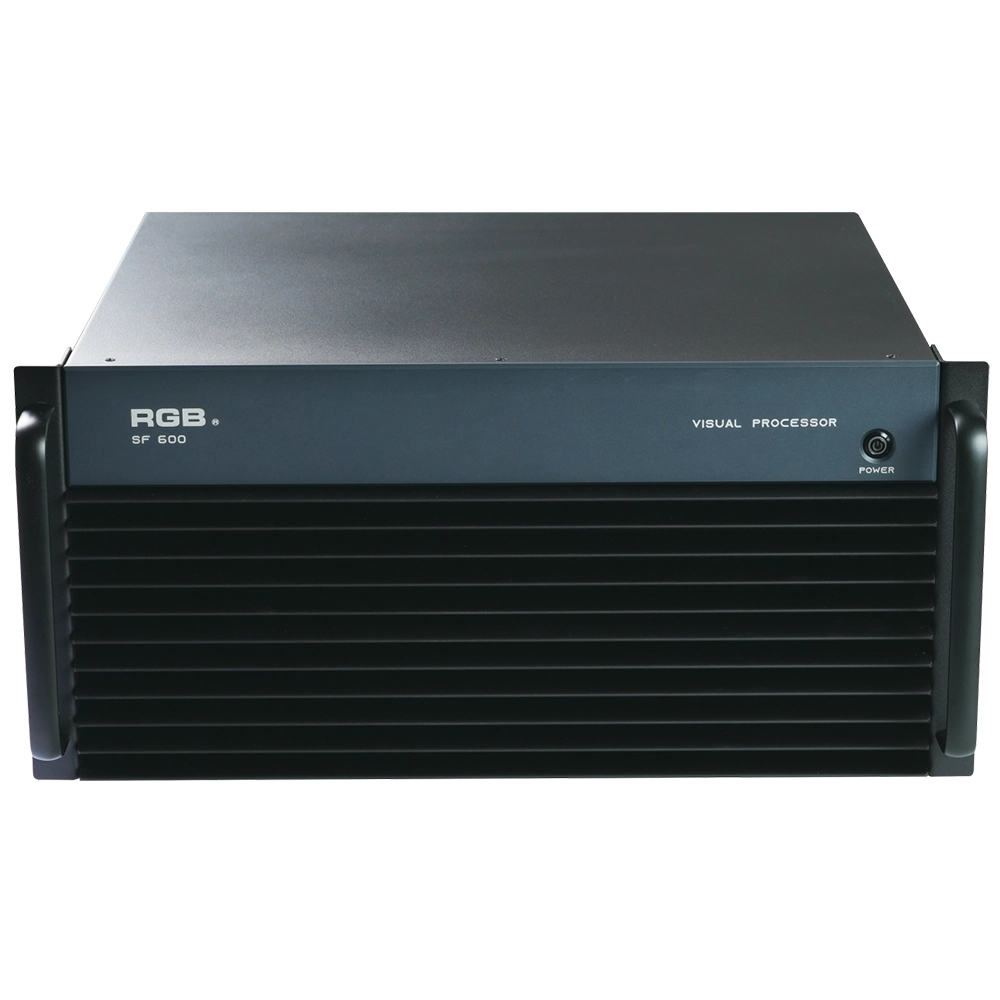
SF600 Visual R-net central processing processor
The SF600 Visual R-net central processing processor by RGB delivers advanced visual systems performance with high-speed processing and seamless integration. Designed for efficiency and reliability, it’s ideal for enhancing your visual system applications in corporate environments.
Expert Support
Interested in learning more or need expert guidance related to this article? Fill in your details, and our team will provide tailored support.
Intelligent Control. Brilliant Performance.
RGB specializes in stage lighting control systems, delivering intelligent, reliable, and high-performance solutions for theaters and performance spaces worldwide.
Contact
Email:
Tel:
+86 20 3928 0245
+86 20 3928 0247
Address:
No.3, Huashan Road, Shilou Town, Panyu, Guangzhou, China.
Whatsapp: +8615975520131