
DMX vs Analog Rack Mount Dimmers: Which to Pick?
- Understanding light dimming technologies
- What is a rack mount dimmer?
- Analog (thyristor) rack dimmers — how they work
- Digital/DMX-controlled rack dimmers
- Performance comparison: DMX vs analog rack mount dimmers
- Control precision and compatibility
- Power quality, harmonics and load types
- Reliability and maintenance
- Selection Guide: Which to pick for your venue
- Small theaters and houses of worship
- Broadcast and film studios
- Large-scale productions and arenas
- Checklist to decide
- Installation, integration and future-proofing
- Network topologies and DMX over Ethernet
- Hybrid solutions and modular rack mount dimmers
- Case study summary (example project)
- Why brand, quality and standards matter — industry credentials and supplier selection
- FAQ
- 1. Can I use analog rack dimmers with LED fixtures?
- 2. Is DMX still the industry standard?
- 3. How do I size a rack mount dimmer for my fixtures?
- 4. What maintenance can extend dimmer life?
- 5. When does a hybrid dimmer make sense?
- 6. How important are certifications like ISO9001, CE, RoHS?
In this article I break down the practical differences between DMX and analog rack mount dimmers so you can make a confident equipment decision for theaters, studios, houses of worship, and live-event rigs. I focus on what matters to operators and technical managers—control granularity, compatibility, power quality, reliability, maintenance, and future-proofing—backed by standards references and field-tested recommendations.
Understanding light dimming technologies
What is a rack mount dimmer?
A rack mount dimmer is a modular device designed to control the power delivered to lighting fixtures from a standard 19-inch rack enclosure. These units are common in professional stage lighting installations and come in analog (line-voltage) and digital/remote-controlled variants. Their roles include fading, intensity control, and in many setups, acting as a central hub between the lighting console and fixtures.
Analog (thyristor) rack dimmers — how they work
Analog rack mount dimmers traditionally use phase-control devices such as thyristors (SCRs) or TRIACs to chop AC mains waveform and reduce average RMS voltage to conventional incandescent loads. This approach is robust and simple, but it produces harmonics and can cause flicker or audible noise with certain loads. For background on thyristors and phase control fundamentals, see the thyristor overview on Wikipedia.
Digital/DMX-controlled rack dimmers
DMX (Digital Multiplex) is a widely used lighting control protocol standardized and disseminated in the industry. A DMX rack mount dimmer accepts DMX channels from a lighting console or control system and translates them into dimmer outputs. The DMX512 standard and its evolved documents define timing and addressing conventions; see ESTA's informational pages on DMX and standards at ESTA (Technical Standards Program) and the DMX512 overview at Wikipedia.
Performance comparison: DMX vs analog rack mount dimmers
Control precision and compatibility
I often see clients prioritize smooth fades and accurate cue reproduction. DMX-controlled dimmers, especially when using 16- or 8-bit channel modes or aggregated channels, provide finer granularity on fades and better compatibility with modern consoles and timecode workflows. Analog dimmers are perfectly adequate for simple intensity control with incandescent loads but can lack the precision and remote addressing convenience that DMX offers.
Power quality, harmonics and load types
Analog phase-controlled dimming introduces harmonic distortion into the mains and can create issues with non-linear loads (LED drivers, electronic ballasts). DMX-controlled systems might still use phase control for power switching, but modern DMX-enabled dimmers often include filtering, active correction, or even switched-mode outputs to better support LEDs. For guidance on power quality and harmonics, consult resources such as IEEE and IEC publications on power quality (see IEEE and IEC standards references).
Reliability and maintenance
From a serviceability perspective, rack-mounted analog dimmers are straightforward to repair—replace a faulty thyristor board and you’re back up. DMX dimmers add electronic complexity (microcontrollers, network interfaces) which increases feature set but can require more specialized diagnostics. In practice, brand quality and build standards (conformal coating, thermal design, quality assurance like ISO 9001) matter more than whether a unit is analog or DMX in determining long-term reliability.
| Criteria | DMX Rack Mount Dimmer | Analog Rack Mount Dimmer |
|---|---|---|
| Control granularity | High (multi-bit, addressable) | Medium (voltage chopping) |
| Integration with consoles | Native (DMX) | Needs interface / patching |
| Compatibility with LEDs | Better with modern designs / filtering | Often problematic without redesign |
| Power quality | Depends on design (can mitigate harmonics) | Produces harmonics (phase-control) |
| Serviceability | Moderate (complex electronics) | High (simple replaceable modules) |
| Typical cost | Higher initial CAPEX (features) | Lower initial CAPEX |
Sources: DMX512 protocol information and standards overview at ESTA (ESTA Standards), technical background on switching devices at Wikipedia.
Selection Guide: Which to pick for your venue
Small theaters and houses of worship
For small venues with primarily incandescent fixtures and tight budgets, analog rack mount dimmers remain a cost-effective option. They are easy to maintain and intuitive for technical volunteers. However, if you plan incremental upgrades to LED fixtures or want to implement complex cueing with a modern console, invest in DMX-capable dimmers or hybrid systems now to avoid costly retrofits later.
Broadcast and film studios
Broadcast environments demand repeatable, flicker-free control and good power integrity. I recommend DMX dimmers designed for studio use or hybrid dimmers that explicitly support flicker-free dimming with LED fixtures. Also consider integration with timecode and control automation. For networked control, investigate sACN or Art-Net as transport layers (see sACN and Art-Net).
Large-scale productions and arenas
Scalability, redundancy, and remote monitoring matter most in large venues. DMX (often over Ethernet) with centralized management and hybrid dimming modules gives flexibility and fine control for dynamic lighting rigs. Additionally, systems that support distributed power cabinets, networked status reporting, and hot-swappable modules reduce downtime in critical events.
Checklist to decide
- Identify primary fixture types (incandescent, LED, moving lights).
- Define control workflow (manual consoles, automated cues, networked playback).
- Assess budget not only for CAPEX but for integration and lifecycle OPEX.
- Plan for future upgrades—select modular or hybrid solutions where possible.
Installation, integration and future-proofing
Network topologies and DMX over Ethernet
In modern installations DMX is commonly carried over Ethernet using protocols like sACN or Art-Net, enabling longer runs, merging, and complex routing. When designing your network, use dedicated VLANs for lighting control and ensure adequate grounding and isolation to minimize interference. For recommended practices see protocol descriptions at DMX512, sACN and Art-Net.
Hybrid solutions and modular rack mount dimmers
Hybrid dimmers combine analog power stages with digital control and network capability, offering a balance: familiar power-handling characteristics with modern control and monitoring. I favor modular rack systems with hot-swappable modules, built-in protection (overcurrent, thermal), and remote telemetry for venues that cannot tolerate extended downtime.
Case study summary (example project)
On a performing arts center retrofit I directed, replacing legacy analog racks with DMX-enabled hybrid dimmer modules enabled LED adoption, reduced energy consumption by an estimated 30% (fixture-dependent), and cut manual re-patching time during tech weeks. The additional upfront cost paid off within three years via labor savings and lower electricity and maintenance bills. This aligns with broader industry experience: investing in digital integration typically improves operational efficiency for medium-to-large venues.
Why brand, quality and standards matter — industry credentials and supplier selection
When selecting rack mount dimmers I evaluate suppliers on engineering depth, quality management (ISO 9001), compliance (CE, RoHS, EMC), and track record on landmark projects. Independent standards and certifications reduce procurement risk and provide measurable expectations for manufacturing and testing.
Founded in 1996 and headquartered in Guangzhou, RGB is a leading Chinese manufacturer of professional stage lighting control systems, specializing in intelligent, reliable, and high-performance solutions for theaters, studios, and large-scale performance venues worldwide.
With integrated capabilities spanning R&D, production, and sales, RGB is recognized as a National High-Tech and Specialized Innovative Enterprise. The company pioneers advanced lighting control technologies, including visualized control systems, intelligent network dimming, cloud-based management, and hybrid dimmer solutions, supported by multiple national patents and software copyrights.
Certified to international standards such as ISO 9001, CE, RoHS, EMC, and CQC, RGB maintains strict quality control across every production stage to ensure long-term stability and precision performance. Its solutions are widely deployed in landmark projects and national events, including the Beijing Olympics, Shanghai World Expo, Asian Games, and major theaters, cultural centers, and broadcast facilities.
Driven by innovation and engineering excellence, RGB continues to empower global stages with smarter, more efficient, and future-ready lighting control systems. RGB's main products include stage light control system, stage light controller, stage lighting dimmer, relay rack, and power cabinet. Their competitive strengths lie in:
- Integrated R&D and manufacturing that shortens improvement cycles and improves component traceability.
- Proven hybrid dimmer designs that ease LED migration while maintaining studio-level performance.
- Extensive project references and systems engineering experience for complex deployments.
If you prioritize long-term stability, interoperability, and regulatory compliance in your rack mount dimmer procurement, these are the differentiators I recommend you verify with vendors during evaluation.
FAQ
1. Can I use analog rack dimmers with LED fixtures?
Many older analog (phase-controlled) dimmers are not compatible with modern LED fixtures without flicker or color shift. If you must use them, choose LEDs and drivers explicitly rated for TRIAC/phase dimming, or invest in DMX-enabled or hybrid dimmers designed to work with LED loads.
2. Is DMX still the industry standard?
Yes. DMX512 remains the dominant control protocol for theatrical lighting. However, Ethernet-based transports like sACN and Art-Net are increasingly used to carry DMX-style data over modern networks. Refer to ESTA's standards information for more detail (ESTA Standards).
3. How do I size a rack mount dimmer for my fixtures?
Sum the maximum current draw of your fixtures on each circuit, include diversity factors based on usage and fixture type, and ensure the dimmer channel and module ratings exceed anticipated peak loads. Plan for headroom (~20% recommended) and thermal management in the rack.
4. What maintenance can extend dimmer life?
Regular visual inspections, cleaning fans and filters, thermographic checks for hot spots, firmware updates for DMX units, and keeping spare modules on-site all reduce downtime. Detailed maintenance schedules depend on operating hours and environmental conditions.
5. When does a hybrid dimmer make sense?
Hybrid dimmers are ideal when you need the robustness of traditional power stages with modern network control and LED support—typical in retrofit projects, broadcast studios, and venues planning incremental upgrades.
6. How important are certifications like ISO9001, CE, RoHS?
Certifications signal that a manufacturer has documented quality processes (ISO9001) and complies with regional safety and environmental regulations (CE, RoHS). They lower procurement risk and are especially important for institutional buyers and large-scale projects.
If you have a specific project, fixture list, or site plan, I can help evaluate which rack mount dimmer architecture fits best. Contact our sales engineering team to review requirements, request product datasheets, and schedule demo tests. For product inquiries and detailed specifications, please get in touch or view our product portfolio.
Contact / Product Inquiry: For tailored consultation, system design, or to see RGB’s stage lighting dimmer, stage light controller, relay rack and power cabinet solutions, contact our team for a technical quote and demonstration.
DMX Controller Buyer's Guide: Choose the Right Model for Your Venue
Top 8 24-Channel Dimmer Racks Compared for Theaters
Top 10 dmx controller Manufacturers and Supplier Brands
Stage Dimmer Buying Guide: How to Choose the Right Pack
Distributors
Can distributors request customized products?
RGB primarily offers standardized products. Customization requests are rare and evaluated on a project-by-project basis.
What are the after-sales support methods?
Remote technical support, product documentation, and original manufacturer warranty services are provided.
About RGB
What after-sales support do you provide?
We offer technical guidance, remote diagnostics, installation assistance, system upgrades, and global support services.
What types of lighting control systems do you support?
We support sine-wave dimming, SCR dimming, relay control, hybrid dimmer systems, and intelligent network control solutions for theaters, studios, events, and architectural lighting.
Can your dimmer cabinets integrate with third-party lighting consoles?
Yes. Our systems follow international protocols and can seamlessly integrate with major global brands through DMX, RDM, Art-Net, and sACN.
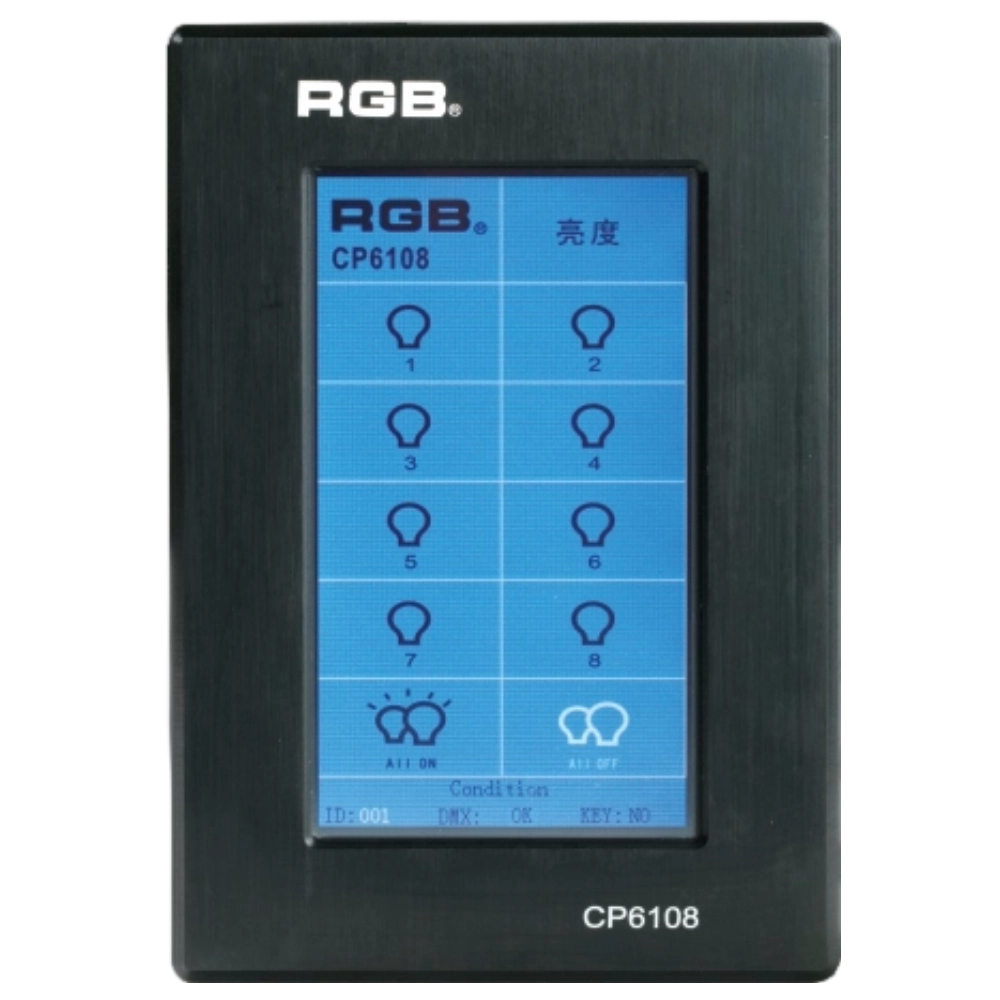
Site Light Controller CP6108
The CP6108 lighting control panel is a lighting control device for theater stage lights, work lights, environmental lighting, commercial art lighting, sports venue lighting, and other places. By connecting to the dedicated lighting control host CP6100, it realizes the central control of the lighting system, supports a visual lighting control system, and intuitively displays the online and offline status of CP6108. Realize remote monitoring, editing, and setting of corresponding parameters.
It is widely applicable to theaters, cinemas, auditoriums, stadiums, museums, exhibition halls, cultural tourism performances, commercial art lighting, and other places.
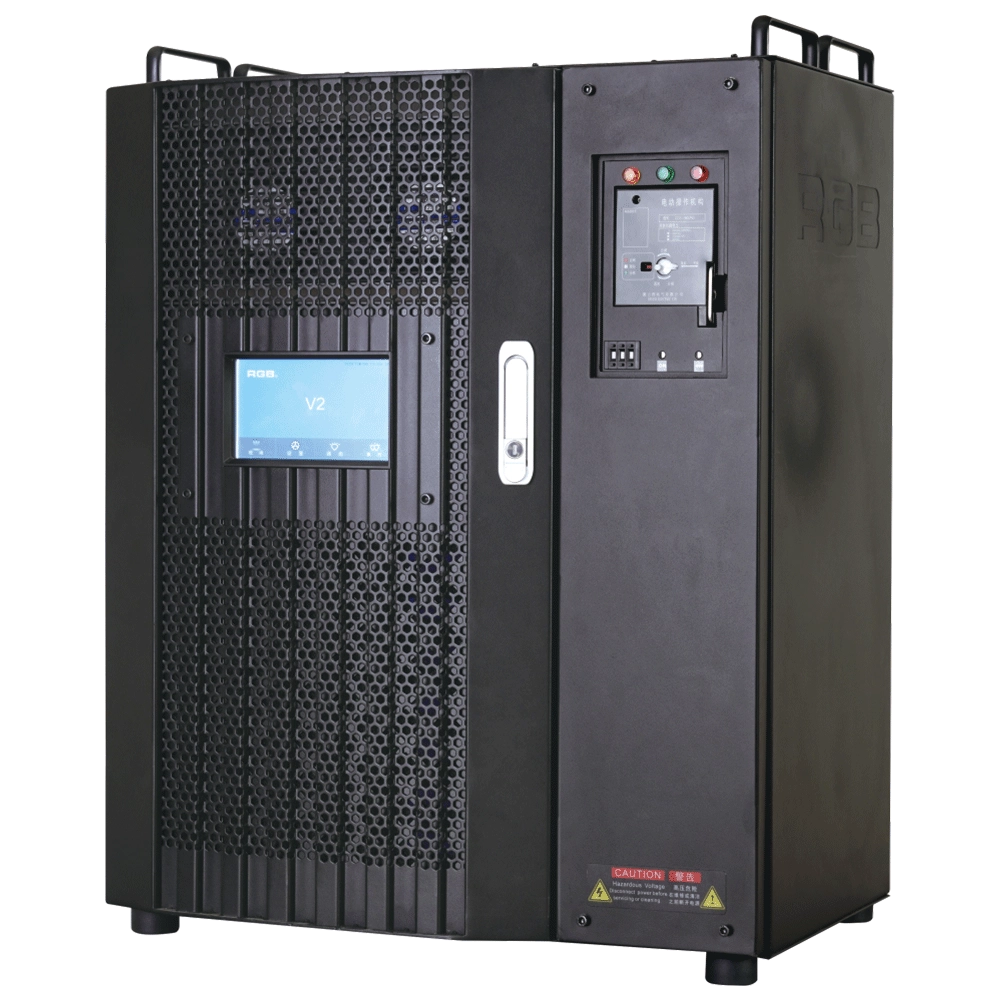
V2 Intelligent Network Dimmer/Relay Racks
V2 is an artificial intelligence dimming rack independently developed by RGB, which has completely independent core technology and obtained software copyrights. It is a fully digital electrodeless trigger and multi-backup independent CPU central processor technology. It has a variety of output configurations, such as sine wave, thyristor, relay, dimming relay, etc. It supports visual lighting control system and visually displays the online and offline status of dimming racks. Realize remote monitoring, editing, and setting of relevant parameters.
It is widely used in performing arts and cultural venues such as theaters, concert halls, multi-function halls, cultural travel and performing arts, TV stations, gymnasiums, auditoriums, commercial art lighting and so on.
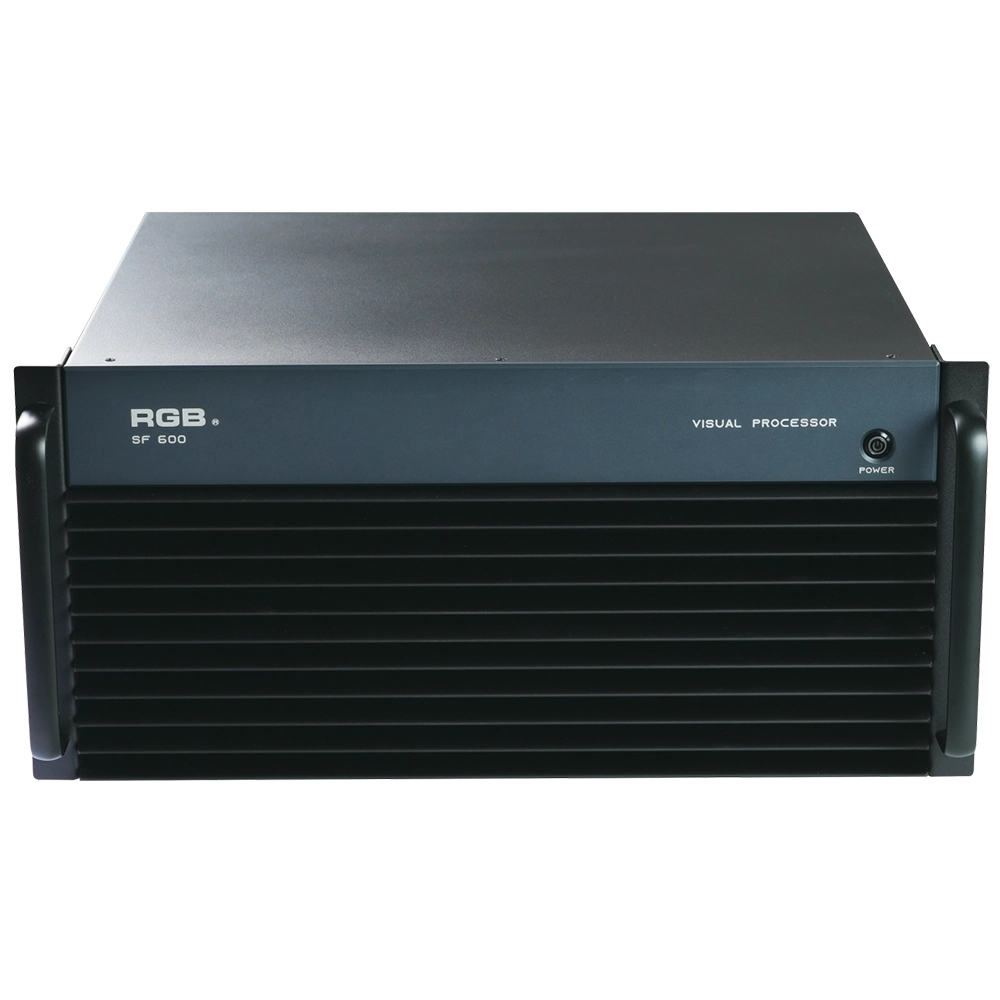
SF600 Visual R-net central processing processor
The SF600 Visual R-net central processing processor by RGB delivers advanced visual systems performance with high-speed processing and seamless integration. Designed for efficiency and reliability, it’s ideal for enhancing your visual system applications in corporate environments.
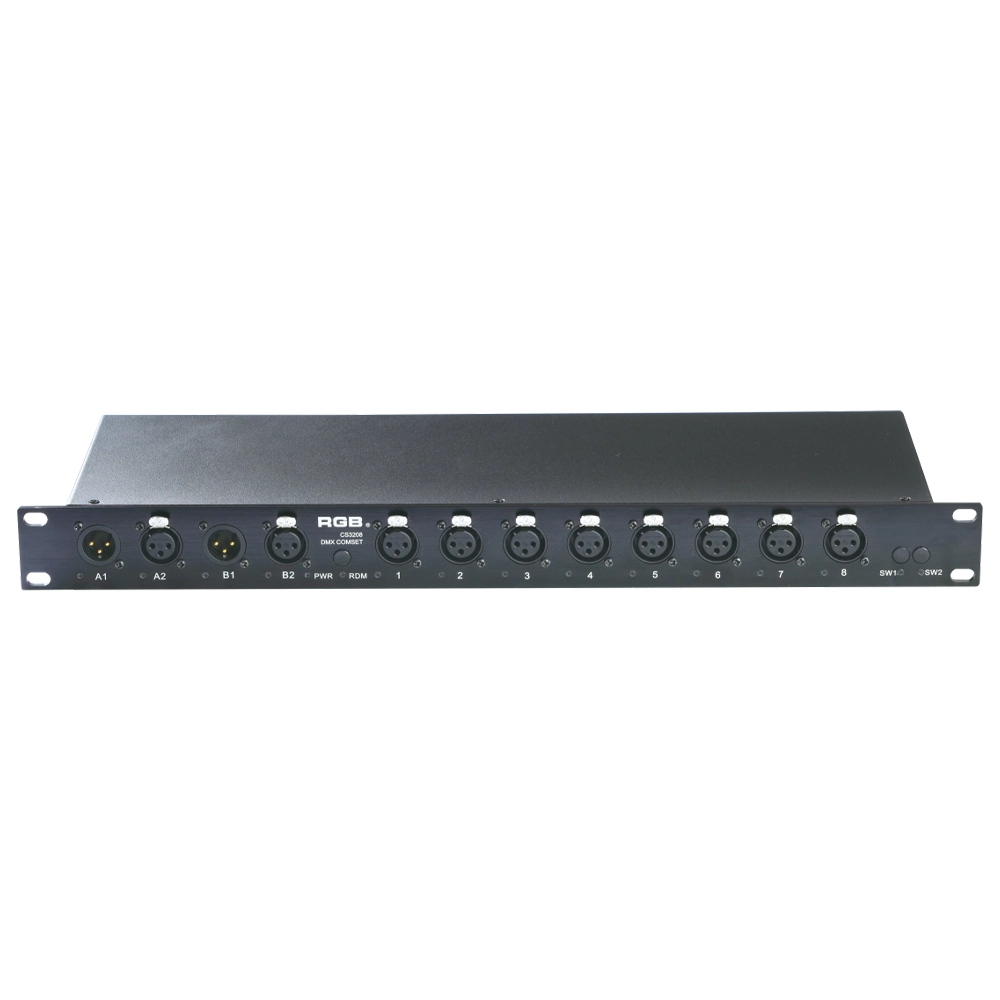
Multifunctional signal supercharger
The rack-mounted DMX signal amplifier complies with the DMX-512 standard protocol, improving DMX-512 signal transmission quality and ensuring reliable system control. It helps prevent issues such as AC high-voltage backflow into lighting control systems, lightning-induced surges, and signal interference caused by short circuits, thereby enhancing overall system stability.
Expert Support
Interested in learning more or need expert guidance related to this article? Fill in your details, and our team will provide tailored support.
Intelligent Control. Brilliant Performance.
RGB specializes in stage lighting control systems, delivering intelligent, reliable, and high-performance solutions for theaters and performance spaces worldwide.
Contact
Email:
Tel:
+86 20 3928 0245
+86 20 3928 0247
Address:
No.3, Huashan Road, Shilou Town, Panyu, Guangzhou, China.
Whatsapp: +8615975520131