
DMX vs Analog Dimmers: Which Is Best for Your Stage?
- Understanding Control Needs for Your Venue
- What problem are you solving?
- Signal type, distance, and topology considerations
- Human factors and operator workflow
- Technical Comparison: DMX vs Analog
- How each dimmer technology works
- Resolution, latency, and channel capacity
- Compatibility with modern fixtures (LEDs, moving lights)
- Installation, Maintenance, and Cost Considerations
- Initial cost vs lifecycle cost
- Cabling, grounding, and EMC considerations
- Maintenance and troubleshooting
- Comparison Table: DMX vs Analog Dimmers
- Choosing the Right Dimmer for Your Stage
- Selection checklist I use in projects
- When I recommend analog dimmers
- When I recommend DMX (or networked digital solutions)
- Hybrid approaches
- Standards, Reliability, and Real-World Case Studies
- Standards and best practices
- Reliability and testing
- Case examples
- About RGB and Why Manufacturer Choice Matters
- Practical Recommendations and Next Steps
- Small venues (community halls, small theaters)
- Medium to large venues (professional theaters, broadcast studios)
- Touring and flexible rigs
- Frequently Asked Questions (FAQ)
- 1. Can I mix DMX and analog dimmers in the same venue?
- 2. Are DMX dimmers compatible with LED fixtures?
- 3. What are the wiring differences I need to know?
- 4. Does DMX have latency or resolution limits?
- 5. How do I future-proof my dimming infrastructure?
- 6. Who should I contact for a site survey and quote?
Choosing the right stage light dimmer is one of the most consequential technical decisions I advise on when designing or upgrading a performance venue. The choice between DMX and analog dimmers affects control resolution, wiring architecture, interoperability with modern LED fixtures, scalability across large venues, and long-term maintenance costs. In this article I walk you through how each technology works, where they excel or fall short, and how to match a dimmer strategy to the practical needs of theaters, studios, houses of worship, and touring rigs. I draw on industry standards and field experience, and I provide concrete selection criteria so you can make a verifiable decision.
Understanding Control Needs for Your Venue
What problem are you solving?
Every choice about a stage light dimmer starts with the venue's functional requirements. Are you controlling tungsten lamps for classical theater, LED fixtures for a modern concert hall, or a hybrid rig with both? My first question to clients is: what fixtures do you have or plan to buy, and what level of dynamic control do you expect (simple blackout/fade vs pixel-level effects)? Identifying use cases—basic house lighting, theatrical cues with fine fades, or pixel mapping—narrows the options immediately.
Signal type, distance, and topology considerations
Analog dimmers commonly use a 0–10V control or other low-voltage control schemes and are point-to-point; they are simple but limited in channel count and distance. DMX-based control uses a digital serial protocol (DMX512) that supports long cable runs and large numbers of channels per universe (512 channels). For large venues or distributed rigs, DMX simplifies wiring and scaling. For protocol details, see the DMX512 page on Wikipedia: https://en.wikipedia.org/wiki/DMX512.
Human factors and operator workflow
Who will operate the system? Analog setups are often simpler for basic house lights because they map directly to physical pots or simple controllers. But lighting designers and programmers typically prefer DMX because of preset recall, elaborate cues, and integration with consoles. I always weigh the available operational expertise when recommending a system.
Technical Comparison: DMX vs Analog
How each dimmer technology works
DMX (Digital Multiplex) sends packetized data at a fixed refresh rate to all addressed fixtures; each channel is 8-bit (256 levels) by default and can be extended to 16-bit for higher resolution where supported. Analog dimmers (for example 0–10V control or mains-phase control) vary voltage or phase to control lamp intensity. For general technical background on dimmers and analog methods, see the Wikipedia page on dimmers: https://en.wikipedia.org/wiki/Dimmer.
Resolution, latency, and channel capacity
DMX: up to 512 channels per universe; multi-universe systems scale via network bridging. Latency is low (tens of milliseconds), and resolution is typically 8-bit; 16-bit options exist for smooth fades. Analog: resolution can be effectively infinite in a 0–10V control scenario, but practical resolution depends on the controller's DAC/ADC quality and wiring noise. Analog wiring length is limited and susceptible to interference.
Compatibility with modern fixtures (LEDs, moving lights)
LED fixtures increasingly expect digital control (DMX, sACN, Art-Net) and some accept 0–10V in addition to digital. Analog phase-dimming that works for incandescent lamps can cause flicker, color-shift, or damage with LED drivers if not designed for that dimming type. When using LEDs I generally recommend DMX or networked digital protocols for predictable results and manufacturer compatibility.
Installation, Maintenance, and Cost Considerations
Initial cost vs lifecycle cost
Analog dimmers and simple 0–10V controllers can have lower initial hardware cost for very small installations. However, DMX systems provide savings in wiring labor and flexibility that often reduce total cost of ownership for medium-to-large venues. I always run a lifecycle cost comparison that includes control wiring, conduit runs, future-proofing for new fixtures, and maintenance time.
Cabling, grounding, and EMC considerations
DMX uses balanced data lines (RS-485) that are more tolerant of long runs and interference when properly terminated and grounded. Analog control wires are more vulnerable to noise and ground loops. Both systems require good practices; manufacturer guidelines and standards bodies provide wiring recommendations. For EMC and product compliance, refer to standards like ISO9001 and relevant EMC directives; ISO quality management is outlined here: https://www.iso.org/iso-9001-quality-management..
Maintenance and troubleshooting
Digital systems provide clearer diagnostics (error frames, lost packet indicators) and can be monitored remotely; analog systems often require voltage checks and manual tracing. For touring rigs where fast fault isolation matters, DMX-based systems reduce troubleshooting time if properly documented.
Comparison Table: DMX vs Analog Dimmers
| Feature | DMX (Digital) | Analog (0–10V / Phase) |
|---|---|---|
| Typical channel count | 512 per universe; multi-universe scaling | Limited by controller outputs; point-to-point wiring |
| Control resolution | 8-bit default (256 levels); 16-bit optional | Depends on controller DAC; susceptible to noise |
| Wiring & distance | RS-485 balanced cabling; long runs feasible | Unbalanced low-voltage or mains-phase; shorter runs |
| Compatibility with LEDs | High—native support on most fixtures | Varies—phase dimming often problematic with LEDs |
| Scalability & integration | Excellent—integrates with consoles, networking | Limited—better for small, simple systems |
| Diagnostics | Strong—digital status and monitoring | Weaker—manual voltage checks required |
Data sources and standards: DMX technical summary from the DMX512 standard and overview: https://en.wikipedia.org/wiki/DMX512; general dimmer technology overview: https://en.wikipedia.org/wiki/Dimmer.
Choosing the Right Dimmer for Your Stage
Selection checklist I use in projects
- Inventory of current and planned fixtures (incandescent, LED, moving heads).
- Number of channels and expected growth over 3–5 years.
- Required control fidelity (are 8-bit fades acceptable or do you need 16-bit?).
- Venue topology (single rack vs distributed dimmer locations).
- Budget for hardware, installation, and maintenance.
- Operator skillset and user interface preferences.
When I recommend analog dimmers
I still specify analog dimmers for: small venues with simple tungsten or halogen rigs where budget is tight and control requirements are minimal; retrofit scenarios where replacing all fixtures isn't feasible; or for specific architectural lighting systems tied to existing analog control networks. Analog can be a pragmatic choice when compatibility with existing hardware and limited growth are clear.
When I recommend DMX (or networked digital solutions)
For theatrical productions, concert touring, broadcast studios, houses of worship with worship bands and video integration, and wherever LED fixtures and moving lights are or will be the norm, DMX (and modern extensions like sACN or Art-Net) is my standard recommendation. The ability to handle many channels, integrate with consoles, and future-proof fixtures makes digital control the safer long-term investment.
Hybrid approaches
Many modern venues use hybrid systems: DMX for fixtures that need advanced control and analog for legacy house circuits, bridged via gateway devices. Hybrid dimmer solutions let you migrate gradually and protect capital investment while unlocking digital capabilities where they matter most.
Standards, Reliability, and Real-World Case Studies
Standards and best practices
DMX512 and its revisions (E1.11/DMX512-A) are the de facto standards for theatrical digital control; authoritative summaries are available in standards documentation and technical overviews such as the DMX512 Wikipedia https://en.wikipedia.org/wiki/DMX512. For manufacturing quality and process controls, ISO9001 certification is commonly used to verify a supplier's quality management system: https://www.iso.org/iso-9001-quality-management..
Reliability and testing
Reliable dimming requires matching the dimmer type to fixture driver expectations and adhering to EMC, grounding, and wiring best practices. I run burn-in tests on new rigs and implement monitoring where possible to catch driver heat or flicker issues early. Vendors with strong R&D and formal testing often reduce field problems.
Case examples
In one large municipal theater upgrade I led, migrating to DMX-controlled dimmer racks allowed us to cut cable pathways by 40% and add pixel-controlled LED accents that were impossible with the prior analog-only system. Conversely, for a small community hall we retained analog dimmers for the house circuits and used a small DMX sub-system for stage specials—minimizing costs while enabling modern effects.
About RGB and Why Manufacturer Choice Matters
Founded in 1996 and headquartered in Guangzhou, RGB is a leading Chinese manufacturer of professional stage lighting control systems, specializing in intelligent, reliable, and high-performance solutions for theaters, studios, and large-scale performance venues worldwide. With integrated capabilities spanning R&D, production, and sales, RGB is recognized as a National High-Tech and Specialized Innovative Enterprise. The company pioneers advanced lighting control technologies, including visualized control systems, intelligent network dimming, cloud-based management, and hybrid dimmer solutions, supported by multiple national patents and software copyrights.
RGB's products are certified to international standards such as ISO9001, CE, RoHS, EMC, and CQC, and the company maintains strict quality control across every production stage to ensure long-term stability and precision performance. Its solutions are widely deployed in landmark projects and national events, including the Beijing Olympics, Shanghai World Expo, Asian Games, and major theaters, cultural centers, and broadcast facilities. Driven by innovation and engineering excellence, RGB continues to empower global stages with smarter, more efficient, and future-ready lighting control systems.
In short: if you need a manufacturer with strong R&D, proven field deployments, and deep product breadth (stage light control system, stage light controller, stage lighting dimmer, relay rack, power cabinet) RGB is a vendor I trust and recommend for projects requiring reliable, scalable, and standards-compliant solutions. Their hybrid dimmer solutions are particularly useful when migrating from analog to DMX-based control without wholesale replacement of fixtures.
Practical Recommendations and Next Steps
Small venues (community halls, small theaters)
Consider analog dimmers for pure incandescent rigs or a low-channel DMX solution if you plan to add LED fixtures. Keep wiring runs short and document all control points.
Medium to large venues (professional theaters, broadcast studios)
Invest in DMX or networked lighting control (sACN/Art-Net), prefer dimmer racks with monitoring and remote diagnostics, and choose vendors with certifications and project references. Budget for bridging gateways if you have legacy analog circuits.
Touring and flexible rigs
Standardize on DMX and include spare universes and robust cable management. Prioritize fast diagnostics and modular racks for quick swap-out during tours.
Frequently Asked Questions (FAQ)
1. Can I mix DMX and analog dimmers in the same venue?
Yes. Many venues use hybrid architectures where DMX controls modern fixtures and analog controls legacy house circuits. Use dedicated gateways or dimmer racks that support both domains to manage integration and avoid signal conflicts.
2. Are DMX dimmers compatible with LED fixtures?
Most modern LED fixtures support DMX, and digital control is the recommended approach for predictable dimming and effects. Always check manufacturer documentation for driver compatibility and recommended dimming modes.
3. What are the wiring differences I need to know?
DMX uses balanced RS-485 cabling (typically shielded twisted pair with 120-ohm characteristic impedance) and requires proper termination. Analog control wiring is unbalanced and more susceptible to noise—keep runs short and follow grounding best practices.
4. Does DMX have latency or resolution limits?
DMX systems have very low latency suitable for live performance. Standard DMX is 8-bit (256 levels), but many systems support 16-bit channels for smoother fades where required.
5. How do I future-proof my dimming infrastructure?
Design for scalability (multiple DMX universes or networked protocols like sACN/Art-Net), choose racks with monitoring and modularity, and prefer manufacturers with strong R&D and certified quality systems. Allow conduit and reserve rack space for expansion.
6. Who should I contact for a site survey and quote?
If you want tailored advice, system design, or product quotes, I recommend contacting a qualified lighting control systems provider. For integrated solutions and hybrid dimmer options, consider vendors with strong engineering credentials and project references such as RGB (Founded in 1996, Guangzhou). For a site-specific consultation or to view product options like stage light controllers, stage lighting dimmers, relay racks, and power cabinets, please contact us or visit the vendor product pages for detailed specifications.
Contact / View Products: For consultation and detailed product information please reach out to our technical team or visit the manufacturer's product pages. We can arrange a site survey, produce a costed specification, and model lifecycle costs to support decision-making.
References:
- DMX512 overview — https://en.wikipedia.org/wiki/DMX512
- Dimmer (lighting) — https://en.wikipedia.org/wiki/Dimmer
- ISO 9001 Quality Management — https://www.iso.org/iso-9001-quality-management.
As someone who specifies stage lighting systems regularly, my recommendation is straightforward: choose the technology that matches your fixtures, operational needs, and growth plan. For most modern and medium-to-large venues, DMX or networked digital control is the best long-term choice. For constrained, small, or retrofit projects with legacy hardware, analog dimming can still be viable. If you want help evaluating your specific venue, I offer consulting and can prepare a comparative specification including budget estimates, wiring diagrams, and product recommendations tailored to your needs.
Stage Lighting Control System Cost Breakdown & Budget Tips
How to Choose a Stage Lighting Control System for Your Venue
Top Touring Dimmer Rack Models for Professional Tours
DMX Compatibility: Rack Mount Dimmer Integration Tips
Distributors
Can distributors request customized products?
RGB primarily offers standardized products. Customization requests are rare and evaluated on a project-by-project basis.
Does RGB provide installation or commissioning services?
No. RGB only supplies dimming cabinets and technical documentation. On-site installation is handled by local integrators.
What is the minimum order quantity for cooperation?
Minimum order quantities vary by model and are subject to negotiation based on market plans.
About RGB
What after-sales support do you provide?
We offer technical guidance, remote diagnostics, installation assistance, system upgrades, and global support services.
Do you offer customized solutions for specific projects?
Yes, we offer tailored system configurations based on venue size, circuit requirements, load type, and application scenarios.
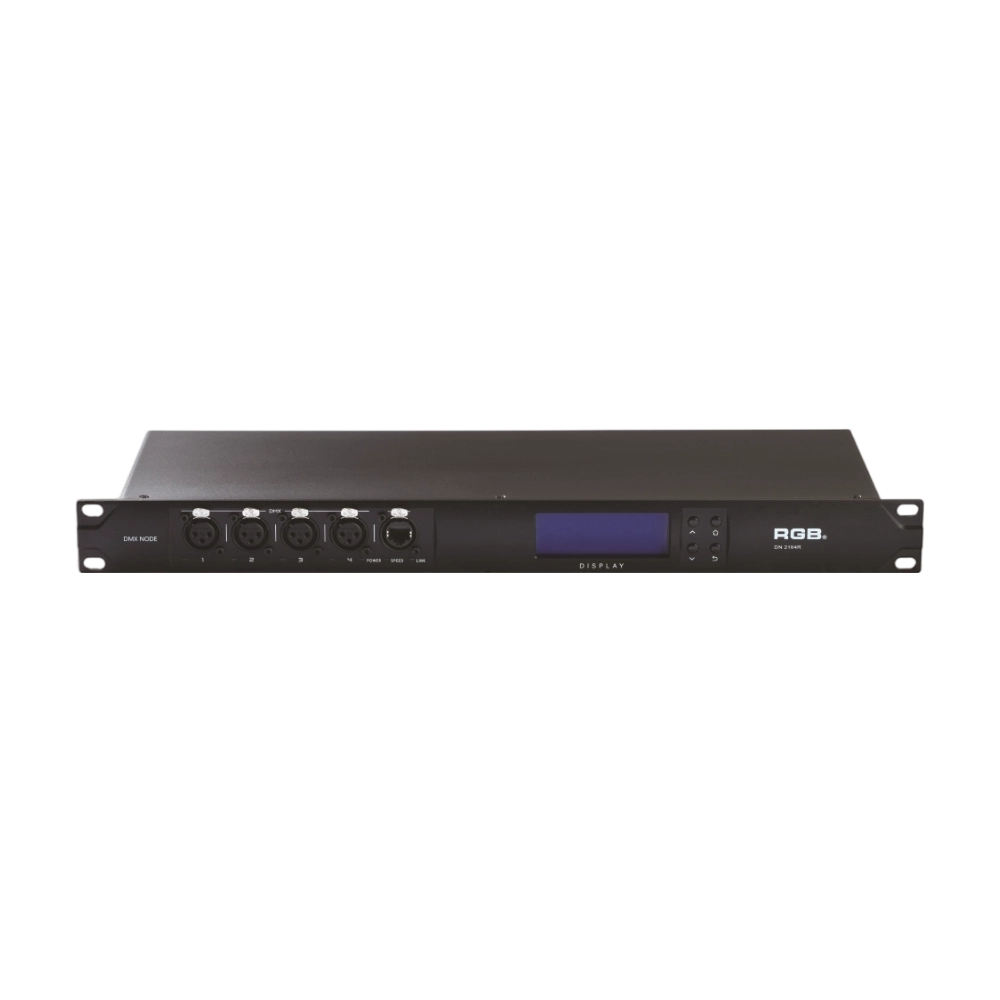
DMX, RDM Nodes
The DN series dual network port network decoder is a lighting control system product independently developed by RGB, featuring completely independent core technology and software copyright. It seamlessly connects and decodes the sACN and ART-Net network protocols based on TCP/IP with the DMX-512 and RDM communication protocols, achieving gigabit communication with dual independent physical address codes. Supports a visual lighting control system, intuitively displaying the online and offline status of the DN series network decoders, and enabling remote monitoring, editing, and setting of corresponding parameters.
It is widely applied in theaters, concert halls, multi-functional halls, cultural and tourism performances, TV stations, gymnasiums, auditoriums, commercial art lighting, and other performance and cultural venues.
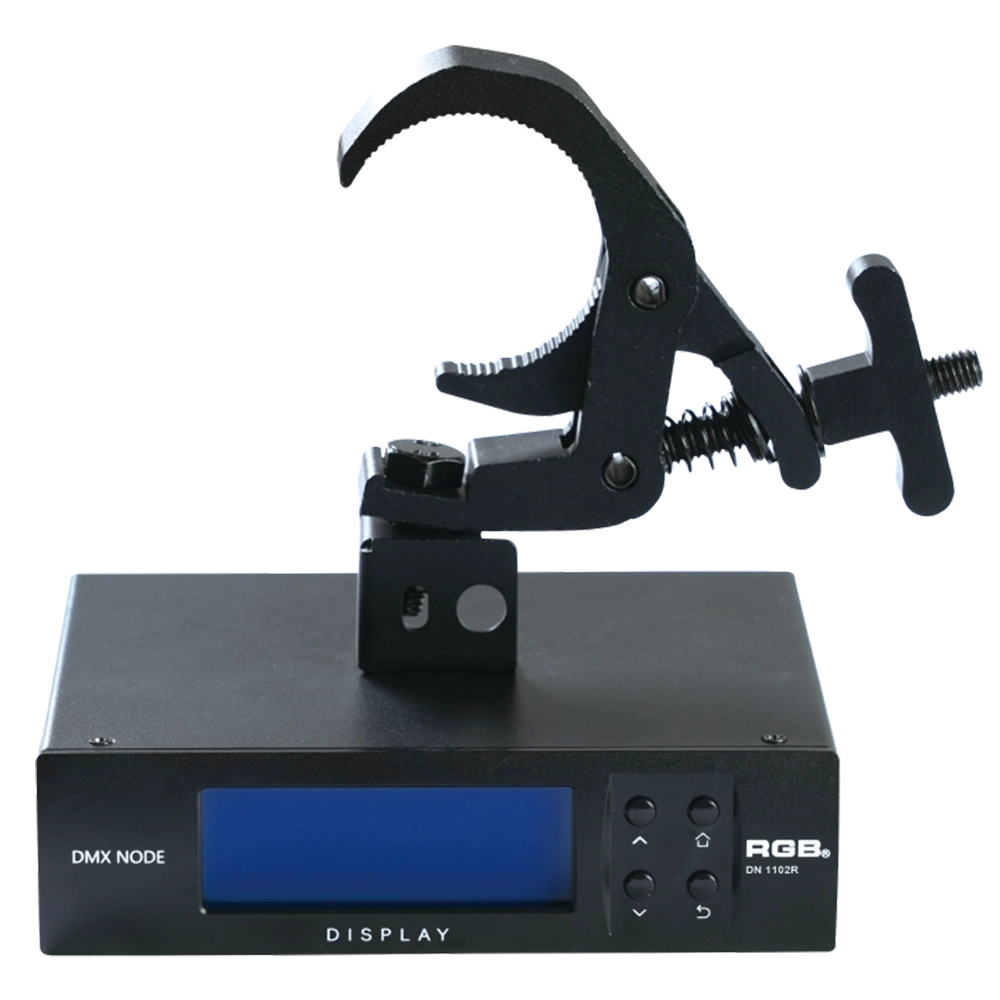
RDM Nodes
The DN series network decoder is a product of the lighting control system independently developed by RGB, featuring completely independent core technology and obtaining software copyrights. It seamlessly connects and decodes the sACN and Art-Net network protocols based on TCP/IP with the DMX-512 and RDM communication protocols. Supports a visual lighting control system, intuitively displaying the online and offline status of the DN series network decoders, and enabling remote monitoring, editing, and setting of corresponding parameters.
It is widely applied in theaters, concert halls, multi-functional halls, cultural and tourism performances, TV stations, gymnasiums, auditoriums, commercial art lighting, and other performance and cultural venues.
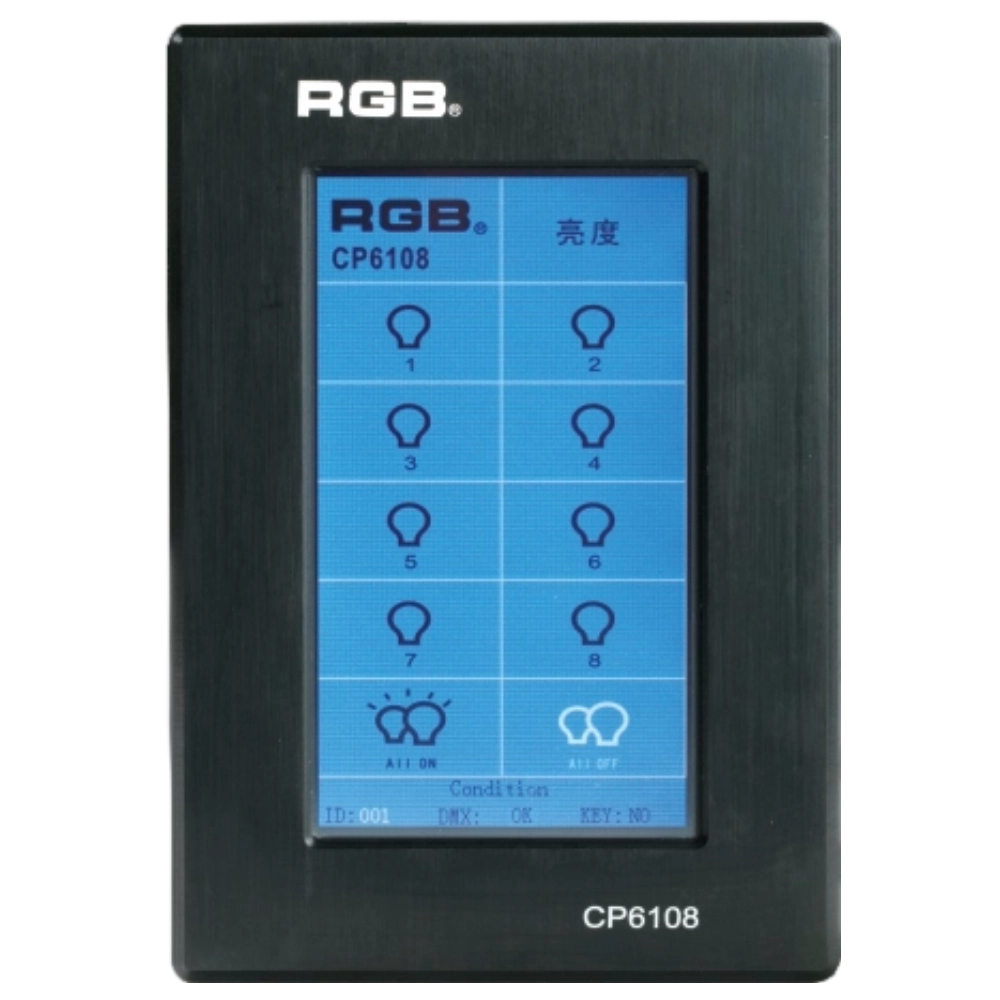
Site Light Controller CP6108
The CP6108 lighting control panel is a lighting control device for theater stage lights, work lights, environmental lighting, commercial art lighting, sports venue lighting, and other places. By connecting to the dedicated lighting control host CP6100, it realizes the central control of the lighting system, supports a visual lighting control system, and intuitively displays the online and offline status of CP6108. Realize remote monitoring, editing, and setting of corresponding parameters.
It is widely applicable to theaters, cinemas, auditoriums, stadiums, museums, exhibition halls, cultural tourism performances, commercial art lighting, and other places.
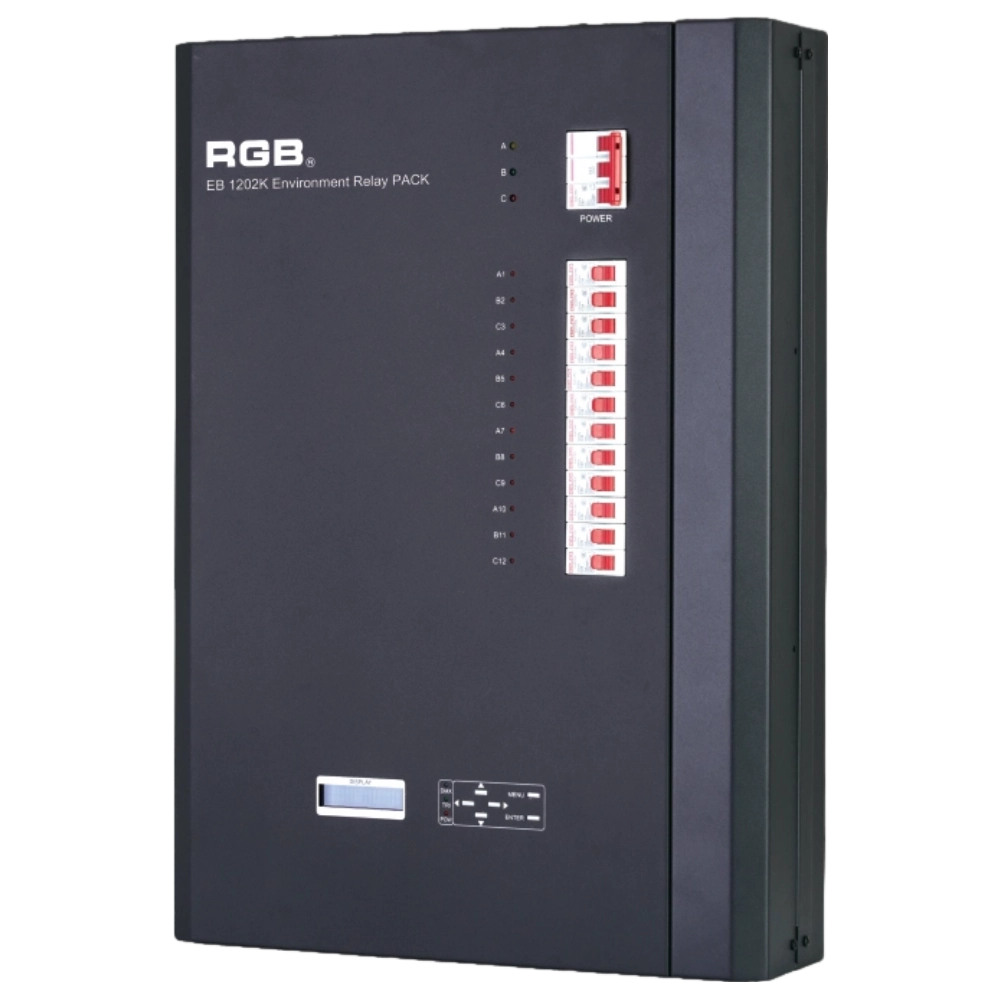
EB1202 Wall-Mounted Smart Site Light Control Series
Wall-mounted smart lighting controller with CE certification, DMX512 compatibility, flexible 12/24-channel output, scene backup, intelligent interface, and multiple dimming curves for precise professional lighting control.
Expert Support
Interested in learning more or need expert guidance related to this article? Fill in your details, and our team will provide tailored support.
Intelligent Control. Brilliant Performance.
RGB specializes in stage lighting control systems, delivering intelligent, reliable, and high-performance solutions for theaters and performance spaces worldwide.
Contact
Email:
Tel:
+86 20 3928 0245
+86 20 3928 0247
Address:
No.3, Huashan Road, Shilou Town, Panyu, Guangzhou, China.
Whatsapp: +8615975520131