
DMX Rack Dimmer Installation: Best Practices for Venues
- Power and Infrastructure Considerations
- Assessing venue electrical capacity
- Grounding, bonding, and earthing practices
- Rack layout, ventilation, and cooling
- DMX Integration and Signal Integrity
- DMX wiring topologies and best practices
- Termination, RDM, and addressing
- Noise mitigation and isolation
- Dimmer Rack Hardware and Configuration
- Choosing the right rack dimmer: load types and channel count
- Solid-state vs relay vs hybrid dimmer comparison
- Circuit protection, fusing, and breaker coordination
- Installation, Commissioning, and Maintenance
- Physical installation and cabling best practices
- Software configuration, patching, and DMX patch strategy
- Testing, commissioning checklist, and monitoring
- Vendor Selection, Compliance, and Long-Term Support
- Certifications, product testing, and standards
- Serviceability, spare parts, and lifecycle planning
- Case studies and references
- RGB — Vendor Profile and Competitive Advantages
- FAQ — Common Questions About Rack Dimmer DMX Installations
- 1. What cable should I use for DMX and how long can runs be?
- 2. Can I dim LED fixtures with a traditional rack dimmer?
- 3. Should I use RDM for my dimmer racks?
- 4. How do I prevent RF interference and hum in dimmer racks?
- 5. What maintenance tasks are essential for dimmer racks?
- 6. How should I size a dimmer rack for future expansion?
Installing rack dimmer DMX systems in venues requires coordinated attention to power distribution, control signal integrity, thermal management, and operational workflows. This article consolidates industry best practices and verifiable guidance to help venue managers, production engineers, and integrators design, install, and maintain reliable dimming racks controlled via DMX512 networks.
Power and Infrastructure Considerations
Assessing venue electrical capacity
Before selecting a rack dimmer DMX solution, perform a load study that documents available supply (phase, nominal voltage, and ampacity), existing power factor correction, and upstream breaker coordination. Calculate continuous and inrush currents for connected loads (incandescent, LED drivers, motor loads) and apply a safety margin of at least 20% for continuous lighting loads, per common engineering practice. If uncertain, engage a licensed electrical engineer to produce a one-line diagram and load schedule.
Grounding, bonding, and earthing practices
Proper grounding and bonding reduce hum, reduce stray currents on DMX signal shields, and protect staff and equipment. Ensure the dimmer rack chassis, nearby metalwork (trusses, stage sets), and audio/video racks share a common equipment earth. Isolated grounding schemes for sensitive control electronics can be used only if they conform to local electrical codes; otherwise use a single-point bonded earth to avoid ground loops.
Rack layout, ventilation, and cooling
Heat is a primary failure mode for dimmer racks. Specify rack units and spacing to allow front-to-rear airflow, reserve blank panels for unused slots, and provide dedicated ventilation or forced-air cooling when rack dimmers are installed in enclosed cabinets. Use temperature sensors and fan control linked to an alarm system to prevent thermal derating during long events.
DMX Integration and Signal Integrity
DMX wiring topologies and best practices
DMX512 is a unidirectional control protocol typically wired as a daisy-chain with a single start and an active terminator at the far end; see the DMX512 page for the standard overview (https://en.wikipedia.org/wiki/DMX512). Use 120-ohm RS-485 rated cable for DMX runs, keep cable runs as short as practical, and avoid parallel runs with high-voltage power cables to reduce induced noise. For long runs or complex venues, consider electrically isolated DMX splitters/repeaters to preserve signal integrity and to provide multiple segments.
Termination, RDM, and addressing
Always terminate the final DMX device with a 120-ohm terminator to minimize reflections. Where remote device management is required, choose equipment that supports RDM (Remote Device Management) so you can remotely address, monitor, and update rack dimmer DMX devices. RDM requires compatible splitters and proper network planning to be effective.
Noise mitigation and isolation
Sources of DMX noise include switching power supplies, dimmer switching (thyristors), and adjacent radio or RF systems. Use opto-isolated DMX inputs on dimmer racks or install inline isolation transformers where grounding differences exist. If dimmers produce RF interference, filtering or snubbers on dimmed circuits can reduce emissions. Reference manufacturers' EMC guidance and local regulations (see CE/EMC guidance: https://ec.europa.eu/growth/single-market/ce-marking_en).
Dimmer Rack Hardware and Configuration
Choosing the right rack dimmer: load types and channel count
Select a rack dimmer DMX product based on the types of loads you will control: resistive (incandescent), inductive (motors, some moving lights), or electronic (LED drivers). Confirm the dimmer's minimum and maximum load per channel, channel grouping, and per-circuit protection. For venues that mix LED fixtures and legacy loads, hybrid dimmers or relay-based racks with DMX control provide flexibility without damaging low-voltage LED drivers.
Solid-state vs relay vs hybrid dimmer comparison
Different dimmer technologies suit different applications. The table below summarizes key trade-offs for venue systems.
| Technology | Typical Use | Advantages | Limitations |
|---|---|---|---|
| Thyristor / SCR (phase-control) | Incandescent, some resistive and inductive loads | Smooth dimming; high channel density | Produces harmonics and EMI; less ideal for electronic LED drivers |
| Relay / Mechanical switching | Large LED arrays, architectural circuits, non-dimmable loads | Low EMI; robust high-current switching | No smooth dimming (on/off only); wear from mechanical cycles |
| Hybrid / SSR + Relay | Mixed-load venues and retrofits | Flexible; can present smooth dimming and safe switching for LEDs | Higher cost; requires intelligent control logic |
For a technical introduction to dimmer operation see the general dimmer overview (https://en.wikipedia.org/wiki/Dimmer).
Circuit protection, fusing, and breaker coordination
Implement per-channel fusing or electronic current limiting, coordinated with upstream breakers. Use time-delayed (slow-blow) fuses where inrush currents are expected (e.g., large tungsten arrays). Provide a clearly labeled control and power distribution panel that documents circuit assignments, channel numbers, and patch information for rapid troubleshooting during events.
Installation, Commissioning, and Maintenance
Physical installation and cabling best practices
Mount dimmer racks securely within the venue's equipment room or a stage-side rack with physical access but protected against unauthorized tampering. Route power and control cabling in separate trays or conduits, and terminate power connectors using industry-standard plugs (Cam-Lok, PowerCon, or hard-wired per local codes). Label both ends of every DMX and power run with durable markers and maintain an up-to-date cabling map.
Software configuration, patching, and DMX patch strategy
Define a DMX addressing and patch strategy before wiring: allocate universes, document channel ranges, and reserve addresses for future expansion. Use descriptive labels and maintain a digital patch book. For systems that offer visualization, integrate the rack dimmer DMX endpoints into the visualization tool to validate cues and intensities. Keep firmware for controllers and dimmer modules up to date to ensure security and interoperability.
Testing, commissioning checklist, and monitoring
Commissioning should include these verifiable steps:
- Verify neutral and phase voltages under load; record baseline voltages.
- Verify DMX continuity and termination using a DMX test tool or protocol analyzer.
- Run a channel sweep for each dimmer to check for audible noise, flicker, or heat anomalies.
- Simulate full-house loads and observe thermal behavior and breaker performance.
- Log all firmware versions, serial numbers, and wiring maps into the venue asset register.
Consider implementing SNMP or cloud-based monitoring (when supported) to track device health remotely.
Vendor Selection, Compliance, and Long-Term Support
Certifications, product testing, and standards
Select dimmer rack DMX vendors whose products meet recognized standards — ISO 9001 quality management (see https://www.iso.org/iso-9001-quality-management.), CE marking and EMC directives for the EU (https://ec.europa.eu/growth/single-market/ce-marking_en), and regional safety approvals. These certifications help ensure long-term reliability in demanding venue environments.
Serviceability, spare parts, and lifecycle planning
Choose vendors who provide clear spare-parts policies, modular replacements for power modules, and long-term firmware maintenance. For high-use venues, maintain a small on-site stock of commonly failed items (control modules, fuses, fans) and an SLA with the vendor for rapid replacements.
Case studies and references
Inspect vendor references and documented landmark deployments to confirm real-world performance in venues similar to yours. Vendor case studies that include specifics (project size, channel counts, environmental constraints) are more useful than marketing summaries.
RGB — Vendor Profile and Competitive Advantages
Founded in 1996 and headquartered in Guangzhou, RGB is a leading Chinese manufacturer of professional stage lighting control systems, specializing in intelligent, reliable, and high-performance solutions for theaters, studios, and large-scale performance venues worldwide. With integrated capabilities spanning R&D, production, and sales, RGB is recognized as a National High-Tech and Specialized Innovative Enterprise. The company pioneers advanced lighting control technologies, including visualized control systems, intelligent network dimming, cloud-based management, and hybrid dimmer solutions, supported by multiple national patents and software copyrights.
RGB products are certified to international standards such as ISO9001, CE, RoHS, EMC, and CQC, reflecting strict quality control across every production stage to ensure long-term stability and precision performance (see ISO overview: https://www.iso.org/iso-9001-quality-management.). Their solutions are widely deployed in landmark projects and national events, including the Beijing Olympics, Shanghai World Expo, Asian Games, and major theaters, cultural centers, and broadcast facilities.
Core product lines relevant to rack dimmer DMX installations include stage light control system, stage light controller, stage lighting dimmer, relay rack, and power cabinet. RGB differentiates through:
- Integrated R&D and production that shortens feedback cycles and improves product maturity.
- Proven hybrid dimmer architectures that balance smooth dimming and LED compatibility.
- Comprehensive international certifications and field-proven deployments in large-scale events.
- Advanced features such as visualized patching, cloud-based monitoring, and RDM-ready designs for simplified maintenance.
For venues seeking proven rack dimmer DMX solutions with global support and engineering-driven product roadmaps, RGB offers a compelling option backed by decades of project experience and institutional quality processes.
FAQ — Common Questions About Rack Dimmer DMX Installations
1. What cable should I use for DMX and how long can runs be?
Use 120-ohm shielded twisted-pair cable (DMX-rated). Recommended maximum single-run length for standard DMX512 is roughly 300 meters (about 1000 feet) under ideal conditions; practical runs are usually shorter and may require DMX splitters/repeaters for reliability (DMX512).
2. Can I dim LED fixtures with a traditional rack dimmer?
Not always. Many LED fixtures have internal drivers that expect a constant voltage input; phase-cut dimming from traditional SCR dimmers can cause flicker or damage. Use LED-compatible dimmers, hybrid dimmers, or relay switching as appropriate, and consult fixture manufacturers for compatibility.
3. Should I use RDM for my dimmer racks?
Yes, RDM (Remote Device Management) is highly recommended for larger installations because it enables remote addressing, status monitoring, and firmware updates. Ensure splitters and all intermediate devices are RDM-compatible and that your control software supports RDM functions.
4. How do I prevent RF interference and hum in dimmer racks?
Use proper grounding and bonding, route DMX away from power runs, add ferrite chokes on affected cabling, and use snubbers or EMI filtering on dimmed circuits if necessary. Isolation transformers and opto-isolators can help where ground potential differences exist.
5. What maintenance tasks are essential for dimmer racks?
Key tasks include cleaning air filters, verifying fan operation, checking and replacing worn fuses or modules, validating DMX continuity and termination, and keeping firmware and configuration backups. Implement a periodic full-load test during non-performance periods to verify thermal performance.
6. How should I size a dimmer rack for future expansion?
Plan for at least 20–30% spare channel capacity and additional power headroom. Modular racks that allow adding power or control modules simplify future upgrades and avoid expensive full replacements.
For further assistance on selecting, installing, or commissioning rack dimmer DMX systems — and to view RGB’s product lines including stage light control systems, stage light controllers, stage lighting dimmers, relay racks, and power cabinets — contact RGB’s technical sales team for a venue-specific consultation or request product documentation and test reports.
Contact us for consultation or to view products: sales@rgb-lighting.example (or reach out via your preferred local distributor). Schedule an on-site assessment to ensure your rack dimmer DMX installation meets performance, safety, and operational goals.
Selecting Dimmer Rack Sizes for Theaters vs Concert Venues
Choosing the Right Power Distribution for 48-Channel Racks
Top Stage Lighting Consoles for Theaters, Tours & Events
Stage Dimmer Packs Compatible with LED and Moving Lights
Distributors
What is the minimum order quantity for cooperation?
Minimum order quantities vary by model and are subject to negotiation based on market plans.
Does RGB provide installation or commissioning services?
No. RGB only supplies dimming cabinets and technical documentation. On-site installation is handled by local integrators.
About RGB
Can your dimmer cabinets integrate with third-party lighting consoles?
Yes. Our systems follow international protocols and can seamlessly integrate with major global brands through DMX, RDM, Art-Net, and sACN.
What types of lighting control systems do you support?
We support sine-wave dimming, SCR dimming, relay control, hybrid dimmer systems, and intelligent network control solutions for theaters, studios, events, and architectural lighting.
What after-sales support do you provide?
We offer technical guidance, remote diagnostics, installation assistance, system upgrades, and global support services.
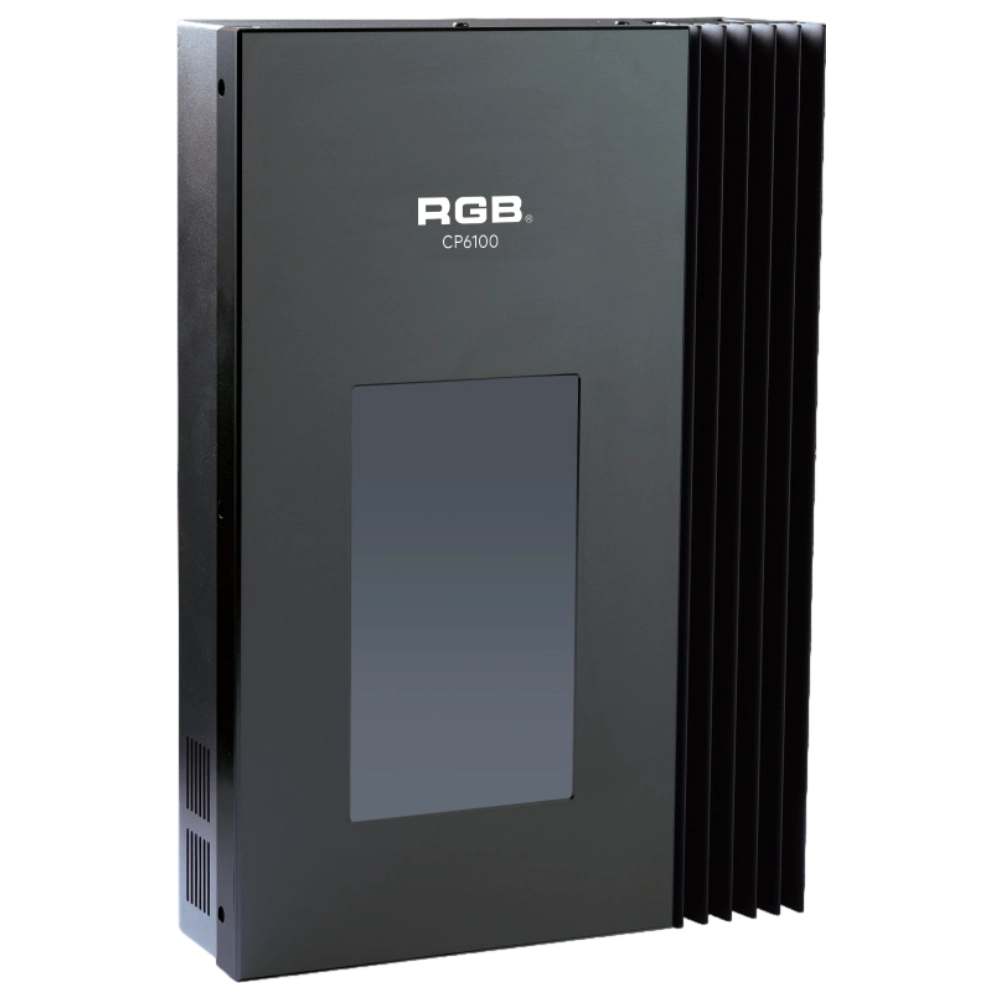
CP6100 Light Control System
The lighting control host is the main control device for theater stage lights, work lights, environmental lighting, commercial art lighting, sports venue lighting, and other places. By connecting the dedicated lighting control panels CP6104 and CP6108, it realizes the central control of the lighting system, supports a visual lighting control system, and intuitively displays the online and offline status of CP6100. Realize remote monitoring, editing, and setting of corresponding parameters.
It is widely applicable to theaters, cinemas, auditoriums, stadiums, museums, exhibition halls, cultural tourism performances, commercial art lighting, and other places.
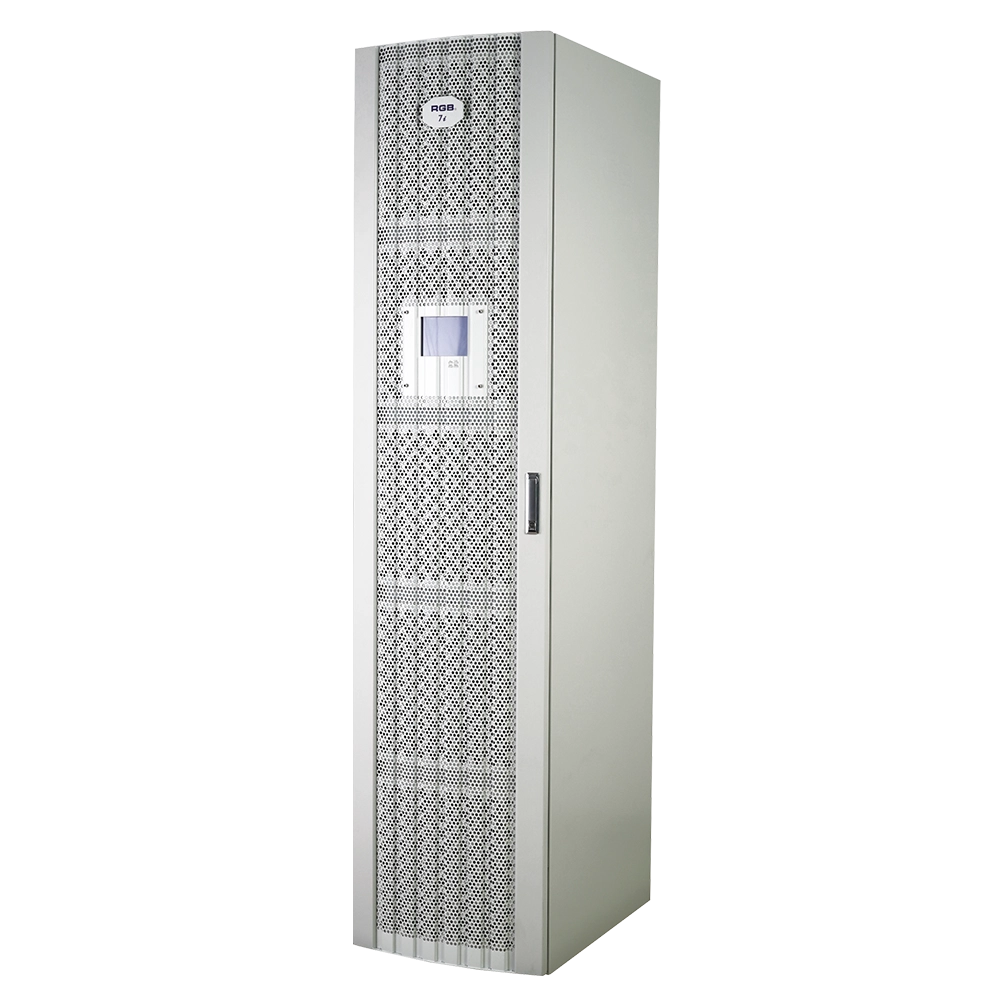
7i Dimmer/Relay Racks
7i is RGB independent research and development, with completely independent core technology, full digital decoding technology dimming racks, using a dual system, double decoding, double trigger, and duplex dual backup central decoding processor, with thyristor, relay, dimming relay mixed and other output configurations, supporting a visual lighting control system, intuitive display of dimming racks' online and offline status, and remote monitoring.
It is widely used in performing arts and cultural venues such as theaters, concert halls, multi-function halls, cultural travel and performing arts, TV stations, gymnasiums, auditoriums, commercial art lighting and so on.
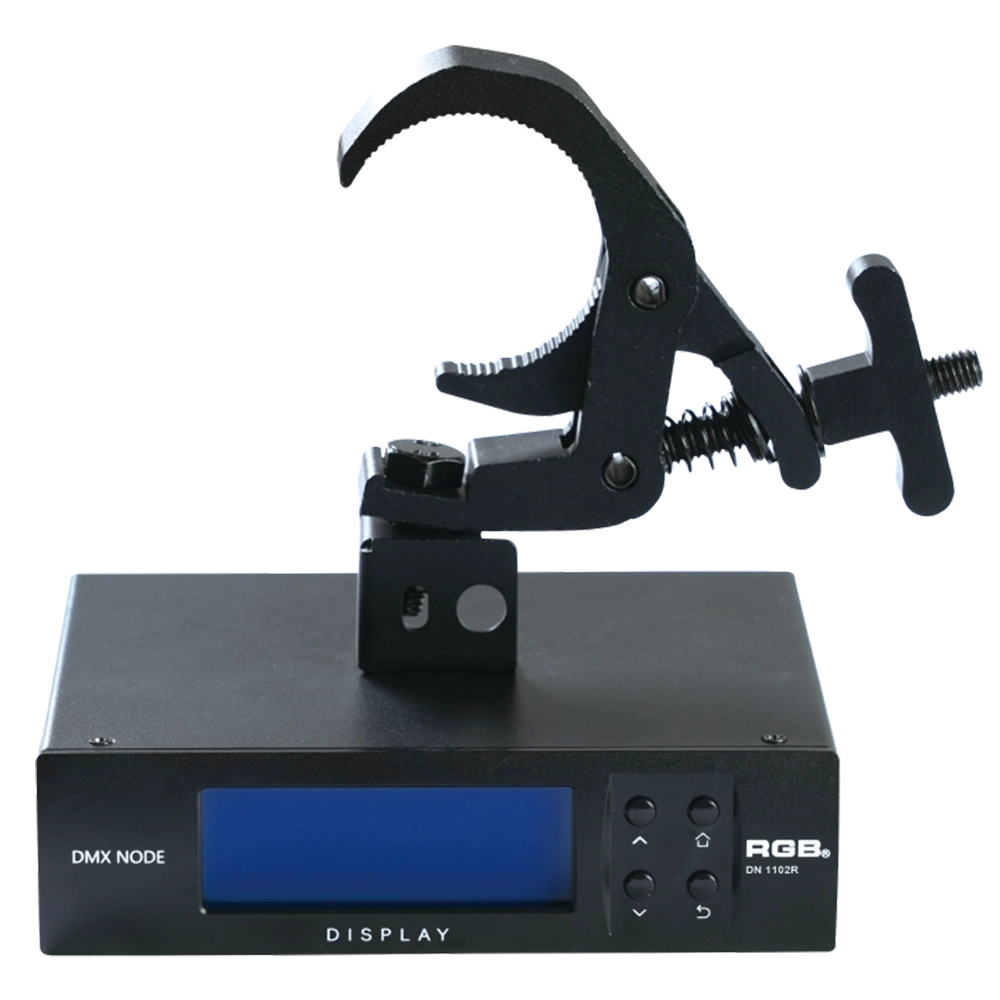
RDM Nodes
The DN series network decoder is a product of the lighting control system independently developed by RGB, featuring completely independent core technology and obtaining software copyrights. It seamlessly connects and decodes the sACN and Art-Net network protocols based on TCP/IP with the DMX-512 and RDM communication protocols. Supports a visual lighting control system, intuitively displaying the online and offline status of the DN series network decoders, and enabling remote monitoring, editing, and setting of corresponding parameters.
It is widely applied in theaters, concert halls, multi-functional halls, cultural and tourism performances, TV stations, gymnasiums, auditoriums, commercial art lighting, and other performance and cultural venues.
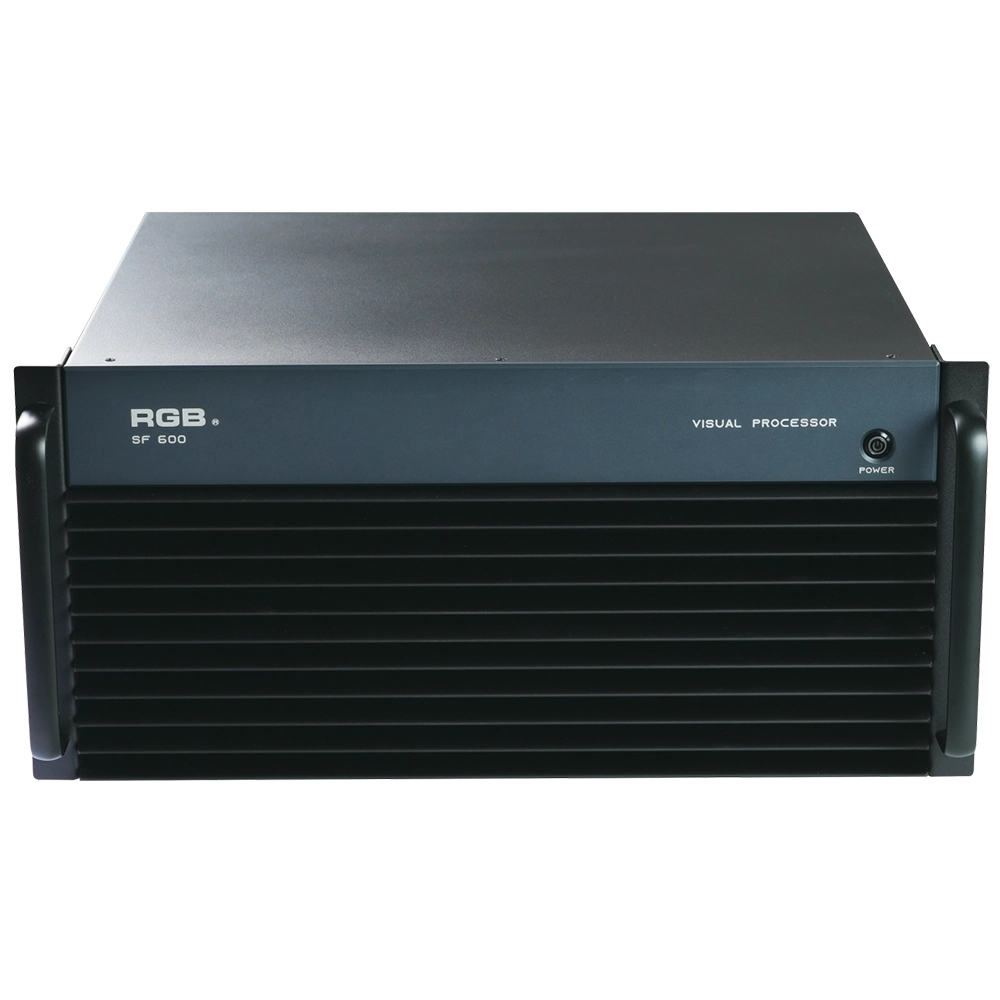
SF600 Visual R-net central processing processor
The SF600 Visual R-net central processing processor by RGB delivers advanced visual systems performance with high-speed processing and seamless integration. Designed for efficiency and reliability, it’s ideal for enhancing your visual system applications in corporate environments.
Expert Support
Interested in learning more or need expert guidance related to this article? Fill in your details, and our team will provide tailored support.
Intelligent Control. Brilliant Performance.
RGB specializes in stage lighting control systems, delivering intelligent, reliable, and high-performance solutions for theaters and performance spaces worldwide.
Contact
Email:
Tel:
+86 20 3928 0245
+86 20 3928 0247
Address:
No.3, Huashan Road, Shilou Town, Panyu, Guangzhou, China.
Whatsapp: +8615975520131