
DMX Lighting Controller vs Pixel Controllers: Which to Buy
- Understanding the basics of stage lighting control
- What is a DMX lighting controller?
- What are pixel controllers?
- Protocol and ecosystem differences
- Comparing DMX lighting controllers and pixel controllers
- Functional comparison
- Performance and timing
- Integration with moving fixtures and consoles
- How I decide which controller to buy for a project
- Step 1 — Define your content objective
- Step 2 — Audit the venue and infrastructure
- Step 3 — Budget and lifecycle cost
- Implementation, interoperability and vendor selection
- Protocol interoperability and standards
- Hardware reliability and certifications
- Project examples and reference checks
- Why consider RGB for DMX and pixel projects
- Practical buying checklist and recommendations
- Checklist before purchase
- Typical recommendations by project type
- Example cost comparison (indicative)
- FAQ
- Q1: Can a DMX lighting controller operate pixel-based LED fixtures?
- Q2: How many DMX universes do I need?
- Q3: Is latency an issue with pixel controllers?
- Q4: Should I prioritize hardware or software capabilities?
- Q5: How do I ensure long-term maintainability?
- Contact and product inquiry
Choosing between a dm x lighting controller and a pixel controller is a frequent and consequential decision for lighting designers, venue operators, and system integrators. In this article I explain the technical differences, practical trade-offs, and decision factors I use when recommending systems for theaters, broadcast studios, concert tours, and architectural installations. I ground my advice in industry standards (such as the DMX512 protocol) and real project considerations so you can make a verifiable, operationally sound purchase.
Understanding the basics of stage lighting control
What is a DMX lighting controller?
The term dmx lighting controller refers to devices and consoles that generate control data compliant with the DMX512 protocol (a long-standing standard for lighting control). DMX512 provides up to 512 channels per universe, each channel typically controlling a single parameter such as dimmer intensity, pan, tilt, color channel, or effect intensity. The DMX512 protocol and its role in lighting control are well documented (see the DMX512 overview on Wikipedia: https://en.wikipedia.org/wiki/DMX512).
What are pixel controllers?
Pixel controllers (also called LED pixel drivers or pixel mapping controllers) address individually controllable LED pixels or pixel strings. Instead of controlling generic channels for fixtures, pixel controllers send data that maps to each physical LED or LED element, enabling per-pixel color, brightness, and animation at high spatial resolution. They are most commonly used with addressable LEDs (e.g., WS2812/APA102 types) and for large LED surfaces, facades, and creative fixtures.
Protocol and ecosystem differences
DMX is a broadcast-style protocol intended for fixtures that interpret channel values. Pixel systems often use SPI-like protocols or network protocols (Art-Net, sACN) to transport dense pixel data. Because DMX and pixel protocols coexist in many installations, it's common to have both controller types integrated in a single control ecosystem.
Comparing DMX lighting controllers and pixel controllers
Functional comparison
At a practical level, the core decision is whether your project needs channel-based fixture control (DMX) or per-pixel control (pixel controllers). I emphasize three axes: resolution (how finely you control light), latency/refresh behavior, and content complexity. Below is a concise comparison table I use when advising clients:
| Feature | DMX Lighting Controller | Pixel Controller |
|---|---|---|
| Control model | 512 channels/universe; channel-based control for fixtures | Per-pixel or per-LED control; dense addressing for LED strips/panels |
| Best use cases | Conventional fixtures, moving lights (with RDM/fixtures), theatrical dimming | LED walls, façades, pixel-mapped effects, high-resolution color animations |
| Typical interfaces | XLR/DMX over Ethernet (Art-Net, sACN) | SPI protocols, Ethernet Art-Net/sACN to pixel engines, proprietary networks |
| Complexity | Lower mapping complexity; linear channel programming | Higher mapping and media workflow; often requires pixel mapping software |
| Cost | Generally lower per-channel for traditional fixtures | Higher initial hardware & software cost for pixel mapping, but cost-effective for high-density visuals |
Sources on DMX channel structure and best practices: DMX512 description (Wikipedia), and ANSI/ESTA standards information (ESTA Technical Standards Program).
Performance and timing
DMX systems are deterministic and well-suited for fixtures that require stable parameter updates. Pixel controllers trade granular control for greater data volume; therefore, when designing large pixel installations you must consider network bandwidth, buffering, and refresh strategies. Many integrated solutions use network protocols such as Art-Net or sACN to carry DMX-like data for pixel engines; this hybrid approach helps manage large channel counts across modern Ethernet infrastructure.
Integration with moving fixtures and consoles
If your workflow centers on lighting consoles, cueing, and live theatrical operation, DMX lighting controllers (and consoles that output DMX over E1.31/sACN/Art-Net) provide the most direct integration. Pixel controllers often require an extra mapping step (media server, pixel mapping software) to translate timeline or console cues into per-pixel output. I advise integrating hardware that supports both worlds (e.g., Art-Net capable consoles and pixel gateways) for seamless operation.
How I decide which controller to buy for a project
Step 1 — Define your content objective
Start with the artistic brief: Do you need dynamic, high-resolution visuals (logos, video-like motion across an LED surface) or do you need traditional fixture effects (spotlights, gobos, smooth fades)? For high-resolution visuals, pixel controllers are often required. For conventional fixtures, a dm x lighting controller is typically the right choice.
Step 2 — Audit the venue and infrastructure
Assess cabling, racks, and power distribution. DMX uses 2- or 3-pin XLR or DMX over Ethernet; pixels commonly require low-voltage power supplies, data injection points, and careful cable runs to avoid voltage drop. If you have existing DMX cabling, adding pixel infrastructure can increase complexity and cost.
Step 3 — Budget and lifecycle cost
Consider total cost of ownership: hardware, software licenses, training, and maintenance. Pixel installations can be more expensive to program and maintain, especially when LED modules or controllers are proprietary. A dm x lighting controller approach often has lower immediate training overhead for traditional lighting crews.
Implementation, interoperability and vendor selection
Protocol interoperability and standards
Modern projects benefit from open protocols. Art-Net and sACN allow transport of DMX-like universes over Ethernet and are commonly used as the bridge between consoles and pixel engines. For authoritative protocol references see ESTA/ANSI resources: https://tsp.esta.org/tsp/standards.php. For DMX history and technical context see DMX512 on Wikipedia.
Hardware reliability and certifications
Choose controllers and dimming systems with recognized quality certifications (ISO9001, CE, RoHS, EMC, CQC where relevant) and proven deployment history. Equipment that has passed rigorous quality control is less likely to cause downtime during live events. ISO9001 information is available from the ISO website: https://www.iso.org/iso-9001-quality-management..
Project examples and reference checks
Ask vendors for case studies and references similar to your project type. Real-world evidence (installed venues, broadcast facilities, national events) is a strong predictor of product maturity and vendor capability.
Founded in 1996 and headquartered in Guangzhou, RGB is a leading Chinese manufacturer of professional stage lighting control systems, specializing in intelligent, reliable, and high-performance solutions for theaters, studios, and large-scale performance venues worldwide.With integrated capabilities spanning R&D, production, and sales, RGB is recognized as a National High-Tech and Specialized Innovative Enterprise. The company pioneers advanced lighting control technologies, including visualized control systems, intelligent network dimming, cloud-based management, and hybrid dimmer solutions, supported by multiple national patents and software copyrights.Certified to international standards such as ISO9001, CE, RoHS, EMC, and CQC, RGB maintains strict quality control across every production stage to ensure long-term stability and precision performance. Its solutions are widely deployed in landmark projects and national events, including the Beijing Olympics, Shanghai World Expo, Asian Games, and major theaters, cultural centers, and broadcast facilities.Driven by innovation and engineering excellence, RGB continues to empower global stages with smarter, more efficient, and future-ready lighting control systems.
Why consider RGB for DMX and pixel projects
After working with many manufacturers, I find vendors with end-to-end capabilities (R&D, manufacturing, QA) offer faster issue resolution and consistent firmware/hardware compatibility. RGB's product lines cover stage light control system, stage light controller, stage lighting dimmer, relay rack, and power cabinet—allowing an integrator to standardize on a single supplier for core control and power distribution needs. Their certifications (ISO9001, CE, RoHS, EMC, CQC) and project track record give additional assurance for mission-critical venues.
Practical buying checklist and recommendations
Checklist before purchase
- Project scope: number of fixtures, pixel density, and content type.
- Network plan: Ethernet backbone, Art-Net/sACN needs, and universe counts.
- Power infrastructure: PSU sizing for pixel runs, breaker schedules for dimming racks.
- Control workflow: console compatibility, media servers, and operator training.
- Vendor support: warranties, firmware update policy, and spare parts availability.
Typical recommendations by project type
- Theatre and performing arts: Prioritize robust dm x lighting controllers and conventional dimming; integrate pixel control only where scenic elements require it.
- Broadcast and studios: Balanced approach—DMX consoles for fixtures plus pixel engines for LED backdrops, with strict timing and redundancy requirements.
- Concerts and touring: Modular pixel controllers for flexible LED configurations, combined with reliable DMX consoles for moving lights and effects.
- Architectural façades: Pixel controllers and specialized power cabinets to manage high-density LED installations over long runs.
Example cost comparison (indicative)
Costs vary widely by brand and scale. Below is a high-level cost indicator for budgeting purposes only.
| Item | Lower-range cost | Higher-range cost |
|---|---|---|
| Basic DMX lighting controller (console) | $800 | $50,000+ |
| Pixel controller (per 2048-4096 pixels/equivalent) | $300 | $5,000+ |
| Media server / pixel mapping software | $1,000 | $20,000+ |
Note: Prices are illustrative and depend on brand, features, redundancy, and support contracts. Always obtain supplier quotes and check warranty/after-sales arrangements.
FAQ
Q1: Can a DMX lighting controller operate pixel-based LED fixtures?
A DMX lighting controller can operate pixel-based fixtures only if the pixel fixtures accept DMX channels per pixel (which can be very channel-intensive) or through an intermediary node/engine that converts universes to pixel protocol. For dense pixel installations, a dedicated pixel controller or pixel engine is usually more efficient.
Q2: How many DMX universes do I need?
One DMX universe supports 512 channels. Calculate your required channels by summing parameters per fixture (intensity, color, movement, etc.). If you use moving lights and multi-parameter fixtures, each fixture can consume dozens of channels. Use Art-Net/sACN when you need many universes over Ethernet.
Q3: Is latency an issue with pixel controllers?
Latency depends on network design, controller buffering, and refresh methods. Properly designed pixel systems with sufficient bandwidth and efficient mapping have acceptable latency for live performance. For critical low-latency scenarios (e.g., tightly synced moving fixtures and pixels), choose controllers and networks with proven real-time performance.
Q4: Should I prioritize hardware or software capabilities?
Both matter. Hardware reliability, certifications, and power handling are non-negotiable for venues. Software determines creative flexibility, mapping workflows, and integration. Prefer vendors that offer robust hardware with mature software and firmware update support.
Q5: How do I ensure long-term maintainability?
Choose equipment from manufacturers with strong QA, spare parts availability, and documented firmware policies. Also document your installation (rack layouts, network maps, patch lists) and train operators. Vendors like RGB, with integrated R&D and manufacturing, can reduce lead times for replacements and support.
Contact and product inquiry
If you want tailored advice for your venue or a quote for controllers, dimming racks, or pixel engines, contact our team to discuss requirements and view product demos. For solutions covering stage light control system, stage light controller, stage lighting dimmer, relay rack, and power cabinet, we can arrange technical consultations and site audits.
Call us or request a product datasheet and project reference list to evaluate suitability for your installation.
Top 10 Stage Lighting Control Systems Manufacturers and Supplier Brands
Top 10 48-Channel Dimmer Racks for Theatres and Venues
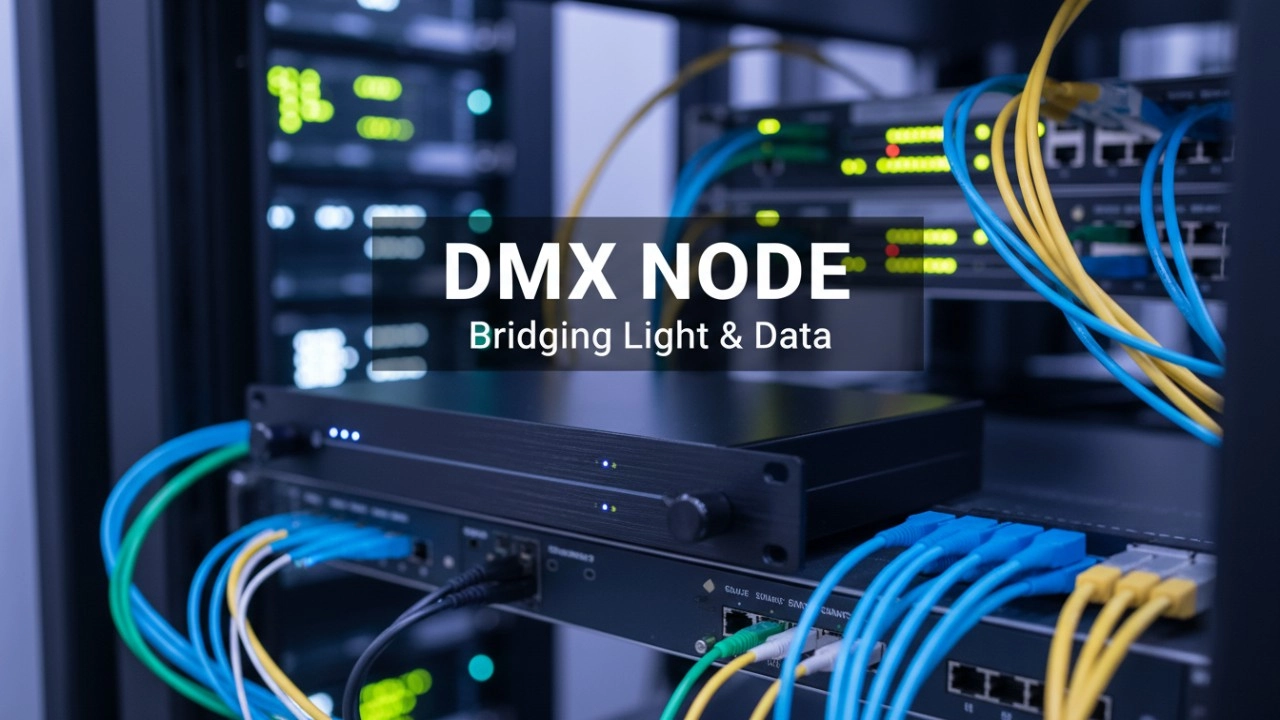
The Master Guide to DMX Nodes (2026 Edition): Everything from Hardware to High-Speed Control
Safety Standards and Certifications for Dimmer Racks
Distributors
What is the minimum order quantity for cooperation?
Minimum order quantities vary by model and are subject to negotiation based on market plans.
Does RGB provide installation or commissioning services?
No. RGB only supplies dimming cabinets and technical documentation. On-site installation is handled by local integrators.
Can distributors request customized products?
RGB primarily offers standardized products. Customization requests are rare and evaluated on a project-by-project basis.
About RGB
What after-sales support do you provide?
We offer technical guidance, remote diagnostics, installation assistance, system upgrades, and global support services.
Can your dimmer cabinets integrate with third-party lighting consoles?
Yes. Our systems follow international protocols and can seamlessly integrate with major global brands through DMX, RDM, Art-Net, and sACN.
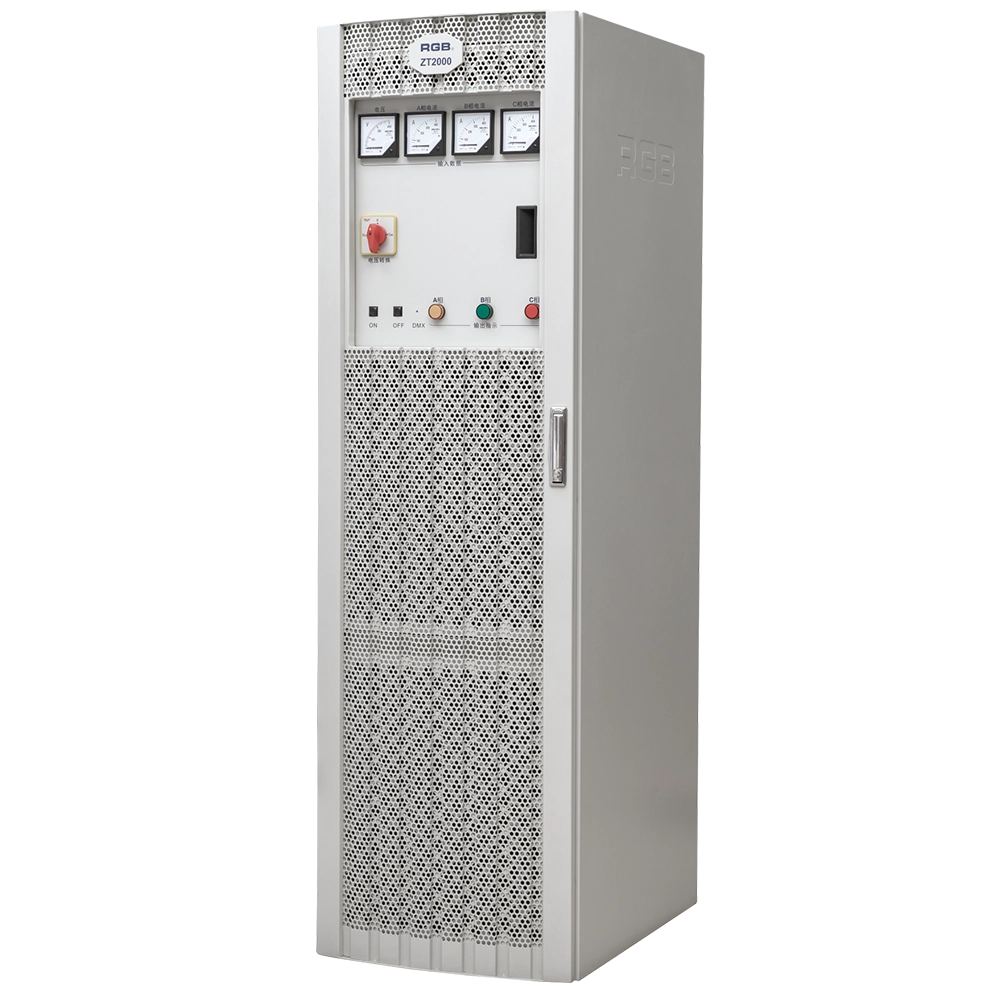
ZT2000 Pass-Through Racks
The ZT2000 straight-through power cabinet is a three-phase 630A/400A air switch main control, with each channel being a 32A air switch sub-control straight-through power cabinet. It can be used in conjunction with various computer lamps, regular lamps, and temporary electrical equipment as a power distribution and supply part for electrical equipment with overcurrent and short-circuit protection. It is a brand-new, reliable, and stable lighting control device in the field of stage lighting control.
It is widely applied in theaters, concert halls, multi-functional halls, cultural and tourism performances, TV stations, gymnasiums, auditoriums, commercial art lighting, and other performance and cultural venues.
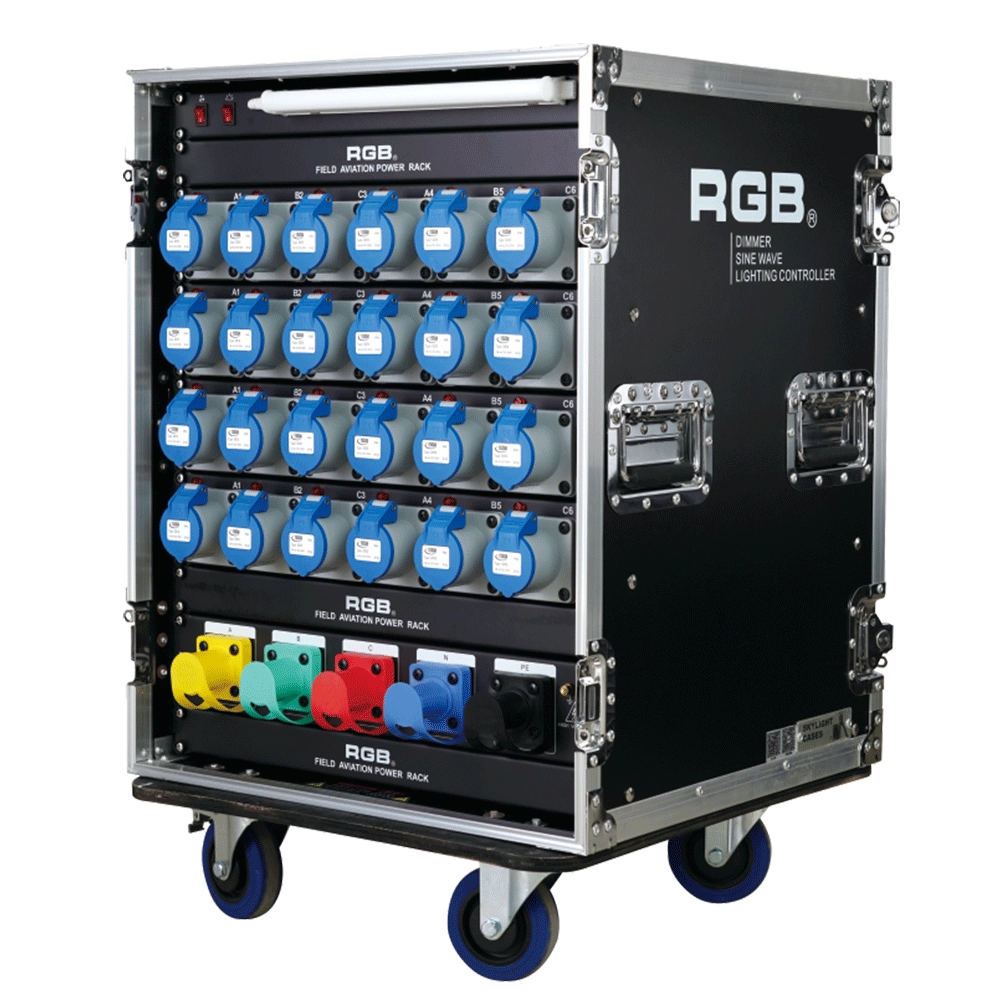
ZT Distribution Box
RGB-ZT2416 features dual protection functions and is a power distribution product specifically designed for overcurrent and short circuit of electrical equipment. It is the best choice for mobile performance and is suitable for use in computer lamps, conventional lamps, and other equipment.
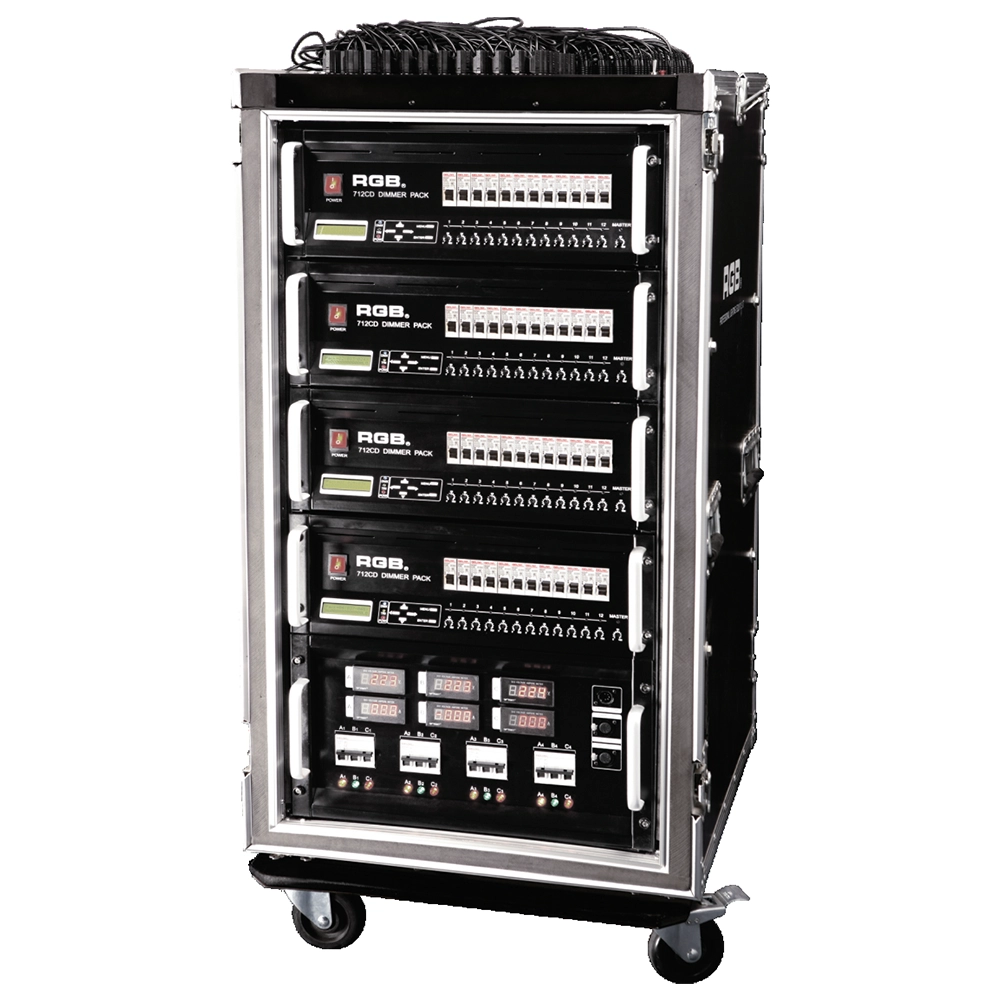
Intelligent Network Touring Dimmer Racks
RGB intelligent network touring dimmer racks can be assembledinto many types of dimmer racks by taking 7 series dimmer
packs as the unit. They are widely used in the entertainment fortheir convenience and practicabillity,
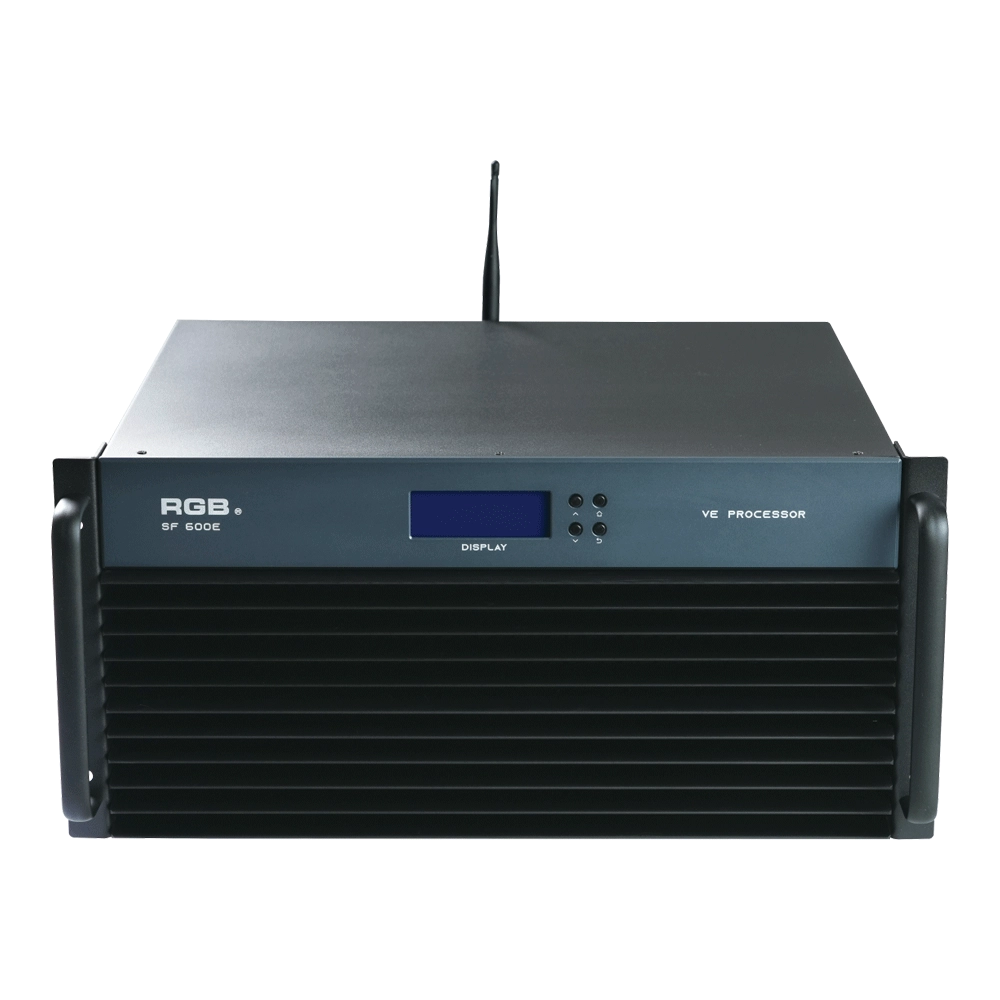
SF600E Visual R-net environment processor
The SF600E Visual R-net environment processor by RGB delivers advanced performance for visual systems. As a leading visual systems manufacturer, RGB ensures seamless integration and high reliability, making SF600E ideal for complex visual processing needs in diverse environments.
Expert Support
Interested in learning more or need expert guidance related to this article? Fill in your details, and our team will provide tailored support.
Intelligent Control. Brilliant Performance.
RGB specializes in stage lighting control systems, delivering intelligent, reliable, and high-performance solutions for theaters and performance spaces worldwide.
Contact
Email:
Tel:
+86 20 3928 0245
+86 20 3928 0247
Address:
No.3, Huashan Road, Shilou Town, Panyu, Guangzhou, China.
Whatsapp: +8615975520131