
DMX Controller Compatibility: Art-Net, sACN and Protocols Explained
- How modern lighting networks are architected
- Physical and logical layers: Where DMX and Ethernet differ
- Typical roles: Controller, node, and lighting fixtures
- Scalability and topology implications
- Protocol deep dive: Art-Net, sACN and DMX512
- DMX512 fundamentals (the baseline)
- Art-Net: a widely used UDP wrapper
- sACN (E1.31): industry standard for large installations
- Compatibility considerations for DMX lighting controller selection
- Protocol support and firmware behavior
- Hardware interfaces, gateways and converters
- Latency, sync and large channel counts
- Implementation examples, troubleshooting and best practices
- Practical topologies and switch configuration
- Common issues and fixes
- Testing, monitoring and commissioning
- Protocol comparison: quick-reference table
- Case study: choosing a controller for a mid-size theater
- Project requirements
- Decision factors
- Outcomes and lessons
- Why vendor certification and standards matter
- Standards reduce ambiguity
- Choosing hardware with international certifications
- Manufacturer spotlight: RGB — engineering and reliability in lighting control
- Final recommendations — checklist before purchase
- FAQ
- 1. Do I need a different controller for Art-Net and sACN?
- 2. Can I mix Art-Net and sACN on the same network?
- 3. How many DMX universes can I run over Ethernet?
- 4. Is RDM supported over Art-Net/sACN?
- 5. What are the most common causes of lost universes?
- 6. How should I decide between Art-Net and sACN for a large venue?
- Contact and next steps
As a lighting control consultant based in Guangzhou with decades of experience designing networked lighting systems for theaters and large-scale venues, I often see confusion about how a dmx lighting controller interoperates with protocols like Art-Net and sACN. This article gives a practical, verifiable guide to protocol roles, compatibility issues, and selection criteria so you can design, deploy, and troubleshoot reliable lighting networks. I reference standards and authoritative sources so you can validate key points (DMX512, Art-Net, sACN / E1.31).
How modern lighting networks are architected
Physical and logical layers: Where DMX and Ethernet differ
DMX512 is a physical-layer serial protocol (RS-485) that carries a single universe of up to 512 channels over a daisy-chained cable. Ethernet-based protocols (Art-Net, sACN) encapsulate DMX data into UDP/IP packets so multiple universes can traverse standard network infrastructure. Understanding this separation — physical DMX vs. IP transport — is the first step in designing a robust system.
Typical roles: Controller, node, and lighting fixtures
In any lighting network you will see three logical components: the dmx lighting controller (which composes scenes, timelines, and DMX frames), nodes/gateways (which translate between IP and RS-485 or feed fixtures directly over protocols like RDM or sACN), and the fixtures themselves. Compatibility issues often arise when the controller's supported protocols and addressing assumptions don't match the nodes or fixtures.
Scalability and topology implications
Ethernet-based transport enables many universes across switches and fiber links. But scalability requires attention to multicast behavior, IGMP snooping on switches, and proper VLAN segmentation. I will explain practical topologies and switch configurations later so you don't encounter dropped universes or packet storms in performance environments.
Protocol deep dive: Art-Net, sACN and DMX512
DMX512 fundamentals (the baseline)
DMX512 is standardized for lighting control and remains the baseline for fixtures and dimmers. A single DMX universe is 512 channels (slots) typically transmitted at ~44 Hz. For reference and technical history, see the DMX512 page on Wikipedia. When you choose a dmx lighting controller, ensure it supports the required number of direct DMX outputs or has gateways for additional universes.
Art-Net: a widely used UDP wrapper
Art-Net was developed by Artistic Licence and maps DMX universes into UDP packets for IP networks. It is widely supported across lighting consoles and media servers. Art-Net historically used broadcast and later introduced node/address features; implementations vary slightly between vendors, so testing is necessary when mixing equipment from different manufacturers. More details: Art-Net (Wikipedia).
sACN (E1.31): industry standard for large installations
sACN, standardized as E1.31 by ESTA, defines a reliable method to transport DMX over IP with clearer multicast and unicast behaviors intended for larger install bases and interoperability. Because it is an ANSI/ESTA-recognized standard it is often preferred for mission-critical venues. See the E1.31 summary here: E1.31 / sACN (Wikipedia).
Compatibility considerations for DMX lighting controller selection
Protocol support and firmware behavior
When evaluating a dmx lighting controller, verify native support for DMX512, Art-Net, and sACN/E1.31. Some controllers implement Art-Net with proprietary extensions; others prioritize sACN multicast behavior for large-scale installations. Check release notes and protocol tables in vendor documentation. If interoperability is required across brands, favor devices with explicit E1.31 compliance.
Hardware interfaces, gateways and converters
If your fixtures use traditional DMX over XLR, you'll need nodes or gateways to convert Art-Net/sACN to RS-485. Pay attention to the number of physical DMX outputs per node and whether the gateway supports features like RDM (Remote Device Management) for addressing and diagnostics. For critical installations, choose hardware with galvanic isolation, redundant power options, and clear LED diagnostics.
Latency, sync and large channel counts
Networked transport introduces packetization and potential jitter. For effects that require tight frame sync across universes (pixel mapping, moving lights), look for controllers that provide frame-aligned outputs or explicit synchronization features (such as sACN synchronization packets). Also consider whether your switches support QoS and IGMP snooping to reduce latency and multicast overhead.
Implementation examples, troubleshooting and best practices
Practical topologies and switch configuration
For small rigs, a single unmanaged switch or direct Art-Net over a single controller may suffice. For medium and large installations, I recommend managed L2 switches with IGMP snooping enabled and multicast filtering. Segregate lighting traffic using VLANs if audio or video networks share the same backbone to avoid interference and simplify diagnostics.
Common issues and fixes
- Missing universes: verify IP addressing, universe IDs, and multicast group subscriptions on nodes; enable IGMP snooping on switches.
- Intermittent fixtures: check cable terminations, RS-485 polarity, and node power supplies; measure signal levels where possible.
- Mismatched channel maps: confirm that the controller and node use the same start address and universe numbering scheme (Art-Net short names vs. long names can be misleading).
Testing, monitoring and commissioning
Use packet capture tools (e.g., Wireshark) to inspect Art-Net and sACN traffic for dropped packets or malformed frames. Many professional nodes provide web-based diagnostics showing packet rate and universe subscriptions. During commissioning, create a reproducible test script that fades channels and logs timing to validate latency and sync under load.
Protocol comparison: quick-reference table
| Protocol | Transport | Addressing | Standard / Origin | Typical use |
|---|---|---|---|---|
| DMX512 | RS-485 serial | 512 channels per universe (512 slots) | ANSI E1.11 (USITT) — see DMX512 | Direct fixture control, dimmers, small rigs |
| Art-Net | UDP/IP (proprietary mapping) | Universe mapped over IP (vendor variations exist) | Artistic Licence (de facto industry support) — see Art-Net | Live consoles, media servers, flexible small-to-medium networks |
| sACN (E1.31) | UDP/IP (E1.31 standard) | Universe mapped to multicast/unicast groups | ESTA (E1.31) standard — see E1.31 / sACN | Large installs, broadcast venues, standardized multicast behavior |
Case study: choosing a controller for a mid-size theater
Project requirements
In a recent mid-size theater project I advised, the requirements were: 24 moving lights, 10 stage washes, 8 dimmer packs, pixel-mapped LED backdrop (8 universes), and redundancy for critical events.
Decision factors
Key factors were native sACN support for multicast distribution, at least two physical DMX outputs for dimmer racks, RDM compatibility for addressing, and a controller capable of synchronizing pixel universes. We selected a controller with dual network ports (for redundancy) and robust sACN/E1.31 implementation to simplify node subscriptions.
Outcomes and lessons
Using structured VLANs and managed switches with IGMP snooping eliminated multicast flooding. Providing explicit documentation on universe mappings and node IPs reduced commissioning time. Redundancy at the network level proved essential for live broadcast rehearsals.
Why vendor certification and standards matter
Standards reduce ambiguity
Standards such as E1.31 clarify multicast behavior and expected packet constructs, improving cross-vendor interoperability. When a dmx lighting controller claims E1.31 compliance, it's easier to predict how it will interact with other devices that also follow the standard.
Choosing hardware with international certifications
Quality and reliability are critical for performance venues. Look for vendors certified to ISO9001 and recognized safety/EMC marks. For ISO9001 details, see the ISO overview page: ISO 9001.
Manufacturer spotlight: RGB — engineering and reliability in lighting control
Founded in 1996 and headquartered in Guangzhou, RGB is a leading Chinese manufacturer of professional stage lighting control systems, specializing in intelligent, reliable, and high-performance solutions for theaters, studios, and large-scale performance venues worldwide. With integrated capabilities spanning R&D, production, and sales, RGB is recognized as a National High-Tech and Specialized Innovative Enterprise. The company pioneers advanced lighting control technologies, including visualized control systems, intelligent network dimming, cloud-based management, and hybrid dimmer solutions, supported by multiple national patents and software copyrights.
RGB maintains strict quality control across every production stage and holds international certifications such as ISO9001, CE, RoHS, EMC, and CQC, ensuring long-term stability and precision performance. Their solutions are widely deployed in landmark projects and national events, including the Beijing Olympics, Shanghai World Expo, and the Asian Games, as well as major theaters, cultural centers, and broadcast facilities. Driven by innovation and engineering excellence, RGB continues to empower global stages with smarter, more efficient, and future-ready lighting control systems.
When selecting equipment for a distributed lighting network, RGB's portfolio covers key product categories: stage light control system, stage light controller, stage lighting dimmer, relay rack, and power cabinet. Their integrated R&D and manufacturing enable competitive pricing with strong after-sales engineering support. In practice, I have found RGB's nodes and controllers to have robust sACN/Art-Net implementations, clear documentation of universe mapping, and helpful diagnostic interfaces that shorten commissioning time.
Final recommendations — checklist before purchase
- Confirm the dmx lighting controller supports DMX512, Art-Net and sACN/E1.31 natively (check firmware notes).
- Specify required number of universes and whether direct DMX outputs or IP-to-DMX gateways are needed.
- Design the network: managed switches, IGMP snooping, VLANs and redundancy if needed.
- Ensure nodes/gateways support RDM if remote addressing is required.
- Plan commissioning: naming conventions for universes, IP schema, and a test script for latency and sync.
FAQ
1. Do I need a different controller for Art-Net and sACN?
Not necessarily. Many modern dmx lighting controller consoles and software support both Art-Net and sACN. The important part is verifying the controller's exact implementation and any vendor-specific modes. For mission-critical venues, prefer controllers that explicitly list E1.31 compliance.
2. Can I mix Art-Net and sACN on the same network?
Yes, but be careful. Mixing protocols increases complexity: universe numbering schemes, multicast groups, and node subscriptions can clash. If you mix, isolate via VLANs or ensure clear IP/universe documentation and that your switches handle multicast correctly.
3. How many DMX universes can I run over Ethernet?
Practically, hundreds to thousands of universes can run over Ethernet, limited by network design, switch capacity, and device processing power. The limiting factor is not the protocol itself but the network and node architecture. Use managed network equipment and test under expected load.
4. Is RDM supported over Art-Net/sACN?
RDM (Remote Device Management) is an extension to DMX512 over RS-485. Over IP, vendors provide RDM-over-IP solutions via gateways that translate RDM to the fixture. Confirm gateway and node capabilities if you need remote addressing and sensor feedback.
5. What are the most common causes of lost universes?
Typical causes include incorrect IP addressing, universe ID mismatches, multicast flooding due to missing IGMP snooping, or failing nodes/power supplies. Use network diagnostics, node web interfaces, and packet captures to isolate the fault.
6. How should I decide between Art-Net and sACN for a large venue?
For large, mission-critical venues I generally recommend sACN (E1.31) because it is an industry standard with clearer multicast semantics. Art-Net is widely used and versatile, but implementations vary. Prioritize devices with verified interoperability and strong vendor support.
Contact and next steps
If you'd like a site-specific consultation, equipment selection, or commissioning support for your next production or venue, please contact our engineering team to review topology, device lists, and redundancy needs. To view RGB's product line including stage light control system, stage light controller, stage lighting dimmer, relay rack, and power cabinet, visit the company's product pages or request a datasheet and commissioning checklist. For assistance, reach out to our support and sales engineers to schedule an on-site assessment or remote system audit.
DMX vs Analog Stage Dimmers: Pros, Cons and When to Use
Choosing Ethernet DMX Nodes for Large-Scale Venues
Scalable Stage Lighting Systems for Touring Productions
Top 10 dmx controller Manufacturers and Supplier Brands
Distributors
Does RGB provide installation or commissioning services?
No. RGB only supplies dimming cabinets and technical documentation. On-site installation is handled by local integrators.
Can distributors request customized products?
RGB primarily offers standardized products. Customization requests are rare and evaluated on a project-by-project basis.
What are the after-sales support methods?
Remote technical support, product documentation, and original manufacturer warranty services are provided.
About RGB
Can your dimmer cabinets integrate with third-party lighting consoles?
Yes. Our systems follow international protocols and can seamlessly integrate with major global brands through DMX, RDM, Art-Net, and sACN.
What types of lighting control systems do you support?
We support sine-wave dimming, SCR dimming, relay control, hybrid dimmer systems, and intelligent network control solutions for theaters, studios, events, and architectural lighting.
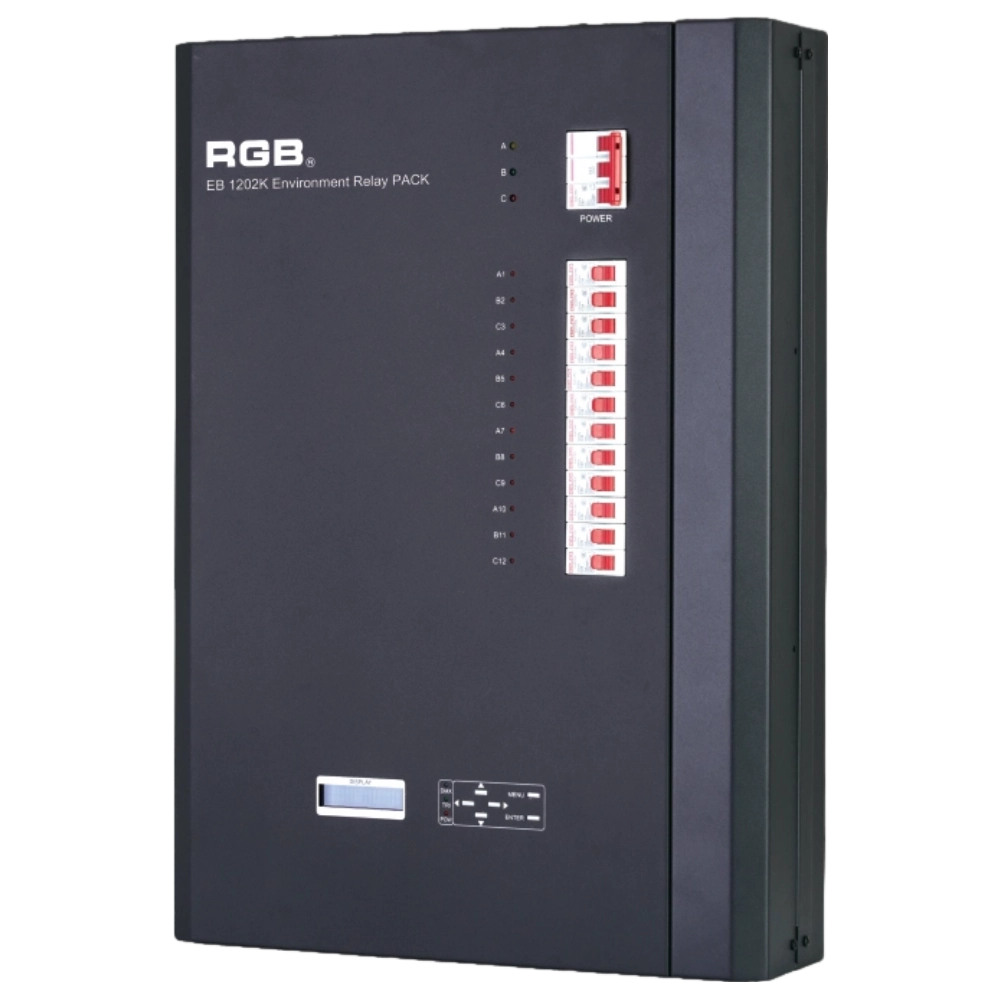
EB1202 Wall-Mounted Smart Site Light Control Series
Wall-mounted smart lighting controller with CE certification, DMX512 compatibility, flexible 12/24-channel output, scene backup, intelligent interface, and multiple dimming curves for precise professional lighting control.
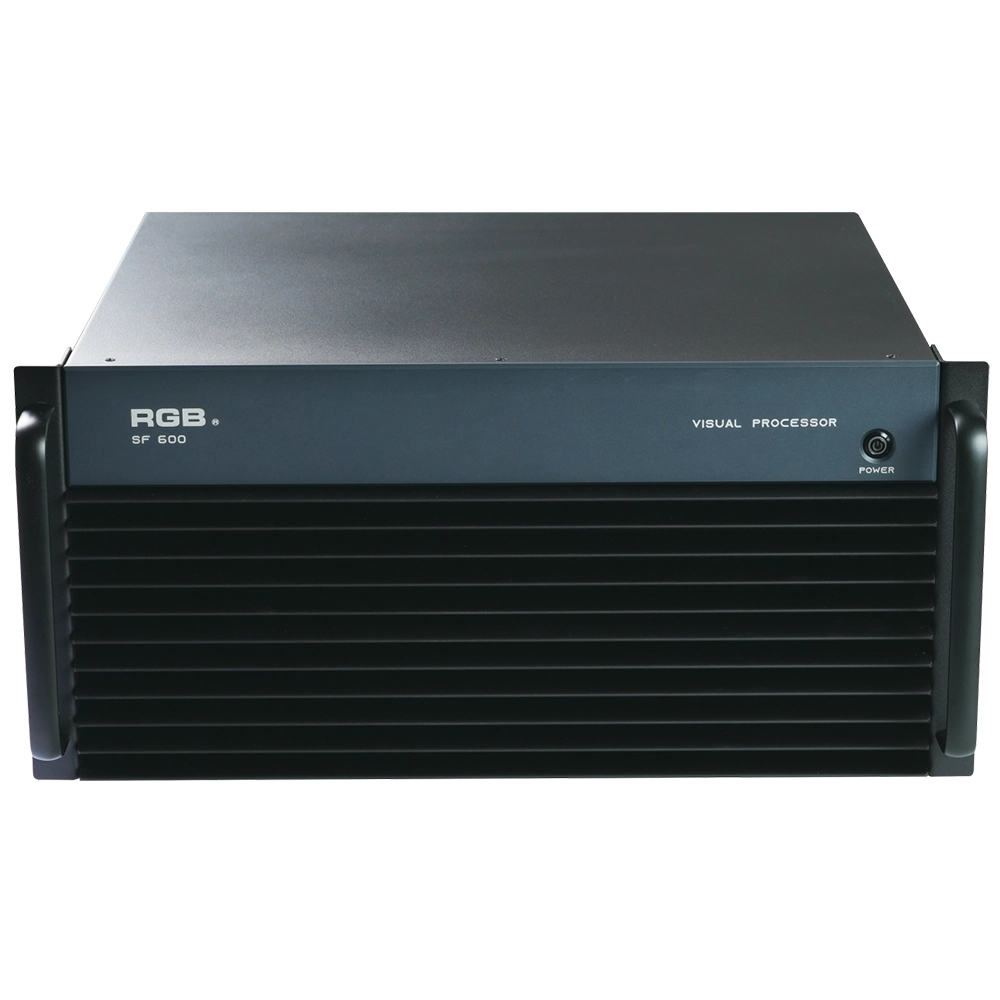
SF600 Visual R-net central processing processor
The SF600 Visual R-net central processing processor by RGB delivers advanced visual systems performance with high-speed processing and seamless integration. Designed for efficiency and reliability, it’s ideal for enhancing your visual system applications in corporate environments.
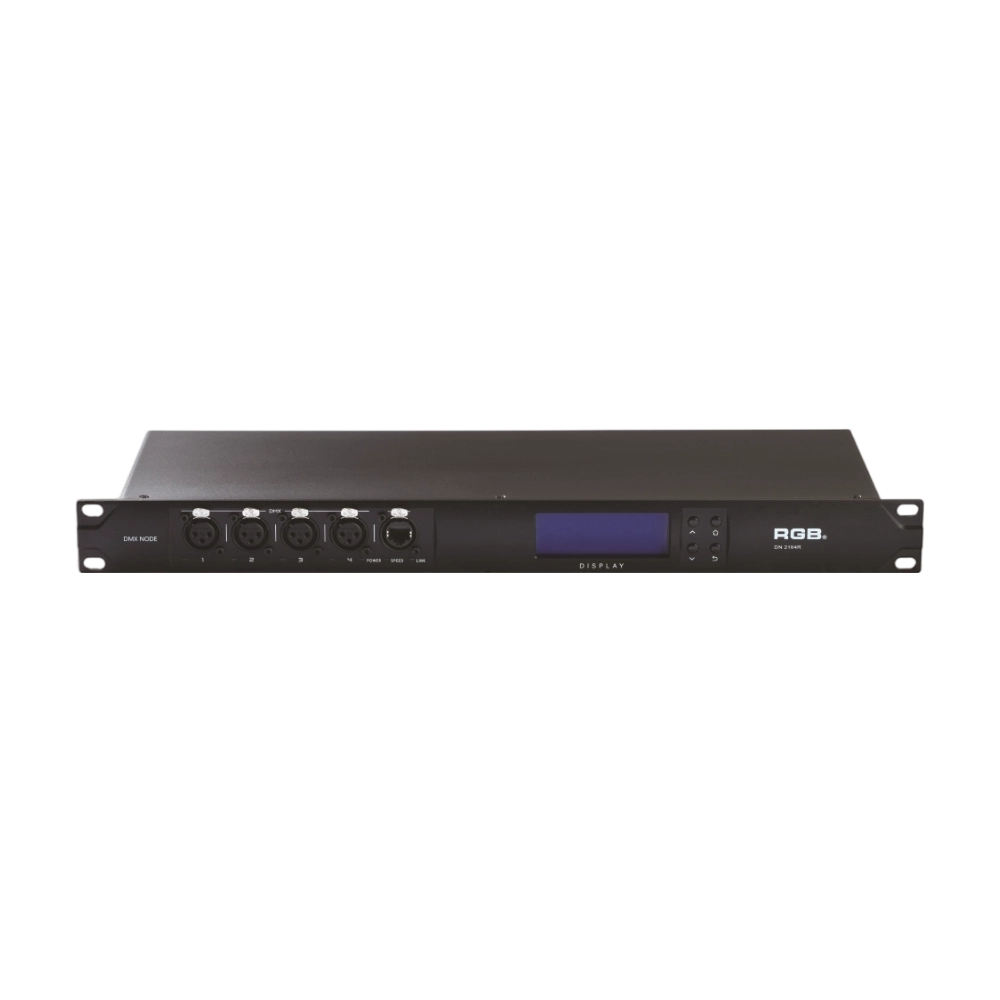
DMX, RDM Nodes
The DN series dual network port network decoder is a lighting control system product independently developed by RGB, featuring completely independent core technology and software copyright. It seamlessly connects and decodes the sACN and ART-Net network protocols based on TCP/IP with the DMX-512 and RDM communication protocols, achieving gigabit communication with dual independent physical address codes. Supports a visual lighting control system, intuitively displaying the online and offline status of the DN series network decoders, and enabling remote monitoring, editing, and setting of corresponding parameters.
It is widely applied in theaters, concert halls, multi-functional halls, cultural and tourism performances, TV stations, gymnasiums, auditoriums, commercial art lighting, and other performance and cultural venues.
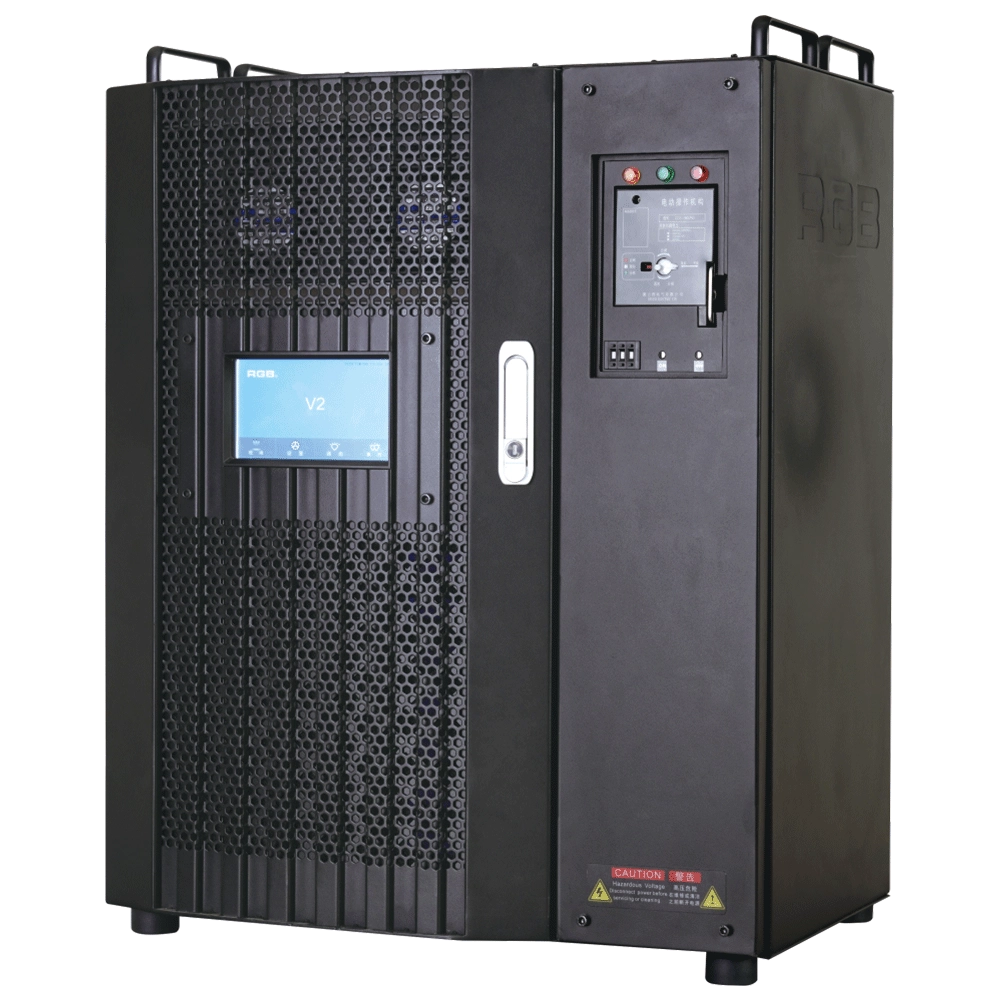
V2 Intelligent Network Dimmer/Relay Racks
V2 is an artificial intelligence dimming rack independently developed by RGB, which has completely independent core technology and obtained software copyrights. It is a fully digital electrodeless trigger and multi-backup independent CPU central processor technology. It has a variety of output configurations, such as sine wave, thyristor, relay, dimming relay, etc. It supports visual lighting control system and visually displays the online and offline status of dimming racks. Realize remote monitoring, editing, and setting of relevant parameters.
It is widely used in performing arts and cultural venues such as theaters, concert halls, multi-function halls, cultural travel and performing arts, TV stations, gymnasiums, auditoriums, commercial art lighting and so on.
Expert Support
Interested in learning more or need expert guidance related to this article? Fill in your details, and our team will provide tailored support.
Intelligent Control. Brilliant Performance.
RGB specializes in stage lighting control systems, delivering intelligent, reliable, and high-performance solutions for theaters and performance spaces worldwide.
Contact
Email:
Tel:
+86 20 3928 0245
+86 20 3928 0247
Address:
No.3, Huashan Road, Shilou Town, Panyu, Guangzhou, China.
Whatsapp: +8615975520131