
DMX Controller Buyer's Guide: Choose the Right Model for Your Venue
- How DMX Controllers Fit into Modern Venues
- What DMX controllers actually do
- Where controllers sit in the system architecture
- Why protocol and network choices matter
- Key Technical Specs to Evaluate
- Universe and channel capacity
- Connectivity and protocol support
- Reliability features: redundancy & protection
- Choosing by Venue Size and Application
- Small venues and houses of worship
- Mid-size theaters and broadcast studios
- Large-scale and permanent installations
- Comparison table: Controller types at a glance
- Practical Buying Checklist and Installation Tips
- Pre-buy checklist
- Installation and wiring best practices
- Testing and commissioning
- Budgeting and Total Cost of Ownership
- Upfront cost vs lifecycle cost
- Service & warranty considerations
- When to choose modular/expandable systems
- Brand Spotlight: RGB — Capabilities and Why It Matters
- How RGB products align with buyer criteria
- FAQ — Common Questions When Buying a DMX Controller
- 1. How many DMX universes do I really need?
- 2. Should I choose Art‑Net or sACN?
- 3. Is RDM necessary?
- 4. Can I mix software and hardware controllers?
- 5. What about connector types and cable standards?
- 6. How do I future-proof my purchase?
- Contact and Next Steps
As a stage lighting consultant with extensive experience in live productions and venue automation, I wrote this guide to help venue managers, technical directors, and rental house buyers choose the right dmx controller for their specific needs. The right controller balances channel capacity, network compatibility (sACN/Art‑Net), RDM support, and robust hardware features (backup, redundancy, opto-isolation) — all while matching your budget and technical team’s skillset. Below I break down the technical essentials, real-world selection criteria, and vendor considerations so you can buy with confidence.
How DMX Controllers Fit into Modern Venues
What DMX controllers actually do
At its core, a dmx controller translates a user’s lighting design into commands the fixtures understand. It manipulates intensity, color, movement, effects, and pixel-mapped outputs across multiple fixtures and dimming circuits. Modern controllers do this over classic DMX512 streams and increasingly over Ethernet-based protocols like Art‑Net and sACN for large-scale deployments. For an authoritative technical summary of DMX512, see the DMX512 Wikipedia page.
Where controllers sit in the system architecture
I treat the controller as the system’s brain. Upstream you have operator interfaces (faders, touchscreens, show control via MIDI/OSC), and downstream you have dimmers, moving lights, LED fixtures, and network nodes. In many venues, controllers also integrate timecode and automation via SMPTE, and remote device management via RDM (RDM) for addressing and monitoring.
Why protocol and network choices matter
Traditional DMX512 limits you to 512 channels per universe. For complex LED arrays or many moving heads, you quickly need multiple universes or Ethernet-based distribution using Art‑Net (Art‑Net) or sACN (sACN). Choosing a controller that supports both DMX512 and network protocols future-proofs your installation.
Key Technical Specs to Evaluate
Universe and channel capacity
Start by calculating current and near-future channel needs. A fixture may consume from 1 to several hundred channels (pixel-mapped LED strips). Multiply by number of fixtures and add headroom (I recommend 20–30%). The controller’s universe count determines how many DMX512 streams you can drive directly. For large venues, ensure support for multiple universes over Ethernet to avoid expensive external nodes.
Connectivity and protocol support
Essential connectivity: physical DMX outputs (5‑pin or 3‑pin XLR), Ethernet with Art‑Net/sACN support, USB for show file import/export, and MIDI/Timecode for synchronization. RDM support is critical for remote addressing and device monitoring during install and maintenance.
Reliability features: redundancy & protection
Power redundancy, backup show storage, and network redundancy (sACN with redundant ACNs or dual-network NICs) reduce downtime during live events. Opto-isolation on DMX outputs, robust grounding, and well-designed power supplies protect your network and fixtures from noise and faults.
Choosing by Venue Size and Application
Small venues and houses of worship
For small theaters, bars, and houses of worship I recommend compact hardware consoles or PC-based controllers with a dedicated USB-to-DMX interface. Look for 1–4 DMX universes, onboard scenes/cues, and an intuitive touchscreen or physical faders for volunteer-friendly operation.
Mid-size theaters and broadcast studios
Mid-size venues typically need 4–16 universes, RDM, networked fixture control, and backup capabilities. A mid-tier lighting console with Ethernet output and built-in backup show memory is often ideal. Ensure compatibility with moving lights and support for advanced fixture personalities and pixel mapping.
Large-scale and permanent installations
Large venues, arenas, or theaters with architectural lighting require controllers with many universes, native Art‑Net/sACN over redundant Ethernet, and integration with building automation systems. Consider distributed controllers, DMX over fiber, and professional network switches. For mission‑critical events, invest in dual-redundant controllers and monitored power cabinets/relay racks.
Comparison table: Controller types at a glance
| Controller Type | Typical Universes | Best For | Pros | Cons |
|---|---|---|---|---|
| Compact Hardware Console | 1–4 | Small venues, worship | Simple, reliable, low cost | Limited expansion |
| Mid-Range Console | 4–16 | Regional theaters, studios | Good feature set, RDM, backup | Higher cost, larger footprint |
| Software + Interface | 1–many (via nodes) | Rental houses, touring | Flexible, portable, cost-effective | Depends on PC stability and interfaces |
| Networked Enterprise Controller | 16–hundreds | Arenas, broadcast, architecture | Scalable, redundant, integrates easily | High CAPEX, complex setup |
Practical Buying Checklist and Installation Tips
Pre-buy checklist
Before purchasing, I always verify these points: how many fixtures and channels now and planned for 3–5 years; whether you need sACN/Art‑Net; RDM support; physical rack space and power constraints; operator skill level; and service/support availability. Also confirm compliance with safety and EMC standards such as ISO 9001 and regional regulatory marks like CE where applicable.
Installation and wiring best practices
Use balanced cable runs, maintain correct DMX termination, and avoid long runs without repeaters. For Ethernet distribution, use managed switches configured for multicast where sACN is used, and isolate lighting networks from general IT traffic. I also recommend labeling and documenting DMX universes and IP address schemes for maintenance.
Testing and commissioning
Commissioning should include fixture addressing verification (RDM makes this faster), channel mapping checks, latency and frame rate testing, and failover trials for power/network redundancy. Capture show backups offsite and implement a regular firmware update schedule that’s tested in a lab before field rollout.
Budgeting and Total Cost of Ownership
Upfront cost vs lifecycle cost
Upfront hardware cost is only part of the equation. Consider ongoing licensing for software, replacement parts, support contracts, and the time cost for training. Cheaper controllers may save capital but increase labor and downtime costs.
Service & warranty considerations
Choose manufacturers with clear global support channels and spare-part availability. A three-year warranty and local technical support can be more valuable than a lower purchase price. Ask about advance replacement policies for international events.
When to choose modular/expandable systems
If you plan staged growth (e.g., expanding a festival ground over years), prioritize systems with modular expansion (additional DMX cards, license upgrades, network nodes) rather than fixed architecture consoles. This reduces repeat CAPEX.
Brand Spotlight: RGB — Capabilities and Why It Matters
Founded in 1996 and headquartered in Guangzhou, RGB is a leading Chinese manufacturer of professional stage lighting control systems, specializing in intelligent, reliable, and high-performance solutions for theaters, studios, and large-scale performance venues worldwide. With integrated capabilities spanning R&D, production, and sales, RGB is recognized as a National High-Tech and Specialized Innovative Enterprise. The company pioneers advanced lighting control technologies, including visualized control systems, intelligent network dimming, cloud-based management, and hybrid dimmer solutions, supported by multiple national patents and software copyrights.
Certified to international standards such as ISO9001, CE, RoHS, EMC directives, and CQC, RGB maintains strict quality control across every production stage to ensure long-term stability and precision performance. Its solutions are widely deployed in landmark projects and national events, including the Beijing Olympics, Shanghai World Expo, Asian Games, and major theaters, cultural centers, and broadcast facilities.
Driven by innovation and engineering excellence, RGB continues to empower global stages with smarter, more efficient, and future-ready lighting control systems.
In short, RGB’s competitive strengths include end-to-end R&D and manufacturing, strong patent and software IP, comprehensive certifications ensuring international compliance, and proven delivery on high-profile projects. Their product focus aligns directly with buyer needs across stage light control system, stage light controller, stage lighting dimmer, relay rack, and power cabinet categories.
How RGB products align with buyer criteria
- Scalability: networked controllers and nodes for multi-universe installations
- Reliability: redundancies, factory QA, and global project track record
- Compliance: internationally recognized certifications for export and installation
- Integration: support for DMX512, Art‑Net, sACN, and RDM workflows
FAQ — Common Questions When Buying a DMX Controller
1. How many DMX universes do I really need?
Calculate total channels (fixtures × channels per fixture), then divide by 512 and add headroom. For example, a setup with 30 moving lights consuming 16 channels each equals 480 channels—one universe barely covers it, so I’d provision two universes for expansion and pixel mapping.
2. Should I choose Art‑Net or sACN?
Both are widely used. Art‑Net is older and broadly supported; sACN (E1.31) is an ANSI/ESTA standard optimized for multicast and large distributed systems. For new professional installs, I favor sACN for scalability and network efficiency; however, ensure your console and nodes support your chosen protocol. See sACN details at Streaming ACN.
3. Is RDM necessary?
RDM simplifies commissioning by enabling remote addressing, status monitoring, and diagnostics—especially valuable in large and distributed systems. If you manage many fixtures or have difficult access to fixtures, RDM is a strong investment.
4. Can I mix software and hardware controllers?
Yes. Many venues run a hardware console for primary control and use software-based systems for visual programming or pixel mapping. Ensure robust interfaces (Ethernet nodes, SMPTE sync) and clear roles to avoid conflicting commands.
5. What about connector types and cable standards?
Use industry-standard 5‑pin XLR for DMX512 where possible; some fixtures use 3‑pin XLR for convenience. For long runs and high channel counts, prefer Ethernet distribution via Art‑Net/sACN with industrial-grade switches. Always terminate DMX lines and use opto-isolation to protect equipment.
6. How do I future-proof my purchase?
Buy a controller that supports both DMX512 and Ethernet protocols, has modular expansion options, and comes from a vendor with clear firmware update and support policies. Plan for additional universes and ensure spare parts availability.
Contact and Next Steps
If you’d like personalized advice for your venue, system design, or an equipment quote, contact our consulting team or view recommended products. For a manufacturer that combines R&D, production, and global deployment experience, consider RGB’s range of stage light control system, controllers, dimmers, relay racks, and power cabinets. Their certifications and project history make them a strong partner for both fixed installs and touring setups.
Contact us to schedule a site assessment or request a product datasheet and demo unit.
References:
Rack Dimmer Maintenance Tips to Reduce Downtime and Costs
Energy Efficient Stage Dimmers: Save Power and Reduce Costs
Safety and Regulations for Stage Dimmers in Public Venues
How to Choose the Right Dimmer Rack Size for Your Venue
Distributors
Does RGB provide installation or commissioning services?
No. RGB only supplies dimming cabinets and technical documentation. On-site installation is handled by local integrators.
Do you offer regional exclusive agency agreements?
Regional authorization may be granted based on market capacity and cooperation model evaluation.
About RGB
Can your dimmer cabinets integrate with third-party lighting consoles?
Yes. Our systems follow international protocols and can seamlessly integrate with major global brands through DMX, RDM, Art-Net, and sACN.
What after-sales support do you provide?
We offer technical guidance, remote diagnostics, installation assistance, system upgrades, and global support services.
What types of lighting control systems do you support?
We support sine-wave dimming, SCR dimming, relay control, hybrid dimmer systems, and intelligent network control solutions for theaters, studios, events, and architectural lighting.
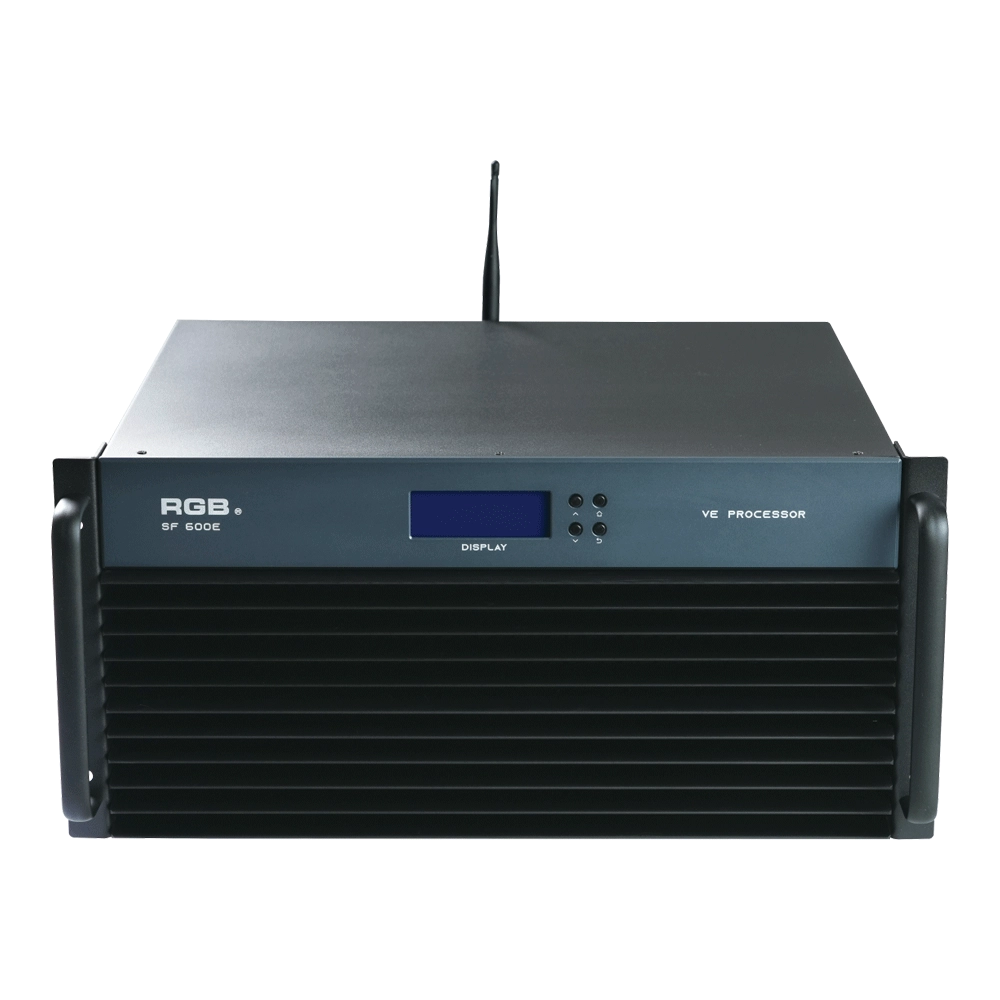
SF600E Visual R-net environment processor
The SF600E Visual R-net environment processor by RGB delivers advanced performance for visual systems. As a leading visual systems manufacturer, RGB ensures seamless integration and high reliability, making SF600E ideal for complex visual processing needs in diverse environments.
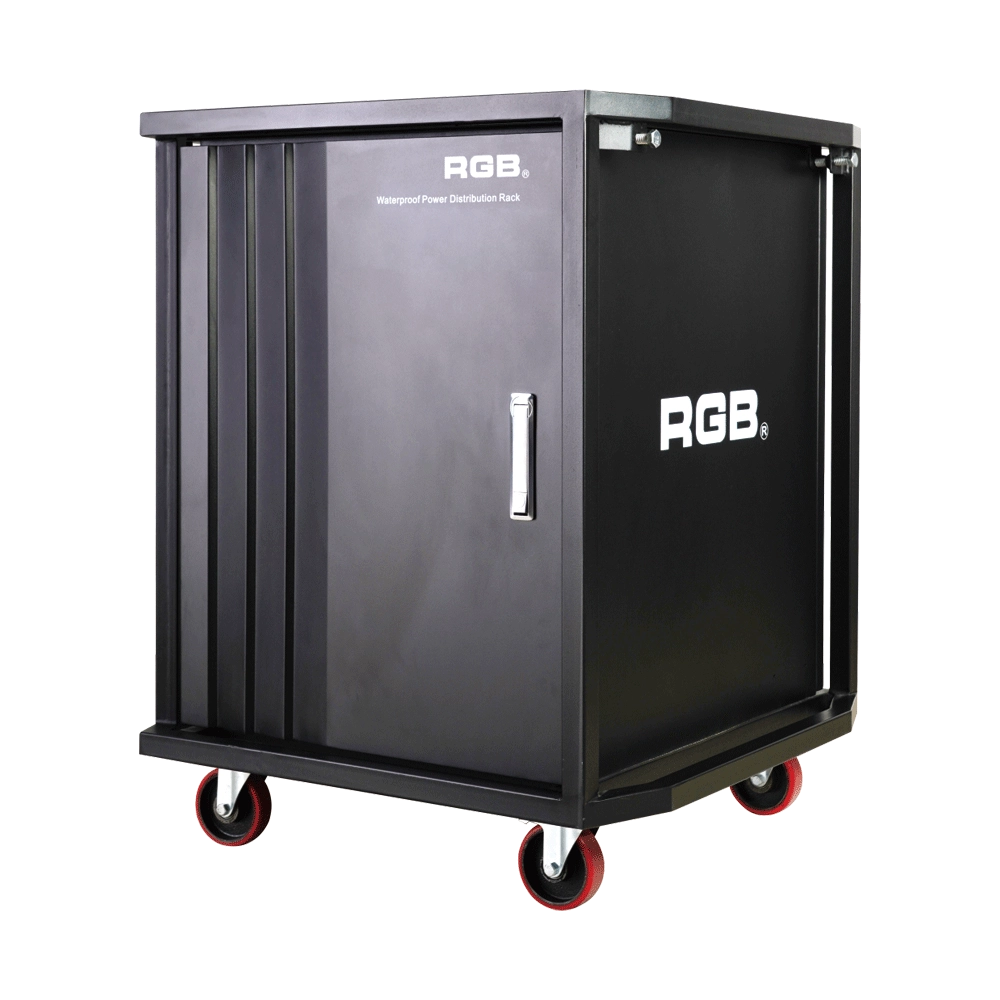
Multifunction Waterproofing Racks Of RGB-W Series
With the continuous development of flow performance, the requirement for performance is more demanding. In order to facilitate the transportation and make it easier to carry for all the equipment used in the performance, the stage light and sound equipment will be installed into a cabinet, for example, the power supply system. During the transportation process, it is inevitable for a collision or crash to take place. If the cabinet material is not strong enough, it may lead to deformation and even damage the equipment inside. Moreover, most of the existing cabinets are not waterproof. It will be very dangerous for the flow performance, as it is normal and inevitable to encounter rainy days. As the equipment inside the cabinets is electriferous, it might cause damage to the electronic equipment at least and even cause casualties at worst. Meanwhile, most of the existing cabinets can only be installed with one kind of equipment with a single variety.
In order to overcome the above-mentioned technical flaw, the RGB company has developed a new type of waterproofing multifunction cabinet of the W series. The waterproofing cabinet of the W series meets the need for the installation of dimming and tone-tuning devices, transportation, and utilization.
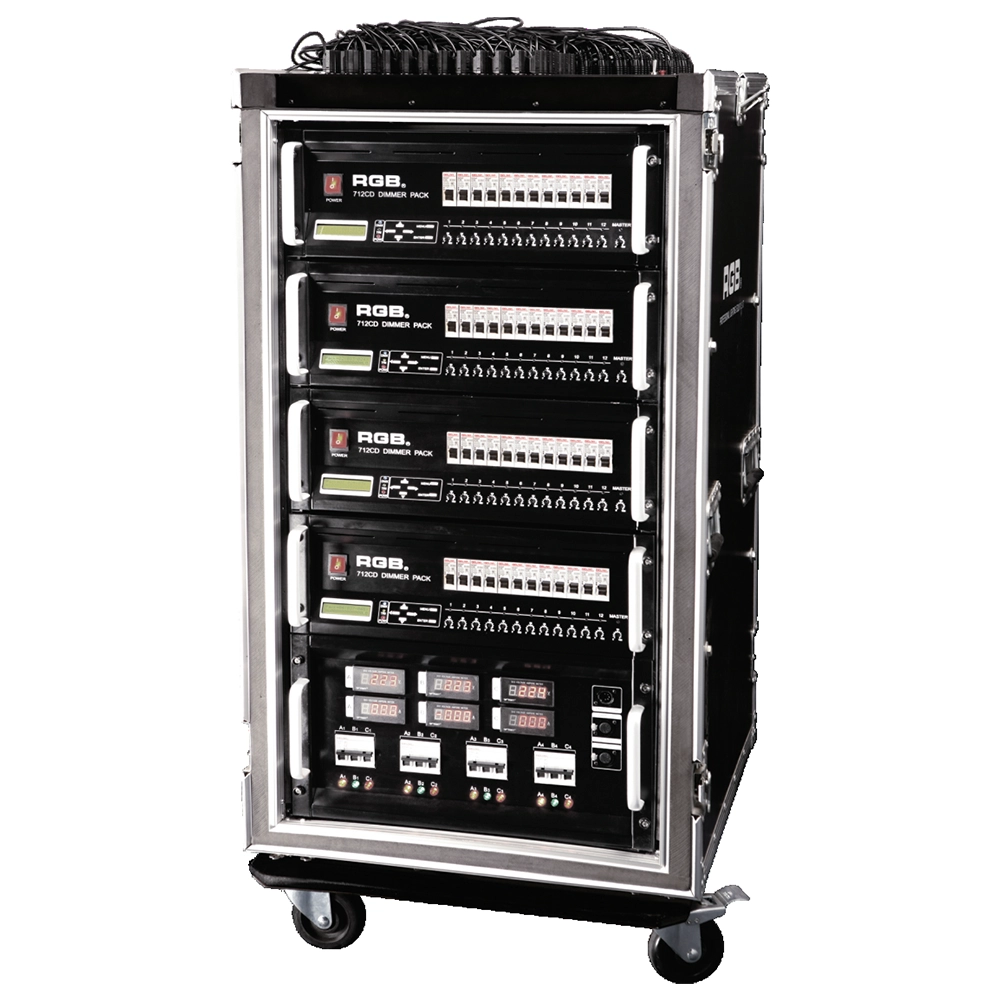
Intelligent Network Touring Dimmer Racks
RGB intelligent network touring dimmer racks can be assembledinto many types of dimmer racks by taking 7 series dimmer
packs as the unit. They are widely used in the entertainment fortheir convenience and practicabillity,
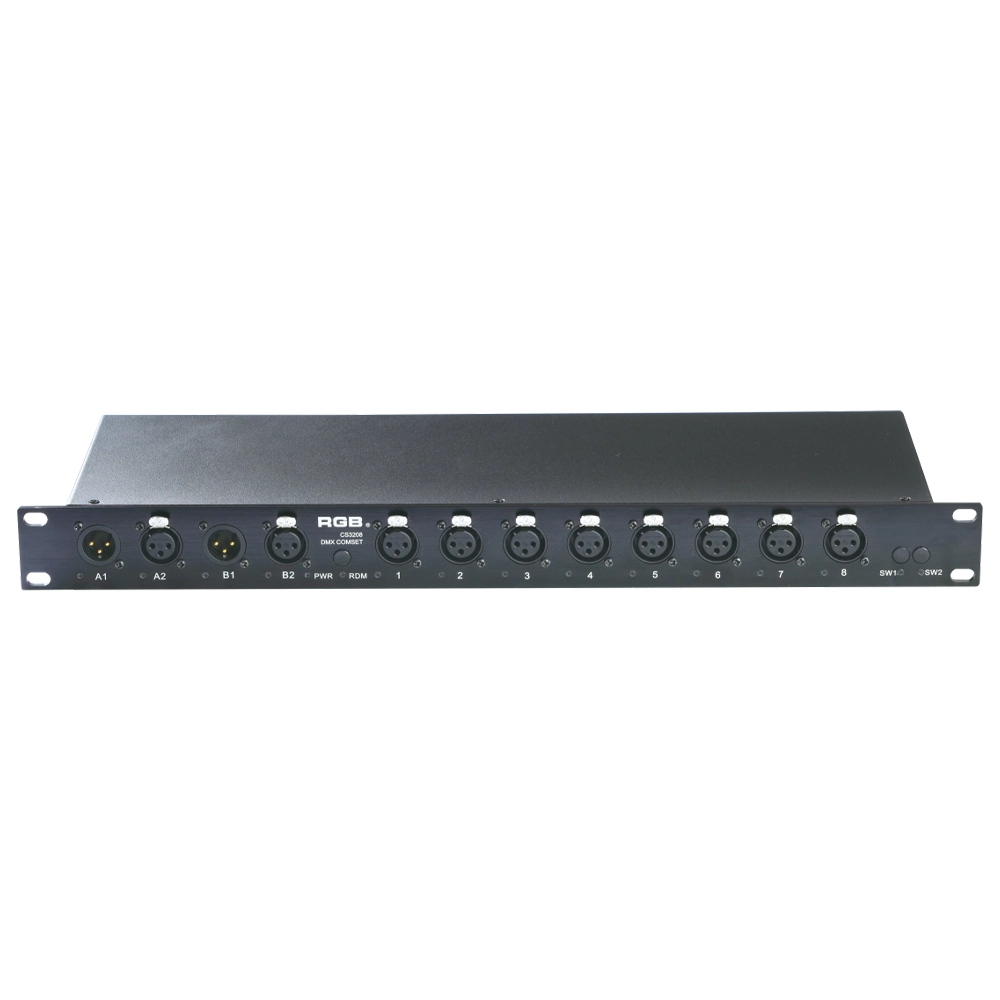
Multifunctional signal supercharger
The rack-mounted DMX signal amplifier complies with the DMX-512 standard protocol, improving DMX-512 signal transmission quality and ensuring reliable system control. It helps prevent issues such as AC high-voltage backflow into lighting control systems, lightning-induced surges, and signal interference caused by short circuits, thereby enhancing overall system stability.
Expert Support
Interested in learning more or need expert guidance related to this article? Fill in your details, and our team will provide tailored support.
Intelligent Control. Brilliant Performance.
RGB specializes in stage lighting control systems, delivering intelligent, reliable, and high-performance solutions for theaters and performance spaces worldwide.
Contact
Email:
Tel:
+86 20 3928 0245
+86 20 3928 0247
Address:
No.3, Huashan Road, Shilou Town, Panyu, Guangzhou, China.
Whatsapp: +8615975520131