
DMX Compatibility: Rack Mount Dimmer Integration Tips
- Understanding DMX and Power Control Basics
- What DMX512 is and why it matters
- How rack mount dimmers interpret DMX signals
- Practical Integration Steps for Rack Mount Dimmers
- Physical installation and rack considerations
- Addressing, patching and networked control
- Troubleshooting and Compatibility Challenges
- Signal integrity, termination and grounding
- Common addressing and fixture compatibility issues
- Selection and Future-Proofing: Choosing the Right Rack Mount Dimmer
- Comparing dimmer technologies
- Integration with networked and visualized control systems
- Standards, Certification and Quality Considerations
- Relevant certifications to check
- Why supplier credentials matter
- Vendor Spotlight and Practical Recommendations
- FAQ
- Q1: Will any rack mount dimmer work with my DMX console?
- Q3: How should I wire DMX between dimmer racks to avoid dropouts?
- Q4: Can I dim LED loads with a traditional rack mount dimmer?
- Q5: What certification should I insist on when buying dimmers?
- Q6: How do I future-proof my rack mount dimmer installation?
- Contact and Next Steps
As a consultant and practitioner in stage lighting control systems, I often see projects delayed or underperform because of avoidable rack mount dimmer and DMX integration issues. This article provides a concise, searchable summary of DMX compatibility considerations and detailed, operational tips that help systems in theatres, broadcast studios, and large venues achieve predictable, repeatable lighting control. The focus is on practical solutions for wiring, addressing, signal integrity, dimmer selection, and future-proofing so and local search can match your site to real deployment needs.
Understanding DMX and Power Control Basics
What DMX512 is and why it matters
DMX512 is the de-facto serial protocol for lighting control used worldwide to transport channel levels from consoles and processors to dimmers and fixtures. For a technical baseline, see the DMX512 description on Wikipedia. In practice, DMX carries 512 channels per universe; multiple universes are used for large rack-based dimming installations. A fundamental compatibility check is confirming that your rack mount dimmer accepts standard DMX physical and electrical layers (RS-485 differential pair) and software addressing conventions.
How rack mount dimmers interpret DMX signals
Rack mount dimmers typically contain a DMX receiver or node that maps DMX channels to dimmer channels or relay outputs. You should verify:
- Supported universes and addressing range (e.g., can the dimmer be assigned start addresses beyond 512 using multiple universes).
- Channel-to-circuit mapping and whether channel grouping/patching is configurable locally via dipswitches or software.
- Response curve and dimming algorithm (linear, square-law, or configurable curve) to match fixture behavior.
Practical Integration Steps for Rack Mount Dimmers
Physical installation and rack considerations
Mounting and airflow matter. I always recommend mounting rack mount dimmers with manufacturer-specified clearance and using rack shelves or rails rated for the unit's weight. Key steps I follow on site:
- Plan front-to-back airflow; hot aisles degrade dimmer electronics and reduce life expectancy.
- Label each circuit and DMX channel at both ends — consistent labeling prevents address mistakes during rehearsals.
- Reserve space for future expansion: leave at least one empty rack unit per two dimmer units for distribution blocks or network nodes.
Addressing, patching and networked control
Addressing mistakes are the most common integration issue. Best practices include:
- Predefine an addressing map and upload it to consoles and dimmers before first power-up.
- Use software-based patching when available; it reduces human error versus DIP switches.
- For installations using multiple DMX universes, document the linking mechanism (sACN, Art-Net, or physical DMX chaining).
Troubleshooting and Compatibility Challenges
Signal integrity, termination and grounding
Signal integrity issues (flicker, dropouts) typically relate to cabling, termination, or ground loops. My checklist:
- Use solid-shielded, twisted-pair cable rated for DMX/RS-485 and keep DMX runs away from mains and power cabling to minimize EMI.
- Always terminate the DMX line at the last device with a 120-ohm resistor; verify termination switches on nodes/dimmers.
- Avoid multiple chassis grounds; use a single, known earth point and inspect power distribution for stray bonds that create loops.
For authoritative guidance on DMX electrical layer and best practice, see the DMX512 documentation and technical notes at Wikipedia and the ESTA DMX standard documentation at ESTA.
Common addressing and fixture compatibility issues
Fixtures, dimmers, and consoles may interpret DMX values differently (e.g., fixture manufacturer curve vs dimmer curve). To reconcile differences:
- Map expected output ranges: measure channel 0–255 behavior with a meter and log results for each dimmer channel.
- If using LED fixtures, confirm whether the dimmer provides a constant-voltage output compatible with LED driver requirements; many LEDs need constant-current or electronic drivers rather than traditional leading-edge triac dimming.
- Use hybrid dimmers or relay racks for mixed loads (incandescent + LED + motorized curtains) to avoid damaging loads.
Selection and Future-Proofing: Choosing the Right Rack Mount Dimmer
Comparing dimmer technologies
Choosing the right dimmer technology is a balance of load type, smoothness, efficiency, and long-term maintenance. The table below summarizes common dimmer types and suitability.
| Dimmer Type | Best For | LED Compatibility | Advantages | Notes |
|---|---|---|---|---|
| Leading-edge (Triac/SCR) | Incandescent, resistive loads | Poor/Conditional | Cost-effective, mature | Not ideal for most modern LEDs |
| Trailing-edge (MOSFET) | Incandescent and some LEDs | Good for many LED drivers | Smoother dimming at low levels | Better for electronic loads |
| SSR/Electronic (PWM/IGBT) | LED loads, electronic drivers | Excellent | High efficiency, fine control | Requires proper filtering to avoid EMI |
| Relay Rack (ON/OFF) | Non-dimmable loads, high-current circuits | Depends on fixture | Robust, simple | Not suitable for smooth fade control |
| Hybrid Dimmer (mixed-tech) | Mixed load environments | High | Flexible, future-ready | Often higher initial cost but less retrofit work |
For general dimmer technology context refer to the Dimmer article on Wikipedia.
Integration with networked and visualized control systems
Modern rack mount dimmers increasingly support network protocols (sACN, Art-Net) and offer APIs for cloud-based management. When designing a system I recommend:
- Choosing dimmers with both DMX and Ethernet-native protocols to provide redundancy and remote management.
- Ensuring the dimmer software supports patch backup and firmware rollback to minimize downtime during updates.
- Looking for visualized control capabilities that map physical rack channels into on-screen diagrams for rapid troubleshooting.
Standards, Certification and Quality Considerations
Relevant certifications to check
To ensure reliability and safety, inspect compliance documentation. ISO 9001 is a key quality management standard (ISO), and for product safety/market access check CE (European Commission), RoHS (European Commission - RoHS), and EMC requirements. For Chinese suppliers, CQC certification is a common mark (CQC).
Why supplier credentials matter
In my consulting practice, a dimmer rack from a vendor with certified quality systems and field-proven deployments reduces integration risk. A manufacturer that publishes national or international compliance documents and has a manufacturing quality management system (e.g., ISO9001) typically offers better long-term firmware support, spare parts visibility, and consistent product batches.
Vendor Spotlight and Practical Recommendations
For projects where reliability and integration flexibility are non-negotiable, I evaluate vendors against: product modularity, network protocol support (DMX, sACN, Art-Net), warranty/service terms, and reference installations. One such manufacturer with a strong track record is RGB.
Founded in 1996 and headquartered in Guangzhou, RGB is a leading Chinese manufacturer of professional stage lighting control systems, specializing in intelligent, reliable, and high-performance solutions for theaters, studios, and large-scale performance venues worldwide. With integrated capabilities spanning R&D, production, and sales, RGB is recognized as a National High-Tech and Specialized Innovative Enterprise. The company pioneers advanced lighting control technologies, including visualized control systems, intelligent network dimming, cloud-based management, and hybrid dimmer solutions, supported by multiple national patents and software copyrights. Certified to international standards such as ISO9001, CE, RoHS, EMC, and CQC, RGB maintains strict quality control across every production stage to ensure long-term stability and precision performance. Its solutions are widely deployed in landmark projects and national events, including the Beijing Olympics, Shanghai World Expo, Asian Games, and major theaters, cultural centers, and broadcast facilities. Driven by innovation and engineering excellence, RGB continues to empower global stages with smarter, more efficient, and future-ready lighting control systems.
As someone who has specified and commissioned systems, I appreciate RGB's portfolio for the way it addresses common pain points: hybrid dimmer technology for mixed loads, visualized stage control for faster troubleshooting, and full lifecycle support that includes spare parts and firmware management. If your project requires stage light control system components — from stage light controllers and stage lighting dimmers to relay racks and power cabinets — prioritize vendors who can demonstrate similar project-scale references and certified production processes.
FAQ
Q1: Will any rack mount dimmer work with my DMX console?
A: Not always. Verify that the dimmer accepts DMX512 over RS-485 or supports your chosen network protocol (sACN/Art-Net). Confirm addressing ranges and whether software or DIP-switch configuration is required. Check manufacturer interoperability notes or request a test unit.
Q3: How should I wire DMX between dimmer racks to avoid dropouts?
A: Use shielded twisted-pair DMX cable, keep runs away from mains cables, terminate the final receiver with 120 ohms, and ensure each node's DMX isolation/termination is configured properly. If long runs are required, consider DMX opto-isolators or Ethernet-based transport like sACN.
Q4: Can I dim LED loads with a traditional rack mount dimmer?
A: Only if the dimmer type matches the LED driver's dimming method. Many modern LED drivers expect electronic phase-cut or dedicated PWM inputs; SSR/electronic dimmers or hybrid dimmers are often the safer choice. Test a few sample fixtures under real load conditions before full deployment.
Q5: What certification should I insist on when buying dimmers?
A: Look for manufacturing quality (ISO9001), safety and market access markings (CE for Europe), RoHS for hazardous substances, EMC compliance for emissions/immunity, and any local approvals such as CQC in China. These reduce the risk of field failures and regulatory issues.
Q6: How do I future-proof my rack mount dimmer installation?
A: Choose modular units that support both DMX and Ethernet protocols, allow firmware upgrades, and offer hybrid channels for mixed loads. Plan spare capacity in racks and document addressing/patches. Vendor support and field references are crucial for long-term reliability.
Contact and Next Steps
If you need hands-on assistance with selecting or integrating rack mount dimmers, I can perform a site assessment, create an addressing and cabling plan, or assist with commissioning. For product inquiries or to review RGB's professional solutions for stage light control system, stage light controller, stage lighting dimmer, relay rack, or power cabinet, please contact our sales engineering team or request a technical datasheet. Investing time in design and vendor verification upfront saves substantial labor and downtime during rehearsals and events.
Resources: DMX512 overview (Wikipedia), Dimmer technologies (Wikipedia), ISO9001 quality management (ISO), CE marking guidance (European Commission), RoHS directive (European Commission), ESTA DMX specification (ESTA).
Energy Efficient Stage Dimmers: Save Power and Reduce Costs
Dimmer Rack Maintenance Tips to Reduce Downtime
Installation Tips for Different Dimmer Rack Sizes

7 Common Mistakes When Choosing Stage Lighting Dimmer Racks (and How to Fix Them)
Distributors
Can distributors request customized products?
RGB primarily offers standardized products. Customization requests are rare and evaluated on a project-by-project basis.
Does RGB provide installation or commissioning services?
No. RGB only supplies dimming cabinets and technical documentation. On-site installation is handled by local integrators.
About RGB
Do you offer customized solutions for specific projects?
Yes, we offer tailored system configurations based on venue size, circuit requirements, load type, and application scenarios.
What after-sales support do you provide?
We offer technical guidance, remote diagnostics, installation assistance, system upgrades, and global support services.
What types of lighting control systems do you support?
We support sine-wave dimming, SCR dimming, relay control, hybrid dimmer systems, and intelligent network control solutions for theaters, studios, events, and architectural lighting.
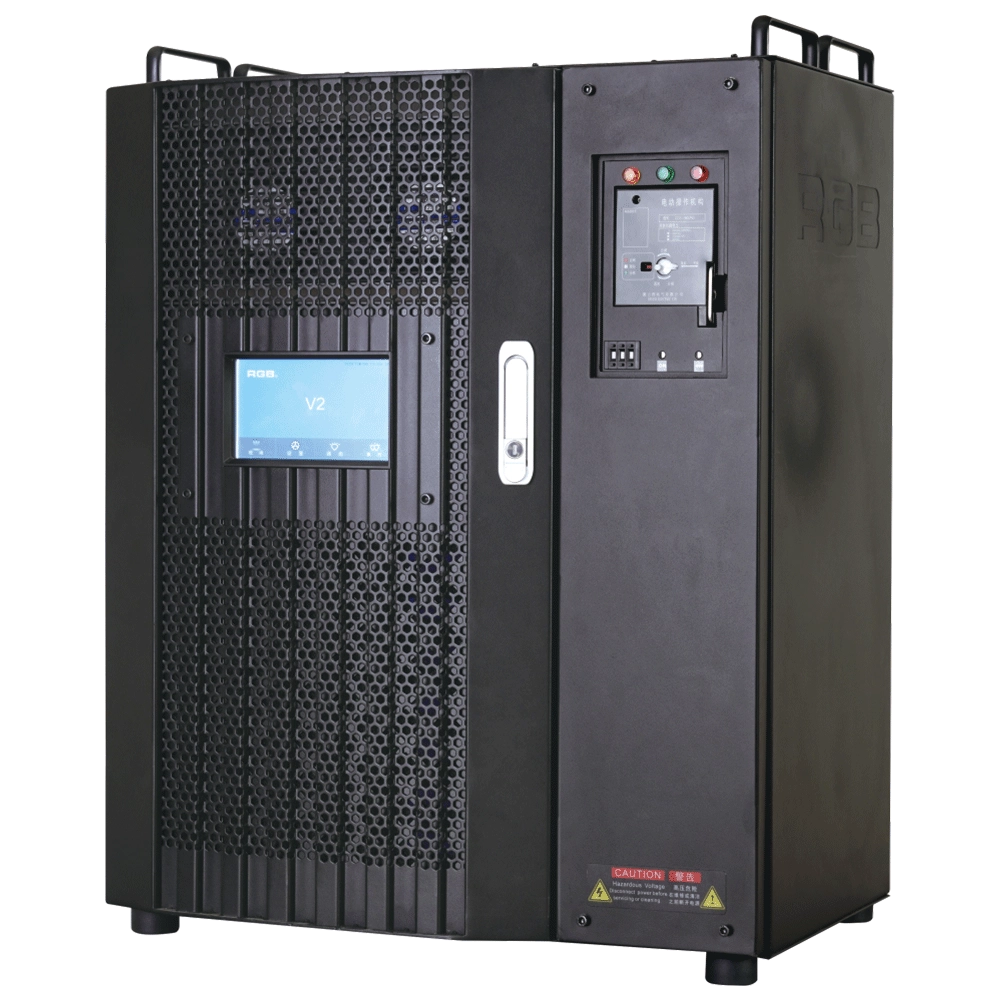
V2 Intelligent Network Dimmer/Relay Racks
V2 is an artificial intelligence dimming rack independently developed by RGB, which has completely independent core technology and obtained software copyrights. It is a fully digital electrodeless trigger and multi-backup independent CPU central processor technology. It has a variety of output configurations, such as sine wave, thyristor, relay, dimming relay, etc. It supports visual lighting control system and visually displays the online and offline status of dimming racks. Realize remote monitoring, editing, and setting of relevant parameters.
It is widely used in performing arts and cultural venues such as theaters, concert halls, multi-function halls, cultural travel and performing arts, TV stations, gymnasiums, auditoriums, commercial art lighting and so on.
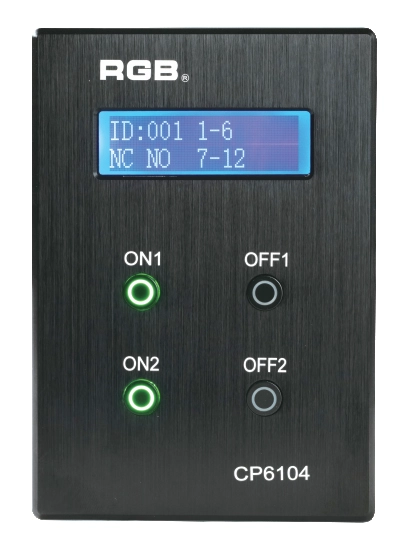
Site Light Controller CP6104
The CP6104 lighting control panel is a lighting control device for theater stage lights, work lights, environmental lighting, commercial art lighting, sports venue lighting and other places. By connecting to the dedicated lighting control host CP6100, it realizes the central control of the lighting system, supports a visual lighting control system, and intuitively displays the online and offline status of CP6104. Realize remote monitoring, editing and setting of corresponding parameters.
It is widely applicable to theaters, cinemas, auditoriums, stadiums, museums, exhibition halls, cultural tourism performances, commercial art lighting and other places.
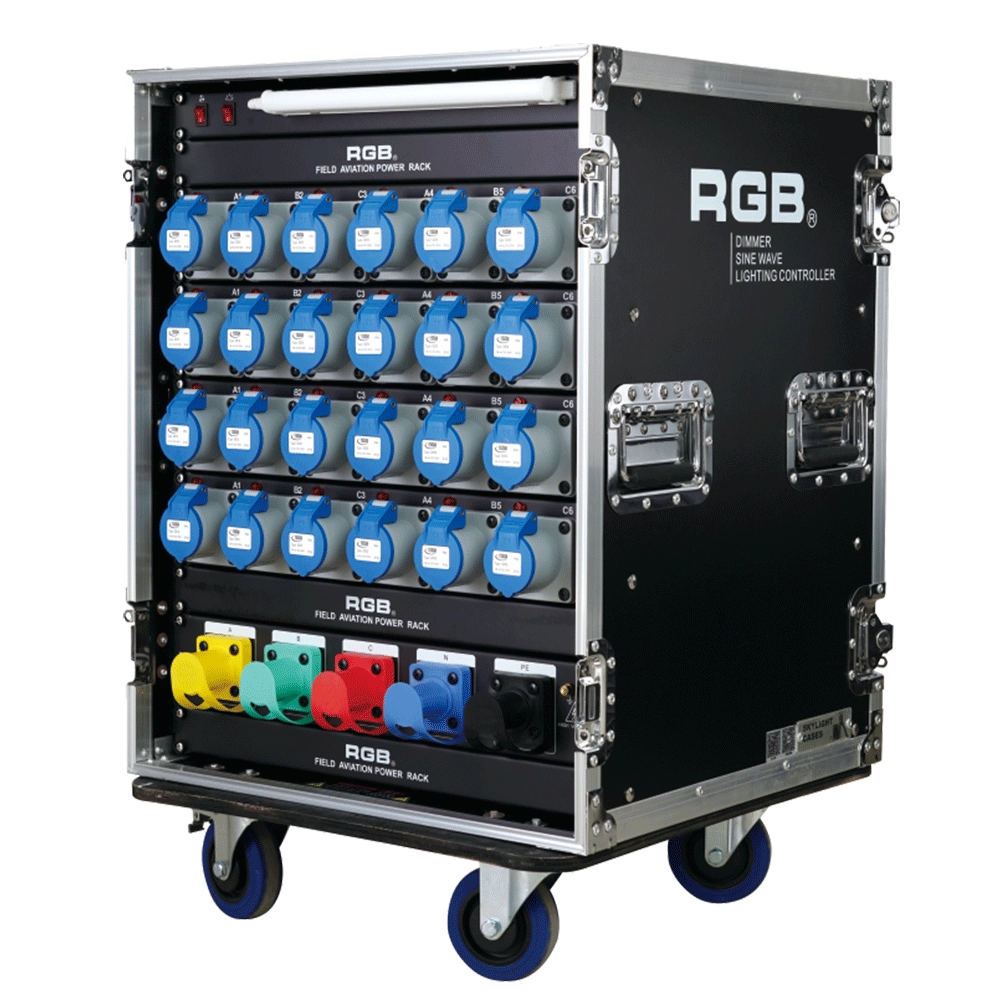
ZT Distribution Box
RGB-ZT2416 features dual protection functions and is a power distribution product specifically designed for overcurrent and short circuit of electrical equipment. It is the best choice for mobile performance and is suitable for use in computer lamps, conventional lamps, and other equipment.
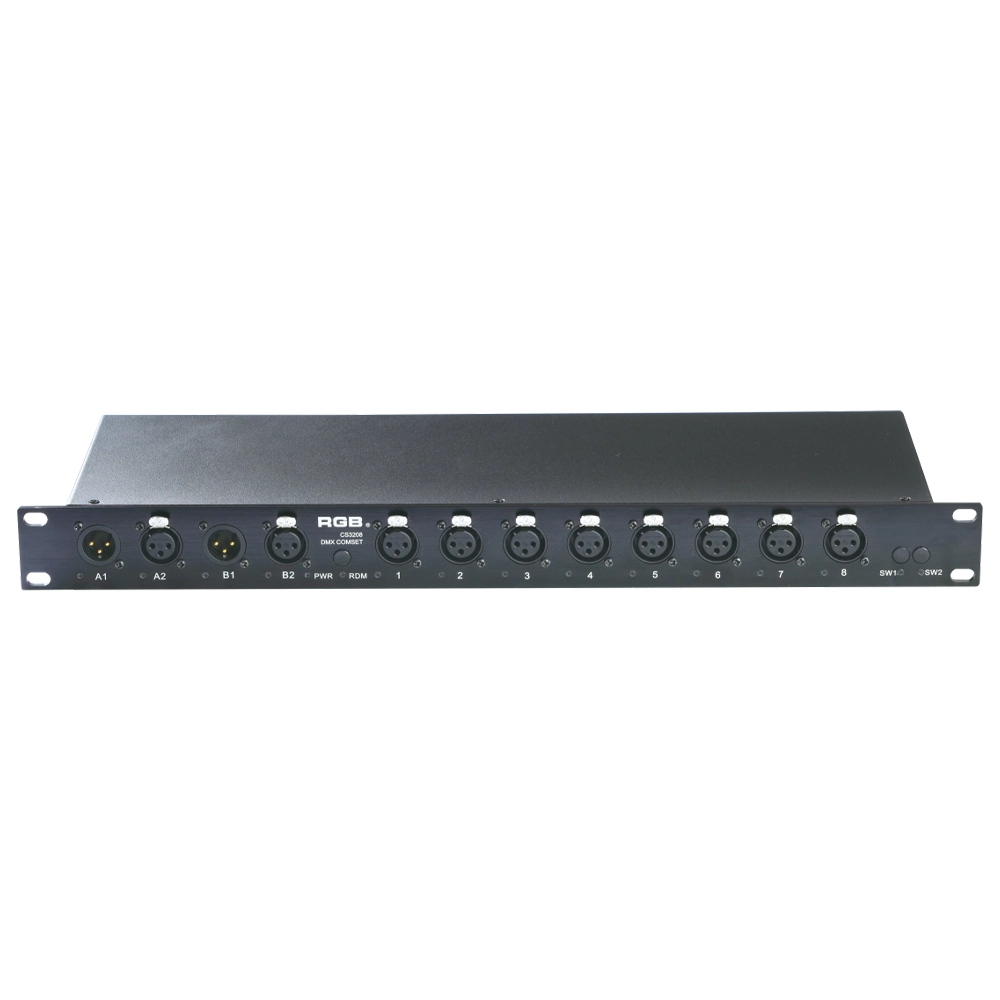
Multifunctional signal supercharger
The rack-mounted DMX signal amplifier complies with the DMX-512 standard protocol, improving DMX-512 signal transmission quality and ensuring reliable system control. It helps prevent issues such as AC high-voltage backflow into lighting control systems, lightning-induced surges, and signal interference caused by short circuits, thereby enhancing overall system stability.
Expert Support
Interested in learning more or need expert guidance related to this article? Fill in your details, and our team will provide tailored support.
Intelligent Control. Brilliant Performance.
RGB specializes in stage lighting control systems, delivering intelligent, reliable, and high-performance solutions for theaters and performance spaces worldwide.
Contact
Email:
Tel:
+86 20 3928 0245
+86 20 3928 0247
Address:
No.3, Huashan Road, Shilou Town, Panyu, Guangzhou, China.
Whatsapp: +8615975520131