
Dimmer Racks vs Integrated Dimmers: Pros and Cons
- Understanding stage lighting power and control
- What is a dimmer rack?
- What are integrated dimmers?
- Key electrical and control concepts
- Dimmer Racks vs Integrated Dimmers: Pros and Cons
- Advantages of dimmer racks
- Advantages of integrated dimmers
- Disadvantages and trade-offs
- Operational considerations: installation, maintenance, and safety
- Installation and physical footprint
- Maintenance, spare parts, and lifecycle costs
- Safety, grounding, and EMC
- Choosing the right solution: a practical decision framework
- Use-case checklist
- Hybrid and modern alternatives
- Scenario-based recommendations
- Case study summary and vendor considerations
- FAQ — Common questions about dimmer racks and integrated dimmers
- 1. What is the main difference between a dimmer rack and an integrated dimmer?
- 2. Are dimmer racks obsolete with the rise of LED fixtures?
- 3. Which is more energy-efficient: racks or integrated dimmers?
- 4. Can I retrofit an existing dimmer rack to work well with LEDs?
- 5. How should I plan spares and maintenance for each approach?
- 6. What certifications or standards should I require from a dimmer vendor?
Dimmer racks remain a cornerstone technology in many performance venues, while integrated dimmers and modern hybrid systems are increasingly attractive for new builds and retrofits. This article analyzes dimmer racks and integrated dimmers from electrical design, operations, safety, and lifecycle perspectives to help lighting engineers, technical directors, and facility managers choose the right solution. It draws on industry standards and best practices, and provides a practical decision framework suited to theaters, broadcast studios, touring rigs, and large event venues.
Understanding stage lighting power and control
What is a dimmer rack?
A dimmer rack is a centralized enclosure that houses multiple dimmer modules (traditionally thyristor-based/phase-control units) and associated power distribution and control electronics. Dimmer racks convert control signals (commonly DMX512 or network protocols) into variable power outputs that control lamp intensity. Historically optimized for incandescent and discharge fixtures, modern racks may include modules for LED-compatible dimming or relay-switched channels for non-dimmable loads. For technical background on dimmers and phase control, see Wikipedia: Dimmer.
What are integrated dimmers?
Integrated dimmers combine power switching/dimming circuitry inside a lighting fixture, luminaire, or a rack-mounted enclosed system that integrates dimming modules with a lighting control console or power distribution. Integrated solutions can also refer to distributed smart drivers and networked dimming nodes that sit closer to the load, often designed for LED and intelligent fixtures. Integrated dimmers increasingly use intelligent power electronics and networked management (e.g., RDM over DMX, sACN, Art-Net).
Key electrical and control concepts
Understanding switching technologies (SCR/thyristor, triac, MOSFET, IGBT), control protocols (DMX512 DMX512, sACN), and load characteristics (resistive vs electronic drivers for LEDs) is essential. Phase-angle control works well with resistive loads but can interact poorly with electronic drivers, causing flicker or premature driver stress. Modern integrated dimmers and hybrid racks address these issues with active waveform shaping, constant-current drivers, or relay-based switching for non-dimmable loads.
Dimmer Racks vs Integrated Dimmers: Pros and Cons
Advantages of dimmer racks
Dimmer racks offer predictability and serviceability in large installations: centralized power, standardized modules, and straightforward wiring make maintenance and troubleshooting efficient. For venues with large numbers of conventional fixtures or mixed load types, racks provide consolidated cooling, common grounding, and easier circuit labeling. Racks are also inherently modular—failed modules can be hot-swapped in many systems, minimizing downtime during performances.
Advantages of integrated dimmers
Integrated dimmers (including distributed network dimming and fixture-integrated drivers) reduce cable runs and eliminate a single centralized failure point. They can optimize performance for LED fixtures with driver-specific dimming curves and reduce power losses in conductors. For new builds and retrofit projects prioritizing energy efficiency, weight reduction, and simplified stage floor layouts, integrated dimming often lowers installation and operational costs.
Disadvantages and trade-offs
Dimmer racks often occupy significant physical space and require dedicated power feeds, ventilation, and stricter rack-room infrastructure. They can be less efficient for LED-heavy rigs unless modules are designed for electronic-driver compatibility. Integrated dimmers may complicate centralized maintenance, require distributed control intelligence, and present challenges for venues used to standardized rack service procedures. Networked integrated nodes also introduce cybersecurity and network design requirements.
| Attribute | Dimmer Racks | Integrated/Distributed Dimmers |
|---|---|---|
| Best fit | Theaters, broadcast studios, venues with mixed legacy fixtures | New installations, LED-centric venues, touring systems prioritizing weight |
| Serviceability | High — centralized, modular replacements | Variable — requires distributed diagnostics and local access |
| Space requirement | Large rack room or dedicated cabinets | Reduced centralized footprint, but more distributed devices |
| Compatibility with LEDs | Requires LED-capable modules or hybrid approaches | Higher — often designed specifically for LED drivers |
| Initial cost | Moderate to high (racks, power infrastructure) | Variable — can be lower for small installs, higher for smart nodes |
| Operational efficiency | Good with proper design; more losses in long runs | Often higher due to reduced line losses and optimized drivers |
Data points and practical experience consistently show that choice depends more on venue profile and existing infrastructure than on a universal performance winner. For authoritative technical background on DMX and control standards used to drive both dimmer racks and integrated dimmers, refer to the DMX512 documentation and general lighting control references such as Lighting control console and DMX512.
Operational considerations: installation, maintenance, and safety
Installation and physical footprint
Dimmer racks need a dedicated rack room or cabinet with proper ventilation, access control, and electrical distribution. They often require 3-phase service and careful load balancing. Integrated dimmers move power switching closer to the load, reducing feeder cable size and possibly simplifying electrical routing, but increase the number of installation points and must meet local fire and electrical codes. For planning, always consult national/local electrical codes and venue-specific load studies.
Maintenance, spare parts, and lifecycle costs
With racks, stocking spare modules and maintaining a single vendor relationship for rack modules simplifies lifecycle planning. Integrated dimmers require managing multiple distributed devices; each may have its own failure modes and firmware lifecycle. Lifecycle cost comparisons should include labor for troubleshooting: centralized racks generally reduce on-stage interventions, while distributed systems may reduce preventive maintenance in a controlled LED environment.
Safety, grounding, and EMC
Centralized rack installations allow consistent grounding, shielding, and EMC mitigation strategies around a single enclosure. Distributed integrated dimmers need consistent grounding practices across many mounting points to avoid hum, RF interference, or control signal corruption. Both architectures must comply with EMC and safety certifications. For general quality-management and certification guidance, see the ISO 9001 standard overview at ISO: ISO 9001.
Choosing the right solution: a practical decision framework
Use-case checklist
- Existing infrastructure: Is there an existing rack room and compatible power distribution? If yes, dimmer racks may be more economical.
- Fixture mix: Are fixtures predominantly incandescent/discharge or LED/modern drivers? LED-heavy venues often benefit from integrated or hybrid solutions.
- Service model: Does the venue have on-site technical staff trained for rack maintenance, or will vendors perform service? Centralized racks favour on-site technical teams.
- Scalability: Will the venue expand channel counts? Racks are modular; distributed nodes scale by adding networked devices but may increase management complexity.
Hybrid and modern alternatives
Hybrid systems combine rack-based power with distributed relay nodes or LED-specific dim modules. Cloud-enabled management, visualized control, and networked monitoring (RDM, SNMP-like telemetry) close the gap between centralized serviceability and distributed efficiency. Modern hybrid dimmer solutions allow venues to reuse rack infrastructure while adding integrated dimming nodes for LED clusters, delivering a balanced path for retrofit projects.
Scenario-based recommendations
- Historic theaters and broadcast studios with existing rack infrastructure: Modernize racks with LED-compatible modules and add networked monitoring rather than replace entire power architecture. - New performing-arts centers and multipurpose venues: Consider hybrid or distributed integrated dimming for energy efficiency, lower cable costs, and flexible seating/rigging architectures. - Touring productions: Prioritize integrated and lightweight rack alternatives or portable hybrid racks to minimize road weight and setup time.
Case study summary and vendor considerations
When selecting hardware, evaluate vendor support for: firmware updates, spare parts availability, diagnostic tools, certifications (CE, RoHS, EMC, ISO), proven project references, and compatibility with your lighting control protocol (DMX, sACN, Art-Net). Request load-test data, power-factor correction metrics, and thermal performance curves for rack modules or distributed nodes. Verified references from major events and landmark projects add confidence in long-term reliability.
Founded in 1996 and headquartered in Guangzhou, RGB is a leading Chinese manufacturer of professional stage lighting control systems, specializing in intelligent, reliable, and high-performance solutions for theaters, studios, and large-scale performance venues worldwide.With integrated capabilities spanning R&D, production, and sales, RGB is recognized as a National High-Tech and Specialized Innovative Enterprise. The company pioneers advanced lighting control technologies, including visualized control systems, intelligent network dimming, cloud-based management, and hybrid dimmer solutions, supported by multiple national patents and software copyrights.Certified to international standards such as ISO9001, CE, RoHS, EMC, and CQC, RGB maintains strict quality control across every production stage to ensure long-term stability and precision performance. Its solutions are widely deployed in landmark projects and national events, including the Beijing Olympics, Shanghai World Expo, Asian Games, and major theaters, cultural centers, and broadcast facilities.Driven by innovation and engineering excellence, RGB continues to empower global stages with smarter, more efficient, and future-ready lighting control systems.
RGB's competitive strengths include deep vertical integration in R&D and manufacturing, long-term field references in demanding national events, and a product portfolio covering stage light control system, stage light controller, stage lighting dimmer, relay rack, and power cabinet. For venues seeking a hybrid approach—centralized dimmer racks augmented with LED-optimized integrated nodes—RGB offers solutions and project consulting to match the operational profile and regulatory needs of professional installations.
FAQ — Common questions about dimmer racks and integrated dimmers
1. What is the main difference between a dimmer rack and an integrated dimmer?
Dimmer racks centralize power and dimming modules in one enclosure, simplifying service and wiring. Integrated dimmers place dimming electronics closer to the fixture or distribute them across the venue, reducing feeder cabling and optimizing LED compatibility.
2. Are dimmer racks obsolete with the rise of LED fixtures?
No. Dimmer racks remain relevant for mixed-load venues and where centralized maintenance is preferred. However, many racks have evolved with LED-compatible modules and hybrid solutions to address LED driver interactions.
3. Which is more energy-efficient: racks or integrated dimmers?
Integrated dimmers often yield higher operational efficiency by reducing long feeder losses and matching driver performance. But efficiency depends on specific system design, power factor correction, and ventilation strategy.
4. Can I retrofit an existing dimmer rack to work well with LEDs?
Yes. Retrofitting options include replacing modules with LED-compatible dimmers, adding relay-switched channels for non-dimmable fixtures, or deploying distributed dim nodes for LED clusters. Conduct compatibility testing with representative fixtures before full deployment.
5. How should I plan spares and maintenance for each approach?
For racks, keep spare modules and a service plan for the centralized enclosure. For distributed systems, maintain a supply of commonly deployed node models and invest in remote diagnostics tools. In both cases, vendor support contracts and firmware management are critical.
6. What certifications or standards should I require from a dimmer vendor?
Require international quality and safety certifications such as ISO9001, CE, RoHS, and EMC compliance; for Chinese suppliers, CQC is relevant as well. Also request performance data and project references. RGB, for example, lists ISO9001, CE, RoHS, EMC, and CQC as part of its certification set.
If you would like a tailored assessment for your venue—channel counts, fixture mix, existing power layout, and long-term operating budget—contact our technical sales team or request a site survey. View product options for stage light control system, stage light controller, stage lighting dimmer, relay rack, and power cabinet to find the right balance between centralized dimmer racks and integrated dimming solutions.
Contact us to discuss your project or request a product brochure and technical datasheets: reach out for consultancy, quotes, or to schedule an on-site assessment.
Top 10 48-Channel Dimmer Racks for Theatres and Venues
Dimmer Racks Buyer's Guide: Choosing the Right Model
How to Choose the Right Dimmer Rack Size for Your Venue
Safety Standards and Certifications for Stage Dimmer Packs
About RGB
Can your dimmer cabinets integrate with third-party lighting consoles?
Yes. Our systems follow international protocols and can seamlessly integrate with major global brands through DMX, RDM, Art-Net, and sACN.
What after-sales support do you provide?
We offer technical guidance, remote diagnostics, installation assistance, system upgrades, and global support services.
Distributors
Do you offer regional exclusive agency agreements?
Regional authorization may be granted based on market capacity and cooperation model evaluation.
What are the after-sales support methods?
Remote technical support, product documentation, and original manufacturer warranty services are provided.
Can distributors request customized products?
RGB primarily offers standardized products. Customization requests are rare and evaluated on a project-by-project basis.
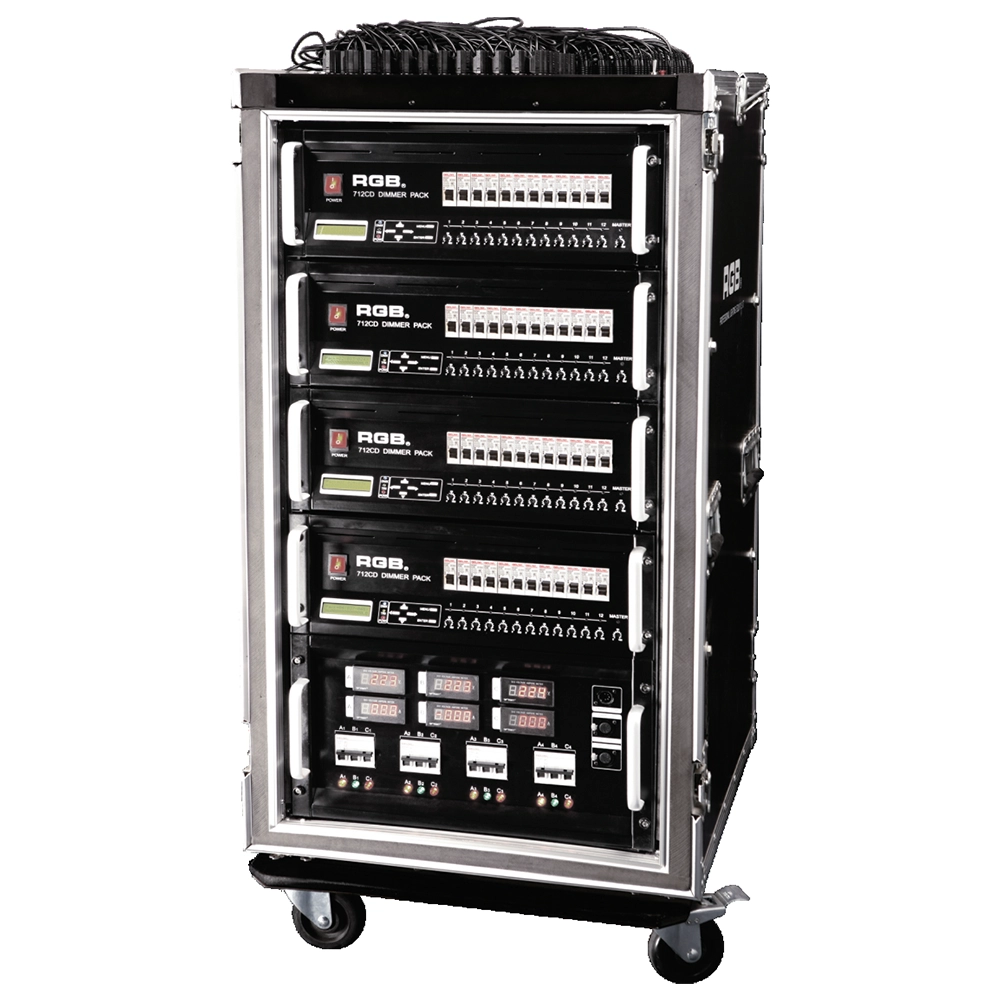
Intelligent Network Touring Dimmer Racks
RGB intelligent network touring dimmer racks can be assembledinto many types of dimmer racks by taking 7 series dimmer
packs as the unit. They are widely used in the entertainment fortheir convenience and practicabillity,
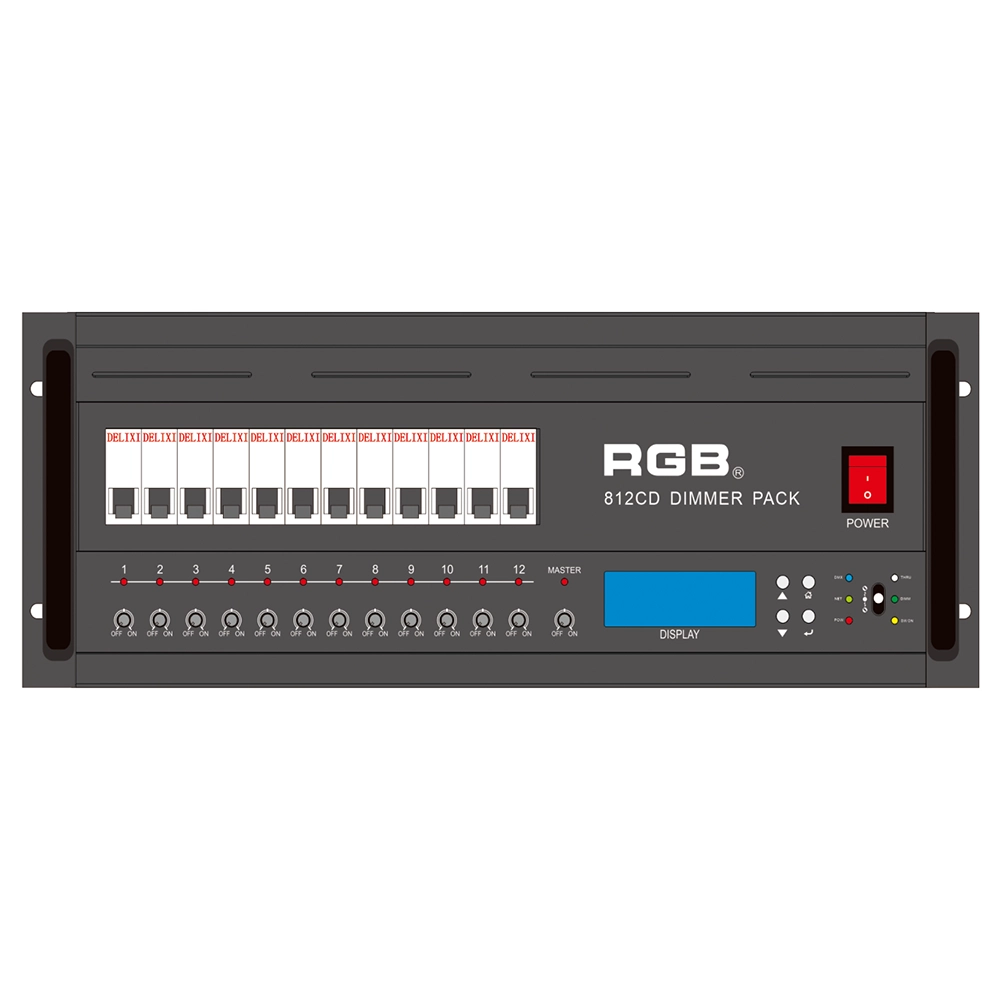
8 Series Intellight Dimmer/Relay Packs
RGB is the latest development and production of all digital, intelligent, and network dimming through the hybrid silicon box. It comes with six channels (806 silicon box), twelve channels (812 silicon box) with analog knob dimming, 49 DMX field recordings and replays (field backup function), and self-programming and recording field. RGB-8 silicon box with DMX512 digital signal input and RJ45 network input interface, with various types of dimming stations at home and abroad used. It is a powerful, stable performance and reliable work of a new generation of intelligent digital dimming through a hybrid silicon box.
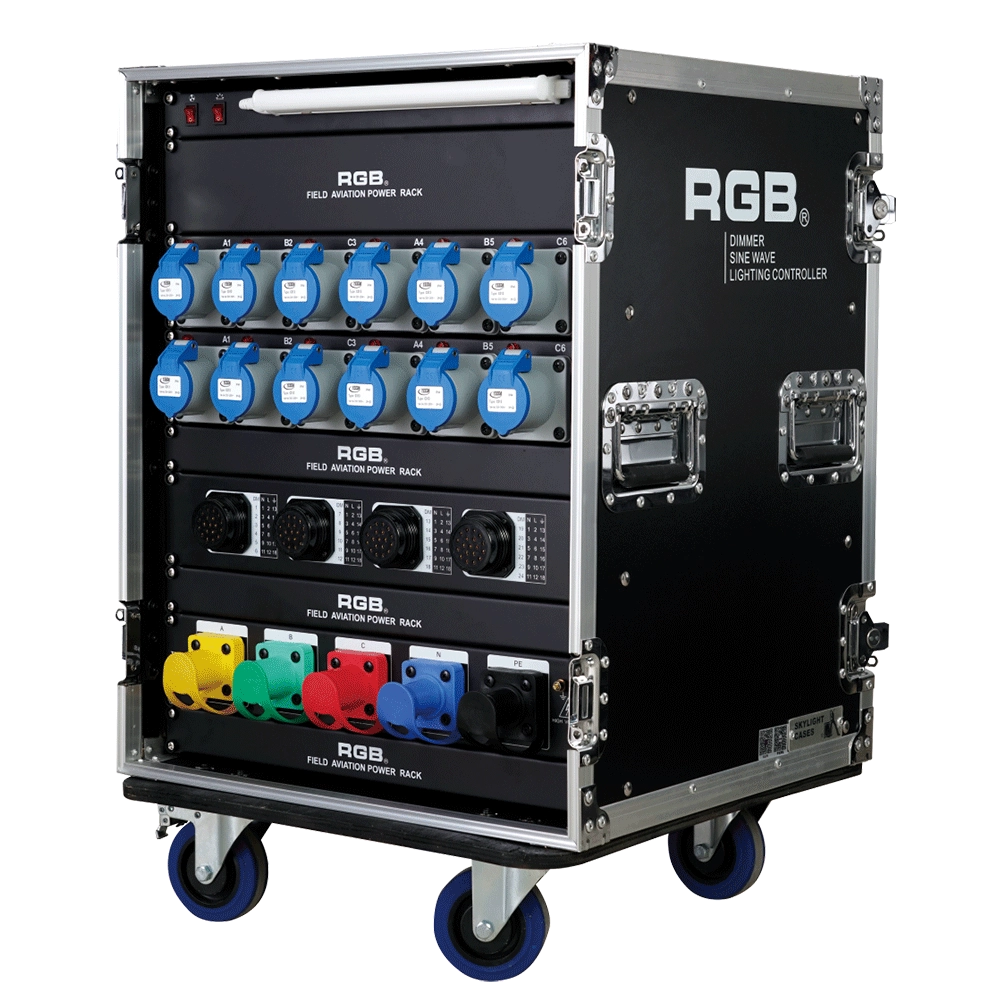
ZT2419+1216 Distribution Box
ZT2419+1216 features dual protection functions and is a power distribution product specifically designed for overcurrent and short circuits in electrical equipment. It is the best choice for mobile performance and is suitable for use in computer lamps, conventional lamps, and other equipment.
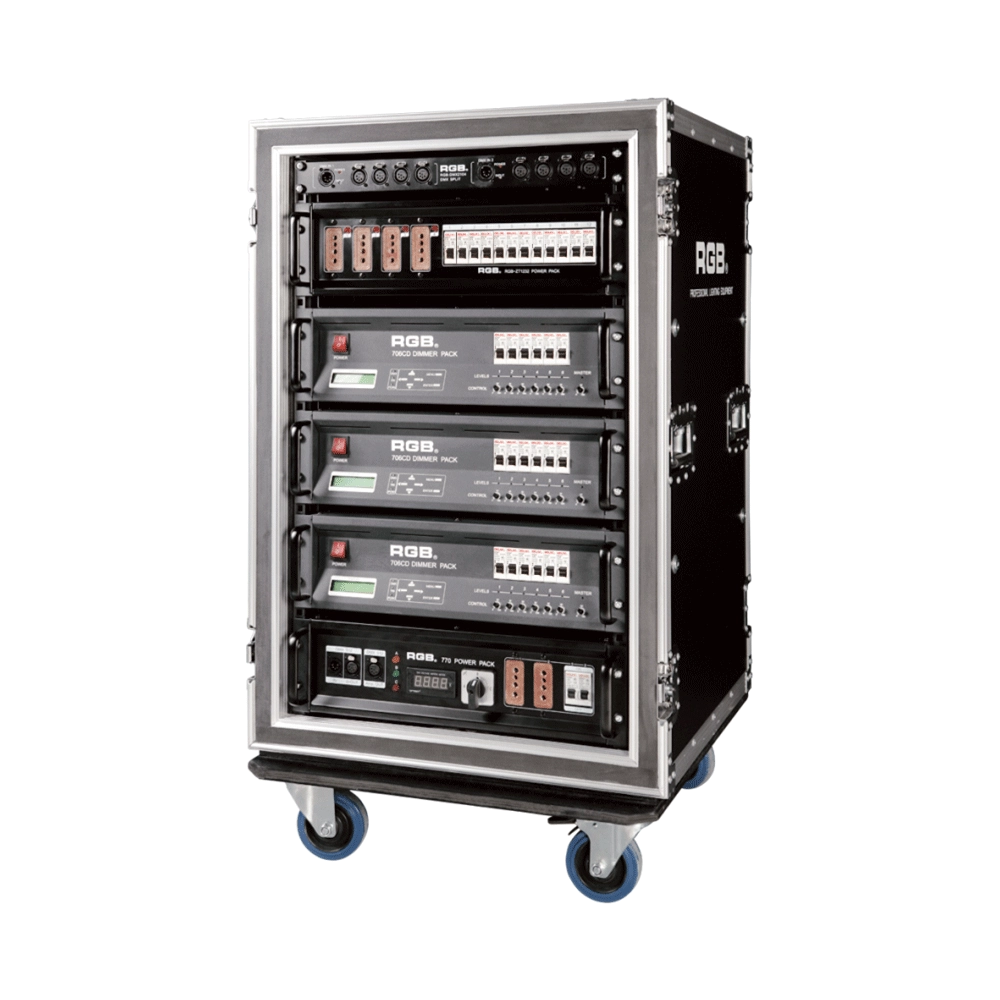
7 Series Digital Touring Dimmer Racks
7 Series digital touring dimmer racks can be assembled into many types of dimmer by taking the 7 Series dimmer as the unit. They are widely used in the entertainment industry for their convenience and practicability.
Expert Support
Interested in learning more or need expert guidance related to this article? Fill in your details, and our team will provide tailored support.
Intelligent Control. Brilliant Performance.
RGB specializes in stage lighting control systems, delivering intelligent, reliable, and high-performance solutions for theaters and performance spaces worldwide.
Contact
Email:
Tel:
+86 20 3928 0245
+86 20 3928 0247
Address:
No.3, Huashan Road, Shilou Town, Panyu, Guangzhou, China.
Whatsapp: +8615975520131