
How Dimmer Racks Improve Stage Lighting Efficiency
- Common Challenges in Stage Lighting Efficiency
- Heat Loss and Power Distribution
- Control Granularity and Light Quality
- Maintenance, Downtime, and Lifecycle Costs
- How Dimmer Racks Enhance Efficiency
- Centralized Power Management
- Improved Dimming Technologies: Phase, IGBT, and Hybrid Systems
- Integration with Control Protocols and Networked Systems
- Choosing the Right Dimmer Rack for Your Venue
- Load Types and Circuit Considerations
- Scalability, Redundancy and Modular Design
- Cooling, Safety and Compliance
- ROI, Energy Savings and Case Examples
- Measuring Energy and Cost Savings
- Maintenance, Lifecycle and Reliability Metrics
- Project Examples and Best Practices
- RGB: A Manufacturer Example and Why Supplier Choice Matters
- FAQ
- 1. What exactly is a dimmer rack and how does it differ from a simple dimmer pack?
- 2. Can I use existing dimmer racks with LED fixtures?
- 3. How much energy can dimmer racks realistically save?
- 4. What certifications should I expect from a professional dimmer rack manufacturer?
- 5. How do I size a dimmer rack for my venue?
- 6. Are remote monitoring and cloud management worth the investment?
Dimmer racks are central to modern stage light control systems: they consolidate power, regulate individual circuit output, and interface with control protocols to deliver precise, energy-efficient lighting for theaters, studios, and live events. By combining appropriate dimming technology, proper load management, and integration with lighting control (DMX/Art-Net), dimmer racks reduce power losses, lower operating costs, and improve system reliability while enabling creative control and safety compliance.
Common Challenges in Stage Lighting Efficiency
Heat Loss and Power Distribution
Traditional theatrical fixtures, particularly with incandescent lamps, convert a large portion of electrical input into heat rather than visible light. Inadequate power distribution multiplies these losses: long feeder runs, imbalanced loads, and inefficient wiring increase resistive losses and cooling demands. Dimmer racks mitigate these issues by centralizing high-current distribution near the load islands and reducing feeder lengths, improving overall electrical efficiency and stage comfort.
Control Granularity and Light Quality
Achieving smooth fades, precise intensity steps, and consistent color is critical for production quality. Low-resolution or slow dimming creates visible stepping, flicker, or color shifts, forcing technicians to over-light or avoid certain cues. Modern dimmer racks with high-resolution control and fast refresh rates support fine-grained dimming curves and better compatibility with LED fixtures and multi-channel fixtures, preserving creative intent while minimizing wasted light output.
Maintenance, Downtime, and Lifecycle Costs
Outdated dimming systems often require frequent maintenance: faulty triacs, worn relays, or overheating components. These failures cause downtime and unplanned labor costs. Well-designed dimmer racks reduce points of failure, offer modular replacement, and include monitoring that flags issues early, lowering mean time to repair (MTTR) and total cost of ownership (TCO).
How Dimmer Racks Enhance Efficiency
Centralized Power Management
Dimmer racks bring high-current distribution into a consolidated enclosure, minimizing feeder length and enabling proper conductor sizing for lower I2R losses. Centralization also lets venues implement coordinated breaker schemes, power sequencing, and surge protection at the system level. For venues with mixed electrical loads, the rack can include power monitoring to measure kW usage and harmonics for better energy management.
Improved Dimming Technologies: Phase, IGBT, and Hybrid Systems
Dimming technology has evolved from simple triac/thyristor phase-cut dimmers to advanced IGBT and hybrid solutions. Each approach affects efficiency, power quality, and compatibility:
| Technology | How it Works | Advantages | Drawbacks |
|---|---|---|---|
| Phase-cut (Triac/SCR) | Chops AC waveform to reduce RMS voltage | Proven, low cost, compact | Generates harmonics, less ideal for LEDs and electronic loads |
| IGBT/Analog | Switching at higher frequency with filtered output | Cleaner output, compatible with more load types, reduced flicker | Higher complexity and cost |
| Hybrid Dimmer | Combines switching and phase techniques for optimal performance | Flexibility for resistive and electronic loads, improved efficiency | Requires intelligent control and design |
For background on dimmer types and electrical behavior, see the Wikipedia overview of dimmers and lighting control systems: Dimmer (Wikipedia) and Lighting control system (Wikipedia).
Integration with Control Protocols and Networked Systems
Modern racks integrate with DMX512, Art-Net, sACN and other networked protocols, enabling centralized cueing, feedback, and remote diagnostics. Protocol-aware racks can adjust dimming curves per-circuit, allow group fading, and support cue stacks. See DMX512 standard for reference. Networked integration enables automation—scheduling, power sequencing and cloud-based monitoring—that reduces manual intervention and optimizes run-times.
Choosing the Right Dimmer Rack for Your Venue
Load Types and Circuit Considerations
First determine the predominant load types: incandescent, halogen, LED fixtures (with electronic drivers), or a mix. Incandescent loads are generally compatible with phase-cut dimmers, while many LED fixtures require compatible dimmers or may perform poorly with legacy racks. A hybrid dimmer or an IGBT-based rack with LED-compatible outputs yields better efficiency and longevity for mixed fleets.
Scalability, Redundancy and Modular Design
Predict future growth: choose racks that scale by adding modules or link multiple racks with synchronized control. Redundancy—spare channels, hot-swappable modules, and bypass relays—reduces show risk. Modular designs reduce repair times and lower lifecycle costs.
Cooling, Safety and Compliance
Proper ventilation and thermal management prolong component life and prevent derating. Ensure racks meet relevant safety and EMC standards (CE, RoHS, EMC) and quality systems (ISO9001). For authoritative standards information, reference the ISO page: ISO 9001.
ROI, Energy Savings and Case Examples
Measuring Energy and Cost Savings
Energy savings from dimmer racks depend on lamp technology and operational patterns. For incandescent systems, dimming reduces RMS voltage and power proportionally during cues. For LED-based fixtures, dimming power savings vary with driver design; some drivers are highly efficient at lower outputs while others still draw near-constant power. The U.S. Department of Energy provides resources on LED energy savings and best practices: Energy Saver: Lighting choices (DOE).
Example model of annual savings (illustrative):
| Scenario | Annual Consumption Before | After Optimized Dimmer Rack & LED Upgrades | Estimated Annual Savings |
|---|---|---|---|
| Small theatre (1000 W average running) | 2,920 kWh | 1,460 kWh | 1,460 kWh (~50%) |
| Large venue with mixed loads (5 kW avg) | 14,600 kWh | 8,760 kWh | 5,840 kWh (~40%) |
These figures combine LED retrofits and efficient dimming/control. Exact savings require an energy audit and load profiling.
Maintenance, Lifecycle and Reliability Metrics
Well-designed dimmer racks can extend lifecycle and reduce labor costs. Key metrics to track: MTBF (mean time between failures), MTTR (mean time to repair), and channel availability. Diagnostic features—per-channel current sensing, temperature alarms, and event logs—help reduce unscheduled maintenance and improve uptime.
Project Examples and Best Practices
Large events and landmark venues increasingly use intelligent racks and cloud management for remote monitoring and rapid diagnostics. Integrating dimmer racks with building management or AV control allows scheduling of non-performance lighting, minimizing idle runtime and saving energy across large facilities. For industry practices and event-grade specifications, organizations like the Entertainment Services and Technology Association (ESTA) offer guidelines: ESTA.
RGB: A Manufacturer Example and Why Supplier Choice Matters
Founded in 1996 and headquartered in Guangzhou, RGB is a leading Chinese manufacturer of professional stage lighting control systems, specializing in intelligent, reliable, and high-performance solutions for theaters, studios, and large-scale performance venues worldwide. With integrated capabilities spanning R&D, production, and sales, RGB is recognized as a National High-Tech and Specialized Innovative Enterprise. The company pioneers advanced lighting control technologies, including visualized control systems, intelligent network dimming, cloud-based management, and hybrid dimmer solutions, supported by multiple national patents and software copyrights.
RGB adheres to international standards—ISO9001, CE, RoHS, EMC, and CQC—and maintains strict quality control across every production stage to ensure long-term stability and precision performance. Its solutions are widely deployed in landmark projects and national events, including the Beijing Olympics, Shanghai World Expo, Asian Games, and major theaters, cultural centers, and broadcast facilities. Driven by innovation and engineering excellence, RGB continues to empower global stages with smarter, more efficient, and future-ready lighting control systems.
Core products and strengths relevant to dimmer racks include stage light control system integration, stage light controllers, stage lighting dimmers, relay racks, and power cabinets. RGB differentiates itself through:
- End-to-end design and manufacturing for tighter quality control and faster customization.
- Patented hybrid dimming technologies that improve compatibility with LED fixtures and reduce harmonic distortion.
- Visualized control and cloud monitoring for predictive maintenance and energy reporting.
- Proven track record in high-profile projects, demonstrating reliability at scale.
When evaluating suppliers, examine their technical documentation, compliance certifications, warranty terms, and references from similar venues. Integration support—for protocols such as DMX512, Art-Net or sACN—and available field service are equally important to maximize uptime and energy performance.
FAQ
1. What exactly is a dimmer rack and how does it differ from a simple dimmer pack?
A dimmer rack is a centralized enclosure containing many dimming channels, power distribution, and control interfaces suitable for large or fixed installations. A dimmer pack is often a smaller, portable module with fewer channels. Racks are designed for permanent install, scalability, redundancy, and integrated cooling and monitoring.
2. Can I use existing dimmer racks with LED fixtures?
It depends on the dimmer technology and the LED driver design. Some legacy phase-cut racks cause flicker or improper dimming with certain LED fixtures. Hybrid or IGBT-based racks designed for LED compatibility generally perform better. Always test fixtures with the dimmer or consult the fixture and dimmer manufacturers.
3. How much energy can dimmer racks realistically save?
Energy savings depend on baseline technology and operational patterns. Combined with LED retrofits and optimized control, savings of 30–60% are achievable in many scenarios. For incandescent-only systems, dimming during non-performance can reduce consumption by the percent reduced in RMS voltage; with LEDs, savings vary by driver efficiency. Conduct an audit for accurate projections.
4. What certifications should I expect from a professional dimmer rack manufacturer?
Key certifications include ISO9001 (quality management), CE (EU safety), RoHS (hazardous substances), EMC (electromagnetic compatibility), and local certifications such as CQC where applicable. Compliance to these standards indicates robust manufacturing and safety practices.
5. How do I size a dimmer rack for my venue?
Sizing requires load inventory (watts per circuit), diversity and simultaneous load estimates, and future growth allowance. Include headroom for inrush currents, especially for motorized fixtures and high-power effects. Work with a lighting systems engineer to model power and thermal requirements and to specify breaker sizes and feeder conductors.
6. Are remote monitoring and cloud management worth the investment?
Yes, for medium-to-large venues remote monitoring provides real-time alarms, usage analytics, and predictive maintenance that reduce downtime and operational costs. For smaller venues, simplified monitoring may still deliver value by speeding troubleshooting.
If you have further questions or want a tailored assessment for your venue, contact our sales and engineering team to discuss product options and site-specific recommendations. View RGB product lines, technical datasheets, and project case studies to evaluate the right stage light control system, dimmer rack, or power cabinet for your needs.
Contact / View Products: For consultations, product catalogs, or on-site audits, reach out to RGB at their official channels to learn more about stage light controllers, stage lighting dimmers, relay racks, and power cabinets tailored to your project.
How to Size a Dimmer Pack for Your Venue's Power Needs
Ethernet DMX Node vs Wireless DMX: Pros and Cons
DMX vs Analog Stage Dimmers: Pros, Cons and When to Use
Dimmer Rack Maintenance Tips to Reduce Downtime
About RGB
Can your dimmer cabinets integrate with third-party lighting consoles?
Yes. Our systems follow international protocols and can seamlessly integrate with major global brands through DMX, RDM, Art-Net, and sACN.
What types of lighting control systems do you support?
We support sine-wave dimming, SCR dimming, relay control, hybrid dimmer systems, and intelligent network control solutions for theaters, studios, events, and architectural lighting.
What after-sales support do you provide?
We offer technical guidance, remote diagnostics, installation assistance, system upgrades, and global support services.
Distributors
Do you offer regional exclusive agency agreements?
Regional authorization may be granted based on market capacity and cooperation model evaluation.
What is the minimum order quantity for cooperation?
Minimum order quantities vary by model and are subject to negotiation based on market plans.
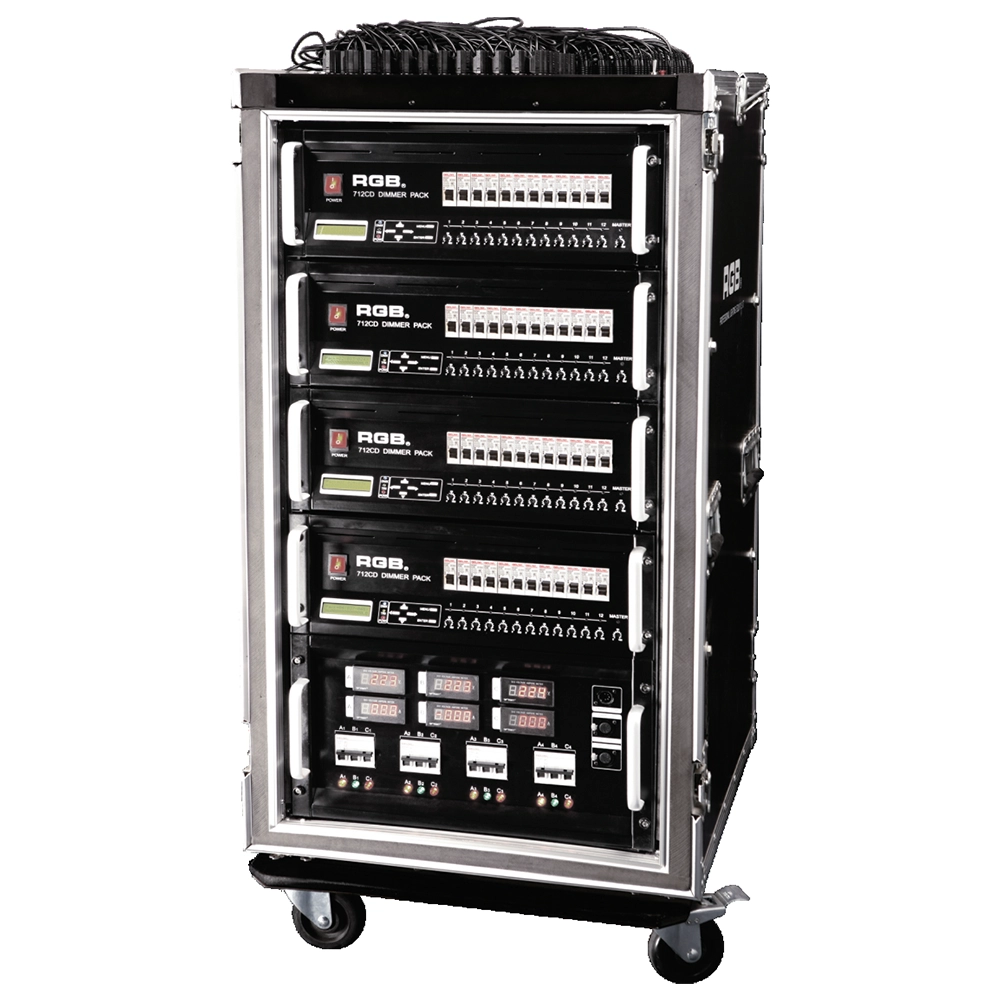
Intelligent Network Touring Dimmer Racks
RGB intelligent network touring dimmer racks can be assembledinto many types of dimmer racks by taking 7 series dimmer
packs as the unit. They are widely used in the entertainment fortheir convenience and practicabillity,
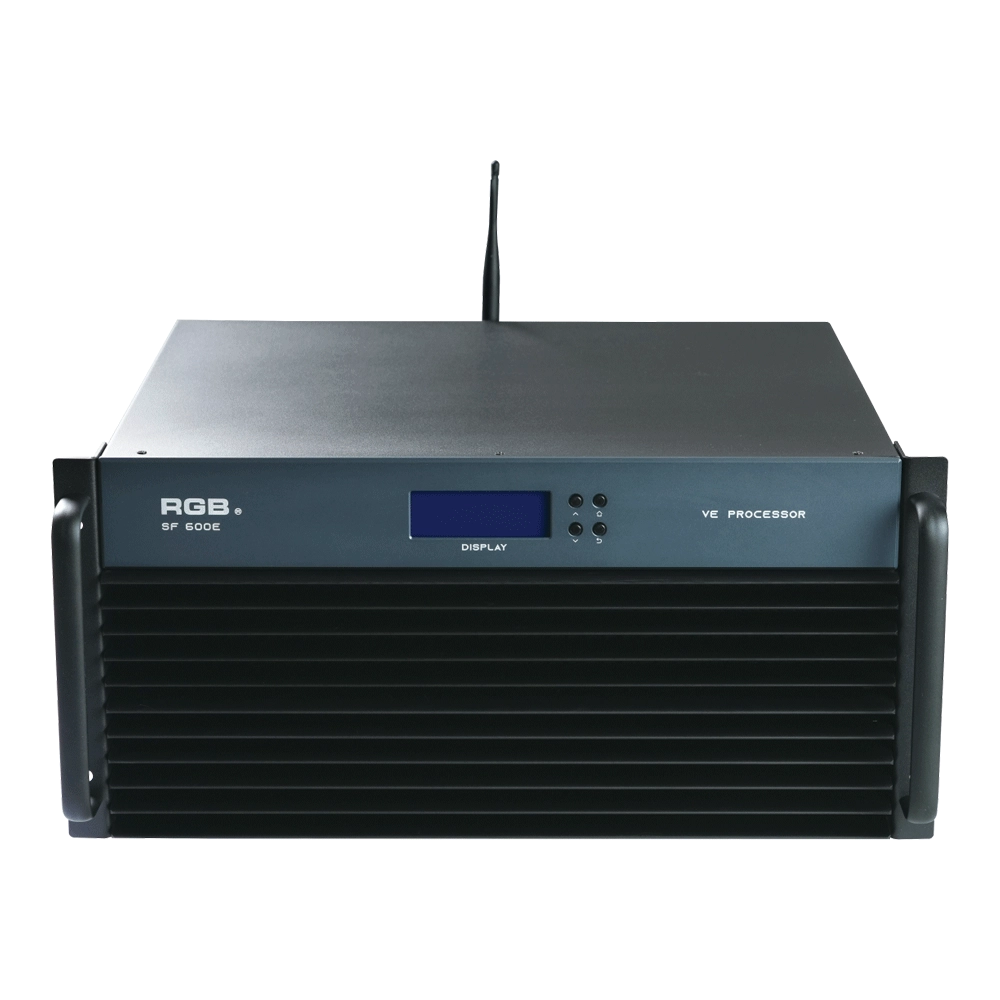
SF600E Visual R-net environment processor
The SF600E Visual R-net environment processor by RGB delivers advanced performance for visual systems. As a leading visual systems manufacturer, RGB ensures seamless integration and high reliability, making SF600E ideal for complex visual processing needs in diverse environments.
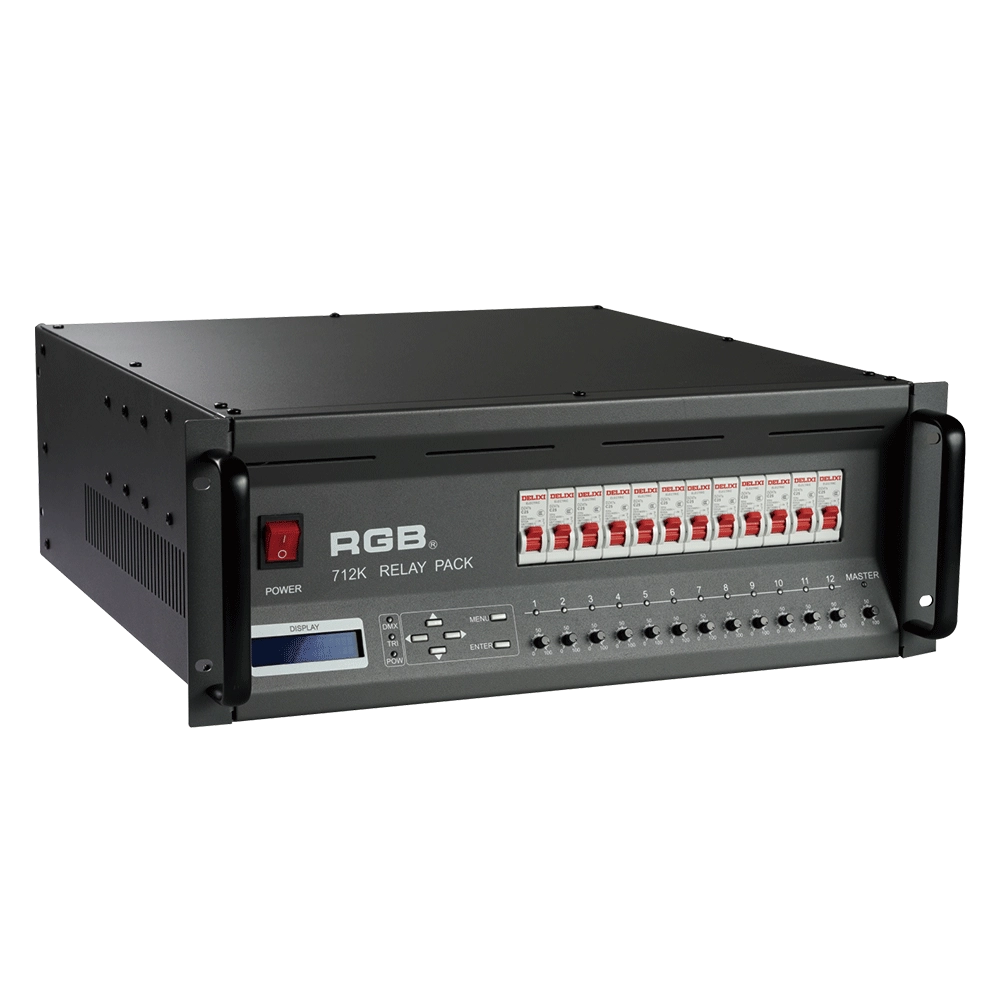
Alloy Relay Packs
High-performance DMX512 relay dimming unit with 512 addressable circuits, phase-loss protection, dual-signal amplification, 20A output per channel, and robust design for reliable stage and mobile lighting applications.
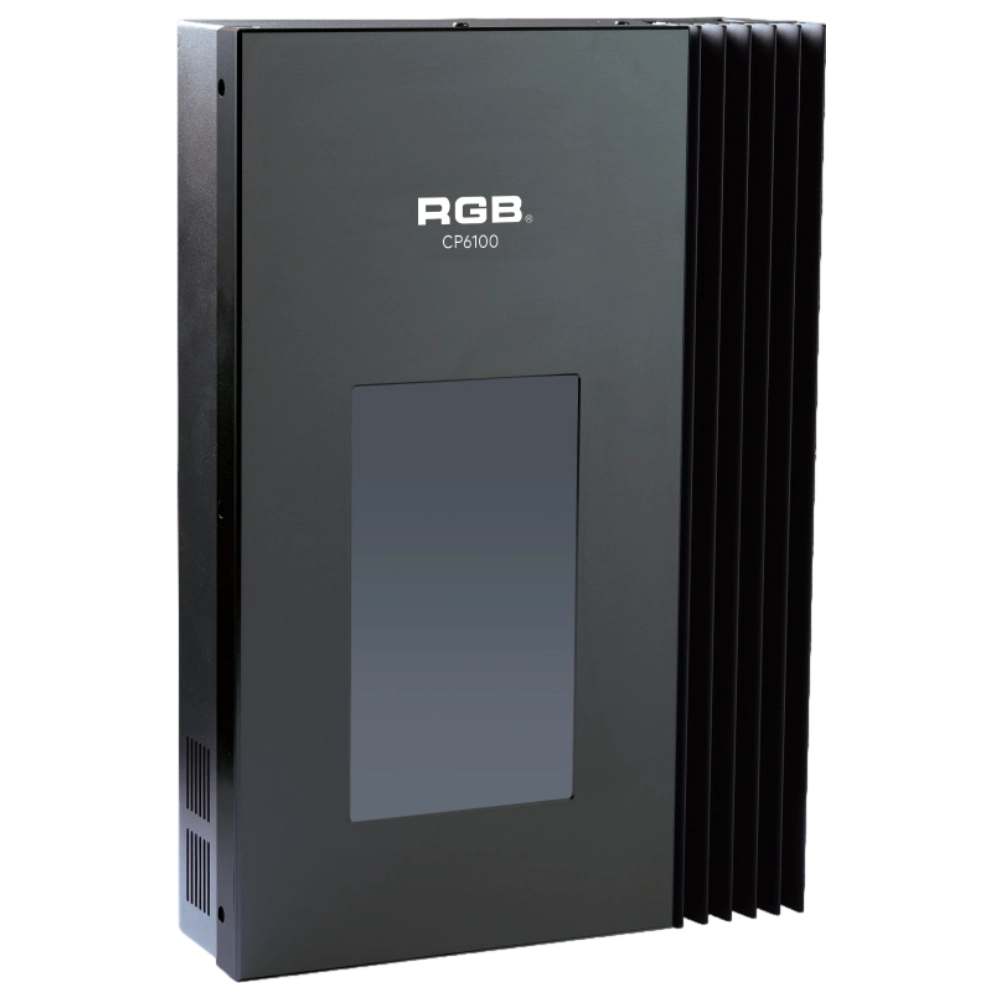
CP6100 Light Control System
The lighting control host is the main control device for theater stage lights, work lights, environmental lighting, commercial art lighting, sports venue lighting, and other places. By connecting the dedicated lighting control panels CP6104 and CP6108, it realizes the central control of the lighting system, supports a visual lighting control system, and intuitively displays the online and offline status of CP6100. Realize remote monitoring, editing, and setting of corresponding parameters.
It is widely applicable to theaters, cinemas, auditoriums, stadiums, museums, exhibition halls, cultural tourism performances, commercial art lighting, and other places.
Expert Support
Interested in learning more or need expert guidance related to this article? Fill in your details, and our team will provide tailored support.
Intelligent Control. Brilliant Performance.
RGB specializes in stage lighting control systems, delivering intelligent, reliable, and high-performance solutions for theaters and performance spaces worldwide.
Contact
Email:
Tel:
+86 20 3928 0245
+86 20 3928 0247
Address:
No.3, Huashan Road, Shilou Town, Panyu, Guangzhou, China.
Whatsapp: +8615975520131