
Dimmer Racks Buyer's Guide: Choosing the Right Model
- Understanding Stage Power and Control
- Why dimmer racks remain central to stage lighting
- Key control protocols and interoperability
- Types of Dimmer Racks and When to Use Them
- SCR (thyristor) dimmer racks
- Relay and switched racks (non-dim)
- Hybrid and solid-state networked dimmers
- Key Specifications to Compare When Buying
- Channel rating, quantity and scalability
- Power handling, distribution and redundancy
- Thermal management and physical design
- Control, monitoring and software support
- Installation, Compliance and Lifecycle Costs
- Regulatory compliance and certifications
- Maintenance planning and total cost of ownership
- Safety, earthing and harmonics
- Comparing Popular Dimmer Configurations
- Choosing by real-world scenario
- Manufacturer Spotlight: RGB
- How RGB aligns with buyer needs
- Questions to ask RGB or any supplier
- Checklist: Final Selection Steps
- Technical validation
- Site planning
- Procurement and commissioning
- Frequently Asked Questions (FAQ)
- 1. What is the difference between a dimmer rack and a relay rack?
- 2. Can I use a dimmer rack with LED fixtures?
- 3. How do I size dimmer channels for my venue?
- 4. What standards should I look for in a professional dimmer rack?
- 5. How important is networked monitoring and remote diagnostics?
- 6. How do hybrid dimmer racks help future-proof an installation?
- Contact & Next Steps
Choosing the right dimmer racks is a foundational decision for any professional lighting installation. From small black-box theatres to large broadcast studios and touring productions, the correct dimmer solution affects lamp life, power efficiency, control flexibility and long-term operational costs. This guide focuses on practical criteria—dimmer technology, channel capacity, control protocols, thermal and power management, and compliance—so technical managers and buyers can make a verifiable, risk-aware selection that aligns with venue requirements and future expansion.
Understanding Stage Power and Control
Why dimmer racks remain central to stage lighting
Dimmer racks convert control signals into variable power to lamps, enabling smooth fades, cues and effects. Although LED fixtures and addressable fixtures have reduced reliance on traditional dimmers in some contexts, many theatrical fixtures, house lights and specialty loads still require high-quality dimming. Properly specified dimmer racks protect circuits, reduce visual artifacts (flicker, stuttering) and integrate with lighting consoles and building power systems.
Key control protocols and interoperability
Most modern dimmer racks support DMX512 (DMX512) and may offer networked control via Art-Net, sACN, or proprietary visualized control systems. Ensuring protocol compatibility with your lighting console and building automation is essential. For reference on DMX and its role in entertainment lighting, see the DMX512 overview linked above. For broader guidance on recommended practices and standardization in entertainment technology, consult resources from PLASA/ESTA (PLASA TSP).
Types of Dimmer Racks and When to Use Them
SCR (thyristor) dimmer racks
Silicon-controlled rectifier (SCR) or thyristor-based dimmers are the traditional choice for high-power incandescent loads. They offer continuous phase-angle dimming, high reliability, and are widely used in theatres. SCR dimmers handle resistive loads well but require attention to harmonics and thermal design. For technical background on dimmer types, see this overview on dimmer technology (Wikipedia: Dimmer).
Relay and switched racks (non-dim)
Relay racks or switched panels (sometimes sold as relay racks or power cabinets) are suitable for non-dimmable loads, large house lights, or as a cost-effective way to control fixtures that include internal drivers. They avoid the heat and harmonic issues of phase-control devices but do not provide smooth fades. Use relays where full on/off control suffices, for example in back-of-house or rigging scenarios.
Hybrid and solid-state networked dimmers
Hybrid racks combine SCR channels with relay-switched channels, or combine dimming with intelligent networked control and monitoring. Networked solid-state dimmers provide remote health monitoring, energy metering, and integration with visualized control systems—key advantages in modern venues and broadcast centers. Hybrid designs are becoming a preferred choice when flexibility and future-proofing are priorities.
Key Specifications to Compare When Buying
Channel rating, quantity and scalability
Match channel amperage ratings and channel count to your fixtures. Common channel ratings include configurations optimized for 10 A–20 A channels (sufficient for many theatrical lamps) up to higher-power modules for house or specialty fixtures. Consider future expansion: modular racks with swappable modules let you add channels without replacing the whole rack.
Power handling, distribution and redundancy
Examine input power options (single-phase vs three-phase), internal bussing design, and whether the rack provides phase-balancing features. For large installations, redundancy (dual power feeds, automatic transfer switches) increases uptime and protects events from single-point failures. Also confirm whether the rack offers per-channel or per-branch circuit breakers and accessible fusing.
Thermal management and physical design
Heat is a primary limiting factor for dimmer reliability. Look for forced-air designs with hot-swappable modules, temperature-based fan control, and adequate ventilation in rack enclosures. For touring applications, shock- and vibration-resistant construction is also important.
Control, monitoring and software support
Verify support for DMX, Art-Net, sACN, and any required visualized control or cloud management features. Remote firmware update capability, SNMP or RESTful APIs, energy metering, and per-channel fault reporting can significantly reduce maintenance time. If you rely on visualized control systems, make sure the dimmer’s APIs and drivers are supported by your console or control software.
Installation, Compliance and Lifecycle Costs
Regulatory compliance and certifications
Ensure the dimmer rack meets relevant international and local standards—CE, RoHS, EMC and ISO9001 certification signal manufacturer quality systems and product safety. For ISO 9001 details, see ISO's official page. Also consult local electrical codes (e.g., NEC in the U.S.) and venue-specific requirements when planning installation.
Maintenance planning and total cost of ownership
Initial purchase price is only part of the cost equation. Consider expected MTBF/MTTR, availability of spare modules, manufacturer support contracts, and energy efficiency. Networked dimmers that provide energy metering and predictive alerts often lower lifecycle costs despite higher upfront investment.
Safety, earthing and harmonics
Proper earthing and harmonic mitigation reduce noise on building power and avoid interference with audio or broadcast equipment. For installations with large banks of dimmers, consult an electrical engineer to assess harmonic filtering, phase balancing, and upstream transformer sizing.
Comparing Popular Dimmer Configurations
The following table summarizes common dimmer rack configurations, typical use-cases, and pros/cons to help buyers decide.
| Type | Typical Use | Advantages | Limitations |
|---|---|---|---|
| SCR / Thyristor Dimmer | Theatre incandescent dimming, controlled fixtures | Smooth fades, proven reliability, good for resistive loads | Heat generation, harmonics, less ideal for some electronic loads |
| Relay / Switched Rack | House lights, non-dimmable loads, switching large circuits | Lower cost, less heat, simple operation | No smooth dimming, limited for theatrical fades |
| Hybrid Dimmer (SCR + Relay) | Multi-purpose venues, mixed loads | Flexible, can switch large loads & dim others, space-saving | Higher cost, more complex control |
| Networked Solid-State Dimmer | Broadcast, touring, large venues needing monitoring | Remote monitoring, energy metering, integration with visualized control | High Quality price, requires IT/network expertise |
Choosing by real-world scenario
- Small black-box theatre: modular SCR dimmer rack with 10–20A channels and DMX control is often best.
- Large multi-purpose venue: hybrid racks with network monitoring, three-phase input, and relay-switched circuits for house systems.
- Touring rig: compact, shock-resistant networked dimmers with remote diagnostics and hot-swappable modules.
Manufacturer Spotlight: RGB
Founded in 1996 and headquartered in Guangzhou, RGB is a leading Chinese manufacturer of professional stage lighting control systems, specializing in intelligent, reliable, and high-performance solutions for theaters, studios, and large-scale performance venues worldwide.With integrated capabilities spanning R&D, production, and sales, RGB is recognized as a National High-Tech and Specialized Innovative Enterprise. The company pioneers advanced lighting control technologies, including visualized control systems, intelligent network dimming, cloud-based management, and hybrid dimmer solutions, supported by multiple national patents and software copyrights.Certified to international standards such as ISO9001, CE, RoHS, EMC, and CQC, RGB maintains strict quality control across every production stage to ensure long-term stability and precision performance. Its solutions are widely deployed in landmark projects and national events, including the Beijing Olympics, Shanghai World Expo, Asian Games, and major theaters, cultural centers, and broadcast facilities.Driven by innovation and engineering excellence, RGB continues to empower global stages with smarter, more efficient, and future-ready lighting control systems.
RGB’s core strengths include integrated stage light control system offerings (stage light controller, stage lighting dimmer, relay rack, power cabinet) and proven field deployments. Their R&D focus on visualization, networked dimming, and hybrid architectures makes them a suitable supplier where long-term reliability, regulatory certification, and project references matter.
How RGB aligns with buyer needs
If you prioritize certified manufacturing processes (ISO9001), robust QC and landmark project experience, RGB’s combination of dimmer racks, intelligent controllers and power cabinets will address both initial deployment and ongoing operational monitoring—particularly in venues requiring clear audit trails and compliance.
Questions to ask RGB or any supplier
- Can you provide MTBF/MTTR data and references from similar projects?
- What are your spare parts and service contract options for international deployments?
- Do your dimmer racks support Art-Net, sACN, and provide SNMP or REST APIs for monitoring?
Checklist: Final Selection Steps
Technical validation
Confirm electrical compatibility (voltage, phase), control protocol support, channel ratings, and redundancy features. Request a FAT (Factory Acceptance Test) report and product datasheets.
Site planning
Perform a site power audit (phase balance, transformer sizing) and physical rack planning (cooling, service access). Include cable routing, patching panels, and remote access considerations.
Procurement and commissioning
Negotiate warranty, spare parts, training, and commissioning support. Ensure documentation (wiring diagrams, firmware images, control drivers) is delivered as part of the contract.
Frequently Asked Questions (FAQ)
1. What is the difference between a dimmer rack and a relay rack?
A dimmer rack provides variable power output (smooth dimming) to control light intensity, typically using SCR or solid-state electronics. A relay rack (or switched rack) uses mechanical or solid-state relays to switch power on/off; it does not offer smooth fades and is used for non-dimmable fixtures or heavy loads.
2. Can I use a dimmer rack with LED fixtures?
Some LED fixtures accept phase-control dimming, but many are best controlled via their onboard drivers or through addressable protocols (DMX/RDM, Art-Net). Using SCR dimmers with LED fixtures can create flicker or reduced lifespan if the LEDs aren’t designed for phase dimming. Hybrid solutions or manufacturers’ recommended methods are preferred.
3. How do I size dimmer channels for my venue?
Count concurrent loads per circuit, check each fixture’s rated wattage, and choose channel amperages accordingly. Allow for headroom (typically 25–30%) and consider load diversity. For precise calculations and local code compliance, consult an electrical engineer.
4. What standards should I look for in a professional dimmer rack?
Look for ISO9001 (quality management), CE marking (where applicable), RoHS, EMC compliance, and local safety approvals (like CQC or UL if targeted to those markets). Manufacturer references and project deployments are also valuable evidence of reliability.
5. How important is networked monitoring and remote diagnostics?
Very important for large venues and touring rigs. Networked monitoring helps detect channel faults, predict failures, measure energy use, and reduce downtime. It can substantially lower lifecycle costs by enabling preventative maintenance.
6. How do hybrid dimmer racks help future-proof an installation?
Hybrid racks support a mix of dimmable and switched circuits, making the system adaptable as fixtures change (e.g., from incandescent to LED). They also often include networked control and monitoring, which simplifies upgrades and integration with building systems.
Contact & Next Steps
If you need tailored advice, detailed datasheets, or project quotes, contact a qualified supplier or reach out to RGB for consultation and product information. For direct consultation, commissioning support and to view product families (stage light control system, stage light controller, stage lighting dimmer, relay rack, power cabinet), contact RGB’s sales and engineering team to discuss your venue’s specific requirements and request case studies from similar projects.
References: Wikipedia: Dimmer, Wikipedia: DMX512, ISO 9001, PLASA TSP.
Power Handling and Load Balancing for Rack Dimmer Racks
Top 10 48-Channel Dimmer Racks for Theatres and Venues
Integrating Stage Lighting Control with AV & Automation
How to Integrate DMX Controllers with LED and Moving Lights
About RGB
Can your dimmer cabinets integrate with third-party lighting consoles?
Yes. Our systems follow international protocols and can seamlessly integrate with major global brands through DMX, RDM, Art-Net, and sACN.
What after-sales support do you provide?
We offer technical guidance, remote diagnostics, installation assistance, system upgrades, and global support services.
What types of lighting control systems do you support?
We support sine-wave dimming, SCR dimming, relay control, hybrid dimmer systems, and intelligent network control solutions for theaters, studios, events, and architectural lighting.
Distributors
Do you offer regional exclusive agency agreements?
Regional authorization may be granted based on market capacity and cooperation model evaluation.
What are the after-sales support methods?
Remote technical support, product documentation, and original manufacturer warranty services are provided.
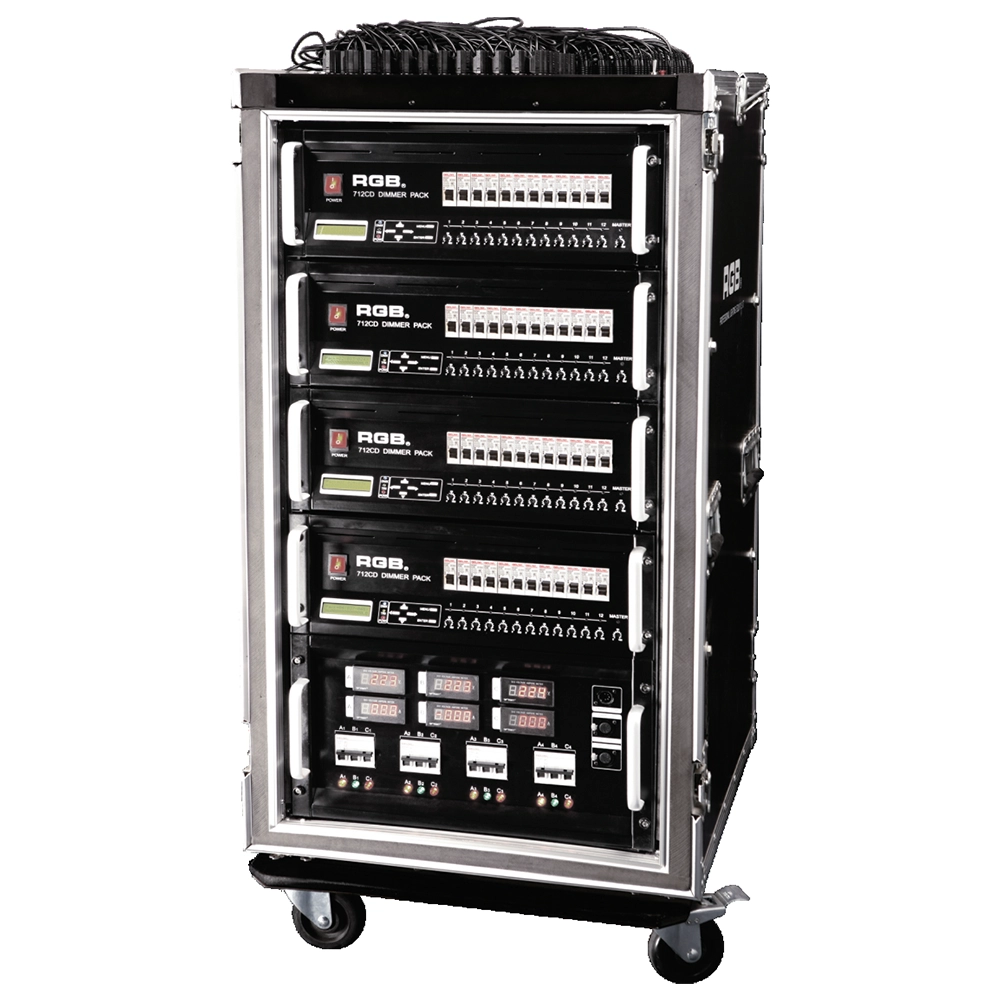
Intelligent Network Touring Dimmer Racks
RGB intelligent network touring dimmer racks can be assembledinto many types of dimmer racks by taking 7 series dimmer
packs as the unit. They are widely used in the entertainment fortheir convenience and practicabillity,
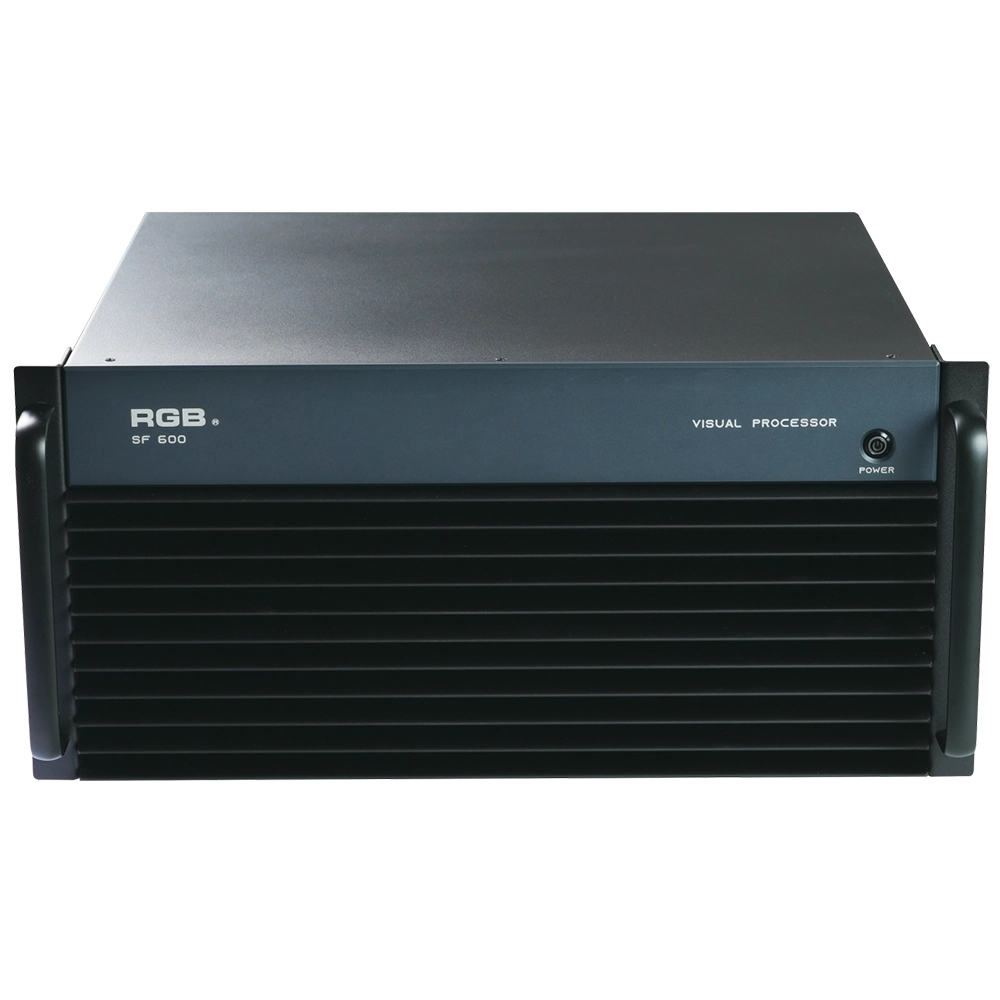
SF600 Visual R-net central processing processor
The SF600 Visual R-net central processing processor by RGB delivers advanced visual systems performance with high-speed processing and seamless integration. Designed for efficiency and reliability, it’s ideal for enhancing your visual system applications in corporate environments.
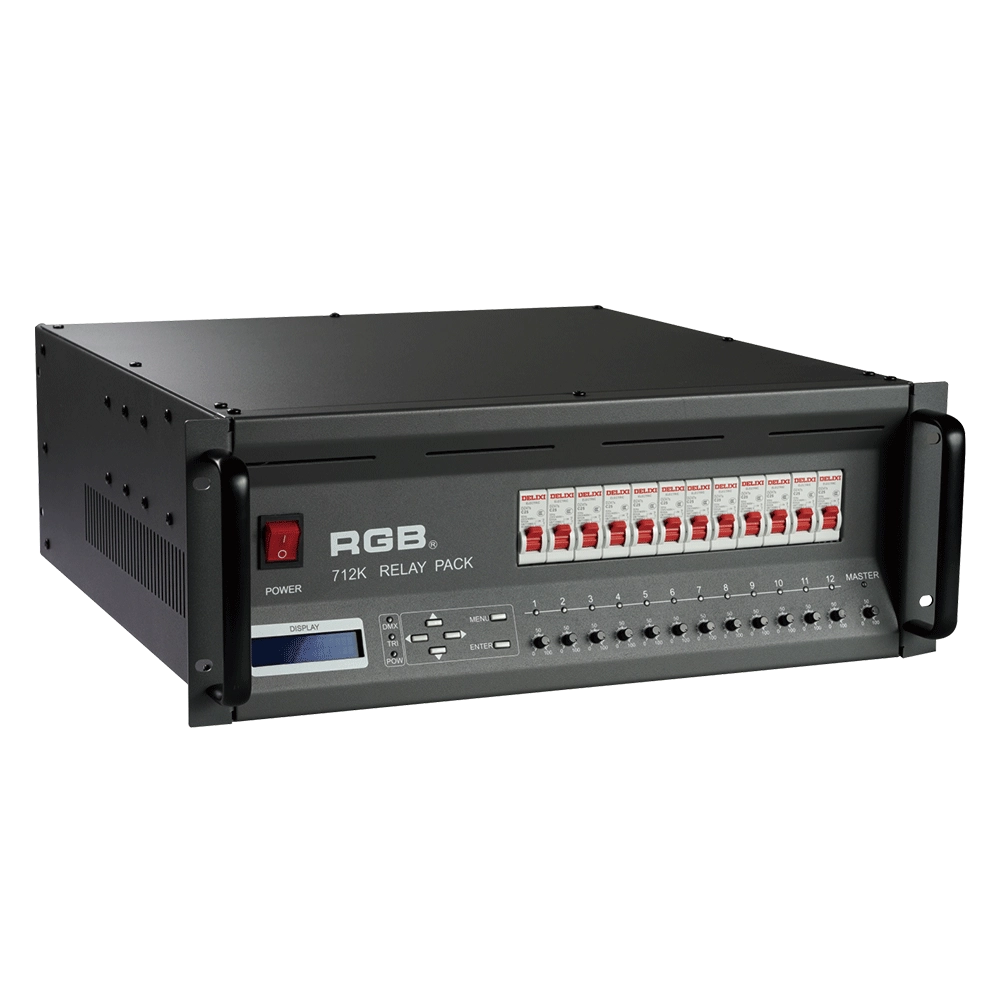
Alloy Relay Packs
High-performance DMX512 relay dimming unit with 512 addressable circuits, phase-loss protection, dual-signal amplification, 20A output per channel, and robust design for reliable stage and mobile lighting applications.
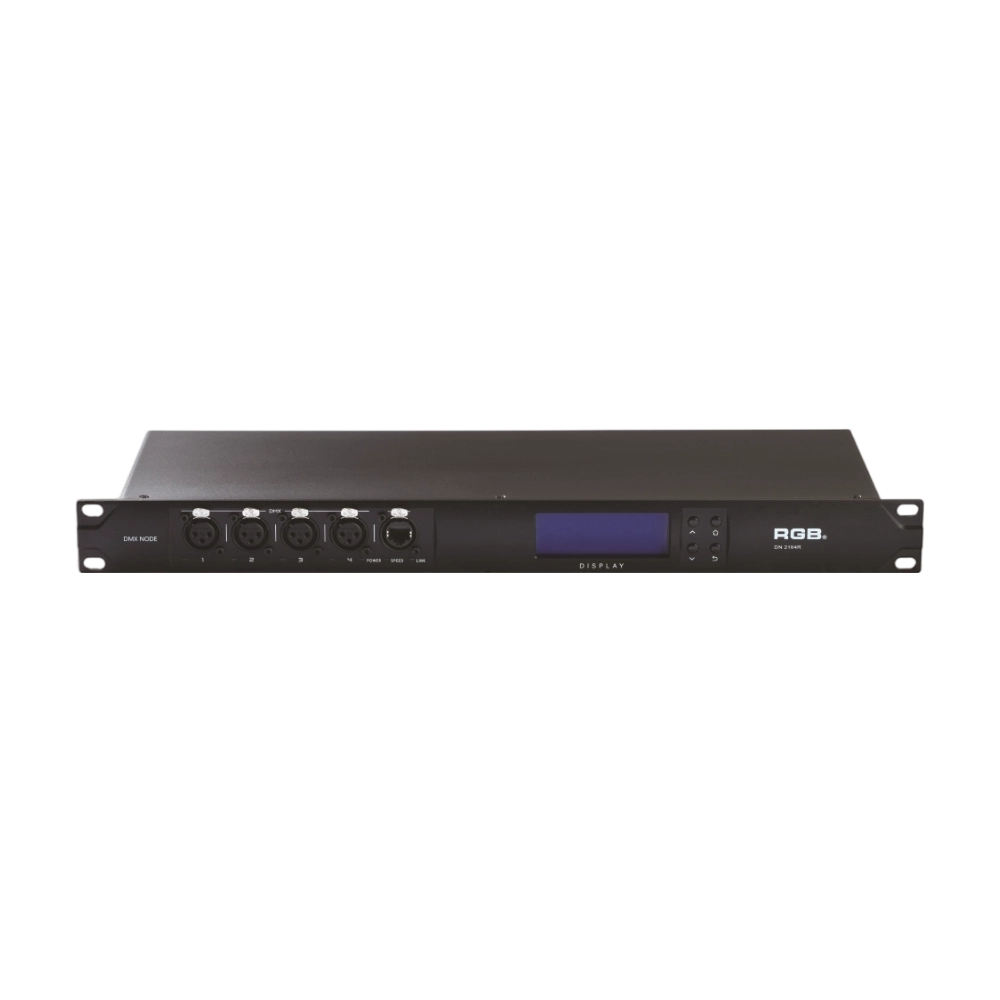
DMX, RDM Nodes
The DN series dual network port network decoder is a lighting control system product independently developed by RGB, featuring completely independent core technology and software copyright. It seamlessly connects and decodes the sACN and ART-Net network protocols based on TCP/IP with the DMX-512 and RDM communication protocols, achieving gigabit communication with dual independent physical address codes. Supports a visual lighting control system, intuitively displaying the online and offline status of the DN series network decoders, and enabling remote monitoring, editing, and setting of corresponding parameters.
It is widely applied in theaters, concert halls, multi-functional halls, cultural and tourism performances, TV stations, gymnasiums, auditoriums, commercial art lighting, and other performance and cultural venues.
Expert Support
Interested in learning more or need expert guidance related to this article? Fill in your details, and our team will provide tailored support.
Intelligent Control. Brilliant Performance.
RGB specializes in stage lighting control systems, delivering intelligent, reliable, and high-performance solutions for theaters and performance spaces worldwide.
Contact
Email:
Tel:
+86 20 3928 0245
+86 20 3928 0247
Address:
No.3, Huashan Road, Shilou Town, Panyu, Guangzhou, China.
Whatsapp: +8615975520131