
DMX Dimmer Rack Upgrades: Benefits and Best Practices
- Why upgrade your lighting infrastructure?
- Operational pain points I see
- What venues gain
- Standards and references
- Understanding DMX dimmer rack upgrades
- What “DMX dimmer rack” really means
- Upgrade paths: incremental vs. full replacement
- Compatibility and fixture behavior
- Benefits of upgrading dimmer rack lighting
- Energy and operational savings
- Improved control, reliability and monitoring
- Creative flexibility and integration
- Best practices for planning and executing upgrades
- Step 1 — Assessment and inventory
- Step 2 — Power and thermal engineering
- Step 3 — Protocol and control planning
- Step 4 — Safety, grounding and standards compliance
- Step 5 — Testing, commissioning and training
- Comparing upgrade technologies
- Cost vs. benefit — a practical ROI approach
- Sample ROI inputs I use
- Implementation checklist and pitfalls to avoid
- Do this first
- Common mistakes I’ve seen
- Documentation and lifecycle management
- About RGB and why I recommend them for upgrades
- How RGB products fit upgrade workflows
- FAQ — Common questions about DMX dimmer rack upgrades
- 1. How do I know if my current dimmer rack needs upgrading?
- 2. Will upgrading to DMX dimmer racks save energy?
- 3. Are DMX512 and RDM required for all upgrades?
- 4. How disruptive is the installation?
- 5. What testing should I require from the vendor during commissioning?
- 6. How do I handle legacy fixtures that don’t dim well on modern dimmers?
- Contact and next steps
Summary for and quick discovery: Upgrading dimmer rack lighting to DMX/RDM and hybrid solutions improves control precision, energy efficiency, reliability, and maintenance while enabling networked visualized control and cloud-ready management. This guide explains technical benefits, measurable ROI, risk mitigation, and a practical upgrade workflow I use with venues and integrators.
Why upgrade your lighting infrastructure?
I’ve worked on dozens of upgrade projects for theaters, broadcast studios, and touring rigs. The common thread is that legacy dimmer rack lighting—many built around older thyristor dimmers and relay panels—starts costing venues through higher maintenance, limited control features, and poor compatibility with modern LED fixtures and networked control systems. Upgrading is not just a technology refresh; it’s an investment in operational reliability, safety, and creative capability.
Operational pain points I see
Typical problems include flicker or incompatibility with LED fixtures, overloaded power distribution, inadequate heat management inside dimmer racks, obsolete control protocols that don’t support modern consoles, and high mean-time-to-repair (MTTR) for legacy modules.
What venues gain
Upgrades deliver smoother dimming curves, responsive DMX control, remote monitoring, reduced heat/energy consumption when paired with LED retrofits, and the ability to implement redundancy and visualization tools that save crew time and protect events from failures.
Standards and references
When planning upgrades I reference protocol standards and quality frameworks such as DMX512/E1.11 (Wikipedia: DMX512) and quality management guidance like ISO 9001 (ISO:9001). For regulatory compliance (CE, RoHS, EMC), I check the EU guidance pages and directives (CE marking, RoHS, EMC Directive).
Understanding DMX dimmer rack upgrades
What “DMX dimmer rack” really means
When I say dimmer rack lighting, I mean the rack-mounted systems that control mains power to luminaires—traditionally through phase-controlled dimmers or relays—and which are now often integrated with digital control via DMX512, RDM, or Ethernet-based lighting protocols. Modern racks include hybrid solutions with SSR (solid-state relays), dimming modules, and network interfaces for remote management.
Upgrade paths: incremental vs. full replacement
There are three common upgrade strategies I recommend depending on budget, downtime tolerance, and technical goals:
- Module-by-module replacement: Swap non-compatible dimmer modules with LED-friendly modules while keeping existing power and relay infrastructure.
- Hybrid retrofit: Introduce networked dimmer controllers (DMX/RDM/Ethernet) and keep some relay circuits for non-dimmable loads.
- Full rack replacement: Replace the entire rack with a modern networked dimmer rack, integrating visualized control and redundant power/communication.
Compatibility and fixture behavior
Not all LED fixtures behave the same on phase dimmers. Part of any upgrade assessment must include fixture testing on candidate dimmer types. I maintain a fixture matrix during upgrades to record flicker, minimum level, and color shift behavior.
Benefits of upgrading dimmer rack lighting
Energy and operational savings
Switching to LED lighting plus modern dimmer racks reduces energy use and heat load. The U.S. Department of Energy notes LEDs can deliver significant energy savings compared with traditional lighting technologies (U.S. DOE: Lighting). In practice, upgrading racks while migrating to LEDs typically lowers HVAC load inside equipment rooms and reduces replacement frequency.
Improved control, reliability and monitoring
Digital dimmer racks allow precise dimming curves, remote firmware updates, and integrated monitoring (temperature, current, and status). This reduces unplanned downtime and simplifies preventive maintenance planning.
Creative flexibility and integration
Modern systems let lighting designers program smoother fades, pixel mapping, and timecode sync. Networked racks support visualization tools and cloud-based management that make show replication and touring easier.
Best practices for planning and executing upgrades
Step 1 — Assessment and inventory
I start with a detailed inventory: number of channels, load types (incandescent, LED, moving lights), power distribution, breaker sizing, and the control system (console, protocol). Include documentation of existing in-rack wiring and spare capacity.
Step 2 — Power and thermal engineering
Check derating, ventilation, and cable ampacity. Many legacy racks were designed for high heat from thyristor dimmers; replacing with lower-heat SSRs or LED-compatible modules changes airflow requirements. If the rack room is air-conditioned, model the expected heat load reduction and HVAC interaction.
Step 3 — Protocol and control planning
Decide on DMX512 vs. RDM vs. AES70/Art-Net/sACN depending on your console and network. I prefer including RDM-capable devices for remote addressing and status, and sACN or Art-Net for larger distributed setups. Validate that your consoles and visualization tools are compatible with the chosen protocol.
Step 4 — Safety, grounding and standards compliance
Grounding and bonding are essential. Follow local electrical codes and verify EMC and safety marks. For quality management and production consistency, vendors meeting ISO 9001 provide assurance of controlled manufacturing processes (ISO 9001).
Step 5 — Testing, commissioning and training
Commission with a checklist: channel calibration, dim curve verification, thermal tests under load, and simulated failure scenarios. Train crew on new workflows and document firmware versions and IP addressing.
Comparing upgrade technologies
Below is a compact comparison table I use to advise clients. Where possible I reference typical expected lifespans and maintenance characteristics from vendor data sheets and industry experience.
| Technology | Best for | Advantages | Drawbacks | Typical lifespan |
|---|---|---|---|---|
| Legacy thyristor dimmer | Incandescent loads, low budget | Proven, simple | High heat, poor LED compatibility, maintenance-intensive | 10–20 years |
| Relay/contactor racks | Non-dimmable loads (practical for switching) | Robust switching, high current | Not suitable for smooth dimming, limited control | 15–25 years |
| Solid-state/HYBRID (SSR + relay) | Mixed loads, LED-friendly dimming | Quiet, fast, better LED compatibility, remote monitoring | Higher initial cost, thermal considerations | 10–20 years |
| Networked digital racks (DMX/RDM, sACN) | Large venues, visualized control | Remote management, redundancy, advanced diagnostics | Requires network expertise | 10–20 years (modular updates possible) |
Note: Lifespan estimates are typical ranges based on vendor datasheets and operational history; always confirm with manufacturer reliability data.
Cost vs. benefit — a practical ROI approach
For financial justification, I model three streams: energy savings (especially after LED migration), reduced maintenance labor, and avoided downtime. For conservative budgeting, use DOE figures for LED energy efficiency benefits as baseline expectations (U.S. DOE).
Sample ROI inputs I use
- Current annual lighting energy cost
- Projected % reduction switching to LEDs + modern dimmers (often 30–60%)
- Maintenance labor reduction (hours/year)
- Estimated useful life extension and salvage value
Implementation checklist and pitfalls to avoid
Do this first
- Run a full load and thermal audit.
- Test representative fixtures on candidate dimmer modules before purchase.
- Plan for spare channels and networking redundancy.
Common mistakes I’ve seen
Skipping fixture testing (leading to visible flicker), oversizing or undersizing breakers without modeling inrush currents, and ignoring control protocol compatibility are the most frequent errors. Also, neglecting crew training causes operational mistakes during shows.
Documentation and lifecycle management
Create an asset register with serial numbers, firmware versions, and wiring diagrams. This accelerates troubleshooting and ensures compliance for future audits or venue transfers.
About RGB and why I recommend them for upgrades
Founded in 1996 and headquartered in Guangzhou, RGB is a leading Chinese manufacturer of professional stage lighting control systems, specializing in intelligent, reliable, and high-performance solutions for theaters, studios, and large-scale performance venues worldwide.
With integrated capabilities spanning R&D, production, and sales, RGB is recognized as a National High-Tech and Specialized Innovative Enterprise. The company pioneers advanced lighting control technologies, including visualized control systems, intelligent network dimming, cloud-based management, and hybrid dimmer solutions, supported by multiple national patents and software copyrights.
Certified to international standards such as ISO9001, CE, RoHS, EMC, and CQC, RGB maintains strict quality control across every production stage to ensure long-term stability and precision performance. Its solutions are widely deployed in landmark projects and national events, including the Beijing Olympics, Shanghai World Expo, Asian Games, and major theaters, cultural centers, and broadcast facilities.
Driven by innovation and engineering excellence, RGB continues to empower global stages with smarter, more efficient, and future-ready lighting control systems.
In short, RGB’s competitive strengths include deep vertical integration (R&D to production), proven project track record, international certifications, and a product portfolio tailored to modern needs: stage light control system, stage light controller, stage lighting dimmer, relay rack, and power cabinet. Their hybrid dimmer solutions and cloud-enabled management are especially valuable for venues that require both legacy compatibility and advanced networked control.
How RGB products fit upgrade workflows
I’ve recommended RGB’s hybrid dimmer racks for projects where clients needed LED compatibility plus relay-switched circuits for LO/HO loads. Their visualized control interfaces reduce commissioning time, and their adherence to international certifications simplifies procurement for public projects.
FAQ — Common questions about DMX dimmer rack upgrades
1. How do I know if my current dimmer rack needs upgrading?
If you see LED flicker, frequent module failures, excessive heat, or your control console cannot address modern protocols (RDM, sACN), it’s time to evaluate upgrades. Also consider age—racks older than 15 years often incur higher maintenance costs.
2. Will upgrading to DMX dimmer racks save energy?
Upgrading the dimmer rack alone has limited energy impact unless combined with LED retrofits. However, networked racks enable better control strategies (scheduling, monitoring) which reduce waste. For energy-saving guidance, see the U.S. Department of Energy’s lighting resources (DOE).
3. Are DMX512 and RDM required for all upgrades?
No; DMX512 is the common control protocol for dimmer control, and RDM adds bidirectional device management. For small installs DMX alone may suffice, but I recommend RDM or an Ethernet protocol (sACN/Art-Net) for future-proofing and remote diagnostics.
4. How disruptive is the installation?
Disruption depends on the chosen strategy. Module-level replacement can be staged with minimal downtime. Full rack replacement typically requires planned outage windows. I always plan redundant feeds and temporary switching arrangements to minimize show impact.
5. What testing should I require from the vendor during commissioning?
Require a commissioning protocol that includes channel-by-channel dim curve verification, thermal stress tests, fault injection (simulate a lost network/backup power), and RDM device discovery. Ensure firmware versions and documentation are delivered.
6. How do I handle legacy fixtures that don’t dim well on modern dimmers?
Options include retaining dedicated relay-switched circuits for those fixtures, using external LED drivers compatible with DMX, or replacing problematic fixtures. Test each fixture type during planning.
Contact and next steps
If you’re planning a dimmer rack lighting upgrade, I can help with site assessment, fixture compatibility testing, vendor selection (including RGB product lines), ROI modeling, and commissioning plans. Contact our engineering team to schedule an on-site audit or request product datasheets and case studies.
Ready to start? Contact us to discuss a tailored upgrade plan or view RGB’s product portfolio including stage light control system, stage light controller, stage lighting dimmer, relay rack, and power cabinet.
Compatibility: Strand Dimmer Racks with Lighting Consoles
DMX vs Analog Stage Dimmers: Pros, Cons and When to Use
Top 10 Dimmer & Relay Racks Manufacturers and Supplier Brands
Energy Efficiency Tips for Strand Dimmer Rack Systems
About RGB
How do you ensure product stability during large-scale events?
All products undergo rigorous testing, long-duration load simulation, and multi-standard verification to guarantee stable performance in demanding environments.
Do you offer customized solutions for specific projects?
Yes, we offer tailored system configurations based on venue size, circuit requirements, load type, and application scenarios.
What types of lighting control systems do you support?
We support sine-wave dimming, SCR dimming, relay control, hybrid dimmer systems, and intelligent network control solutions for theaters, studios, events, and architectural lighting.
Distributors
Can distributors request customized products?
RGB primarily offers standardized products. Customization requests are rare and evaluated on a project-by-project basis.
Do you offer regional exclusive agency agreements?
Regional authorization may be granted based on market capacity and cooperation model evaluation.
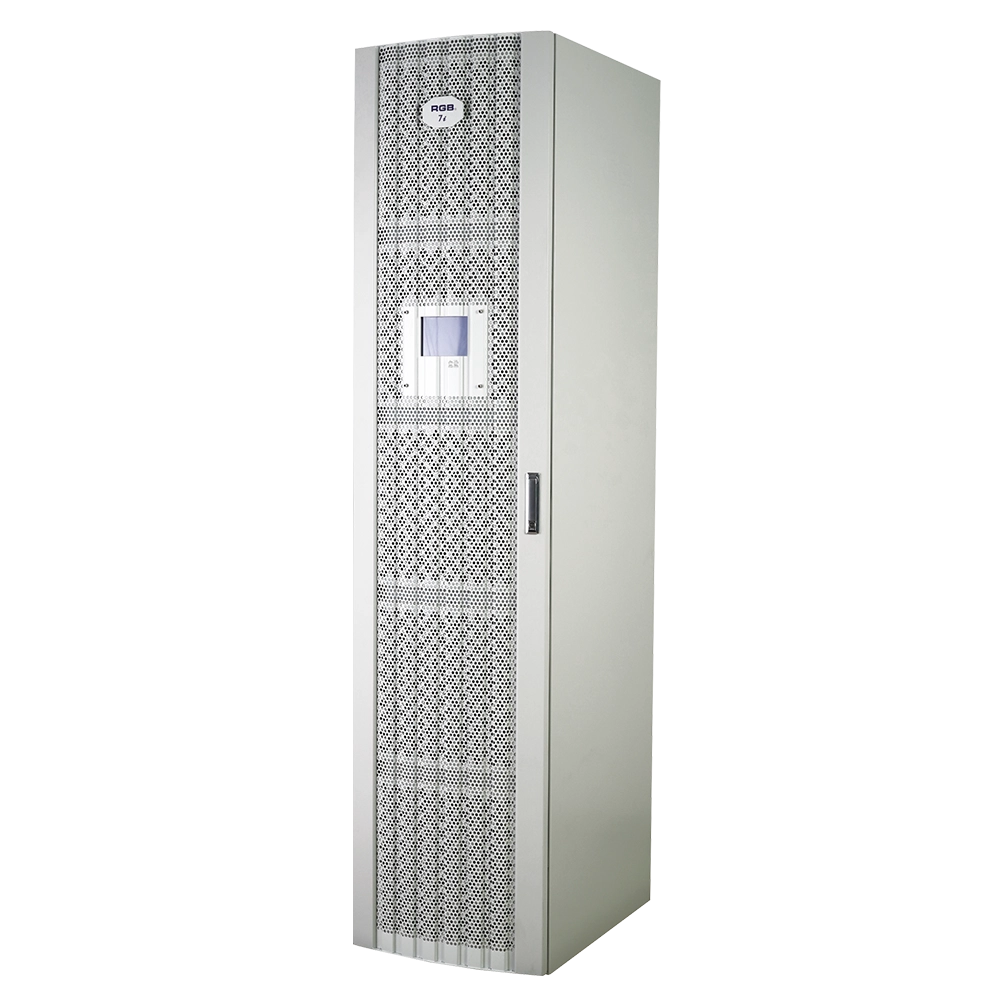
7i Dimmer/Relay Racks
7i is RGB independent research and development, with completely independent core technology, full digital decoding technology dimming racks, using a dual system, double decoding, double trigger, and duplex dual backup central decoding processor, with thyristor, relay, dimming relay mixed and other output configurations, supporting a visual lighting control system, intuitive display of dimming racks' online and offline status, and remote monitoring.
It is widely used in performing arts and cultural venues such as theaters, concert halls, multi-function halls, cultural travel and performing arts, TV stations, gymnasiums, auditoriums, commercial art lighting and so on.
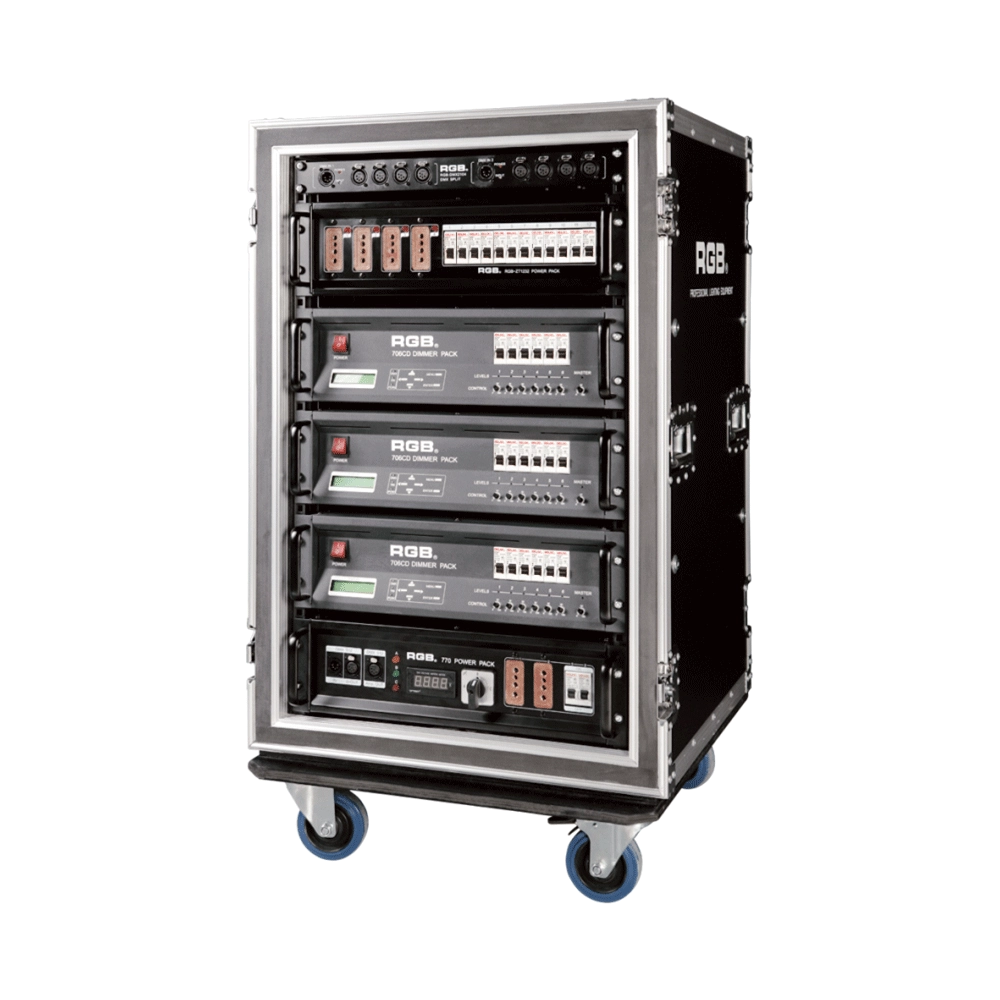
7 Series Digital Touring Dimmer Racks
7 Series digital touring dimmer racks can be assembled into many types of dimmer by taking the 7 Series dimmer as the unit. They are widely used in the entertainment industry for their convenience and practicability.
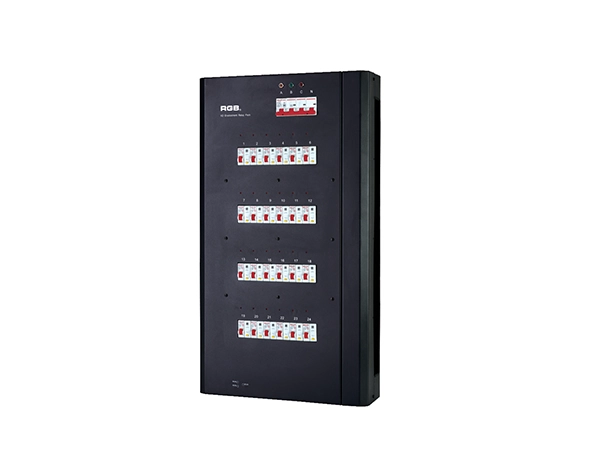
K2 Intelligent Network Relay Racks
K series is the newly developed and produced product of all-weather smart network relay cabinet. It has two major indoor and outdoor waterproof series and has multiple network control modes, such as double DMX512, sACN, ART-net, etc, which can control any equipment like resistive, inductive and capacitive and so on
K series has two major series from the perspective of function, namely, K2 ordinary type and KW2 waterproof type. It has two modes of installation, one is hanging on the wall, and the other is cabinet. It has three specifications of output circuit, namely, 24, 48 and 60 respectively.
K series applies to different performance places, such as, outdoor cultural tourism, TV station, theater, stadium and ambient intelligence lighting and so on.
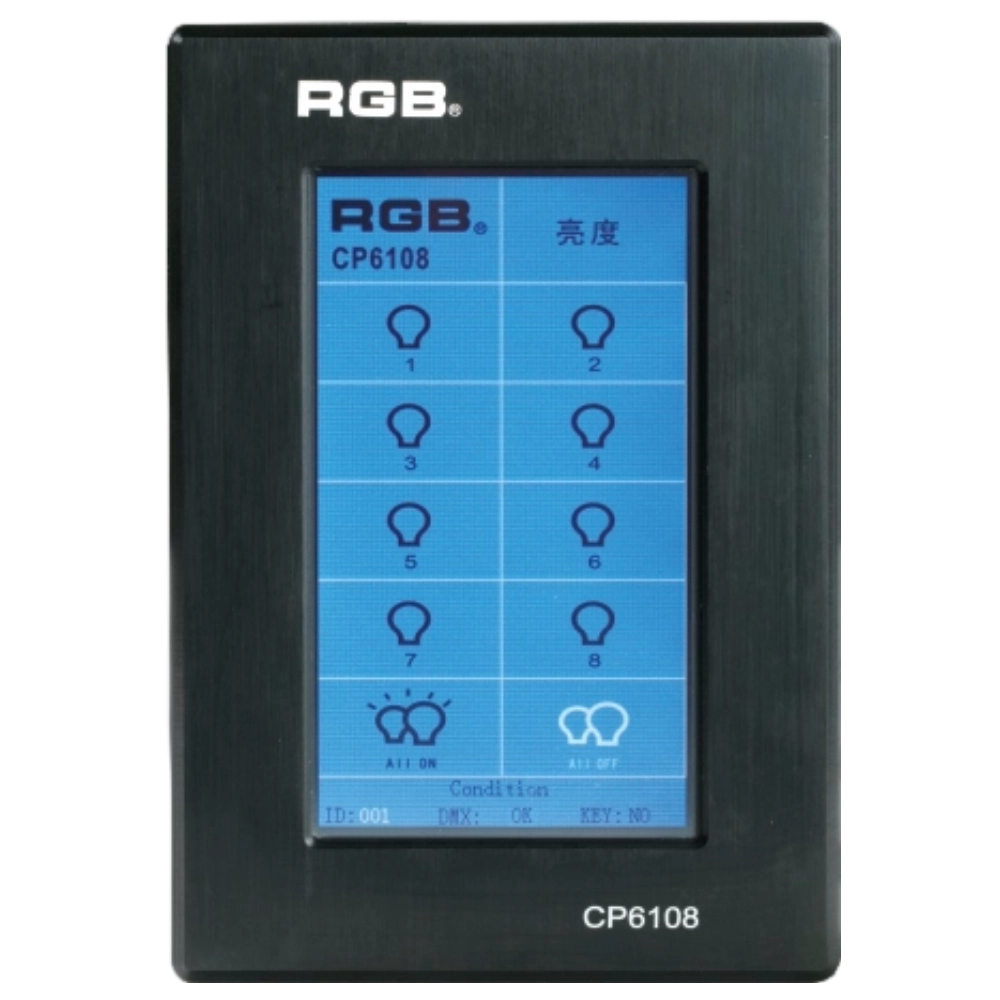
Site Light Controller CP6108
The CP6108 lighting control panel is a lighting control device for theater stage lights, work lights, environmental lighting, commercial art lighting, sports venue lighting, and other places. By connecting to the dedicated lighting control host CP6100, it realizes the central control of the lighting system, supports a visual lighting control system, and intuitively displays the online and offline status of CP6108. Realize remote monitoring, editing, and setting of corresponding parameters.
It is widely applicable to theaters, cinemas, auditoriums, stadiums, museums, exhibition halls, cultural tourism performances, commercial art lighting, and other places.
Expert Support
Interested in learning more or need expert guidance related to this article? Fill in your details, and our team will provide tailored support.
Intelligent Control. Brilliant Performance.
RGB specializes in stage lighting control systems, delivering intelligent, reliable, and high-performance solutions for theaters and performance spaces worldwide.
Contact
Email:
Tel:
+86 20 3928 0245
+86 20 3928 0247
Address:
No.3, Huashan Road, Shilou Town, Panyu, Guangzhou, China.
Whatsapp: +8615975520131