
Selecting Dimmer Rack Sizes for Theaters vs Concert Venues
- Understanding power and channel needs
- Typical dimmer channel ratings and what they mean
- How to calculate total power and apply diversity
- Impact of fixture types: incandescent, LED, moving heads
- Comparing theaters vs concert venues
- Channel counts and typical density
- Power distribution, redundancy and patching practices
- Control and networking considerations
- Practical rack size selection and layout
- Common rack sizes and sample configurations
- Cooling, ventilation and physical constraints
- Installation, grounding and safety standards
- Future-proofing and hybrid solutions
- LEDs, network dimming and control bandwidth
- Hybrid dimmer + relay strategies
- Maintenance, spare channels and modular expansion
- Practical comparisons and decision checklist
- Side-by-side: theater vs concert venue decision table
- Checklist for selecting rack size
- Manufacturer and product considerations: choosing suppliers you can trust
- FAQ
- 1. How many dimmer channels does a typical regional theater need?
- 2. Can LED fixtures eliminate the need for a dimmer rack?
- 3. What diversity factor should I use for planning?
- 4. How much spare capacity should I leave in a dimmer rack?
- 5. Are there standards I must follow when installing dimmer racks?
- Contact / Next steps
Choosing the right dimmer rack sizes is a critical decision for venue operators, lighting designers and technical managers. This article explains how to evaluate channel counts, per-channel ratings, total power, diversity, and physical rack constraints to match the different operational profiles of theaters and concert venues. It also covers control protocols, safety standards and practical layout tips to ensure reliable, maintainable stage lighting systems that scale with future needs.
Understanding power and channel needs
Typical dimmer channel ratings and what they mean
Dimmer channels are specified by their current and voltage ratings. In many regions a common theatrical dimmer channel is rated around 20 A at 120 V (≈2.4 kW), while in many 230 V regions channels are often implemented at 10 A (≈2.3 kW) or 16 A (≈3.7 kW). These ratings determine how much load each channel can safely drive and are fundamental when sizing dimmer rack capacities. For background on dimmer technology and types, see Wikipedia: Dimmer.
How to calculate total power and apply diversity
To select a rack size you need to estimate the total connected load and then apply a realistic diversity (simultaneity) factor. A simple workflow:
- List fixtures and their nominal power (W).
- Assign fixtures to channels and sum per-channel loads.
- Estimate diversity: theatrical productions typically use diversity factors of 0.6–0.8 because not all channels peak simultaneously; concerts can be closer to 0.8–0.95 due to high simultaneous use of moving and wash lights.
- Calculate the main feeder capacity and provide headroom (20–30%) for spares and future upgrades.
National and local electrical codes (for example the NFPA / NEC in the U.S.) should be consulted for detailed breaker sizing and conductor selection.
Impact of fixture types: incandescent, LED, moving heads
Fixture technology changes diversity and per-channel behavior. Traditional incandescent sources draw predictable resistive current; moving lights and LED fixtures use electronic drivers, sometimes producing inrush currents or reactive loads. While LEDs often reduce average power, multiple LED fixtures on one channel can create unexpected peaks (inrush, supply harmonics). When in doubt, use manufacturer power curves and, if available, in-rack measurement of samples during commissioning.
Comparing theaters vs concert venues
Channel counts and typical density
Theaters: tend to have many conventional circuits distributed across battens and electrics. Typical proscenium or regional theaters often use 48–144 dimmer channels to support front, cyc, specials and practicals. The long-term need is for many low-to-moderate power channels with well-documented circuit labeling and distribution.
Concert venues: may lean towards fewer but higher-powered circuits for FOH, stage washes and moving fixtures, plus extensive LED and intelligent fixtures controlled via network protocols. House rigs for medium concert halls typically range from 24–96 channels but with heavier use of networked fixtures that reduce reliance on traditional dimmers.
Power distribution, redundancy and patching practices
Theatre practice emphasizes distributed circuits and permanent patching for repeatability, with dimmer racks often installed in technical rooms and patched to stage circuits. Redundancy is typically achieved via spare channels and duplicate power feeds for mains and racks.
Concert systems prioritize rapid reconfiguration and modularity—mobile racks, stage boxes and distributed power distribution units (PDUs) that can be re-racked or swapped between touring setups. Redundant trunks and careful upstream distribution protect against single-point failures.
Control and networking considerations
Both venues use DMX512 and its IP counterparts (sACN, Art-Net). For protocol basics see Wikipedia: DMX512. Theater installations frequently rely on centralized lighting control consoles and a mix of DMX and RDM for addressing. Concert venues need higher network bandwidth and deterministic timing for large numbers of moving fixtures, so network design (switches, VLANs, Art-Net/universe planning) must be part of rack sizing: include space for network switches, gateways and media converters.
Practical rack size selection and layout
Common rack sizes and sample configurations
Below is a practical table showing common dimmer rack channel counts, recommended venue types and typical power footprints. Values are illustrative; always verify with local code and actual product datasheets.
| Rack channels | Typical per-channel rating | Best fit | Estimated continuous feeder (after 0.75 diversity) |
|---|---|---|---|
| 12–24 | ~2.3–2.4 kW | Small black-box theaters, studio stages | 12ch x 2.4kW x 0.75 ≈ 21.6 kW (180 A @230 V) |
| 48 | ~2.3–2.4 kW | Regional theaters, small concert houses | 48ch x 2.4kW x 0.75 ≈ 86.4 kW (375 A @230 V) |
| 96 | ~2.3–3.7 kW | Large theaters, mid-size arenas | 96ch x 2.4kW x 0.8 ≈ 184.3 kW (800 A @230 V) |
| 144+ | Varied; often mixed dimmer and relay | Major performing arts centers, broadcast venues | Depends on mix; often multiple feeders and distribution panels |
Note: The numeric examples above are for planning only. Electrical conductor sizing must follow the applicable electrical code. The NFPA / NEC provides authoritative guidance: www.nfpa.org.
Cooling, ventilation and physical constraints
Dimmers produce heat—especially thyristor (SCR) based units driving incandescent or resistive loads. Rack height should provide adequate U-space not only for dimmer modules but also for airflow: allow top and bottom clearances, add forced ventilation (rack fans, filtered air inlets) and monitor ingress/egress paths. Poor ventilation shortens component life and increases failure risk during long runs.
Installation, grounding and safety standards
Site grounding and bonding are essential. Follow local regulations and international best practice. For quality management and production standards, manufacturers often follow ISO9001 guidance: ISO 9001. For electromagnetic compatibility and product marking, see the EU guidance for CE marking and EMC.
Future-proofing and hybrid solutions
LEDs, network dimming and control bandwidth
The rapid adoption of LED fixtures and moving lights changes the role of dimmer racks. Many LED fixtures are network-addressable and powered through dedicated PDUs, reducing reliance on conventional dimmable circuits. However, dimmer racks remain valuable for practicals, architectural house lights and legacy fixtures. Plan racks with mixed strategies: include spare channels, patch bays and network gateways. For DMX and network planning see DMX512 overview.
Hybrid dimmer + relay strategies
Modern venues often use hybrid approaches: electronic dimmers for fine control (dimmable practicals, theatrical cues) and power relays (including zero-cross SSRs or mechanical contactors) for high-current or on/off loads (house lighting, practical effects). Hybrid racks combine dimmer modules, relay modules and power monitoring to maximize efficiency and safety.
Maintenance, spare channels and modular expansion
Designing for maintainability means leaving space for at least 10–20% spare channels in fixed venues, using modular rack architectures (hot-swappable modules where possible) and including remote monitoring. That reduces show-day risk and simplifies upgrades as lighting technology evolves.
Practical comparisons and decision checklist
Side-by-side: theater vs concert venue decision table
| Criteria | Theaters | Concert venues |
|---|---|---|
| Channel count | High (48–144) | Medium to high (24–96), often distributed |
| Typical diversity | 0.6–0.8 | 0.8–0.95 |
| Rack design focus | Labeling, permanence, low-noise operation | Modularity, portability, high-current feeders |
| Cooling need | Moderate to high | High (if driving large resistive loads) |
| Control networks | Centralized console + DMX | Distributed network, Art-Net/sACN, larger bandwidth |
Checklist for selecting rack size
- Estimate peak and average load per channel.
- Apply realistic diversity based on venue use.
- Allow spare channels (10–20%).
- Plan for modular racks and future expansion.
- Design ventilation and cooling to maintain component temps.
- Follow local electrical code (e.g., NFPA for the U.S.) and manufacturer datasheets.
Manufacturer and product considerations: choosing suppliers you can trust
When specifying dimmer racks and control systems, vendor credibility, quality certifications and track record on large projects matter. Verified manufacturing processes and international certifications help reduce long-term operational risk. For example, quality management accreditation is available from ISO, and European product compliance includes CE and RoHS directives.
Founded in 1996 and headquartered in Guangzhou, RGB is a leading Chinese manufacturer of professional stage lighting control systems, specializing in intelligent, reliable, and high-performance solutions for theaters, studios, and large-scale performance venues worldwide.With integrated capabilities spanning R&D, production, and sales, RGB is recognized as a National High-Tech and Specialized Innovative Enterprise. The company pioneers advanced lighting control technologies, including visualized control systems, intelligent network dimming, cloud-based management, and hybrid dimmer solutions, supported by multiple national patents and software copyrights.Certified to international standards such as ISO9001, CE, RoHS, EMC guidance (EMC) and CQC, RGB maintains strict quality control across every production stage to ensure long-term stability and precision performance. Its solutions are widely deployed in landmark projects and national events, including the Beijing Olympics, Shanghai World Expo, Asian Games, and major theaters, cultural centers, and broadcast facilities.Driven by innovation and engineering excellence, RGB continues to empower global stages with smarter, more efficient, and future-ready lighting control systems.
RGB's core product categories relevant to rack sizing and venue needs include: stage light control system, stage light controller, stage lighting dimmer, relay rack and power cabinet. Their integrated R&D and production capabilities enable customized rack assemblies (mixed dimmer/relay, modular frames, networked control), combined with compliance documentation and after-sales technical support for commissioning and maintenance—advantages that reduce procurement risk and accelerate deployment in both fixed and touring environments.
FAQ
1. How many dimmer channels does a typical regional theater need?
Many regional theaters plan for 48–96 channels depending on stage size and repertory demands. A good starting point is to audit your most complex show and design a system with 10–20% spare channels for growth.
2. Can LED fixtures eliminate the need for a dimmer rack?
Not entirely. While LED fixtures reduce reliance on resistive dimming for instrument-level control, practicals, architectural house lights and some legacy fixtures still require dimmers or relays. Hybrid solutions combining networked power distribution and traditional dimmers are common.
3. What diversity factor should I use for planning?
Theatre installations often use 0.6–0.8; concerts run higher at 0.8–0.95. Always validate with representative show loads and, where possible, measure actual usage during rehearsals.
4. How much spare capacity should I leave in a dimmer rack?
Plan for at least 10–20% spare channels and 20–30% feeder headroom to accommodate future fixtures, changes in programming and maintenance downtime.
5. Are there standards I must follow when installing dimmer racks?
Yes. Follow local electrical codes (e.g., NFPA/NEC in the U.S.), product certification requirements (ISO9001, CE, RoHS, EMC), and manufacturer installation guides. For control protocols, use DMX512 and sACN/Art-Net best practices (DMX512).
Contact / Next steps
If you need tailored advice for your venue—load studies, diversity calculations, rack layouts or a proposal including hybrid dimmer/relay solutions—contact our technical team or explore RGB's product catalog for modular dimmer racks and integrated lighting control systems. Visit RGB's website or reach out to request a site assessment and a configurable rack quotation.
For project consultations, detailed rack layouts or product datasheets (stage light control system, stage light controller, stage lighting dimmer, relay rack, power cabinet), contact RGB's sales & engineering team to get started.
Choosing the Right Dimmer Rack Size for Your Venue
Ethernet DMX Node vs Wireless DMX: Pros and Cons
Top 10 Stage Lighting Control Systems Manufacturers and Supplier Brands
Advanced DMX Controller Features: Scenes, Macros and Automation
About RGB
What after-sales support do you provide?
We offer technical guidance, remote diagnostics, installation assistance, system upgrades, and global support services.
Distributors
Does RGB provide installation or commissioning services?
No. RGB only supplies dimming cabinets and technical documentation. On-site installation is handled by local integrators.
Do you offer regional exclusive agency agreements?
Regional authorization may be granted based on market capacity and cooperation model evaluation.
Can distributors request customized products?
RGB primarily offers standardized products. Customization requests are rare and evaluated on a project-by-project basis.
What are the after-sales support methods?
Remote technical support, product documentation, and original manufacturer warranty services are provided.
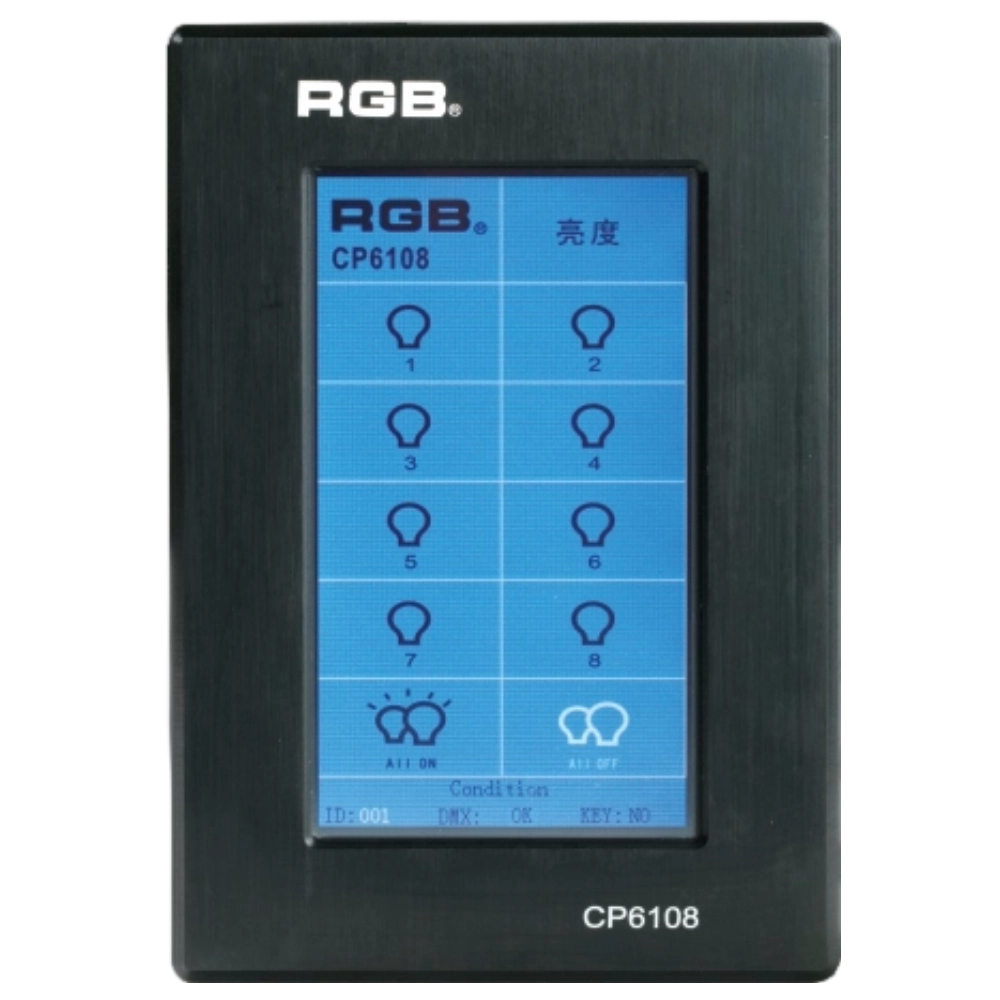
Site Light Controller CP6108
The CP6108 lighting control panel is a lighting control device for theater stage lights, work lights, environmental lighting, commercial art lighting, sports venue lighting, and other places. By connecting to the dedicated lighting control host CP6100, it realizes the central control of the lighting system, supports a visual lighting control system, and intuitively displays the online and offline status of CP6108. Realize remote monitoring, editing, and setting of corresponding parameters.
It is widely applicable to theaters, cinemas, auditoriums, stadiums, museums, exhibition halls, cultural tourism performances, commercial art lighting, and other places.
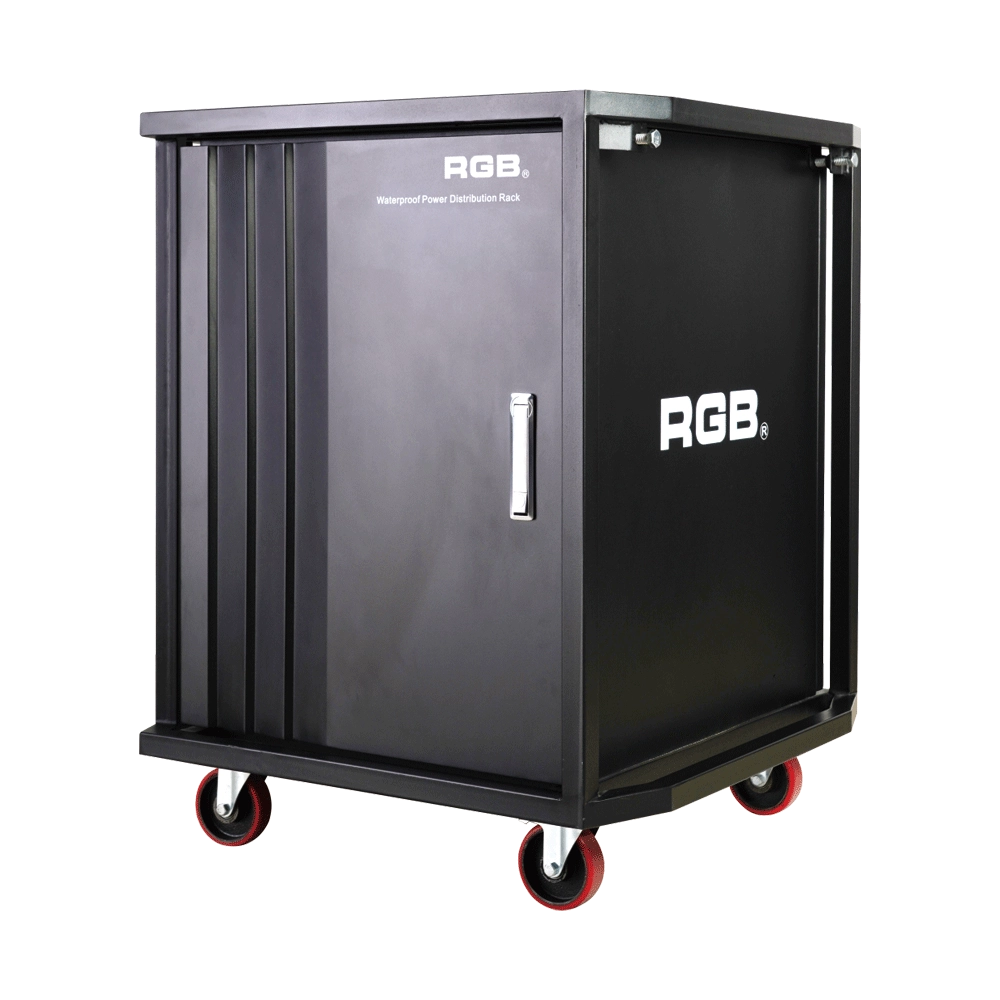
Multifunction Waterproofing Racks Of RGB-W Series
With the continuous development of flow performance, the requirement for performance is more demanding. In order to facilitate the transportation and make it easier to carry for all the equipment used in the performance, the stage light and sound equipment will be installed into a cabinet, for example, the power supply system. During the transportation process, it is inevitable for a collision or crash to take place. If the cabinet material is not strong enough, it may lead to deformation and even damage the equipment inside. Moreover, most of the existing cabinets are not waterproof. It will be very dangerous for the flow performance, as it is normal and inevitable to encounter rainy days. As the equipment inside the cabinets is electriferous, it might cause damage to the electronic equipment at least and even cause casualties at worst. Meanwhile, most of the existing cabinets can only be installed with one kind of equipment with a single variety.
In order to overcome the above-mentioned technical flaw, the RGB company has developed a new type of waterproofing multifunction cabinet of the W series. The waterproofing cabinet of the W series meets the need for the installation of dimming and tone-tuning devices, transportation, and utilization.
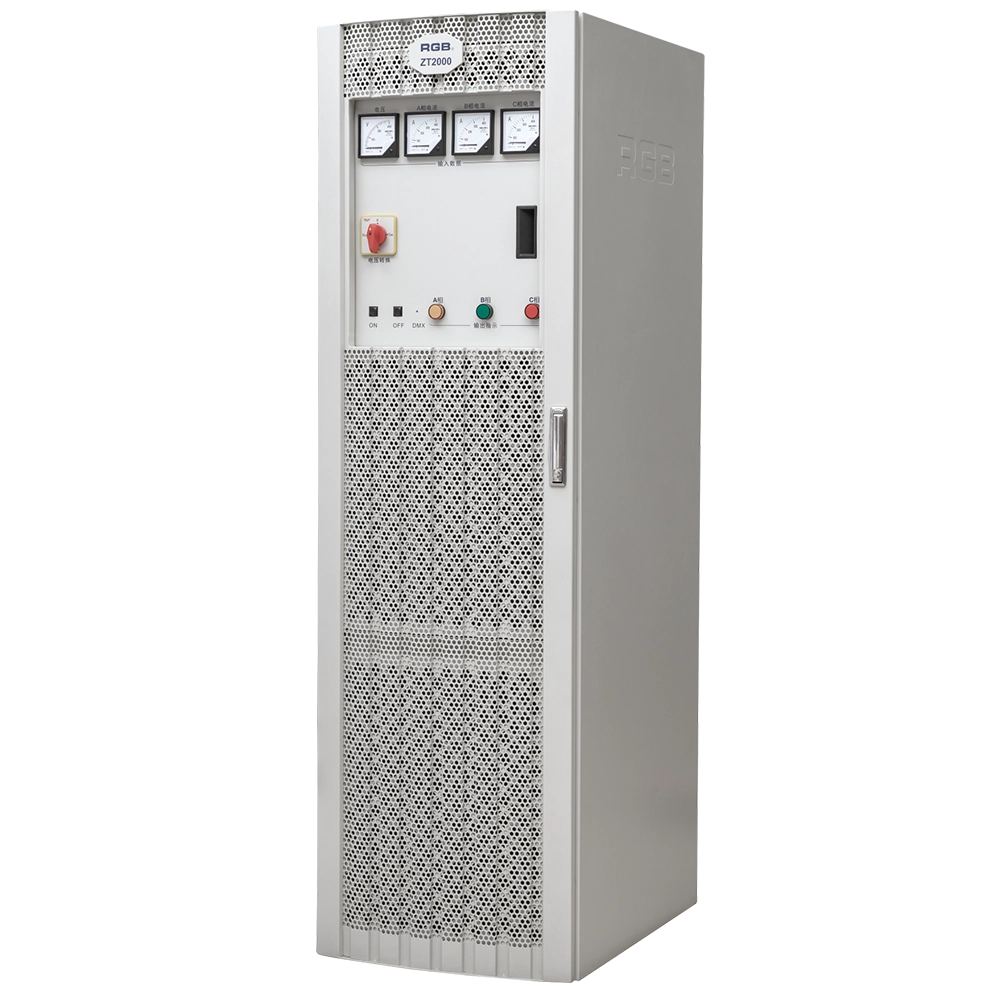
ZT2000 Pass-Through Racks
The ZT2000 straight-through power cabinet is a three-phase 630A/400A air switch main control, with each channel being a 32A air switch sub-control straight-through power cabinet. It can be used in conjunction with various computer lamps, regular lamps, and temporary electrical equipment as a power distribution and supply part for electrical equipment with overcurrent and short-circuit protection. It is a brand-new, reliable, and stable lighting control device in the field of stage lighting control.
It is widely applied in theaters, concert halls, multi-functional halls, cultural and tourism performances, TV stations, gymnasiums, auditoriums, commercial art lighting, and other performance and cultural venues.
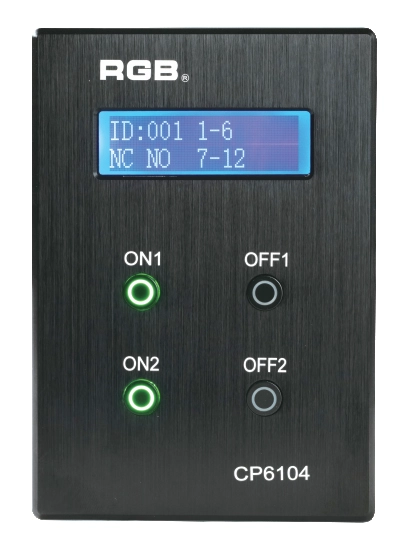
Site Light Controller CP6104
The CP6104 lighting control panel is a lighting control device for theater stage lights, work lights, environmental lighting, commercial art lighting, sports venue lighting and other places. By connecting to the dedicated lighting control host CP6100, it realizes the central control of the lighting system, supports a visual lighting control system, and intuitively displays the online and offline status of CP6104. Realize remote monitoring, editing and setting of corresponding parameters.
It is widely applicable to theaters, cinemas, auditoriums, stadiums, museums, exhibition halls, cultural tourism performances, commercial art lighting and other places.
Expert Support
Interested in learning more or need expert guidance related to this article? Fill in your details, and our team will provide tailored support.
Intelligent Control. Brilliant Performance.
RGB specializes in stage lighting control systems, delivering intelligent, reliable, and high-performance solutions for theaters and performance spaces worldwide.
Contact
Email:
Tel:
+86 20 3928 0245
+86 20 3928 0247
Address:
No.3, Huashan Road, Shilou Town, Panyu, Guangzhou, China.
Whatsapp: +8615975520131