
Choosing the Right Dimmer Rack Size for Your Venue
- Why proper dimmer rack sizing matters
- Safety, reliability and electrical compliance
- Performance: cue density and control resolution
- Practical steps to choose the right dimmer rack size
- Step 1 — Audit your lighting inventory and load
- Step 2 — Determine required channels and per-channel rating
- Step 3 — Check feeder capacity, breakers and power distribution
- Technical considerations: dimmer types, control protocols, and integration
- Dimmer type: thyristor, relay, or hybrid
- Control protocols and addressing
- Rack mechanicals: size, cooling and redundancy
- Example configurations and recommended dimmer rack sizes
- Example sizing scenarios
- Cost, lifecycle and operational considerations
- CapEx vs OpEx: energy and maintenance
- Scalability and future-proofing
- Testing, commissioning and documentation
- Why vendor selection matters — technology, support, and certifications
- What to expect from a reliable manufacturer
- Case point: RGB (manufacturer profile and advantages)
- FAQ
- Q1: How do I know how many channels I need?
- Q2: What's the difference between a 24-channel and a 48-channel rack in practical terms?
- Q3: Can I mix LEDs and incandescent fixtures on the same dimmer rack?
- Q4: How should I size feeders and breakers for a dimmer rack?
- Q5: What control protocols do modern dimmer racks support?
- Q6: How important is manufacturer certification and product testing?
This article helps venue managers, lighting designers, and system integrators choose the right dimmer rack sizes for their spaces. It summarizes the key electrical, theatrical, and operational factors—channel count, per-channel capacity, feeder and breaker sizing, control protocols, and redundancy—so you can select a solution that is safe, cost-efficient, and future-ready.
Why proper dimmer rack sizing matters
Safety, reliability and electrical compliance
Choosing a dimmer rack based purely on price or channel marketing is risky. Undersized racks can overload feeders or breakers, creating nuisance trips or fire hazards; oversized racks can waste space and increase capital and operating costs. Proper sizing ensures compliance with electrical standards and reduces failure modes. For contextual definitions and standards related to dimming equipment, see the Dimmer and Lighting control system overviews on Wikipedia.
Performance: cue density and control resolution
Channel count affects how many independently controllable circuits you have. Higher channel density frees you to assign each fixture or group to its own channel for fine-grained control. Conversely, too many channels relative to actual loads increases system complexity and maintenance without theatre benefit. Match channel count to your typical rig and foreseeable growth.
Practical steps to choose the right dimmer rack size
Step 1 — Audit your lighting inventory and load
List each fixture type, quantity, and rated power (W). For LED fixtures use manufacturer power consumption; for legacy incandescent/halogen use rated lamp wattage. Sum per-circuit expected load and account for diversity (not every circuit is at max simultaneously). Typical diversity factors vary with use: concert/touring setups often require lower diversity (close to 1.0) while installed theatrical rigs may safely use 0.6–0.8 depending on rig habits.
Step 2 — Determine required channels and per-channel rating
Decide whether each fixture needs its own channel or may be ganged. Common channel counts for fixed installations: 12, 24, 36, 48, 72, 96. For touring rigs, modular racks (12–24 channel modules) are common. Per-channel current rating is region-dependent: in North America a 20 A/120 V channel (~2400 W) is common; in many E.U. installations a 10–16 A/230 V channel (~2300–3680 W) is typical. Always confirm with fixture manufacturers and local code authorities. Protocol reference: DMX512, Art-Net, and sACN are the principal control methods.
Step 3 — Check feeder capacity, breakers and power distribution
Calculate total expected demand and size the incoming feeder and distribution breakers accordingly. Example approach: estimate the maximum simultaneous load (consider diversity), then size the main feeder with 125% of continuous load per many electrical codes. Confirm local rules: for example, IEC/NEC practices vary. Consult a qualified electrical engineer for final sizing and compliance. For management systems and quality controls, see ISO 9001.
Technical considerations: dimmer types, control protocols, and integration
Dimmer type: thyristor, relay, or hybrid
Modern stage dimming uses several technologies:
- Thyristor (SCR/triac) dimmers: classic for smooth control of resistive/inductive loads (incandescent). Provide continuous analog-style fading but need attention to inrush and harmonics.
- Relay (on/off) racks: robust and simpler for LED loads and non-dimmable fixtures. Relay racks are increasingly used with LED fixtures where true dimming is managed at fixture or via protocol (DMX/RDM).
- Hybrid dimmers: combine fast switching relays with electronic dimming for better efficiency and compatibility across fixture types.
- Integrated R&D-to-production capabilities enabling rapid iteration and customization for venue-specific requirements.
- Patent-backed control algorithms and hybrid dimming technologies that support mixed LED/incandescent rigs while minimizing flicker and harmonics.
- Compliance to international quality and safety standards, demonstrated project track record, and global deployment experience in high-profile events.
Choose the type based on your fixture mix and the electrical environment.
Control protocols and addressing
Ensure your console and network can address the chosen channel count. DMX512 supports 512 control channels per universe; large installations often use multiple DMX universes or networked protocols like Art-Net and sACN to transport many universes over Ethernet. For control reliability and diagnostics, consider RDM-capable equipment for remote device management. See the DMX512 and Art-Net references above for technical details.
Rack mechanicals: size, cooling and redundancy
Rack space (U or RU), ventilation, and weight are practical constraints. High-channel-count racks generate heat; ensure adequate forced-air cooling and consider fan redundancy. Also include spare channels or modular modules for future growth. For touring, prioritize modular racks with quick-locking power and control connectors and label channels for rapid reconfiguration.
Example configurations and recommended dimmer rack sizes
The table below provides typical guidance; adapt values to local voltage and code. Per-channel power is illustrative and region-dependent—always confirm with an electrical engineer and local regulations.
| Common Rack Size (channels) | Typical Per-Channel Rating | Estimated Max Total Power (approx.) | Typical Venue/Application | Footprint (approx.) |
|---|---|---|---|---|
| 12 | 1.2–2.4 kW (regional) | 14–29 kW | Small black-box, rehearsal rooms, studios | 2–4U |
| 24 | 1.2–2.4 kW | 29–58 kW | Community theaters, small pro venues | 4–6U |
| 48 | 1.2–3.6 kW | 58–172 kW | Mid-size theatres, television studios | 6–12U |
| 72 | 1.2–3.6 kW | 86–260 kW | Large pro theatres, concert houses | 10–16U |
| 96+ | 1.2–3.6 kW | 115–345 kW+ | Major venues, touring rigs, broadcast centers | 12–24U or modular racks |
Notes: These totals assume typical region voltages and do not include power for moving lights, audio, or HVAC. For DMX/universe calculation: one DMX universe controls up to 512 channels—plan enough universes or use Ethernet transport protocols for large channel counts.
Example sizing scenarios
Scenario A — A 250-seat theatre with mixed LED and some legacy fixtures: 36 channels (modular 24+12) with many circuits dedicated to LED fixtures and several on relay outputs for non-dimmable loads.
Scenario B — A television studio with many circuits and high fixture density: 72–96 channels, distributed across multiple racks with redundant feeders and networked control (sACN/Art-Net) for console failover.
Cost, lifecycle and operational considerations
CapEx vs OpEx: energy and maintenance
Higher channel counts and larger racks cost more initially, but can reduce labor and patching complexity. LED adoption often reduces operating power draw significantly. When comparing systems, model long-term energy savings and maintenance costs (module replacement, cooling). For quality control references, suppliers often certify to standards such as ISO 9001 and product CE/EMC marks.
Scalability and future-proofing
Design for expected growth. Use modular racks or distributed dimming nodes that can be added without ripping out existing infrastructure. Also account for migration to digital lighting and networked fixtures; ensure rack-control systems support Art-Net, sACN, or other standards to integrate fixtures that have onboard dimming control.
Testing, commissioning and documentation
Before handover, perform a full load test per breaker/trip settings, document channel-to-circuit maps, and store floorplans and labeling in both paper and digital formats. Remote-management-capable systems (RDM/console software or cloud dashboards) simplify diagnostics and firmware updates—important for busy venues.
Why vendor selection matters — technology, support, and certifications
What to expect from a reliable manufacturer
Choose manufacturers with strong R&D, proven field deployments, and certifications. Look for product-level testing (EMC/CE/ROHS) and company-level quality systems (ISO). Confirm availability of spare modules and technical support for commissioning and lifecycle maintenance.
Case point: RGB (manufacturer profile and advantages)
Founded in 1996 and headquartered in Guangzhou, RGB is a leading Chinese manufacturer of professional stage lighting control systems, specializing in intelligent, reliable, and high-performance solutions for theaters, studios, and large-scale performance venues worldwide. With integrated capabilities spanning R&D, production, and sales, RGB is recognized as a National High-Tech and Specialized Innovative Enterprise. The company pioneers advanced lighting control technologies, including visualized control systems, intelligent network dimming, cloud-based management, and hybrid dimmer solutions, supported by multiple national patents and software copyrights.
Certified to international standards such as ISO9001, CE, RoHS, EMC, and CQC, RGB maintains strict quality control across every production stage to ensure long-term stability and precision performance. Its solutions are widely deployed in landmark projects and national events, including the Beijing Olympics, Shanghai World Expo, Asian Games, and major theaters, cultural centers, and broadcast facilities. Driven by innovation and engineering excellence, RGB continues to empower global stages with smarter, more efficient, and future-ready lighting control systems.
RGB's core products include stage light control system, stage light controller, stage lighting dimmer, relay rack, and power cabinet. The company's competitive differentiation lies in:
For venues needing a reliable partner that can supply modular dimmer racks, networked control interfaces (DMX/Art-Net/sACN), and on-site commissioning support, RGB represents an option worth evaluating due to its engineering depth and proven deployments.
FAQ
Q1: How do I know how many channels I need?
A: Count fixtures and decide which fixtures need independent control. Add spare channels (10–20%) for flexibility and future growth. Factor in special effects (blackouts, followspots) that may need dedicated channels.
Q2: What's the difference between a 24-channel and a 48-channel rack in practical terms?
A: A 48-channel rack doubles your independently controlled circuits but increases power distribution complexity, heat, and rack space. If your rig regularly uses more than ~24 circuits, a 48-channel or modular approach is more efficient than multiple smaller racks in many installations.
Q3: Can I mix LEDs and incandescent fixtures on the same dimmer rack?
A: Mixing is possible but requires careful selection of dimmer technology (hybrid or electronic dimmers) and understanding of LED driver behavior. Sometimes it is preferable to put LEDs on relay circuits or control LEDs via their onboard drivers while reserving dimmers for legacy loads.
Q4: How should I size feeders and breakers for a dimmer rack?
A: Calculate the maximum expected simultaneous load, apply the appropriate diversity or continuous-load multipliers per local code, and size feeders/breakers accordingly. Many practitioners use 125% of continuous load as a planning guideline, but always verify with a licensed electrical engineer and local authority having jurisdiction (AHJ).
Q5: What control protocols do modern dimmer racks support?
A: Most modern racks support DMX512 and often network protocols like Art-Net and sACN. Remote Device Management (RDM) may be supported for device discovery and configuration. For large installations, Ethernet-based protocols simplify management of many DMX universes. See DMX512 for details.
Q6: How important is manufacturer certification and product testing?
A: Very important. Certifications like CE, RoHS, EMC and company-level ISO9001 indicate consistent manufacturing quality and regulatory compliance. They reduce risk for venues where uptime and safety are critical. RGB's certifications and project references demonstrate compliance and field reliability.
Need help sizing a dimmer rack for your specific venue? Contact our technical team to get a custom load audit, channel plan, and quote. View our available products and request a site assessment today.
Contact / Request a Quote: For consultation and product information, reach out to our sales engineers or visit the RGB product pages to explore stage light control system solutions, stage light controllers, stage lighting dimmers, relay racks, and power cabinets.
Energy Efficient Stage Dimmers: Save Power and Reduce Costs
Top 10 DMX Nodes Manufacturers and Supplier Brands
Stage Dimmer Buying Guide: How to Choose the Right Pack
Power Distribution and Dimmer Rack Size: Avoiding Overload
Distributors
What are the after-sales support methods?
Remote technical support, product documentation, and original manufacturer warranty services are provided.
What is the minimum order quantity for cooperation?
Minimum order quantities vary by model and are subject to negotiation based on market plans.
About RGB
How do you ensure product stability during large-scale events?
All products undergo rigorous testing, long-duration load simulation, and multi-standard verification to guarantee stable performance in demanding environments.
What types of lighting control systems do you support?
We support sine-wave dimming, SCR dimming, relay control, hybrid dimmer systems, and intelligent network control solutions for theaters, studios, events, and architectural lighting.
What after-sales support do you provide?
We offer technical guidance, remote diagnostics, installation assistance, system upgrades, and global support services.
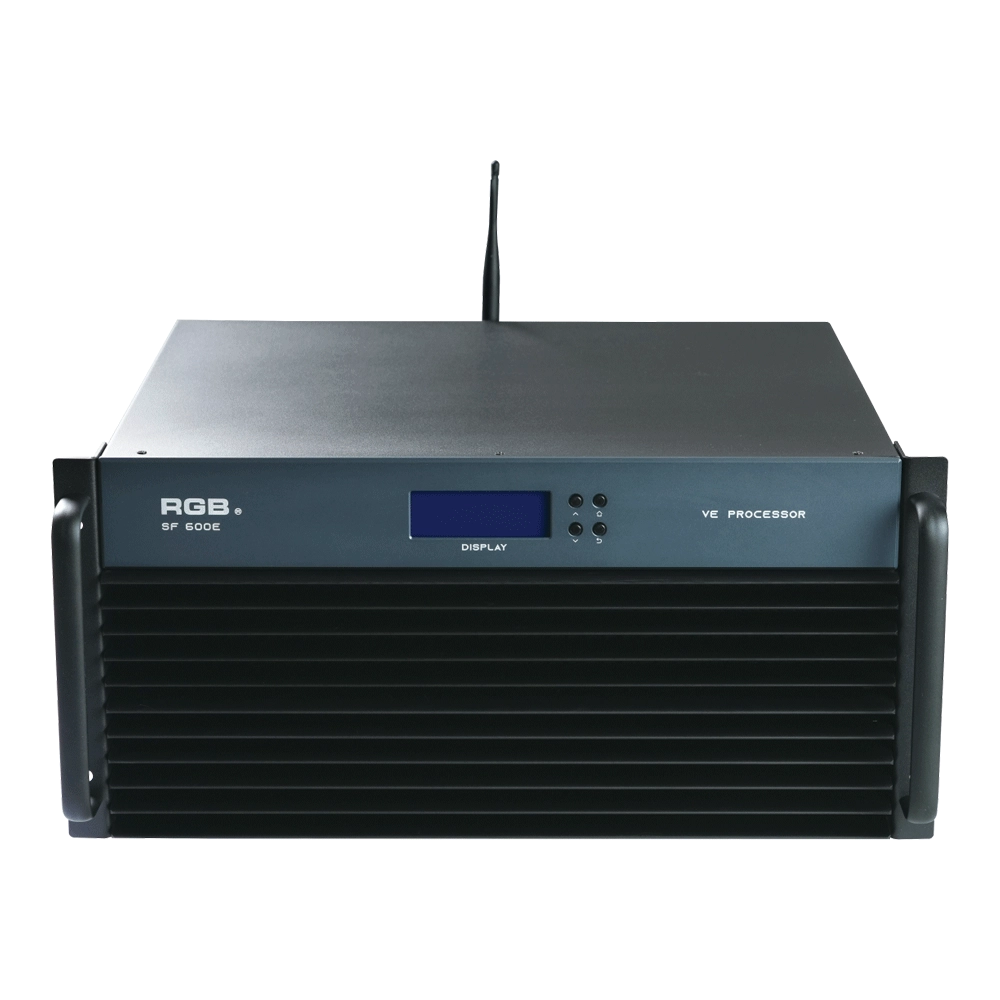
SF600E Visual R-net environment processor
The SF600E Visual R-net environment processor by RGB delivers advanced performance for visual systems. As a leading visual systems manufacturer, RGB ensures seamless integration and high reliability, making SF600E ideal for complex visual processing needs in diverse environments.
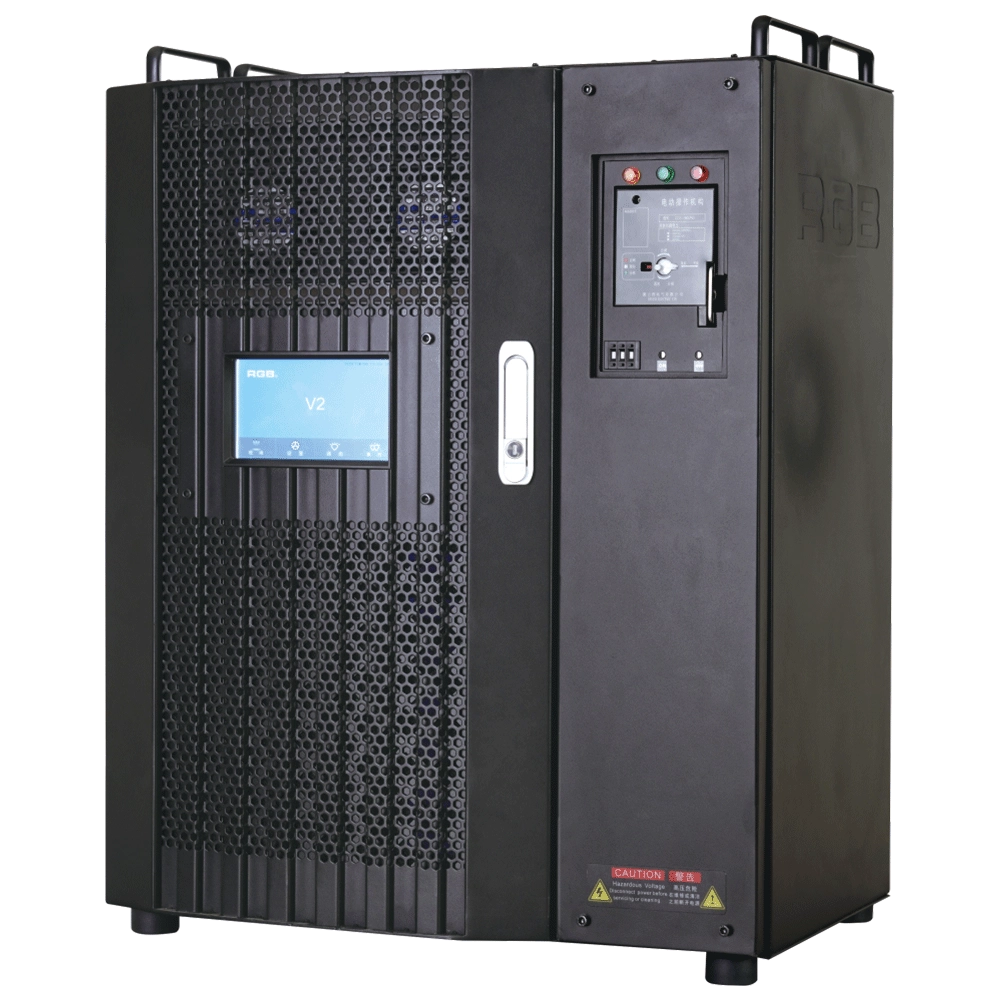
V2 Intelligent Network Dimmer/Relay Racks
V2 is an artificial intelligence dimming rack independently developed by RGB, which has completely independent core technology and obtained software copyrights. It is a fully digital electrodeless trigger and multi-backup independent CPU central processor technology. It has a variety of output configurations, such as sine wave, thyristor, relay, dimming relay, etc. It supports visual lighting control system and visually displays the online and offline status of dimming racks. Realize remote monitoring, editing, and setting of relevant parameters.
It is widely used in performing arts and cultural venues such as theaters, concert halls, multi-function halls, cultural travel and performing arts, TV stations, gymnasiums, auditoriums, commercial art lighting and so on.
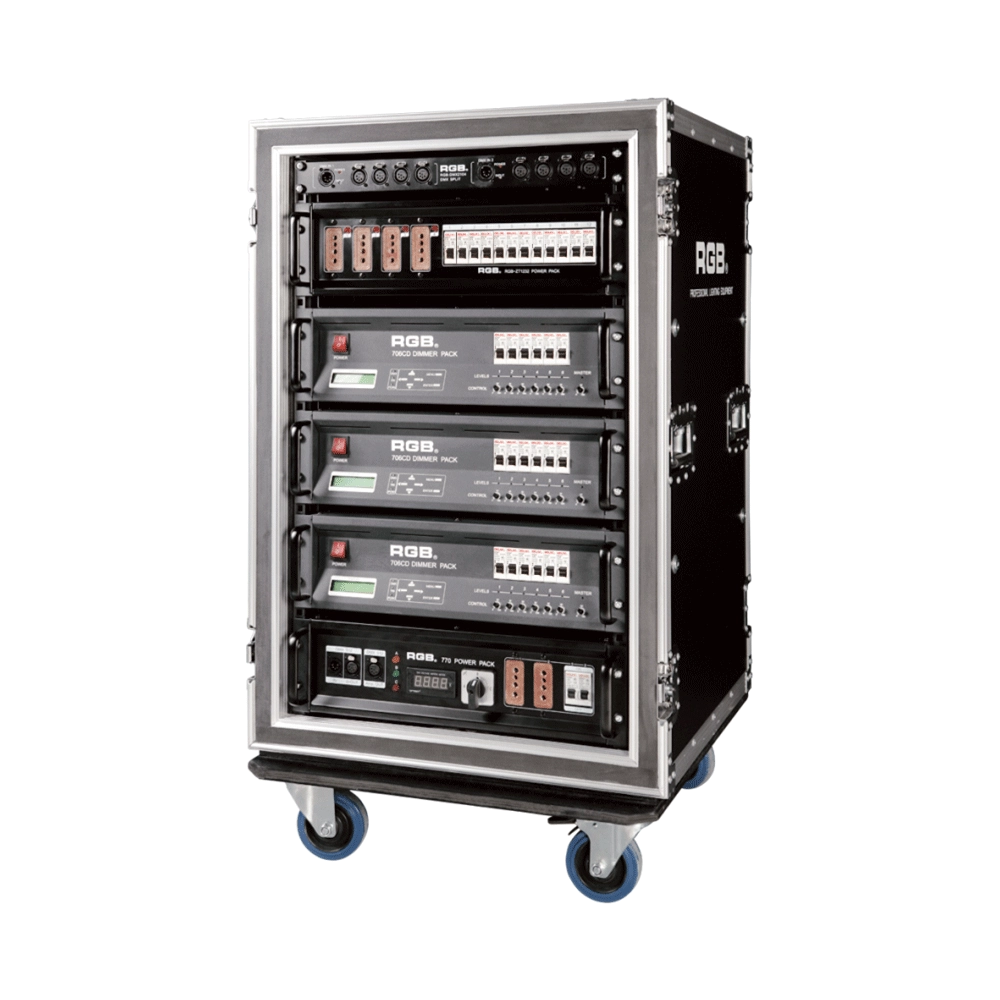
7 Series Digital Touring Dimmer Racks
7 Series digital touring dimmer racks can be assembled into many types of dimmer by taking the 7 Series dimmer as the unit. They are widely used in the entertainment industry for their convenience and practicability.
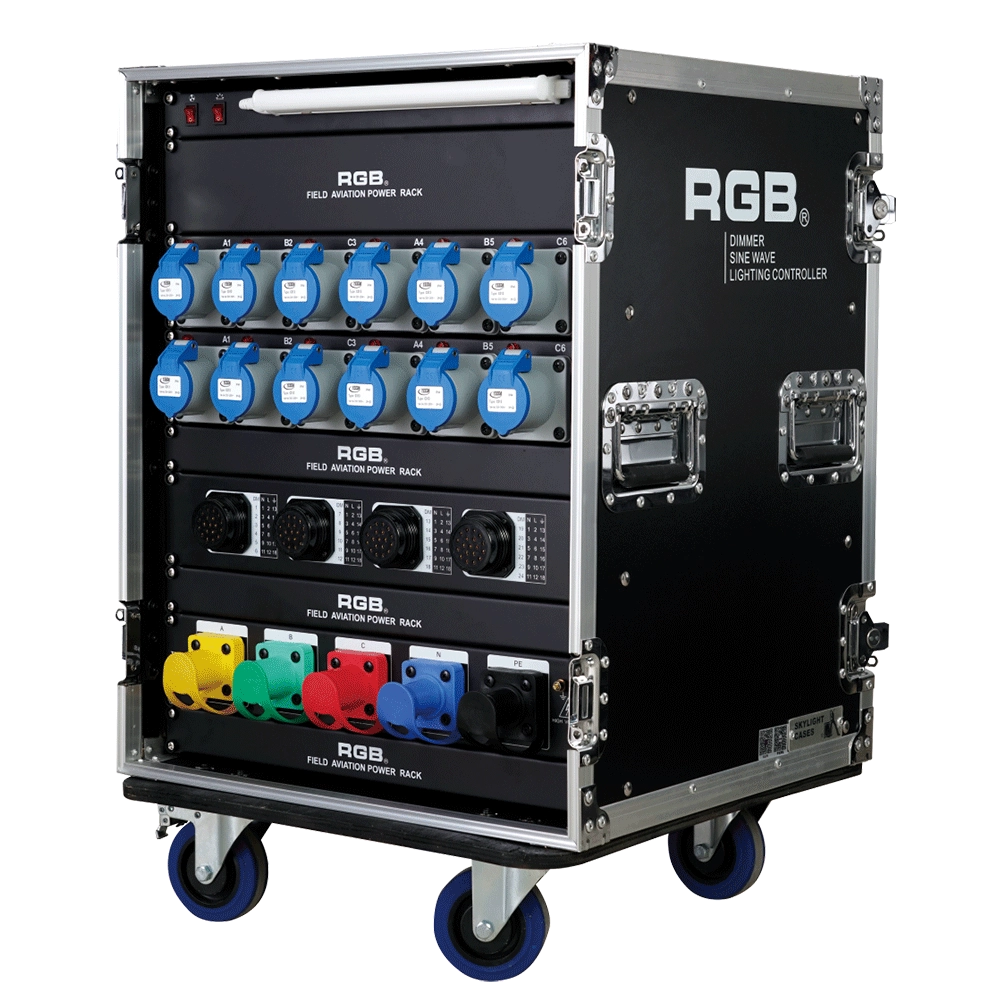
ZT2419+1216 Distribution Box
ZT2419+1216 features dual protection functions and is a power distribution product specifically designed for overcurrent and short circuits in electrical equipment. It is the best choice for mobile performance and is suitable for use in computer lamps, conventional lamps, and other equipment.
Expert Support
Interested in learning more or need expert guidance related to this article? Fill in your details, and our team will provide tailored support.
Intelligent Control. Brilliant Performance.
RGB specializes in stage lighting control systems, delivering intelligent, reliable, and high-performance solutions for theaters and performance spaces worldwide.
Contact
Email:
Tel:
+86 20 3928 0245
+86 20 3928 0247
Address:
No.3, Huashan Road, Shilou Town, Panyu, Guangzhou, China.
Whatsapp: +8615975520131