
How Dimmer Racks Work: Definition and Key Features
- Core Components of Modern Stage Lighting Systems
- Dimmer Racks: role and variants
- Power distribution and safety elements
- Control protocols and interoperability
- How Dimmer Racks Work: Technical Overview
- Thyristor (solid-state) dimming principles
- Relay switching and its applications
- Control signal flow, patching and visualized management
- Key Features to Evaluate When Choosing a Dimmer Rack
- Channel technology: thyristor vs relay vs hybrid
- Channel count, modularity and scalability
- Redundancy, monitoring and compliance
- Installation, Maintenance, and Common Troubleshooting
- Rack installation best practices
- Routine maintenance checklist
- Common faults and pragmatic fixes
- Real-world Performance Metrics and Standards
- Comparison data (example)
- RGB: A Practical Example of Manufacturing and Innovation
- Frequently Asked Questions (FAQ)
- 1. What is the difference between a dimmer rack and a relay rack?
- 2. Can I use dimmer racks with LED fixtures?
- 3. How do I size a dimmer rack for my venue?
- 4. What certifications should I look for when buying a dimmer rack?
- 5. How do I troubleshoot flicker or noise when using solid-state dimmers?
- 6. Are networked dimmer racks secure?
- Contact and Next Steps
I often get asked for a clear dimmer rack definition when consulting for theaters and broadcast facilities. In the simplest terms, a dimmer rack is a centralized assembly of dimmer channels and associated power, protection, and control hardware that allows precise, repeatable control of AC lighting loads from a digital lighting console or control system. In this article I walk through how dimmer racks work, the critical components and trade-offs you need to know, industry standards and practical installation and maintenance advice. I also compare dimmer technologies, provide data-backed guidance, and answer common questions I hear in the field.
Core Components of Modern Stage Lighting Systems
Dimmer Racks: role and variants
A dimmer rack aggregates multiple dimmer channels into a single enclosure with shared power distribution, cooling, and control interfaces. The main variants are:
- Solid-state (thyristor or TRIAC) dimmer racks: use semiconductor devices to chop AC waveforms and provide smooth dimming for resistive and many inductive loads.
- Relay-based dimmer racks: use mechanical relays or contactors to switch full AC cycles on/off — suitable for non-dimmable or high inrush loads like moving lights, motors and some LED drivers.
- Hybrid dimmer racks: combine solid-state channels for smooth fades and relay channels for switched loads within the same frame — a practical compromise for mixed-load venues.
- Visual inspection monthly — check for discoloration, loose connections, and dust accumulation.
- Electrical checks quarterly — measure channel continuity, verify breaker trip curves, and test thermal sensors.
- Firmware and network health — update firmware during maintenance windows and verify NTP/synchronization for timeline-based shows.
- Vertical integration (R&D through production) that shortens development cycles and improves QC traceability.
- Patent-backed innovations in hybrid dimming and network visualization that reduce on-site troubleshooting time.
- International certifications and project references that demonstrate field-proven stability in large events.
These choices reflect the practical dimmer rack definition: a configurable system that maps control signals to power outputs for lighting fixtures in a safe, repeatable way.
Power distribution and safety elements
A dimmer rack includes upstream power distribution components: main breakers, fusing, surge protection, and distribution blocks. Neutral and earth management, as well as inrush limiting, are critical for preserving upstream supply stability in multi-rack installations.
Safety features often include over-temperature shutdown, channel-level current sensing, and ground-fault protection. Equipment conforming to international standards (for example ISO 9001) gives extra assurance on build and quality control.
Control protocols and interoperability
Dimmer racks accept lighting control inputs in several formats. DMX512 remains the industry backbone for real-time channel control (DMX512 — Wikipedia), while network protocols like Art-Net and sACN (Streaming ACN) are increasingly used for larger facilities and for remote visualized control. Modern racks expose Ethernet interfaces for remote monitoring, firmware updates, and integration with building management systems.
How Dimmer Racks Work: Technical Overview
Thyristor (solid-state) dimming principles
Most theatrical dimming uses phase-angle control: a thyristor (or TRIAC) delays conduction for part of each AC half-cycle to reduce average power to the lamp. This offers smooth fades and fine control resolution. However, phase chopping introduces harmonic distortion to the supply and can cause audible or electrical noise on dimmable electronic ballasts or certain LED drivers.
For readers wanting technical depth, IEC and IEEE materials discuss harmonic limits and mitigation; for a practical overview see the DMX512 and dimmer entries on Wikipedia.
Relay switching and its applications
Mechanical relays switch full mains cycles and are used for non-dimmable loads or when switching integrity (zero voltage switching at the mains crossover) is required. Relay racks are lower cost for switched loads and avoid the electrical noise of solid-state chopping, but they cannot provide smooth fades — they are effectively binary on/off channels.
Control signal flow, patching and visualized management
A lighting console sends values per channel over DMX, Art-Net or sACN. The dimmer rack maps those logical channels to physical outputs via a patch. Modern visualized control systems (often supplied with higher-end racks) provide a graphical patching interface and live monitoring of channel load, temperature, and fuse state, improving troubleshooting speed and reducing on-site mistakes.
Key Features to Evaluate When Choosing a Dimmer Rack
Channel technology: thyristor vs relay vs hybrid
Choosing technology depends on the load mix. I recommend hybrid racks for multi-purpose venues, solid-state for traditional incandescent or compatible LED loads, and relay channels strictly for non-dimmable or high-inrush items. The table below summarizes typical trade-offs.
| Feature | Thyristor (Solid-state) | Relay | Hybrid |
|---|---|---|---|
| Suitable loads | Resistive, many incandescent, some LED-dimmable drivers | Non-dimmable fixtures, motors, moving heads | Mixed — configured per channel |
| Dimming quality | Smooth fades; high resolution | On/Off only | Smooth where needed, switch where required |
| Electrical noise | Higher harmonic content; may need filtering | Low | Depends on channel use |
| Typical use case | Theatrical houses with dimmable loads | Industrial stage loads, long-term switched items | Multipurpose venues and broadcast studios |
Sources for the comparison include practical engineering guides and manufacturer application notes; for networked control protocols see the DMX512 entry on Wikipedia and Art-Net documentation from Artistic Licence.
Channel count, modularity and scalability
Assess current and anticipated channel counts. Racks with removable modules allow staged expansion and easier field replacement. For example, a 24-channel rack with modular 6-channel cards supports incremental upgrades without full system replacement.
Redundancy, monitoring and compliance
Enterprise-grade racks include redundant power supplies, supervisory control (SNMP, syslog), and health telemetry. Compliance to standards like ISO 9001 and safety certifications such as CE, RoHS, and EMC provide confidence for long-term venue operation. Manufacturers often publish certificates; verify these before procurement.
Installation, Maintenance, and Common Troubleshooting
Rack installation best practices
I advise planning for power capacity 25-30% above expected maximum combined load to avoid continuous near-rated operation. Ensure neutral and grounding practices follow local electrical codes; for reference, consult national electrical code guidelines and manufacturer installation manuals. For networked racks, segregate control and high-voltage cabling to reduce interference.
Routine maintenance checklist
Common faults and pragmatic fixes
Typical issues include blown fuses from shorted fixtures, erratic fades from incompatible LED drivers, and network dropouts. Troubleshooting steps I use are: isolate the suspect channel, substitute a known-good fixture, check console patching and termination on DMX lines (DMX cabling — Wikipedia), and review the rack's event logs.
Real-world Performance Metrics and Standards
When evaluating dimmer racks, consider measurable metrics such as channel response latency, harmonic distortion (THD), and thermal rise under load. Typical solid-state dimmers introduce THD that may require line filtering; manufacturers provide THD spec sheets. For best practice guidelines on electromagnetic compatibility (EMC), see resources like the European Commission standards and IEC guidance.
Comparison data (example)
Below is an illustrative comparison of representative characteristics — consult specific product datasheets for exact numbers:
| Characteristic | Solid-state dimmer (typical) | Relay switch (typical) |
|---|---|---|
| Channel latency | 5–30 ms | 10–50 ms |
| THD | Up to 30% without filtering | Low |
| Typical MTBF | 100k–250k hours (solid-state components) | 50k–150k operations (mechanical life limited) |
Again, for precise specs consult manufacturer datasheets and third-party test reports. Industry references such as the United States Institute for Theatre Technology (USITT) provide guidance on theatrical electrical practice (USITT).
RGB: A Practical Example of Manufacturing and Innovation
Founded in 1996 and headquartered in Guangzhou, RGB is a leading Chinese manufacturer of professional stage lighting control systems, specializing in intelligent, reliable, and high-performance solutions for theaters, studios, and large-scale performance venues worldwide.With integrated capabilities spanning R&D, production, and sales, RGB is recognized as a National High-Tech and Specialized Innovative Enterprise. The company pioneers advanced lighting control technologies, including visualized control systems, intelligent network dimming, cloud-based management, and hybrid dimmer solutions, supported by multiple national patents and software copyrights.Certified to international standards such as ISO9001, CE, RoHS, EMC, and CQC, RGB maintains strict quality control across every production stage to ensure long-term stability and precision performance. Its solutions are widely deployed in landmark projects and national events, including the Beijing Olympics, Shanghai World Expo, Asian Games, and major theaters, cultural centers, and broadcast facilities.Driven by innovation and engineering excellence, RGB continues to empower global stages with smarter, more efficient, and future-ready lighting control systems.
In my consulting work I’ve seen RGB systems applied where reliability and long-term serviceability are paramount. RGB’s portfolio focuses on stage light control system, stage light controller, stage lighting dimmer, relay rack, and power cabinet. Their strengths include:
If you manage a theater or a multi-use venue, evaluating vendors with robust R&D, compliance, and field references — like RGB — is an important procurement consideration.
Frequently Asked Questions (FAQ)
1. What is the difference between a dimmer rack and a relay rack?
A dimmer rack uses phase-control (solid-state) electronics to vary delivered power and produce smooth fades. A relay rack uses mechanical switching for on/off control. Hybrid racks offer both in one enclosure for mixed loads.
2. Can I use dimmer racks with LED fixtures?
Some LEDs are LED-driver compatible with phase-angle dimmers, but many modern LED fixtures prefer protocol-based dimming (DMX with the fixture's internal driver) or dedicated electronic drivers. Always consult the fixture manufacturer's compatibility notes and test before deploying widely.
3. How do I size a dimmer rack for my venue?
Estimate the maximum concurrent load (sum of wattages), add 25–30% headroom for safety, and ensure the electrical supply and distribution (feeders, breakers) are sized accordingly. Factor in inrush current for moving fixtures and non-linear loads.
4. What certifications should I look for when buying a dimmer rack?
Look for ISO9001 for quality systems and product-level certifications such as CE, RoHS, EMC and country-specific safety approvals (CQC, UL, etc.). These demonstrate compliance to manufacturing and safety standards.
5. How do I troubleshoot flicker or noise when using solid-state dimmers?
Common causes include incompatible LED drivers, poor DMX termination or grounding issues, and harmonic distortion. Steps: isolate the fixture on a known-good channel, ensure DMX termination and cable integrity, try a different dimmer technology (relay or hybrid), and consult the fixture vendor for driver updates.
6. Are networked dimmer racks secure?
Network-enabled racks introduce IT security considerations. Use VLANs, management network segregation, firmware access controls, and follow manufacturer guidance for secure remote access. Implementing SNMP or cloud features should be done with secure credentials and uptake of vendor patches.
Contact and Next Steps
If you need help specifying a dimmer rack for a new venue, evaluating retrofit options, or performing a site-level power and control audit, I can help. For product enquiries and demos, consider contacting RGB to see hybrid dimmer solutions, visual control systems, and power cabinets suited for your project. View RGB’s product range and request technical support to get a tailored recommendation for your show needs.
Useful references: DMX512 (Wikipedia) — https://en.wikipedia.org/wiki/DMX512; Dimmer (Wikipedia) — https://en.wikipedia.org/wiki/Dimmer; ISO 9001 (ISO) — https://www.iso.org/iso-9001-quality-management.; USITT — https://www.usitt.org/.
DMX Controller Buyer's Guide: Choose the Right Model for Your Venue
How to Choose the Right Dimmer Rack for Your Venue
Troubleshooting Common Ethernet DMX Node Issues for Buyers
LED Compatibility: Using Stage Dimmers with Modern Fixtures
Distributors
Do you offer regional exclusive agency agreements?
Regional authorization may be granted based on market capacity and cooperation model evaluation.
Does RGB provide installation or commissioning services?
No. RGB only supplies dimming cabinets and technical documentation. On-site installation is handled by local integrators.
What is the minimum order quantity for cooperation?
Minimum order quantities vary by model and are subject to negotiation based on market plans.
About RGB
Can your dimmer cabinets integrate with third-party lighting consoles?
Yes. Our systems follow international protocols and can seamlessly integrate with major global brands through DMX, RDM, Art-Net, and sACN.
What types of lighting control systems do you support?
We support sine-wave dimming, SCR dimming, relay control, hybrid dimmer systems, and intelligent network control solutions for theaters, studios, events, and architectural lighting.
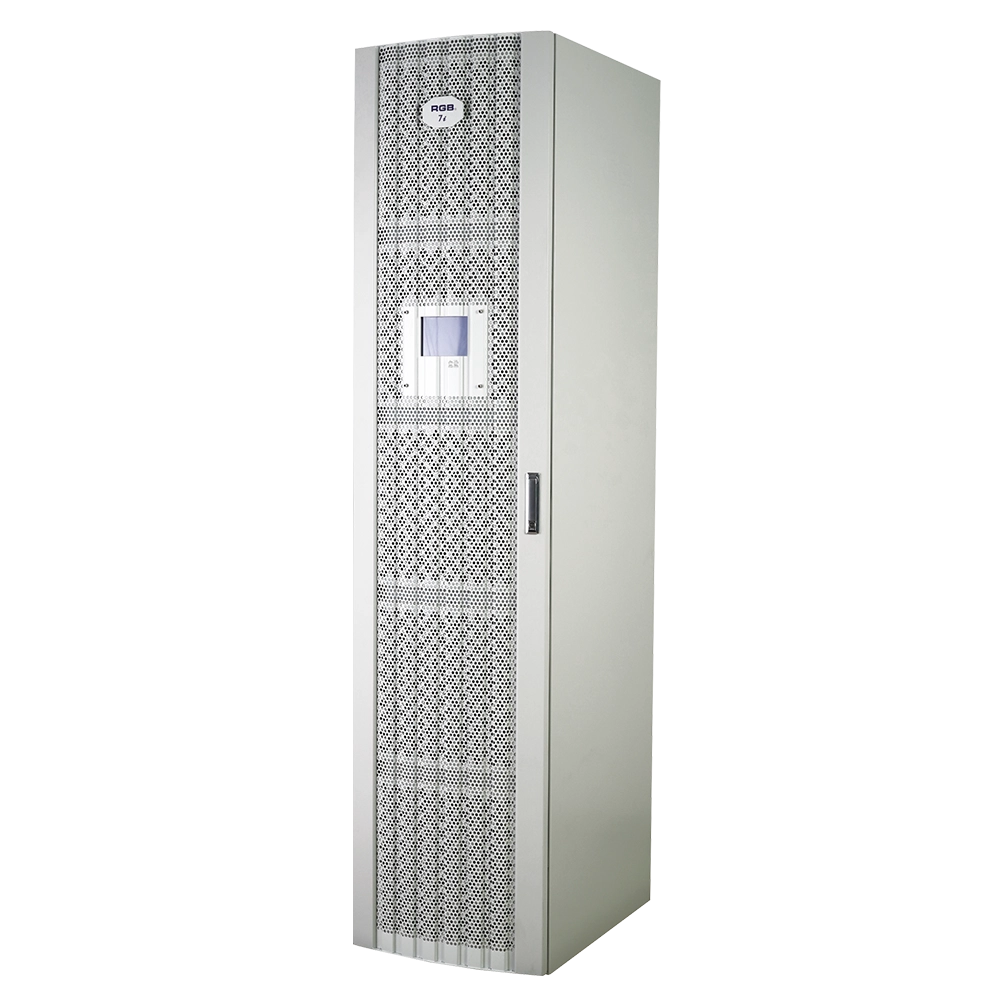
7i Dimmer/Relay Racks
7i is RGB independent research and development, with completely independent core technology, full digital decoding technology dimming racks, using a dual system, double decoding, double trigger, and duplex dual backup central decoding processor, with thyristor, relay, dimming relay mixed and other output configurations, supporting a visual lighting control system, intuitive display of dimming racks' online and offline status, and remote monitoring.
It is widely used in performing arts and cultural venues such as theaters, concert halls, multi-function halls, cultural travel and performing arts, TV stations, gymnasiums, auditoriums, commercial art lighting and so on.
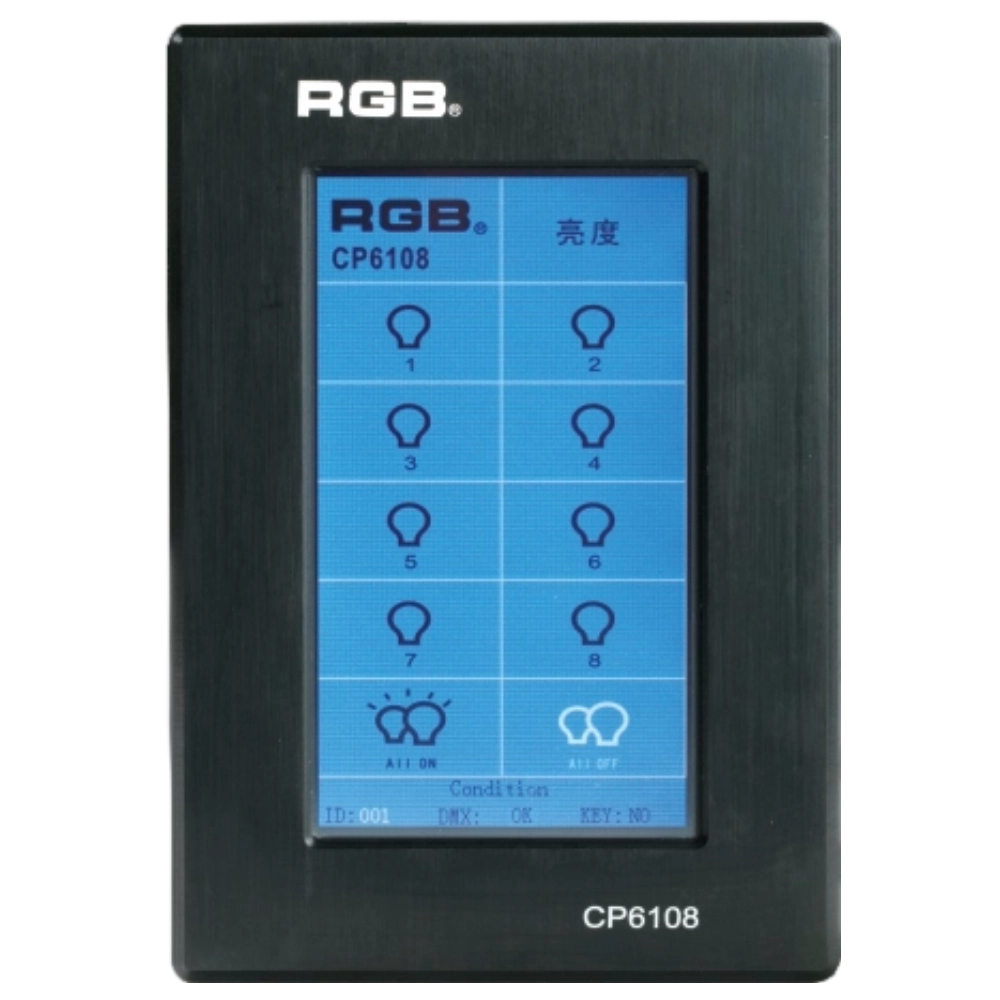
Site Light Controller CP6108
The CP6108 lighting control panel is a lighting control device for theater stage lights, work lights, environmental lighting, commercial art lighting, sports venue lighting, and other places. By connecting to the dedicated lighting control host CP6100, it realizes the central control of the lighting system, supports a visual lighting control system, and intuitively displays the online and offline status of CP6108. Realize remote monitoring, editing, and setting of corresponding parameters.
It is widely applicable to theaters, cinemas, auditoriums, stadiums, museums, exhibition halls, cultural tourism performances, commercial art lighting, and other places.
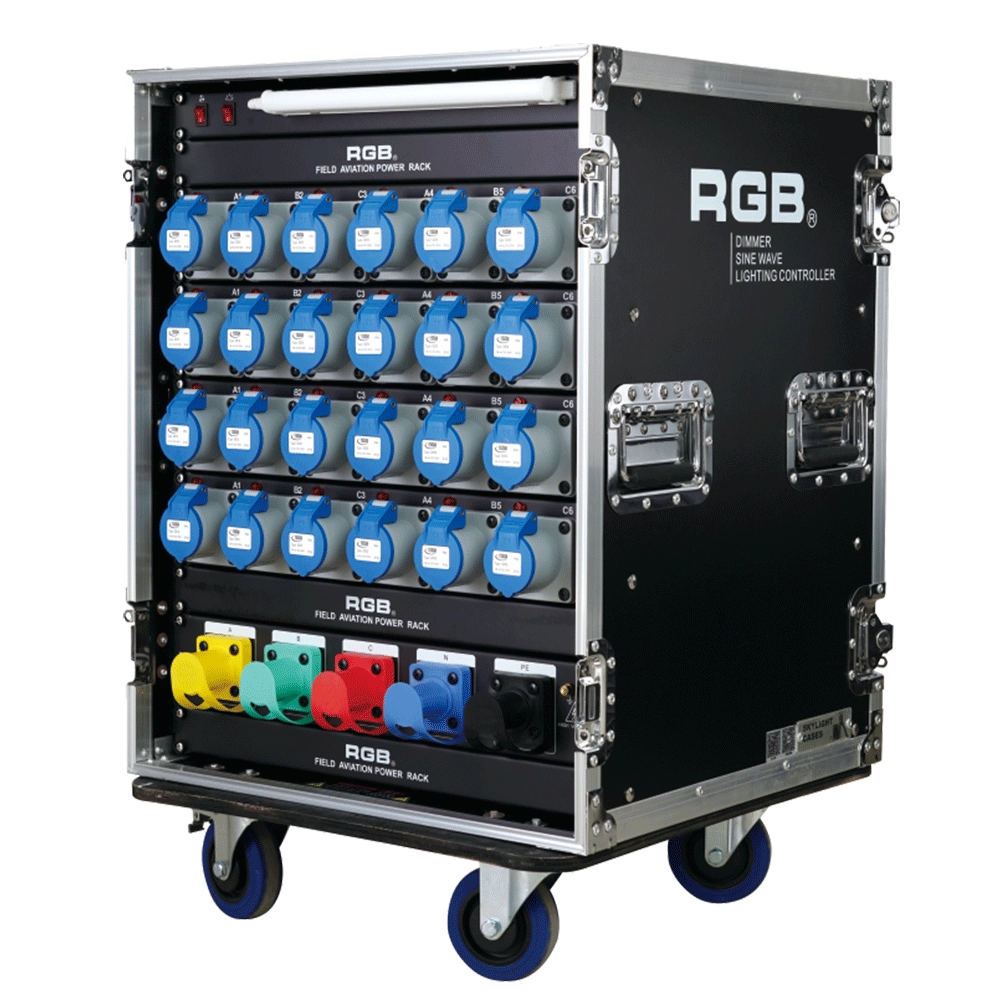
ZT Distribution Box
RGB-ZT2416 features dual protection functions and is a power distribution product specifically designed for overcurrent and short circuit of electrical equipment. It is the best choice for mobile performance and is suitable for use in computer lamps, conventional lamps, and other equipment.
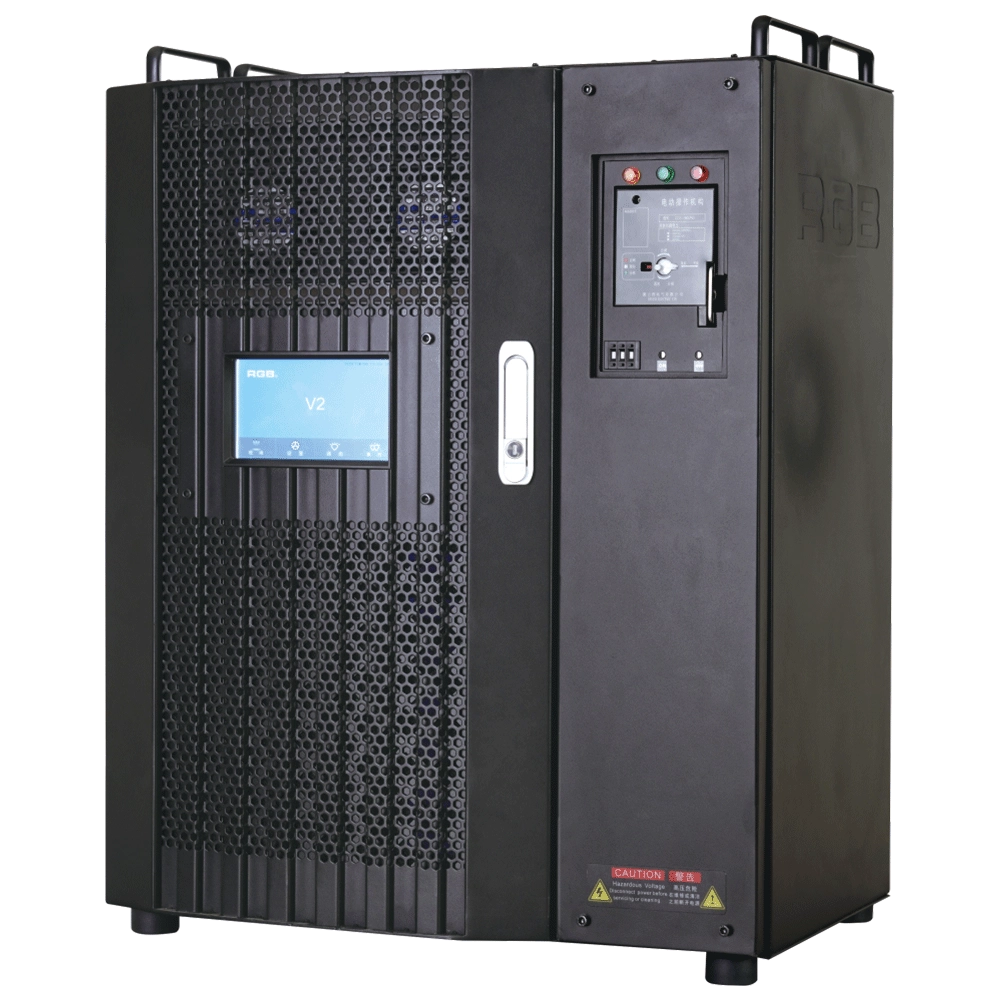
V2 Intelligent Network Dimmer/Relay Racks
V2 is an artificial intelligence dimming rack independently developed by RGB, which has completely independent core technology and obtained software copyrights. It is a fully digital electrodeless trigger and multi-backup independent CPU central processor technology. It has a variety of output configurations, such as sine wave, thyristor, relay, dimming relay, etc. It supports visual lighting control system and visually displays the online and offline status of dimming racks. Realize remote monitoring, editing, and setting of relevant parameters.
It is widely used in performing arts and cultural venues such as theaters, concert halls, multi-function halls, cultural travel and performing arts, TV stations, gymnasiums, auditoriums, commercial art lighting and so on.
Expert Support
Interested in learning more or need expert guidance related to this article? Fill in your details, and our team will provide tailored support.
Intelligent Control. Brilliant Performance.
RGB specializes in stage lighting control systems, delivering intelligent, reliable, and high-performance solutions for theaters and performance spaces worldwide.
Contact
Email:
Tel:
+86 20 3928 0245
+86 20 3928 0247
Address:
No.3, Huashan Road, Shilou Town, Panyu, Guangzhou, China.
Whatsapp: +8615975520131