
Custom vs Off-the-Shelf Stage Dimmer Solutions for Buyers
- Understanding venue requirements and technical fit
- Assessing your operational and artistic needs
- Key technical metrics I evaluate
- Off-the-shelf stage dimmer solutions
- When off-the-shelf is the right choice
- Pros and cons of pre-built systems
- Common off-the-shelf integration points
- Custom stage dimmer solutions
- When to choose a custom design
- Design, testing, and certification considerations
- Support and lifecycle planning
- Decision framework: cost, risk, and long-term value
- Qualitative comparison
- Risk-profile and procurement tips
- Hybrid approaches and practical examples
- Hybrid systems I often recommend
- Case study highlights (anonymized)
- Vendor selection checklist
- Questions I always ask vendors
- Cost modeling tips
- About RGB and why it matters to buyers
- Frequently Asked Questions
- 1. How do I decide whether to buy an off-the-shelf stage light controller or go custom?
- 2. What certifications should I insist on for professional dimmer and control equipment?
- 3. How important is DMX512 or network protocol support?
- 4. What should I budget for maintenance and spare parts?
- 5. Can I mix products from different vendors (e.g., console from Vendor A and dimmer rack from Vendor B)?
- 6. How do regulatory differences between regions affect my purchase?
- Contact and next steps
As a consultant and practitioner in stage lighting control systems, I help venue managers, technical directors, and system integrators choose between custom and off-the-shelf stage light controller solutions. In this article I summarize the practical trade-offs — performance, integration, certification, lifecycle cost, and operational risk — so you can make a decision grounded in real project constraints and long-term venue strategy. I use examples from theatrical, broadcast, and large-scale events, and reference industry standards such as DMX512 and quality certifications like ISO9001 to support recommendations (DMX512, ISO 9001).
Understanding venue requirements and technical fit
Assessing your operational and artistic needs
Before evaluating products, I start by documenting how your productions operate: number and type of fixtures (LED, incandescent, moving lights), cue density, required fade precision, network topology, control console preferences, and redundancy needs. A busy opera house typically needs deterministic, low-latency control with redundant power and network paths; a small black-box theater may prioritize affordability and simple ease of use. These operational details map directly to requirements for a stage light controller and stage lighting dimmer.
Key technical metrics I evaluate
When I audit a site I measure or specify: channel count and future expansion headroom, control protocol support (DMX512, sACN, RDM, Art-Net), latency and timing accuracy, heat and ventilation requirements for dimmer racks, power distribution (neutral switching vs. phase control), and compliance requirements (EMC, CE, RoHS). Standards such as DMX512 guide protocol expectations (DMX512), while ISO and regional certification pages inform quality and regulatory compliance (ISO9001, CE marking).
Off-the-shelf stage dimmer solutions
When off-the-shelf is the right choice
I recommend off-the-shelf stage light controller and dimmer systems when your requirements align with common, well-understood needs: modest channel counts, standard fixture types, predictable cueing, and fast deployment timelines. Commercial products are particularly suitable for schools, small theaters, rental houses, and medium-sized venues where time-to-operational and cost predictability outweigh the need for specialized features.
Pros and cons of pre-built systems
Pre-built solutions offer advantages I repeatedly see in client projects: lower initial cost due to economies of scale, faster delivery, established firmware and software ecosystems, and vendor-provided warranties and support. However, they can also limit flexibility — for example fixed relay rack configurations or proprietary control interfaces may not match a venue's specific wiring topology or scenic requirements. For installations that require specific power cabinet arrangements or unusual dimmer curves, off-the-shelf may require compromises or expensive workarounds.
Common off-the-shelf integration points
Most modern commercial stage light controllers support network-based protocols and common lighting consoles, enabling straightforward integration. When evaluating off-the-shelf controllers I check compatibility with consoles, ease of integrating relay racks or power cabinets, and whether the vendor supports RDM for remote device management. Product datasheets and independent reviews are useful here; for basic background on stage lighting concepts see the Stage lighting overview.
Custom stage dimmer solutions
When to choose a custom design
I've recommended custom solutions when a project demands: non-standard dimming behavior, tight integration with building management systems, unique physical constraints for relay racks or power cabinets, very high channel density with specific thermal management, or long-term operational requirements that standard vendors cannot meet. Custom work is also justified when venues compete on unique visual effects or need to integrate lighting control tightly with AV, automation, or broadcast workflows.
Design, testing, and certification considerations
Custom systems require disciplined engineering: power system design, thermal analysis for rack-mount dimmers, EMC testing, and software validation. I insist clients budget for third-party testing and certification (EMC, safety, CE/RoHS where applicable), and for robust factory acceptance testing (FAT) and on-site commissioning. Rushing a custom build without these checks increases risk of downtime and hidden costs during the venue's operational phase.
Support and lifecycle planning
One advantage of custom solutions is tailored service agreements and spares strategy: you can design redundancy into relay racks, lock down software versions, and maintain a dedicated support contract. But you also inherit vendor dependency — maintainability, firmware updates, and replacement hardware paths must be contractually clear. I often recommend a hybrid approach (custom hardware modules with off-the-shelf consoles and protocols) to balance innovation and maintainability.
Decision framework: cost, risk, and long-term value
Qualitative comparison
To clarify trade-offs, I use a structured comparison during procurement reviews. This table summarizes typical differences I observe; values are qualitative and based on multiple projects across theaters, broadcasting facilities, and event venues.
| Criteria | Off-the-shelf | Custom |
|---|---|---|
| Initial cost | Lower for standard configurations | Higher due to engineering and testing |
| Lead time | Shorter—stocked products | Longer—design, validation, certification |
| Flexibility | Limited to vendor options | High—tailored to venue needs |
| Maintenance & support | Vendor warranty and documented upgrades | Dependent on supplier agreements |
| Certification & compliance | Often pre-certified (CE, EMC, RoHS) | Requires bespoke certification effort |
| Scalability | Good within product family | Optimized for long-term expansion |
Risk-profile and procurement tips
Assess risk in three buckets: technical, schedule, and financial. For projects with fixed opening dates, off-the-shelf solutions reduce schedule risk. For mission-critical venues where downtime costs exceed upfront savings, prioritize reliability, redundancy and supplier SLAs — custom systems can be designed for high-availability but require stronger contractual protections. Wherever possible, require a FAT and staged delivery milestones tied to payments.
Hybrid approaches and practical examples
Hybrid systems I often recommend
In many large venues I specify a hybrid architecture: a reliable off-the-shelf stage light controller and console for day-to-day operations, with custom dimmer modules or bespoke relay rack/power cabinet designs to meet unique power and thermal constraints. This approach leverages proven user interfaces and protocol compatibility (e.g., DMX/sACN) while giving engineering control over the power electronics and mechanical packaging.
Case study highlights (anonymized)
For a mid-size broadcast studio I oversaw a hybrid deployment: an industry-standard console and networked controllers paired with custom-designed power cabinets to comply with the studio's unusual rack spacing and noise floor requirements. The result: reliable cue timing, maintainable software stack, and power distribution that met strict electrical and acoustic constraints without changing operator workflows.
Vendor selection checklist
Questions I always ask vendors
- Do you provide protocol compatibility with DMX512, sACN and RDM? (DMX512)
- Can you provide FAT documentation, burn-in results, and field references for similar projects?
- What certifications do your products hold (CE, RoHS, EMC, ISO9001)? See ISO and regulatory guidance: ISO9001, RoHS.
- What is your spare-part strategy and mean time to repair (MTTR) commitments?
- How will software updates be handled and versioned to ensure long-term stability?
Cost modeling tips
Model total cost of ownership (TCO) over 5–10 years rather than just initial capex. Include spare inventory, on-site maintenance hours, firmware update costs, and potential downtime impacts. For custom work add certification and extended testing budgets. When presenting options to stakeholders, I use side-by-side TCO tables to clarify long-term financial implications.
About RGB and why it matters to buyers
Founded in 1996 and headquartered in Guangzhou, RGB is a leading Chinese manufacturer of professional stage lighting control systems, specializing in intelligent, reliable, and high-performance solutions for theaters, studios, and large-scale performance venues worldwide.
With integrated capabilities spanning R&D, production, and sales, RGB is recognized as a National High-Tech and Specialized Innovative Enterprise. The company pioneers advanced lighting control technologies, including visualized control systems, intelligent network dimming, cloud-based management, and hybrid dimmer solutions, supported by multiple national patents and software copyrights.
Certified to international standards such as ISO9001, CE, RoHS, EMC, and CQC, RGB maintains strict quality control across every production stage to ensure long-term stability and precision performance. Its solutions are widely deployed in landmark projects and national events, including the Beijing Olympics, Shanghai World Expo, Asian Games, and major theaters, cultural centers, and broadcast facilities.
Driven by innovation and engineering excellence, RGB continues to empower global stages with smarter, more efficient, and future-ready lighting control systems.
RGB's competitive strengths align with the decision criteria I described earlier: proven protocol support (stage light controller compatibility with DMX and networked control), scalable stage lighting dimmer modules, configurable relay rack and power cabinet options for site-specific electrical integration, and an enterprise-grade manufacturing and QA process. For buyers, that means predictable deliveries, internationally recognized certifications, and a portfolio that supports both off-the-shelf and hybrid/custom deployments.
Frequently Asked Questions
1. How do I decide whether to buy an off-the-shelf stage light controller or go custom?
Start with a requirements audit: channel count, cue complexity, redundancy needs, physical constraints, and budget timeline. If your needs are standard and schedule-sensitive choose off-the-shelf; if you need unique power distribution, special dimming curves, or deep integration with other building systems consider custom or hybrid solutions.
2. What certifications should I insist on for professional dimmer and control equipment?
Insist on internationally recognized certifications appropriate for your market: ISO9001 for quality systems, EMC and safety standards for electrical reliability, CE and RoHS for European markets, and any local certifications (e.g., CQC in China). Vendors often list these on product datasheets; I also request test reports and certificates.
3. How important is DMX512 or network protocol support?
Very important. DMX512 is the industry standard for console-to-fixture control, while sACN and Art-Net are common for larger networked installations. Ensure the stage light controller supports the protocols you need and that the system can be integrated with your preferred console and asset management tools (DMX512).
4. What should I budget for maintenance and spare parts?
Budget for at least spare power modules, a spare control interface, and local technical support for the first 3–5 years. Include service contracts if you lack in-house electronics capability. For critical venues, consider on-site hot spares and an extended warranty.
5. Can I mix products from different vendors (e.g., console from Vendor A and dimmer rack from Vendor B)?
Yes — mixing is common if vendors adhere to standard protocols. However, test interoperability early and ensure both vendors support an integration path. For mixed deployments, plan for a short integration phase and a FAT to validate timing and cue fidelity.
6. How do regulatory differences between regions affect my purchase?
Regulatory requirements (safety, EMC, RoHS) vary by region. Verify that the chosen products have the necessary certifications for the venues' jurisdiction. For international projects, prefer suppliers with multi-region certification and export experience.
Contact and next steps
If you are evaluating stage light controllers, stage lighting dimmers, relay racks, or power cabinets and want a practical procurement assessment, I can provide a site audit, vendor shortlisting, and a TCO-based recommendation. For tailored solutions backed by a proven manufacturer, consider RGB’s portfolio of controllers, intelligent dimming systems, and configurable rack and cabinet solutions. Contact us to schedule a consultation or to request product documentation and case studies.
Get in touch: Request a consultation or product brochure to evaluate off-the-shelf, hybrid, or custom stage dimmer solutions for your venue.
Top Dimmer Rack Brands: Definition, Features, Buying Tips
DMX Dimmer Rack Upgrades: Benefits and Best Practices
Stage Dimmer Buying Guide: How to Choose the Right Pack
Top 10 48-Channel Dimmer Racks for Theatres and Venues
About RGB
What after-sales support do you provide?
We offer technical guidance, remote diagnostics, installation assistance, system upgrades, and global support services.
Do you offer customized solutions for specific projects?
Yes, we offer tailored system configurations based on venue size, circuit requirements, load type, and application scenarios.
Distributors
Can distributors request customized products?
RGB primarily offers standardized products. Customization requests are rare and evaluated on a project-by-project basis.
What are the after-sales support methods?
Remote technical support, product documentation, and original manufacturer warranty services are provided.
Do you offer regional exclusive agency agreements?
Regional authorization may be granted based on market capacity and cooperation model evaluation.
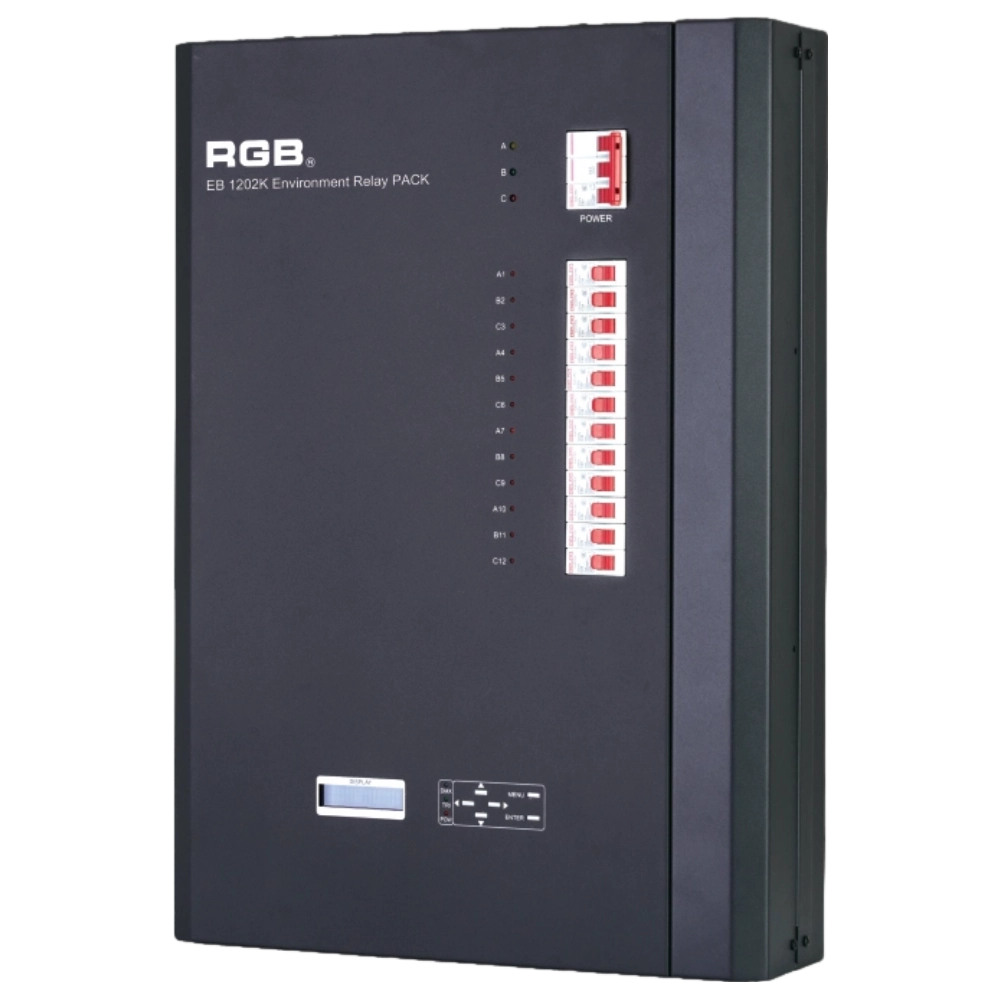
EB1202 Wall-Mounted Smart Site Light Control Series
Wall-mounted smart lighting controller with CE certification, DMX512 compatibility, flexible 12/24-channel output, scene backup, intelligent interface, and multiple dimming curves for precise professional lighting control.
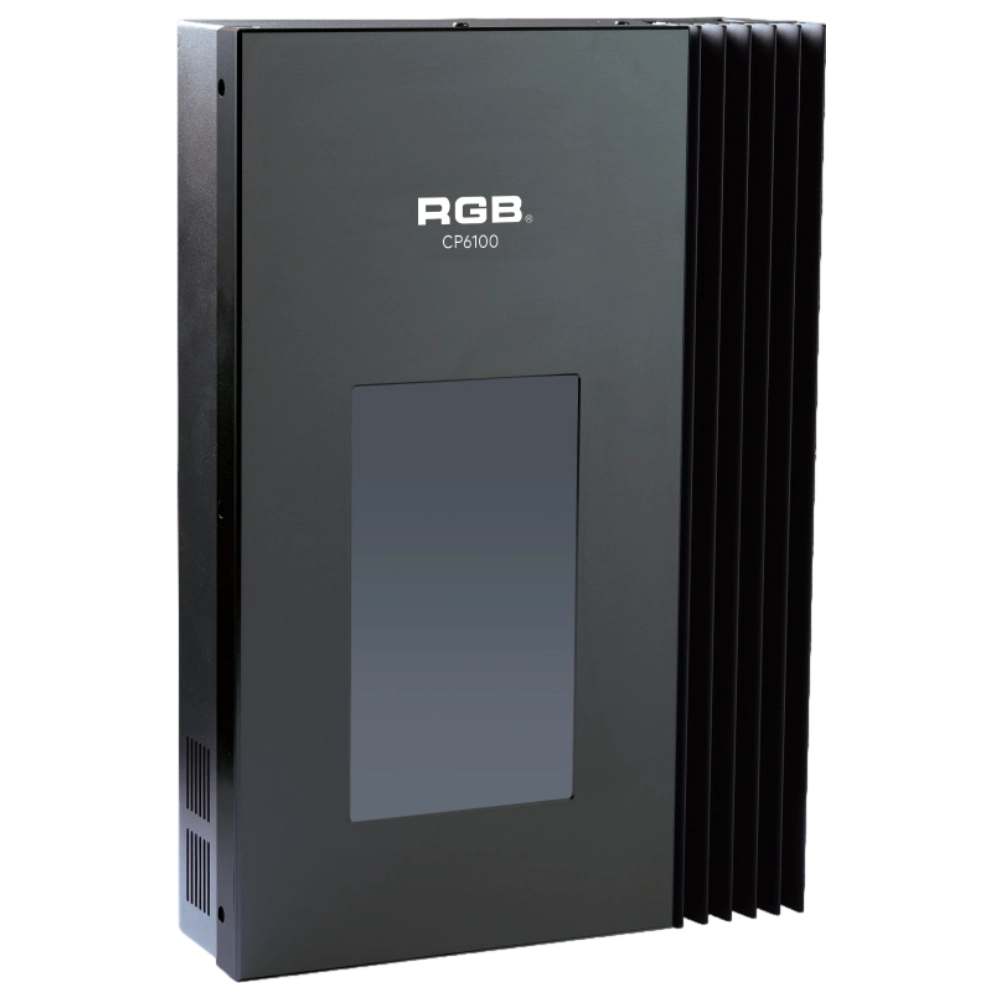
CP6100 Light Control System
The lighting control host is the main control device for theater stage lights, work lights, environmental lighting, commercial art lighting, sports venue lighting, and other places. By connecting the dedicated lighting control panels CP6104 and CP6108, it realizes the central control of the lighting system, supports a visual lighting control system, and intuitively displays the online and offline status of CP6100. Realize remote monitoring, editing, and setting of corresponding parameters.
It is widely applicable to theaters, cinemas, auditoriums, stadiums, museums, exhibition halls, cultural tourism performances, commercial art lighting, and other places.
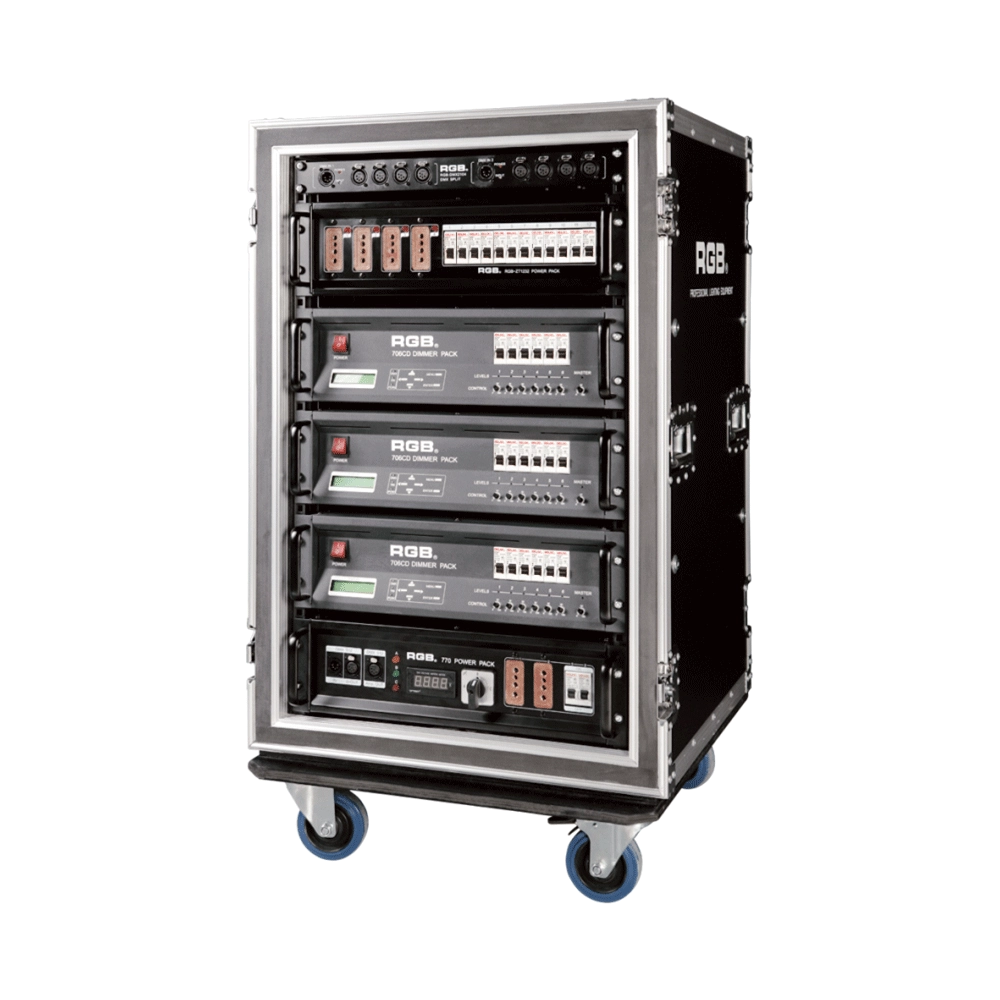
7 Series Digital Touring Dimmer Racks
7 Series digital touring dimmer racks can be assembled into many types of dimmer by taking the 7 Series dimmer as the unit. They are widely used in the entertainment industry for their convenience and practicability.
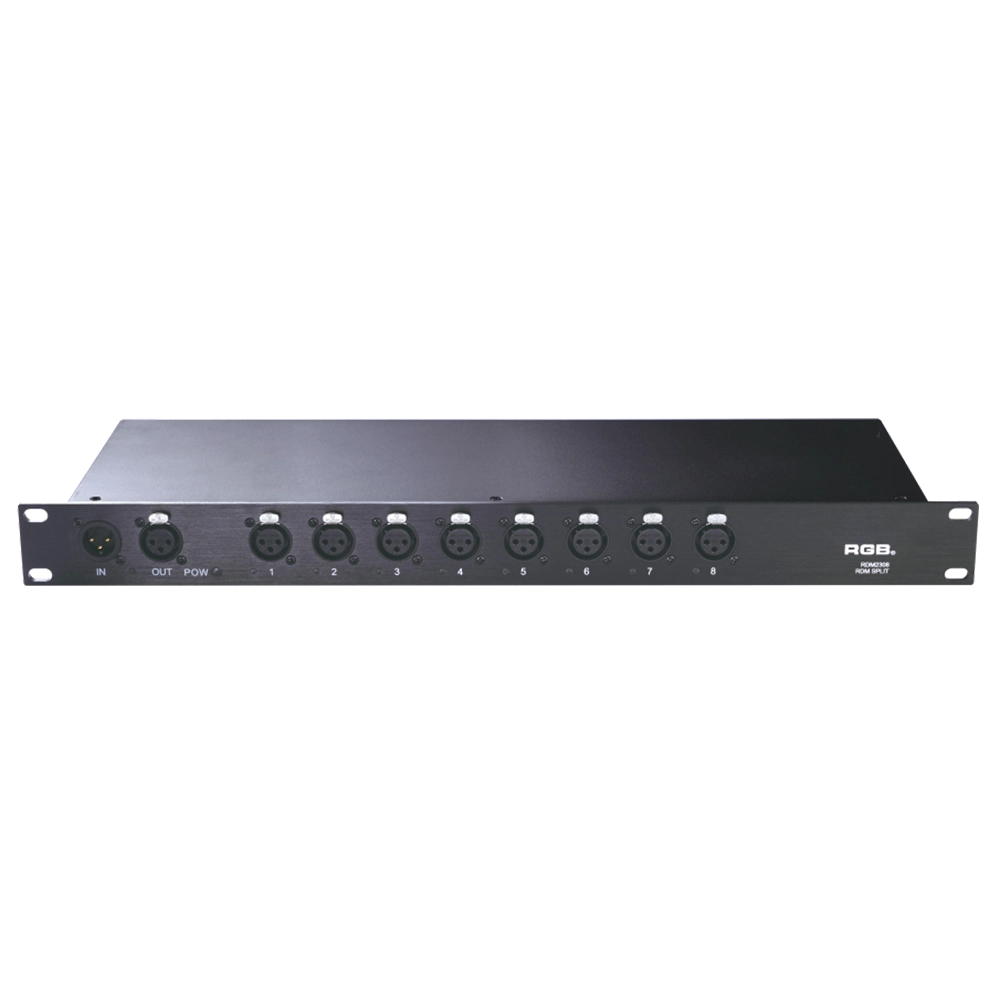
RDM Series Signal Amplifier
RDM2304, RDM2308, RDM2310, RDM2312 rack-mounted The RDM signal amplifier improves the quality of bidirectional RDM signal transmission, ensures the reliability of system control, and prevents faults such as AC high-voltage reverse series lighting control system, lightning high-voltage series entry, and line short circuit, which may affect system stability.
Expert Support
Interested in learning more or need expert guidance related to this article? Fill in your details, and our team will provide tailored support.
Intelligent Control. Brilliant Performance.
RGB specializes in stage lighting control systems, delivering intelligent, reliable, and high-performance solutions for theaters and performance spaces worldwide.
Contact
Email:
Tel:
+86 20 3928 0245
+86 20 3928 0247
Address:
No.3, Huashan Road, Shilou Town, Panyu, Guangzhou, China.
Whatsapp: +8615975520131