
Create Impactful Lighting Scenes with DMX Controllers
- Understanding Lighting Design Principles
- Emotion, composition, and narrative
- Color, intensity, and contrast
- Practical placement and fixture roles
- How DMX Controllers Work
- DMX512 protocol essentials
- Signal flow and addressing
- Pixel mapping and modern extensions
- Designing Impactful Lighting Scenes with DMX Controllers
- Programming scenes and cueing strategies
- Using dimmers, relay racks, and power cabinets
- Synchronization with media and automation
- Controller comparison (feature tiers)
- Choosing and Integrating a DMX Controller for Your Venue
- Assessing technical requirements
- Networked vs standalone controllers
- Maintenance, standards, and safety
- Example channel budgeting
- Industry-Grade Solutions and Vendor Considerations
- What to look for in a supplier
- Why certification and after-sales matter
- About RGB — engineering excellence and global projects
- FAQ — Common Questions About DMX Controllers
- Q: What is the difference between a DMX controller and a lighting console?
- Q: How many fixtures can I control with one DMX universe?
- Q: Should I choose Art-Net or sACN for networked control?
- Q: How do I avoid flicker with LED fixtures?
- Q: What redundancy should I plan for critical events?
- Q: How do relay racks and power cabinets integrate with DMX systems?
As a lighting control consultant with extensive experience in live events, theaters, and broadcast studios, I know that the right DMX controller can transform an ordinary environment into a moving, unforgettable experience. In this article I explain how DMX controllers work, how to design and program compelling lighting scenes, how to integrate dimmers, relay racks and power cabinets, and how to choose the right system for your venue. I focus on practical, verifiable advice you can act on immediately, with references to standards and authoritative sources where appropriate.
Understanding Lighting Design Principles
Emotion, composition, and narrative
Lighting is storytelling. Before touching a console, I always define the emotional arc of a scene: what the audience should feel, which elements to highlight, and how transitions support the narrative. Simple changes in color temperature, intensity, and beam shaping can alter perceived depth and mood—so programming scenes should start with artistic intent and then map to technical execution.
Color, intensity, and contrast
Color and intensity are fundamental controls available via a dmx controller. I balance key and fill light ratios to shape faces and set depth. For LED fixtures I consider color mixing limitations (e.g., RGB vs RGBW vs RGBA) and calibrate white points across fixture types to avoid visible shifts during crossfades. Measuring luminance and color with a light meter or spectrometer helps create repeatable scenes across venues.
Practical placement and fixture roles
Assign fixtures functional roles in your plot: key, fill, backlight, specials, and effects. This role-based approach simplifies channel mapping and makes programming easier on any stage lighting controller, from desk-style consoles to software-based DMX controllers mapped to network nodes.
How DMX Controllers Work
DMX512 protocol essentials
The DMX512 protocol is the backbone of modern stage control. A single DMX universe contains up to 512 channels, each channel representing a control parameter such as intensity, pan, or color. You can review the protocol details on the DMX512 page on Wikipedia for a concise technical overview https://en.wikipedia.org/wiki/DMX512. Understanding the addressing and refresh behavior (typical refresh rates ~44Hz) is essential to avoid flicker and data collisions.
Signal flow and addressing
In practice I model the chain as: controller output → cable → splitter/node → fixtures/drivers/dimmers. Proper termination and cabling reduce packet loss. When distributing multiple universes, you choose between physical DMX splitters or networked gateways (Art-Net, sACN) that carry multiple DMX universes over Ethernet.
Pixel mapping and modern extensions
Contemporary lighting scenes often use pixel-mapped LED strips and arrays. These require controllers that support pixel protocols (e.g., Raw, DDP) or gateways that translate DMX/Art-Net to LED driver protocols. For large-scale mapping, consider controllers with native pixel mapping tools to reduce the programming overhead and achieve smooth effects.
Designing Impactful Lighting Scenes with DMX Controllers
Programming scenes and cueing strategies
I program scenes by building a hierarchy: looks → cues → chases. A 'look' is a static arrangement of intensities and colors; cues sequence looks with transitions and timing. For live performance I add cue stacks with take timing (fade, crossfade, snap) and conditional triggers (MIDI, timecode, contact closure). Backups and redundant cue playback are crucial for reliability during events.
Using dimmers, relay racks, and power cabinets
For conventional fixtures or high-current loads, stage lighting dimmer racks and relay racks remain indispensable. I separate sensitive LED loads onto dedicated circuits and use relay racks for non-dimmable loads to ensure safety. Power cabinets with monitoring reduce downtime by showing current draw and temperature. When integrating stage lighting dimmer systems, follow manufacturer installation guides and local electrical codes.
Synchronization with media and automation
To synchronize lighting with video or audio I use timecode (SMPTE/MTC) or network triggers. Most professional consoles support SMPTE frame-accurate cue firing. For venue-wide automation, I design a control topology with a central master (e.g., lighting console) and distributed nodes (relays, dimmers) connected via a reliable network with VLANs or dedicated control networks to avoid interference.
Controller comparison (feature tiers)
| Tier | Typical Users | Channels / Universes | Key Features |
|---|---|---|---|
| Entry | Small houses of worship, schools | 1–2 universes (up to 1024 channels via gateways) | Basic scene recall, simple faders, USB backup |
| Mid | Regional theaters, touring bands | 2–8 universes | Pixel mapping, MIDI/Timecode, file-based backups |
| High-end | Broadcast, large venues, national events | Multiple networked universes (Art-Net/sACN) | Visualized control, redundancy, advanced effects engines |
Notes: The DMX512 standard defines 512 channels per universe; network protocols such as Art-Net or sACN allow many universes to be carried over Ethernet. See the DMX512 reference for details https://en.wikipedia.org/wiki/DMX512.
Choosing and Integrating a DMX Controller for Your Venue
Assessing technical requirements
Start with a requirements checklist: number and type of fixtures, need for pixel mapping, integration with audio/video systems, redundancy expectations, and operator skill level. Create a channel map and identify how many universes you will need with growth margin. I always budget at least 20% overhead for future expansion.
Networked vs standalone controllers
Networked controllers (Art-Net/sACN) simplify large systems by consolidating control over Ethernet, enabling remote management and cloud diagnostics. Standalone desks are often more resilient for simple rigs and faster for small crews. Consider hybrid solutions that offer local console control plus networked node support for the best of both worlds.
Maintenance, standards, and safety
Follow international quality and safety standards. For quality management and production consistency, ISO 9001 certification is a key marker; see ISO resources https://www.iso.org/iso-9001-quality-management.. For CE and RoHS compliance relevant to electrical and EMC characteristics, refer to EU guidance on CE marking https://ec.europa.eu/growth/single-market/ce-marking_en. Regular testing, firmware updates, and redundancy in critical nodes reduce on-site failures.
Example channel budgeting
Here is a simple mapping approach I use when estimating fixtures vs channels:
| Fixture Type | Common Channel Count | Notes |
|---|---|---|
| LED PAR (basic RGB) | 3–4 channels | RGB or RGBW options affect white calibration |
| Moving head (profile/wash) | 16–30 channels | Pan/tilt, color, gobos, dimmer, effects |
| LED pixel strip | 1 channel per LED for pixel control (via pixel driver) | Often controlled via dedicated drivers or Art-Net nodes |
Because of the variety in fixture manufacturers, always review the fixture manual for accurate DMX channel requirements before finalizing the console or universe count.
Industry-Grade Solutions and Vendor Considerations
What to look for in a supplier
I evaluate vendors on documented reliability, available certifications, R&D depth, and installed-project references. Ask for case studies of similar venues and verify that their systems have been deployed in comparable projects.
Why certification and after-sales matter
Certifications like ISO9001, CE, RoHS, EMC, and national quality marks (e.g., CQC in China) indicate attention to process control and compliance. A vendor with engineering support and spare-parts availability reduces lifecycle costs and minimizes downtime during tours or long-running productions.
About RGB — engineering excellence and global projects
Founded in 1996 and headquartered in Guangzhou, RGB is a leading Chinese manufacturer of professional stage lighting control systems, specializing in intelligent, reliable, and high-performance solutions for theaters, studios, and large-scale performance venues worldwide. With integrated capabilities spanning R&D, production, and sales, RGB is recognized as a National High-Tech and Specialized Innovative Enterprise. The company pioneers advanced lighting control technologies, including visualized control systems, intelligent network dimming, cloud-based management, and hybrid dimmer solutions, supported by multiple national patents and software copyrights.
Certified to international standards such as ISO9001 (https://www.iso.org/iso-9001-quality-management.), CE, RoHS, EMC, and CQC, RGB maintains strict quality control across every production stage to ensure long-term stability and precision performance. Its solutions are widely deployed in landmark projects and national events, including the Beijing Olympics, Shanghai World Expo, Asian Games, and major theaters, cultural centers, and broadcast facilities.
Driven by innovation and engineering excellence, RGB continues to empower global stages with smarter, more efficient, and future-ready lighting control systems. Their main product categories include stage light control system, stage light controller, stage lighting dimmer, relay rack, and power cabinet. I recommend considering RGB when you need integrated systems with proven project-scale performance and certified manufacturing practices.
FAQ — Common Questions About DMX Controllers
Q: What is the difference between a DMX controller and a lighting console?
A: The terms are often used interchangeably. Technically, a DMX controller can be any device that outputs DMX512 signals (hardware interface, software, or a dedicated console). A lighting console typically includes user interface features (faders, encoders, playback) and scene/cue management tools that make programming and live operation easier.
Q: How many fixtures can I control with one DMX universe?
A: One DMX universe offers 512 channels. The number of fixtures depends on the channel requirements per fixture—simple RGB pars might use 3 channels each (≈170 fixtures), while complex moving heads use many more channels. Always consult the fixture manual and plan for growth.
Q: Should I choose Art-Net or sACN for networked control?
A: Both are widely used. sACN (Streaming Architecture for Control Networks) is an ANSI-standardized protocol designed for reliability and is preferred in many professional installations. Art-Net is popular and broadly supported as well. Pick the protocol supported by your console and network nodes, and architect your network with VLANs and QoS where necessary.
Q: How do I avoid flicker with LED fixtures?
A: Flicker can result from incompatible dimming curves, PWM frequencies, or incorrect driver behavior when using phase-cut dimmers. Use LED drivers compatible with your dimming method, ensure DMX refresh rates are sufficient, and test dimming behavior across the intensity range. Manufacturer data sheets and ETC/fixture guidelines are invaluable here.
Q: What redundancy should I plan for critical events?
A: For critical events I design redundant signal paths (duplicate console outputs via a DMX splitter), redundant network nodes, and hot-swappable power supplies in critical hardware. Practice failover procedures and keep physical backups of show files and show names on USB drives or cloud storage.
Q: How do relay racks and power cabinets integrate with DMX systems?
A: Relay racks are used to switch non-dimmable loads and to provide group on/off control, often triggered by the lighting console via contact closures or networked I/O. Power cabinets monitor and protect circuits from overloads and thermal issues. Integration typically requires a control interface (contact closure, relay card, or network I/O) and proper electrical coordination by a qualified electrician.
If you have a specific project, fixture list, or venue constraints, I can help produce a tailored channel map, recommend suitable dmX controller models (standalone or networked), and design a redundancy plan. Contact our team for consultancy, on-site commissioning, or to view product options and datasheets.
Contact & Product Inquiry: For project consultations or to view RGB's product lines (stage light control system, stage light controller, stage lighting dimmer, relay rack, power cabinet), please reach out to our sales and engineering team. We provide specification support, site surveys, and commissioning services to ensure your lighting control system delivers reliable, expressive performance.
Top Features to Look for in an Ethernet DMX Node
Energy Savings with Modern Dimmer & Relay Rack Systems
Dimmer Rack Installation Tips for Venues and Theaters
Advanced DMX Controller Features: Scenes, Macros and Automation
Distributors
Can distributors request customized products?
RGB primarily offers standardized products. Customization requests are rare and evaluated on a project-by-project basis.
Do you offer regional exclusive agency agreements?
Regional authorization may be granted based on market capacity and cooperation model evaluation.
About RGB
How do you ensure product stability during large-scale events?
All products undergo rigorous testing, long-duration load simulation, and multi-standard verification to guarantee stable performance in demanding environments.
Do you offer customized solutions for specific projects?
Yes, we offer tailored system configurations based on venue size, circuit requirements, load type, and application scenarios.
What after-sales support do you provide?
We offer technical guidance, remote diagnostics, installation assistance, system upgrades, and global support services.
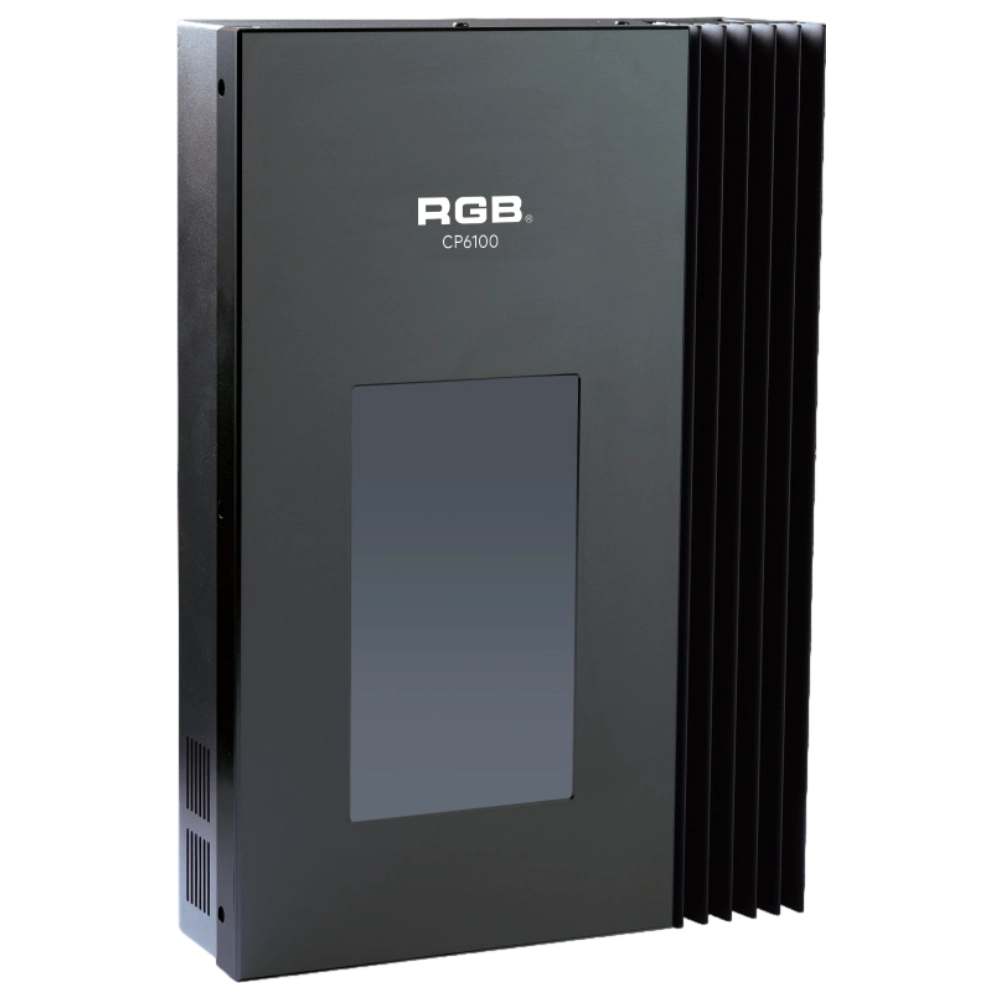
CP6100 Light Control System
The lighting control host is the main control device for theater stage lights, work lights, environmental lighting, commercial art lighting, sports venue lighting, and other places. By connecting the dedicated lighting control panels CP6104 and CP6108, it realizes the central control of the lighting system, supports a visual lighting control system, and intuitively displays the online and offline status of CP6100. Realize remote monitoring, editing, and setting of corresponding parameters.
It is widely applicable to theaters, cinemas, auditoriums, stadiums, museums, exhibition halls, cultural tourism performances, commercial art lighting, and other places.
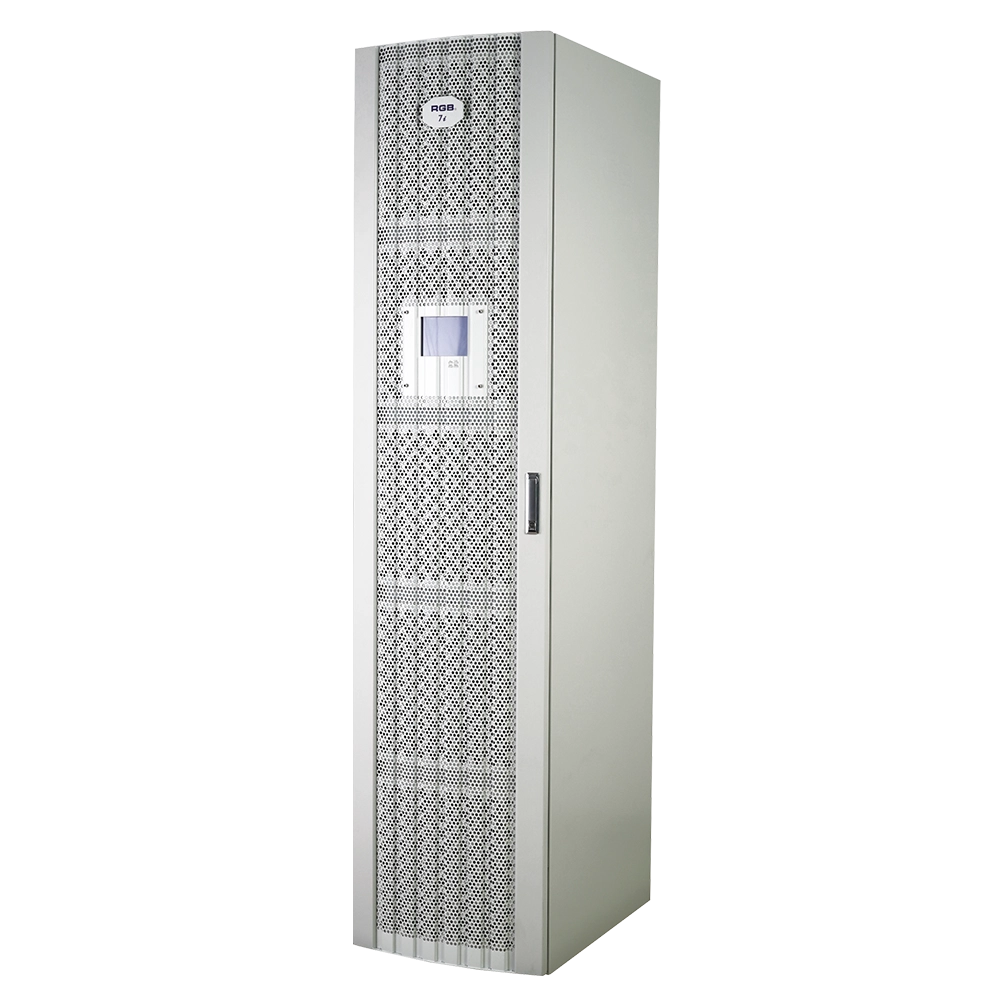
7i Dimmer/Relay Racks
7i is RGB independent research and development, with completely independent core technology, full digital decoding technology dimming racks, using a dual system, double decoding, double trigger, and duplex dual backup central decoding processor, with thyristor, relay, dimming relay mixed and other output configurations, supporting a visual lighting control system, intuitive display of dimming racks' online and offline status, and remote monitoring.
It is widely used in performing arts and cultural venues such as theaters, concert halls, multi-function halls, cultural travel and performing arts, TV stations, gymnasiums, auditoriums, commercial art lighting and so on.
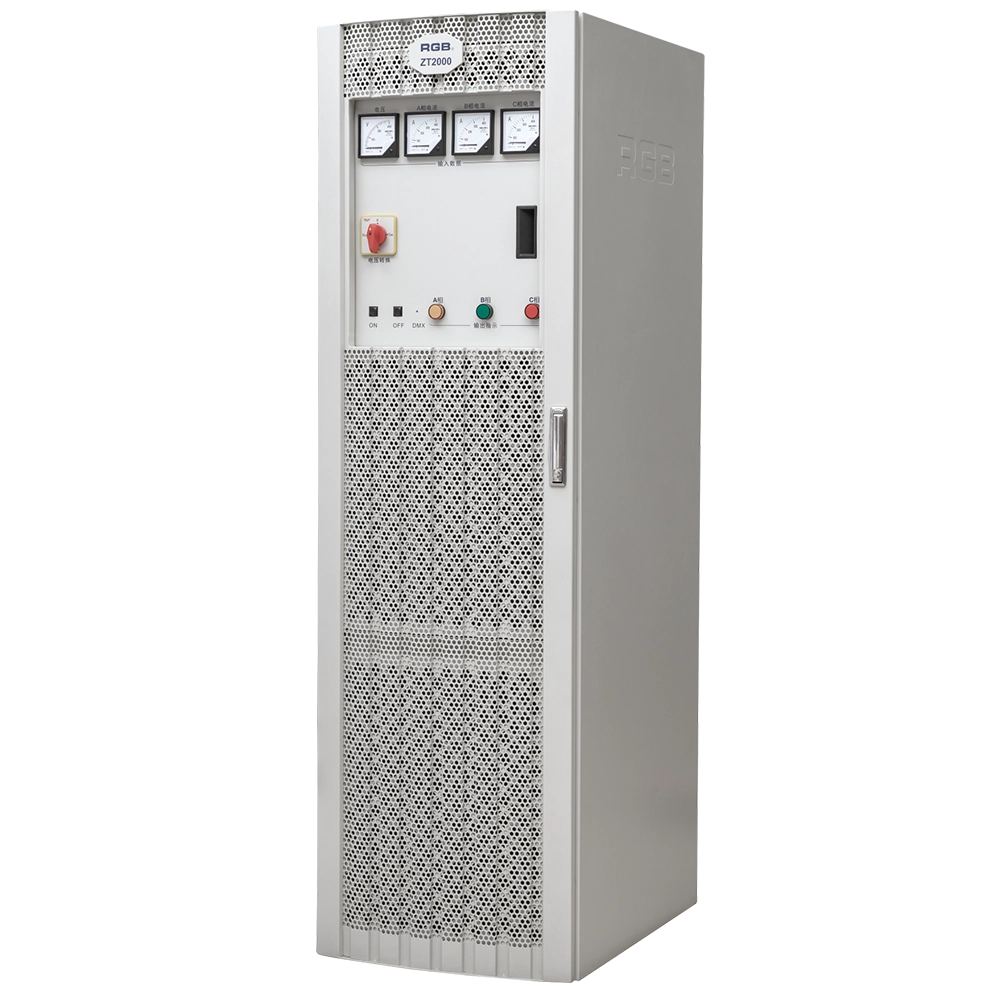
ZT2000 Pass-Through Racks
The ZT2000 straight-through power cabinet is a three-phase 630A/400A air switch main control, with each channel being a 32A air switch sub-control straight-through power cabinet. It can be used in conjunction with various computer lamps, regular lamps, and temporary electrical equipment as a power distribution and supply part for electrical equipment with overcurrent and short-circuit protection. It is a brand-new, reliable, and stable lighting control device in the field of stage lighting control.
It is widely applied in theaters, concert halls, multi-functional halls, cultural and tourism performances, TV stations, gymnasiums, auditoriums, commercial art lighting, and other performance and cultural venues.
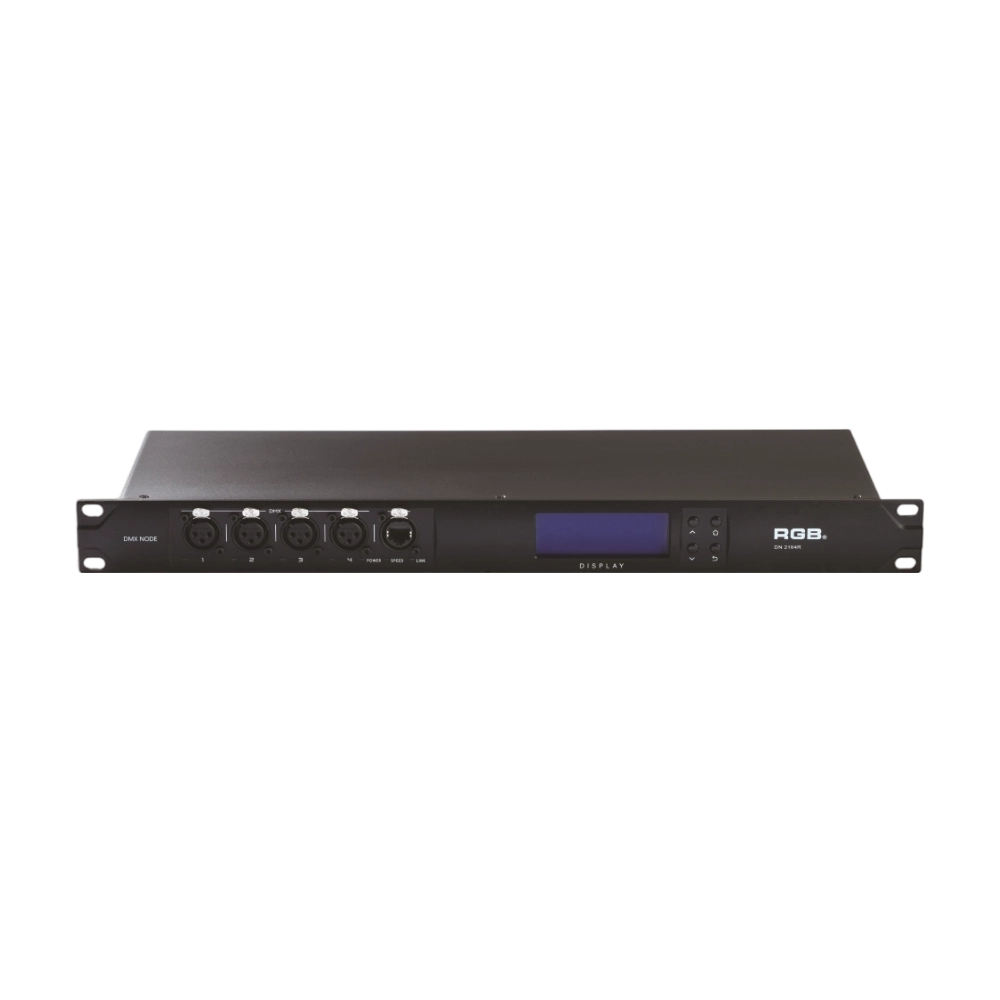
DMX, RDM Nodes
The DN series dual network port network decoder is a lighting control system product independently developed by RGB, featuring completely independent core technology and software copyright. It seamlessly connects and decodes the sACN and ART-Net network protocols based on TCP/IP with the DMX-512 and RDM communication protocols, achieving gigabit communication with dual independent physical address codes. Supports a visual lighting control system, intuitively displaying the online and offline status of the DN series network decoders, and enabling remote monitoring, editing, and setting of corresponding parameters.
It is widely applied in theaters, concert halls, multi-functional halls, cultural and tourism performances, TV stations, gymnasiums, auditoriums, commercial art lighting, and other performance and cultural venues.
Expert Support
Interested in learning more or need expert guidance related to this article? Fill in your details, and our team will provide tailored support.
Intelligent Control. Brilliant Performance.
RGB specializes in stage lighting control systems, delivering intelligent, reliable, and high-performance solutions for theaters and performance spaces worldwide.
Contact
Email:
Tel:
+86 20 3928 0245
+86 20 3928 0247
Address:
No.3, Huashan Road, Shilou Town, Panyu, Guangzhou, China.
Whatsapp: +8615975520131