
CP6100 & CP6200 Light Control System: Intelligent Stage Lighting for Theaters and Venues
- How to choose a lighting control system for theaters and large venues
- How to compare networked dimming and console features when evaluating systems
- How to assess reliability and redundancy for live-event operation
- How to evaluate maintainability and long-term TCO for lighting control hardware
- Why does CP6100/CP6200 improve production efficiency on stage
- How does visualized control reduce setup and programming time
- How does hybrid dimmer architecture save energy and reduce maintenance
- How does centralized scheduling and cloud management streamline venue operations
- What causes signal loss in large lighting networks and how to prevent it
- Why does protocol selection (Art-Net vs sACN vs DMX512) impact network performance
- How to design grounding and cable runs to prevent dropouts and interference
- How to monitor and diagnose network health in real time
- How to integrate CP6100/CP6200 with broadcast, automation and venue control
- How to sync lighting with SMPTE timecode and media servers
- How to scale multi-console control across complex venues and tours
- How to integrate with building automation and third-party control systems
- Contact RGB sales for technical consultation and demos
- Frequently Asked Questions

Based in Guangzhou, RGB has developed the CP6100 and CP6200 light control systems to meet the needs of modern theaters, broadcast studios, and large-scale performance venues. The CP6100 CP6200 light control system combines visualized control, intelligent network dimming, and hybrid dimmer management to reduce setup time, increase runtime reliability, and simplify integration with DMX512, Art-Net and sACN infrastructures. For organizations seeking compliant, maintainable stage lighting solutions engineered in China and deployed globally, these controllers align with ISO9001 quality practices while supporting common industry protocols for interoperability.
How to choose a lighting control system for theaters and large venues
How to compare networked dimming and console features when evaluating systems
Compare systems by looking for native support of industry protocols such as DMX512 (ANSI E1.11), Art-Net and sACN, robust Ethernet interfaces, and pixel-mapping capabilities. The CP6100 CP6200 light control system supports visualized control and multiple output protocols to reduce protocol translation points, which lowers configuration time and simplifies long cable runs.
How to assess reliability and redundancy for live-event operation
Prioritize consoles with multi-path network options, hot-swappable backup and console merge features to avoid single points of failure. CP6100/CP6200 architectures provide redundant network links and database backup strategies, enabling failover and console takeover workflows that maintain show continuity during hardware or link faults.
How to evaluate maintainability and long-term TCO for lighting control hardware
Review firmware update paths, spare-parts availability, and manufacturer certifications such as ISO9001 and CE. RGB’s manufacturing processes and quality management reduce field failures, and the CP6100/CP6200 are designed for remote diagnostics and firmware updates to keep maintenance windows short and predictable.
Why does CP6100/CP6200 improve production efficiency on stage
How does visualized control reduce setup and programming time
Visualized interfaces let lighting designers drag-and-drop fixtures onto venue maps and build cues visually, dramatically reducing patch time. The CP6100 CP6200 light control system’s visual editor and timeline-based programming facilitate faster cue creation, enabling crews to finalize complex scenes in fewer rehearsal hours.
How does hybrid dimmer architecture save energy and reduce maintenance
Hybrid dimmer systems combine intelligent network dimming with localized power management to balance load and reduce heat stress on fixtures. By optimizing dimmer curves and local distribution, CP6100/CP6200 reduces overall energy draw and prolongs fixture lifespans, lowering total cost of ownership.
How does centralized scheduling and cloud management streamline venue operations
Centralized scheduling and remote monitoring let technical directors deploy show updates to multiple consoles and venues from a single interface. RGB’s cloud-assisted features support remote backups and settings distribution, reducing on-site labor and accelerating multi-venue rollouts.
What causes signal loss in large lighting networks and how to prevent it
Why does protocol selection (Art-Net vs sACN vs DMX512) impact network performance
Art-Net and sACN are designed for Ethernet transport of lighting data and scale differently under heavy channel loads; choose the protocol that matches your network architecture. The CP6100 CP6200 light control system supports Art-Net and sACN to allow integrators to select the best-fit protocol for latency, multicast behavior, and switch hardware in their venue.
How to design grounding and cable runs to prevent dropouts and interference
Use balanced data cabling per manufacturer guidance, segmented power distribution, and proper grounding to minimize ground loops and RF interference. Structured cable routes and professional-grade Ethercon/RJ45 terminations reduce connector-related faults during shows.
How to monitor and diagnose network health in real time
Implement SNMP and syslog monitoring on managed switches, and use console diagnostics to trace packet flow and identify bottlenecks. CP6100/CP6200 systems expose network health metrics and event logs, helping technicians quickly isolate issues and restore full operation.
How to integrate CP6100/CP6200 with broadcast, automation and venue control
How to sync lighting with SMPTE timecode and media servers
Look for SMPTE/LTC timecode input, MIDI and network timecode support to synchronize lighting cues with audio and video. CP6100/CP6200 provide timecode-triggered sequences and cue lists to ensure frame-accurate transitions for broadcast pipelines.
How to scale multi-console control across complex venues and tours
Use hierarchical console networks and showfile distribution to maintain consistent control across stages and rehearsal spaces. RGB’s systems enable master/slave arrangements and session replication so touring productions can deploy identical cue stacks across venues quickly.
How to integrate with building automation and third-party control systems
Choose control systems with TCP/IP APIs, OPC, or MQTT interfaces for integration into building management systems and automation controllers. CP6100/CP6200 include network APIs and trigger inputs for seamless interaction with HVAC, AV routers, and safety interlocks.
For protocol background and implementation guidance see DMX512 protocol documentation at DMX512 protocol (Wikipedia), technical notes on sACN at sACN (Streaming Architecture for Control Networks), and quality management context via ISO 9001. For hands-on product details, learn more about the CP6100 CP6200 light control system on RGB’s product page: CP6100 CP6200 light control system product page.
Contact RGB sales for technical consultation and demos
If you need an on-site demo or system design review, contact RGB’s sales and engineering team to schedule a workshop. RGB’s Guangzhou R&D and production resources support custom integrations, training, and long-term service agreements.
Frequently Asked Questions
- What protocols does the CP6100/CP6200 support?
The CP6100/CP6200 support DMX512 (ANSI E1.11), Art-Net and sACN for Ethernet lighting transport. These protocols ensure interoperability with industry fixtures and media servers for broadcast and live events. - How often should firmware be updated on a lighting console?
Update firmware every 6–12 months to stay current with bug fixes and protocol improvements. Schedule updates during off-season or planned maintenance windows to avoid show interruptions. - Can the CP6200 handle multi-stage touring setups?
Yes, the CP6200 is engineered for multi-stage touring with networked console merge and showfile replication. Its architecture supports distributed control sessions across venues and quick reconfiguration between shows. - How does visualized control improve cue accuracy?
Visualized control reduces human error by mapping physical fixtures to on-screen venue layouts for direct manipulation. This visual mapping accelerates programming and verifies cue timing before live playback. - Is the CP6100 certified for international deployment?
Yes, RGB follows CE and RoHS certification practices and operates under ISO9001 quality control standards. These certifications facilitate compliant installation in multiple international markets. - What kind of redundancy is recommended for mission-critical shows?
Use dual-network links, a secondary console, and power redundancy to ensure continuity during failures. For national events, combine hardware redundancy with automated takeover scripts for immediate failover.
For personalized quotes, system architecture, or to arrange a demo, contact RGB customer service or your local RGB distributor to speak with a technical consultant and schedule an evaluation.
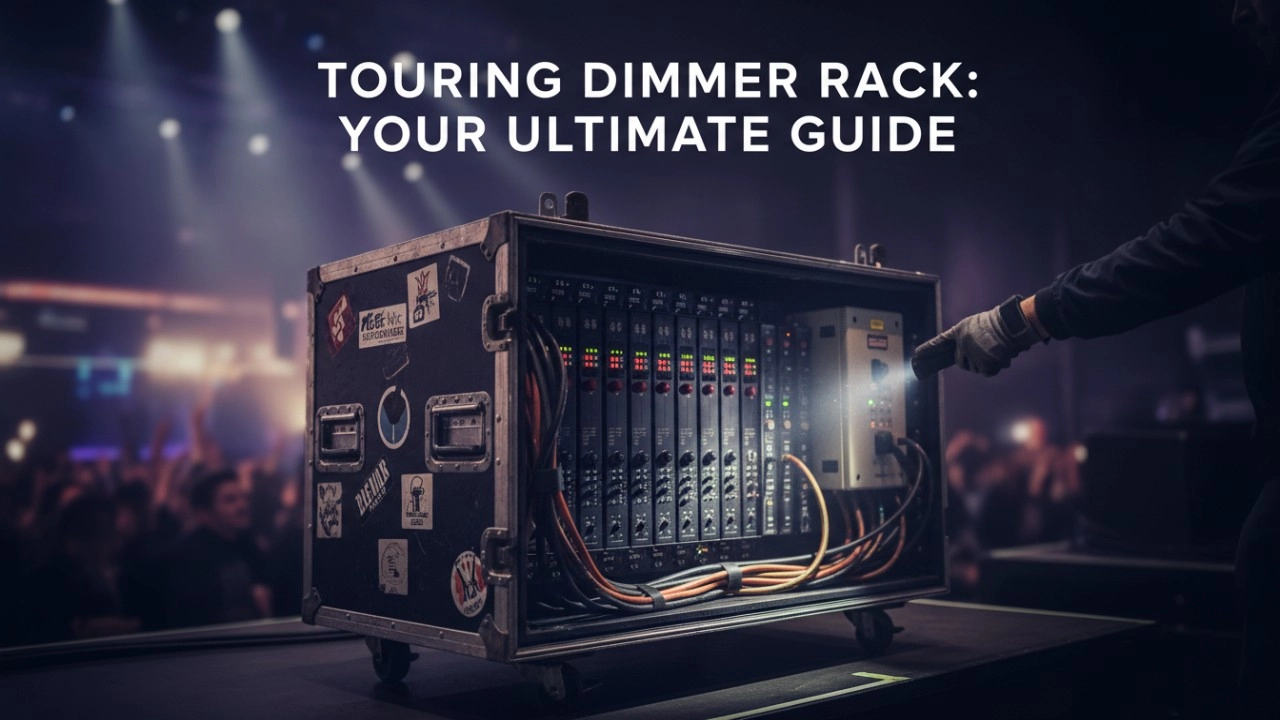
The Ultimate Guide to Touring Dimmer Racks [2026 Selection & Maintenance]
Troubleshooting Common Ethernet DMX Node Issues for Buyers
Rack vs Portable Dimmers: What Venue Managers Should Know
Wireless Stage Light Dimmer Options for Flexible Event Setups
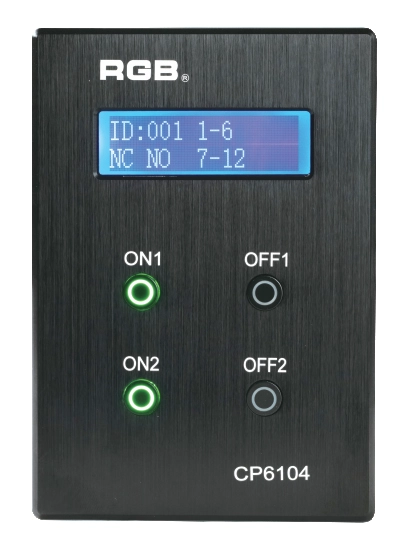
CP6104 Four-Key Stage Lighting Control Panel
RGB CP6104 is a four-key lighting control panel for stage and venue scenes within a CP6100 host-based system. The published design lists a local LCD, four backlit scene keys, panel status indication and an RJ45 interface powered by the main unit. Host-level circuit and scene capacities must be confirmed for the full system rather than attributed to the panel alone.

10i Visual Network Dimmer & Relay Rack
RGB 10i is a visual network dimmer and relay rack for theater and performance lighting. It combines network topology monitoring with configurable SCR, sine-wave and relay switching modules, plus digital DMX512 control and local status display. Art-Net, sACN and RDM device monitoring support system supervision; confirm optional functions and the selected 60- or 96-circuit configuration before specifying the rack.
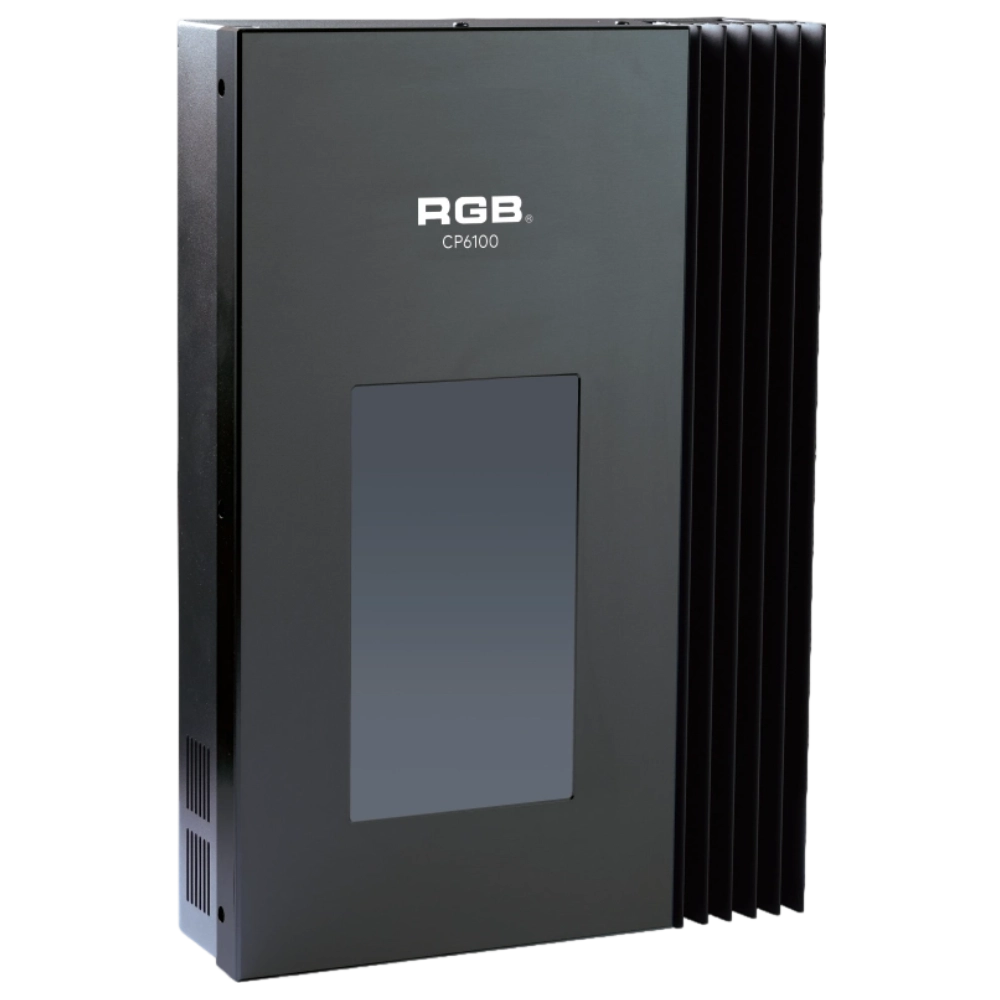
CP6100/CP6200 Stage Lighting Control Hosts
RGB CP6100/CP6200 is a stage and venue lighting control host family for coordinating lighting scenes and compatible CP6104/CP6108 control panels. The current product specification describes DMX512, Art-Net and sACN control, scene playback, network monitoring and RJ45 connections. CP6100 and CP6200 are listed together, but the current documentation does not establish model-specific differences or confirm which expansion capacities apply to each host.
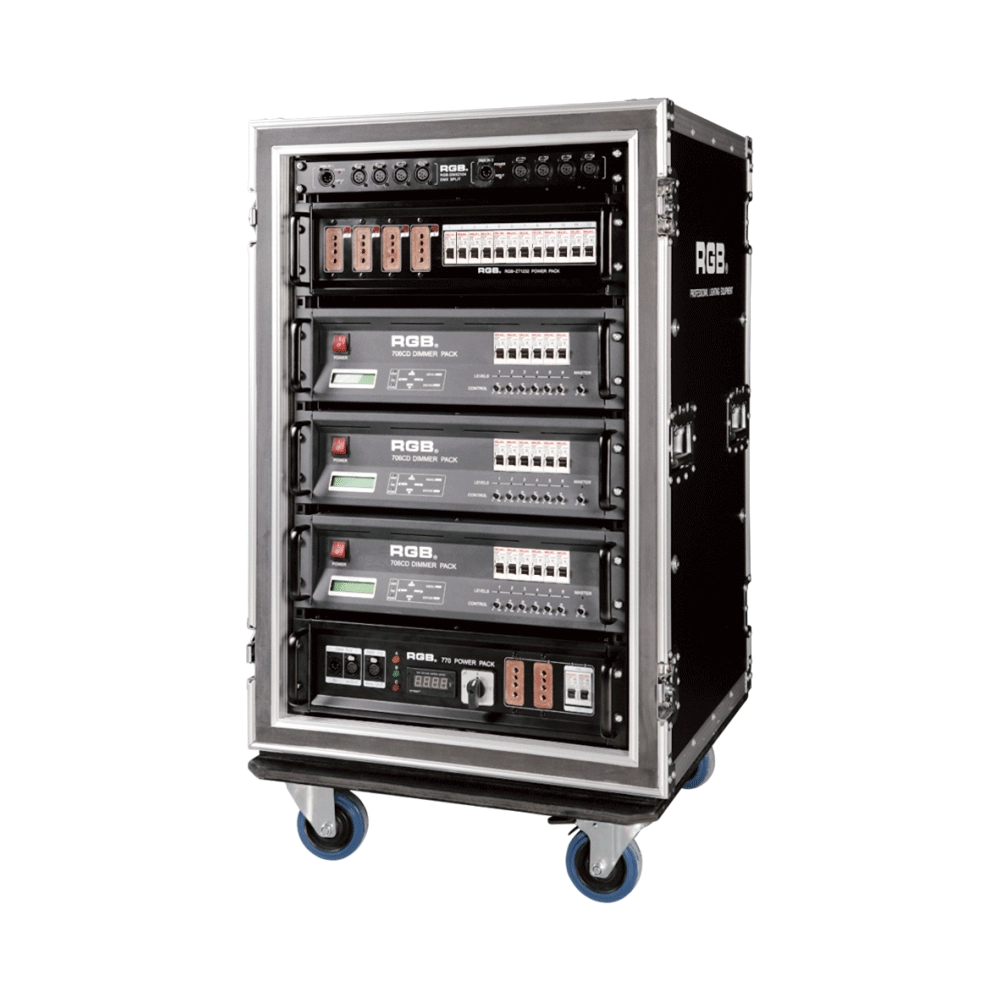
7 Series Digital Touring Dimmer Rack Systems
RGB 7 Series Digital Touring Dimmer Racks are modular touring cabinets assembled from 7 Series dimmer units. The published range lists RGB-7126, 7186, 7246, 7243, 7363 and 7483 variants with 12–48 channels and 3 kW or 6 kW model ratings. DMX512 control and A/B input arrangements are described for touring lighting, while rack wiring, protection devices and final output connectors require confirmation for each configuration.
Expert Support
Interested in learning more or need expert guidance related to this article? Fill in your details, and our team will provide tailored support.
Intelligent Control. Brilliant Performance.
RGB specializes in stage lighting control systems, delivering intelligent, reliable, and high-performance solutions for theaters and performance spaces worldwide.
Contact
Email:
Tel:
+86 20 3928 0245
+86 20 3928 0247
Address:
No.3, Huashan Road, Shilou Town, Panyu, Guangzhou, China.
Whatsapp: +8615975520131