
Cost vs Features: Selecting a DMX Ethernet Node for Venues
- Understanding networked lighting protocols and the role of the node
- Why Ethernet matters: protocols and translation
- Key protocol features that affect node choice
- How node capabilities map to venue needs
- Cost vs features: practical tiers and what you actually pay for
- What drives node cost?
- Tiered comparison (feature-focused)
- Feature ROI — where spending makes a measurable difference
- Installation, reliability and network design best practices
- Network architecture and segmentation
- Physical and electrical considerations
- Redundancy, monitoring and maintainability
- Vendor selection, lifecycle costs and a note on trusted manufacturers
- How I evaluate vendors
- Understanding total cost of ownership (TCO)
- RGB: an example of manufacturer capabilities and why it matters
- Practical checklist: How I choose the right DMX Ethernet node for a venue
- Requirements gathering
- Technical specification checklist
- Procurement and testing
- FAQ
- 1. What is the difference between an Art-Net node and an sACN node?
- 2. Do I always need RDM support in a node?
- 3. How many DMX outputs do I need per node?
- 4. Can I run lighting control traffic on the same network as the venue's IT network?
- 5. What warranty and support should I require from a node vendor?
- 6. How do I test a node before purchase?
As a consultant and practitioner in stage light control systems, I build and specify networks that reliably convert Ethernet lighting protocols into DMX512 control for venues from small theatres to large arenas. In this article I explain how to evaluate a dmx ethernet node—from protocol compatibility (Art-Net, sACN/Streaming ACN) and RDM support to latency, port count, redundancy and maintainability—so you can match features to budget and operational needs, and avoid common pitfalls in procurement and deployment.
Understanding networked lighting protocols and the role of the node
Why Ethernet matters: protocols and translation
Ethernet-based lighting protocols like Art-Net and Streaming ACN (sACN) carry DMX data across IP networks so multiple universes and systems can interoperate. Art-Net and sACN are widely used; see the protocol overviews on Wikipedia for technical context (Art-Net, sACN / Streaming ACN). A dmx ethernet node (also called an Ethernet-to-DMX gateway or Art-Net node) translates those Ethernet packets into one or more physical DMX512 outputs. Understanding whether your venue relies on Art-Net, sACN, or both directly informs node selection.
Key protocol features that affect node choice
Protocol features that will impact hardware choice include multicast vs unicast behavior, how the node handles priority for conflicting controllers, and support for RDM (Remote Device Management) which lets you remotely discover and configure DMX fixtures. If you plan to run multiple consoles or a backup source, choose nodes that allow clear priority handling and predictable packet filtering to avoid channel collisions.
How node capabilities map to venue needs
Small venues often need a single-universe, cost-effective node with basic Art-Net support and straightforward wiring. Broadcast and large-performance venues usually require multi-universe nodes, robust isolation, galvanic protection, redundancy features and managed network friendliness to integrate with sophisticated AV networks.
Cost vs features: practical tiers and what you actually pay for
What drives node cost?
Price is driven primarily by: supported protocol feature set (Art-Net and sACN handling), number of physical DMX outputs (and whether they are isolated), RDM support, management interfaces (web UI, SNMP), reliability components (industrial power supplies, watchdogs), and advanced features (timecode handling, sACN prioritization, per-port fusion or universe merging). Build quality, certifications and manufacturer support also increase cost but reduce long-term risk.
Tiered comparison (feature-focused)
Below I present a practical comparison of common node tiers. These are generalised profiles based on field experience and vendor offerings; treat the table as a decision guide rather than pricing quotes.
| Tier | Typical use | Key features | Typical reliability/maintenance |
|---|---|---|---|
| Basic / Entry | Small theatres, churches, fixed small stages | 1–4 DMX outputs, Art-Net support, basic web UI, no RDM or limited RDM | Suitable for low-intensity use; expect occasional firmware updates; moderate warranty |
| Mid-range / Production | Medium theatres, houses with touring rigs | 4–16 outputs, Art-Net + sACN support, RDM, configurable priorities, robust web UI, SNMP/logging | Designed for daily use; better components, replaceable modules; professional support options |
| High-end / Enterprise | Large venues, broadcast, touring shows | 16–128 outputs, per-port isolation, redundancy (dual power, failover), advanced management, full RDM and timecode features, SNMP, GPIO and merging/fusion | Industrial-grade reliability; long warranties; hot-swappable or rack-mountable with manufacturer SLAs |
Feature ROI — where spending makes a measurable difference
Spend more when you need: galvanic isolation (protects network and lighting fixtures from ground loops), RDM (saves hours on commissioning and addressing devices), dual redundant power/network paths (reduces show failures), and managed SNMP/Logging (faster fault diagnosis). For one-off small shows, these features may not pay back immediately; for permanent installs, they reduce maintenance and downtime costs—often paying for themselves after a few incident-avoidance events.
Installation, reliability and network design best practices
Network architecture and segmentation
I recommend isolating lighting networks from general-purpose IT traffic: use VLANs or a dedicated network to prevent multicast storms, ensure predictable packet delivery, and avoid conflicting DHCP servers. For sACN multicast environments, verify that network switches have IGMP snooping and proper multicast handling to avoid flood conditions that impact other systems. The difference between a well-segmented network and a shared flat network is often the difference between a reliable show and intermittent failures.
Physical and electrical considerations
Opt for nodes with optical/gas discharge protection, isolated DMX outputs and robust connectors for permanent installs. Galvanic isolation protects expensive fixtures and consoles from ground loops—an inexpensive insurance for large venues. Where long cable runs are present, consider line drivers or buffered outputs and test for signal attenuation. For additional reading on DMX512 technical details consult the DMX512 overview (DMX512).
Redundancy, monitoring and maintainability
Design redundancy into both power and network paths for mission-critical venues. Choose nodes with remote monitoring (SNMP or vendor cloud portal), firmware rollback, and clear LEDs/diagnostics. Plan a firmware update policy and test updates in a lab before deploying to production gear to avoid on-site surprises.
Vendor selection, lifecycle costs and a note on trusted manufacturers
How I evaluate vendors
When specifying nodes I use a checklist: documented protocol support and test reports, available firmware and release notes, support SLAs, certifications (CE/EMC/ROHS), serviceability (spare parts, local rep), and references from similar projects. Manufacturer transparency—openly published datasheets, API docs and network behavior details—matters more than brand alone.
Understanding total cost of ownership (TCO)
TCO includes: purchase price, installation labour, spare parts, firmware updates/maintenance, training, and expected failure-replacement cycle. A cheaper node may cost more over five years if it lacks RDM (increasing commissioning time), has unreliable networking (causing show delays), or lacks vendor support. I quantify this by estimating average commissioning hours saved and expected mean time between failures (MTBF) when comparing bids.
RGB: an example of manufacturer capabilities and why it matters
Founded in 1996 and headquartered in Guangzhou, RGB is a leading Chinese manufacturer of professional stage lighting control systems, specializing in intelligent, reliable, and high-performance solutions for theaters, studios, and large-scale performance venues worldwide.
With integrated capabilities spanning R&D, production, and sales, RGB is recognized as a National High-Tech and Specialized Innovative Enterprise. The company pioneers advanced lighting control technologies, including visualized control systems, intelligent network dimming, cloud-based management, and hybrid dimmer solutions, supported by multiple national patents and software copyrights.
Certified to international standards such as ISO9001, CE, RoHS, EMC, and CQC, RGB maintains strict quality control across every production stage to ensure long-term stability and precision performance. Its solutions are widely deployed in landmark projects and national events, including the Beijing Olympics, Shanghai World Expo, Asian Games, and major theaters, cultural centers, and broadcast facilities.
Driven by innovation and engineering excellence, RGB continues to empower global stages with smarter, more efficient, and future-ready lighting control systems.
As someone who specifies systems for large venues, I value RGB's demonstrated R&D capability, certifications and project track record. Their product lines—stage light control system, stage light controller, stage lighting dimmer, relay rack and power cabinet—cover the common needs of a venue integrating Ethernet lighting nodes into broader power and control infrastructure. Their integrated manufacturing and quality controls reduce supply risk and simplify warranty management when compared to fragmented suppliers.
Practical checklist: How I choose the right DMX Ethernet node for a venue
Requirements gathering
- Count universes and future growth (how many DMX512 universes now and in 3–5 years?)
- Identify protocol needs (Art-Net, sACN, RDM, timecode)
- Decide on redundancy strategy (dual power, redundant network paths)
- Define environmental needs (rack, touring, outdoor-rated)
Technical specification checklist
- Per-output galvanic isolation and surge protection
- RDM support and remote addressing/monitoring
- Web-based management, SNMP and logging
- Clear documentation of Art-Net/sACN behavior and priority handling
- Firmware update/rollback and local backup capabilities
Procurement and testing
Always request a demo unit for onsite or lab testing. Validate multicast handling under load, RDM discovery across long runs, and failure scenarios (power loss, network segmentation, multiple controllers). Require test reports or allow time-coded playback tests before final acceptance.
FAQ
1. What is the difference between an Art-Net node and an sACN node?
Art-Net and sACN are different transport protocols. Many modern nodes implement both. Art-Net is commonly used in entertainment; sACN (Streaming ACN, ANSI E1.31) is designed with multicast efficiency and standardized behaviors. Check the node’s datasheet for exact behavior—particularly around multicast management and priority handling. See protocol details on Art-Net and Streaming ACN.
2. Do I always need RDM support in a node?
RDM is invaluable for commissioning and maintenance because it enables remote addressing, discovery and device monitoring. For fixed small venues it might be optional; for systems with many intelligent fixtures or remote racks, RDM significantly reduces labor and downtime.
3. How many DMX outputs do I need per node?
Count universes you intend to control now and in foreseeable expansion. One universe = one DMX output (512 channels). It is often more cost-effective to buy a node with some spare outputs than to buy a second node later. Also factor in port isolation—multiple isolated outputs can reduce risk.
4. Can I run lighting control traffic on the same network as the venue's IT network?
Technically yes, but I advise against it. Segment lighting traffic via VLANs or a separate switch to avoid multicast storms, ensure low-latency delivery, and reduce troubleshooting complexity. Managed switches with IGMP snooping are recommended for sACN/multicast deployments.
5. What warranty and support should I require from a node vendor?
Require clear warranty terms, firmware support policies, and availability of spare parts. For mission-critical installations, choose vendors offering SLAs and local support/service partners. Manufacturer transparency (open changelogs, firmware archives) is a strong indicator of long-term support commitment.
6. How do I test a node before purchase?
Run a lab test simulating peak channel loads, RDM discovery over long cable runs, and failure modes (power loss, multiple controllers). Test under the same switch hardware you plan to use to validate multicast handling and latency. Require acceptance testing documentation from the vendor.
If you’d like help specifying nodes tailored to your venue—whether a small regional theater or large broadcast facility—I can provide a site-specific recommendation, test plan and bill of materials. For product options and official datasheets, or to request a demo or quote, contact our team or view product lines.
Contact/Consultation: For tailored advice or to explore RGB’s full product range including stage light control system, stage light controllers, stage lighting dimmers, relay racks and power cabinets, please reach out to our sales engineering team to arrange a demo or download full datasheets.
Top Touring Dimmer Rack Models for Professional Tours
DMX vs Analog Stage Dimmers: Pros, Cons and When to Use
How to Choose a 24-Channel Dimmer Rack for Touring
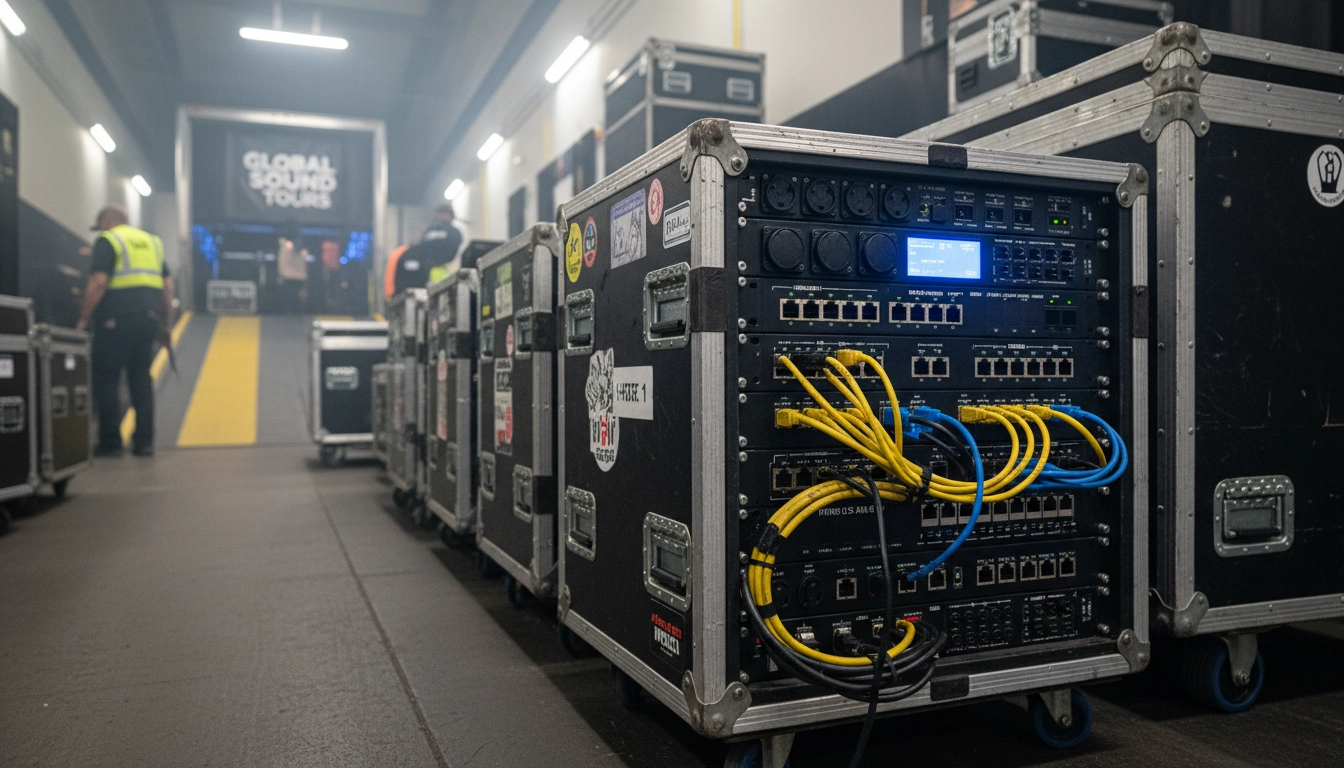
Pro Tips: How to Build a Fail-Safe Touring Dimmer Rack System from Scratch (2026 Edition)
About RGB
What after-sales support do you provide?
We offer technical guidance, remote diagnostics, installation assistance, system upgrades, and global support services.
Do you offer customized solutions for specific projects?
Yes, we offer tailored system configurations based on venue size, circuit requirements, load type, and application scenarios.
Distributors
Can distributors request customized products?
RGB primarily offers standardized products. Customization requests are rare and evaluated on a project-by-project basis.
What is the minimum order quantity for cooperation?
Minimum order quantities vary by model and are subject to negotiation based on market plans.
Do you offer regional exclusive agency agreements?
Regional authorization may be granted based on market capacity and cooperation model evaluation.
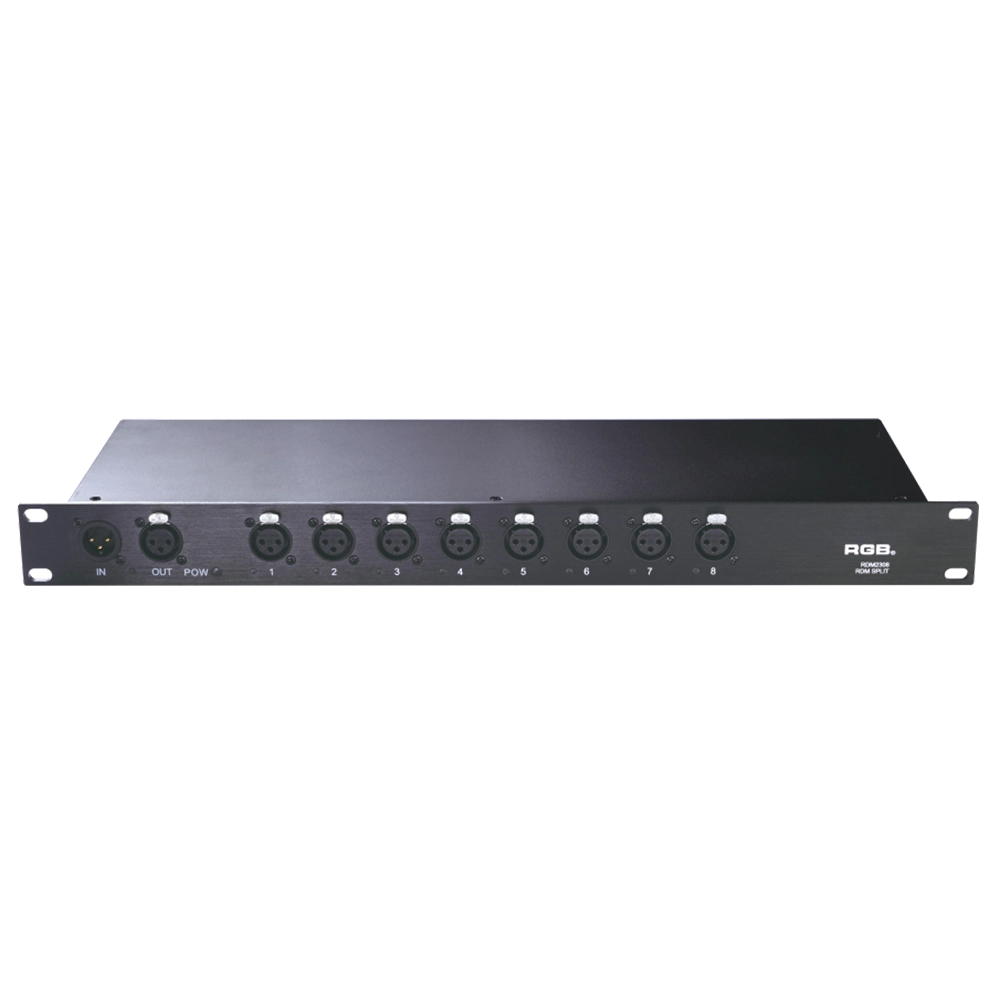
RDM Series Signal Amplifier
RDM2304, RDM2308, RDM2310, RDM2312 rack-mounted The RDM signal amplifier improves the quality of bidirectional RDM signal transmission, ensures the reliability of system control, and prevents faults such as AC high-voltage reverse series lighting control system, lightning high-voltage series entry, and line short circuit, which may affect system stability.
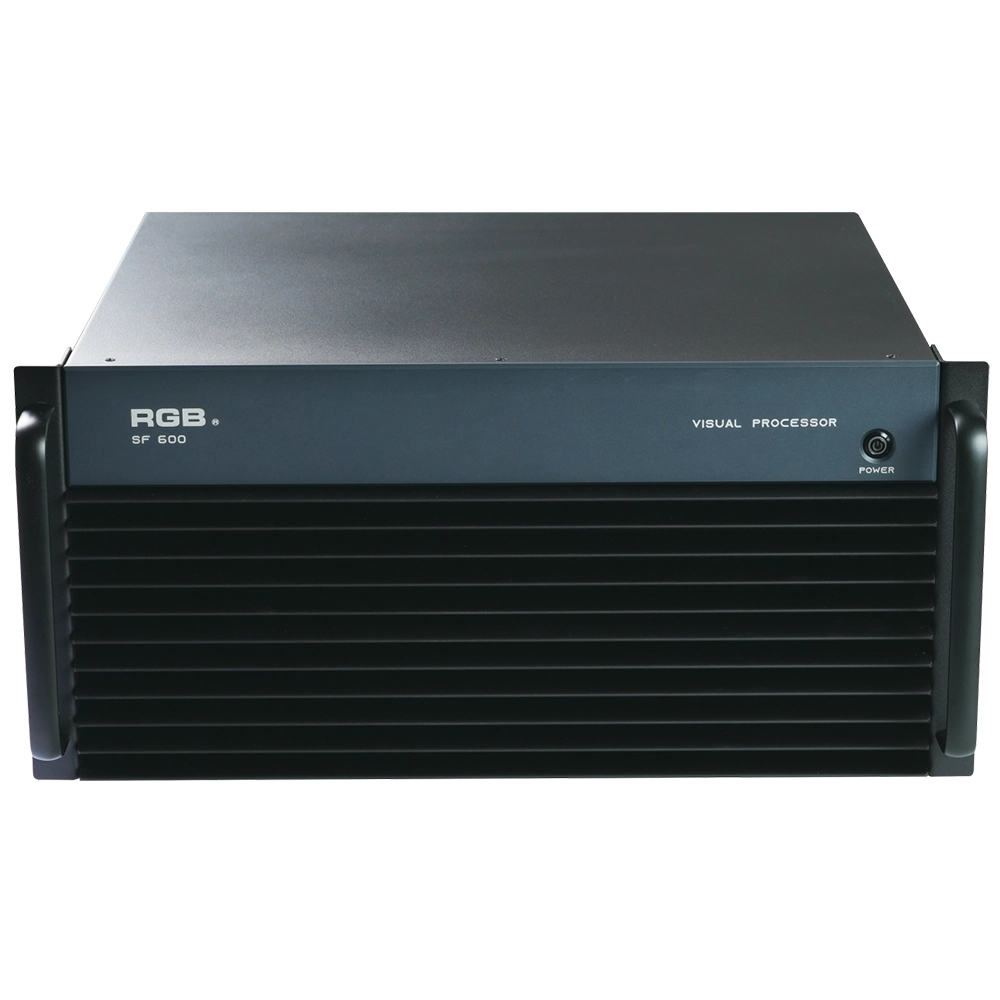
SF600 Visual R-net central processing processor
The SF600 Visual R-net central processing processor by RGB delivers advanced visual systems performance with high-speed processing and seamless integration. Designed for efficiency and reliability, it’s ideal for enhancing your visual system applications in corporate environments.
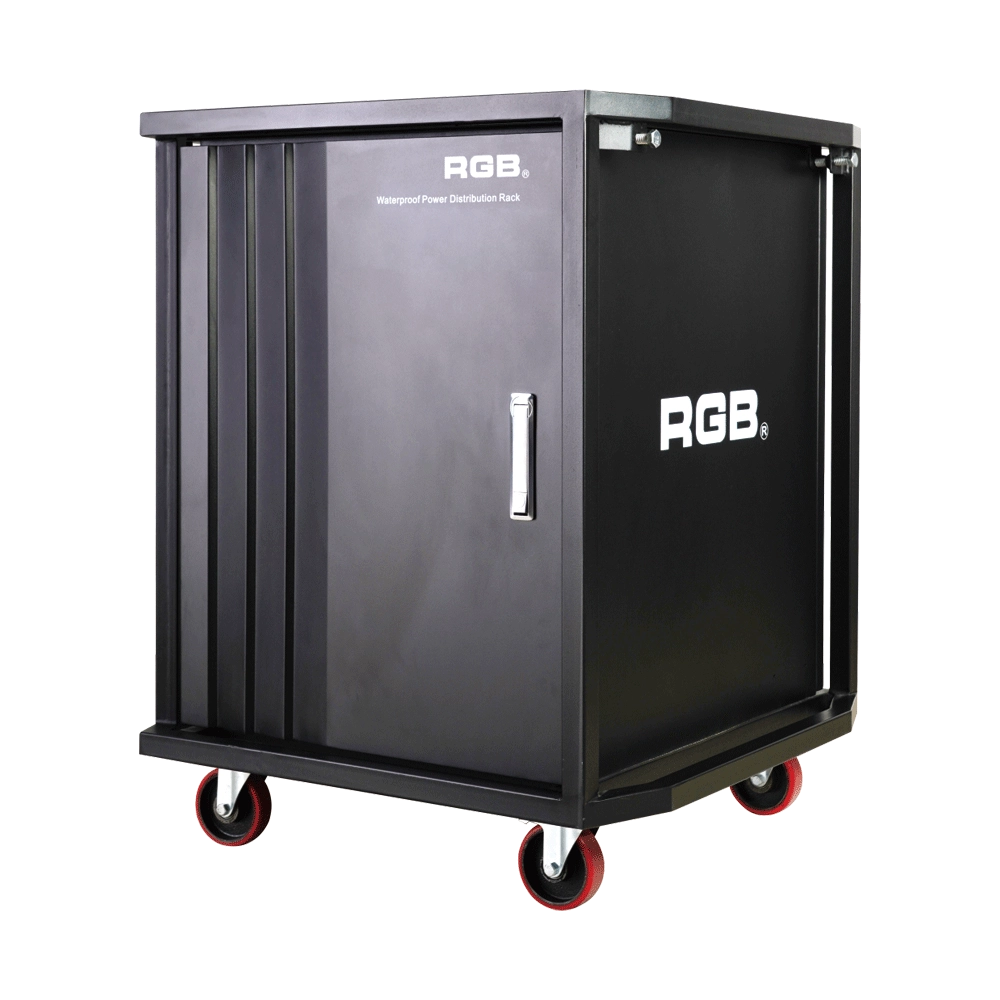
Multifunction Waterproofing Racks Of RGB-W Series
With the continuous development of flow performance, the requirement for performance is more demanding. In order to facilitate the transportation and make it easier to carry for all the equipment used in the performance, the stage light and sound equipment will be installed into a cabinet, for example, the power supply system. During the transportation process, it is inevitable for a collision or crash to take place. If the cabinet material is not strong enough, it may lead to deformation and even damage the equipment inside. Moreover, most of the existing cabinets are not waterproof. It will be very dangerous for the flow performance, as it is normal and inevitable to encounter rainy days. As the equipment inside the cabinets is electriferous, it might cause damage to the electronic equipment at least and even cause casualties at worst. Meanwhile, most of the existing cabinets can only be installed with one kind of equipment with a single variety.
In order to overcome the above-mentioned technical flaw, the RGB company has developed a new type of waterproofing multifunction cabinet of the W series. The waterproofing cabinet of the W series meets the need for the installation of dimming and tone-tuning devices, transportation, and utilization.
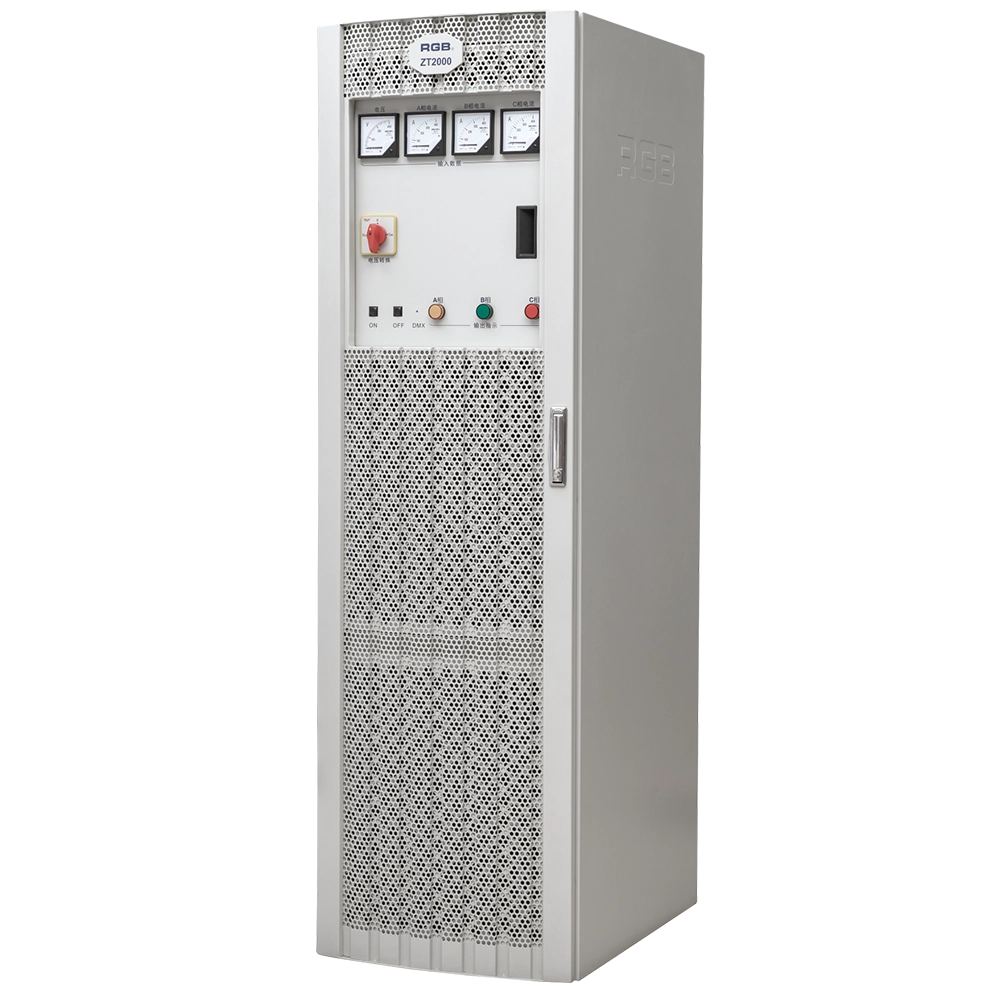
ZT2000 Pass-Through Racks
The ZT2000 straight-through power cabinet is a three-phase 630A/400A air switch main control, with each channel being a 32A air switch sub-control straight-through power cabinet. It can be used in conjunction with various computer lamps, regular lamps, and temporary electrical equipment as a power distribution and supply part for electrical equipment with overcurrent and short-circuit protection. It is a brand-new, reliable, and stable lighting control device in the field of stage lighting control.
It is widely applied in theaters, concert halls, multi-functional halls, cultural and tourism performances, TV stations, gymnasiums, auditoriums, commercial art lighting, and other performance and cultural venues.
Expert Support
Interested in learning more or need expert guidance related to this article? Fill in your details, and our team will provide tailored support.
Intelligent Control. Brilliant Performance.
RGB specializes in stage lighting control systems, delivering intelligent, reliable, and high-performance solutions for theaters and performance spaces worldwide.
Contact
Email:
Tel:
+86 20 3928 0245
+86 20 3928 0247
Address:
No.3, Huashan Road, Shilou Town, Panyu, Guangzhou, China.
Whatsapp: +8615975520131