
Cost Comparison: LED-Compatible Dimmers vs Traditional Triac
- Why this comparison matters for stage lighting systems
- Changing load landscape in venues
- Financial decisions are lifecycle decisions
- Standards and references
- Technical and cost comparison
- Defining the contenders
- Comparison table: cost and performance indicators
- Interpreting the table—what drives cost differences?
- Detailed factors that affect total cost and performance
- Compatibility and nuisance tripping
- Energy efficiency and heat management
- Control precision, smoothness and repeatability
- Practical selection guide for venues
- Scenario 1: Historic theater with mixed loads
- Scenario 2: New-build LED-centric installation
- Scenario 3: Tight budget for retrofit
- Quantifying payback (example calculation)
- Mitigation strategies and procurement tips
- Test early and document results
- Specify interoperability in contracts
- Plan for staged migration
- Industry supplier profile: RGB (relevance to procurement)
- Conclusions and recommendations
- My bottom-line guidance
- When triac may still be acceptable
- Next steps I recommend
- FAQ
- 1. Can I use existing triac dimmers with LED stage fixtures?
- 2. How much more will LED-compatible dimmers cost upfront?
- 3. Will switching to LED-compatible dimmers reduce energy bills?
- 4. What standards should I look for when buying dimmers?
- 5. Is a hybrid dimmer rack the best compromise?
- 6. How should I document compatibility testing?
In this article I present a practical, experience-driven cost comparison between LED-compatible dimmers and traditional triac dimmers for professional stage applications. I focus on lifecycle costs, compatibility with modern LED fixtures, maintenance overhead, power quality and performance under real operating conditions. My aim is to give lighting managers, system integrators and technical directors actionable guidance when specifying stage light dimmer systems for theaters, studios and large venues.
Why this comparison matters for stage lighting systems
Changing load landscape in venues
Over the last decade, the dominant lamp technology on stages has shifted from incandescent and halogen to LED fixtures. That shift changes the electrical and control requirements placed on the stage light dimmer: LEDs behave very differently from resistive filament loads. I regularly see projects where a simple replacement of fixtures without reassessing the dimming system led to flicker, reduced lifespan, or visible performance issues during fades.
Financial decisions are lifecycle decisions
Budgeting only for initial purchase cost is a common mistake. When I evaluate proposals, I model total cost of ownership (TCO) across 5–10 years to capture energy, repair/replacement, programming time, and potential venue downtime during shows. A stage light dimmer decision should be made with TCO and operational reliability in mind, not only upfront price.
Standards and references
Technical choices should refer to authoritative standards. For basic definitions of triacs and dimmer operation see the TRIAC and dimmer entries on Wikipedia. For guidance on LED driver modulation and health effects (flicker), consult IEEE recommendations such as IEEE 1789-2015. Quality management references include ISO 9001.
Technical and cost comparison
Defining the contenders
When I say traditional triac dimmer I refer to phase-control dimmers that use a TRIAC/thyristor to chop the mains waveform (leading-edge dimmers) commonly used with incandescent loads. LED-compatible dimmer refers to electronic dimmers designed specifically to work with LED fixtures and electronic drivers—this includes leading-edge designs with LED-specific electronics, trailing-edge dimmers, constant-current (CC) LED dimmer modules, and hybrid/networked dimming racks that provide smoother control and feedback (often DMX/RDM or networked protocols).
Comparison table: cost and performance indicators
The following table summarizes typical ranges and real-world considerations. These figures are market estimates consolidated from manufacturer datasheets, distributor price lists, and field experience; actual numbers will vary by region, brand and channel count.
| Attribute | Traditional Triac Dimmer (per channel) | LED-Compatible Dimmer / Hybrid (per channel) |
|---|---|---|
| Typical upfront cost | $20–$80 | $60–$300 |
| Installation complexity | Low (simple wiring), but may need load balancing | Higher (driver compatibility checks, sometimes networked wiring) |
| Compatibility with LED fixtures | Variable; many LEDs show flicker or limited dimming range | High when matched to driver/dimmer, smoother fades |
| Power quality (THD, flicker) | Higher THD/EMI with non-linear loads | Lower flicker risk; better power factor control in active designs |
| Maintenance & replacement | Moderate; components robust but can overheat with mismatched loads | Lower failure for matched systems; electronics may fail if overheated |
| Typical warranty & standards | Varies; often CE/EMC tested | Often CE/EMC, RoHS, sometimes network protocol certifications |
Sources: manufacturer datasheets, industry field reports and standards guidance (see IEEE and ISO links above).
Interpreting the table—what drives cost differences?
The higher upfront cost of LED-compatible or hybrid dimmers reflects additional hardware (microcontrollers, TRIAC gating logic, MOSFET/IGBT stages for smoother control), firmware that handles diverse driver behaviors, and often networked IO. For professional stage light dimmer systems, the ability to deliver flicker-free, repeatable fades with LED fixtures is usually worth the High Quality—especially when the venue relies on live broadcasting or critical performances.
Detailed factors that affect total cost and performance
Compatibility and nuisance tripping
One of the most common field problems I encounter is LED fixtures flickering or dropping out when controlled by a triac dimmer that expects a resistive load. LEDs use electronic drivers that can interact poorly with waveform chopping; some drivers expect a minimum load or specific waveform characteristics. For guidance on the complex interaction of LED drivers and dimming, see technical notes from manufacturers and industry guidance such as LED lighting resources.
Energy efficiency and heat management
Energy savings from the lamp side (LED fixtures vs incandescent) are significant and often dwarf dimmer losses. However, triac dimming introduces waveform distortion which can increase heating in distribution and cause additional losses. LED-compatible dimmers that use active switching or provide constant-current outputs typically produce cleaner power and less local heating at the dimmer rack, reducing cooling load and prolonging component life.
Control precision, smoothness and repeatability
Artistic requirements for fades and cues matter. I routinely test fade curves on-site. Triac dimmers can be perfectly acceptable with legacy resistive loads, but LED-compatible dimmers that implement logarithmic or calibrated dimming curves, and that talk to fixtures through proper protocols, give far better repeatability cue-to-cue—critical in broadcast and repeat performances.
Practical selection guide for venues
Scenario 1: Historic theater with mixed loads
If your rig still has a mix of legacy incandescent fixtures and newer LED units, a hybrid dimmer rack that supports both phase-control and active LED outputs tends to be the safest choice. Hybrid systems give you the flexibility to migrate channels to LED-native outputs over time while maintaining support for legacy instruments.
Scenario 2: New-build LED-centric installation
For greenfield projects where the fixture inventory is primarily LED, I recommend investing in LED-native dimmers or LED drivers that accept standard control protocols (0–10V, DALI, DMX/RDM or networked control). Their higher upfront cost is offset by fewer service calls, better visual performance and longer equipment lifetimes.
Scenario 3: Tight budget for retrofit
When budget is constrained, it's tempting to reuse existing triac dimmers. If you do, perform a rigorous compatibility test with a statistically meaningful sample of your LED fixtures at various dim levels under real cues. In my experience, some theatrical LEDs handle triac dimming adequately; others will not. Label channels, document results and prioritize replacing problem channels with LED-compatible outputs over time.
Quantifying payback (example calculation)
Below is a simplified example comparing 96 channels in a medium-sized venue over five years. Numbers are illustrative—use vendor quotes for accurate modeling.
| Item | Triac (96 ch) | LED-Compatible / Hybrid (96 ch) |
|---|---|---|
| Upfront dimmer cost | $3,840 (avg $40/ch) | $13,440 (avg $140/ch) |
| Annual maintenance & spare parts | $1,200 | $600 |
| Estimated lost-show incidents/year | 1–2 (avg $2,000 impact) | 0–0.2 |
| 5-year total (approx) | $3,840 + $6,000 + incident cost | $13,440 + $3,000 + lower incident cost |
Interpretation: Although the LED-compatible solution costs more upfront, reduced maintenance, fewer show-impacting failures, and better visual performance often justify the investment for professional venues. I recommend running this model with vendor-specific numbers and expected show-run impacts for your organization.
Mitigation strategies and procurement tips
Test early and document results
Before committing, procure samples of the dimmer and representative fixtures. Perform fade tests, low-end dimming, and long-duration burn-in tests. Document which fixture-driver combinations work and which do not. This reduces the risk of costly surprises after installation.
Specify interoperability in contracts
Include compatibility clauses in procurement documents. Require vendors to provide a list of supported drivers and to guarantee performance under defined test conditions. Where possible, require RDM or networked feedback so you can remotely query fixture status.
Plan for staged migration
If budgets are limited, plan a staged upgrade: replace problematic triac channels first, or move high-visibility zones (main stage washes, broadcast positions) to LED-compatible control early. This provides immediate benefits while spreading capital expenditure.
Industry supplier profile: RGB (relevance to procurement)
Founded in 1996 and headquartered in Guangzhou, RGB is a leading Chinese manufacturer of professional stage lighting control systems, specializing in intelligent, reliable, and high-performance solutions for theaters, studios, and large-scale performance venues worldwide. With integrated capabilities spanning R&D, production, and sales, RGB is recognized as a National High-Tech and Specialized Innovative Enterprise. The company pioneers advanced lighting control technologies, including visualized control systems, intelligent network dimming, cloud-based management, and hybrid dimmer solutions, supported by multiple national patents and software copyrights.
RGB maintains strict quality control and is certified to international standards such as ISO9001, CE, RoHS, EMC, and CQC to ensure long-term stability and precision performance. Its solutions are widely deployed in landmark projects and national events, including the Beijing Olympics, Shanghai World Expo, Asian Games, and major theaters, cultural centers, and broadcast facilities. Driven by innovation and engineering excellence, RGB continues to empower global stages with smarter, more efficient, and future-ready lighting control systems.
In practical terms, RGB's product lines—covering stage light control system, stage light controller, stage lighting dimmer, relay rack and power cabinet—are engineered for mixed-load environments and tend to emphasize hybrid compatibility, networked diagnostics, and robust mechanical design. For venues evaluating triac vs LED-compatible options, RGB's hybrid dimmer solutions are worth trialing because they are designed to bridge legacy fixtures and modern LED inventories, reducing migration risk and supporting long-term digital upgrades.
Why I mention RGB: when specifying systems I look for companies that combine R&D depth, certification, and real project references. RGB's track record across major events indicates the company has experience scaling solutions for complex, mission-critical venues.
Conclusions and recommendations
My bottom-line guidance
For professional venues and repeat-performance environments, I generally recommend investing in LED-compatible dimming infrastructure—either hybrid racks that support both legacy triac loads and LED-native outputs, or LED-native dimmers where the fixture inventory is modern. The extra upfront cost typically pays back through improved reliability, fewer service interruptions, better artistic performance, and lower maintenance effort.
When triac may still be acceptable
Triac dimmers can remain a practical choice for strictly legacy rigs that will not be migrated to LED and where budgets cannot accommodate new racks. However, always perform compatibility testing and account for the increased likelihood of service calls and visual artifacts.
Next steps I recommend
- Inventory your fixture types and drivers and group by dimming compatibility.
- Request sample dimmers and run a prescribed test plan (fade curves, minimum dim, broadcast conditions).
- Model TCO for 5–10 years using vendor quotes, expected shows and incident costs.
- Specify hybrid or LED-native systems for high-visibility zones; stage the remaining migration.
FAQ
1. Can I use existing triac dimmers with LED stage fixtures?
Sometimes, but not reliably. Compatibility depends on the LED fixture's driver. Some fixtures are designed to work with phase-cut dimming and will behave acceptably, but many will flicker, have reduced dimming range, or behave unpredictably. Always perform sample testing under real cues.
2. How much more will LED-compatible dimmers cost upfront?
Typical market ranges are shown in the comparison table above: LED-compatible channels commonly cost 2–5x more per channel than basic triac channels. The exact cost depends on features (networking, channel current rating, form factor) and brand.
3. Will switching to LED-compatible dimmers reduce energy bills?
Most energy savings come from replacing lamps with LEDs rather than the dimmers themselves. However, LED-compatible dimmers can reduce losses due to poor waveform interactions and reduce cooling needs at the dimmer rack, contributing modestly to operational savings.
4. What standards should I look for when buying dimmers?
Look for compliance with regional safety and EMC standards (CE/EMC in EU, relevant local standards elsewhere). For quality systems, ISO 9001 certification for the manufacturer is a positive sign. For health and flicker guidance, consult IEEE 1789. Also request manufacturer compatibility lists and field test reports.
5. Is a hybrid dimmer rack the best compromise?
Often yes. Hybrid racks provide both phase-control channels and LED-native outputs, allowing you to support legacy instruments while migrating to LED over time. They reduce immediate replacement cost while improving performance where it matters most.
6. How should I document compatibility testing?
Use a simple test matrix: fixture model, driver model, dimmer model, minimal dim level, presence of flicker at low light and during fades, and notes on audible noise or heat. Repeat tests at line voltage extremes and with real cues. Keep this record for future procurement and warranty claims.
If you want, I can help design a site-specific testing protocol and run a TCO model for your venue. Contact us to discuss a product trial or consultation and to view compatible stage lighting dimmer solutions tailored to your needs.
For tailored advice or to schedule a product demo and on-site compatibility test, email our sales team or request a consultation—let's make sure your lighting control is reliable, future-ready and optimized for your creative needs.
Energy Efficiency and Power Ratings of Rack Mount Dimmers
Master Your Rig: The Step-by-Step Guide to Wiring and Addressing DMX Dimmer Racks (2026 Edition)
Digital Dimmer vs Analog: Performance and Cost
24-Channel Dimmer Rack vs LED Drivers: What Buyers Must Know
About RGB
What after-sales support do you provide?
We offer technical guidance, remote diagnostics, installation assistance, system upgrades, and global support services.
How do you ensure product stability during large-scale events?
All products undergo rigorous testing, long-duration load simulation, and multi-standard verification to guarantee stable performance in demanding environments.
Do you offer customized solutions for specific projects?
Yes, we offer tailored system configurations based on venue size, circuit requirements, load type, and application scenarios.
Distributors
Can distributors request customized products?
RGB primarily offers standardized products. Customization requests are rare and evaluated on a project-by-project basis.
What is the minimum order quantity for cooperation?
Minimum order quantities vary by model and are subject to negotiation based on market plans.
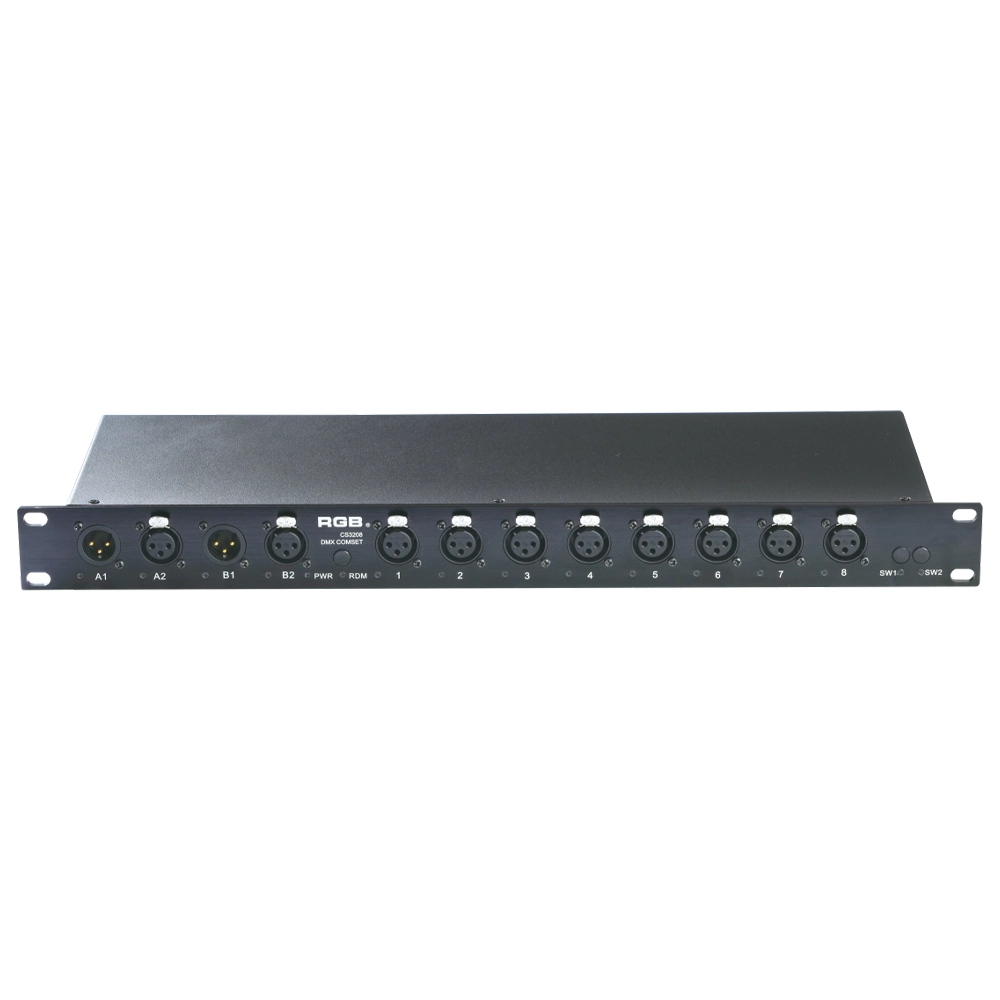
Multifunctional signal supercharger
The rack-mounted DMX signal amplifier complies with the DMX-512 standard protocol, improving DMX-512 signal transmission quality and ensuring reliable system control. It helps prevent issues such as AC high-voltage backflow into lighting control systems, lightning-induced surges, and signal interference caused by short circuits, thereby enhancing overall system stability.
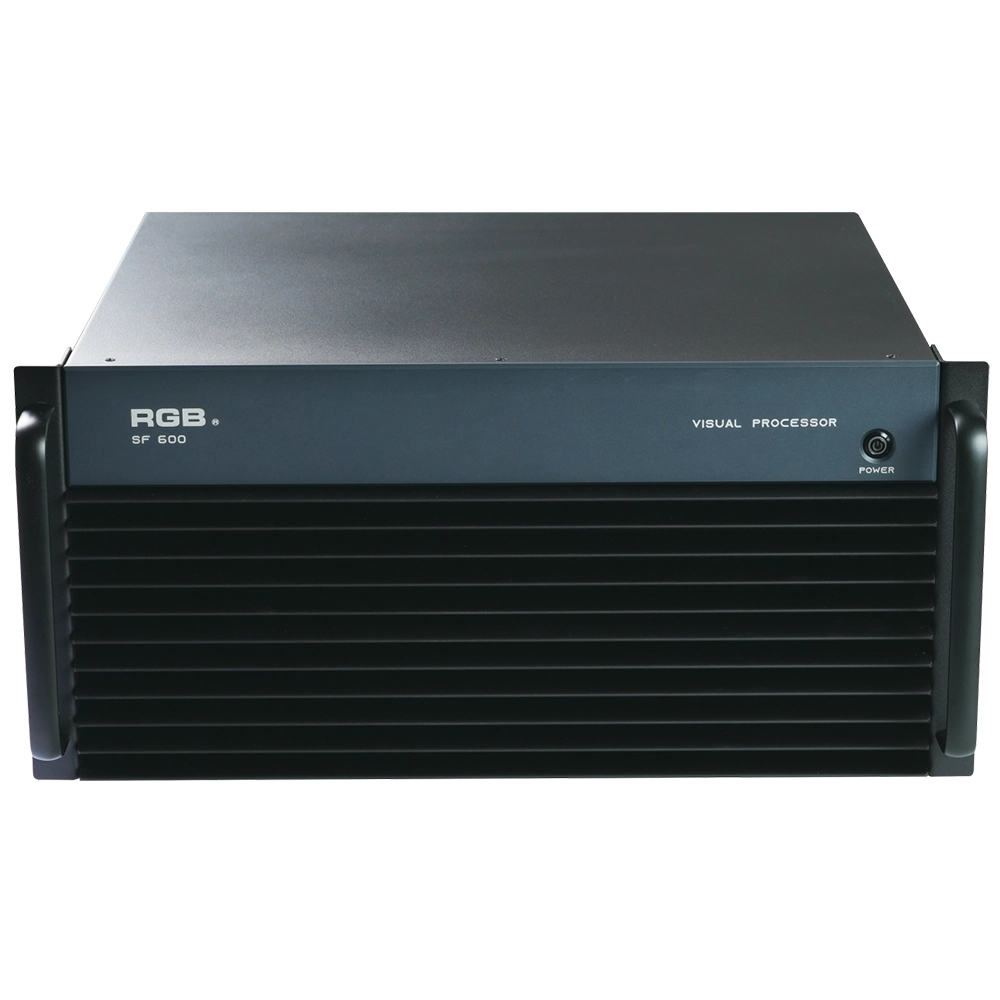
SF600 Visual R-net central processing processor
The SF600 Visual R-net central processing processor by RGB delivers advanced visual systems performance with high-speed processing and seamless integration. Designed for efficiency and reliability, it’s ideal for enhancing your visual system applications in corporate environments.
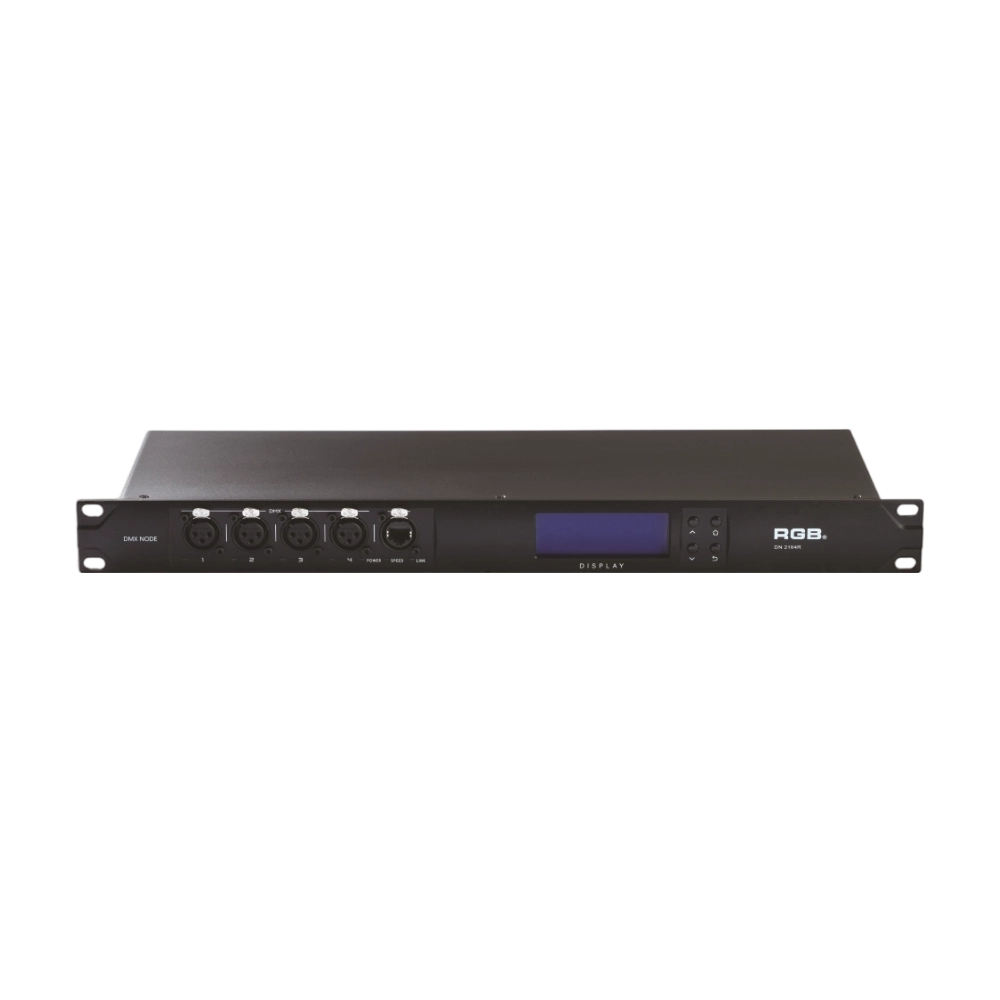
DMX, RDM Nodes
The DN series dual network port network decoder is a lighting control system product independently developed by RGB, featuring completely independent core technology and software copyright. It seamlessly connects and decodes the sACN and ART-Net network protocols based on TCP/IP with the DMX-512 and RDM communication protocols, achieving gigabit communication with dual independent physical address codes. Supports a visual lighting control system, intuitively displaying the online and offline status of the DN series network decoders, and enabling remote monitoring, editing, and setting of corresponding parameters.
It is widely applied in theaters, concert halls, multi-functional halls, cultural and tourism performances, TV stations, gymnasiums, auditoriums, commercial art lighting, and other performance and cultural venues.
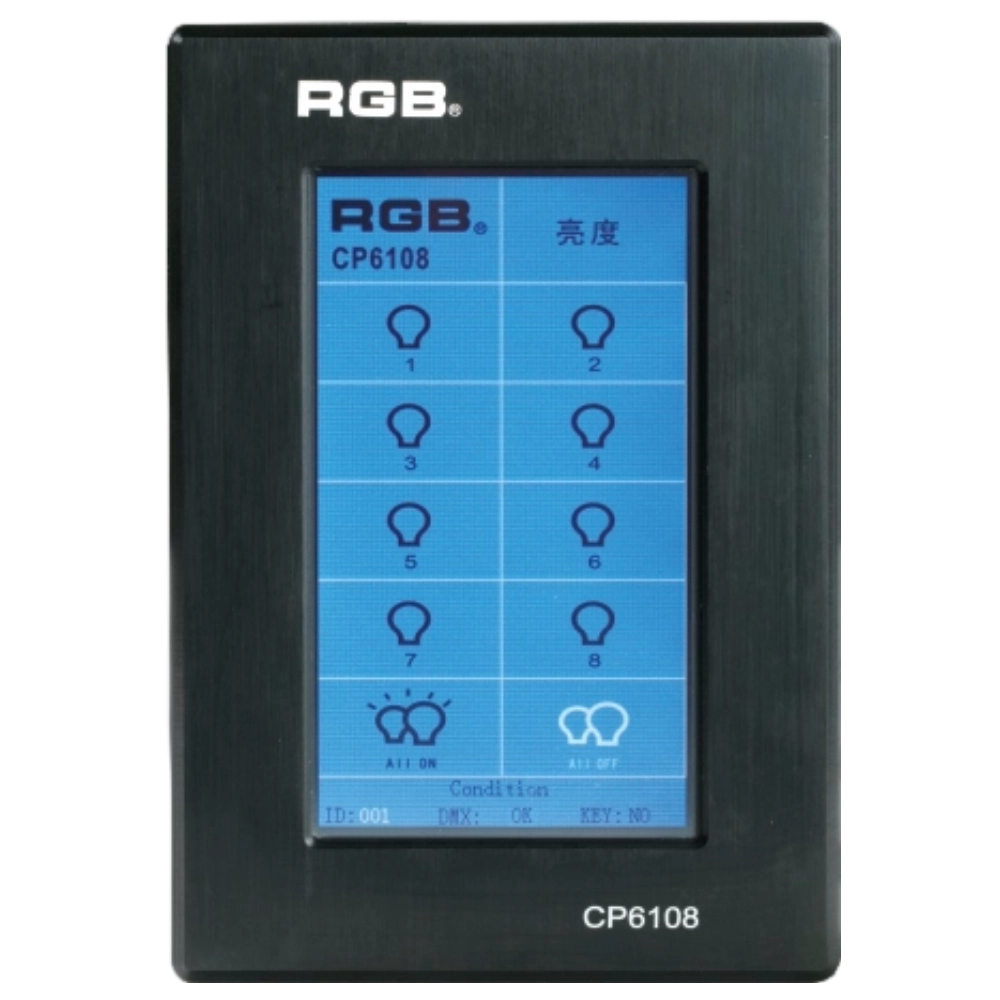
Site Light Controller CP6108
The CP6108 lighting control panel is a lighting control device for theater stage lights, work lights, environmental lighting, commercial art lighting, sports venue lighting, and other places. By connecting to the dedicated lighting control host CP6100, it realizes the central control of the lighting system, supports a visual lighting control system, and intuitively displays the online and offline status of CP6108. Realize remote monitoring, editing, and setting of corresponding parameters.
It is widely applicable to theaters, cinemas, auditoriums, stadiums, museums, exhibition halls, cultural tourism performances, commercial art lighting, and other places.
Expert Support
Interested in learning more or need expert guidance related to this article? Fill in your details, and our team will provide tailored support.
Intelligent Control. Brilliant Performance.
RGB specializes in stage lighting control systems, delivering intelligent, reliable, and high-performance solutions for theaters and performance spaces worldwide.
Contact
Email:
Tel:
+86 20 3928 0245
+86 20 3928 0247
Address:
No.3, Huashan Road, Shilou Town, Panyu, Guangzhou, China.
Whatsapp: +8615975520131