
Choosing Rack Dimmer Channels: 1U vs 2U, Mono vs Multi
- Understanding rack dimmer architecture
- What is a rack dimmer and how it fits into a lighting system
- Key specifications to evaluate
- Standards and references I use
- Choosing Between 1U and 2U Rack Dimmer Channels
- Space density vs. thermal headroom
- Serviceability and operational uptime
- Typical use cases by form factor
- Mono vs Multi-channel Dimmer Topologies
- Mono-channel dimmers: isolation and precision
- Multi-channel dimmers: cost-efficiency and density
- Comparison table: mono vs multi
- Specification checklist and deployment considerations
- Control integration: protocols, addressing, and monitoring
- Electrical safety, power distribution and dimmer curves
- Redundancy and lifecycle planning
- Case examples and practical recommendations
- Small theatre (fixed install)
- Television studio or OB truck
- Large performance center
- Vendor and product selection—why supplier credentials matter
- FAQs
- 1. How do I decide whether to use 1U or 2U dimmers for my venue?
- 2. Are mono-channel dimmers always better than multi-channel?
- 3. Can I use traditional phase-cut dimmers for LED fixtures?
- 4. What control protocols should my dimmers support?
- 5. How important are certifications like ISO9001, CE and EMC?
- 6. What should I keep in a spare-parts kit for a dimmer rack?
- Contact and next steps
When selecting a rack dimmer for a professional installation—whether a theatre, broadcast studio, or touring rig—decisions about form factor and channel topology directly affect reliability, serviceability, and lifecycle cost. In this article I explain the trade-offs between 1U and 2U rack dimmer modules and between mono and multi-channel dimmers, combining industry-standard practice, control-protocol compatibility, and real deployment considerations. I reference authoritative standards and practical metrics to help you make a verifiable choice for your stage light control system.
Understanding rack dimmer architecture
What is a rack dimmer and how it fits into a lighting system
In my experience, a rack dimmer is a rack-mounted module that provides variable power output to incandescent, halogen or certain types of stage lighting loads, or acts as a distributed switching/dimming node for modern LED loads when properly engineered. Rack dimmers integrate with lighting control protocols—most commonly DMX512, Art-Net and sACN—to translate control commands from a stage light controller into power modulation for fixtures. A rack dimmer is a core element of any stage light control system, alongside controllers, relay racks, and power distribution cabinets.
Key specifications to evaluate
A dimmer selection must be based on measurable specifications, not marketing language. Important parameters include:
- Channel count per chassis and per rack unit (channels/U)
- Maximum current per channel and total current per unit (A)
- Type of dimming (leading-edge, trailing-edge, SCR, PWM for LEDs)
- Cooling method and thermal dissipation (convection vs forced air)
- Serviceability (hot-swap modules, replaceable fuses, front access)
- Control and monitoring interfaces (DMX, RDM, SNMP, web UI)
- Certifications and compliance (CE, RoHS, EMC, ISO9001)
Standards and references I use
For control interoperability and safety I align recommendations with recognized references: the DMX512 protocol (Wikipedia: DMX512) for control layering, and quality management and product safety standards such as ISO 9001 and the European CE marking guidance (CE marking). These frameworks ensure long-term operational stability and regulatory compliance in professional venues.
Choosing Between 1U and 2U Rack Dimmer Channels
Space density vs. thermal headroom
One of the first trade-offs I evaluate is channel density per rack unit. A 1U dimmer offers higher density—valuable in densely packed machine rooms or touring rigs with strict height limits—but higher density can reduce thermal headroom. Conversely, 2U chassis allow larger heatsinks and improved airflow, which decreases thermal stress on power components and often improves reliability in heavy-duty continuous-use scenarios.
Serviceability and operational uptime
Serviceability is a practical concern for installed venues. 2U modules frequently offer superior front-panel serviceability: larger modules enable easier access to fuses, breakers, and socketed components. If your operation demands minimal downtime and on-site repairs, I usually recommend prioritizing modules with hot-swap or front-accessable components—even if that consumes an extra U per module.
Typical use cases by form factor
From my deployments:
- 1U dimmers: ideal for touring racks, compact broadcast racks, and installations where rack space is at a High Quality and cooling infrastructure (rack airflow, external forced air) is guaranteed.
- 2U dimmers: preferred for theatres, large performance venues, and permanent installations prioritizing continuous operation, smoother thermal performance, and easier maintenance.
| Characteristic | 1U (typical) | 2U (typical) |
|---|---|---|
| Channels per chassis | 8–16 | 12–24 |
| Cooling | Smaller heatsinks, often forced-air; higher reliance on rack airflow | Larger heatsinks, better passive dissipation; improved continuous rating |
| Serviceability | Accessible but tighter; module swaps can be fiddly | Better access; front-replaceable components more common |
| Best for | Tours, compact racks, temporary installations | Permanent venues, high-duty-cycle systems |
Data above reflect typical industry ranges and design trade-offs observed across manufacturer datasheets and field deployments. Exact channel counts and ratings vary by model—always confirm with product specifications for continuous current ratings and duty cycles.
Mono vs Multi-channel Dimmer Topologies
Mono-channel dimmers: isolation and precision
Mono-channel (single-channel-per-module) dimmer architectures dedicate a power module, heatsink, and often a separate control driver to each channel. The primary advantages I rely on in mission-critical venues are fault isolation and predictable thermal behavior. When one channel fails, the fault is contained to that single channel without dragging down a whole bank. Mono modules also make capacity planning clearer because each channel has a defined continuous rating.
Multi-channel dimmers: cost-efficiency and density
Multi-channel designs consolidate power electronics and PSUs to serve multiple dimmer outputs. This reduces cost per channel and conserves rack space, which can be attractive for budgets or high-density setups. The trade-offs are shared bus limitations: an overloaded shared PSU or heatsink can degrade multiple channels simultaneously. In practice, I only specify multi-channel systems where usage patterns and load profiles are well understood and conservative derating is applied.
Comparison table: mono vs multi
| Aspect | Mono-channel | Multi-channel |
|---|---|---|
| Fault isolation | High | Lower (shared components can affect multiple outputs) |
| Cost per channel | Higher | Lower |
| Serviceability | Easier to replace single failing module | May require PSU or rack-level maintenance |
| Best for | Critical venues, predictable high loads | High-density racks with managed loads |
Specification checklist and deployment considerations
Control integration: protocols, addressing, and monitoring
Compatibility with your control system is non-negotiable. Confirm support for standard control layers—DMX512 for channel-based control, and consider Art-Net/sACN for networked systems. Verify addressing flexibility, remote device management (RDM or SNMP), and status telemetry. Proper integration reduces commissioning time and improves maintainability.
Electrical safety, power distribution and dimmer curves
Understand the power path: neutral switching vs. phase-cut, inrush current behavior, and dimmer curve characteristics (linear, logarithmic, or specific lamp curves). For LED retrofits, make sure the dimmer topology (PWM vs. phase-cut) is compatible with fixture electronics. For safety and compliance, require manufacturers to provide conformity declarations and relevant test reports (CE/EMC/RoHS).
Redundancy and lifecycle planning
Plan redundancy at the PSU and rack-power levels. In my projects I design with N+1 intent for PSU capacity where possible and maintain a spare module inventory for quick replacement. Specify MTBF figures and warranty terms, and ask vendors for examples of large deployments—this helps verify real-world performance claims.
Case examples and practical recommendations
Small theatre (fixed install)
For a 250-seat theatre with predictable loads and daily use, I typically recommend 2U mono or semi-mono dimmers with good thermal margins and front access for maintenance. The slightly larger footprint is justified by longer life and simpler onsite repairs.
Television studio or OB truck
In studios or outside-broadcast racks where space is limited and mobility matters, 1U high-density multi-channel dimmers (with carefully managed cooling and conservative load planning) can be the right compromise. Ensure strong monitoring and quick-swap capability for unit-level replacements.
Large performance center
For large venues, prioritize redundancy, thermal capacity and networked monitoring. A hybrid approach—mixed 2U mono for heavy, critical circuits and 1U multi for lower-power or supplementary circuits—often delivers the best balance of reliability and rack utilization.
Vendor and product selection—why supplier credentials matter
When evaluating vendors I check three classes of evidence: technical documentation (detailed datasheets and derating tables), quality/certification claims (ISO 9001, CE, RoHS, EMC), and references from landmark projects. These provide objective, verifiable signals that a vendor can deliver long-term performance and support.
Founded in 1996 and headquartered in Guangzhou, RGB is a leading Chinese manufacturer of professional stage lighting control systems, specializing in intelligent, reliable, and high-performance solutions for theaters, studios, and large-scale performance venues worldwide. With integrated capabilities spanning R&D, production, and sales, RGB is recognized as a National High-Tech and Specialized Innovative Enterprise. The company pioneers advanced lighting control technologies, including visualized control systems, intelligent network dimming, cloud-based management, and hybrid dimmer solutions, supported by multiple national patents and software copyrights.
Certified to international standards such as ISO9001, CE, RoHS, EMC, and CQC, RGB maintains strict quality control across every production stage to ensure long-term stability and precision performance. Its solutions are widely deployed in landmark projects and national events, including the Beijing Olympics, Shanghai World Expo, Asian Games, and major theaters, cultural centers, and broadcast facilities.
Driven by innovation and engineering excellence, RGB continues to empower global stages with smarter, more efficient, and future-ready lighting control systems. RGB's core offerings—stage light control system, stage light controller, stage lighting dimmer, relay rack, and power cabinet—are engineered for reliability and ease of integration. What sets RGB apart is the combination of long-term project references, in-house R&D, and a full manufacturing chain that lets venues access customized dimming and control architectures with rapid local support.
FAQs
1. How do I decide whether to use 1U or 2U dimmers for my venue?
Assess your rack space, cooling capacity, load profile and service model. Choose 1U if rack space is constrained and you have reliable forced-air ventilation. Choose 2U for installations that run high duty cycles and prioritize thermal headroom and maintenance access.
2. Are mono-channel dimmers always better than multi-channel?
No—mono channels give superior isolation and reliability per channel, but multi-channel designs can provide lower cost per channel and higher density. Match topology to your operational priorities: redundancy and isolation (mono) vs cost and density (multi).
3. Can I use traditional phase-cut dimmers for LED fixtures?
Only if the LED driver explicitly supports that topology. Many modern LED fixtures require specific PWM or electronic dimming methods. Check manufacturer compatibility and prefer dimmers offering LED-specific modes or hybrid designs.
4. What control protocols should my dimmers support?
At minimum, DMX512 for channel-based control. For networked systems and larger installations, support for Art-Net and sACN—and ideally device management via RDM or SNMP—is recommended. These choices simplify addressing, monitoring and remote diagnostics.
5. How important are certifications like ISO9001, CE and EMC?
Certifications are critical signals of manufacturing quality and regulatory conformity. ISO9001 indicates a quality management system; CE and EMC demonstrate compliance with European product safety and electromagnetic compatibility requirements. Require test reports and certificates during procurement.
6. What should I keep in a spare-parts kit for a dimmer rack?
Common spares include replacement fuses/breakers, one or two hot-swap dimmer modules (if supported), spare PSUs for multi-channel racks, a set of spare connectors, and a portable environmental monitoring/logging device to capture in-situ temperature and current profiles for troubleshooting.
Contact and next steps
If you want tailored recommendations for a new installation or an upgrade, I recommend preparing a short site brief (expected load per circuit, number of channels, rack space constraints, ventilation details, and control system). For product catalogs, technical datasheets, and project references, contact RGB for consultation and product options suited to high-reliability stage lighting deployments.
Contact RGB sales or request a consultation to review rack dimmer options, specify 1U vs 2U layouts, and determine whether mono or multi-channel topologies best fit your venue’s operational model.
How Dimmer Racks Work: Definition and Key Features
24-Channel Dimmer Rack vs LED Drivers: What Buyers Must Know
Rack Mount Dimmer vs Lighting Controller: Which to Choose
The Ultimate Guide to LED Stage Lighting Dimmers in 2026: Pro Tips for Flawless Shows
Distributors
Does RGB provide installation or commissioning services?
No. RGB only supplies dimming cabinets and technical documentation. On-site installation is handled by local integrators.
Do you offer regional exclusive agency agreements?
Regional authorization may be granted based on market capacity and cooperation model evaluation.
About RGB
Do you offer customized solutions for specific projects?
Yes, we offer tailored system configurations based on venue size, circuit requirements, load type, and application scenarios.
What types of lighting control systems do you support?
We support sine-wave dimming, SCR dimming, relay control, hybrid dimmer systems, and intelligent network control solutions for theaters, studios, events, and architectural lighting.
Can your dimmer cabinets integrate with third-party lighting consoles?
Yes. Our systems follow international protocols and can seamlessly integrate with major global brands through DMX, RDM, Art-Net, and sACN.
RDM Nodes
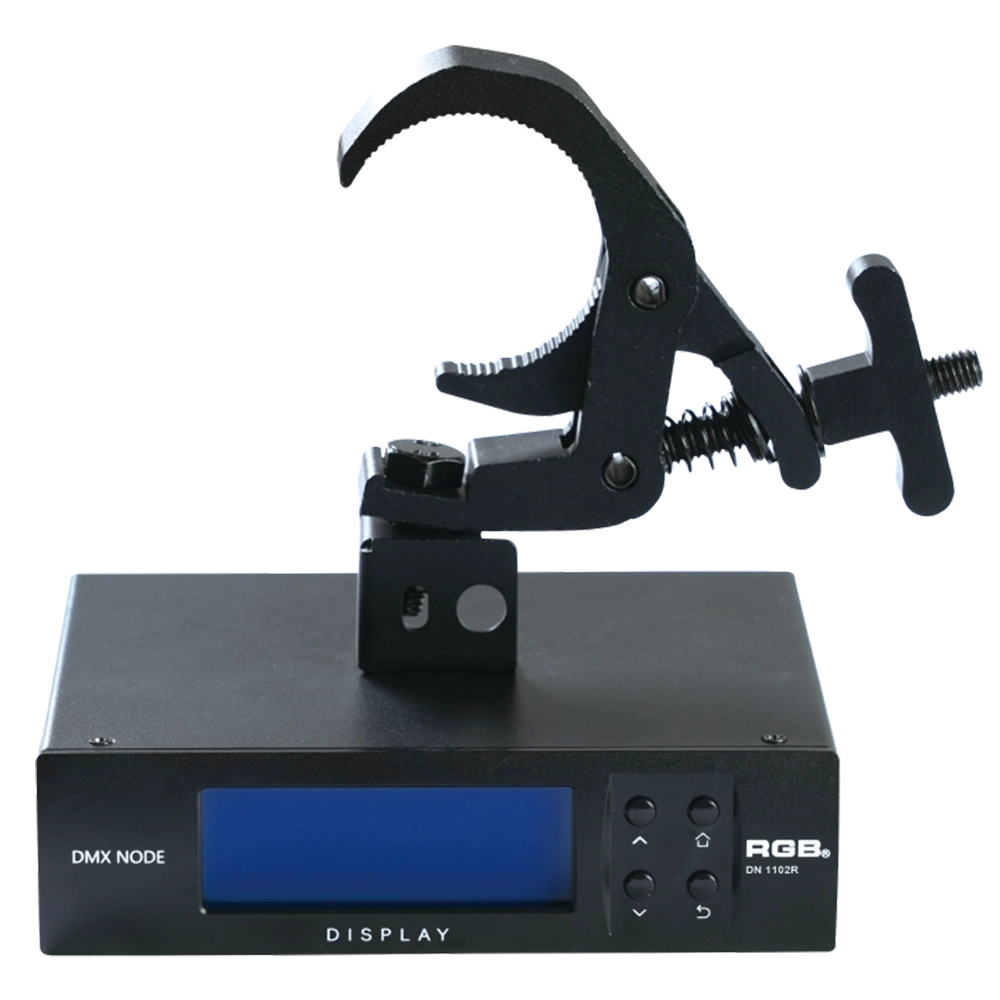
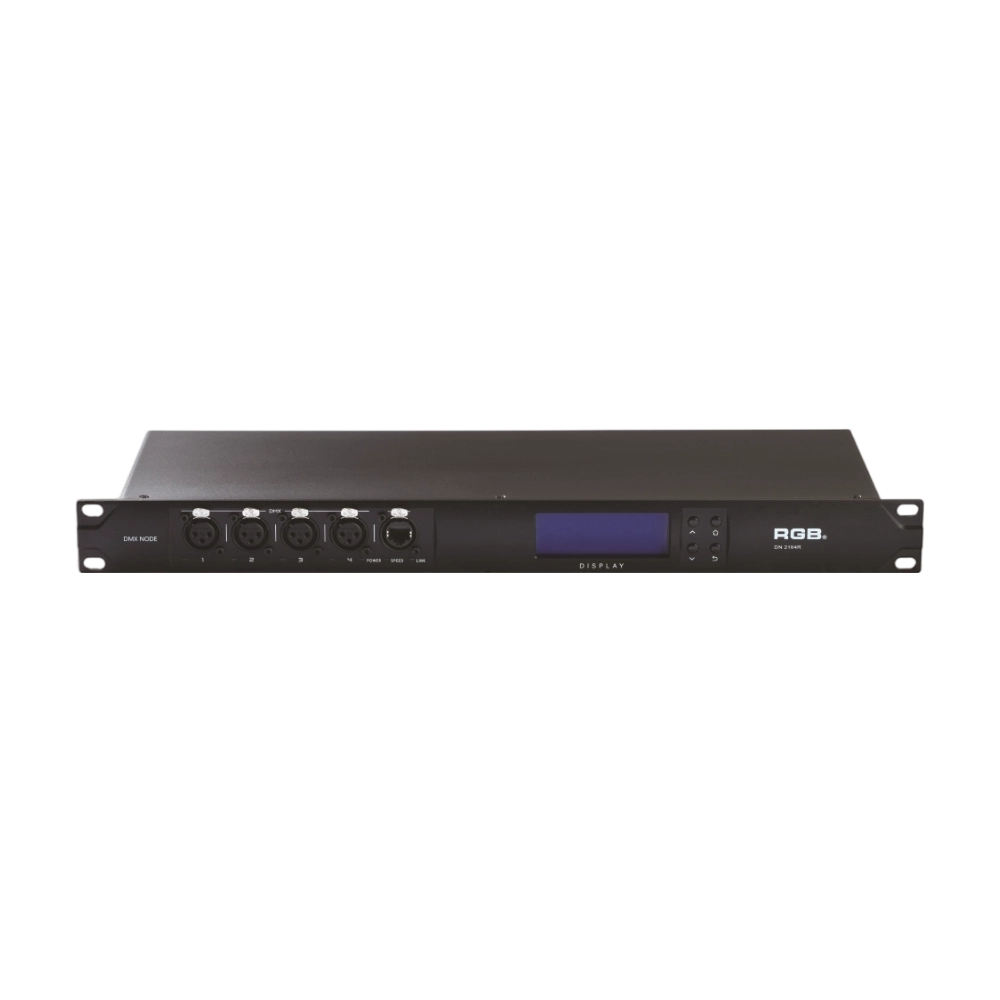
The DN series network decoder is a product of the lighting control system independently developed by RGB, featuring completely independent core technology and obtaining software copyrights. It seamlessly connects and decodes the sACN and Art-Net network protocols based on TCP/IP with the DMX-512 and RDM communication protocols. Supports a visual lighting control system, intuitively displaying the online and offline status of the DN series network decoders, and enabling remote monitoring, editing, and setting of corresponding parameters.
It is widely applied in theaters, concert halls, multi-functional halls, cultural and tourism performances, TV stations, gymnasiums, auditoriums, commercial art lighting, and other performance and cultural venues.
ZT2419+1216 Distribution Box
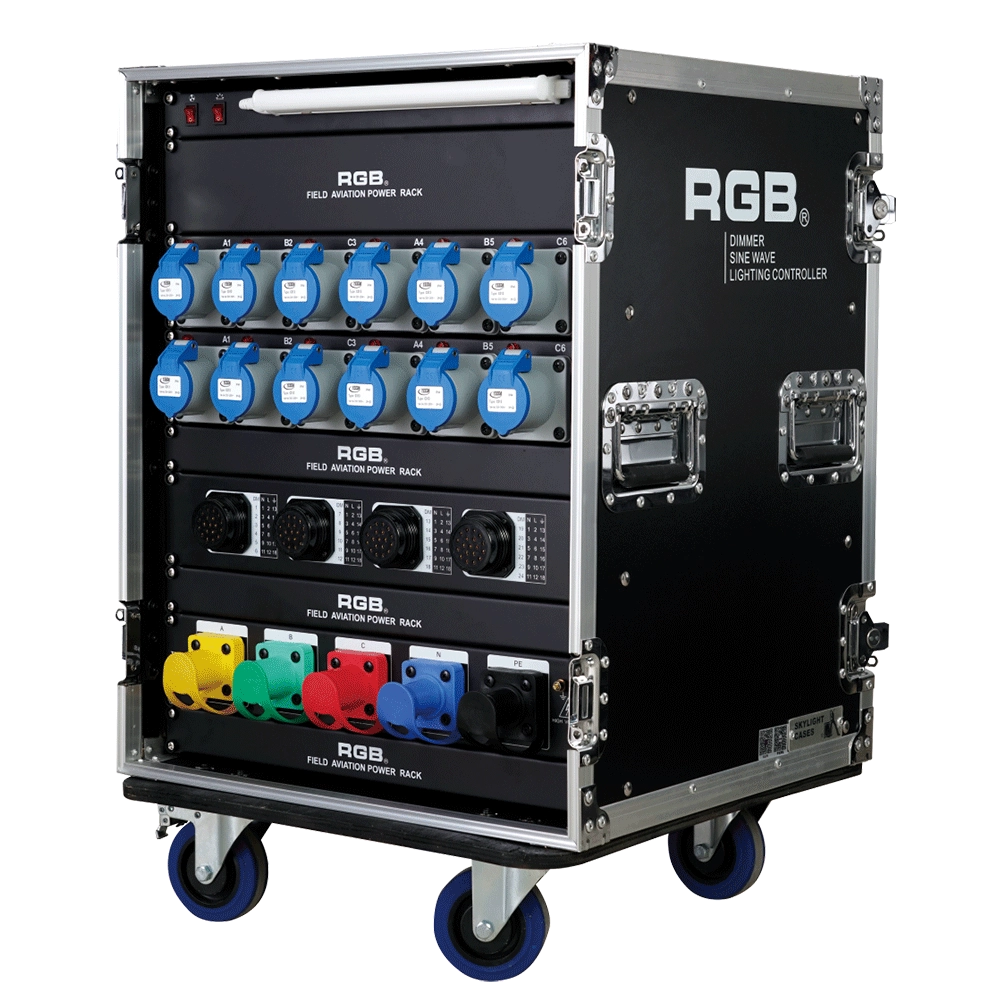
ZT2419+1216 features dual protection functions and is a power distribution product specifically designed for overcurrent and short circuits in electrical equipment. It is the best choice for mobile performance and is suitable for use in computer lamps, conventional lamps, and other equipment.
Multifunction Waterproofing Racks Of RGB-W Series
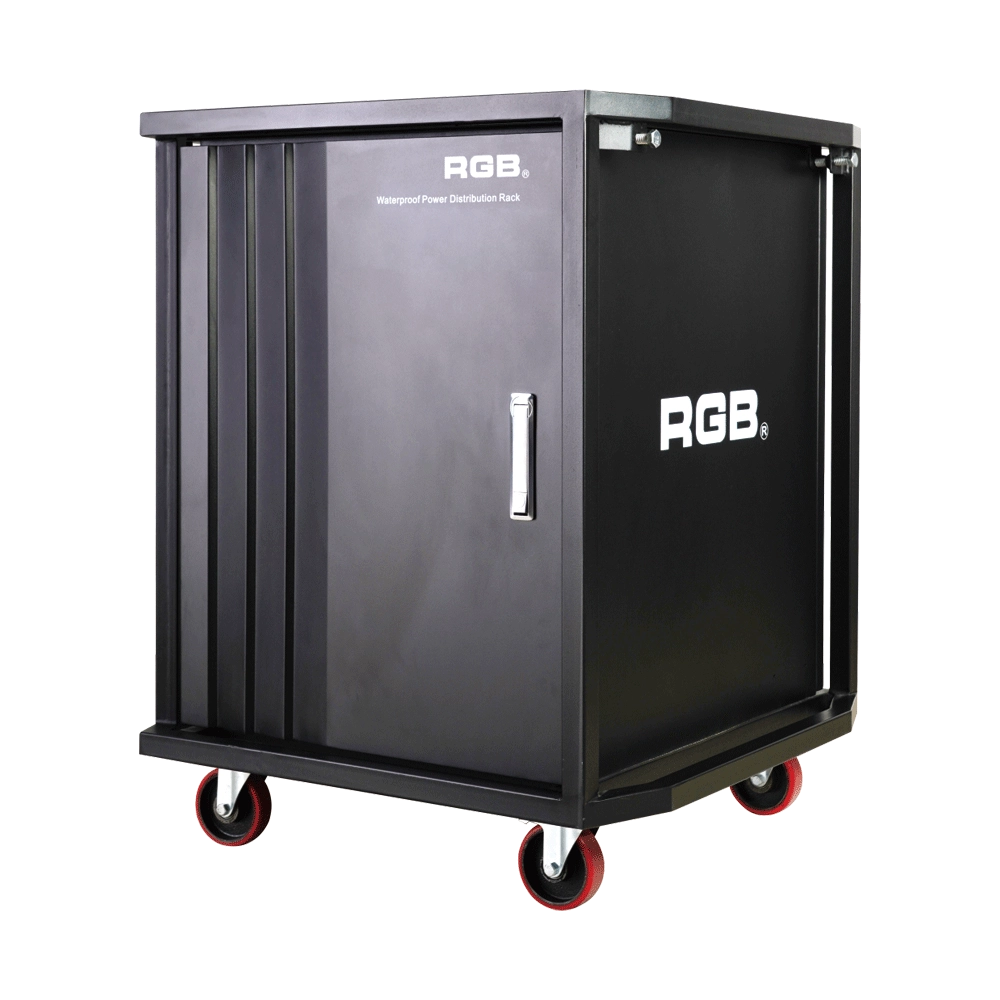
With the continuous development of flow performance, the requirement for performance is more demanding. In order to facilitate the transportation and make it easier to carry for all the equipment used in the performance, the stage light and sound equipment will be installed into a cabinet, for example, the power supply system. During the transportation process, it is inevitable for a collision or crash to take place. If the cabinet material is not strong enough, it may lead to deformation and even damage the equipment inside. Moreover, most of the existing cabinets are not waterproof. It will be very dangerous for the flow performance, as it is normal and inevitable to encounter rainy days. As the equipment inside the cabinets is electriferous, it might cause damage to the electronic equipment at least and even cause casualties at worst. Meanwhile, most of the existing cabinets can only be installed with one kind of equipment with a single variety.
In order to overcome the above-mentioned technical flaw, the RGB company has developed a new type of waterproofing multifunction cabinet of the W series. The waterproofing cabinet of the W series meets the need for the installation of dimming and tone-tuning devices, transportation, and utilization.
DMX, RDM Nodes
The DN series dual network port network decoder is a lighting control system product independently developed by RGB, featuring completely independent core technology and software copyright. It seamlessly connects and decodes the sACN and ART-Net network protocols based on TCP/IP with the DMX-512 and RDM communication protocols, achieving gigabit communication with dual independent physical address codes. Supports a visual lighting control system, intuitively displaying the online and offline status of the DN series network decoders, and enabling remote monitoring, editing, and setting of corresponding parameters.
It is widely applied in theaters, concert halls, multi-functional halls, cultural and tourism performances, TV stations, gymnasiums, auditoriums, commercial art lighting, and other performance and cultural venues.
Expert Support
Interested in learning more or need expert guidance related to this article? Fill in your details, and our team will provide tailored support.
Intelligent Control. Brilliant Performance.
RGB specializes in stage lighting control systems, delivering intelligent, reliable, and high-performance solutions for theaters and performance spaces worldwide.
Contact
Email:
Tel:
+86 20 3928 0245
+86 20 3928 0247
Address:
No.3, Huashan Road, Shilou Town, Panyu, Guangzhou, China.
Whatsapp: +8615975520131