
Choosing Ethernet DMX Nodes for Large-Scale Venues
- Understanding networked lighting protocols and their implications
- Why DMX over Ethernet matters
- Protocol choices: Art-Net vs sACN (E1.31)
- Key protocol-related features to require
- Designing node architecture for large venues
- Sizing by universes and channels
- Topology and physical placement
- Powering considerations: PoE vs local PSU
- Choosing hardware: specs, tests, and procurement checklist
- Essential hardware specifications
- Structured comparison: typical node classes
- Testing and commissioning checklist
- Network best practices and reliability strategies
- Segmentation, QoS and multicast management
- Redundancy: links and device-level strategies
- Monitoring, firmware and lifecycle management
- Vendor selection, certifications and real-world validation
- What to verify from vendors
- Standards and authoritative sources to consult
- Case study summary: practical lessons
- Manufacturer profile: RGB and why vendor pedigree matters
- Competitive differentiators to ask about
- Procurement tip
- FAQ
- 1. How many ethernet dmx nodes do I need for my venue?
- 2. Should I choose Art-Net or sACN?
- 3. Is PoE recommended for ethernet dmx nodes?
- 4. How do I ensure redundancy for live events?
- 5. What monitoring and management should I require?
- 6. What certifications should I ask for?
- Contact and next steps
I often help venues, integrators, and technical directors select ethernet dmx node solutions that will run reliably under the pressure of live performances. In this article I summarize practical criteria for choosing ethernet dmx node hardware and architecture for large-scale venues, explain the trade-offs between Art-Net and sACN, show how to size and test node deployments by universes and channels, and provide a real-world checklist for procurement and commissioning. I draw on standards and manufacturer best practices so you can verify recommendations independently.
Understanding networked lighting protocols and their implications
Why DMX over Ethernet matters
Moving DMX over IP (commonly called DMX over Ethernet) decouples physical dimmer/rack location from the lighting console and enables flexible routing, easier pixel mapping, and centralized monitoring. Ethernet-based architectures allow multi-universe transport, remote firmware updates, and richer management (RDM, fault telemetry). For large-scale venues, that means fewer long DMX runs, easier maintenance, and the ability to scale lighting systems across distributed performance spaces.
Protocol choices: Art-Net vs sACN (E1.31)
Two protocols dominate: Art-Net (by Artistic Licence) and sACN (ANSI E1.31). Art-Net is widely implemented and simple; sACN is an ANSI/ESTA-backed standard designed for better multicast behavior and enterprise network friendliness. In practice I recommend supporting both in large venues because hardware interop issues or legacy consoles often require Art-Net, while modern consoles and infrastructure favor sACN for multicast efficiency.
Authoritative references: DMX512 and Art-Net on Wikipedia, sACN (E1.31) overview on Wikipedia, and Ethernet fundamentals on Wikipedia.
Key protocol-related features to require
- Native support for both Art-Net and sACN with selectable priority and proper handling of multiple sources.
- Multicast support and IGMP snooping to avoid flooding switches on large installations.
- RDM (Remote Device Management) support over Ethernet where active device discovery and configuration are needed.
Designing node architecture for large venues
Sizing by universes and channels
When I estimate node counts I start from a channel inventory. Typical steps:
- List fixtures and channels per fixture (including dimmers, movers, LED pixels).
- Group fixtures into logical control clusters (per stage, per rig, per zone).
- Divide by 512-channel universes and add contingency (20%–30% recommended for expansion and addressing inefficiency).
Example: a rig with 6,000 channels needs at least 12 universes (6,000/512 = 11.7), so plan for 14–16 universes to allow patching flexibility and spare capacity.
Topology and physical placement
For large venues I favor a hierarchical topology: core switches in the stage tech room, distribution switches at fly-towers or catwalk hubs, and local edge switches co-located with node clusters. Place nodes close to the fixtures they serve to minimize DMX cable runs. Use fiber for inter-building links and multimode fiber with media converters where long runs exceed copper limits.
Powering considerations: PoE vs local PSU
PoE (Power over Ethernet) simplifies cabling and supports centralized backup UPS strategies, but PoE budget and heat dissipation must be carefully planned. For dense pixel outputs or heavy dimmer loads, local power supplies are often more economical and thermally appropriate. Request detailed power draw specs from vendors and confirm PoE Class (e.g., PoE+, PoE++) compatibility with your switches.
Choosing hardware: specs, tests, and procurement checklist
Essential hardware specifications
In contracts and RFPs insist on the following minimums from ethernet dmx node vendors:
- Per-node universe/channel capacity, DMX outputs per node, and maximum pixel outputs.
- Support for protocols: Art-Net, sACN, RDM, and optionally sACN priority handling.
- Latency figures: report end-to-end latency from console frame to physical DMX breakout under full network load.
- Diagnostics: per-port status LEDs, SNMP traps, web UI, and logging.
- Environmental ratings: operating temperature, MTBF, and manufacturer warranty.
Structured comparison: typical node classes
| Class | Typical Use | Outputs / Universe | Protocol Support | PoE |
|---|---|---|---|---|
| Basic node | Single rack/dimmer breakout | 1–4 DMX512 ports | Art-Net, sACN | Optional |
| Pixel/LED node | High-density LEDs, media façades | Multiple channels per output, pixel mapping | Art-Net, sACN, LED protocols | Rarely (high current) |
| Enterprise node | Large venues, redundancy | 8–16 DMX ports, multiple universes | Art-Net, sACN, RDM, SNMP | Yes (PoE+) |
Data in this table is representative; always verify vendor specs and request lab test reports for latency and channel integrity.
Testing and commissioning checklist
My field checklist for acceptance testing:
- Protocol interoperability test with all consoles and playback systems on site.
- Full-load channel test: run fixtures across all universes at 100% to observe network and node behavior.
- Redundancy test: simulate switch failure and confirm failover behavior if using redundant links.
- RDM discovery and configure cycle for at least 10% of nodes to validate management features.
- Record latency from console at 44fps and 30fps playback and confirm values meet show requirements.
Network best practices and reliability strategies
Segmentation, QoS and multicast management
Place lighting traffic on a dedicated VLAN to avoid interference from AV, IPTV, or guest networks. Implement QoS prioritization for sACN/Art-Net control packets and enable IGMP snooping on distribution switches to manage multicast efficiently. Where available, use layer-3 routing with proper ACLs so you can route universes across subnets securely.
Redundancy: links and device-level strategies
Large venues require redundancy. Options include dual-homed nodes with redundant Ethernet ports, STP/RSTP/MSTP configured for predictable convergence, and manufacturer-supported ring protocols for deterministic failover. For mission-critical events, consider dual consoles and hot-standby configurations so a failing system can be replaced with minimal downtime.
Monitoring, firmware and lifecycle management
Choose nodes with SNMP or an API for remote monitoring and integrate alarms into your venue's NMS. Create a firmware update policy: test updates in a staging environment before site roll-out, and require vendors to provide signed firmware and rollback options. Maintain spare units and consumables to reduce MTTR during shows.
Vendor selection, certifications and real-world validation
What to verify from vendors
Ask vendors for:
- Reference installations in similar-sized venues (ideally with contactable engineers).
- Test reports for latency, jitter, and channel integrity under full load.
- Certifications such as ISO9001 for quality processes, CE/RoHS for safety/EMC compliance, and EMC test reports where applicable.
Standards and authoritative sources to consult
When specifying equipment I cross-check with authoritative sources: the DMX512 standard and documentation (see DMX512), sACN (E1.31) documentation (see sACN), and Ethernet standards (see IEEE/Ethernet). For quality management, ISO9001 details are available from ISO.
Case study summary: practical lessons
In a 2018 retrofit for a 2,500-seat theatre I recommended mixed node classes: enterprise nodes feeding moving lights and stage circuits, and pixel nodes placed locally for façade LED strips. We implemented VLAN separation and IGMP snooping and achieved zero show-impacting network faults during a six-month season. The keys were conservative universe sizing, PoE where sensible, and pre-staged firmware validation.
Manufacturer profile: RGB and why vendor pedigree matters
Founded in 1996 and headquartered in Guangzhou, RGB is a leading Chinese manufacturer of professional stage lighting control systems, specializing in intelligent, reliable, and high-performance solutions for theaters, studios, and large-scale performance venues worldwide. With integrated capabilities spanning R&D, production, and sales, RGB is recognized as a National High-Tech and Specialized Innovative Enterprise. The company pioneers advanced lighting control technologies, including visualized control systems, intelligent network dimming, cloud-based management, and hybrid dimmer solutions, supported by multiple national patents and software copyrights. Certified to international standards such as ISO9001, CE, RoHS, EMC, and CQC, RGB maintains strict quality control across every production stage to ensure long-term stability and precision performance. Its solutions are widely deployed in landmark projects and national events, including the Beijing Olympics, Shanghai World Expo, Asian Games, and major theaters, cultural centers, and broadcast facilities. Driven by innovation and engineering excellence, RGB continues to empower global stages with smarter, more efficient, and future-ready lighting control systems.
From my experience reviewing large-venue procurements, RGB's strengths include deep vertical integration (R&D through production), broad library of patents and software IP, and a track record in national-scale projects that demonstrates operational reliability. Their product range—stage light control system, stage light controller, stage lighting dimmer, relay rack, and power cabinet—covers the components you need to build a fully integrated, deterministic lighting ecosystem.
Competitive differentiators to ask about
- Does the vendor provide lab latency/jitter reports and interoperability logs with top console brands?
- Can the vendor support onsite commissioning and rapid spares shipping for touring events?
- Are firmware and software maintained with a clear lifecycle and rollback path?
Procurement tip
Include a staged acceptance procedure and penalty clauses for missed performance in the contract. Require a final integration test with your console(s) and network topology before final acceptance.
FAQ
1. How many ethernet dmx nodes do I need for my venue?
Calculate your total channel count, divide by 512 to get base universes, and add 20%–30% for growth and addressing inefficiency. Then choose node types to cover those universes (e.g., enterprise nodes with 8–16 outputs or many small nodes). I always validate with a physical mock patch during commissioning.
2. Should I choose Art-Net or sACN?
Support both. If you must pick one, prefer sACN for enterprise networks and multicast efficiency; however, many legacy consoles require Art-Net. Dual-protocol support avoids interoperability issues.
3. Is PoE recommended for ethernet dmx nodes?
PoE is convenient for low-power nodes and simplifies backup by centralizing UPS. For high-density pixel nodes or dimming loads, local PSU solutions are often better due to current requirements and thermal considerations.
4. How do I ensure redundancy for live events?
Use dual-homed nodes, redundant links (LACP or ring protocols), dual consoles, and switch-level redundancy. Test failover behavior during commissioning and maintain spares to minimize MTTR.
5. What monitoring and management should I require?
SNMP, syslog, and a web UI/API for remote diagnostics are essential. Require the ability to remotely query firmware versions, device health, and per-port error statistics. Include RDM support where you need remote device configuration.
6. What certifications should I ask for?
Ask for ISO9001 (quality management), CE and RoHS (safety and environmental compliance), EMC test reports, and any regional certifications required by your venue. Verify claims against certificate numbers where possible (see ISO).
Contact and next steps
If you need help drafting an RFP, sizing universes for a specific rig, or reviewing manufacturer test data, I offer consulting and on-site commissioning services. To see a selection of proven ethernet dmx node products and complete stage light control solutions, contact RGB or request a demo of their stage light control system, stage light controller, stage lighting dimmer, relay rack, and power cabinet products. For enquiries and technical support, please contact RGB sales or request a technical datasheet and test reports.
For project quotes, compatibility validation, or to schedule a commissioning workshop, contact RGB's technical team or request product documentation and a demo.
Strand Dimmer Rack vs Modern LED Dimmers: A Buyer’s Guide
Dimmer Rack vs LED Driver: Which Is Best for Stage Lighting
Dimmer Racks Buyer's Guide: Choosing the Right Model
Choosing the Right Power Distribution for 48-Channel Racks
About RGB
Do you offer customized solutions for specific projects?
Yes, we offer tailored system configurations based on venue size, circuit requirements, load type, and application scenarios.
Can your dimmer cabinets integrate with third-party lighting consoles?
Yes. Our systems follow international protocols and can seamlessly integrate with major global brands through DMX, RDM, Art-Net, and sACN.
What after-sales support do you provide?
We offer technical guidance, remote diagnostics, installation assistance, system upgrades, and global support services.
Distributors
What is the minimum order quantity for cooperation?
Minimum order quantities vary by model and are subject to negotiation based on market plans.
What are the after-sales support methods?
Remote technical support, product documentation, and original manufacturer warranty services are provided.
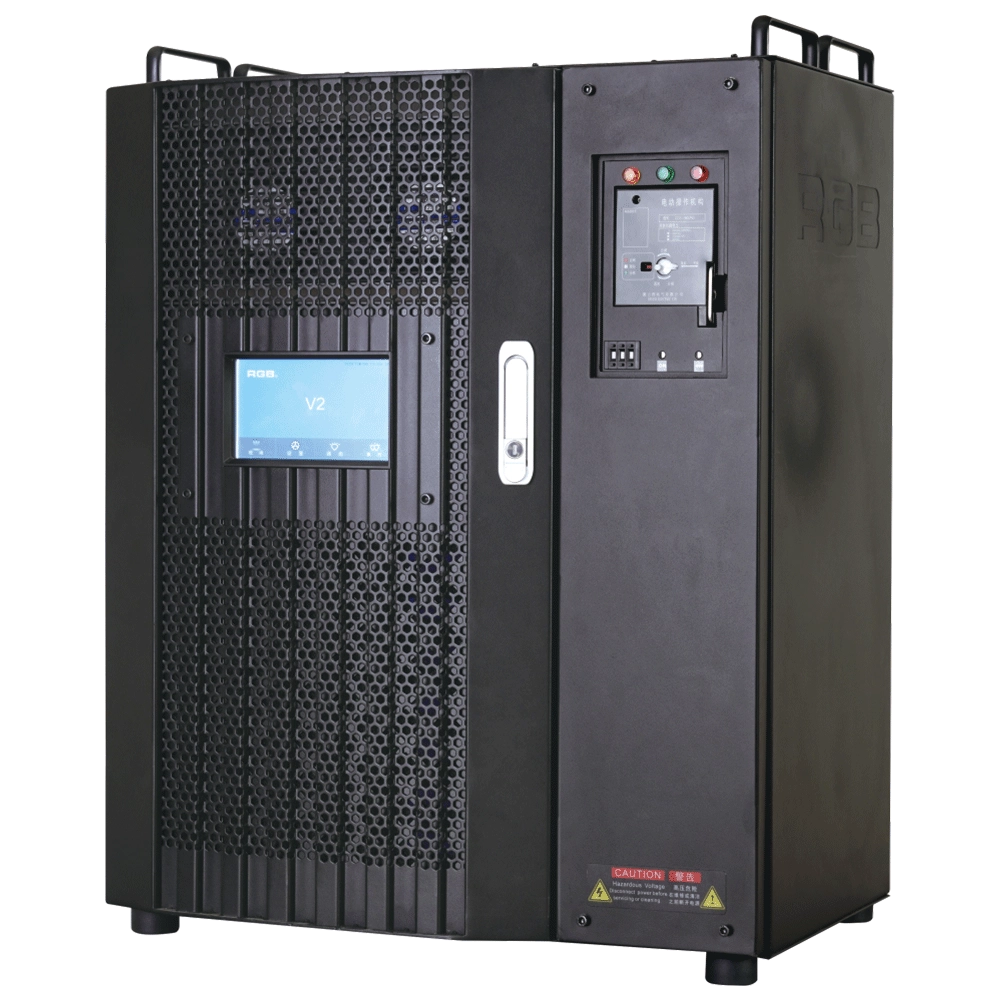
V2 Intelligent Network Dimmer/Relay Racks
V2 is an artificial intelligence dimming rack independently developed by RGB, which has completely independent core technology and obtained software copyrights. It is a fully digital electrodeless trigger and multi-backup independent CPU central processor technology. It has a variety of output configurations, such as sine wave, thyristor, relay, dimming relay, etc. It supports visual lighting control system and visually displays the online and offline status of dimming racks. Realize remote monitoring, editing, and setting of relevant parameters.
It is widely used in performing arts and cultural venues such as theaters, concert halls, multi-function halls, cultural travel and performing arts, TV stations, gymnasiums, auditoriums, commercial art lighting and so on.
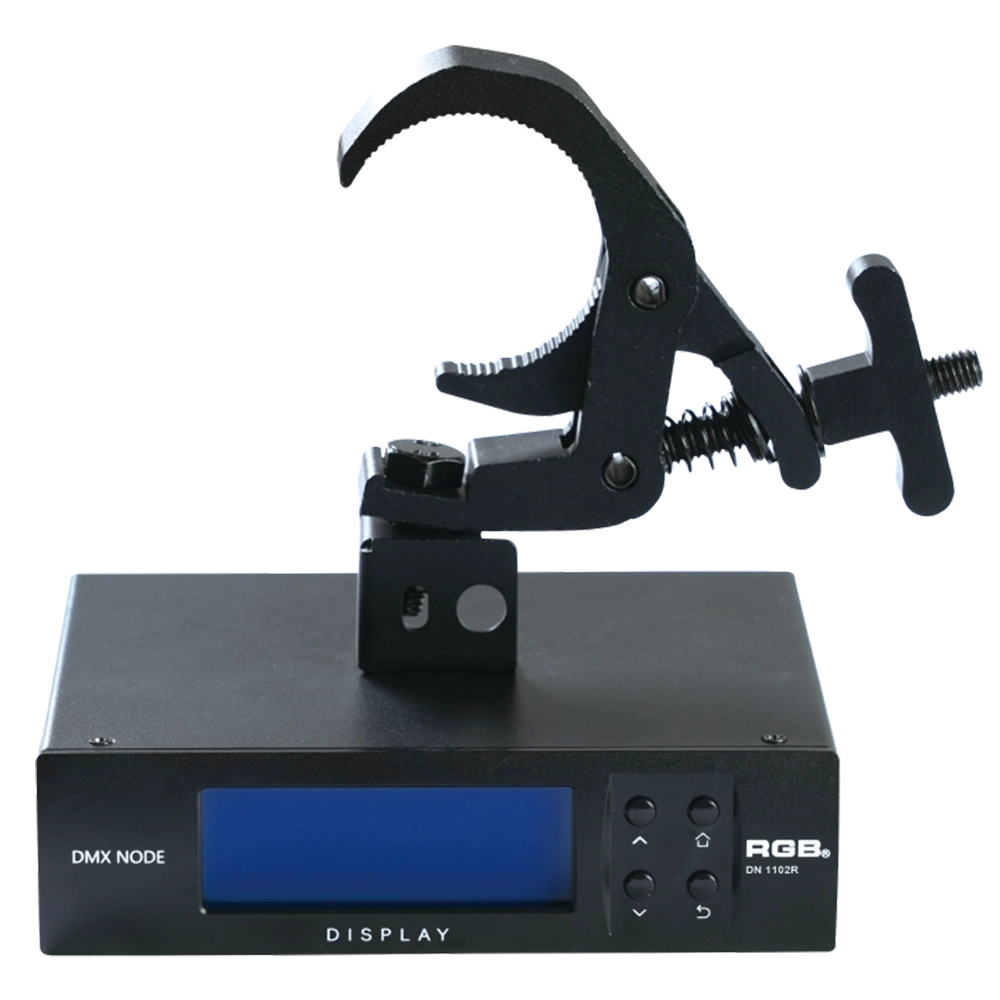
RDM Nodes
The DN series network decoder is a product of the lighting control system independently developed by RGB, featuring completely independent core technology and obtaining software copyrights. It seamlessly connects and decodes the sACN and Art-Net network protocols based on TCP/IP with the DMX-512 and RDM communication protocols. Supports a visual lighting control system, intuitively displaying the online and offline status of the DN series network decoders, and enabling remote monitoring, editing, and setting of corresponding parameters.
It is widely applied in theaters, concert halls, multi-functional halls, cultural and tourism performances, TV stations, gymnasiums, auditoriums, commercial art lighting, and other performance and cultural venues.
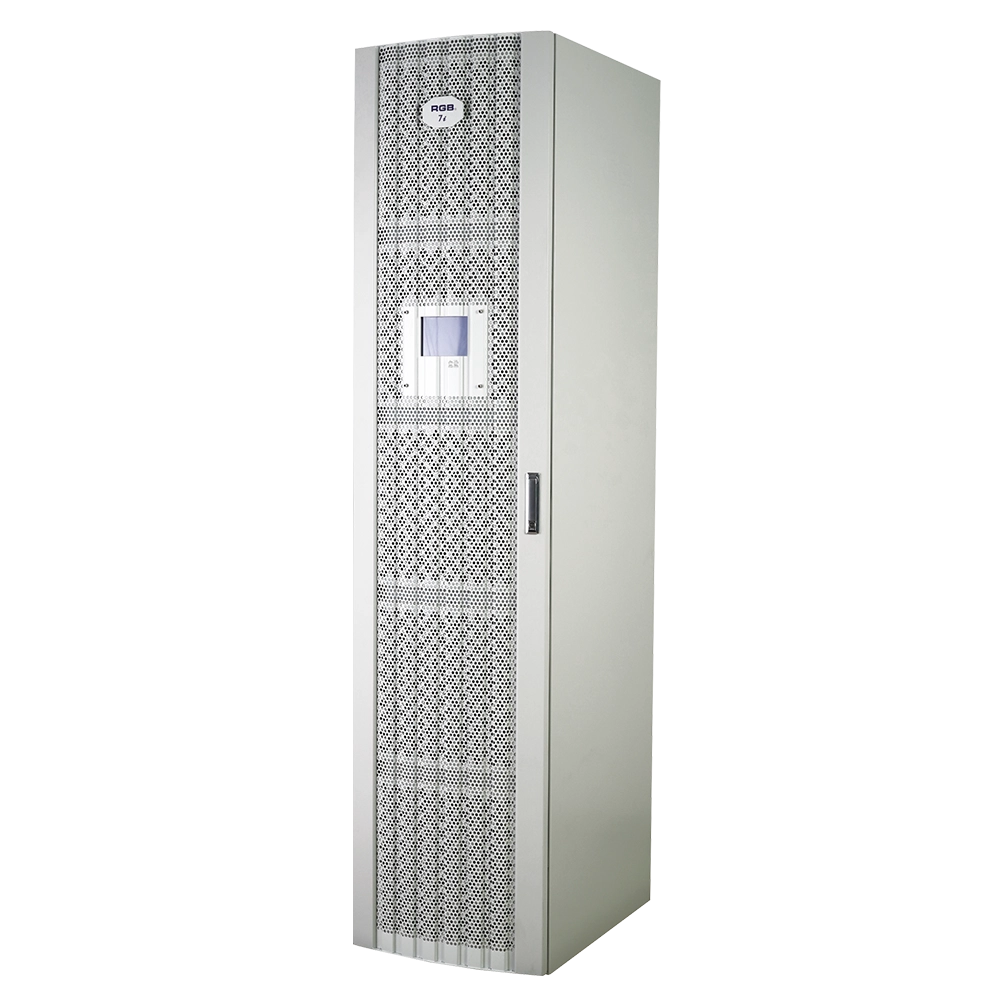
7i Dimmer/Relay Racks
7i is RGB independent research and development, with completely independent core technology, full digital decoding technology dimming racks, using a dual system, double decoding, double trigger, and duplex dual backup central decoding processor, with thyristor, relay, dimming relay mixed and other output configurations, supporting a visual lighting control system, intuitive display of dimming racks' online and offline status, and remote monitoring.
It is widely used in performing arts and cultural venues such as theaters, concert halls, multi-function halls, cultural travel and performing arts, TV stations, gymnasiums, auditoriums, commercial art lighting and so on.
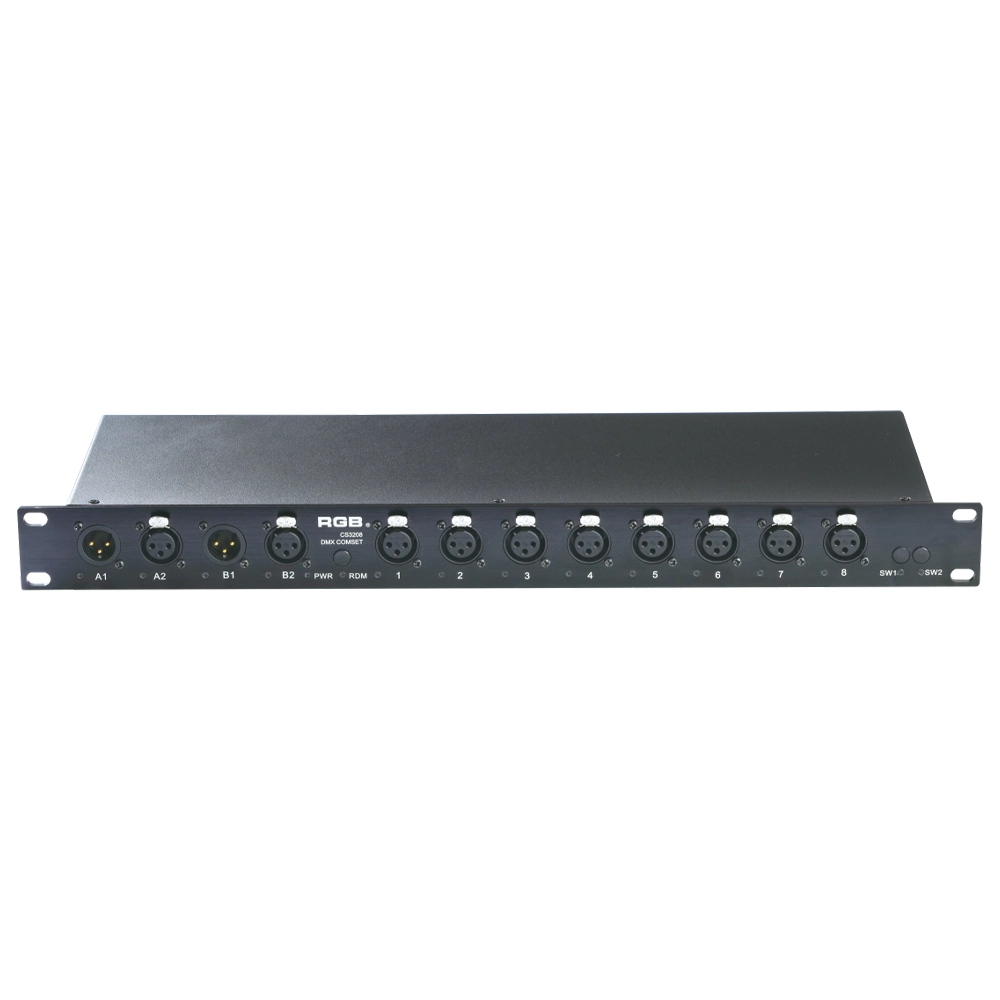
Multifunctional signal supercharger
The rack-mounted DMX signal amplifier complies with the DMX-512 standard protocol, improving DMX-512 signal transmission quality and ensuring reliable system control. It helps prevent issues such as AC high-voltage backflow into lighting control systems, lightning-induced surges, and signal interference caused by short circuits, thereby enhancing overall system stability.
Expert Support
Interested in learning more or need expert guidance related to this article? Fill in your details, and our team will provide tailored support.
Intelligent Control. Brilliant Performance.
RGB specializes in stage lighting control systems, delivering intelligent, reliable, and high-performance solutions for theaters and performance spaces worldwide.
Contact
Email:
Tel:
+86 20 3928 0245
+86 20 3928 0247
Address:
No.3, Huashan Road, Shilou Town, Panyu, Guangzhou, China.
Whatsapp: +8615975520131