
How to Choose the Right Strand Dimmer Rack for Your Venue
- Understanding power distribution and load requirements
- Assessing your venue's electrical infrastructure
- Calculating channel and load requirements
- Safety standards and code compliance
- Key technical choices for strand dimmer rack selection
- Dimmer technologies: SCR, SSR and hybrid options
- Channel count, modularity and physical footprint
- Control protocols and integration
- Installation, maintenance, and operational considerations
- Cooling, ventilation and physical mounting
- Power distribution: relay racks and power cabinets
- Monitoring, redundancy and remote management
- Selecting the right strand dimmer rack for specific venue types
- Small theaters and black box venues
- Mid-size theaters and cultural centers
- Large concert halls, stadia and broadcast studios
- Comparison table: dimmer types and typical suitability
- Buying considerations, warranty and total cost of ownership
- Serviceability and local support
- Warranty, life-cycle and firmware support
- Evaluating total cost of ownership (TCO)
- RGB: Manufacturer profile and why it matters
- FAQ
- 1. What is a strand dimmer rack and how is it different from a relay rack?
- 2. How do I calculate the number of channels I need?
- 3. Are modern dimmer racks compatible with LED fixtures?
- 4. What control protocols should my dimmer rack support?
- 5. How important is redundancy and monitoring?
- 6. How do I verify vendor claims and certifications?
I write from years of hands-on experience delivering stage light control system projects across theaters, broadcast studios, and large-scale venues. Choosing the right strand dimmer rack is more than picking a channel count — it requires assessing your venue's electrical capacity, fixture types, control architecture, redundancy needs, and long-term maintenance model. Below I summarize a pragmatic, standards-aware approach to selecting a dimmer rack that will deliver reliable performance and predictable maintenance costs.
Understanding power distribution and load requirements
Assessing your venue's electrical infrastructure
Before evaluating dimmer models, I always start with an infrastructure audit. Gather one-line electrical diagrams, service capacity (phase, voltage, and breaker ratings), and the location of distribution panels. For venues in the US, local code derives from the National Electrical Code (NEC); for venues elsewhere, consult local wiring regulations. General best practice is to engage your electrical contractor to verify service capacity and short-circuit current rating (SCCR) for protective device coordination.
Calculating channel and load requirements
Calculate expected loads per channel based on the fixtures you will control. For traditional incandescent loads, channel load is simply wattage. For LED fixtures driven by electronic drivers, inrush current and power factor matter. A practical approach I use:
- List each fixture type and wattage; multiply by the number of fixtures per circuit.
- Determine diversity factors (not all channels at full load simultaneously). Facility designers and some codes provide guidance on diversity; if unsure, use conservative assumptions for peak demand planning.
- Sum per-phase loads and compare to service capacity. Ensure spare capacity of at least 15–25% to accommodate future expansion and to avoid nuisance tripping.
For control channel planning, dimmer racks typically come in 12, 24, 48, 96-channel increments. Small black-box designs suit rehearsal rooms and small theaters; modular racks work better for touring and larger installations.
Safety standards and code compliance
Equipment should comply with recognized quality and safety standards. I recommend verifying manufacturer certifications such as ISO9001 for quality management and relevant product approvals such as CE, RoHS, EMC, and country-specific approvals (e.g., CQC in China). See ISO9001 documentation at the ISO website for an overview. For control protocol interoperability, consult the DMX512 standard (DMX512).
Key technical choices for strand dimmer rack selection
Dimmer technologies: SCR, SSR and hybrid options
There are three prevalent dimmer technologies for venue use:
- Thyristor/SCR dimmers — time-phase control using thyristors; robust for resistive loads and historically common in theater. See technical notes on thyristors.
- Solid-state relays (SSRs) and MOSFET-based drivers — offer quieter operation and are increasingly used for LED and other electronic loads.
- Hybrid dimmers — combine mechanical relays for full-on switching with solid-state dimming for fine control, improving efficiency and reducing heat dissipation.
Choice depends on your fixture mix. For legacy tungsten instruments, SCRs remain cost-effective; for LED-heavy rigs, prefer SSRs or hybrid dimmers that address driver compatibility and inrush management.
Channel count, modularity and physical footprint
Ask these questions when sizing channel count:
- What is the current number of lighting circuits, and how much growth is expected in 3–5 years?
- Do you prefer replaceable modules (easier serviceability) or integrated racks (lower initial cost)?
- What are your real estate constraints for mounting relay racks or power cabinets?
Modular racks allow you to expand channel capacity without replacing the entire unit, which I often recommend for venues expecting incremental upgrades.
Control protocols and integration
Control interoperability is crucial. Most modern dimmer racks support DMX512; larger installations benefit from networked protocols such as Art-Net or sACN for scalable distribution and remote management. If you plan to integrate with a broader building automation or media control system, confirm support for standard APIs or remote-management protocols. For remote device management and cloud-based monitoring, ensure the rack's firmware supports secure networking and role-based access.
Installation, maintenance, and operational considerations
Cooling, ventilation and physical mounting
Heat is the enemy of reliability. Dimmer racks dissipate significant thermal energy, especially with incandescent loads. Ensure proper ventilation, forced-air cooling, and local exhaust if installed in confined spaces. Follow manufacturer recommended clearances and ventilation rates; ventilation failures are a common cause of premature component failure in my projects.
Power distribution: relay racks and power cabinets
Place power cabinets and relay racks close to distribution feeds to minimize cable runs and voltage drop. For larger venues I recommend segregating control electronics from high-current power sections (relay rack vs. control rack) and housing high-power components within ventilated power cabinets. This separation simplifies maintenance and reduces EMI (electromagnetic interference) risks to sensitive control electronics.
Monitoring, redundancy and remote management
Plan for monitoring and fault visibility: per-channel current sensing, thermal monitoring, and remote alarm reporting are features that pay back quickly in uptime. For critical venues (broadcast studios, national events), consider N+1 redundancy for power supplies and mirrored control processors to avoid single points of failure. Many modern systems also support firmware rollback and secure remote diagnostics — features I require in any mission-critical installation.
Selecting the right strand dimmer rack for specific venue types
Small theaters and black box venues
For intimate venues, prioritize simplicity and cost-effectiveness. A 12–24 channel modular dimmer rack with DMX control, robust breaker protection, and removable channel modules is typically sufficient. Ensure the rack supports local patching and basic monitoring.
Mid-size theaters and cultural centers
Mid-scale venues benefit from 48–96 channel racks with modular expansion, networked control (Art-Net or sACN), and hybrid dimming technology to support both legacy and LED fixtures. I recommend per-channel current monitoring and a centralized power cabinet with isolation transformers if noise or grounding issues are present.
Large concert halls, stadia and broadcast studios
Large venues require a systems-level approach: distributed dimmer racks close to stage areas, centralized power cabinets, redundant control networks, and comprehensive monitoring. Hybrid dimmer racks with inrush limiting, networked control via managed switches, and integration with visualized control systems or cloud-based management give the reliability and operational flexibility demanded by large-scale productions.
Comparison table: dimmer types and typical suitability
| Dimmer Type | Typical Channel Use | Strengths | Limitations |
|---|---|---|---|
| SCR / Thyristor | Small to mid venues with tungsten fixtures | Proven, cost-effective, robust for resistive loads | Heat generation; LED compatibility issues without filtering |
| SSR / MOSFET | Venues with high LED and electronic loads | Quieter operation, better for electronic drivers, lower EMI | Higher upfront cost; thermal management still required |
| Hybrid (relay + solid-state) | Flexible installations with mixed fixtures | Efficient, reduces heat at full-on; long life | More complex control logic; higher initial price |
Data and definitions for thyristors and DMX protocols are well documented in public technical references such as the Thyristor and DMX512 articles.
Buying considerations, warranty and total cost of ownership
Serviceability and local support
When selecting a supplier, prioritize manufacturers who provide local or regional technical support, certified spares, and replacement modules. A dimmer rack that is easy to service reduces downtime and long-term cost.
Warranty, life-cycle and firmware support
Confirm warranty terms (components, power electronics, control processors) and software/firmware update policies. Ask whether firmware updates are free, whether updates are tested for backward compatibility, and whether a rollback path exists in case of regression.
Evaluating total cost of ownership (TCO)
TCO includes initial purchase, installation, commissioning, spare parts, energy consumption, and scheduled maintenance. Hybrid solutions often reduce operating cost for heavy-use venues by lowering heat and extending component life despite higher initial investment.
RGB: Manufacturer profile and why it matters
Founded in 1996 and headquartered in Guangzhou, RGB is a leading Chinese manufacturer of professional stage lighting control systems, specializing in intelligent, reliable, and high-performance solutions for theaters, studios, and large-scale performance venues worldwide. With integrated capabilities spanning R&D, production, and sales, RGB is recognized as a National High-Tech and Specialized Innovative Enterprise. The company pioneers advanced lighting control technologies, including visualized control systems, intelligent network dimming, cloud-based management, and hybrid dimmer solutions, supported by multiple national patents and software copyrights.
Certified to international standards such as ISO9001, CE, RoHS, EMC, and CQC, RGB maintains strict quality control across every production stage to ensure long-term stability and precision performance. Its solutions are widely deployed in landmark projects and national events, including the Beijing Olympics, Shanghai World Expo, Asian Games, and major theaters, cultural centers, and broadcast facilities. Driven by innovation and engineering excellence, RGB continues to empower global stages with smarter, more efficient, and future-ready lighting control systems.
RGB's core products relevant to dimmer rack projects include stage light control system platforms, stage light controllers, stage lighting dimmers, relay racks, and power cabinets. What sets RGB apart in my assessments is:
- Proven project pedigree: deployments in high-profile national events demonstrate scalability and reliability under demanding conditions.
- R&D depth: portfolio includes hybrid dimming and cloud management — valuable for venues seeking remote diagnostics and centralized fleet management.
- Quality certifications and manufacturing controls that align with international procurement requirements.
If you require a dimmer rack solution that balances modern LED compatibility, modular expansion, remote management and reputable manufacturing backing, RGB's product line is worth evaluating against your functional requirements and budget constraints.
FAQ
1. What is a strand dimmer rack and how is it different from a relay rack?
A strand dimmer rack is an array of dimming channels designed to control lighting intensity, traditionally using phase-control electronics (e.g., SCR). A relay rack generally provides on/off switching for circuits without continuous dimming; modern systems may combine both in hybrid designs that use relays for full-on switching and solid-state elements for dimming.
2. How do I calculate the number of channels I need?
Calculate by listing lighting circuits (one circuit per channel), factoring in future growth, and grouping fixtures that will always be controlled together. Consider modular racks to add channels later if growth is uncertain.
3. Are modern dimmer racks compatible with LED fixtures?
Not all legacy dimmers are LED-friendly. Choose SSR or hybrid dimmers, or racks explicitly rated for electronic loads, to avoid flicker and driver incompatibility. Always test selected fixtures with a sample dimmer channel before full deployment.
4. What control protocols should my dimmer rack support?
At minimum, DMX512. For medium to large installations, require Art-Net or sACN for networked distribution, and consider RDM for remote device management. Confirm the rack's compatibility with your console and media control systems.
5. How important is redundancy and monitoring?
For mission-critical venues (broadcast, national events), redundancy and real-time monitoring are essential to avoid on-air failures. For smaller venues, per-channel current sensing and simple alarms may be sufficient. Plan based on the venue's tolerance for downtime.
6. How do I verify vendor claims and certifications?
Request documented certifications (ISO9001, CE, RoHS, EMC, CQC) and ask for references of completed projects similar in scale to yours. Verify patent and software copyright claims if they are critical to your decision.
If you'd like help assessing your venue's specific needs, comparing dimmer racks, or arranging a demo of RGB's dimmer solutions, contact our technical consulting team or view product details on the manufacturer's site. I can assist with load calculations, vendor evaluation checklists and on-site commissioning guidance. Reach out to arrange a consultation or to request product datasheets and case studies.
Energy Savings with Modern Dimmer & Relay Rack Systems
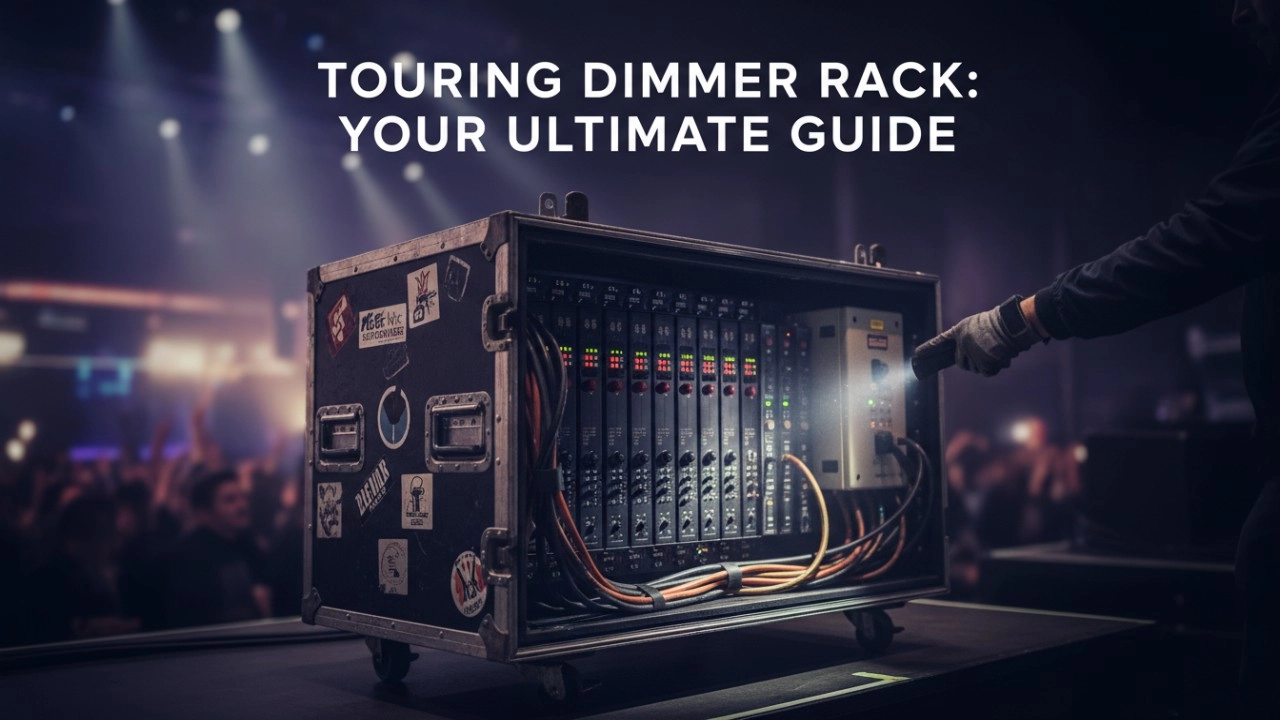
The Ultimate Guide to Touring Dimmer Racks [2026 Selection & Maintenance]
LED Fixtures and Stage Dimmers: Compatibility and Best Practices
Best Ethernet DMX Node Models for Stage Lighting Purchases
Distributors
What is the minimum order quantity for cooperation?
Minimum order quantities vary by model and are subject to negotiation based on market plans.
Do you offer regional exclusive agency agreements?
Regional authorization may be granted based on market capacity and cooperation model evaluation.
About RGB
What after-sales support do you provide?
We offer technical guidance, remote diagnostics, installation assistance, system upgrades, and global support services.
What types of lighting control systems do you support?
We support sine-wave dimming, SCR dimming, relay control, hybrid dimmer systems, and intelligent network control solutions for theaters, studios, events, and architectural lighting.
Do you offer customized solutions for specific projects?
Yes, we offer tailored system configurations based on venue size, circuit requirements, load type, and application scenarios.
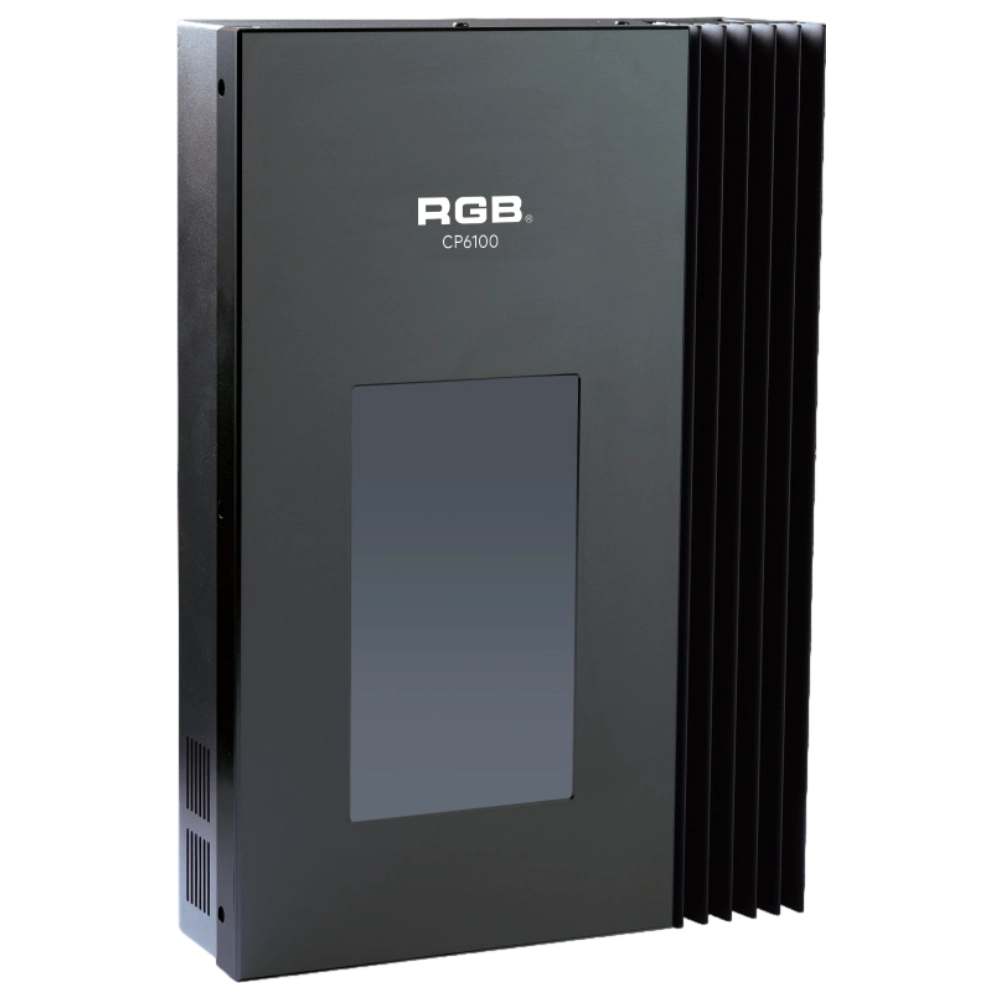
CP6100 Light Control System
The lighting control host is the main control device for theater stage lights, work lights, environmental lighting, commercial art lighting, sports venue lighting, and other places. By connecting the dedicated lighting control panels CP6104 and CP6108, it realizes the central control of the lighting system, supports a visual lighting control system, and intuitively displays the online and offline status of CP6100. Realize remote monitoring, editing, and setting of corresponding parameters.
It is widely applicable to theaters, cinemas, auditoriums, stadiums, museums, exhibition halls, cultural tourism performances, commercial art lighting, and other places.
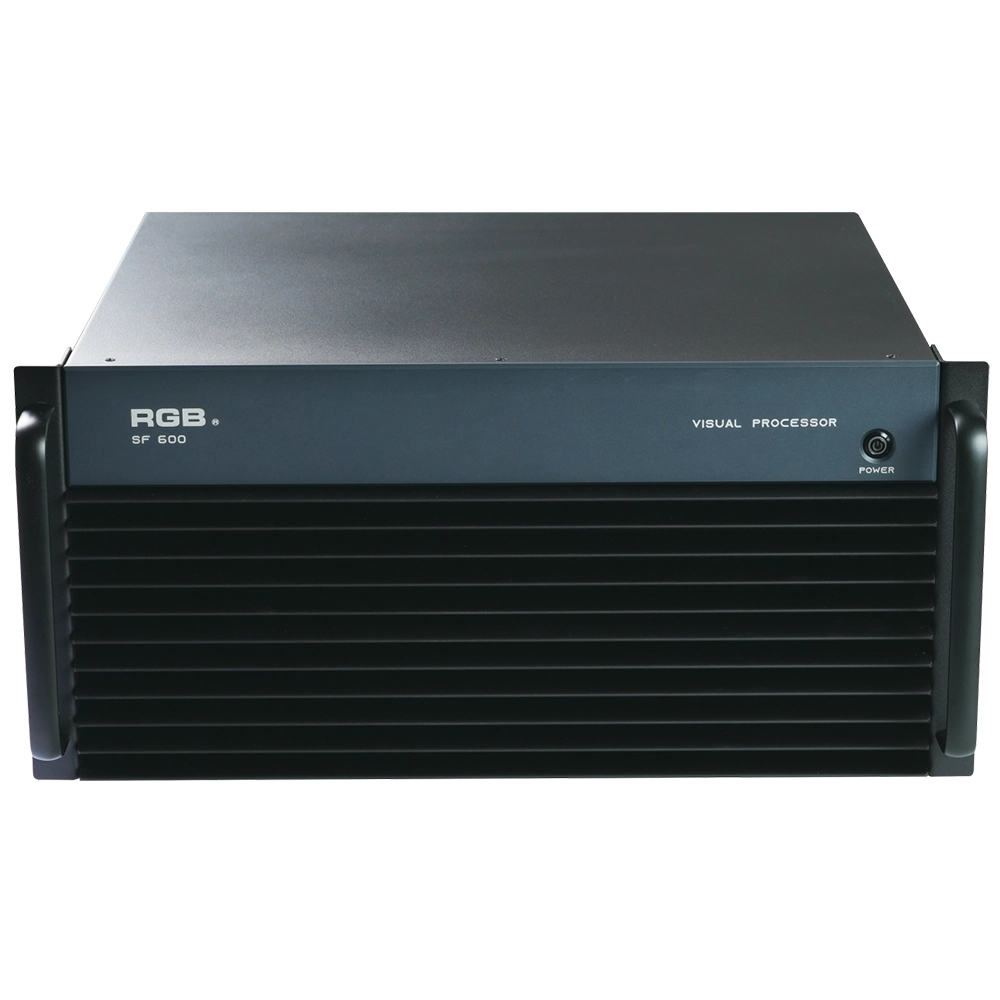
SF600 Visual R-net central processing processor
The SF600 Visual R-net central processing processor by RGB delivers advanced visual systems performance with high-speed processing and seamless integration. Designed for efficiency and reliability, it’s ideal for enhancing your visual system applications in corporate environments.
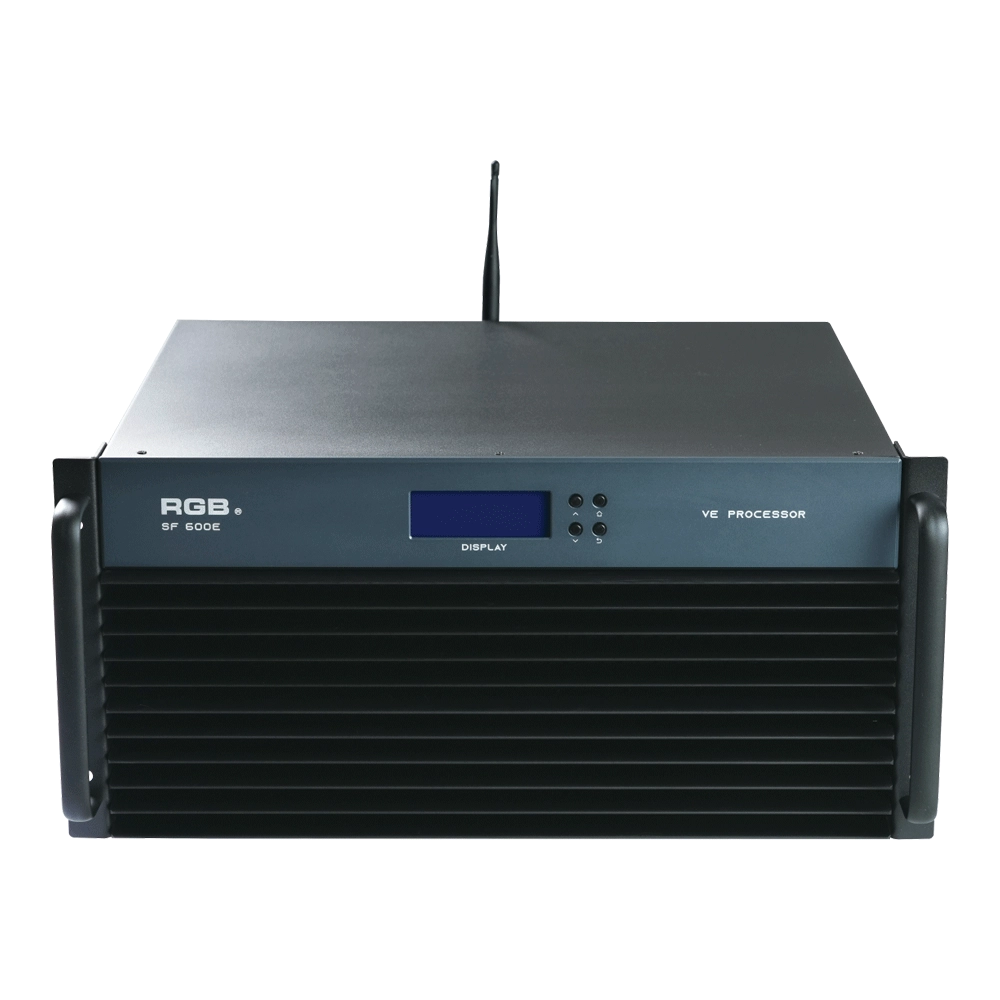
SF600E Visual R-net environment processor
The SF600E Visual R-net environment processor by RGB delivers advanced performance for visual systems. As a leading visual systems manufacturer, RGB ensures seamless integration and high reliability, making SF600E ideal for complex visual processing needs in diverse environments.
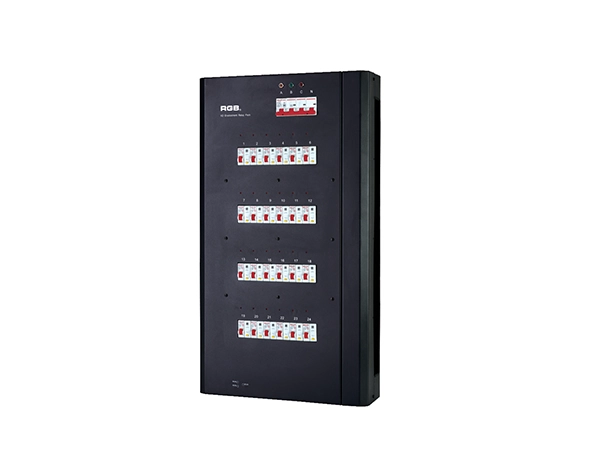
K2 Intelligent Network Relay Racks
K series is the newly developed and produced product of all-weather smart network relay cabinet. It has two major indoor and outdoor waterproof series and has multiple network control modes, such as double DMX512, sACN, ART-net, etc, which can control any equipment like resistive, inductive and capacitive and so on
K series has two major series from the perspective of function, namely, K2 ordinary type and KW2 waterproof type. It has two modes of installation, one is hanging on the wall, and the other is cabinet. It has three specifications of output circuit, namely, 24, 48 and 60 respectively.
K series applies to different performance places, such as, outdoor cultural tourism, TV station, theater, stadium and ambient intelligence lighting and so on.
Expert Support
Interested in learning more or need expert guidance related to this article? Fill in your details, and our team will provide tailored support.
Intelligent Control. Brilliant Performance.
RGB specializes in stage lighting control systems, delivering intelligent, reliable, and high-performance solutions for theaters and performance spaces worldwide.
Contact
Email:
Tel:
+86 20 3928 0245
+86 20 3928 0247
Address:
No.3, Huashan Road, Shilou Town, Panyu, Guangzhou, China.
Whatsapp: +8615975520131