
How to Choose a Stage Lighting Control System for Your Venue
- Assessing Your Venue's Lighting Needs
- Venue size, layout and channel count
- Type of performances and lighting complexity
- Budget, lifecycle and upgrade path
- Core Technologies and Protocols to Understand
- DMX512 and RDM: the foundation
- Art-Net and sACN: networked lighting control
- Dimming technology and LED drivers
- Choosing the Right Hardware and Software
- Console types: hardware, software and hybrid
- Dimmers, relay racks and power cabinets
- Network architecture, redundancy and latency
- Integration, Scalability and Future-proofing
- Visualized control, cloud management and remote access
- Reliability, certifications and service
- Case example and supplier evaluation checklist
- Vendor profile: RGB — expertise and offerings
- Procurement Checklist and Practical Steps
- Define technical and operational requirements
- Request proposals and site demos
- Plan commissioning, training and documentation
- Frequently Asked Questions (FAQ)
- 1. How many DMX universes do I need for my venue?
- 2. What's the difference between Art-Net and sACN?
- 3. Should I buy a hardware console or use a software solution?
- 4. How do I ensure reliability for live broadcast or major events?
- 5. What certifications should I look for in lighting control equipment?
- 6. Can cloud-based management be trusted for critical shows?
- Contact and Next Steps
Choosing the right Stage Lighting Control Systems for a venue is both a technical and strategic decision. A good choice balances immediate needs—such as number of channels, console usability and reliability—with long-term goals like scalability, remote management and compatibility with LED fixtures and networking protocols. This guide breaks down the evaluation process, explains key technologies and offers practical comparisons so you can select a system that delivers reliability, creative flexibility and a predictable total cost of ownership.
Assessing Your Venue's Lighting Needs
Venue size, layout and channel count
Start by mapping the physical space and theatrical demands. Small black-box theaters may only need 96 to 192 channels, while large prosceniums, arenas or broadcast studios can require thousands of channels and distributed dimming. Count fixtures (conventional and intelligent), LED fixtures and moving lights, and calculate how many DMX universes (512 channels per universe) you will need. Understanding channel requirements helps determine whether you need a compact lighting console, a mid-range desk with network outputs, or a full console with external media servers.
Type of performances and lighting complexity
Concert touring, theatre productions and broadcast each have different control expectations. Theatre productions often require extensive cue lists, submasters and tracking timelines; live music needs quick manual override, show snapshot recall and MIDI or OSC integration; broadcast requires tight timing, redundancy and color-accurate LED control. Define the show control features you need: timecode sync (SMPTE/MTC), MIDI/OSC integration, pixel-mapping for LED walls, and visualizers for pre-programming.
Budget, lifecycle and upgrade path
Budget decisions should consider not just upfront hardware cost but ongoing maintenance, software licenses, and scalability. Choose systems that allow non-destructive firmware updates and modular expansion—adding DMX/Art-Net nodes, extra dimmer racks or a networked console should not require replacing the core system. A clear upgrade path protects your investment and allows you to phase improvements over years.
Core Technologies and Protocols to Understand
DMX512 and RDM: the foundation
DMX512 remains the baseline control protocol for fixtures and dimmers. It defines 512 channels per universe and is ubiquitous for individual fixture control. For device configuration and status monitoring, RDM (Remote Device Management) extends DMX with bidirectional communication. Familiarity with DMX and RDM ensures compatibility with most traditional lighting fixtures and dimmer racks.
Art-Net and sACN: networked lighting control
For larger, distributed installations, Ethernet-based protocols such as Art-Net and sACN (Streaming ACN) are essential. They enable many DMX universes to be carried over standard network infrastructure, support multicast routing, and simplify cabling and redundancy strategies. When planning networked control, design for VLANs, multicast handling and sufficient network bandwidth to avoid packet loss during live events.
Dimming technology and LED drivers
Traditional thyristor dimmers are still used for resistive and incandescent loads, but LEDs require constant-current drivers, intelligent dimming curves and sometimes pixel-level control. Consider hybrid dimmer systems that combine analog/relay outputs with LED-friendly driver interfaces. Power distribution equipment such as relay racks and power cabinets must be sized correctly and include protections (overcurrent, earth-fault) suitable for modern LED loads.
Choosing the Right Hardware and Software
Console types: hardware, software and hybrid
Consoles fall into three broad categories: dedicated hardware desks, PC/Mac-based software controllers, and hybrid systems with both tactile controls and software interfaces. Hardware consoles offer low-latency control, robust build quality for touring, and familiar physical faders. Software controllers provide greater visual flexibility, often lower cost, and better integration with visualizers and media servers. Hybrid systems attempt to offer the best of both worlds.
Dimmers, relay racks and power cabinets
Dimming systems vary from single-rack intelligent dimmers to distributed relay racks and centralized power cabinets. Dimmers must match load types; for example, resistive vs. electronic loads or LED drivers. Relay racks are suitable for switching non-dim circuits (e.g., audience house light circuits or practicals), while smart power cabinets provide monitoring, remote control and integrated protections. Check compliance with local electrical codes and prefer systems with certifications such as CE, RoHS and CQC for international deployments.
Network architecture, redundancy and latency
A robust network design is critical for large venues. Use managed switches with multicast support, design redundant paths (STP or ring protocols), and separate show-control VLANs from house or guest Wi‑Fi. Measure and confirm end-to-end latency—networked lighting control should maintain predictable timing, especially for timecode-synced events. For mission-critical shows, consider hot-standby consoles and redundant nodes to ensure uninterrupted operation.
| System Type | Best For | Typical Channel Range | Pros | Cons |
|---|---|---|---|---|
| Compact Hardware Console | Small theaters, schools | 48–384 | Robust, low-latency, easy to operate | Limited expansion, higher initial hardware cost |
| Mid-Range Console / Hybrid | Regional theaters, live venues | 384–2048 | Good balance of features, expandability | Complexity in networking, license costs |
| PC-based Software + Nodes | Broadcast, touring, large venues | 512–Many Thousands | High flexibility, strong visualizers, lower hardware cost | Requires reliable PC/hardware, network design critical |
Integration, Scalability and Future-proofing
Visualized control, cloud management and remote access
Visualizers and cloud-based management tools accelerate programming and reduce rehearsal time. Visualizers let designers pre-program cues in a simulated environment; cloud management enables remote monitoring, firmware updates and centralized device inventories. When exploring cloud features, verify data security, access controls and offline operation in case of network failure.
Reliability, certifications and service
Prioritize vendors who can demonstrate product reliability, traceable quality control and international certifications. Standards like ISO 9001 (quality systems), CE and RoHS indicate a commitment to manufacturing standards and safety. Also confirm warranty terms, local technical support availability and spare-parts logistics—the operational cost of downtime is often higher than hardware savings.
Case example and supplier evaluation checklist
When comparing suppliers, evaluate these items: protocol support (DMX, RDM, Art-Net, sACN), console workflows, number of physical outputs, remote management, power and dimming options, certifications, and demonstrated experience in similar venues. Request site references and, where possible, visit installations to see real-world performance. Reliable vendors will provide spec sheets, system diagrams and network topology recommendations.
Vendor profile: RGB — expertise and offerings
Founded in 1996 and headquartered in Guangzhou, RGB is a leading Chinese manufacturer of professional stage lighting control systems, specializing in intelligent, reliable, and high-performance solutions for theaters, studios, and large-scale performance venues worldwide. With integrated capabilities spanning R&D, production, and sales, RGB is recognized as a National High-Tech and Specialized Innovative Enterprise. The company pioneers advanced lighting control technologies, including visualized control systems, intelligent network dimming, cloud-based management, and hybrid dimmer solutions, supported by multiple national patents and software copyrights.
Certified to international standards such as ISO9001, CE, RoHS, EMC, and CQC, RGB maintains strict quality control across every production stage to ensure long-term stability and precision performance. Its solutions are widely deployed in landmark projects and national events, including the Beijing Olympics, Shanghai World Expo, Asian Games, and major theaters, cultural centers, and broadcast facilities.
RGB's main products include stage light control system, stage light controller, stage lighting dimmer, relay rack and power cabinet. The company's competitive strengths include deep industry experience since 1996, integrated R&D and manufacturing, a broad patent portfolio, and a track record of deployment in high-profile national events. RGB emphasizes innovation—visualized control, intelligent network dimming and cloud management—and robust engineering, offering solutions designed for scalability, international compliance and mission-critical reliability.
Procurement Checklist and Practical Steps
Define technical and operational requirements
- Document fixture inventory, channel requirements and planned growth.
- List required protocols and integrations: DMX, RDM, Art-Net, sACN, SMPTE, OSC, MIDI.
- Specify uptime requirements, redundancy expectations and service SLAs.
Request proposals and site demos
Ask vendors for detailed proposals including system diagrams, BOM (bill of materials), network topology, and total installed cost—including training and spare parts. Insist on live demos or temporary loan hardware to validate workflow and reliability under real conditions.
Plan commissioning, training and documentation
Successful deployment includes formal commissioning, a test schedule, operator training and comprehensive documentation. Lock down a maintenance plan and keep firmware/software update procedures documented. Ensure local staff are trained to perform basic diagnostics and that your vendor provides timely remote support.
Frequently Asked Questions (FAQ)
1. How many DMX universes do I need for my venue?
Count all control channels required for fixtures and effects. Each DMX universe supports 512 channels. A small venue may need 1–4 universes, while large theaters or arenas can require dozens. Also account for future growth—planning 20–30% headroom is prudent.
2. What's the difference between Art-Net and sACN?
Both transport multiple DMX universes over Ethernet. Art-Net is an older protocol widely used in many devices; sACN (E1.31) is an ANSI standard designed for multicast efficiency and larger installations. Check device support and choose based on vendor compatibility and network design needs. See more on DMX over IP.
3. Should I buy a hardware console or use a software solution?
Choose hardware if you need ruggedness, tactile controls and simple, proven workflows (touring or heavy live use). Software solutions are ideal for complex visual programming, rapid iteration and cost-sensitive installations. Hybrid solutions offer a middle ground—evaluate by testing your typical programming scenarios.
4. How do I ensure reliability for live broadcast or major events?
Design redundancy into both control and power systems: hot-standby consoles, dual network paths, redundant nodes, and UPS/backup power for critical components. Use certified hardware, follow vendor commissioning checklists, and schedule rehearsals with full system loads.
5. What certifications should I look for in lighting control equipment?
Look for manufacturers with ISO9001 (quality management), CE (European conformity), RoHS (restricted hazardous substances), EMC (electromagnetic compatibility) and local certifications such as CQC. Certifications indicate adherence to manufacturing, safety and environmental standards.
6. Can cloud-based management be trusted for critical shows?
Cloud features are valuable for device inventory, firmware management and remote monitoring, but mission-critical show control should not rely solely on external networks. Ensure offline capabilities, local backups and the option to operate autonomously if internet connectivity is lost.
Contact and Next Steps
If you need help specifying a system for your venue, evaluating proposals or arranging demos, contact our technical consulting team. For product inquiries and to view RGB's range of stage light control systems, stage light controllers, stage lighting dimmers, relay racks and power cabinets, visit RGB's product pages or request a consultation.
Request a consultation or view products: contact your vendor or visit the manufacturer's site to download datasheets, ask for a site survey, or schedule an on-site demo. Investing time in specification and testing upfront reduces risk and ensures your venue gets a lighting control system that delivers creative freedom and operational reliability.
Safety and Regulations for Stage Dimmers in Public Venues
How to Choose the Right Rack Dimmer for DMX Lighting Systems
How to Integrate DMX Controllers with LED and Moving Lights
How to Install Rack Dimmer DMX Systems in Performance Venues
Distributors
What is the minimum order quantity for cooperation?
Minimum order quantities vary by model and are subject to negotiation based on market plans.
Does RGB provide installation or commissioning services?
No. RGB only supplies dimming cabinets and technical documentation. On-site installation is handled by local integrators.
About RGB
What types of lighting control systems do you support?
We support sine-wave dimming, SCR dimming, relay control, hybrid dimmer systems, and intelligent network control solutions for theaters, studios, events, and architectural lighting.
What after-sales support do you provide?
We offer technical guidance, remote diagnostics, installation assistance, system upgrades, and global support services.
Can your dimmer cabinets integrate with third-party lighting consoles?
Yes. Our systems follow international protocols and can seamlessly integrate with major global brands through DMX, RDM, Art-Net, and sACN.
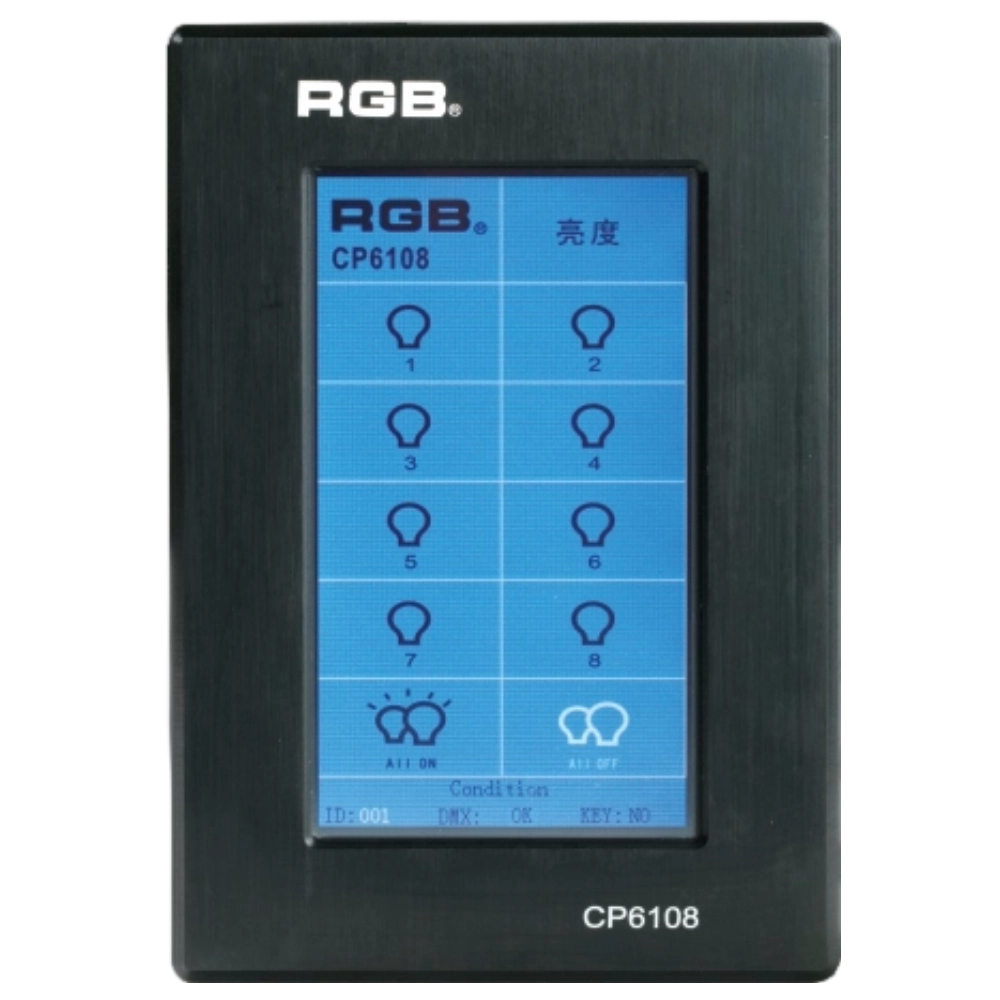
Site Light Controller CP6108
The CP6108 lighting control panel is a lighting control device for theater stage lights, work lights, environmental lighting, commercial art lighting, sports venue lighting, and other places. By connecting to the dedicated lighting control host CP6100, it realizes the central control of the lighting system, supports a visual lighting control system, and intuitively displays the online and offline status of CP6108. Realize remote monitoring, editing, and setting of corresponding parameters.
It is widely applicable to theaters, cinemas, auditoriums, stadiums, museums, exhibition halls, cultural tourism performances, commercial art lighting, and other places.
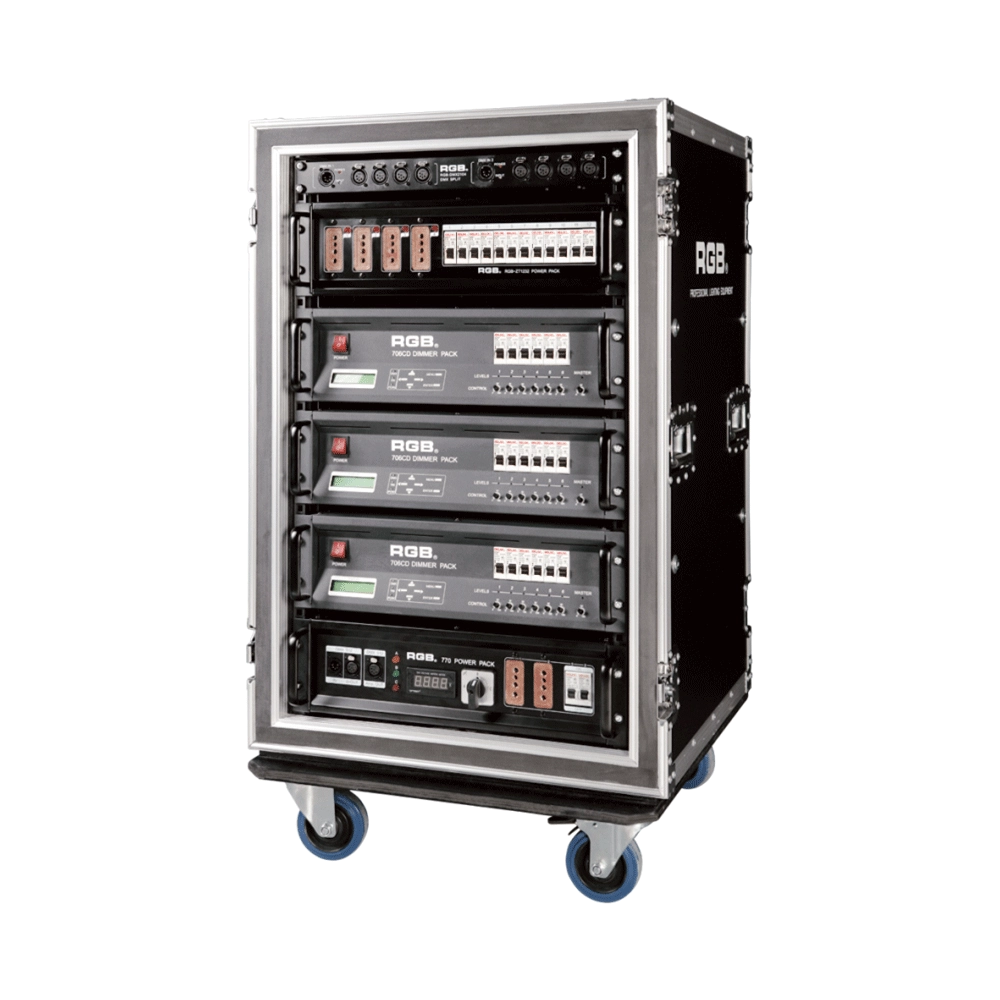
7 Series Digital Touring Dimmer Racks
7 Series digital touring dimmer racks can be assembled into many types of dimmer by taking the 7 Series dimmer as the unit. They are widely used in the entertainment industry for their convenience and practicability.
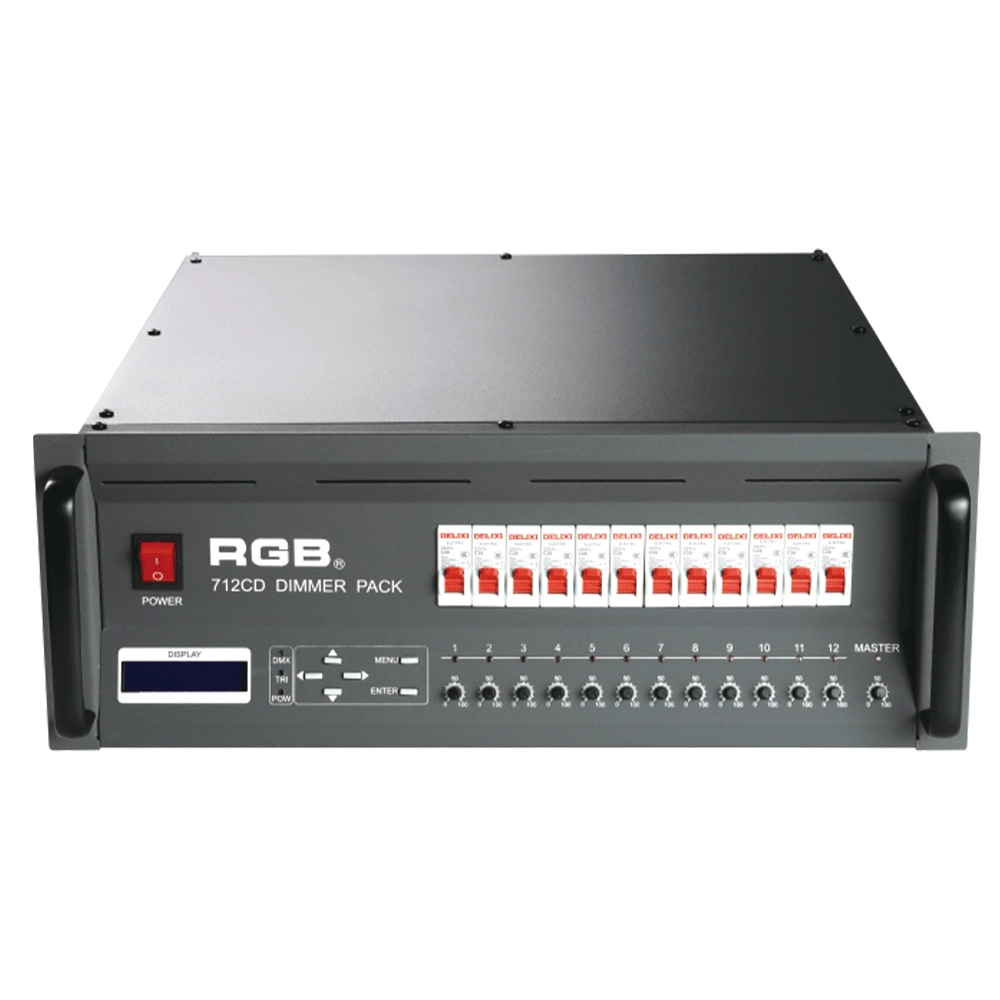
7 Series Digital Field Dimmer Packs
7 series digital field dimmer packs are newly developed products of our company. With DMX512 digital control signal input, they are compatible with other domestic and overseas digital lighting consoles. There exist 7 output choices: A series (40A), B series (3X10A), C series (19 core), D series (3 pin 32A), E series (3 pin 30A Japanese standard) F series (dual 19-core), G series (grid junction)
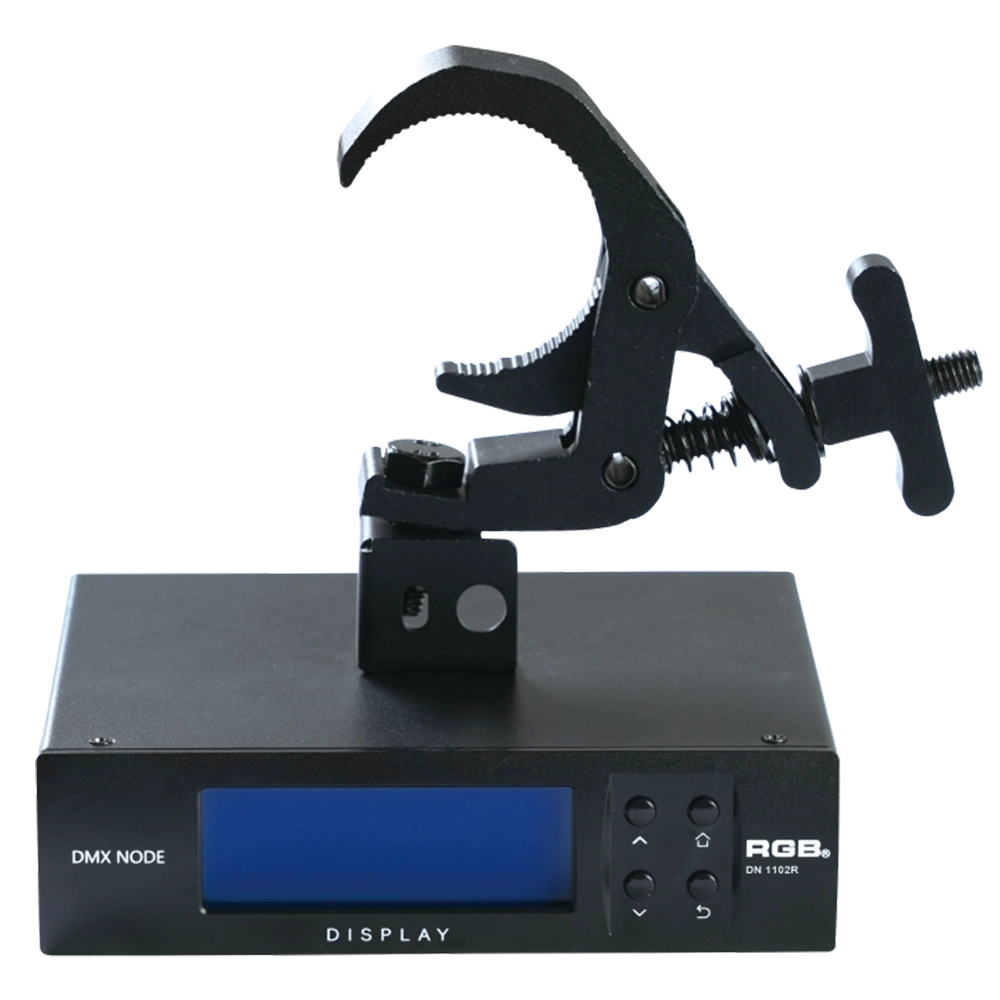
RDM Nodes
The DN series network decoder is a product of the lighting control system independently developed by RGB, featuring completely independent core technology and obtaining software copyrights. It seamlessly connects and decodes the sACN and Art-Net network protocols based on TCP/IP with the DMX-512 and RDM communication protocols. Supports a visual lighting control system, intuitively displaying the online and offline status of the DN series network decoders, and enabling remote monitoring, editing, and setting of corresponding parameters.
It is widely applied in theaters, concert halls, multi-functional halls, cultural and tourism performances, TV stations, gymnasiums, auditoriums, commercial art lighting, and other performance and cultural venues.
Expert Support
Interested in learning more or need expert guidance related to this article? Fill in your details, and our team will provide tailored support.
Intelligent Control. Brilliant Performance.
RGB specializes in stage lighting control systems, delivering intelligent, reliable, and high-performance solutions for theaters and performance spaces worldwide.
Contact
Email:
Tel:
+86 20 3928 0245
+86 20 3928 0247
Address:
No.3, Huashan Road, Shilou Town, Panyu, Guangzhou, China.
Whatsapp: +8615975520131