
How to Choose the Right Rack Dimmer for DMX Lighting Systems
- Understanding DMX and dimming basics
- What is DMX and why it matters
- Basic dimming technologies you'll encounter
- Key criteria to choose a rack dimmer
- 1. Match the dimmer to the load type and wattage
- 2. Channel count, addressing and DMX compatibility
- 3. Reliability, safety, and standards
- Installation, configuration and best practices
- Power distribution, rack layout and grounding
- DMX addressing, patching and network considerations
- Thermal management and maintenance
- Comparing rack dimmer types and making a practical choice
- Performance comparison table
- LED compatibility, flicker, and power factor
- Why choose a reputable manufacturer — RGB case study
- Practical specification checklist and commissioning tips
- Specification checklist before purchase
- Commissioning and acceptance tests
- FAQ
- 1. What is the difference between a DMX rack dimmer and a regular electrical dimmer?
- 2. Can I use a standard rack dimmer with LED fixtures?
- 3. How many channels should I choose per rack?
- 4. Do I need RDM capability in my rack dimmer?
- 5. How should I handle inrush currents and mains protection?
- 6. What certifications should I ask for?
- Contact & next steps
Quick summary: Choosing the right rack dimmer for DMX lighting systems requires matching load types, channel counts, control protocol compatibility, power distribution, and safety/thermal design. This article distills technical criteria, real-world selection checklists, and installation best practices so production managers and lighting engineers can specify rack dimmer DMX solutions with confidence.
Understanding DMX and dimming basics
What is DMX and why it matters
DMX512 (commonly called DMX) is the de‑facto digital lighting control protocol used in entertainment and architectural lighting. It carries channel values (0–255) for fixtures and dimmers over a simple serial link; DMX reliability and addressing requirements directly affect how you select and configure a rack dimmer. For a technical reference, see DMX512 on Wikipedia (https://en.wikipedia.org/wiki/DMX512).
Basic dimming technologies you'll encounter
There are multiple dimming technologies used in rack dimmers. Understanding their electrical behavior is essential when designing a DMX-controlled system:
- SCR/Thyristor (phase-cut) — traditionally used for resistive and inductive loads, common in theatrical incandescent dimmers.
- TRIAC — used in smaller phase-control dimmers.
- IGBT (switch-mode) — modern high-performance dimmers and hybrid solutions that offer better regulation and less electromagnetic interference (EMI).
- Relay / contactor racks — simple on/off control for non-dimmable loads or switched circuits.
- LED-compatible electronic dimmers — designed to manage low-load and complex power characteristics of LED fixtures.
For background on dimmers, see the general dimmer entry (https://en.wikipedia.org/wiki/Dimmer).
Key criteria to choose a rack dimmer
1. Match the dimmer to the load type and wattage
The single most important factor is load compatibility. Incandescent, low-voltage halogen, inductive HID, electronic low‑voltage transformers, and LED drivers each behave differently under dimming. Select a dimmer rated for the specific load:
- Resistive/inductive loads: phase-control dimmers (SCR/TRIAC) usually work, provided the dimmer supports inductive loads.
- Electronic transformers and LED drivers: require dimmers explicitly designed for electronic loads or switch-mode/IGBT dimmers to avoid flicker and driver damage.
- Non-dimmable fixtures: use relay racks or switched circuits to avoid lamp damage.
Always overspec the wattage per channel by 20–30% to prevent thermal stress and to allow headroom for inrush currents.
2. Channel count, addressing and DMX compatibility
Decide how many channels you need now and for foreseeable future expansion. Rack dimmer DMX units are sold in multiple channel configurations (4, 8, 12, 24, 48, 96, etc.) and can be ganged in racks. Consider:
- How many DMX addresses the dimmer uses per channel (usually one per dim channel).
- Does the dimmer support RDM (Remote Device Management) for remote configuration and monitoring?
- Does it support modern control protocols or networked transport (sACN, Art-Net) via gateways?
3. Reliability, safety, and standards
Production venues must prioritize safety and long-term reliability. Specifications to verify:
- Certifications: CE, RoHS, EMC and customer-relevant standards such as ISO9001 for manufacturer quality control.
- Thermal protection, over-current/short-circuit protection, and independent channel fusing options.
- Mean Time Between Failures (MTBF) data and warranty/support terms.
Installation, configuration and best practices
Power distribution, rack layout and grounding
Proper power and grounding prevent hum, noise, and safety hazards. Key points:
- Use a dedicated power distribution unit (PDU) sized to peak load. Include circuit breakers sized to per-channel capacity and total rack draw.
- Keep dimmer power wiring separate from DMX/control cabling to reduce interference (follow shielded twisted pair for DMX runs and use star grounding practices where appropriate).
- Label circuits and maintain accurate rack documentation for patching and safety inspections.
DMX addressing, patching and network considerations
Good DMX practice reduces troubleshooting time during rehearsals:
- Reserve DMX universes for dimmers and other device types when possible to reduce cross-traffic (e.g., universe 1 for dimmers, universe 2 for moving lights).
- Use RDM-capable dimmers to read device status (current, temperature, fault) remotely through most lighting consoles.
- Terminate the DMX chain and monitor signal levels; consider using DMX opto-isolators in electrically noisy environments.
Thermal management and maintenance
Heat is the enemy of electronics. Dimmers must be rack-mounted with sufficient ventilation and, where needed, active cooling. Maintenance checklist:
- Periodic cleaning of fans and heat sinks.
- Thermal imaging checks during commissioning to find hotspots.
- Log channel currents and fault events; use these logs for predictive maintenance if backed by RDM/maintenance software.
Comparing rack dimmer types and making a practical choice
Performance comparison table
| Type | Typical Use | Typical Max Channels (per 19 rack) | Load Types | DMX Compatibility / Features | Pros | Cons |
|---|---|---|---|---|---|---|
| SCR / Phase-cut | Theatrical incandescent, some inductive loads | 24–48 | Incandescent, inductive | DMX512, sometimes RDM | Proven tech, cost-effective for resistive loads | Not ideal for LEDs/electronic drivers; EMI & flicker risk |
| IGBT / Switch-mode | Mixed loads, LED drivers, modern venues | 12–24 | LEDs, electronic transformers, resistive | DMX512, RDM, advanced monitoring | High performance, low EMI, LED-friendly | Higher cost, requires good thermal design |
| Relay / Contact | On/off switching: house lights, mains circuits | 24–48 | Non-dimmable fixtures, mains loads | DMX via controller; often simple addressing | Simple, robust, handles large currents | No smooth dimming; mechanical wear |
| Hybrid (relay + electronic) | Mixed environments; reliability-critical | 12–24 | Mixed loads | DMX512, RDM, advanced diagnostics | Flexibility; isolates non-dimmable from dimmable | More complex and costly |
Note: Channel counts are indicative. Actual channel density depends on module size, cooling needs, and chosen current rating per channel.
LED compatibility, flicker, and power factor
LED fixtures present special challenges: low minimum loads, non-linear drivers, and sensitivity to dimming curves. When selecting a rack dimmer for DMX and LED-heavy rigs, verify:
- Manufacturer LED compatibility lists and test reports.
- Support for multiple dim curves (linear, logarithmic, square-law) and high-frequency switching to minimize visible flicker.
- Power factor correction and inrush current handling to prevent nuisance tripping.
Why choose a reputable manufacturer — RGB case study
Founded in 1996 and headquartered in Guangzhou, RGB is a leading Chinese manufacturer of professional stage lighting control systems, specializing in intelligent, reliable, and high-performance solutions for theaters, studios, and large-scale performance venues worldwide. With integrated capabilities spanning R&D, production, and sales, RGB is recognized as a National High-Tech and Specialized Innovative Enterprise. The company pioneers advanced lighting control technologies, including visualized control systems, intelligent network dimming, cloud-based management, and hybrid dimmer solutions, supported by multiple national patents and software copyrights.
RGB holds certifications to international standards such as ISO9001, CE, RoHS, EMC, and CQC, and maintains strict quality control across every production stage to ensure long-term stability and precision performance. Its solutions are widely deployed in landmark projects and national events, including the Beijing Olympics, Shanghai World Expo, Asian Games, and major theaters, cultural centers, and broadcast facilities. Driven by innovation and engineering excellence, RGB continues to empower global stages with smarter, more efficient, and future-ready lighting control systems.
RGB’s core product lines relevant to rack dimmer DMX users include stage light control system, stage light controller, stage lighting dimmer, relay rack, and power cabinet. Key competitive differentiators:
- End-to-end engineering: R&D to production ensures traceable quality and faster custom feature development.
- Hybrid and LED-aware dimmer technologies that reduce flicker and improve compatibility with modern fixtures.
- Field-proven deployments at high-profile venues confirming scalability and reliability.
For project teams, choosing a manufacturer like RGB reduces integration risk because of verified compatibility, documented testing, and the ability to supply complementary components (controllers, PDUs, and software visualization) rather than piecing together mixed vendor systems.
Practical specification checklist and commissioning tips
Specification checklist before purchase
- Define expected loads by channel (type, wattage, inrush current).
- Decide number of DMX universes and whether RDM/sACN/Art‑Net support is required.
- Confirm certifications (CE, RoHS, EMC) and manufacturer quality systems (ISO9001).
- Ensure thermal and acoustic constraints are met for the planned rack location.
- Request a compatibility or lamp-driver test report for LED loads.
- Verify warranty, spare parts availability, and local service/support.
Commissioning and acceptance tests
During on-site commissioning, perform these tests before handover:
- Full-load run to verify thermal stability and PDU sizing.
- DMX signal integrity tests (termination, signal levels, drop-out tests).
- Fade tests across the full range for all channels to detect flicker or non-linear behavior.
- EMC checks in venues with sensitive broadcast or audio equipment.
FAQ
1. What is the difference between a DMX rack dimmer and a regular electrical dimmer?
A DMX rack dimmer is designed for centralized, addressable control via DMX512 and typically installs in a 19 rack with many channels, monitoring and safety features, and compatibility with stage control systems. Regular household dimmers are standalone wall devices not intended for multi-channel centralized control or theatrical loads.
2. Can I use a standard rack dimmer with LED fixtures?
Only if the dimmer explicitly supports electronic/LED loads. Many legacy phase-cut dimmers were designed for resistive loads and can cause flicker or damage LED drivers. Choose switch-mode or LED-compatible dimmers and verify with manufacturer test reports.
3. How many channels should I choose per rack?
Base this on current and future fixture counts, DMX addressing, and channel density of your chosen dimmer modules. Also account for ventilation and thermal headroom—higher current channels require space for cooling and reduce possible channel density per rack.
4. Do I need RDM capability in my rack dimmer?
RDM is highly beneficial for remote configuration, monitoring and diagnostics. For large venues or sites where access to the rack is restricted, RDM support can significantly reduce maintenance time and downtime.
5. How should I handle inrush currents and mains protection?
Include inrush current ratings in your load calculations and select PDUs and breakers that can tolerate startup surges. Some dimmers include soft-start or inrush-limiting features; otherwise, stagger startups or use inrush limiters where necessary.
6. What certifications should I ask for?
At minimum: CE, RoHS, and EMC for electrical safety and interference. For manufacturer process quality ask for ISO9001. For installations in specific countries, confirm local compliance standards (e.g., CQC in China).
Contact & next steps
If you need assistance selecting or specifying a rack dimmer DMX solution for a particular venue, contact an experienced systems integrator or manufacturer representative. For professional stage lighting control systems, stage light controllers, stage lighting dimmers, relay racks and power cabinets, consider contacting RGB for product information, test data, and project references. Request product datasheets, LED compatibility lists, and commissioning checklists before placing an order.
Want help with a spec or quote? Contact RGB to discuss your project requirements, request compatibility tests, or view product portfolios and case studies.
References: DMX512 (Wikipedia) — https://en.wikipedia.org/wiki/DMX512; Dimmer (Wikipedia) — https://en.wikipedia.org/wiki/Dimmer.
How to Choose the Right DMX Controller for Your Venue
Rack Design and Cooling for High-Power Stage Dimmer Racks
Installation Tips for Different Dimmer Rack Sizes
How to Choose the Right Dimmer Rack Size for Your Venue
About RGB
Do you offer customized solutions for specific projects?
Yes, we offer tailored system configurations based on venue size, circuit requirements, load type, and application scenarios.
How do you ensure product stability during large-scale events?
All products undergo rigorous testing, long-duration load simulation, and multi-standard verification to guarantee stable performance in demanding environments.
Can your dimmer cabinets integrate with third-party lighting consoles?
Yes. Our systems follow international protocols and can seamlessly integrate with major global brands through DMX, RDM, Art-Net, and sACN.
Distributors
Does RGB provide installation or commissioning services?
No. RGB only supplies dimming cabinets and technical documentation. On-site installation is handled by local integrators.
Can distributors request customized products?
RGB primarily offers standardized products. Customization requests are rare and evaluated on a project-by-project basis.
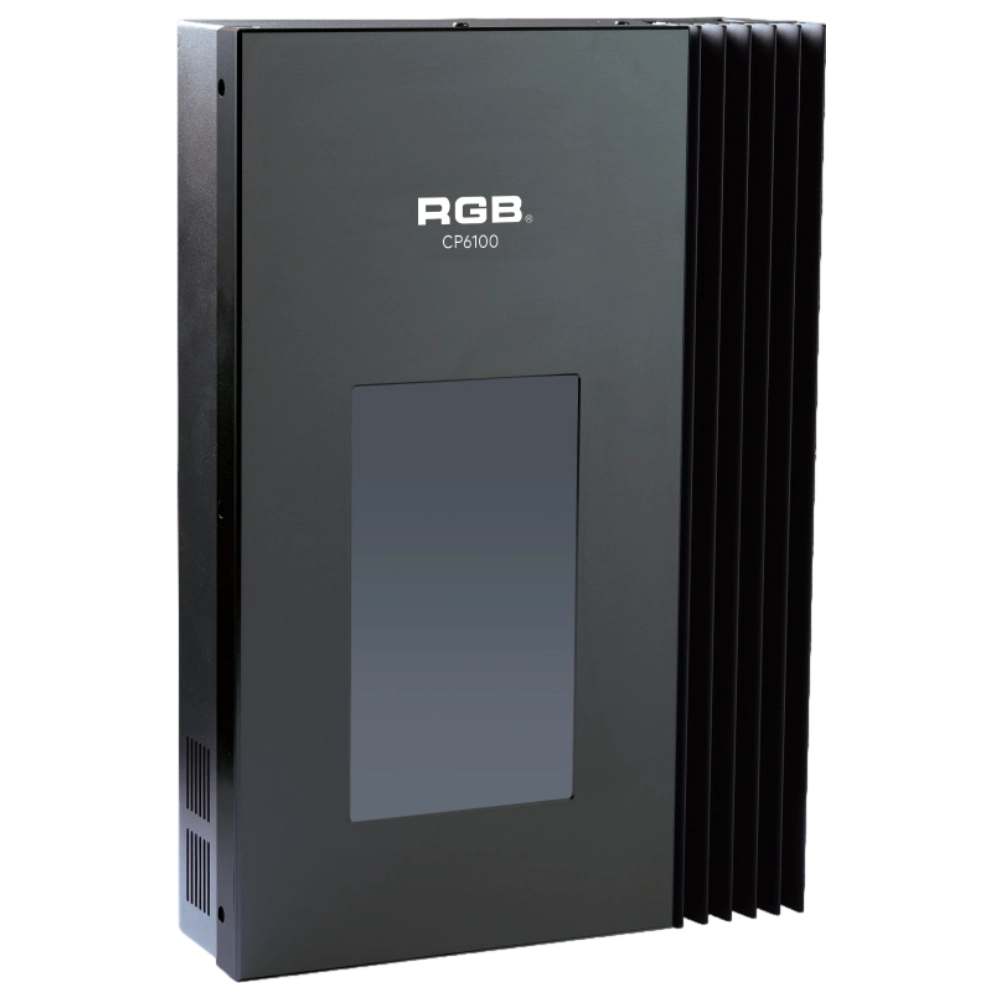
CP6100 Light Control System
The lighting control host is the main control device for theater stage lights, work lights, environmental lighting, commercial art lighting, sports venue lighting, and other places. By connecting the dedicated lighting control panels CP6104 and CP6108, it realizes the central control of the lighting system, supports a visual lighting control system, and intuitively displays the online and offline status of CP6100. Realize remote monitoring, editing, and setting of corresponding parameters.
It is widely applicable to theaters, cinemas, auditoriums, stadiums, museums, exhibition halls, cultural tourism performances, commercial art lighting, and other places.
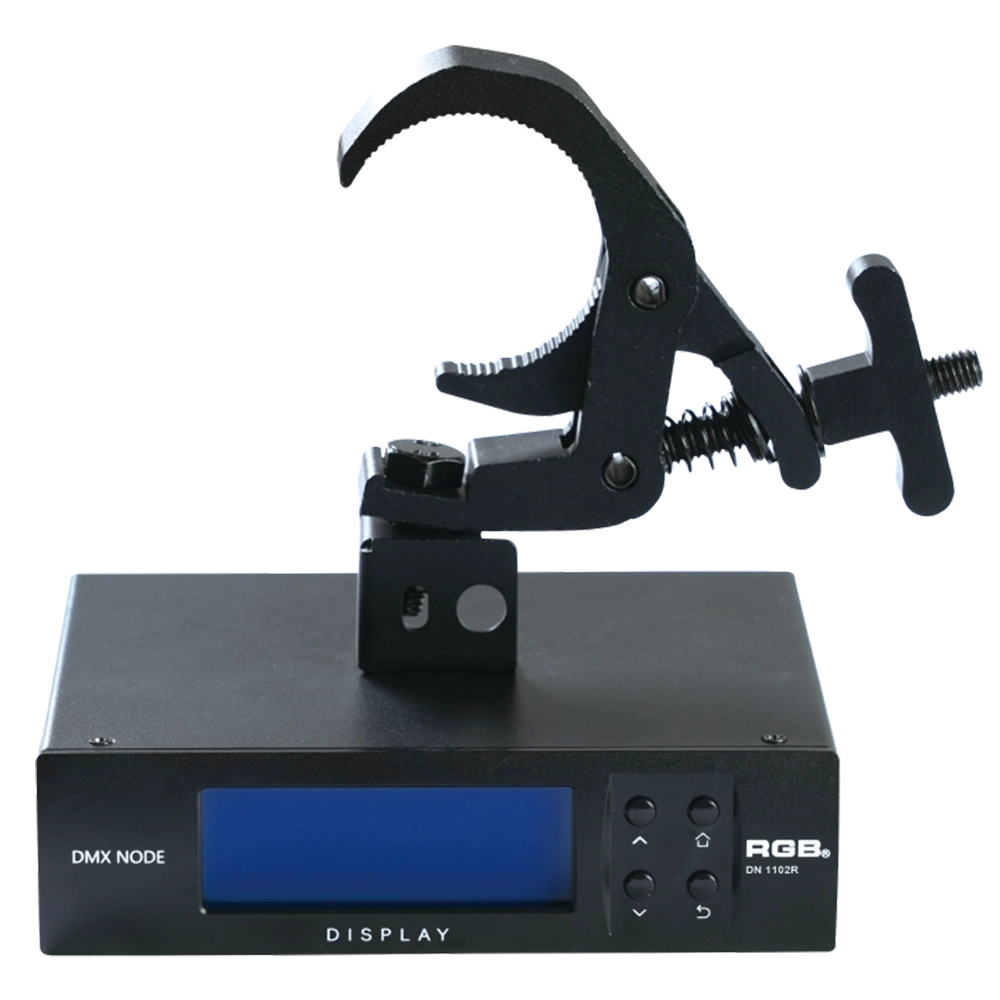
RDM Nodes
The DN series network decoder is a product of the lighting control system independently developed by RGB, featuring completely independent core technology and obtaining software copyrights. It seamlessly connects and decodes the sACN and Art-Net network protocols based on TCP/IP with the DMX-512 and RDM communication protocols. Supports a visual lighting control system, intuitively displaying the online and offline status of the DN series network decoders, and enabling remote monitoring, editing, and setting of corresponding parameters.
It is widely applied in theaters, concert halls, multi-functional halls, cultural and tourism performances, TV stations, gymnasiums, auditoriums, commercial art lighting, and other performance and cultural venues.
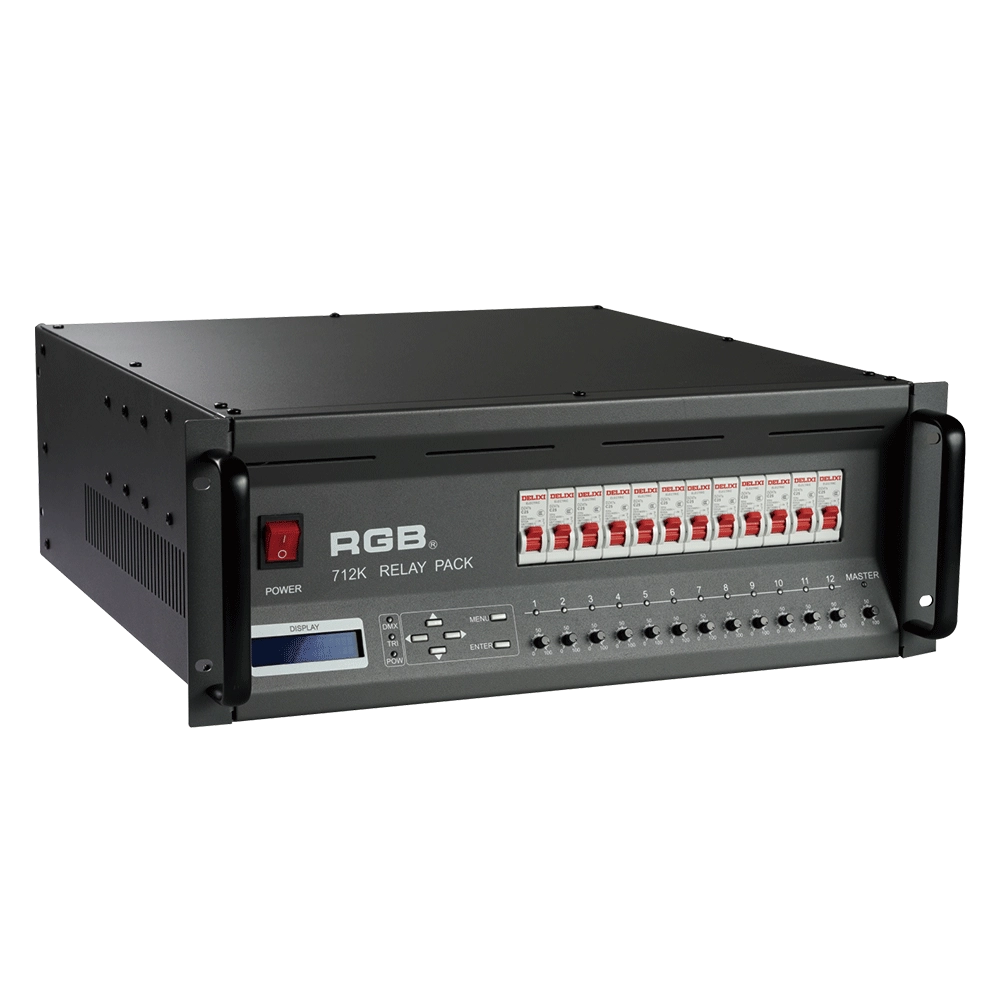
Alloy Relay Packs
High-performance DMX512 relay dimming unit with 512 addressable circuits, phase-loss protection, dual-signal amplification, 20A output per channel, and robust design for reliable stage and mobile lighting applications.
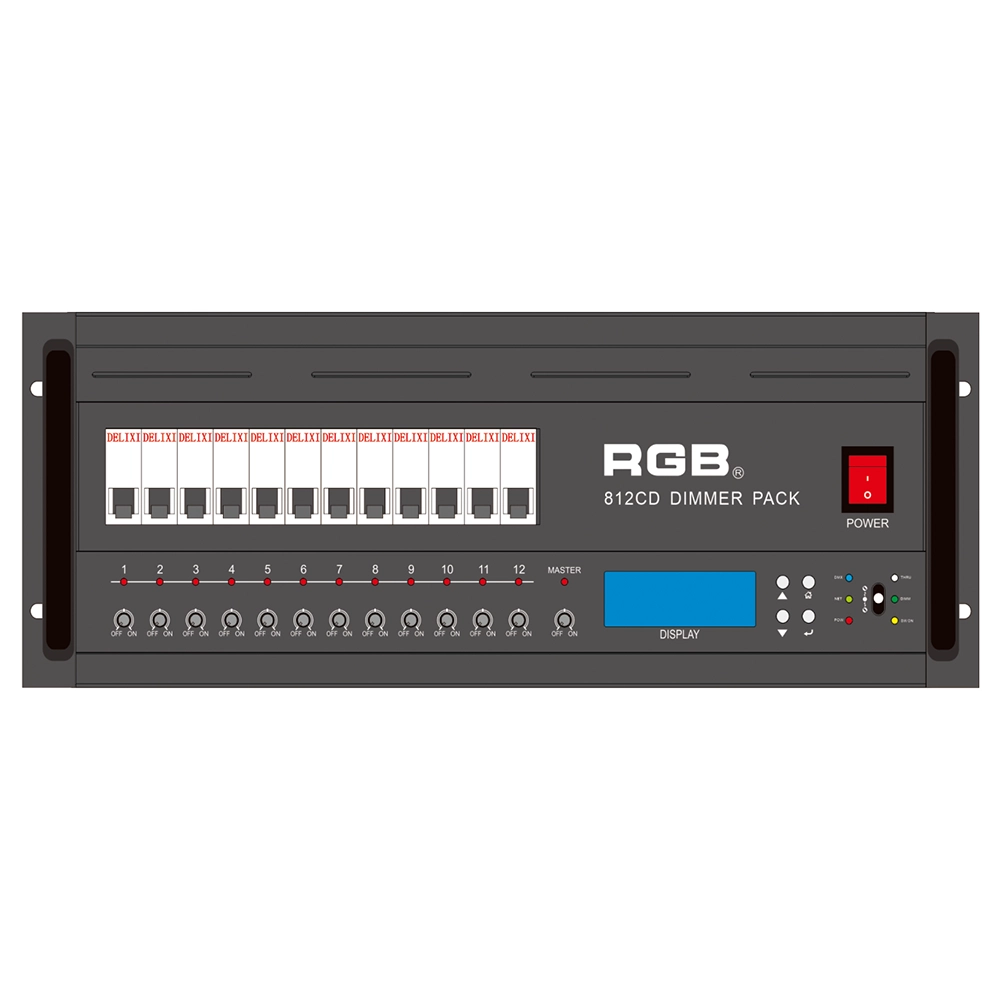
8 Series Intellight Dimmer/Relay Packs
RGB is the latest development and production of all digital, intelligent, and network dimming through the hybrid silicon box. It comes with six channels (806 silicon box), twelve channels (812 silicon box) with analog knob dimming, 49 DMX field recordings and replays (field backup function), and self-programming and recording field. RGB-8 silicon box with DMX512 digital signal input and RJ45 network input interface, with various types of dimming stations at home and abroad used. It is a powerful, stable performance and reliable work of a new generation of intelligent digital dimming through a hybrid silicon box.
Expert Support
Interested in learning more or need expert guidance related to this article? Fill in your details, and our team will provide tailored support.
Intelligent Control. Brilliant Performance.
RGB specializes in stage lighting control systems, delivering intelligent, reliable, and high-performance solutions for theaters and performance spaces worldwide.
Contact
Email:
Tel:
+86 20 3928 0245
+86 20 3928 0247
Address:
No.3, Huashan Road, Shilou Town, Panyu, Guangzhou, China.
Whatsapp: +8615975520131