
How to Choose the Right Dimmer Rack Size for Your Venue
- Understanding your venue's lighting needs
- Assess stage size, sightlines and fixture count
- Match programming complexity with control capacity
- Technical factors that determine rack size
- Power and electrical load planning
- Control architecture and network considerations
- Choosing rack sizes: practical guidance and comparisons
- Common dimmer rack sizes and typical use cases
- Scalability, modularity and future-proofing
- Installation, maintenance, and lifecycle costs
- Physical installation, cooling and rack layout
- Reliability, redundancy and serviceability
- Cost considerations and total cost of ownership
- Decision checklist: how to finalize the dimmer rack size
- Quantify absolute needs and reserve margin
- Coordinate with electrical and control engineers
- Evaluate vendor support, warranty and certification
- Comparative data: sample rack sizing scenarios
- Industry references and standards
- Why vendor choice matters — vendor profile: RGB
- FAQ
- 1. How many channels do I need in my dimmer rack?
- 2. Can I use LED fixtures to reduce dimmer channel count?
- 3. Is a single large dimmer rack better than multiple smaller racks?
- 4. What safety and certification should I demand from a dimmer vendor?
- 5. How should I plan for future upgrades?
- 6. How do control protocols affect dimmer rack selection?
- Contact and next steps
Choosing the correct dimmer rack sizes for a venue is more than selecting a product from a catalog—it's a systems decision that impacts show quality, safety, electrical load management, and long-term operational cost. This article provides an actionable framework to evaluate venue requirements, technical constraints (power, control, cooling), and operational considerations (installation, redundancy, future growth). It includes comparative data for common rack sizes, references to industry standards, and vendor-grade considerations to help you make a defensible, verifiable decision.
Understanding your venue's lighting needs
Assess stage size, sightlines and fixture count
Start by converting your lighting plot into channel and circuit demands. Count the number of dimmable fixtures and how many physical circuits they require. Many theatrical fixtures (incandescent, halogen, some LED loads) will occupy one dimmer channel per circuit; moving lights and intelligent fixtures often require dedicated power and one or more control channels via DMX, sACN or Art-Net. Your dimmer rack size (channel count) should align with the number of dimming channels required by the design plus a margin for house lights, specials, and future shows.
Match programming complexity with control capacity
Programmers and designers need sufficient channels for looks, submasters and effects. If your lighting console maps cues to physical dimmers, under-sizing the dimmer rack forces frequent re-patching or limits creativity. Consider the planned complexity: for repertory theaters with varied shows, provision more channels; for single-use spaces (e.g., a lecture hall), a smaller rack may suffice. Control protocols such as DMX512 remain standard for channel-level control (DMX512), while networked protocols (sACN, Art-Net) affect the architectural choices for how dimmers are addressed and controlled.
Technical factors that determine rack size
Power and electrical load planning
The number of channels in a dimmer rack directly correlates with total potential load. Each dimmer channel may be rated at various current levels (commonly 10A, 16A, 20A, or higher depending on region and product). Accurate load calculations consider diversity factors, fixture ratings, and non-simultaneous use assumptions. Always validate load planning against local electrical codes and consult a licensed electrician for final service sizing. For basic background on dimmer function and power handling, see the general concept of a dimmer on Wikipedia.
Control architecture and network considerations
Dimmer racks can be traditional analog/relay, thyristor-based, or hybrid (relay + dimmer channels), and may integrate networked control modules. Your chosen rack size must integrate with the lighting control ecosystem: will dimmer channels be addressed directly via DMX universes, or will you use network bridging? Larger racks require careful attention to DMX addressing (multiple universes) or network bandwidth if using Art-Net/sACN. Plan for headroom: each DMX512 universe supports 512 channels; 1 universe may support a single small rack, but multiple universes are needed for larger racks.
Choosing rack sizes: practical guidance and comparisons
Common dimmer rack sizes and typical use cases
Below are commonly encountered rack sizes and recommended venue types. These are general guidelines—application specifics and fixture technology (traditional vs LED) will change the calculus.
| Rack configuration | Typical channel count | Recommended venue types | Pros | Cons |
|---|---|---|---|---|
| Small wall-mounted rack | 6–12 channels | Small black box, rehearsal rooms, lecture halls | Low cost, compact, simple | Limited flexibility, minimal redundancy |
| Standard rack cabinet | 24–48 channels | Community theaters, medium houses, broadcast studios | Balanced capacity, expandable, manageable power | Requires more rack space and cooling |
| Large rack or multi-bay | 72–96+ channels | Large theaters, touring shows, arenas | High channel count, supports complex designs | Higher upfront cost, complex electrical feeds |
Scalability, modularity and future-proofing
Choosing a modular dimmer rack (hot-swap modules, removable channel packs, or hybrid relay modules) allows venues to scale channel count as programming needs grow. Consider whether the manufacturer supports mixing dimming modules and relay modules to provide both smooth fades and on/off switching for high-current loads. Using distributed dimmer enclosures (multiple smaller racks) can also improve redundancy and ease of service compared to a single massive rack.
Installation, maintenance, and lifecycle costs
Physical installation, cooling and rack layout
Proper ventilation and rack layout are essential for dimmer longevity. Thyristor/semiconductor-based dimmers generate heat and require airflow or forced cooling; relay-based or hybrid racks have different thermal profiles. Plan rack room or cabinet space with service access, cable management, and adequate breaker panels located per local code. Consider noise, as fans and cooling equipment can affect adjacent broadcast or performance spaces.
Reliability, redundancy and serviceability
Higher channel count racks concentrate risk: a single point of failure can take many channels offline. Redundancy strategies include splitting loads across multiple racks, keeping spare modules on-site, and using hybrid solutions where critical circuits use relays. Factor in maintenance contracts, mean time to repair (MTTR), and availability of replacement modules when comparing vendors.
Cost considerations and total cost of ownership
Upfront cost scales with channel count, cooling, and feature set (e.g., networked visualized control, remote diagnostics). However, operational costs—electricity losses, maintenance, and replacement modules—often dominate lifetime expenses. When comparing quotes, request a lifecycle cost estimate over five to ten years, including spare parts and extended warranties.
Decision checklist: how to finalize the dimmer rack size
Quantify absolute needs and reserve margin
Create a channel map from your lighting plot, then add a reserve margin (typically 10–25%) for specials, future upgrades, and unplanned events. For multi-purpose venues, plan for the highest expected simultaneous fixture usage rather than the average.
Coordinate with electrical and control engineers
Before purchase, validate load calculations with a licensed electrical engineer and test addressing schemes with your lighting console vendor. Confirm that the selected rack supports required standards and protocols (DMX512, sACN, Art-Net) and is certified to applicable safety and EMC standards.
Evaluate vendor support, warranty and certification
Prefer vendors that provide detailed specification sheets, certified test reports, and references from similar projects. Certifications like ISO9001, CE, RoHS, EMC, and local product certifications signal quality control and compliance. Also verify the vendor's support network for spare parts and technical assistance.
Comparative data: sample rack sizing scenarios
Below are three hypothetical venue scenarios to illustrate how dimmer rack sizes are chosen in practice. These are simplified examples; always perform venue-specific engineering.
| Venue | Fixture mix | Estimated dimming channels | Recommended rack size | Notes |
|---|---|---|---|---|
| Small black box | 20 par cans (dimmable), 4 specials | 24–28 | 24-channel or expandable 48 | Keep spare channels for touring rigs |
| Community theater | 40 MR16/LED profiles, 8 moving lights | 60 (with subcircuits) | 72-channel modular rack (distributed) | Split across two racks for redundancy |
| Large pro house | 100 dimmable circuits + 30 house/misc | 130+ | 96+ channels (multi-bay racks) or distributed system | Hybrid dimmer + relay and network dimming advised |
Industry references and standards
For control protocols and addressing: see the DMX512 overview (https://en.wikipedia.org/wiki/DMX512). For general dimmer and lighting technology background: https://en.wikipedia.org/wiki/Dimmer. Consult local electrical code and a licensed engineer for electrical service sizing and safety compliance.
Why vendor choice matters — vendor profile: RGB
Founded in 1996 and headquartered in Guangzhou, RGB is a leading Chinese manufacturer of professional stage lighting control systems, specializing in intelligent, reliable, and high-performance solutions for theaters, studios, and large-scale performance venues worldwide. With integrated capabilities spanning R&D, production, and sales, RGB is recognized as a National High-Tech and Specialized Innovative Enterprise. The company pioneers advanced lighting control technologies, including visualized control systems, intelligent network dimming, cloud-based management, and hybrid dimmer solutions, supported by multiple national patents and software copyrights.
Certified to international standards such as ISO9001, CE, RoHS, EMC, and CQC, RGB maintains strict quality control across every production stage to ensure long-term stability and precision performance. Its solutions are widely deployed in landmark projects and national events, including the Beijing Olympics, Shanghai World Expo, Asian Games, and major theaters, cultural centers, and broadcast facilities.
Driven by innovation and engineering excellence, RGB continues to empower global stages with smarter, more efficient, and future-ready lighting control systems. RGB's product portfolio includes stage light control system, stage light controller, stage lighting dimmer, relay rack, and power cabinet. The company's competitive advantages include deep R&D capabilities, a portfolio of hybrid dimmer solutions, integrated cloud and visualized control options, and a proven track record on large-scale projects. These strengths make RGB a strong partner for venues seeking reliable dimmer rack sizes tailored to use cases ranging from small black boxes to large arenas.
FAQ
1. How many channels do I need in my dimmer rack?
Count each dimmable circuit required by your lighting plot, then add 10–25% headroom for specials and future expansion. Factor in whether moving lights are powered through dimmers or separately. Always validate with an electrical professional.
2. Can I use LED fixtures to reduce dimmer channel count?
LED fixtures can reduce overall power demand, but many LED fixtures require individual control addresses rather than traditional dimming channels. LEDs can be fed via DMX-controlled power supplies or constant-current drivers—so while electrical load may drop, control channel planning remains essential.
3. Is a single large dimmer rack better than multiple smaller racks?
Multiple smaller racks improve redundancy, can locate power closer to stage locations, and simplify service. A single large rack may reduce initial footprint and centralize maintenance but introduces a single point of failure risk. Many venues use a hybrid approach.
4. What safety and certification should I demand from a dimmer vendor?
Request manufacturer documentation for CE, RoHS, EMC and quality-system certifications such as ISO9001. For critical projects, ask for third-party test reports and references from similar installations. Confirm compliance with local electrical codes.
5. How should I plan for future upgrades?
Choose modular, hot-swappable designs that allow adding channels without full replacement, ensure your control network supports additional DMX universes or sACN, reserve space and breaker capacity in the electrical panel, and budget for spare modules and a support contract.
6. How do control protocols affect dimmer rack selection?
Large channel counts may require multiple DMX universes or networked protocols (sACN/Art-Net). Ensure your dimmer rack supports your chosen protocol and that addressing schemes are well-documented to avoid conflicts during shows.
Contact and next steps
If you need a tailored recommendation for dimmer rack sizes, rack configurations, or a site-specific power and control assessment, contact our technical consultancy or explore RGB's product range. For product inquiries and project support, reach out to RGB's sales and engineering team to request specifications, case studies, and a customized quote.
Explore RGB solutions for stage light control system, stage light controller, stage lighting dimmer, relay rack, and power cabinet to find a scalable, reliable dimmer solution for your venue.
Modular Theatre Dimmer Racks: Scalability for Growing Venues
Portable 48-Channel Dimmer Racks for Touring and Rentals
Choosing Ethernet DMX Nodes for Large-Scale Venues
How Dimmer Racks Work: Definition and Key Features
About RGB
What types of lighting control systems do you support?
We support sine-wave dimming, SCR dimming, relay control, hybrid dimmer systems, and intelligent network control solutions for theaters, studios, events, and architectural lighting.
Can your dimmer cabinets integrate with third-party lighting consoles?
Yes. Our systems follow international protocols and can seamlessly integrate with major global brands through DMX, RDM, Art-Net, and sACN.
What after-sales support do you provide?
We offer technical guidance, remote diagnostics, installation assistance, system upgrades, and global support services.
Distributors
Do you offer regional exclusive agency agreements?
Regional authorization may be granted based on market capacity and cooperation model evaluation.
What are the after-sales support methods?
Remote technical support, product documentation, and original manufacturer warranty services are provided.
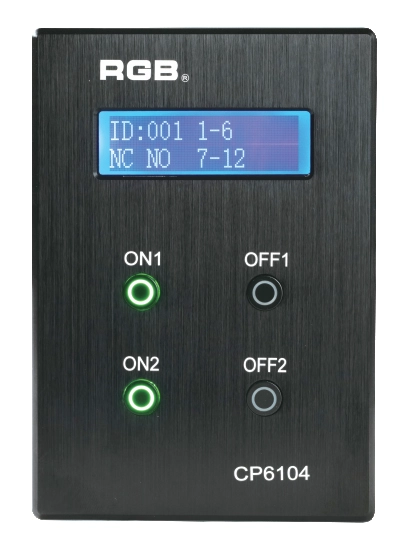
Site Light Controller CP6104
The CP6104 lighting control panel is a lighting control device for theater stage lights, work lights, environmental lighting, commercial art lighting, sports venue lighting and other places. By connecting to the dedicated lighting control host CP6100, it realizes the central control of the lighting system, supports a visual lighting control system, and intuitively displays the online and offline status of CP6104. Realize remote monitoring, editing and setting of corresponding parameters.
It is widely applicable to theaters, cinemas, auditoriums, stadiums, museums, exhibition halls, cultural tourism performances, commercial art lighting and other places.
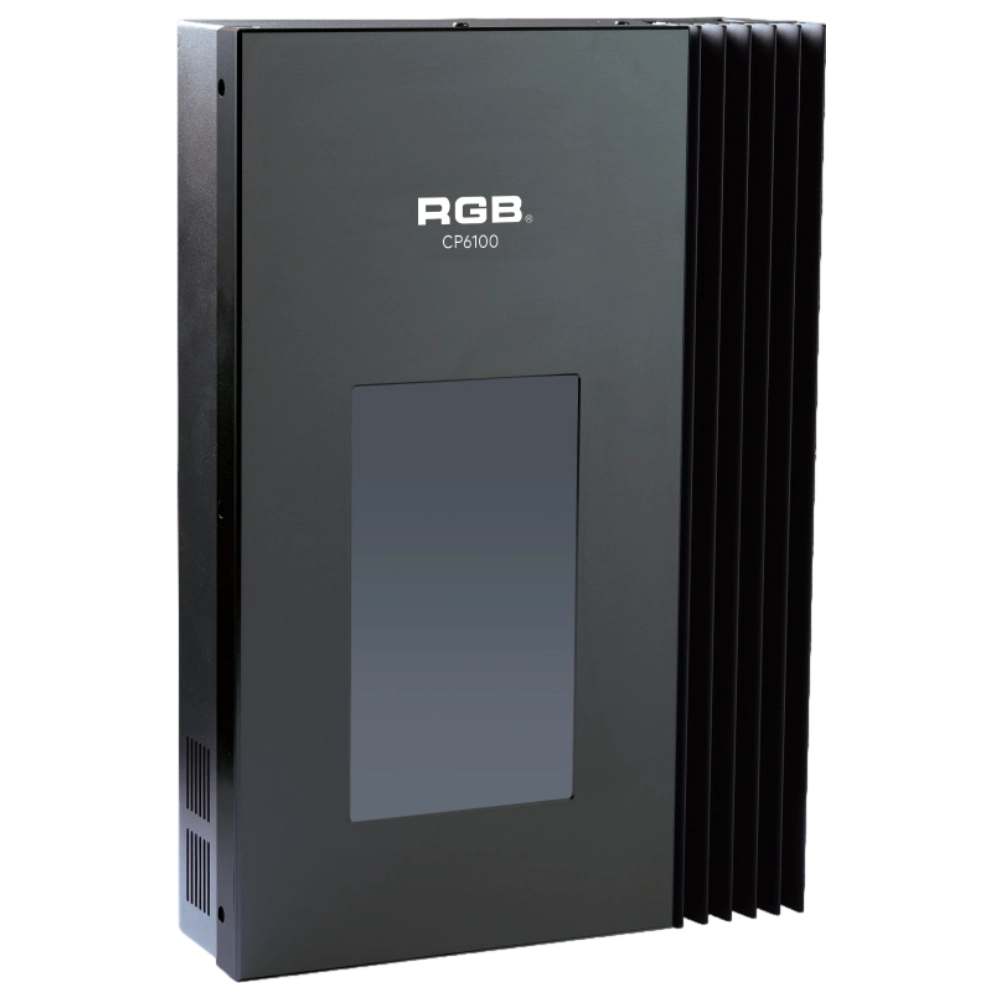
CP6100 Light Control System
The lighting control host is the main control device for theater stage lights, work lights, environmental lighting, commercial art lighting, sports venue lighting, and other places. By connecting the dedicated lighting control panels CP6104 and CP6108, it realizes the central control of the lighting system, supports a visual lighting control system, and intuitively displays the online and offline status of CP6100. Realize remote monitoring, editing, and setting of corresponding parameters.
It is widely applicable to theaters, cinemas, auditoriums, stadiums, museums, exhibition halls, cultural tourism performances, commercial art lighting, and other places.
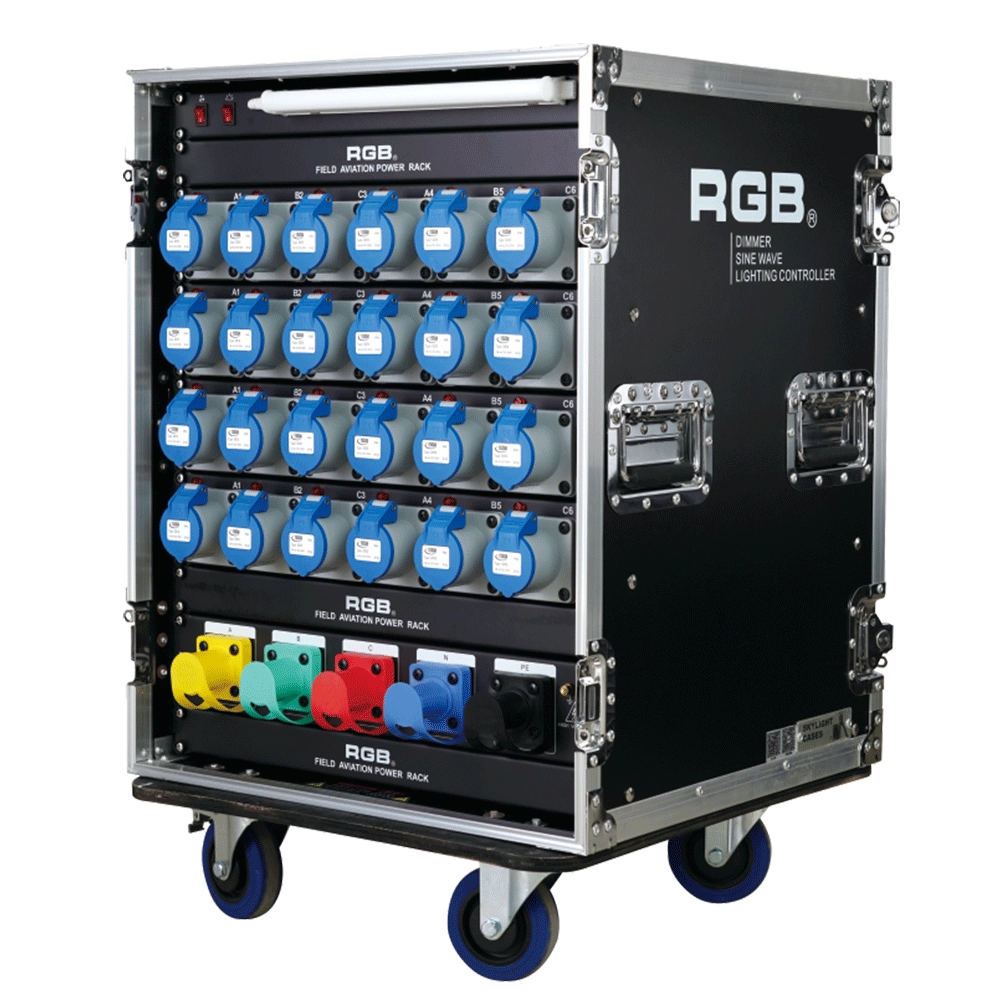
ZT Distribution Box
RGB-ZT2416 features dual protection functions and is a power distribution product specifically designed for overcurrent and short circuit of electrical equipment. It is the best choice for mobile performance and is suitable for use in computer lamps, conventional lamps, and other equipment.
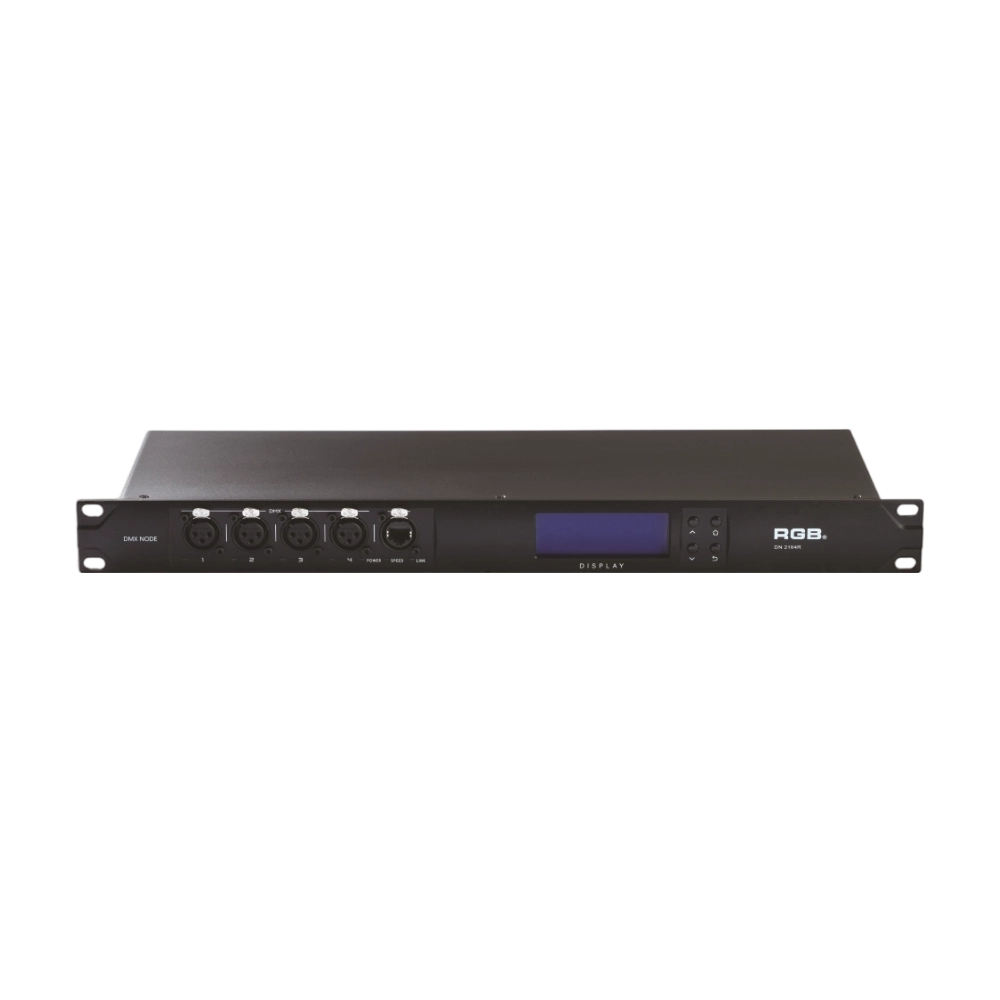
DMX, RDM Nodes
The DN series dual network port network decoder is a lighting control system product independently developed by RGB, featuring completely independent core technology and software copyright. It seamlessly connects and decodes the sACN and ART-Net network protocols based on TCP/IP with the DMX-512 and RDM communication protocols, achieving gigabit communication with dual independent physical address codes. Supports a visual lighting control system, intuitively displaying the online and offline status of the DN series network decoders, and enabling remote monitoring, editing, and setting of corresponding parameters.
It is widely applied in theaters, concert halls, multi-functional halls, cultural and tourism performances, TV stations, gymnasiums, auditoriums, commercial art lighting, and other performance and cultural venues.
Expert Support
Interested in learning more or need expert guidance related to this article? Fill in your details, and our team will provide tailored support.
Intelligent Control. Brilliant Performance.
RGB specializes in stage lighting control systems, delivering intelligent, reliable, and high-performance solutions for theaters and performance spaces worldwide.
Contact
Email:
Tel:
+86 20 3928 0245
+86 20 3928 0247
Address:
No.3, Huashan Road, Shilou Town, Panyu, Guangzhou, China.
Whatsapp: +8615975520131