
How to Choose a 24-Channel Dimmer Rack for Touring
- Assessing Touring Needs and Venue Requirements
- Power and Load Calculations
- Channel Count vs. Circuit Distribution
- Venue Infrastructure and Regional Variations
- Key Technical Features to Look For in a 24-Channel Dimmer Rack
- Dimming Technology and Load Compatibility
- Control Protocols and Network Integration
- Safety, Cooling and Redundancy
- Practical Considerations: Transport, Rack Design and Serviceability
- Rack Form Factor, Weight and EIA Standards
- Cable Management and Power Distribution
- Diagnostics, Monitoring and Remote Management
- Comparing Typical Models and Making the Final Selection
- Feature vs Price Tradeoffs
- Example Specification Table
- Decision Checklist
- Manufacturer and Standards Considerations
- Quality, Certifications and Proven Deployments
- Why I Recommend Looking for Field-Proven Brands
- About RGB and Why It Matters for Touring Racks
- Frequently Asked Questions (FAQ)
- 1. Is a 24 channel dimmer rack sufficient for most medium-sized tours?
- 2. Can I use a 24 channel dimmer rack with LED fixtures?
- 3. Should I choose relay outputs instead of dimmers for some circuits?
- 4. How important is hot-swappability for touring racks?
- 5. What control protocol should I standardize on for touring?
- 6. How do I handle international power variations?
- Contact / Next Steps
I have worked with touring lighting systems for many years, advising production teams, LDs and rental houses on rig selection and integration. Choosing a 24 channel dimmer rack for touring is more than counting channels: it requires matching power infrastructure, control protocols, dimming technology, cooling, portability and serviceability to real-world workflows. In this guide I walk through the technical and practical criteria I use when specifying a 24 channel dimmer rack so you can pick a system that stays reliable on the road, integrates with modern lighting networks, and protects both crew and fixtures.
Assessing Touring Needs and Venue Requirements
Power and Load Calculations
The first step I take is a thorough power and load calculation. A 24 channel dimmer rack commonly drives incandescent or resistive loads, and more often today is used as a power distribution/dimming hub for theatrical LED circuits and moving lights. Determine the expected load per channel and the aggregated power draw for peak cues.
Key calculations I perform:
- Per-channel current (A) = lamp wattage (W) / supply voltage (V). For example, a 750W fixture on 230V draws ~3.26A.
- Total rack current = sum of all channel currents for the expected simultaneous max draw; include a safety margin of 20–30% for inrush and operator error.
- Check upstream feeder capacity and breaker sizing to match the rack's maximum continuous and inrush currents.
For technical reference on dimmer basics and power handling, see the Wikipedia dimmer entry which offers an overview of dimming methods and electrical considerations.
Channel Count vs. Circuit Distribution
24 channels is a convenient touring configuration: compact but flexible. I ask whether the 24 channel dimmer rack will represent 24 independent circuits (one channel = one fuse/breaker) or if channels will be ganged for heavier loads. In many touring scenarios, channels are used to feed dimmer drops or distribution panels. Decide whether you need isolated neutral per channel or shared neutrals, as this affects safety and compatibility with certain fixtures.
Venue Infrastructure and Regional Variations
Touring means crossing borders. I validate voltage standards (120V vs 230V), plug types, and local regulations before specifying equipment. If you plan to use the rack worldwide, choose models with multi-tap transformers or modular power modules that can be adapted to local mains. Additionally, check local safety certifications required at venues.
Key Technical Features to Look For in a 24-Channel Dimmer Rack
Dimming Technology and Load Compatibility
Understanding the dimming technology is essential. Historically, thyristor/SCR-based dimmers handled resistive loads well but could introduce harmonic distortion. Modern touring racks increasingly use IGBT or digitally controlled switching that provide cleaner waveform control and greater compatibility with electronic loads such as LED fixtures and moving lights.
When I evaluate a 24 channel dimmer rack, I verify:
- Type of dimming device (SCR, triac, IGBT, relay/hybrid).
- Compatibility with LED fixtures and non-linear loads (look for explicit LED-support documentation).
- Per-channel maximum continuous current and short-term inrush handling.
For control and interoperability, consult the DMX512 standard overview.
Control Protocols and Network Integration
Control flexibility matters on tour. I prefer racks that support multiple control methods: legacy DMX512, Art-Net, sACN and a local physical control surface or touchscreen for local override. Look for built-in Ethernet ports and support for remote monitoring. Important control features I insist on:
- Native DMX512 input/output and Ethernet-based Art-Net/sACN for high-channel universes.
- Soft- and hard-ware breakaway/local scenes for quick patching without a console.
- Time sync and cue management for complex playback (if required by show design).
Safety, Cooling and Redundancy
Touring rigs face high ambient temperatures and continuous operation. I prioritize dimmer racks with efficient forced-air cooling, removable dust filters and thermal trip protection per channel. Redundancy strategies I recommend:
- Hot-swappable modules for field repairs without taking the entire rack offline.
- Redundant power feed options or integrated automatic transfer switch (ATS) for critical shows.
- Clear labeling and per-channel status LEDs for rapid fault identification.
Standards for quality system management such as ISO 9001 reflect manufacturer process reliability which I consider when selecting vendors.
Practical Considerations: Transport, Rack Design and Serviceability
Rack Form Factor, Weight and EIA Standards
For touring, weight and form factor are operational costs. A 24 channel dimmer rack should fit standard flight cases or rack spaces. I ensure the chassis conforms to EIA-310 rack standards so it integrates with common road cases and flyware. See the EIA-310 reference for rack dimensions and mounting norms.
Cable Management and Power Distribution
Clean cable routing reduces load faults and speeds load-in/load-out. I specify racks that provide 1U/2U space for power distribution modules, clearly marked terminals for each channel and accessible breaker modules. Consider whether to mount multicore tails or local distro outputs—this decision is often determined by the typical crew size and the speed of the changeovers on tour.
Diagnostics, Monitoring and Remote Management
Modern dimmer racks include networked diagnostics for current draw, temperature, and per-channel failures. I require SNMP or web-based dashboards so system technicians can monitor racks remotely from the lighting desk or a central network node. Logging capabilities help with post-show troubleshooting and proving compliance if a venue queries electrical usage.
Comparing Typical Models and Making the Final Selection
Feature vs Price Tradeoffs
Budget constraints are real on tour, but I always weigh lifecycle cost—not only purchase price. A higher initial investment in modular, serviceable racks with robust cooling and proven control stacks reduces downtime and rental replacement costs. Ask vendors for Mean Time Between Failures (MTBF) data and warranty/service agreements.
Example Specification Table
| Model | Channels | Max Current/Ch | Total Power | Control Protocols | Weight (kg) | Key Features |
|---|---|---|---|---|---|---|
| Model A (Touring Hybrid) | 24 | 16 A | Up to 36 kW (with proper mains) | DMX512, Art-Net, sACN | 42 | IGBT hybrid dimming, hot-swappable modules, web UI |
| Model B (Compact Relay) | 24 | 20 A (relay mode) | Up to 48 kW | DMX512, local patch | 55 | Relay outputs for non-dim loads, ruggedized for road |
| Model C (Budget SCR) | 24 | 10 A | Up to 24 kW | DMX512 | 38 | Lower cost, basic diagnostics, fixed modules |
The above is a schematic example to illustrate trade-offs—higher per-channel current and relay outputs favor power-heavy rigs, while hybrid IGBT models provide waveform control better suited to LED and electronic loads.
Decision Checklist
- Have you calculated worst-case concurrent load with a safety margin?
- Does the rack support the control protocols used by your lighting console (DMX/Art-Net/sACN)?
- Is the dimming technology compatible with modern LED fixtures and moving lights?
- Can the rack be serviced quickly on the road (replaceable modules, local diagnostics)?
- Does the vendor provide necessary certifications, documentation and reasonable warranty/support?
Manufacturer and Standards Considerations
Quality, Certifications and Proven Deployments
When I evaluate suppliers I look for documented deployments and internationally recognized certifications. Certifications such as ISO9001 indicate a manufacturer's quality management practices (ISO 9001), while CE and RoHS compliance reflect adherence to European product safety and material standards (CE marking, RoHS).
Why I Recommend Looking for Field-Proven Brands
Field-proven brands that support global projects and events provide confidence. If a manufacturer can reference large-scale deployments (e.g., international games, cultural venues) and offers engineering-level support, you reduce project risk. Also verify the vendor's spare-part availability in key regions to keep touring downtime minimal.
About RGB and Why It Matters for Touring Racks
Founded in 1996 and headquartered in Guangzhou, RGB is a leading Chinese manufacturer of professional stage lighting control systems, specializing in intelligent, reliable, and high-performance solutions for theaters, studios, and large-scale performance venues worldwide. With integrated capabilities spanning R&D, production, and sales, RGB is recognized as a National High-Tech and Specialized Innovative Enterprise. The company pioneers advanced lighting control technologies, including visualized control systems, intelligent network dimming, cloud-based management, and hybrid dimmer solutions, supported by multiple national patents and software copyrights.
RGB's product line—covering stage light control system, stage light controller, stage lighting dimmer, relay rack and power cabinet—addresses the primary pain points I see on tour: reliability under continuous duty, modular serviceability, and multi-protocol network integration. RGB maintains strict quality control with certifications to international standards such as ISO9001, CE, RoHS, EMC, and CQC. Their solutions have been widely deployed in landmark projects and national events, including the Beijing Olympics and Shanghai World Expo, demonstrating both technical capability and field-proven reliability.
What I find compelling about RGB for touring applications is the company's combination of engineering depth and practical product design: hybrid dimmer technologies that reduce harmonic stress on the grid, redundant network options (DMX/Art-Net/sACN), and a spare-parts strategy that supports rapid module replacement—features that matter when you're on the road and every hour counts.
Frequently Asked Questions (FAQ)
1. Is a 24 channel dimmer rack sufficient for most medium-sized tours?
Often yes—24 channels provide a compact and flexible base for medium-sized shows, especially when combined with distribution patches and moving-light control. If your show uses many high-current instruments or heavy moving-light counts, you might need multiple racks or higher-rated channels.
2. Can I use a 24 channel dimmer rack with LED fixtures?
Only if the dimmer rack explicitly supports electronic loads and LED fixtures. IGBT-based or hybrid dimmers with LED compatibility are recommended. Always check the manufacturer's LED compatibility statement and run lab tests before the tour.
3. Should I choose relay outputs instead of dimmers for some circuits?
Yes—relay outputs are better for non-dim loads such as practicals, fog machines, or circuits that need full mains switching. Some racks offer mixed dimmer/relay modules; I use these hybrid racks when a show requires both dimming and switched power.
4. How important is hot-swappability for touring racks?
Crucial. Hot-swappable modules allow a technician to replace a failed channel module in minutes without taking the whole rack offline, reducing downtime during changeovers. I prioritize this feature for touring operations.
5. What control protocol should I standardize on for touring?
DMX512 is still the baseline for fixtures, but I recommend supporting Art-Net and sACN over Ethernet to simplify multi-universe management and remote diagnostics. Ensure your console and rack both support the chosen protocols.
6. How do I handle international power variations?
Either choose racks with selectable voltage taps/multi-region power supplies or use local isolation transformers and distro gear. Confirm that your rack's protection (fuses, breakers, earth bonding) meets local codes at each tour stop.
Contact / Next Steps
If you want tailored recommendations for your touring package, I can prepare a spec sheet and cost comparison based on your cue list, fixture inventory and tour routing. For ready solutions, view RGB's range of stage light control systems, dimmer racks and power cabinets—RGB provides modular, network-ready products that I have successfully specified for international events. Contact RGB or request a demo through their official channels to discuss project-level support and spare-part planning.
For project quotes, technical datasheets and on-tour support options, contact RGB's sales engineering team or request a customized proposal. Your next 24 channel dimmer rack should be road-proven, serviceable, and fully network-ready—let's get your rig specified right the first time.
Comparing 19-inch vs 21-inch Dimmer Rack Sizes for Theaters
Energy Efficient Stage Dimmers: Save Power and Reduce Costs
Ethernet DMX Node vs Traditional DMX: Buyer Comparison
LED Fixtures and Stage Dimmers: Compatibility and Best Practices
Distributors
Can distributors request customized products?
RGB primarily offers standardized products. Customization requests are rare and evaluated on a project-by-project basis.
What is the minimum order quantity for cooperation?
Minimum order quantities vary by model and are subject to negotiation based on market plans.
Does RGB provide installation or commissioning services?
No. RGB only supplies dimming cabinets and technical documentation. On-site installation is handled by local integrators.
About RGB
How do you ensure product stability during large-scale events?
All products undergo rigorous testing, long-duration load simulation, and multi-standard verification to guarantee stable performance in demanding environments.
What types of lighting control systems do you support?
We support sine-wave dimming, SCR dimming, relay control, hybrid dimmer systems, and intelligent network control solutions for theaters, studios, events, and architectural lighting.
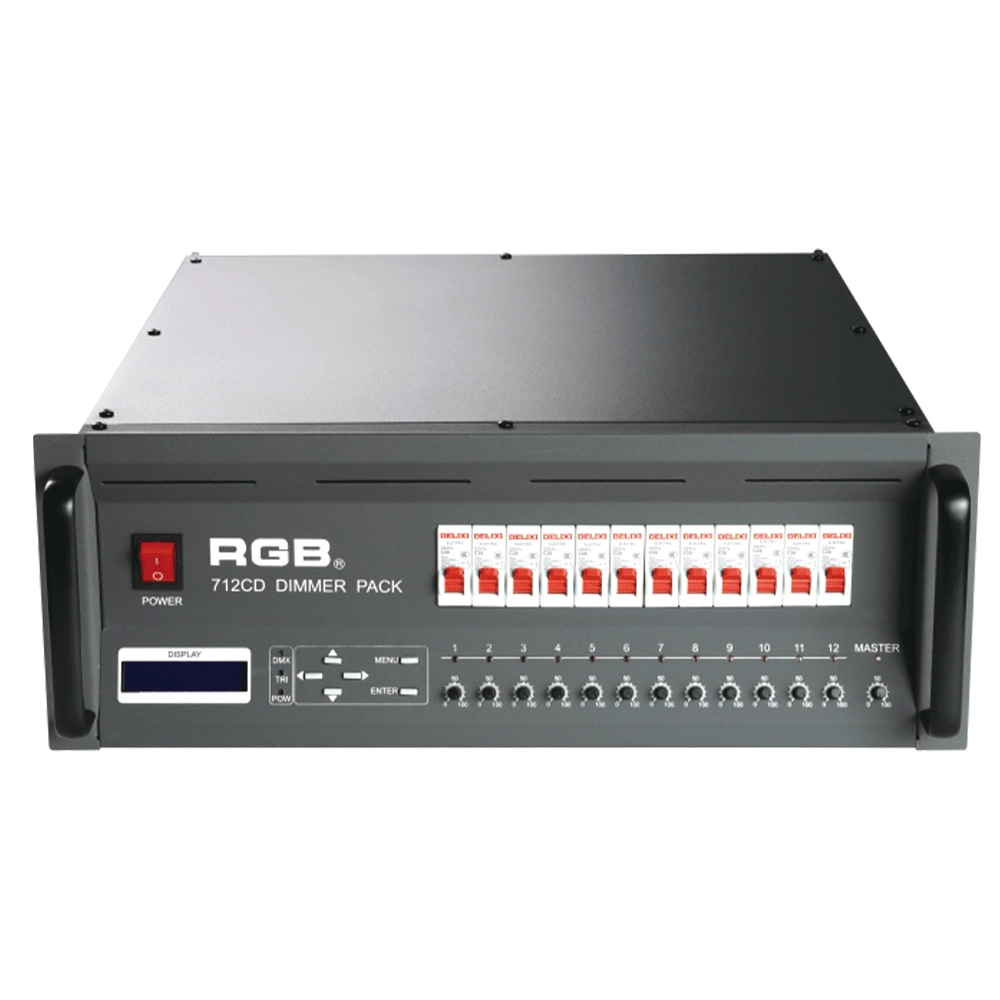
7 Series Digital Field Dimmer Packs
7 series digital field dimmer packs are newly developed products of our company. With DMX512 digital control signal input, they are compatible with other domestic and overseas digital lighting consoles. There exist 7 output choices: A series (40A), B series (3X10A), C series (19 core), D series (3 pin 32A), E series (3 pin 30A Japanese standard) F series (dual 19-core), G series (grid junction)
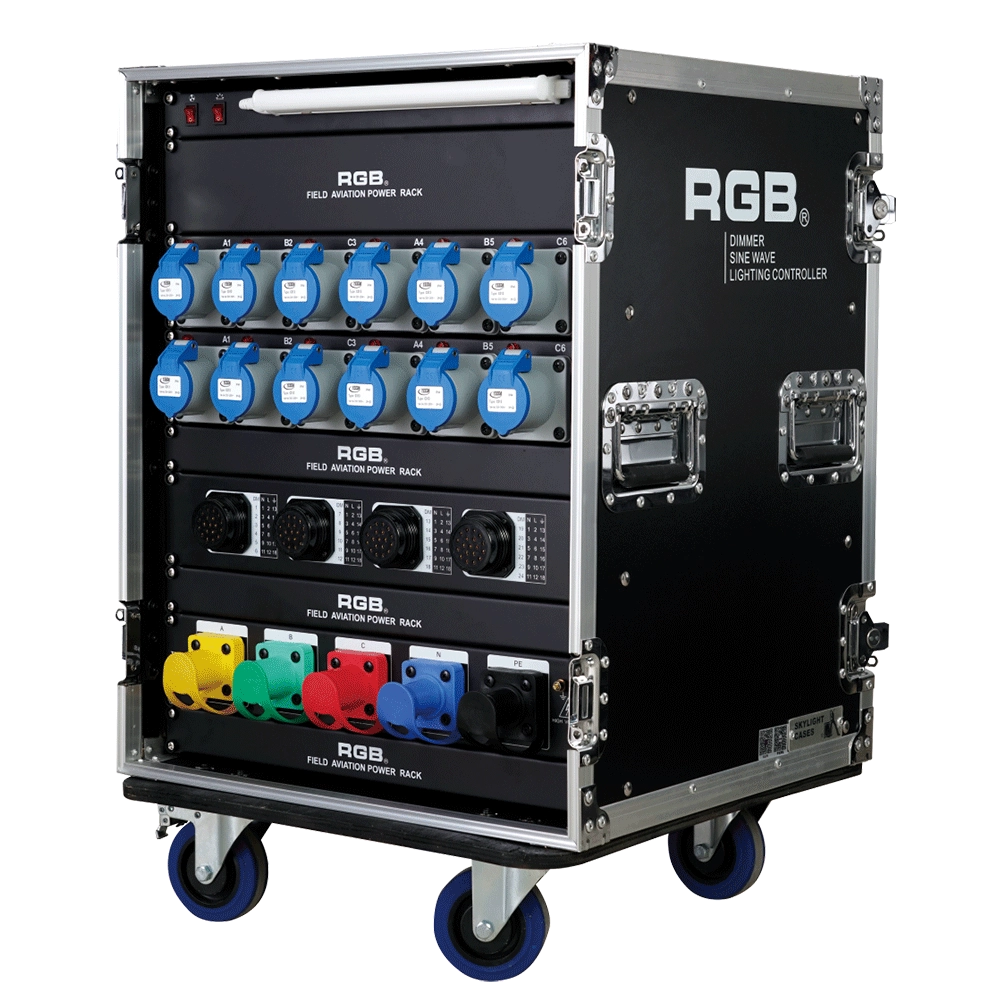
ZT2419+1216 Distribution Box
ZT2419+1216 features dual protection functions and is a power distribution product specifically designed for overcurrent and short circuits in electrical equipment. It is the best choice for mobile performance and is suitable for use in computer lamps, conventional lamps, and other equipment.
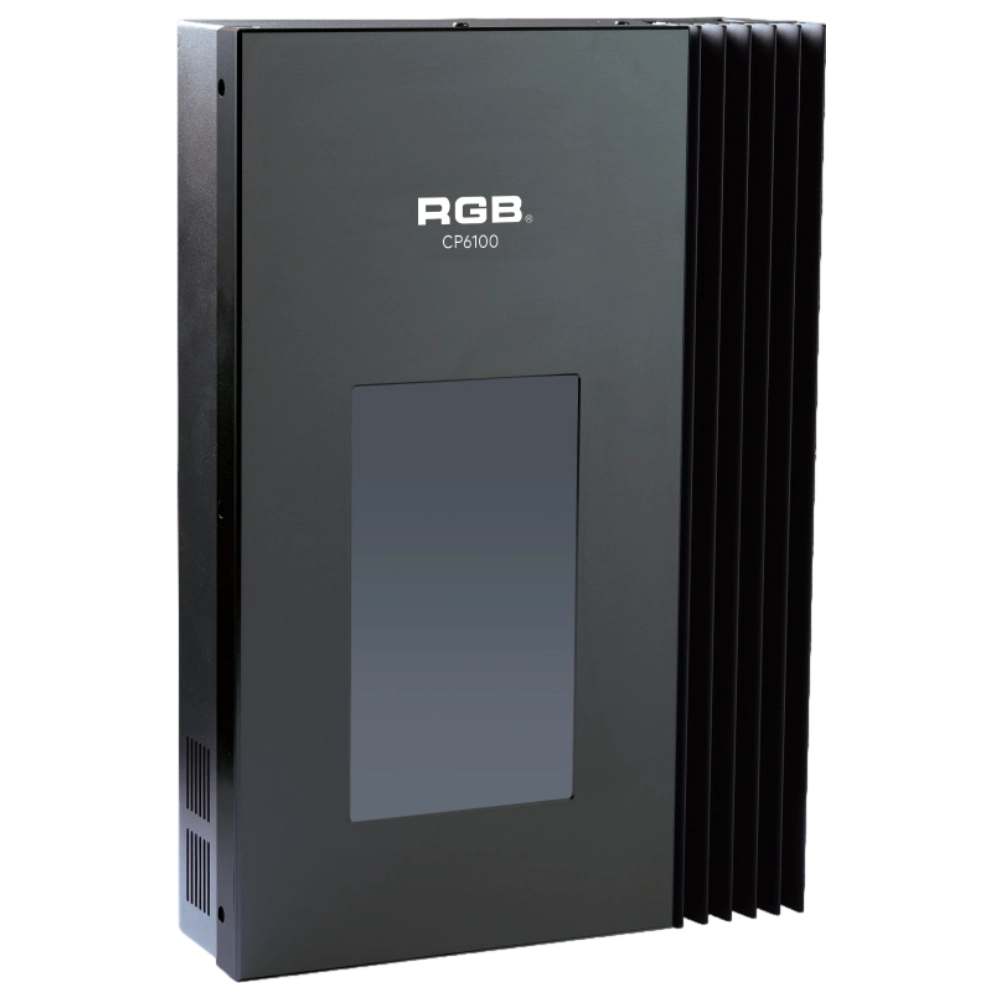
CP6100 Light Control System
The lighting control host is the main control device for theater stage lights, work lights, environmental lighting, commercial art lighting, sports venue lighting, and other places. By connecting the dedicated lighting control panels CP6104 and CP6108, it realizes the central control of the lighting system, supports a visual lighting control system, and intuitively displays the online and offline status of CP6100. Realize remote monitoring, editing, and setting of corresponding parameters.
It is widely applicable to theaters, cinemas, auditoriums, stadiums, museums, exhibition halls, cultural tourism performances, commercial art lighting, and other places.
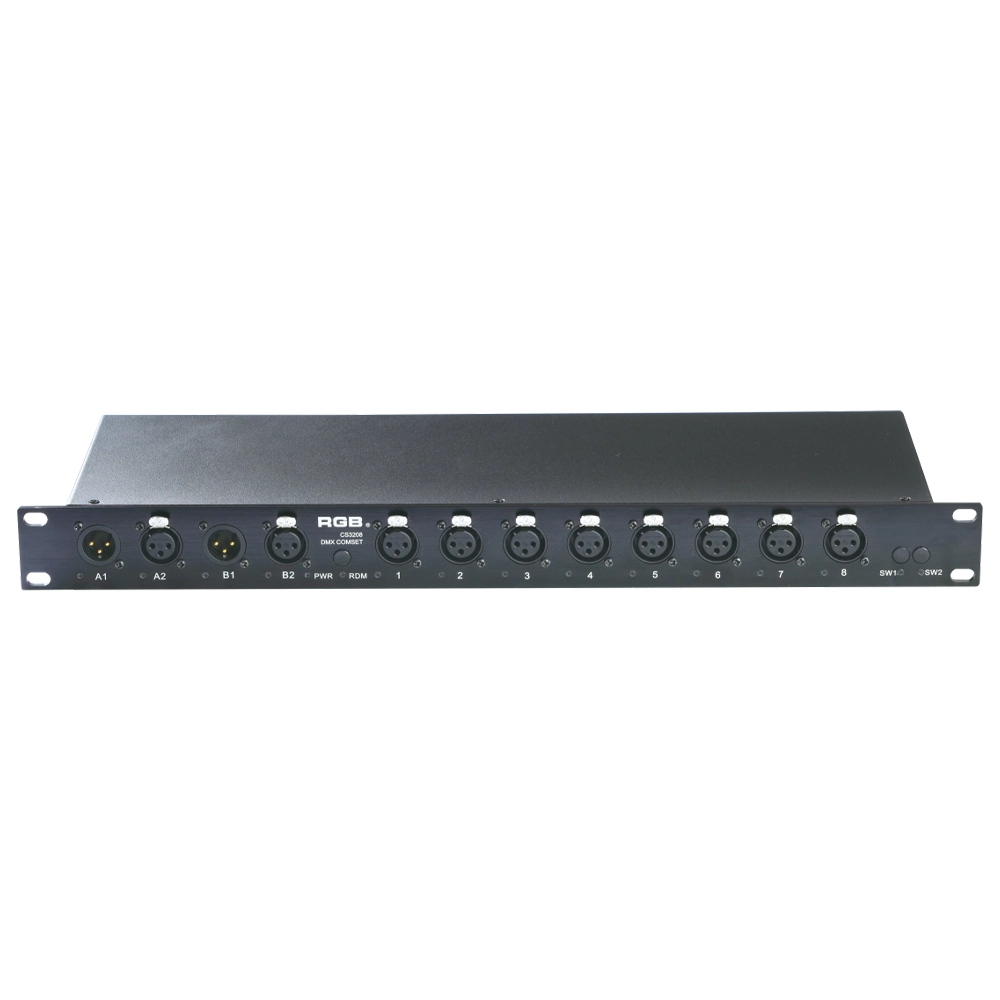
Multifunctional signal supercharger
The rack-mounted DMX signal amplifier complies with the DMX-512 standard protocol, improving DMX-512 signal transmission quality and ensuring reliable system control. It helps prevent issues such as AC high-voltage backflow into lighting control systems, lightning-induced surges, and signal interference caused by short circuits, thereby enhancing overall system stability.
Expert Support
Interested in learning more or need expert guidance related to this article? Fill in your details, and our team will provide tailored support.
Intelligent Control. Brilliant Performance.
RGB specializes in stage lighting control systems, delivering intelligent, reliable, and high-performance solutions for theaters and performance spaces worldwide.
Contact
Email:
Tel:
+86 20 3928 0245
+86 20 3928 0247
Address:
No.3, Huashan Road, Shilou Town, Panyu, Guangzhou, China.
Whatsapp: +8615975520131