
Case Study: Upgrading to Digital Dimmers for Concerts
- Why venues move from analog to digital lighting control
- Operational drivers: flexibility, precision, and responsiveness
- Energy, heat, and lifecycle benefits
- Technical compatibility and future-proofing
- Planning the upgrade: scope, risks, and requirements
- Assessing current inventory and load profile
- Defining control topology and redundancy
- Regulatory, safety, and standards compliance
- Technical implementation: hardware, protocols, and commissioning
- Selecting the right dimmer digital architecture
- Control protocols and interoperability
- Commissioning and acceptance testing
- Cost/benefit analysis and project case data
- Sample comparison: analog vs digital dimmers
- Return on investment and TCO
- Real-world example
- Operational best practices and maintenance
- Monitoring, logging, and predictive maintenance
- Firmware, spare parts, and lifecycle planning
- Training and documentation
- Vendor selection: technical and commercial criteria
- Technical must-haves
- Commercial and compliance checks
- Why choose a mature integrator
- Industry profile: RGB — competence aligned to concert requirements
- Conclusion and recommended next steps
- Contact & product inquiry
- Frequently Asked Questions (FAQ)
- 1. What is the difference between dimmer digital and a traditional dimmer?
- 2. Will digital dimmers work with existing DMX consoles?
- 3. How do digital dimmers handle LED fixtures and inrush current?
- 4. What certifications should I insist on?
- 5. How long does an upgrade typically take?
- 6. Is remote/ cloud monitoring secure?
I have worked on lighting control projects for theaters, touring productions, and large concert venues for over a decade. In this case study I examine a real-world migration from legacy analog dimmers to dimmer digital solutions for concert use. I summarize the technical rationale, interoperability requirements (DMX512, Art-Net, Ethernet), energy and maintenance implications, and the project management steps needed to achieve a reliable, future-ready stage light control system that meets modern production demands.
Why venues move from analog to digital lighting control
Operational drivers: flexibility, precision, and responsiveness
When I consult with venue managers and lighting directors, the first demands I hear are finer intensity control, repeatable looks, and lower latency in cueing. Analog systems—often relying on large thyristor racks or relay-based solutions—offer robustness but limited precision. Digital dimmers deliver much better granularity and fast, predictable response to control commands through protocols such as DMX512 and Art-Net. Digital dimming allows variable curve shapes, pixel-level LED control, and programmable scenes that are essential for modern concert visuals.
Energy, heat, and lifecycle benefits
Energy efficiency is not only an operational cost issue but also a stage environment concern. Digital dimmers integrated with LED drivers reduce power losses compared with resistive or legacy SCR-based dimming. Lower heat output reduces HVAC load in enclosed racks and minimizes thermal stress on stage lighting fixtures. In practical terms, migrating to dimmer digital can reduce electricity and cooling costs while extending fixture lifetime.
Technical compatibility and future-proofing
Concerts increasingly use pixel-mapped LED arrays, media servers, and networked control. Digital dimmers that support Ethernet transport and network management (e.g., Art-Net, sACN) integrate more readily with modern consoles and media servers. Ensuring your dimmer digital supports both DMX512 and networked protocols is a key future-proofing requirement.
Planning the upgrade: scope, risks, and requirements
Assessing current inventory and load profile
Start with a full inventory: fixture types (incandescent, halogen, LED), current draw per circuit, inrush characteristics, and existing distribution topology (power cabinet and relay rack layout). I often create a spreadsheet capturing per-circuit maximum current, continuous load, and whether the fixtures require phase-cut, leading-edge, or trailing-edge dimming. This baseline drives whether you need hybrid dimmer solutions or dedicated LED drivers alongside dimmer digital modules.
Defining control topology and redundancy
A robust concert setup requires redundancy in both control and power. I specify dual-redundant network paths for control (primary/secondary Art-Net or sACN streams) and redundant power feeds or automatic transfer mechanisms in the power cabinet. For mission-critical concerts, distributed dimmer nodes reduce a single point of failure: if one node fails, only a subset of channels is lost rather than the whole system.
Regulatory, safety, and standards compliance
Make sure the chosen dimmer digital equipment meets international and local standards. For quality management and consistent manufacturing, look for ISO 9001 certification details (see ISO9001). Electromagnetic compatibility and product safety should be certified (CE, RoHS). Refer to CE marking guidance from the European Commission (CE marking) and RoHS directives (RoHS).
Technical implementation: hardware, protocols, and commissioning
Selecting the right dimmer digital architecture
There are three common architectures I recommend evaluating:
- Centralized rack-based digital dimmer banks for high channel density in fixed venues.
- Distributed modular dimmer nodes installed near load groups, reducing long power runs and enabling localized cooling.
- Hybrid dimmer solutions that include both relay outputs for non-dimmable loads and analog/digital outputs for LEDs and sensitive fixtures.
Choose systems that provide clear documentation of dimming curves, firmware update mechanisms, and remote diagnostics.
Control protocols and interoperability
Modern consoles and media servers speak a mix of DMX512, RDM (Remote Device Management), Art-Net, and sACN. Ensure your dimmer digital supports at least DMX512 and preferably Art-Net/sACN over Ethernet for scalability. For device discovery and fault diagnosis, RDM support is highly beneficial. The DMX512 standard remains foundational for many fixtures, but Ethernet-based transport enables more channels and higher resolution for pixel mapping.
Commissioning and acceptance testing
Commissioning should include continuity and insulation tests, channel-by-channel dim curve verification, thermal profiling under full load, and network stress testing. I use automated scripts to step channels through defined intensity ramps while logging current, voltage, and temperature. Acceptance criteria should be documented before procurement to avoid scope creep and ensure vendor accountability.
Cost/benefit analysis and project case data
Sample comparison: analog vs digital dimmers
Below is a practical comparison I compiled from project data across mid-size concert halls. The figures are representative and conservative estimates—actual results vary by venue and usage patterns.
| Metric | Legacy Analog (SCR/Relay) | Dimmer Digital (Modern) |
|---|---|---|
| Initial capital cost (per 96-channel bank) | $25,000 | $35,000 |
| Energy loss (approx. avg) | 8–15% heat dissipation | 2–6% (with LED drivers) |
| Estimated annual energy & cooling savings | — | 10–30% depending on mix |
| Maintenance frequency | Quarterly to semi-annual | Annual preventive + remote firmware updates |
| Lifetime (typical) | 10–15 years | 12–20 years (with modular replacements) |
Source notes: equipment cost estimates based on industry vendor lists and aggregated project budgets; energy savings based on LED adoption and reduced thermal losses documented in lighting industry whitepapers and manufacturer datasheets.
Return on investment and TCO
In venues with high usage (daily events or frequent touring), the energy, reduced maintenance, and increased production capability typically deliver payback in 3–7 years. Lower-labor costs for re-rigging and faster changeovers also count toward operational ROI because digital dimmers allow saved setup time to be reinvested in revenue-generating activity.
Real-world example
In one stadium retrofit I led, switching 384 channels to dimmer digital and LED fixtures reduced annual power draw by ~15% and saved an estimated $40k/year in combined power and cooling, with a project payback around 4 years. We achieved improved show consistency and reduced blackout incidents due to better networked monitoring and predictive fault alerts.
Operational best practices and maintenance
Monitoring, logging, and predictive maintenance
Implement continuous monitoring of temperature, current, and supply voltage at the dimmer nodes and power cabinet. Digital dimmer systems with SNMP or cloud-based telemetry enable predictive maintenance: detecting channels with rising temperature profiles or current anomalies before they fail during a performance.
Firmware, spare parts, and lifecycle planning
Maintain a structured firmware update policy and keep a stock of hot-swap modules. The modular design of many dimmer digital products allows field replacement with minimal downtime—critical in touring or multi-show venues.
Training and documentation
Invest in operator and technician training on network topology, RDM usage, and emergency procedures. Create laminated quick-reference guides for common troubleshooting steps during load-ins and rehearsals.
Vendor selection: technical and commercial criteria
Technical must-haves
- Support for DMX512 and Art-Net/sACN, plus RDM for device management.
- Modular, hot-swappable power/dimmer modules.
- Remote diagnostics, SNMP/telemetry, and secure firmware update paths.
Commercial and compliance checks
Require evidence of manufacturing quality control (e.g., ISO9001) and product certifications (CE, RoHS, EMC). Ensure the vendor provides clear warranty terms and a parts availability plan for the expected product lifetime.
Why choose a mature integrator
A trusted manufacturer that combines R&D, production, and global support reduces integration risk. For example, consider companies that have a track record in major events and national projects; their proven reliability under high-profile conditions is a strong indicator of product maturity.
Industry profile: RGB — competence aligned to concert requirements
Founded in 1996 and headquartered in Guangzhou, RGB is a leading Chinese manufacturer of professional stage lighting control systems, specializing in intelligent, reliable, and high-performance solutions for theaters, studios, and large-scale performance venues worldwide. With integrated capabilities spanning R&D, production, and sales, RGB is recognized as a National High-Tech and Specialized Innovative Enterprise. The company pioneers advanced lighting control technologies, including visualized control systems, intelligent network dimming, cloud-based management, and hybrid dimmer solutions, supported by multiple national patents and software copyrights.
RGB holds certifications aligned with international standards such as ISO9001, CE, RoHS, EMC, and CQC, and maintains strict quality control across every production stage to ensure long-term stability and precision performance. RGB's solutions are widely deployed in landmark projects and national events, including the Beijing Olympics, Shanghai World Expo, the Asian Games, and many major theaters, cultural centers, and broadcast facilities. Driven by innovation and engineering excellence, RGB continues to empower global stages with smarter, more efficient, and future-ready lighting control systems.
In the context of upgrading to dimmer digital for concerts, RGB's product lines—stage light control system, stage light controller, stage lighting dimmer, relay rack, and power cabinet—offer a competitive combination of modular hardware, intelligent networked control, and manufacturing depth. Their hybrid dimmer approach and cloud-enabled diagnostic tools reduce downtime and simplify maintenance, while certifications and deployment history support risk-averse procurement decisions.
Conclusion and recommended next steps
Upgrading to dimmer digital is a strategic investment that enhances artistic control, operational efficiency, and venue reliability. My recommended roadmap: conduct a detailed inventory and load study, choose a modular digital dimmer architecture supporting DMX/Art-Net, require vendor certifications and lifecycle commitments, implement redundant control and power paths, and adopt telemetry-enabled monitoring for predictive maintenance.
If you want to discuss a venue-specific migration plan or evaluate suitable dimmer digital products, contact our team for a tailored site survey and proposal. For a proven vendor with global project experience, consider RGB for integrated lighting control solutions and hybrid dimming systems.
Contact & product inquiry
For consultancy, site surveys, or product demos related to digital dimming and stage light control systems, please reach out to our sales and engineering team. We provide on-site assessments, system design, and full commissioning services to ensure a seamless upgrade.
Frequently Asked Questions (FAQ)
1. What is the difference between dimmer digital and a traditional dimmer?
Dimmer digital typically refers to digitally-controlled dimming modules that accept networked control signals (DMX/Art-Net/sACN), offer programmable dim curves, remote diagnostics, and often integrate with LED drivers. Traditional dimmers (SCR or relay) are simpler in function, with less granular control and limited networked management.
2. Will digital dimmers work with existing DMX consoles?
Yes—most modern digital dimmers support DMX512 natively. For larger systems, look for support of Art-Net or sACN to carry more universes over Ethernet and to simplify cabling and routing.
3. How do digital dimmers handle LED fixtures and inrush current?
Quality digital dimmers and hybrid solutions include LED-friendly outputs and inrush current limiting, or they pair with dedicated LED drivers. Verify the dimmer's waveform, dimming curve, and inrush protection in the technical datasheet.
4. What certifications should I insist on?
Insist on manufacturing quality (ISO9001) and product-level safety and compliance (CE, RoHS, EMC). These certifications indicate consistent quality and regulatory compliance—see ISO9001 and the European Commission CE guidance (CE marking).
5. How long does an upgrade typically take?
Timeline depends on scope. A mid-size concert hall retrofit can take 6–12 weeks from procurement to commissioning; larger projects or those requiring structural power cabinet changes may take several months. Proper lead times for equipment, cable pulls, and commissioning slots are critical.
6. Is remote/ cloud monitoring secure?
Cloud or remote monitoring can be secure if proper network segmentation, VPNs, and access controls are in place. Require vendors to document their security model and provide secure firmware update mechanisms.
If you'd like a detailed proposal for your venue, to schedule a site survey, or to review RGB's product catalog for stage light control systems, stage light controllers, stage lighting dimmers, relay racks, and power cabinets, please contact us for consultancy and product demos.
Scaling Dimmer Rack Sizes for Touring vs Fixed Installations
Energy Savings and Efficiency of 3 Phase Dimmer Racks
How to Choose the Right DMX Controller for Your Venue
Stage Dimmer Buying Guide: How to Choose the Right Pack
Distributors
Do you offer regional exclusive agency agreements?
Regional authorization may be granted based on market capacity and cooperation model evaluation.
What are the after-sales support methods?
Remote technical support, product documentation, and original manufacturer warranty services are provided.
Can distributors request customized products?
RGB primarily offers standardized products. Customization requests are rare and evaluated on a project-by-project basis.
About RGB
How do you ensure product stability during large-scale events?
All products undergo rigorous testing, long-duration load simulation, and multi-standard verification to guarantee stable performance in demanding environments.
Can your dimmer cabinets integrate with third-party lighting consoles?
Yes. Our systems follow international protocols and can seamlessly integrate with major global brands through DMX, RDM, Art-Net, and sACN.
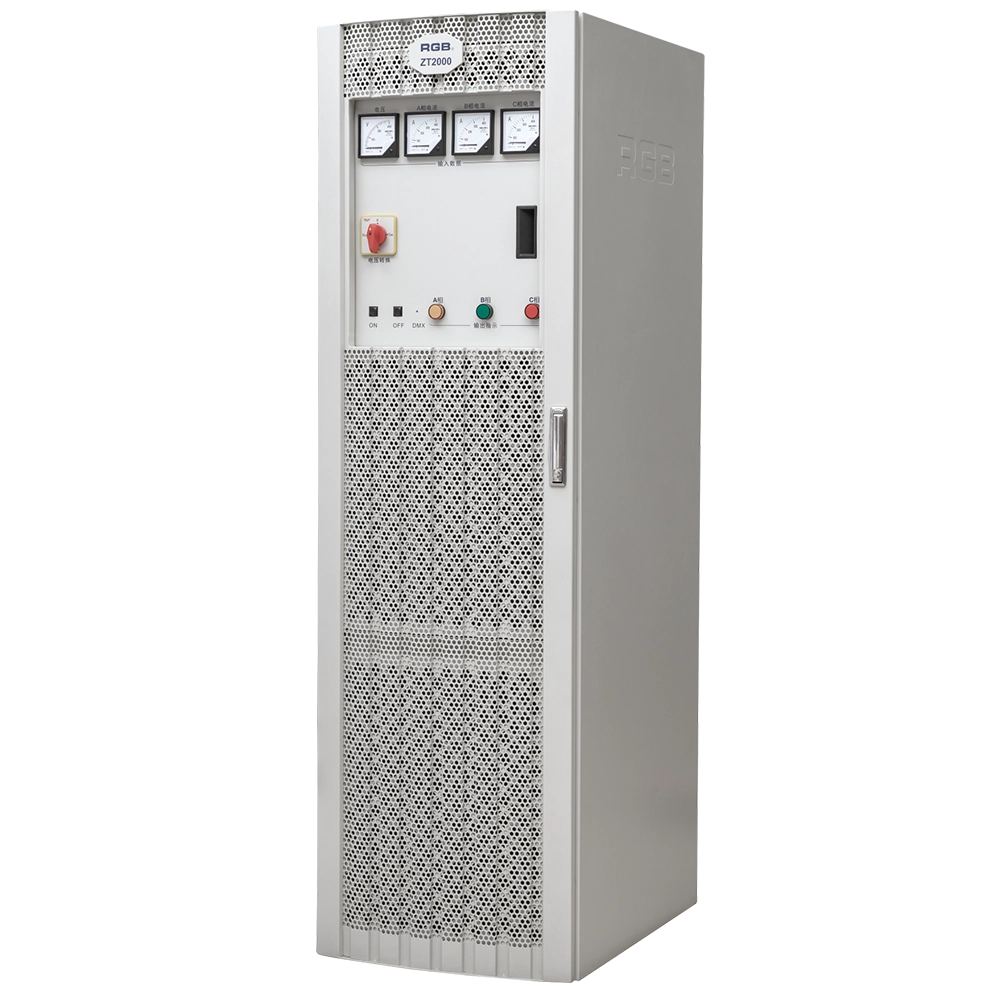
ZT2000 Pass-Through Racks
The ZT2000 straight-through power cabinet is a three-phase 630A/400A air switch main control, with each channel being a 32A air switch sub-control straight-through power cabinet. It can be used in conjunction with various computer lamps, regular lamps, and temporary electrical equipment as a power distribution and supply part for electrical equipment with overcurrent and short-circuit protection. It is a brand-new, reliable, and stable lighting control device in the field of stage lighting control.
It is widely applied in theaters, concert halls, multi-functional halls, cultural and tourism performances, TV stations, gymnasiums, auditoriums, commercial art lighting, and other performance and cultural venues.
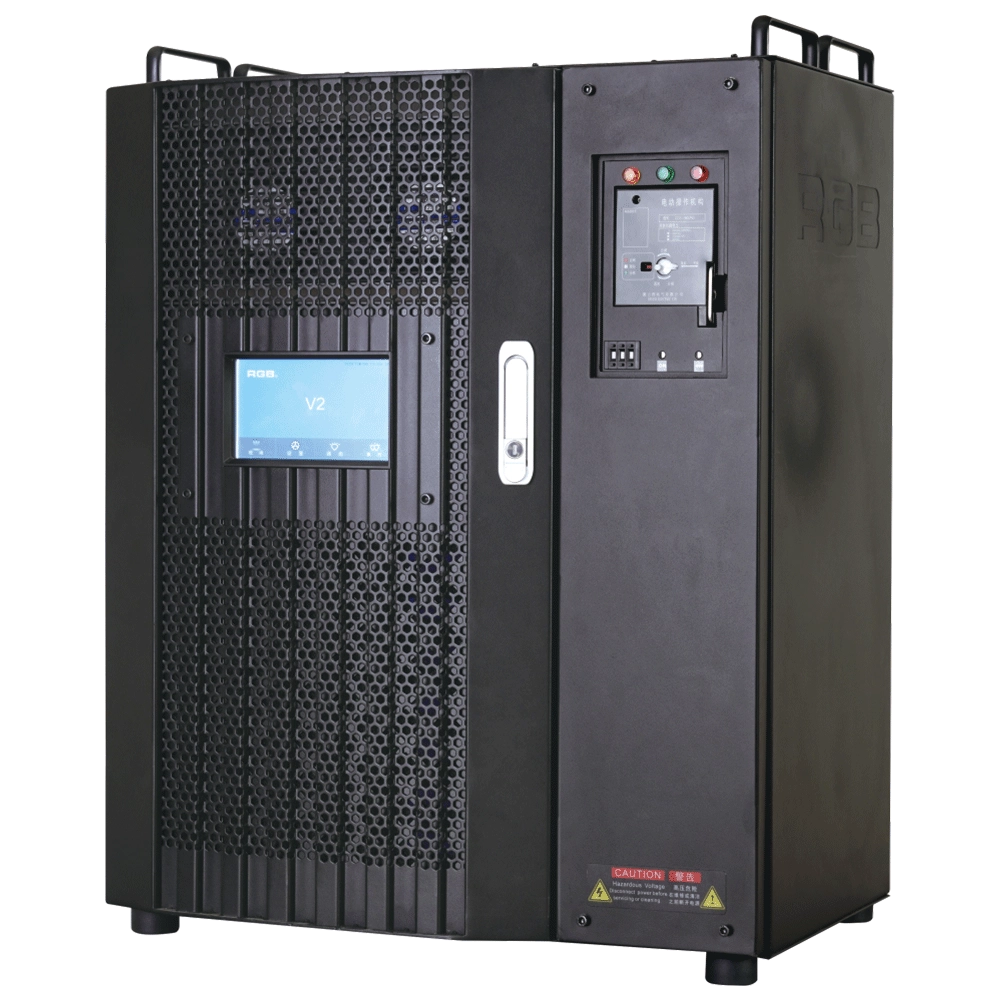
V2 Intelligent Network Dimmer/Relay Racks
V2 is an artificial intelligence dimming rack independently developed by RGB, which has completely independent core technology and obtained software copyrights. It is a fully digital electrodeless trigger and multi-backup independent CPU central processor technology. It has a variety of output configurations, such as sine wave, thyristor, relay, dimming relay, etc. It supports visual lighting control system and visually displays the online and offline status of dimming racks. Realize remote monitoring, editing, and setting of relevant parameters.
It is widely used in performing arts and cultural venues such as theaters, concert halls, multi-function halls, cultural travel and performing arts, TV stations, gymnasiums, auditoriums, commercial art lighting and so on.
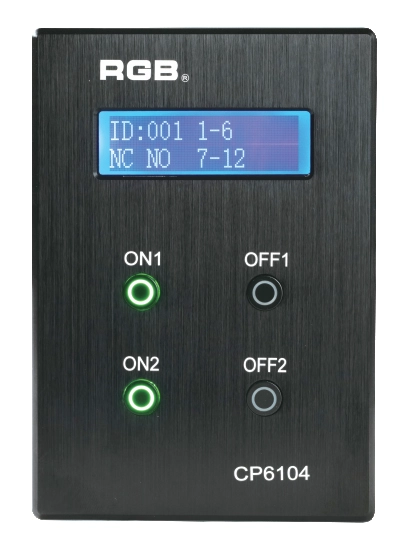
Site Light Controller CP6104
The CP6104 lighting control panel is a lighting control device for theater stage lights, work lights, environmental lighting, commercial art lighting, sports venue lighting and other places. By connecting to the dedicated lighting control host CP6100, it realizes the central control of the lighting system, supports a visual lighting control system, and intuitively displays the online and offline status of CP6104. Realize remote monitoring, editing and setting of corresponding parameters.
It is widely applicable to theaters, cinemas, auditoriums, stadiums, museums, exhibition halls, cultural tourism performances, commercial art lighting and other places.
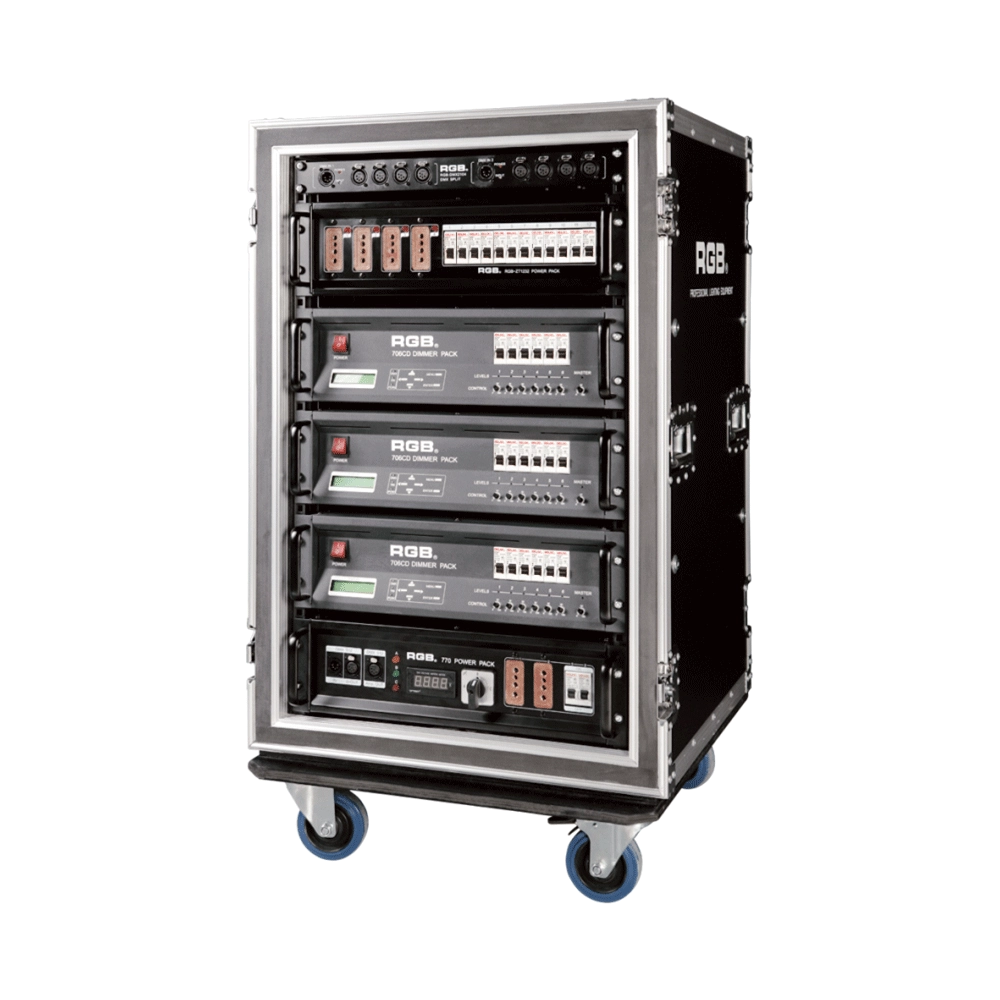
7 Series Digital Touring Dimmer Racks
7 Series digital touring dimmer racks can be assembled into many types of dimmer by taking the 7 Series dimmer as the unit. They are widely used in the entertainment industry for their convenience and practicability.
Expert Support
Interested in learning more or need expert guidance related to this article? Fill in your details, and our team will provide tailored support.
Intelligent Control. Brilliant Performance.
RGB specializes in stage lighting control systems, delivering intelligent, reliable, and high-performance solutions for theaters and performance spaces worldwide.
Contact
Email:
Tel:
+86 20 3928 0245
+86 20 3928 0247
Address:
No.3, Huashan Road, Shilou Town, Panyu, Guangzhou, China.
Whatsapp: +8615975520131