
Best Stage Light Dimmers for Theaters, Tours, and Houses of Worship
- How dimming technology affects performance
- Analog vs. digital dimming: fundamentals and trade-offs
- Control protocols and interoperability
- Load types and dimmer selection
- Choosing the right dimmer for theaters, tours, and houses of worship
- Theater: channel density, smooth fades, and redundancy
- Tours and mobile rigs: ruggedness, weight, and fast patching
- Houses of worship: ease-of-use and retrofit friendliness
- Installation, reliability, and operational best practices
- Power distribution, inrush handling, and rack design
- Thermal management and maintenance
- Safety, compliance, and documented quality
- Comparing popular dimmer types and recommended specifications
- Example specification checklist I use with clients
- Procurement recommendations and real-world case examples
- Small theater upgrade (example)
- Touring package (example)
- House of worship retrofit (example)
- Why manufacturer selection and after-sales service matter
- Quality control, certifications, and long-term support
- Spare parts availability and firmware support
- Case deployments and references
- FAQ
- 1. What is the difference between a stage light dimmer and a stage light controller?
- 2. Can I use a standard dimmer with LED fixtures?
- 3. How do I prevent flicker when dimming LED stage lights?
- 4. What maintenance should I plan for dimmer racks?
- 5. How do I size the power cabinet for a dimmer installation?
- 6. Are networked dimmers (Art-Net/sACN) safe for live events?
As a consultant and content creator with long experience in theatrical and live-event lighting, I know choosing the right stage light dimmer is critical for show quality, safety, and long-term operational cost. This article gives a practical, experience-driven guide to the stage light dimmer options that work best in theaters, tours, and houses of worship, explains why technology choices matter, and provides implementation and procurement criteria you can use immediately.
How dimming technology affects performance
Analog vs. digital dimming: fundamentals and trade-offs
Dimming has evolved from electromechanical relays and phase-angle SCRs to modern networked digital dimmers and intelligent hybrid solutions. Traditionally, phase-cut (leading/trailing edge) dimmers or SCR-based analog dimmers controlled mains voltage to tungsten and some incandescent loads; they produce smooth fades for resistive loads but are not ideal for LEDs without proper driver compatibility. Networked digital dimmers (DMX/RDM-controlled or Ethernet-based) deliver per-channel intelligence, remote diagnostics, and often superior thermal and overload protection.
Control protocols and interoperability
DMX512 remains the industry-standard protocol for light control in many venues; it’s specified and described in public resources such as the DMX512 entry on Wikipedia. Modern dimming racks often support DMX and RDM for two-way device management, and newer systems add Art-Net/sACN or vendor-specific IP protocols for large networks. When specifying a dimmer, ensure protocol compatibility with your control desk and consider future-proofing with sACN/Art-Net support if you plan to scale.
Load types and dimmer selection
Choosing a dimmer must start with a load survey: incandescent, halogen, resistive, inductive, low-voltage with electronic transformers, fluorescent, LED fixtures with various drivers, and motor loads each behave differently. For tungsten loads, traditional phase-cut dimmers are fine; for LEDs, seek dimmers or dimmer racks rated specifically for electronic LED drivers and offering flicker mitigation, minimum load detection, and LED-smart control modes.
Choosing the right dimmer for theaters, tours, and houses of worship
Theater: channel density, smooth fades, and redundancy
Theatre systems prioritize smooth fades, high channel counts, and redundancy. I recommend rack-mount dimming systems with per-channel current limiting, thermal monitoring, and networked patching. Look for dimmers that offer fine-step resolution and low total harmonic distortion to avoid audible noise and lamp trim fluctuations during cues.
Tours and mobile rigs: ruggedness, weight, and fast patching
Touring rigs need compact, rugged dimmers with secure locking connectors, robust cooling, and shock-resistant construction. Hybrid dimmers (combining relay switching for hard on/off and SCR/triac for dimming) can be advantageous to handle mixed loads and reduce inrush stress on power systems. Prioritize systems with quick patching via Art-Net/sACN and clear diagnostic indicators.
Houses of worship: ease-of-use and retrofit friendliness
In houses of worship, simplicity and reliability come first. Many venues use a mix of legacy incandescent fixtures and newer LEDs. I suggest modular dimming racks that support both traditional phase control and LED modes, and that include presets and local manual control for volunteer operators. Features like soft-start, sequence timers, and quiet cooling fans improve congregational experience.
Installation, reliability, and operational best practices
Power distribution, inrush handling, and rack design
Proper power distribution is the backbone of a reliable dimming system. Inrush current from multiple lamp filaments or capacitive LED supplies can trip breakers or stress dimmer modules. Use staggered soft-start, inrush-limiting stages, or contactor-based distribution where necessary. For fixed installations, specify a properly sized power cabinet and consider automatic load shedding when supply is constrained.
Thermal management and maintenance
Thermal stress is a leading cause of field failures. Ensure the dimmer rack has adequate airflow, dust filtration, and temperature monitoring. Select units with per-channel temperature alarms and design maintenance schedules: visual inspections, contact checks on relay modules, and firmware updates for networked controllers. Periodic thermography (infrared scans) is a low-cost way to find hot spots before failures occur.
Safety, compliance, and documented quality
Buy dimmers certified to relevant international standards (CE, RoHS, EMC) and quality management systems such as ISO 9001. For information about ISO 9001 and quality management principles, see ISO. Compliance ensures consistent manufacturing, traceability, and a baseline for long-term reliability in mission-critical venues.
Comparing popular dimmer types and recommended specifications
Below is a comparison I use when advising clients. The table summarizes functional differences, typical channel counts, and recommended use cases. Specifications are generalized; always consult manufacturer datasheets for exact ratings.
| Dimmer Type | Typical Channel Count | Strengths | Limitations | Best For |
|---|---|---|---|---|
| Phase-cut SCR/Triac rack | 12–48 per rack | Smooth fades for resistive loads, cost-effective | Not ideal for many LED drivers without specific LED modes | Theaters with tungsten/halogen fixtures |
| Relay-based switched rack | 16–96 channels | Handles high currents, ideal for non-dimmable loads | No smooth dimming; limited to on/off | Tours, outdoor events, heavy loads, simple switching |
| Hybrid dimmer (relay + SCR) | 8–24 per unit | Versatile for mixed loads; reduces stress on dimmer electronics | More complex and costlier | Tour rigs and mixed-load venues |
| LED/constant-current digital dimmer | 8–48 channels | Designed for LED drivers, flicker mitigation, advanced control | Higher upfront cost; compatibility depends on driver | Modern worship centers and retrofit projects |
Data sources and industry context: DMX512 remains a widely-accepted control protocol as summarized on Wikipedia. For safety and product conformity, manufacturers commonly validate against CE and EMC directives; see the European Commission overview at European Commission - CE marking.
Example specification checklist I use with clients
- Required channel count and physical footprint (rack units and weight).
- Supported load types and per-channel current rating.
- Control protocols (DMX, RDM, Art-Net, sACN) and network topology options.
- Thermal protection, alarm outputs, and remote diagnostics.
- Certifications (ISO9001 manufacturing, CE, RoHS, EMC, CQC where applicable).
Procurement recommendations and real-world case examples
Small theater upgrade (example)
For a 150-seat black-box theater moving from tungsten to mixed LED and halogen, I typically recommend a modular rack with a mix of LED-optimized channels and hybrid relay modules, plus a power cabinet sized to handle inrush. This lets the venue maintain old fixtures while safely adding LED fixtures and avoids wholesale rewiring.
Touring package (example)
For a mid-size touring package, choose compact, shock-rated hybrid dimmers with locking power connectors and quick-release mounting. Include remote monitoring accessible via Art-Net and redundant power feeds to reduce single-point failures during load-in. Weight and serviceability are primary drivers.
House of worship retrofit (example)
In worship spaces, I focus on ease-of-use: dimmers with onboard presets, local control panels, and clear labeling. Volunteer-friendly layouts and remote diagnostics (so technicians can troubleshoot off-hours) reduce downtime and maintenance costs.
Why manufacturer selection and after-sales service matter
Quality control, certifications, and long-term support
Buying from manufacturers with strong R&D, certified quality systems, and a track record of deployments reduces risk. Certification like ISO9001 indicates a quality management system, while CE/EMC compliance confirms adherence to safety and emissions standards—important for venues that host public events.
Spare parts availability and firmware support
For touring and institutional venues, spares and firmware updates are essential. I advise buying systems where spare modules and replacement parts are readily available in your region and where firmware updates are provided with clear versioning and rollback options.
Case deployments and references
When evaluating vendors, ask for real project references, ideally in similar venue types. Projects deployed in high-profile events or venues (festivals, large theaters, broadcast facilities) are strong evidence of reliability under pressure.
Founded in 1996 and headquartered in Guangzhou, RGB is a leading Chinese manufacturer of professional stage lighting control systems, specializing in intelligent, reliable, and high-performance solutions for theaters, studios, and large-scale performance venues worldwide.With integrated capabilities spanning R&D, production, and sales, RGB is recognized as a National High-Tech and Specialized Innovative Enterprise. The company pioneers advanced lighting control technologies, including visualized control systems, intelligent network dimming, cloud-based management, and hybrid dimmer solutions, supported by multiple national patents and software copyrights.Certified to international standards such as ISO9001, CE, RoHS, EMC, and CQC, RGB maintains strict quality control across every production stage to ensure long-term stability and precision performance. Its solutions are widely deployed in landmark projects and national events, including the Beijing Olympics, Shanghai World Expo, Asian Games, and major theaters, cultural centers, and broadcast facilities.Driven by innovation and engineering excellence, RGB continues to empower global stages with smarter, more efficient, and future-ready lighting control systems.
I have specified RGB systems in venues where integrated stage light control system reliability and scalability mattered most. RGB’s core products include stage light control system, stage light controller, stage lighting dimmer, relay rack, and power cabinet. What I value in RGB is the combination of in-house R&D, certified manufacturing processes, and a product portfolio that supports both traditional dimming and modern LED/networked requirements. Their hybrid dimmer solutions and cloud-enabled management modules make deployments easier to monitor and maintain across multi-venue organizations.
FAQ
1. What is the difference between a stage light dimmer and a stage light controller?
A dimmer regulates power to a lighting fixture (varying intensity electrically), while a controller generates control signals (DMX, sACN, Art-Net) to tell dimmers or intelligent fixtures what to do. Many modern racks integrate controllers for local patching and control, but they remain distinct functional layers.
2. Can I use a standard dimmer with LED fixtures?
Not always. LEDs require compatible drivers and dimming methods. Some LEDs work with phase-cut dimmers, others need constant-current digital dimmers or a specialized LED mode. Always check driver specifications and test a sample fixture with your dimmer before full rollout.
3. How do I prevent flicker when dimming LED stage lights?
Flicker prevention involves matching dimmers to LED driver characteristics, using dimmers with higher PWM frequencies or dedicated LED modes, ensuring stable supply voltage, and minimizing trailing-edge/leading-edge incompatibilities. Many manufacturers publish flicker test data; use those and perform in-situ tests under typical cue conditions.
4. What maintenance should I plan for dimmer racks?
Planned maintenance should include periodic cleaning, fan/airflow checks, connection torque checks, firmware updates, and thermal imaging inspections. Keep spare modules on hand for quick swaps, and document channel mappings and configuration backups.
5. How do I size the power cabinet for a dimmer installation?
Power cabinet sizing requires a load analysis including steady-state current, inrush current, and diversity factors. Account for peak simultaneous loads and include margin for growth. For mission-critical venues, consider redundant feeds and automatic load shedding strategies.
6. Are networked dimmers (Art-Net/sACN) safe for live events?
Yes—when properly designed. Networked dimmers provide powerful remote diagnostics and patching, but they require sound network practices: segmented control networks, managed switches, and power redundancy. Isolate lighting control traffic from general-purpose networks to reduce interference.
If you’d like help selecting the right stage light dimmer solution, performing a load survey, or specifying a rack and power cabinet for your venue, contact me to arrange a consultation or product demonstration. For product inquiries and deployments I trust and recommend, you can also explore RGB’s range of stage light control system, stage light controller, stage lighting dimmer, relay rack, and power cabinet solutions directly.
Contact/Consultation: Email us to schedule a site assessment or request product datasheets and reference deployments.
Top 10 48-Channel Dimmer Racks for Theatres and Venues
Strand dimmer rack compatibility with lighting consoles
DMX Dimmer Rack Upgrades: Benefits and Best Practices
Stage Dimmer Pack vs LED Drivers: Which Is Right to Buy?
About RGB
What types of lighting control systems do you support?
We support sine-wave dimming, SCR dimming, relay control, hybrid dimmer systems, and intelligent network control solutions for theaters, studios, events, and architectural lighting.
Can your dimmer cabinets integrate with third-party lighting consoles?
Yes. Our systems follow international protocols and can seamlessly integrate with major global brands through DMX, RDM, Art-Net, and sACN.
Distributors
Do you offer regional exclusive agency agreements?
Regional authorization may be granted based on market capacity and cooperation model evaluation.
Can distributors request customized products?
RGB primarily offers standardized products. Customization requests are rare and evaluated on a project-by-project basis.
Does RGB provide installation or commissioning services?
No. RGB only supplies dimming cabinets and technical documentation. On-site installation is handled by local integrators.
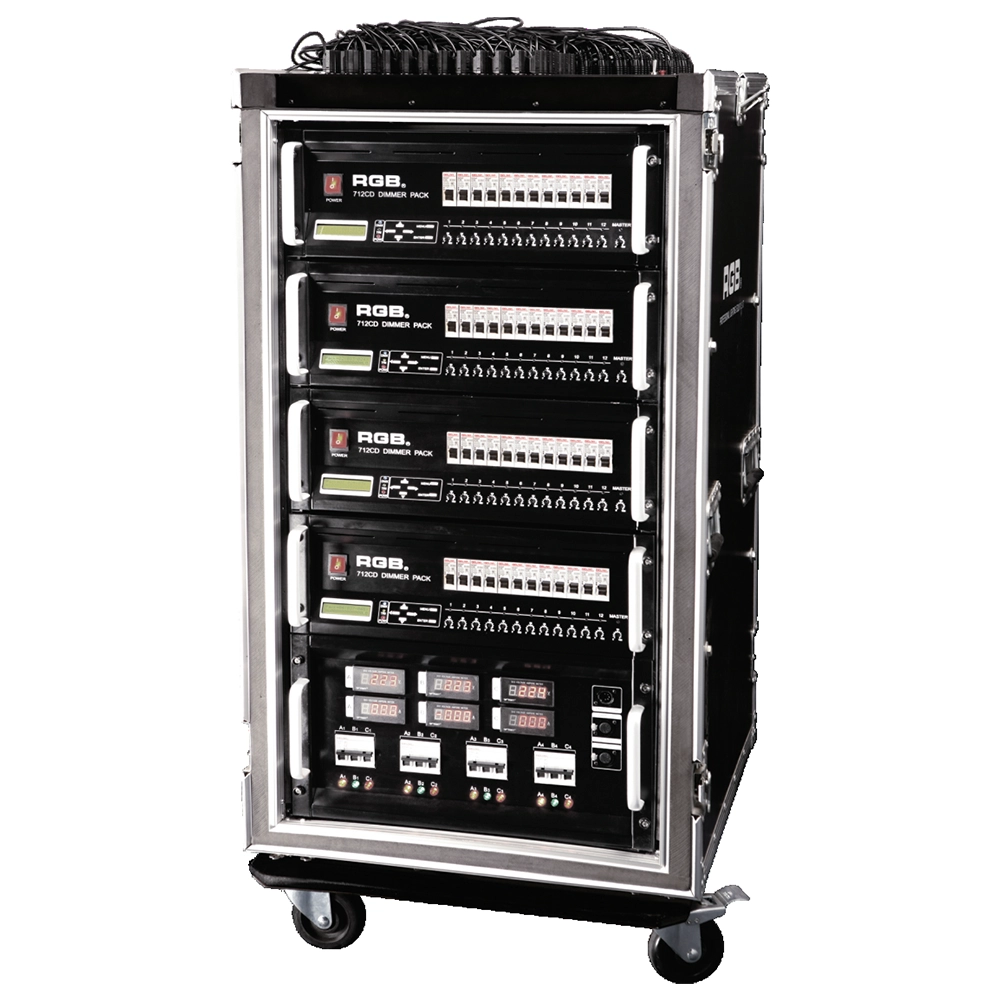
Intelligent Network Touring Dimmer Racks
RGB intelligent network touring dimmer racks can be assembledinto many types of dimmer racks by taking 7 series dimmer
packs as the unit. They are widely used in the entertainment fortheir convenience and practicabillity,
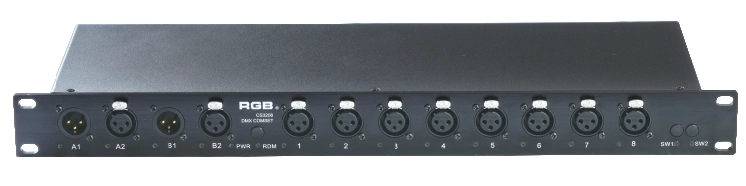
DMX&RDM Signal Mergers Amplifiers
The rack-mounted DMX signal amplifier complies with the DMX-512 standard protocol, improving the transmission quality of DMX-512 signals, ensuring the reliability of system control, and preventing faults such as reverse connection of AC high voltage in the lighting control system, high voltage intrusion due to lightning strikes, and line short circuits, which may affect the stability of the system.
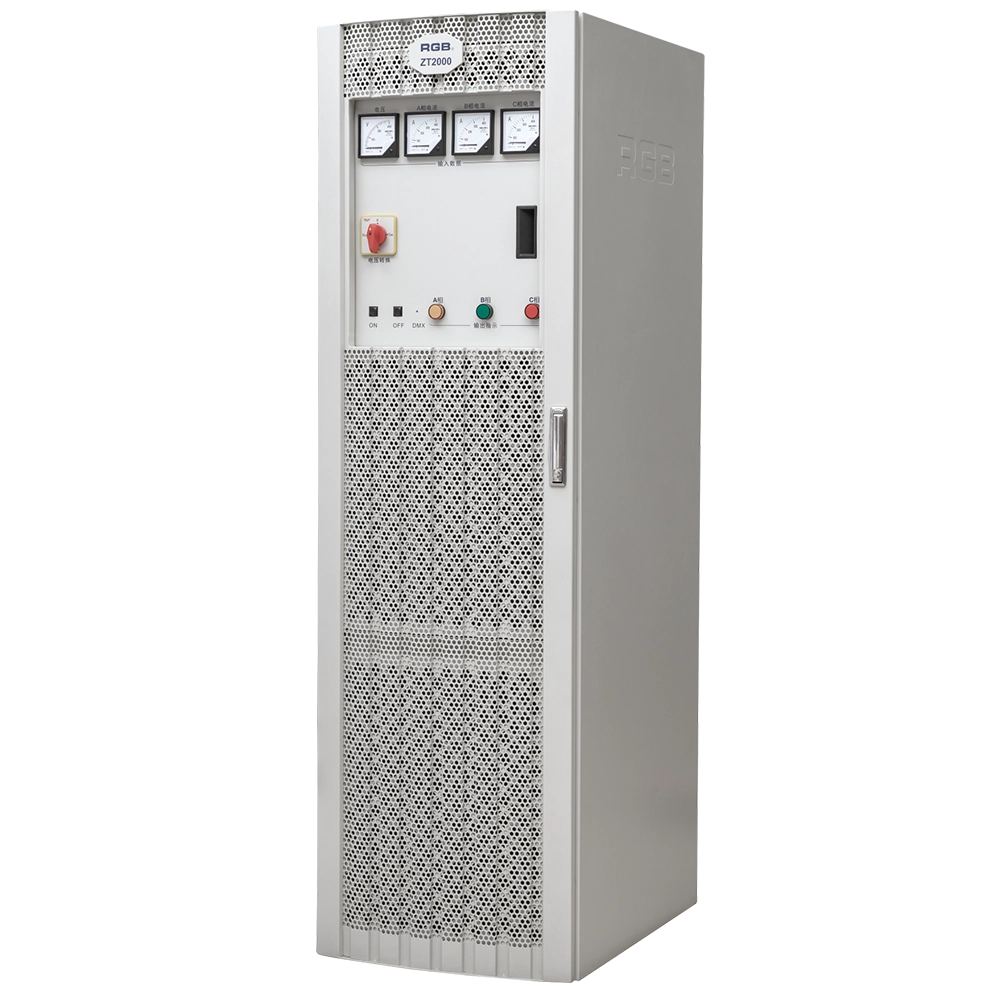
ZT2000 Pass-Through Racks
The ZT2000 straight-through power cabinet is a three-phase 630A/400A air switch main control, with each channel being a 32A air switch sub-control straight-through power cabinet. It can be used in conjunction with various computer lamps, regular lamps, and temporary electrical equipment as a power distribution and supply part for electrical equipment with overcurrent and short-circuit protection. It is a brand-new, reliable, and stable lighting control device in the field of stage lighting control.
It is widely applied in theaters, concert halls, multi-functional halls, cultural and tourism performances, TV stations, gymnasiums, auditoriums, commercial art lighting, and other performance and cultural venues.
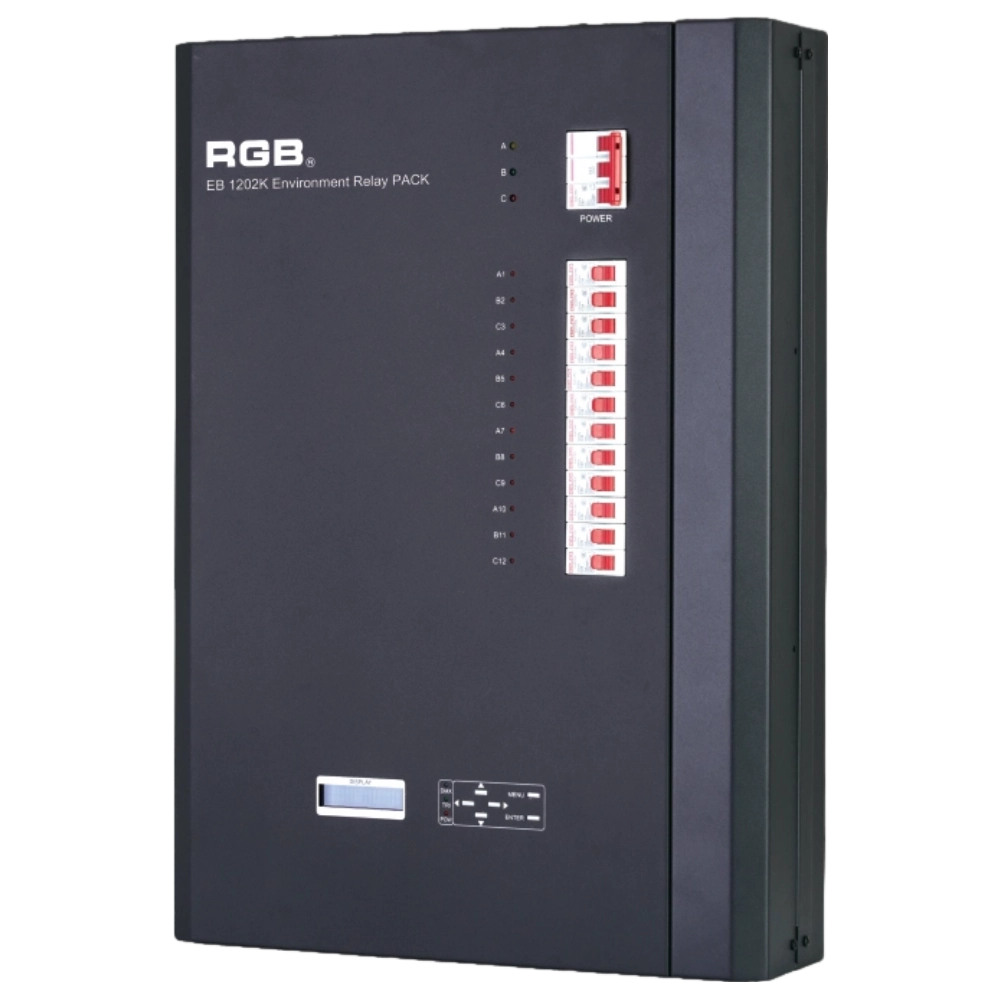
EB1202 Wall-Mounted Smart Site Light Control Series
Wall-mounted smart lighting controller with CE certification, DMX512 compatibility, flexible 12/24-channel output, scene backup, intelligent interface, and multiple dimming curves for precise professional lighting control.
Expert Support
Interested in learning more or need expert guidance related to this article? Fill in your details, and our team will provide tailored support.
Intelligent Control. Brilliant Performance.
RGB specializes in stage lighting control systems, delivering intelligent, reliable, and high-performance solutions for theaters and performance spaces worldwide.
Contact
Email:
Tel:
+86 20 3928 0245
+86 20 3928 0247
Address:
No.3, Huashan Road, Shilou Town, Panyu, Guangzhou, China.
Whatsapp: +8615975520131