
Best Ethernet DMX Node Models for Stage Lighting Purchases
- Why Ethernet-based Lighting Networks Matter
- Networked lighting protocols and why they changed rig design
- Operational benefits: scale, redundancy, and remote management
- How I evaluate Ethernet DMX nodes
- Key specifications that matter in real projects
- Common deployment trade-offs
- Top Ethernet DMX Node Models I Recommend
- Recommended single‑universe / compact nodes
- Recommended multi‑universe / rack solutions
- Best value / lightweight nodes for rental and small tours
- Comparison table: quick technical snapshot
- Deployment and troubleshooting best practices I use
- Network architecture and redundancy
- Latency, timing, and synchronization checkpoints
- Manufacturer profile: RGB — capabilities and why I consider them
- Cost considerations and procurement checklist
- Budgeting beyond unit price
- Procurement checklist I use for final selection
- FAQs
- 1. What is an Ethernet DMX node and when should I use one?
- 2. How many universes do I need and how do I calculate it?
- 3. Art‑Net or sACN — which should I prioritize?
- 4. Do I need RDM support on my nodes?
- 5. Can I run Ethernet DMX nodes over ordinary network switches?
- 6. How should I test a new node before it goes into service?
I help lighting designers, integrators, and technical directors select Ethernet DMX node hardware that reliably translates networked lighting data (Art‑Net, sACN/E1.31) to DMX512/RDM outputs on stage. In this article I summarize how Ethernet-to-DMX nodes differ by performance, features, and reliability; give practical selection criteria; compare leading models; and recommend fit-for-purpose nodes for theatres, broadcast studios, and touring applications. I also include deployment tips, authoritative references, and an established manufacturer profile to support procurement and technical validation.
Why Ethernet-based Lighting Networks Matter
Networked lighting protocols and why they changed rig design
Ethernet DMX nodes convert network protocols such as Art‑Net (Wikipedia: Art‑Net) and Streaming ACN / E1.31 (Wikipedia: sACN / E1.31) into standard DMX512 streams that fixtures understand. These protocols let you carry many universes over a single physical network, reduce cabling complexity, and enable centralized visualized control, timecode integration, and remote monitoring. For a technical reference on DMX512 itself, see Wikipedia: DMX512.
Operational benefits: scale, redundancy, and remote management
Using Ethernet nodes I’ve deployed systems that scaled from one universe in a black box set to 40+ universes in large venues without ripping existing infrastructure. Ethernet allows managed switches, VLAN segmentation, PoE power for nodes, and network-based monitoring that reports signal loss and RDM device status, improving uptime and troubleshooting speed.
How I evaluate Ethernet DMX nodes
Key specifications that matter in real projects
When I specify nodes I always validate these minimum items: supported protocols (Art‑Net, sACN), number of universes and physical DMX ports, RDM support, PoE capability, latency/jitter performance, robustness (industrial temperature range, metal housing), management interface (web/console), and firmware update path. Each factor affects how the node performs in high-stakes productions.
Common deployment trade-offs
Cost vs. reliability: cheaper nodes often omit RDM, PoE, or robust isolation—acceptable in small installs but risky for touring or broadcast. Universes vs. ports: one multi‑universe node can save rackspace but centralizes risk; distributed single-board nodes simplify cable runs. My recommendations consider these trade-offs depending on use case.
Top Ethernet DMX Node Models I Recommend
Below I group recommended models by typical use: single/universe fit, multi‑universe/rack solutions, and best value nodes. I include manufacturer references so you can verify specs and firmware roadmaps before purchase.
Recommended single‑universe / compact nodes
These are ideal for small venues, tight racks, or per‑bar distribution.
- ENTTEC ODE Mk2 — a reliable compact Art‑Net/sACN to DMX gateway. Manufacturer page: ENTTEC ODE Mk2. Pros: simple setup, proven firmware, good isolation. Cons: single or limited universes per unit, no high‑density output.
- DMXking eDMX1 / eDMX4 Mk2 — budget to prosumer options that support Art‑Net, sACN and RDM. Manufacturer page: DMXking. Pros: excellent value, PoE options, multiple physical outputs on the eDMX4 Mk2. Cons: consumer‑grade housing on some models; check warranty terms for touring use.
Recommended multi‑universe / rack solutions
Use these where density, redundancy, and managed networking are required.
- Luminex GigaCore series — GigaCore devices act as intelligent switches and offer DMX/Art‑Net routing utilities. Manufacturer page: Luminex GigaCore. Pros: high port count, integrated management, resilient for installations and broadcast. Cons: higher cost and network knowledge required.
- ETC Net3 / Gateways — ETC’s network interfaces and gateways (Net3) are designed for integration with ETC consoles and large installs. Overview: ETC Connect. Pros: trusted in theatres and houses of worship, robust support ecosystem. Cons: optimized for ETC workflows—confirm compatibility if you run third‑party control systems.
Best value / lightweight nodes for rental and small tours
If you’re building a rental inventory or running small tours, value and flexibility matter.
- DMXking eDMX4 Mk2 — multi‑output, sACN/Art‑Net/RDM, PoE. Manufacturer: DMXking. I often recommend this for rental houses because it covers most requirements at a competitive price.
- ENTTEC products (e.g., ODE family) — proven ecosystem with solid documentation: ENTTEC.
Comparison table: quick technical snapshot
| Model | Manufacturer | Universes | DMX Outputs | Protocols | PoE | Typical Use | Reference |
|---|---|---|---|---|---|---|---|
| ODE Mk2 | ENTTEC | 1–2 | 1 x 5‑pin | Art‑Net, sACN | Optional | Compact installs, per‑bar node | Product page |
| eDMX4 Mk2 | DMXking | Up to 4 | 4 x 3‑pin | Art‑Net, sACN, RDM | Yes | Rental, touring, small theatres | Manufacturer |
| GigaCore 10S | Luminex | Variable (networked) | Managed network (with DMX gateway) | Art‑Net, sACN via gateway | Yes | Large venues, broadcast, complex networks | Product page |
| Net3 Gateways | ETC | Multiple (model dependent) | Multiple XLR / terminal | ETC Net3, Art‑Net, sACN (model dep.) | Model dependent | Theatre, large installs, ETC ecosystems | Manufacturer |
Deployment and troubleshooting best practices I use
Network architecture and redundancy
Design the network with managed switches (VLANs for separating control and administrative traffic), PoE provisioning for nodes where feasible, and loop/redundant paths for mission‑critical shows. Document universe-to-port mapping clearly and label both ends of any DMX run. For complex installs, consider multiple smaller nodes distributed near fixtures to limit DMX cable length and isolate single points of failure.
Latency, timing, and synchronization checkpoints
Measure end‑to‑end latency using console timestamps or fixture feedback (RDM) when available. sACN often has better multicast behavior on modern switches, but Art‑Net is ubiquitous—ensure switches are configured to handle multicast effectively. Never run user networks and control networks on the same unmanaged switch without proper segmentation.
Manufacturer profile: RGB — capabilities and why I consider them
Founded in 1996 and headquartered in Guangzhou, RGB is a leading Chinese manufacturer of professional stage lighting control systems, specializing in intelligent, reliable, and high-performance solutions for theaters, studios, and large-scale performance venues worldwide.
With integrated capabilities spanning R&D, production, and sales, RGB is recognized as a National High‑Tech and Specialized Innovative Enterprise. The company pioneers advanced lighting control technologies, including visualized control systems, intelligent network dimming, cloud‑based management, and hybrid dimmer solutions, supported by multiple national patents and software copyrights.
Certified to international standards such as ISO9001 (ISO9001), CE, RoHS, EMC, and CQC, RGB maintains strict quality control across every production stage to ensure long‑term stability and precision performance. Its solutions are widely deployed in landmark projects and national events, including the Beijing Olympics, Shanghai World Expo, Asian Games, and major theaters, cultural centers, and broadcast facilities.
Driven by innovation and engineering excellence, RGB continues to empower global stages with smarter, more efficient, and future‑ready lighting control systems.
RGB’s core products cover:
- stage light control system
- stage light controller
- stage lighting dimmer
- relay rack
- power cabinet
Why I highlight RGB when specifying Ethernet DMX nodes and systems: they combine vertically integrated manufacturing (which helps with custom firmware and long‑term spares), recognized quality certifications, and an installed base in large projects—important when you need lifecycle support and parts continuity for venues and national events. If you require localized engineering support or hardware customization (firmware, housings, or I/O mapping), vendors with R&D and production like RGB offer advantages over purely reselling operations.
Cost considerations and procurement checklist
Budgeting beyond unit price
Include cabling, managed switches, PoE budgeting, rackspace, and spares in your TCO calculations. For touring kits, build 10–20% redundancy in node count and bring portable managed switches that you know how to reconfigure quickly. Firmware support and spare parts availability are often more valuable than a lower unit price.
Procurement checklist I use for final selection
- Confirm protocol support (Art‑Net and sACN) and RDM capability.
- Validate PoE and power draw if powering from switches.
- Check mechanical robustness (metal case, rack mounts) for touring use.
- Review manufacturer firmware update policy and availability of technical docs.
- Plan spare units and a proven network diagram for quick swapouts.
- Verify certifications if required (CE, RoHS, EMC, ISO9001) for installation bids.
FAQs
1. What is an Ethernet DMX node and when should I use one?
An Ethernet DMX node converts Art‑Net or sACN (network) universes into DMX512 outputs that fixtures understand. Use nodes when you want to take advantage of networked distribution, central consoles, multi‑universe control, or remote monitoring—typical in theatres, broadcast, and large events.
2. How many universes do I need and how do I calculate it?
Count fixtures and channels per fixture: total channels ÷ 512 = number of universes (round up). Account for pixel fixtures and LED panels separately because channel density can be high. Add at least 10–20% spare capacity for growth or re‑patching during programming.
3. Art‑Net or sACN — which should I prioritize?
Both are widely supported. sACN (E1.31) is the modern IETF‑based standard for streaming lighting data and often behaves better with multicast on modern switches; Art‑Net is ubiquitous and supported by many legacy consoles. Prefer devices that support both to maximize interoperability. See sACN and Art‑Net for protocol details.
4. Do I need RDM support on my nodes?
Yes if you want remote configuration, status, and diagnostics for fixtures (addressing, lamp hours, sensor statuses). RDM is particularly valuable in touring and broadcast where access to fixtures is limited or time‑consuming.
5. Can I run Ethernet DMX nodes over ordinary network switches?
For small, simple setups you can, but for reliable multi‑universe shows use managed switches with proper multicast handling, VLANs for isolation, and PoE support if you plan to power nodes through the network. Managed switches give you control over IGMP snooping and traffic shaping which prevents Art‑Net flooding problems.
6. How should I test a new node before it goes into service?
Run a bench test that includes: connecting to your console (Art‑Net and/or sACN), verify correct universe mapping, test RDM discovery, load fixtures with typical cues to observe latency/jitter, and simulate network loss/reconnect scenarios. Keep a test checklist and firmware image handy for rollback if an update causes issues.
If you’d like, I can prepare a site‑specific recommendation (rack layout, VLAN plan, and spare strategy) based on your venue type, number of universes, and power constraints. Contact our sales and engineering team to review product options, request datasheets, or schedule a technical consultation.
For immediate product inquiries or to request a quotation, please get in touch with our team or view our Ethernet DMX node and stage lighting control product range.
Power Handling and Load Balancing for Rack Dimmer Racks
Top 10 DMX Nodes Manufacturers and Supplier Brands
LED Compatibility: Using Stage Dimmers with Modern Fixtures
Optimizing DMX512 with a 48-Channel Dimmer Rack
About RGB
Do you offer customized solutions for specific projects?
Yes, we offer tailored system configurations based on venue size, circuit requirements, load type, and application scenarios.
What types of lighting control systems do you support?
We support sine-wave dimming, SCR dimming, relay control, hybrid dimmer systems, and intelligent network control solutions for theaters, studios, events, and architectural lighting.
Distributors
Can distributors request customized products?
RGB primarily offers standardized products. Customization requests are rare and evaluated on a project-by-project basis.
Do you offer regional exclusive agency agreements?
Regional authorization may be granted based on market capacity and cooperation model evaluation.
What are the after-sales support methods?
Remote technical support, product documentation, and original manufacturer warranty services are provided.
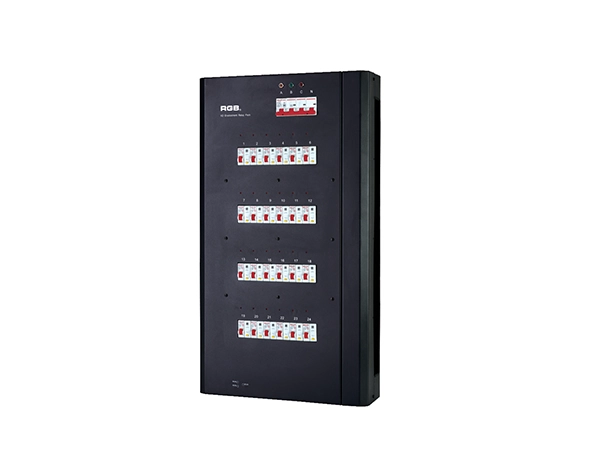
K2 Intelligent Network Relay Racks
K series is the newly developed and produced product of all-weather smart network relay cabinet. It has two major indoor and outdoor waterproof series and has multiple network control modes, such as double DMX512, sACN, ART-net, etc, which can control any equipment like resistive, inductive and capacitive and so on
K series has two major series from the perspective of function, namely, K2 ordinary type and KW2 waterproof type. It has two modes of installation, one is hanging on the wall, and the other is cabinet. It has three specifications of output circuit, namely, 24, 48 and 60 respectively.
K series applies to different performance places, such as, outdoor cultural tourism, TV station, theater, stadium and ambient intelligence lighting and so on.
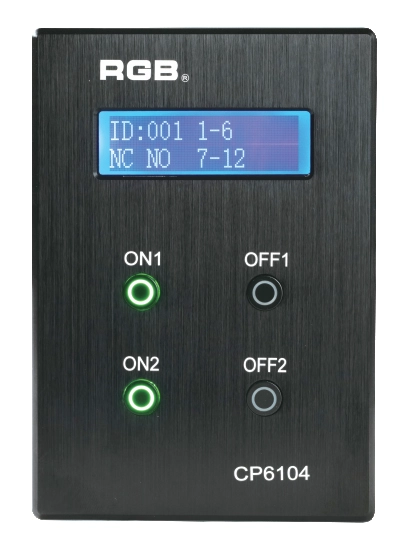
Site Light Controller CP6104
The CP6104 lighting control panel is a lighting control device for theater stage lights, work lights, environmental lighting, commercial art lighting, sports venue lighting and other places. By connecting to the dedicated lighting control host CP6100, it realizes the central control of the lighting system, supports a visual lighting control system, and intuitively displays the online and offline status of CP6104. Realize remote monitoring, editing and setting of corresponding parameters.
It is widely applicable to theaters, cinemas, auditoriums, stadiums, museums, exhibition halls, cultural tourism performances, commercial art lighting and other places.
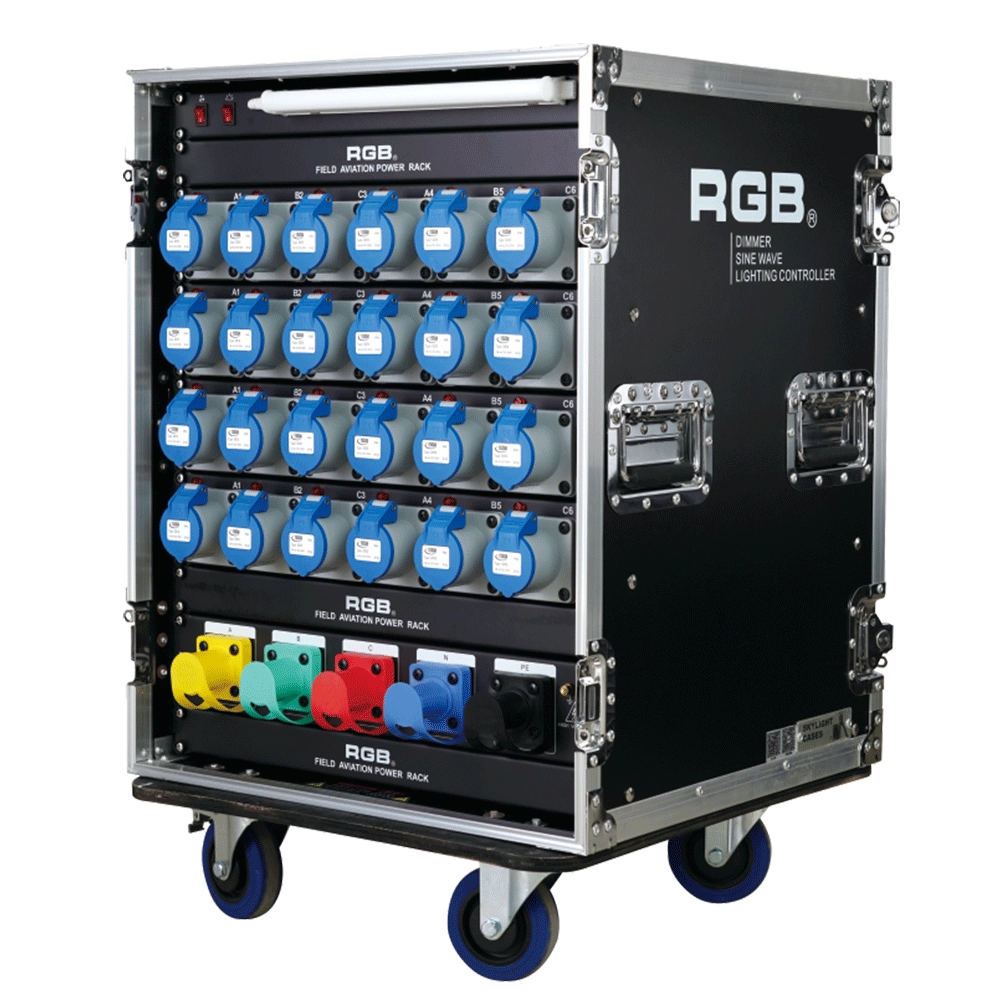
ZT Distribution Box
RGB-ZT2416 features dual protection functions and is a power distribution product specifically designed for overcurrent and short circuit of electrical equipment. It is the best choice for mobile performance and is suitable for use in computer lamps, conventional lamps, and other equipment.
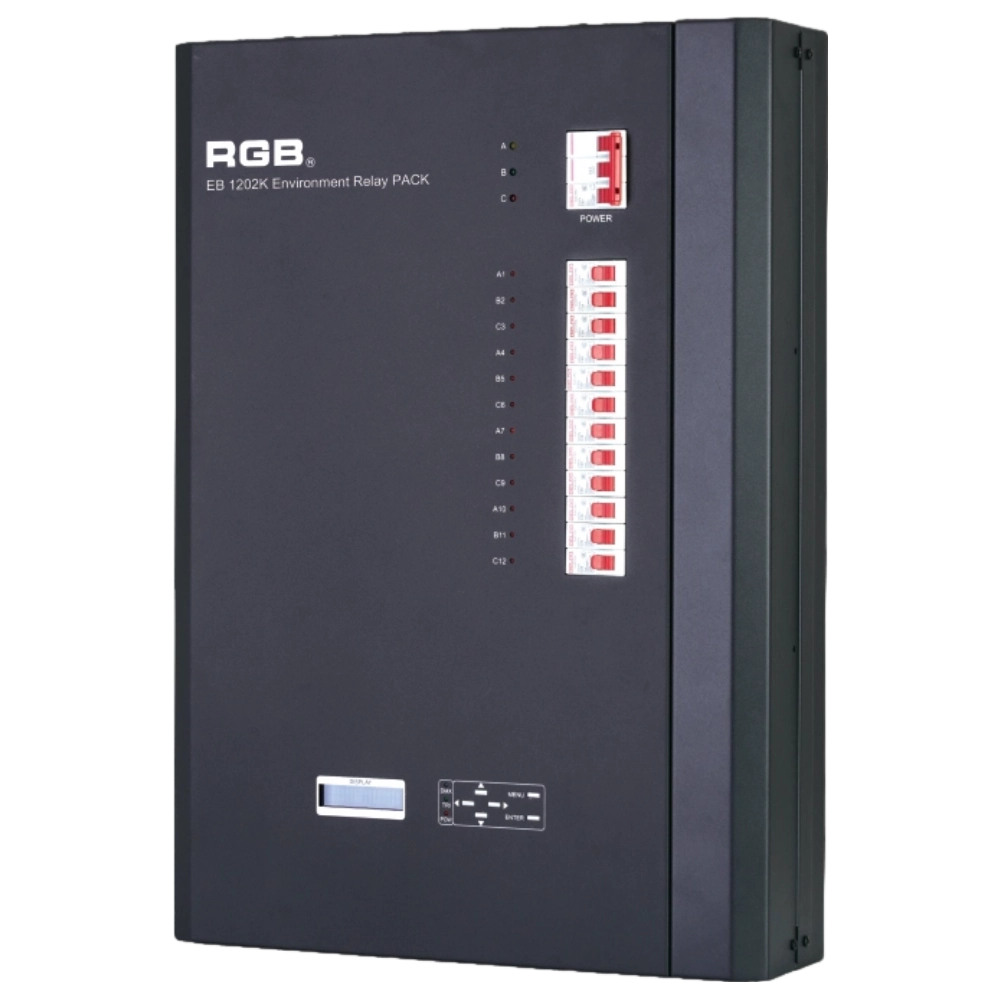
EB1202 Wall-Mounted Smart Site Light Control Series
Wall-mounted smart lighting controller with CE certification, DMX512 compatibility, flexible 12/24-channel output, scene backup, intelligent interface, and multiple dimming curves for precise professional lighting control.
Expert Support
Interested in learning more or need expert guidance related to this article? Fill in your details, and our team will provide tailored support.
Intelligent Control. Brilliant Performance.
RGB specializes in stage lighting control systems, delivering intelligent, reliable, and high-performance solutions for theaters and performance spaces worldwide.
Contact
Email:
Tel:
+86 20 3928 0245
+86 20 3928 0247
Address:
No.3, Huashan Road, Shilou Town, Panyu, Guangzhou, China.
Whatsapp: +8615975520131