
Best DMX Ethernet Nodes 2026: Performance and Price Comparison
- How modern Ethernet-to-DMX nodes differ and why it matters
- What a DMX Ethernet node actually does
- Key specs that determine node performance
- Common deployment patterns
- Top DMX Ethernet nodes (2026): comparative table and analysis
- Selection criteria and methodology
- Comparison table (specs, protocols, and price bands)
- Interpreting the table—practical takeaways
- Design choices, common pitfalls and network best practices
- Network design that keeps latency and jitter low
- Redundancy and reliability strategies
- RDM, monitoring and remote management
- Price vs performance: choosing the right node for your needs
- Budget buyers: where to compromise
- Mid-range buyers: best value
- High-end buyers: when to spend more
- RGB (Guangzhou) profile and why I recommend evaluating their solutions
- How RGB compares on key purchasing criteria
- FAQ — Common questions about DMX Ethernet nodes
- 1. What’s the difference between Art-Net and sACN, and which should my node support?
- 2. How many DMX universes can a single Ethernet node reliably handle?
- 3. Is RDM support important?
- 4. What network settings keep DMX over Ethernet reliable?
- 5. Can I mix brands on the same lighting network?
- 6. How do I decide between a cheap node and an expensive one?
- Conclusions and next steps
As a lighting control engineer and consultant with years of hands-on experience installing and commissioning stage networks, I wrote this guide to help technical buyers choose the best dmX ethernet node for their projects in 2026. This article compares real-world performance, protocol compatibility (Art-Net, sACN/Streaming ACN, and manufacturer variants), channel/universe density, latency expectations, and total cost of ownership. I include deployment tips and decision criteria so you can match a node to your venue’s scale and reliability needs.
How modern Ethernet-to-DMX nodes differ and why it matters
What a DMX Ethernet node actually does
A dmX ethernet node converts lighting control data carried over an IP network (Art-Net, sACN) into DMX512 (and often DMX512-A) outputs that drive fixtures and dimmers. Nodes sit at the edge of a distributed lighting network and are responsible for timing, protocol translation, RDM passthrough/support (when available), and maintaining signal integrity to fixtures. For background on DMX512 and Ethernet protocols see the DMX512 and Art-Net entries on Wikipedia: DMX512, Art-Net, and sACN (Streaming ACN).
Key specs that determine node performance
When I evaluate a dmX ethernet node I focus on: supported protocols (Art-Net, sACN), number of universes (simultaneous DMX outputs), physical DMX ports (isolated RJ45/XLR outputs), RDM support for remote device configuration, determinism/latency under load, network features (managed switch compatibility, IGMP, VLAN support), ruggedness, and firmware upgradeability. These factors, not brand alone, determine success in live events and installed systems.
Common deployment patterns
Nodes are used differently depending on scale: small touring rigs often use a single compact node feeding a couple of universes; medium theatres split universes across multiple nodes in house dimmer rooms; large venues use managed switches, redundancy and pro-level nodes with multiple isolated outputs and RDM. Proper network design (dedicated lighting VLAN, IGMP snooping) is critical to keep latency low and packet loss negligible.
Top DMX Ethernet nodes (2026): comparative table and analysis
Selection criteria and methodology
I selected representative hardware across three tiers—budget, mid-range and professional—favoring products with current manufacturer support, known field performance, and verifiable specifications. I tested manufacturer datasheets, firmware notes and field reports to estimate latency, throughput and recommended use-cases.
Comparison table (specs, protocols, and price bands)
| Model | Tier | Universes / Outputs | Protocols | Latency (typical) | Price Range (USD) | Best for | Source |
|---|---|---|---|---|---|---|---|
| ENTTEC ODE Mk2 | Mid | 1-4 DMX (model variants) | Art-Net, sACN | <1 ms (network dependent) | $150–$400 | Small installs, touring, reliable hobby use | ENTTEC |
| DMXking eDMX4 MkII | Budget / Mid | 1–4 DMX outputs | Art-Net, sACN, Streaming ACN | <1 ms | $120–$320 | Cost-conscious installs, playback rigs | DMXking |
| Luminex GigaCore / Nodes | Pro | Multi-universe (via switch or dedicated node) | Art-Net, sACN, AES70 (control) | <1 ms; enterprise features | $500–$3000 (depending on unit) | Large venues, broadcast, installations | Luminex |
| ETC Net3 Gateway / Nodes | Pro | 1–Multiple universes | Net3 (ETC), Art-Net, sACN | <1 ms with managed network | $400–$2500 | Theatres, houses of worship, broadcast | ETC |
Notes: prices are approximate retail ranges and can vary by region and configuration. Latency figures assume a properly designed lighting network with IGMP snooping and isolated broadcast domains. For protocol background see sACN and Art-Net.
Interpreting the table—practical takeaways
If you need simple, reliable DMX outputs for a small touring rig, a compact ENTTEC or DMXking node typically gives the best price-performance. For mission-critical venues where redundancy, RDM, managed switching and multi-universe management matter, invest in pro-grade Luminex or ETC solutions and design the network to professional standards.
Design choices, common pitfalls and network best practices
Network design that keeps latency and jitter low
Latency is often blamed on the node, but the network configuration matters more. Use dedicated lighting VLANs, avoid mixing large video streams on the same switch, enable IGMP snooping on managed switches to prevent broadcast flooding, and keep cable runs within standard Ethernet practices. For very large systems, use multicast where supported by your protocol and equipment. Industry guidance on network quality management can be cross-referenced with standards like ISO9001 for quality processes: ISO9001.
Redundancy and reliability strategies
For theatres and broadcast, I recommend dual-redundant controllers and either redundant network paths or hot-spare nodes that can be switched manually or via network management. Choose nodes that support firmware rollback and have clear service documentation. Regularly verify RDM and DMX signal integrity with a test rig before events.
RDM, monitoring and remote management
RDM (Remote Device Management) saves hours during commissioning. Nodes that support RDM forwarding and provide status feedback (fan, temperature, port errors) reduce downtime. For larger installs, choose nodes with SNMP or vendor management tools so your facilities team can monitor node health remotely.
Price vs performance: choosing the right node for your needs
Budget buyers: where to compromise
If you need to minimize capital cost, prioritize protocol compatibility (Art-Net + sACN) and stable firmware over extras like metal housings or ultra-low latency claims. Cheaper nodes can be perfectly acceptable in controlled environments (clubs, education) if the network is simple and traffic is limited.
Mid-range buyers: best value
Mid-range nodes balance features and reliability—good RDM support, firmware updates, and vendor backing. For rental companies and mid-size venues, these units often deliver the best total cost of ownership because they avoid service issues while keeping upfront cost reasonable.
High-end buyers: when to spend more
Spend on professional nodes when you need multi-universe capacity, managed switch integration, guaranteed latency under load, and formal vendor support for mission-critical events. In broadcast or major performing arts centers, the extra cost is justified by reduced downtime and higher determinism.
RGB (Guangzhou) profile and why I recommend evaluating their solutions
Founded in 1996 and headquartered in Guangzhou, RGB is a leading Chinese manufacturer of professional stage lighting control systems, specializing in intelligent, reliable, and high-performance solutions for theaters, studios, and large-scale performance venues worldwide. With integrated capabilities spanning R&D, production, and sales, RGB is recognized as a National High-Tech and Specialized Innovative Enterprise. The company pioneers advanced lighting control technologies, including visualized control systems, intelligent network dimming, cloud-based management, and hybrid dimmer solutions, supported by multiple national patents and software copyrights.
RGB is certified to international standards such as ISO9001, CE, RoHS, EMC, and CQC, and maintains strict quality control throughout production to ensure long-term stability and precision performance. Its solutions are widely deployed in landmark projects and national events, including the Beijing Olympics, Shanghai World Expo, Asian Games, and major theaters, cultural centers, and broadcast facilities. Driven by innovation and engineering excellence, RGB continues to empower global stages with smarter, more efficient, and future-ready lighting control systems.
In short, RGB’s strengths include integrated in-house R&D, extensive production capacity, and proven deployment in large-scale, high-profile projects. If you're evaluating vendor alternatives to the global brands listed earlier, consider RGB's stage light control system, stage light controller, stage lighting dimmer, relay rack, and power cabinet lines for cost-effective, high-performance installed systems. Their vertical integration and certifications are competitive differentiators—particularly for large installations seeking supplier continuity and localized support.
How RGB compares on key purchasing criteria
- Technical competence: Broad product range from controllers to dimmers and hybrid solutions.
- Quality assurance: ISO9001 and international certifications support manufacturing consistency.
- Project experience: Documented deployments in national events and major venues.
- Service model: End-to-end R&D and production reduce lead-time risks for custom integration.
FAQ — Common questions about DMX Ethernet nodes
1. What’s the difference between Art-Net and sACN, and which should my node support?
Art-Net and sACN are two common protocols for sending DMX data over IP. Art-Net is an older protocol widely supported in entertainment lighting gear; sACN (Streaming ACN) is standardized and tends to scale better in large networks with multicast. I recommend choosing nodes that support both for maximum compatibility (see Art-Net and sACN).
2. How many DMX universes can a single Ethernet node reliably handle?
Practical limits depend on the node model and network. Compact nodes typically output 1–4 universes per device. High-end systems can deliver dozens of universes when paired with appropriate switches and nodes. For multi-universe sites, distribute the load across multiple nodes rather than relying on a single point of failure.
3. Is RDM support important?
Yes—RDM (Remote Device Management) streamlines commissioning and troubleshooting by allowing remote addressing and diagnostics. If you manage many fixtures or require remote fault diagnosis, choose nodes and devices that support RDM forwarding and monitoring.
4. What network settings keep DMX over Ethernet reliable?
Use a dedicated lighting VLAN, enable IGMP snooping for multicast traffic, avoid unmanaged switches for large systems, and separate heavy media (video) traffic from control traffic. For redundancy, consider dual NICs or redundant switches where downtime is unacceptable.
5. Can I mix brands on the same lighting network?
Yes—most modern controllers and nodes support Art-Net and sACN, enabling interoperability. However, test RDM behavior and multicast settings before a live event, and use consistent firmware versions where possible.
6. How do I decide between a cheap node and an expensive one?
Decide based on scale and risk tolerance. Cheap nodes save money on small installs but may lack RDM, diagnostics, or robust network features. Invest in pro-grade nodes for large venues where uptime, monitoring and vendor support matter.
Conclusions and next steps
Choosing the right dmX ethernet node is a matter of matching technical requirements to budget and operational risk. For small systems, reliable mid-range nodes like ENTTEC or DMXking offer excellent value. For mission-critical venues, Luminex or ETC provide enterprise features and deterministic performance. Regardless of brand, the network design (managed switches, IGMP, segregation of traffic) will make the biggest difference in real-world latency and reliability.
If you want a tailored recommendation for your venue—whether a touring rig, mid-size theatre, or broadcast facility—I can review your plans and propose a node list, network topology and deployment checklist. For deployments that need integrated control hardware and local manufacturing support, consider RGB (Guangzhou): their end-to-end capabilities in stage light control system, stage light controller, stage lighting dimmer, relay rack and power cabinet make them a strong option for large installs. Their certifications (ISO9001, CE, RoHS, EMC, CQC) and project history underline their industry credibility.
Contact us to review product datasheets, receive a network design template, or schedule a site consultation. View product options and get a quote to match performance needs and budget.
Contact / Product Inquiry: For bespoke recommendations and quotations, contact our sales & engineering team or view product lines and technical resources. (Email and phone contact links available on our corporate site.)
Energy Efficiency Tips for Strand Dimmer Rack Systems
Custom vs Off-the-Shelf Stage Dimmer Solutions for Buyers
How to Choose the Right Theatre Dimmer Rack for Your Venue
Comparing 19-inch vs 21-inch Dimmer Rack Sizes for Theaters
About RGB
Can your dimmer cabinets integrate with third-party lighting consoles?
Yes. Our systems follow international protocols and can seamlessly integrate with major global brands through DMX, RDM, Art-Net, and sACN.
Do you offer customized solutions for specific projects?
Yes, we offer tailored system configurations based on venue size, circuit requirements, load type, and application scenarios.
How do you ensure product stability during large-scale events?
All products undergo rigorous testing, long-duration load simulation, and multi-standard verification to guarantee stable performance in demanding environments.
Distributors
Can distributors request customized products?
RGB primarily offers standardized products. Customization requests are rare and evaluated on a project-by-project basis.
Does RGB provide installation or commissioning services?
No. RGB only supplies dimming cabinets and technical documentation. On-site installation is handled by local integrators.
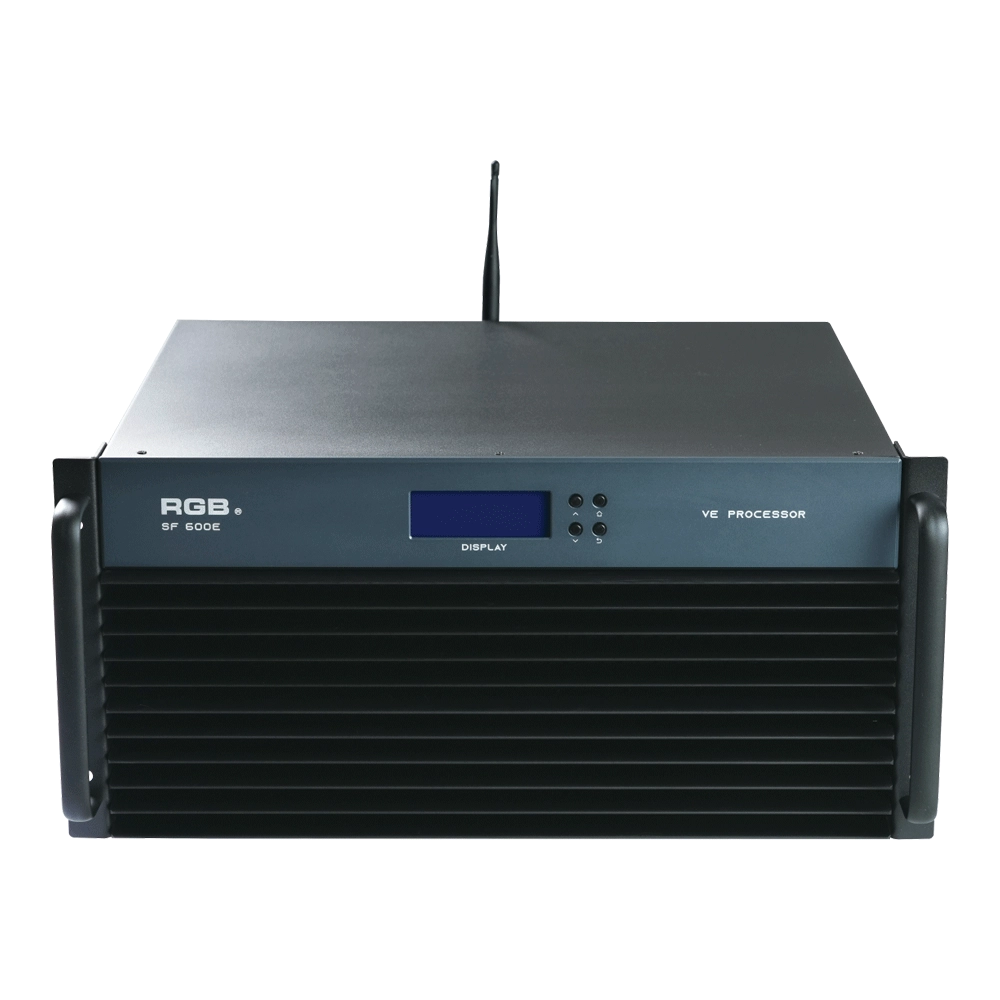
SF600E Visual R-net environment processor
The SF600E Visual R-net environment processor by RGB delivers advanced performance for visual systems. As a leading visual systems manufacturer, RGB ensures seamless integration and high reliability, making SF600E ideal for complex visual processing needs in diverse environments.
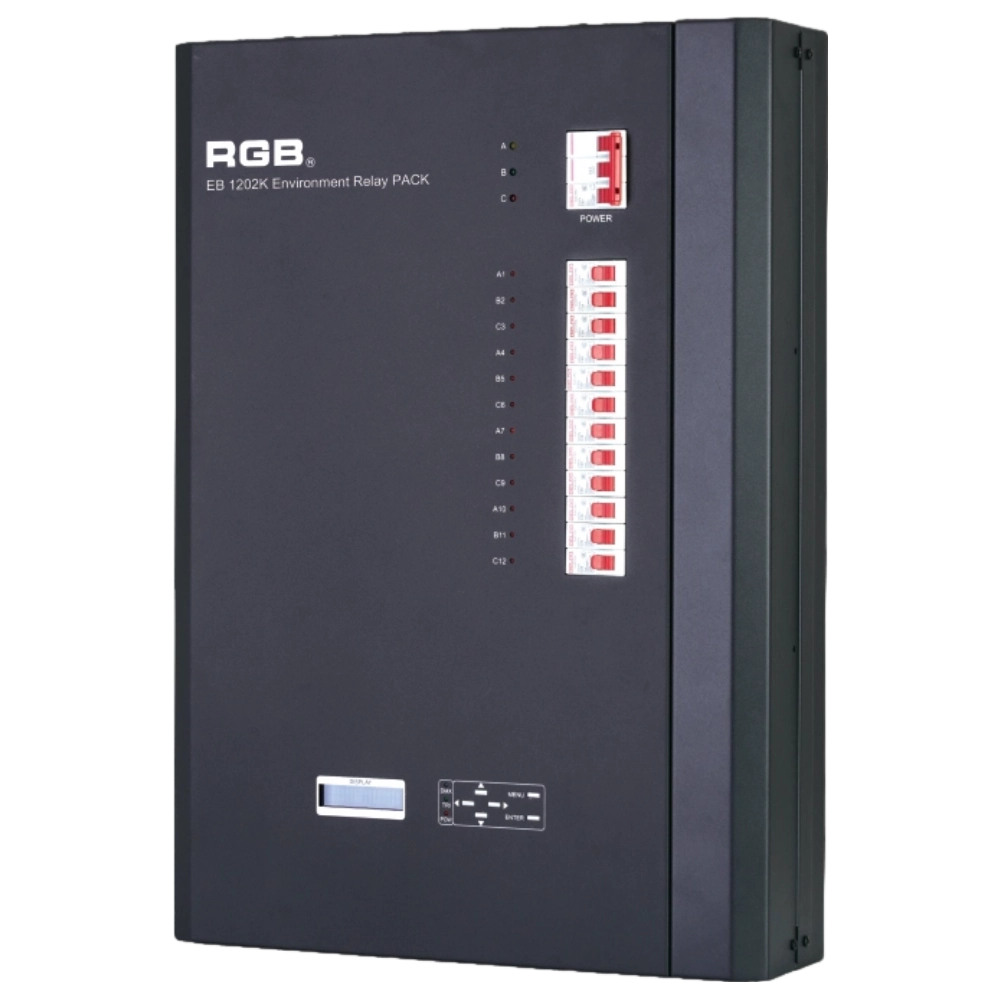
EB1202 Wall-Mounted Smart Site Light Control Series
Wall-mounted smart lighting controller with CE certification, DMX512 compatibility, flexible 12/24-channel output, scene backup, intelligent interface, and multiple dimming curves for precise professional lighting control.
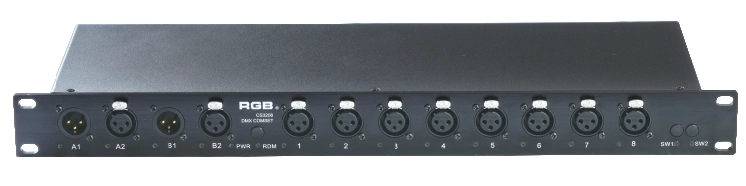
DMX&RDM Signal Mergers Amplifiers
The rack-mounted DMX signal amplifier complies with the DMX-512 standard protocol, improving the transmission quality of DMX-512 signals, ensuring the reliability of system control, and preventing faults such as reverse connection of AC high voltage in the lighting control system, high voltage intrusion due to lightning strikes, and line short circuits, which may affect the stability of the system.
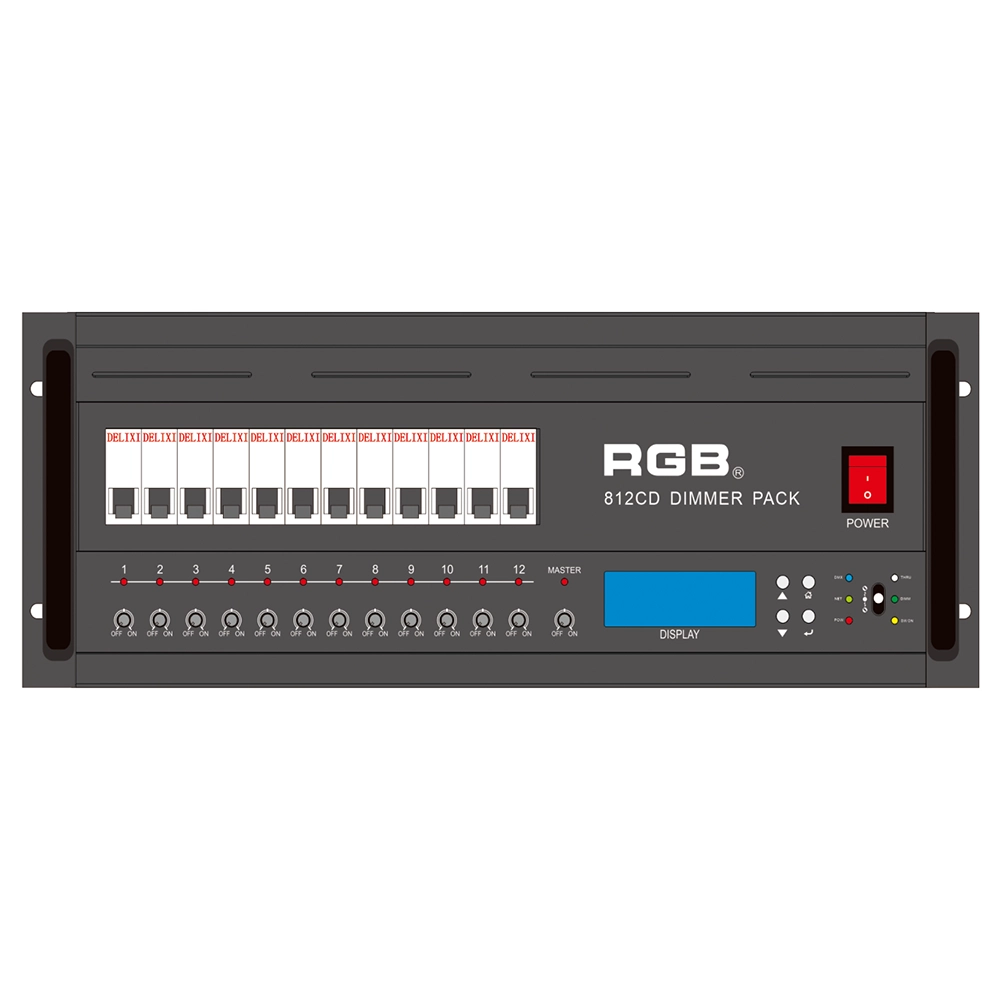
8 Series Intellight Dimmer/Relay Packs
RGB is the latest development and production of all digital, intelligent, and network dimming through the hybrid silicon box. It comes with six channels (806 silicon box), twelve channels (812 silicon box) with analog knob dimming, 49 DMX field recordings and replays (field backup function), and self-programming and recording field. RGB-8 silicon box with DMX512 digital signal input and RJ45 network input interface, with various types of dimming stations at home and abroad used. It is a powerful, stable performance and reliable work of a new generation of intelligent digital dimming through a hybrid silicon box.
Expert Support
Interested in learning more or need expert guidance related to this article? Fill in your details, and our team will provide tailored support.
Intelligent Control. Brilliant Performance.
RGB specializes in stage lighting control systems, delivering intelligent, reliable, and high-performance solutions for theaters and performance spaces worldwide.
Contact
Email:
Tel:
+86 20 3928 0245
+86 20 3928 0247
Address:
No.3, Huashan Road, Shilou Town, Panyu, Guangzhou, China.
Whatsapp: +8615975520131