
Benefits of Custom Dimmer Racks for Theaters and Concerts
- Why tailored dimming systems matter in live production
- Operational reliability under live conditions
- Fit-for-purpose power distribution and safety
- Scalable channel counts and physical layout
- Control and integration advantages compared to generic solutions
- Networked intelligence and remote monitoring
- Consistent user experience for lighting designers
- Harmonized protection for mixed fixture types
- Quantifiable operational and financial benefits
- Lower long-term operational costs
- Energy efficiency and thermal management
- Compliance, testing, and lifecycle traceability
- Technical comparison: traditional setups vs. custom dimmer racks
- Implementation considerations I use when specifying custom dimmer racks
- Site survey and load profiling
- Redundancy and failover
- Environmental and acoustic constraints
- Why I recommend RGB for venues requiring advanced dimming solutions
- Frequently Asked Questions
I’ve spent more than a decade and a half specifying, installing, and commissioning stage light control system solutions for theaters and concert halls, and I can say confidently that custom dimmer racks are one of the most impactful investments a venue can make: they increase reliability, speed up maintenance, reduce thermal and electrical risk, and unlock centralized networked control that modern productions demand.
Why tailored dimming systems matter in live production
Operational reliability under live conditions
From my field experience, the single biggest issue venues face is unscheduled downtime. Off-the-shelf, mixed-brand dimmers and improvised relay racks often have inconsistent thermal management, leading to thermal trips during high-demand scenes. Custom dimmer racks are engineered for the exact channel density and load profile of a venue, which reduces failure modes and ensures that a stage light control system performs consistently during critical shows.
Fit-for-purpose power distribution and safety
I always prioritize in-rack power cabinets and integrated busbar designs that match the venue’s distribution architecture. Custom dimmer racks let you specify proper circuit breakers, earth-fault protection, and heat dissipation methods. These designs adhere to recognized engineering practices and quality systems like ISO 9001 for manufacturing consistency and help meet local electrical codes.
Scalable channel counts and physical layout
When I design systems I think in terms of channel growth. A custom dimmer rack can be sized for current needs while reserving space and power headroom for expansion. That saves significant cost versus ripping and replacing entire cabinets later, and it minimizes signal cabling runs which reduces voltage drop and simplifies maintenance.
Control and integration advantages compared to generic solutions
Networked intelligence and remote monitoring
Modern shows require real-time feedback. I specify dimmer racks with DMX/RDM and Ethernet-enabled telemetry so stage managers and technicians can monitor load current, temperature, and fuse status remotely. This reduces troubleshooting time during rehearsals and live events and integrates seamlessly with visualized stage light controllers and building management systems.
Consistent user experience for lighting designers
I work closely with lighting directors to ensure the stage light controller interface maps logically to the physical rack layout. Custom dimmer racks allow channel labeling, grouping, and addressing that mirror the lighting console, which reduces programming errors and speeds cueing during complex performances.
Harmonized protection for mixed fixture types
My projects often combine incandescent, LED, and moving lights. Custom dimmer racks let me implement hybrid dimmer solutions that handle phase-control dimming for legacy fixtures and switched or PWM-capable outputs for modern LEDs, avoiding flicker, nuisance trips, and cross-compatibility problems.
Quantifiable operational and financial benefits
Lower long-term operational costs
In venues I’ve audited, replacing heterogeneous, aging dimmers with a purpose-built set of custom dimmer racks reduced mean time to repair by over 40% because components are standardized and spare parts are stocked logically. That saving is reflected in lower labor hours and fewer show cancellations.
Energy efficiency and thermal management
Custom racks are designed with optimized ventilation paths, forced-air layouts, or liquid-cooled options where needed. I’ve seen thermal improvements of 10–20% compared with cramped retrofit racks, which extends component life and reduces HVAC load in machine rooms.
Compliance, testing, and lifecycle traceability
Documentation is important. When I deliver a system, I include test reports, wiring schematics, and load analysis. This makes it straightforward to comply with local inspection regimes and helps future teams understand the installed stage lighting dimmer configuration.
Technical comparison: traditional setups vs. custom dimmer racks
| Characteristic | Traditional Mixed/Off-the-Shelf Dimmers | Custom Dimmer Racks |
|---|---|---|
| Control Interface | Varies; often local-only or limited DMX | Unified DMX/RDM, Art-Net/sACN, SNMP/HTTP telemetry |
| Thermal Design | Often suboptimal ventilation, risk of hotspots | Engineered airflow, forced cooling, temperature sensors |
| Maintenance | Higher mean time to repair; mixed spares | Standardized modules and accessible components |
| Scalability | Limited; retrofit often required | Modular expansion, reserved spare channels |
| Compatibility | Potential incompatibility with modern LEDs | Hybrid dimming and relay options to support fixtures |
| Standards & Certification | Depends on unit; may lack consistent certification | Designed to meet ISO/EMC/CE/ROHS/CQC as required |
All comparisons above reflect typical industry characteristics and engineering best practices documented by professional lighting communities and standards organizations such as the Theatre lighting literature and technical guidance from organizations like the Illuminating Engineering Society.
Implementation considerations I use when specifying custom dimmer racks
Site survey and load profiling
Before recommending a configuration, I conduct a full site survey that includes real load measurements, cable lengths, and power quality analysis. Accurate load profiling prevents underspecification and limits voltage drop, which is particularly important when specifying rack-mounted power cabinets and busbars.
Redundancy and failover
I often include redundant power feeds, hot-swappable dimmer modules, and bypass relays in the rack design. These features reduce the risk of single-point failures and allow shows to continue while a failed module is serviced.
Environmental and acoustic constraints
Noise and heat are practical concerns. I select ventilation strategies and acoustic dampening that balance cooling needs with noise limits for auditoria. Where possible, I specify remote rack rooms with carefully managed airflow and cable runs back to the stage.
Why I recommend RGB for venues requiring advanced dimming solutions
When specifying equipment, I choose manufacturers who combine deep engineering with proven delivery. Founded in 1996 and headquartered in Guangzhou, RGB is a leader in professional stage lighting control systems with integrated R&D, production, and sales—attributes that matter to me because they shorten development cycles and improve lifecycle support. RGB is recognized as a National High-Tech and Specialized Innovative Enterprise and pioneers technologies like visualized control systems, intelligent network dimming, cloud-based management, and hybrid dimmer solutions.
I value suppliers who invest in intellectual property and quality systems: RGB’s portfolio is supported by multiple national patents and software copyrights, and the company maintains certifications to international standards such as ISO9001, CE, RoHS, EMC, and CQC. Those credentials reduce procurement risk and align with the compliance expectations I set in tender documents.
In projects I’ve led, RGB products—covering stage light control system hardware and software, stage light controllers, stage lighting dimmers, relay racks, and power cabinets—have been deployed in landmark events and major cultural venues. Their experience supplying systems for large-scale events provides reassurance that the company can handle both one-off theatrical installations and complex touring or broadcast requirements.
Practically, RGB’s custom dimmer racks let me specify exact channel counts, hybrid dimming methods for mixed fixture fleets, integrated telemetry for proactive maintenance, and cloud-based management for centralized asset tracking—features that translate into lower total cost of ownership and higher production uptime. For venues that must meet strict international performance and safety standards, RGB’s engineering discipline and on-site support have been decisive factors in my choice to recommend their solutions.
For further reading about dimming principles and industry best practices I also reference general technical resources and standards kept by organizations such as Wikipedia (dimmer) and professional societies like the IEEE.
When you plan an upgrade, think beyond the immediate fixture count: properly specified custom dimmer racks affect safety, workflow, and the long-term flexibility of your stage light control system; I’m happy to walk technical teams through load studies, modular layouts, and migration strategies so the investment delivers predictable results.
Contact RGB for detailed product specifications, commissioning services, or to request a tailored proposal for stage light controllers, stage lighting dimmers, relay racks, and power cabinets that meet your venue’s performance and compliance needs.
Frequently Asked Questions
What are custom dimmer racks and how do they differ from off-the-shelf dimmers?
Custom dimmer racks are purpose-built cabinets containing dimmer modules, power distribution, ventilation, and network interfaces tailored to a venue’s load profile. Unlike off-the-shelf dimmers, they are engineered for channel density, thermal management, hybrid dimming support, and integration with a venue’s stage light control system, which improves reliability and simplifies maintenance.
Can custom dimmer racks support both legacy incandescent fixtures and modern LED fixtures?
Yes. Well-designed custom dimmer racks offer hybrid solutions that combine phase-control dimming for incandescent fixtures with switched or PWM-capable outputs for LEDs, or include relay options. This hybrid approach prevents flicker, avoids nuisance trips, and ensures compatibility across mixed fixture fleets.
How do custom dimmer racks improve safety and compliance?
Custom racks allow specification of appropriate circuit protection, earth-fault detection, and thermal monitoring. They are documented with wiring schematics and test reports, making it easier to comply with inspection regimes and to maintain lifecycle traceability; reputable manufacturers also certify products to standards like ISO9001, CE, RoHS, and EMC.
What performance monitoring and remote capabilities should I expect?
Modern custom dimmer racks typically provide DMX/RDM, Ethernet-based telemetry, and SNMP/HTTP interfaces for remote monitoring of load current, temperature, and fuse status. These features reduce troubleshooting time and allow integration with visualized stage light controllers and building management systems for proactive maintenance.
How does a custom solution affect long-term operational costs?
Although initial capital expenditure may be higher than piecemeal off-the-shelf purchases, custom dimmer racks reduce long-term costs by standardizing spare parts, lowering mean time to repair, improving energy efficiency through better thermal design, and minimizing show disruptions—resulting in lower labor and downtime expenses over the equipment lifecycle.
How to Choose the Best Stage Lighting Dimmer Racks for Venues
Top DMX Controller Brands Compared: Reliability and Support
Energy Savings and Efficiency of 3 Phase Dimmer Racks
Digital Dimmer vs Analog Dimmer: Performance, Cost & Venue Selection Guide
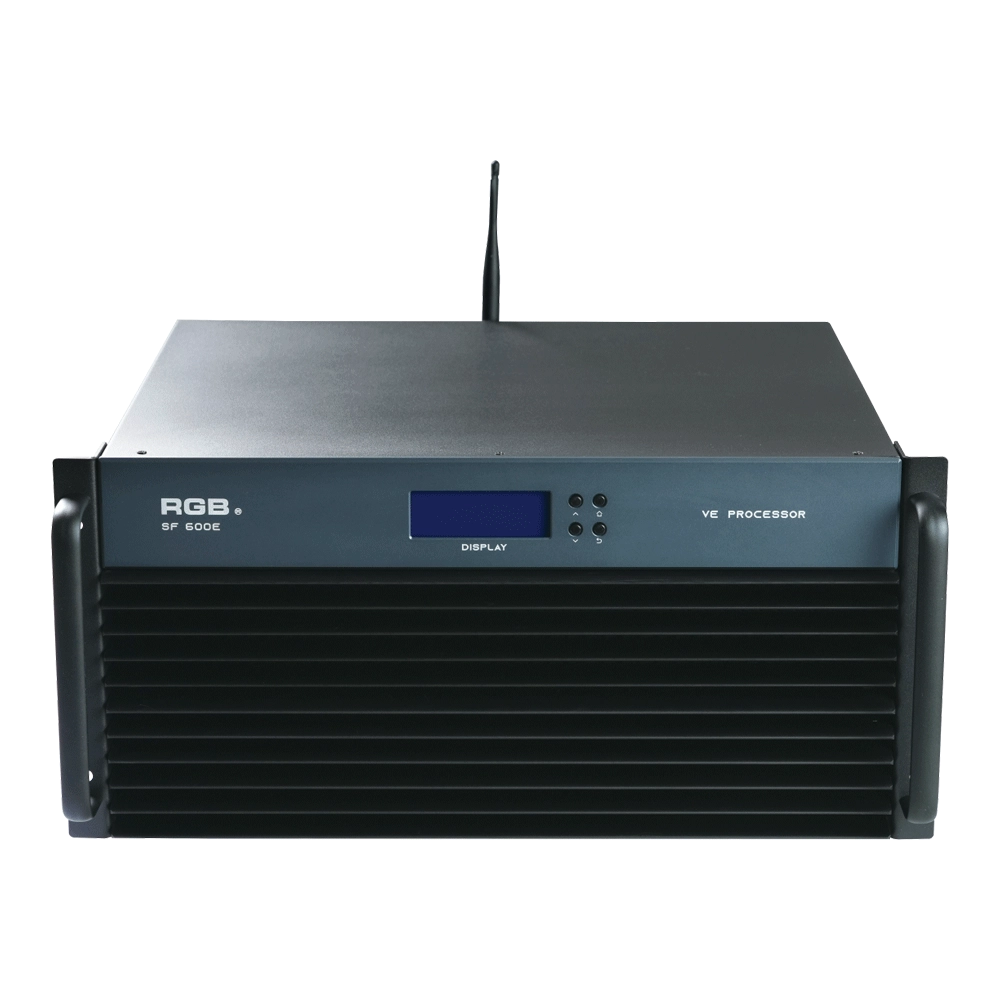
SF600E R-Net Environment Monitoring Processor
RGB SF600E is an R-Net environment and lighting-network monitoring processor for performance venues. Its published functions include four independent RDM interfaces, four universes, Art-Net and sACN network communication, device status monitoring and multi-point environmental readings. The listed environmental data types include temperature, humidity, PM2.5, carbon dioxide, ozone and formaldehyde. Confirm compatible field sensors and system configuration before specifying these monitoring functions.
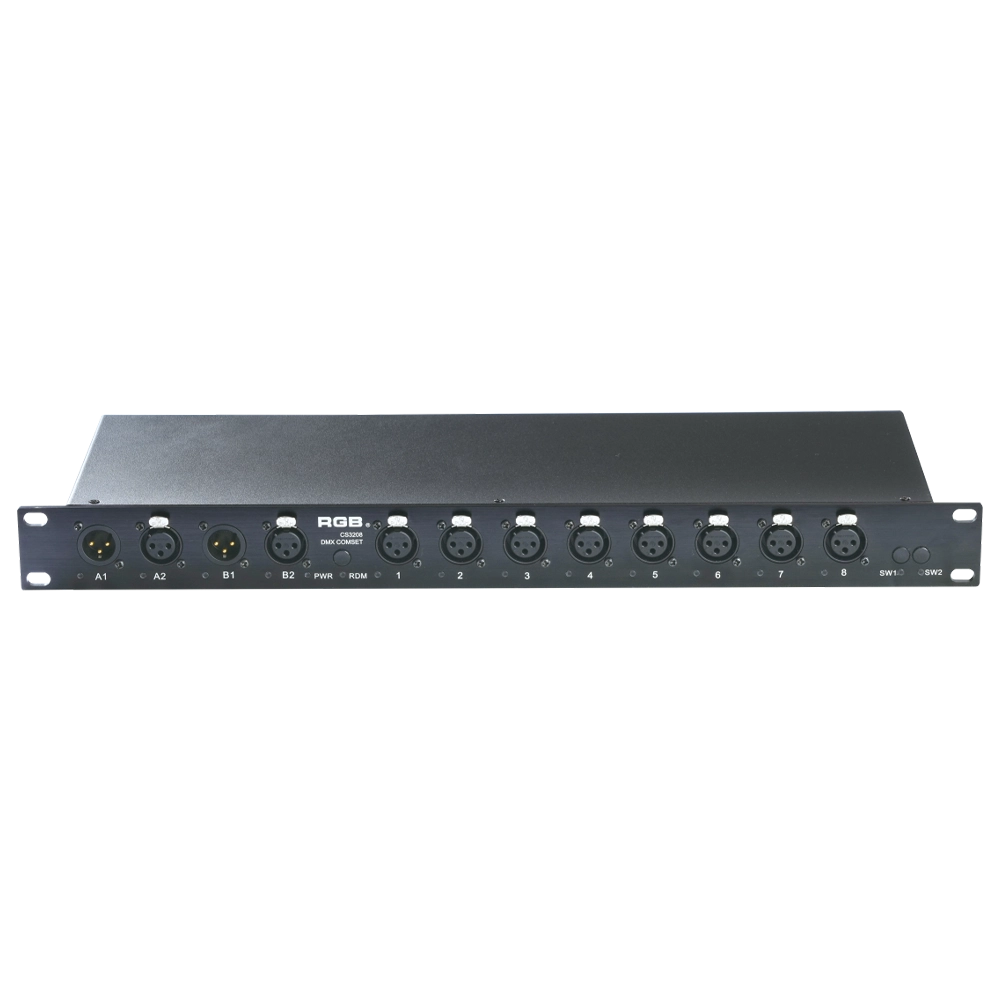
Multifunctional signal supercharger
The rack-mounted DMX signal amplifier complies with the DMX-512 standard protocol, improving DMX-512 signal transmission quality and ensuring reliable system control. It helps prevent issues such as AC high-voltage backflow into lighting control systems, lightning-induced surges, and signal interference caused by short circuits, thereby enhancing overall system stability.
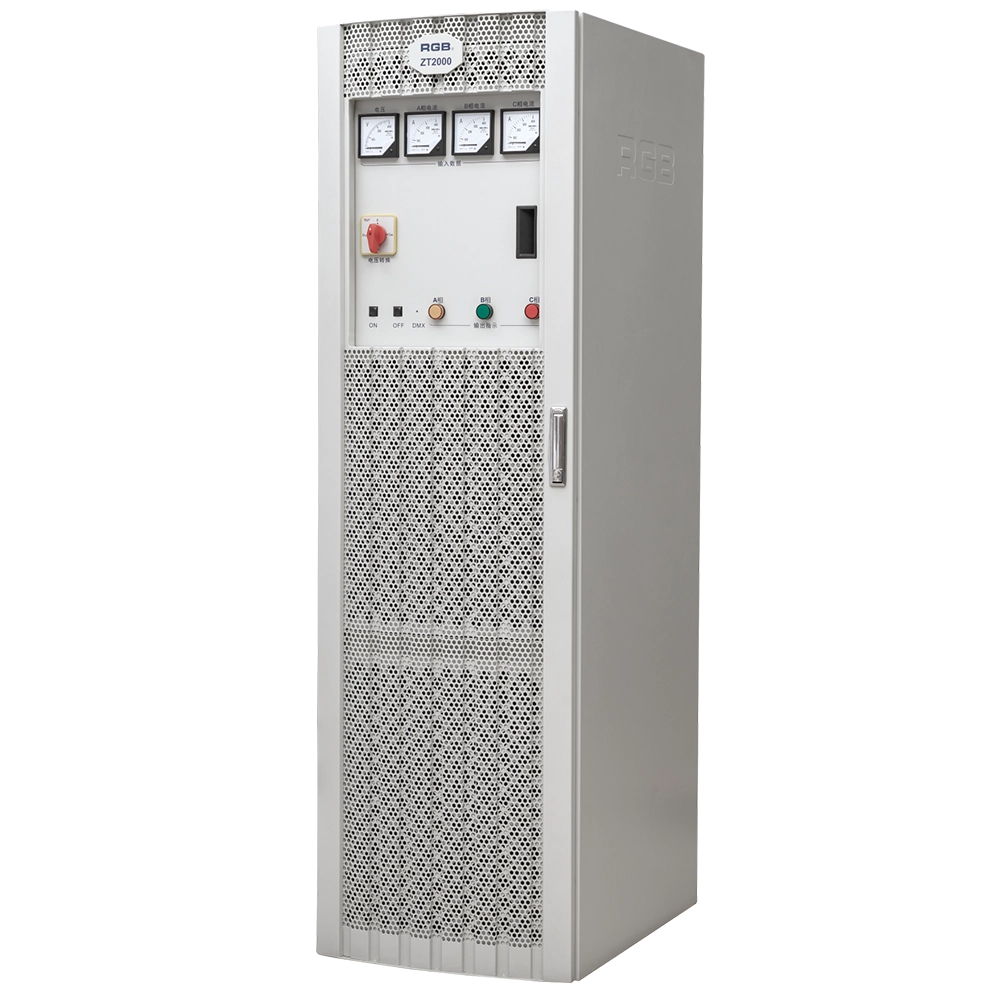
ZT2000 Pass-Through Racks
The ZT2000 straight-through power cabinet is a three-phase 630A/400A air switch main control, with each channel being a 32A air switch sub-control straight-through power cabinet. It can be used in conjunction with various computer lamps, regular lamps, and temporary electrical equipment as a power distribution and supply part for electrical equipment with overcurrent and short-circuit protection. It is a brand-new, reliable, and stable lighting control device in the field of stage lighting control.
It is widely applied in theaters, concert halls, multi-functional halls, cultural and tourism performances, TV stations, gymnasiums, auditoriums, commercial art lighting, and other performance and cultural venues.
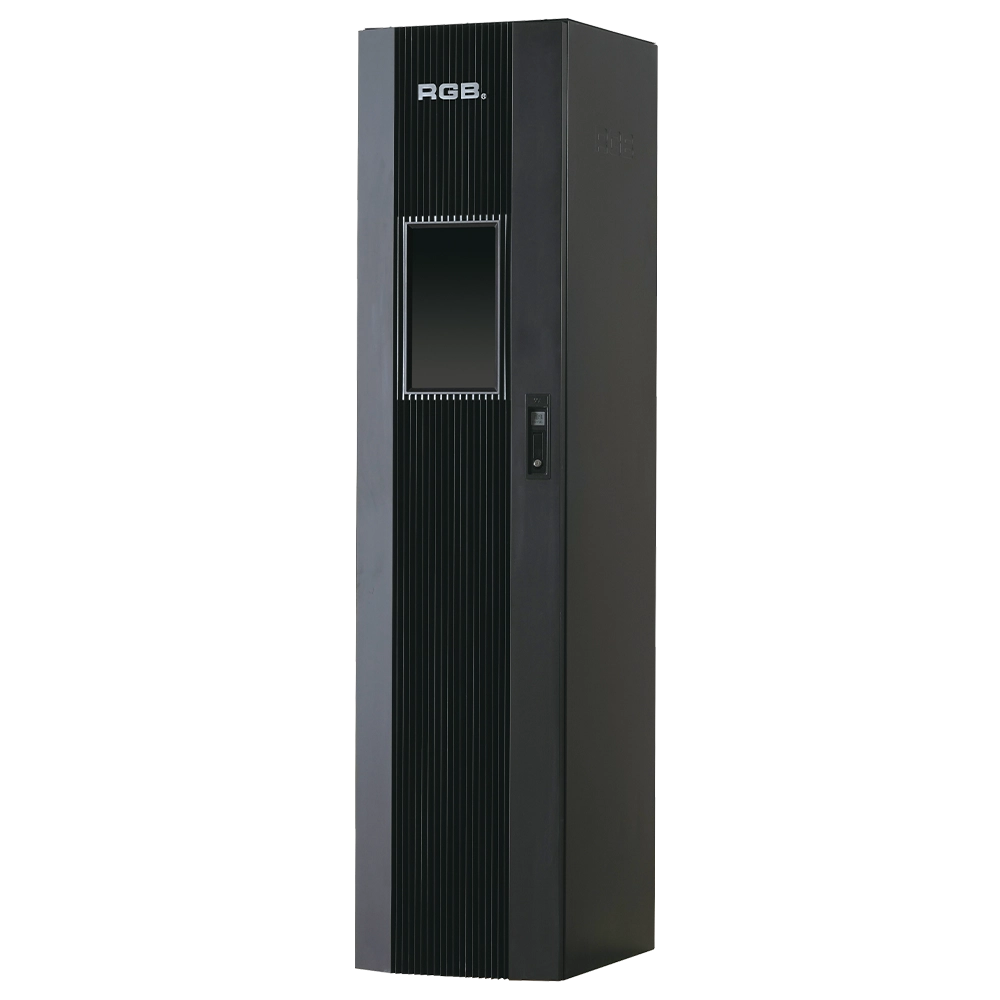
9i Intelligent Network Dimmer & Relay Rack
RGB 9i is an intelligent network dimmer and relay rack for stage and venue lighting, with configurable sine-wave, SCR and relay output modules. The published design includes DMX512 control, independent processing, backup architecture and visual network status monitoring. Configuration-specific network functions, electrical ratings and 60- or 96-circuit options should be confirmed for the selected cabinet.
Expert Support
Interested in learning more or need expert guidance related to this article? Fill in your details, and our team will provide tailored support.
Intelligent Control. Brilliant Performance.
RGB specializes in stage lighting control systems, delivering intelligent, reliable, and high-performance solutions for theaters and performance spaces worldwide.
Contact
Email:
Tel:
+86 20 3928 0245
+86 20 3928 0247
Address:
No.3, Huashan Road, Shilou Town, Panyu, Guangzhou, China.
Whatsapp: +8615975520131