
7 Common Mistakes When Choosing Stage Lighting Dimmer Racks (and How to Fix Them)
- Quick Summary: Key Takeaways for Lighting Directors
- What is a Stage Lighting Dimmer Rack?
- Mistake #1: Investing in 'Dimmer-Only' Racks for an LED Future
- Mistake #2: Ignoring 'Rise Time' and Audio Interference
- Mistake #3: Confusing SCR with IGBT Technology
- Mistake #4: Underestimating Protocol Compatibility (DMX vs. Network)
- Mistake #5: Neglecting Thermal Management and Airflow
- Mistake #6: Overlooking Maintenance and Modularity
- Mistake #7: Failing to Plan for 'Inrush Current'
- Future-Proofing: Dimmer Rack Trends for 2026 and Beyond
- Conclusion
- FAQ
- What is the difference between SCR and IGBT dimmer racks?
- Can I plug LED stage lights into a standard dimmer rack?
- What is 'Rise Time' in stage lighting dimmers?
- How many channels do I need in a dimmer rack?
- What is a 'ThruPower' or Hybrid dimmer module?
- Why is my dimmer rack making a buzzing noise?
- Do I need 3-phase power for a dimmer rack?
- How long do dimmer racks typically last?
Quick Summary: Key Takeaways for Lighting Directors
- Hybrid is Essential: Buying for the future means prioritizing Hybrid Racks (Dimmer + Relay) over pure dimming to accommodate LED mains dimming compatibility.
- Noise Control: Noise floors matter; dimmer rack rise time specifications dictate how much your lights will 'sing' and interfere with audio.
- Protocol Support: Network protocols (sACN, Art-Net) are now as critical as power capacity for modern theatrical power distribution systems.
- Tech Type: Understanding SCR vs IGBT dimming technology is crucial for balancing budget against noise requirements.
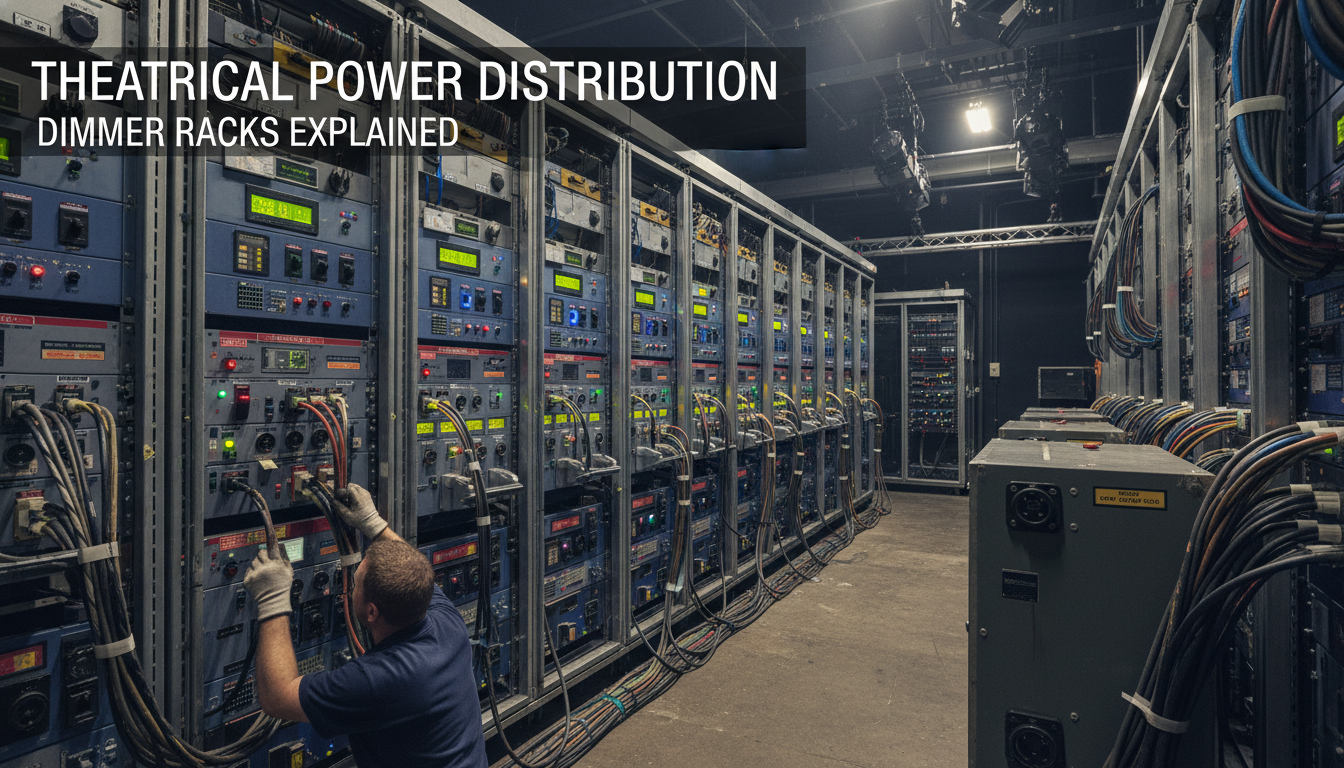
What is a Stage Lighting Dimmer Rack?
A stage lighting dimmer rack is a high-density power distribution unit that regulates the voltage supplied to lighting fixtures to control their intensity.
Unlike standard breaker panels, these racks utilize thyristors or transistors to rapidly switch power on and off, creating a dimming curve. They serve as the critical translator between lighting console DMX protocols and the physical rig, converting low-voltage digital signals into high-power electrical output. While historically designed for tungsten payloads, modern racks must now manage hybrid loads including intelligent moving lights and LED fixtures.
Mistake #1: Investing in 'Dimmer-Only' Racks for an LED Future
The most critical error in 2026 is purchasing traditional dimming systems that lack 'ThruPower' or bypass relay capabilities.
Modern LED fixtures contain internal power supply units (PSUs) that require constant, unregulated sine wave power (110V/230V). Connecting an LED fixture to a standard dimmer circuit—even one set to 100%—can introduce a chopped waveform that overheats capacitors and destroys the fixture's PSU over time. This is a massive issue regarding LED mains dimming compatibility.
The Fix:
- Specify Hybrid Modules: Choose racks that offer "Universal" or "ThruPower" modules.
- Software Switching: Ensure you can toggle each circuit between Dimmer (for Tungsten), Relay (for LEDs), and Constant Power (for Motors) via the control processor.
- Safety Precaution: Never rely on a standard dimmer "parked" at full to power intelligent lights; a spike can still occur.
Mistake #2: Ignoring 'Rise Time' and Audio Interference
Overlooking the choke specification, known as 'Rise Time,' guarantees audible filament buzz and hum in your audio system.
Rise time is the duration it takes for the current to rise from zero to its maximum value during the dimming cycle, measured in microseconds (µs). A short rise time (sharp spike) creates significant harmonic noise that causes lamp filaments to physically vibrate ("sing") and induces electromagnetic interference (EMI) into nearby audio cables. As explained by industry leaders like Electronic Theatre Controls (ETC), a standard rise time of 350µs is often insufficient for professional theatres.
The Fix:
- Standard Venues: Look for dimmer rack rise time specs of at least 350µs to 500µs.
- Critical Audio Environments: For concert halls and opera houses, specify 800µs toroidal chokes to maximize noise suppression.
- Cable Management: Always separate audio lines from power multicore cables by at least 12 inches.
Mistake #3: Confusing SCR with IGBT Technology
Assuming all dimming technologies perform equally leads to noisy venues and wasted budgets.
SCR vs IGBT dimming technology represents the difference between standard heavy-duty touring gear and silent, refined installation systems.
- SCR (Silicon Controlled Rectifier): The industry workhorse. It chops the sine wave on the leading edge. It is robust, handles short circuits well, but requires heavy copper chokes to reduce noise. It is cheaper but physically heavier.
- IGBT (Insulated-Gate Bipolar Transistor): A solid-state switch that can chop on the trailing edge (Reverse Phase). Because it controls voltage more precisely, it does not need large chokes, making it silent and lighter. However, it is more expensive and sensitive to short circuits.
The Fix:
- Touring/Rock: Stick to SCR for durability and cost-effectiveness.
- Broadcast/Opera: Invest in IGBT for silent operation where microphone gain is high.
Mistake #4: Underestimating Protocol Compatibility (DMX vs. Network)
Relying solely on basic DMX512 connections without planning for Ethernet-based network protocols is a bottleneck for modern rigs.
While lighting console DMX protocols are the standard foundation, a single DMX universe only supports 512 channels. Modern rigs with pixel-mapped LEDs consume thousands of addresses. Furthermore, basic DMX often lacks the bandwidth for advanced system monitoring. According to Wikipedia's overview of DMX512, the standard has evolved into DMX512-A to support limited feedback, but Ethernet is superior for data density.
The Fix:
- Network Processor: Ensure your rack processor supports sACN (Streaming ACN) or Art-Net inputs directly via RJ45.
- RDM Capability: Verify the rack supports RDM (Remote Device Management). This allows you to remotely monitor rack temperature, fan status, and breaker trips directly from your lighting console.
Mistake #5: Neglecting Thermal Management and Airflow
Installing high-density dimmer racks in closets without calculated HVAC is the leading cause of mid-show blackouts.
Dimmer racks are essentially heaters; they are around 97-98% efficient, meaning 2-3% of the total load is converted directly into heat. A fully loaded 96-channel rack can generate as much heat as several space heaters. If the ambient temperature exceeds the rack's operating threshold (usually 40°C/104°F), the processor will trigger a thermal shutdown to protect the electronics.
The Fix:
- BTU Calculation: Calculate the total BTU load (Watts dissipated) and size the room's air conditioning accordingly.
- Airflow Direction: Identify if the rack breathes front-to-back or bottom-to-top and ensure intake vents are not blocked by walls or cables.
- Cleanliness: Schedule monthly filter cleanings; dust buildup acts as insulation and accelerates failure.
Mistake #6: Overlooking Maintenance and Modularity
Choosing racks with hard-wired internal components instead of hot-swappable modules creates maintenance nightmares.
In a live environment, speed is currency. If a dimmer cube or control card fails 10 minutes before curtain, you cannot afford to power down the entire system to unscrew a hard-wired component.
The Fix:
- Hot-Swap capability: Prioritize racks where individual power modules can be pulled and replaced while the rest of the rack remains energized.
- Spare Stock: Always purchase 2-3 spare modules and a spare processor core (brain) with the initial install.
Mistake #7: Failing to Plan for 'Inrush Current'
Sizing breakers exactly to the running load without accounting for cold starts will lead to nuisance tripping.
Tungsten filaments have very low resistance when cold. When you flash a rig to 100%, the initial current draw (Inrush) can be 10 to 15 times the rated steady-state current for a split second. Standard household breakers often trip instantly under this magnetic force.
The Fix:
- High-Magnetic Breakers: Ensure the rack uses "High-Mag" or fully hydraulic-magnetic breakers designed to withstand high inrush currents without tripping.
- Sequential Startup: Program your theatrical power distribution systems to power up sequentially rather than all at once to reduce the load on the building's main transformer.
Future-Proofing: Dimmer Rack Trends for 2026 and Beyond
As we look ahead, the line between "dimming" and "power distribution" is blurring. The most advanced systems are now "Distributed Dimming" bars that live on the pipe next to the light, reducing copper cabling costs. Additionally, the integration of AI-driven energy monitoring allows venue managers to predict module failure before it happens, analyzing voltage irregularities in real-time. Whether you are upgrading a high school auditorium or a professional arena, flexibility is the only future-proof strategy.
Conclusion
Avoiding these common pitfalls—specifically the failure to accommodate LED power requirements—ensures your venue's infrastructure lasts for decades. Focus on hybrid technology, noise suppression (rise time), and thermal management to maximize ROI on your electrical infrastructure. Contact us today to optimize your theatrical power distribution strategy.
FAQ
What is the difference between SCR and IGBT dimmer racks?
SCR (Silicon Controlled Rectifier) chops the sine wave on the leading edge and requires a choke to reduce noise, making it heavy but durable. IGBT (Insulated-Gate Bipolar Transistor) can chop on the trailing edge (reverse phase), is silent, lighter, and better for sensitive equipment but typically more expensive.
Can I plug LED stage lights into a standard dimmer rack?
Generally, no. Standard dimmers modify voltage which can damage the power supply of an LED fixture. You must use a 'Relay Module' or set the dimmer to 'Non-Dim/Switched' mode if the hardware supports it.
What is 'Rise Time' in stage lighting dimmers?
Rise time measures how long it takes for the current to rise from zero to full flow in a dimming cycle. A higher rise time (e.g., 800 microseconds) reduces filament buzz and audio line interference.
How many channels do I need in a dimmer rack?
This depends on your fixture count. A standard 96-way rack is common for mid-sized theaters. Always plan for 20% spare capacity to accommodate future expansion or touring rentals.
What is a 'ThruPower' or Hybrid dimmer module?
It is a module that can act as a dimmer, a mechanical relay (hard switch), or constant power source. This flexibility allows venues to mix tungsten and LED fixtures in the same rig easily.
Why is my dimmer rack making a buzzing noise?
Buzzing usually comes from the vibration of the magnetic chokes inside the dimmer modules. Excessive noise may indicate loose laminations in the choke or an overload condition.
Do I need 3-phase power for a dimmer rack?
Yes, almost all professional high-density dimmer racks require 3-phase power to balance the heavy electrical load. Portable 'dimmer packs' might run on single-phase, but full racks do not.
How long do dimmer racks typically last?
With proper maintenance (cleaning fans, tightening terminals), a quality rack can last 20+ years. However, the control processors often require upgrades every 10 years to stay compatible with modern protocols.
Power Handling and Load Balancing for Rack Dimmer Racks
Top 10 Dimmer & Relay Racks Manufacturers and Supplier Brands
Custom vs Off-the-Shelf Stage Dimmer Solutions for Buyers
DMX Rack Dimmer Installation: Best Practices for Venues
Distributors
What is the minimum order quantity for cooperation?
Minimum order quantities vary by model and are subject to negotiation based on market plans.
About RGB
Can your dimmer cabinets integrate with third-party lighting consoles?
Yes. Our systems follow international protocols and can seamlessly integrate with major global brands through DMX, RDM, Art-Net, and sACN.
What after-sales support do you provide?
We offer technical guidance, remote diagnostics, installation assistance, system upgrades, and global support services.
What types of lighting control systems do you support?
We support sine-wave dimming, SCR dimming, relay control, hybrid dimmer systems, and intelligent network control solutions for theaters, studios, events, and architectural lighting.
How do you ensure product stability during large-scale events?
All products undergo rigorous testing, long-duration load simulation, and multi-standard verification to guarantee stable performance in demanding environments.
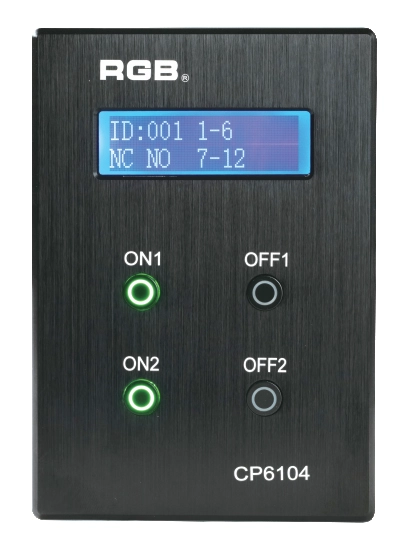
Site Light Controller CP6104
The CP6104 lighting control panel is a lighting control device for theater stage lights, work lights, environmental lighting, commercial art lighting, sports venue lighting and other places. By connecting to the dedicated lighting control host CP6100, it realizes the central control of the lighting system, supports a visual lighting control system, and intuitively displays the online and offline status of CP6104. Realize remote monitoring, editing and setting of corresponding parameters.
It is widely applicable to theaters, cinemas, auditoriums, stadiums, museums, exhibition halls, cultural tourism performances, commercial art lighting and other places.
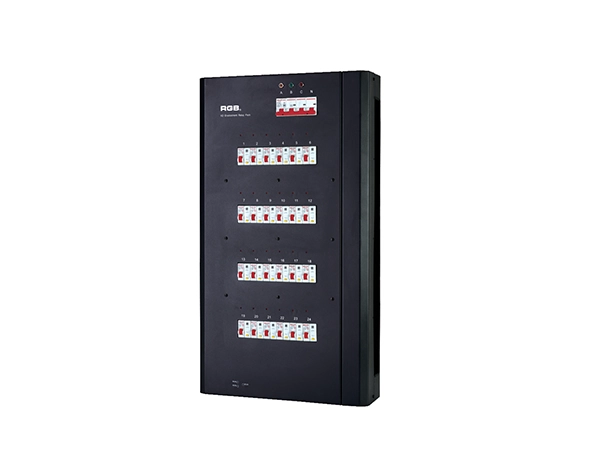
K2 Intelligent Network Relay Racks
K series is the newly developed and produced product of all-weather smart network relay cabinet. It has two major indoor and outdoor waterproof series and has multiple network control modes, such as double DMX512, sACN, ART-net, etc, which can control any equipment like resistive, inductive and capacitive and so on
K series has two major series from the perspective of function, namely, K2 ordinary type and KW2 waterproof type. It has two modes of installation, one is hanging on the wall, and the other is cabinet. It has three specifications of output circuit, namely, 24, 48 and 60 respectively.
K series applies to different performance places, such as, outdoor cultural tourism, TV station, theater, stadium and ambient intelligence lighting and so on.
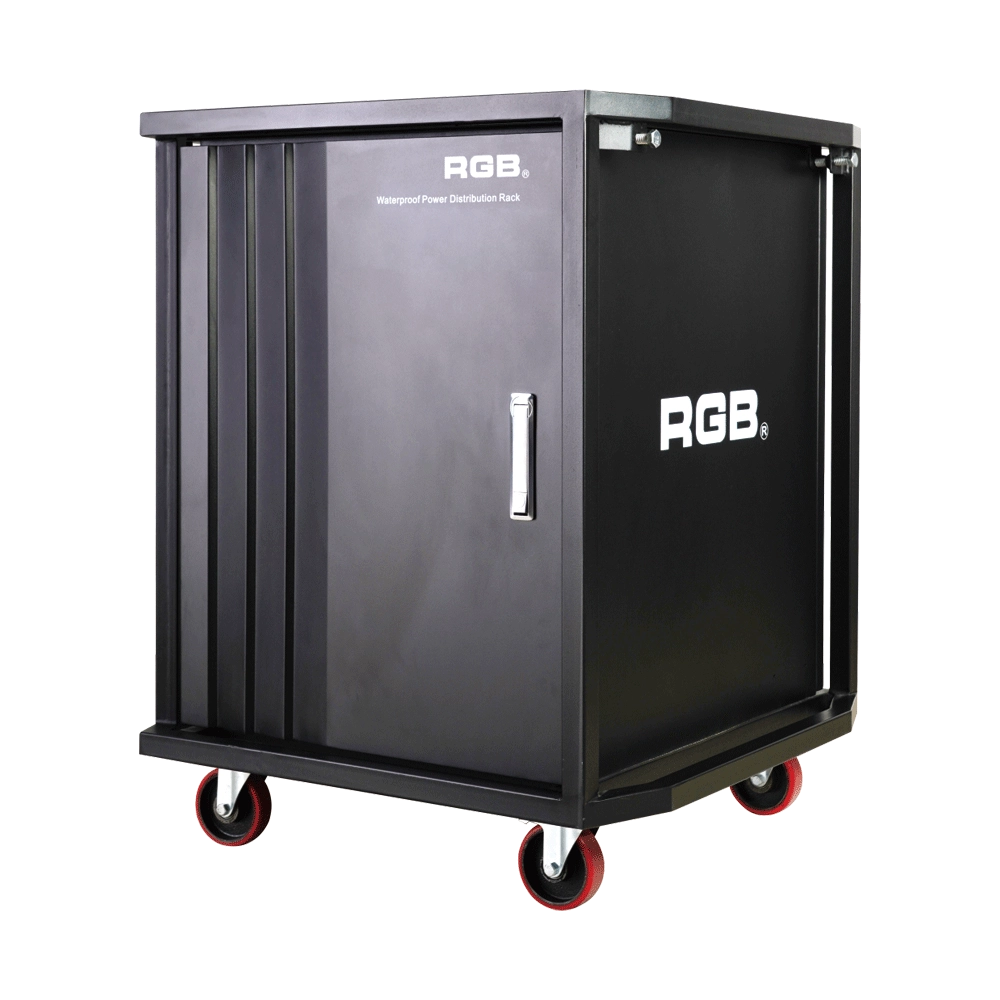
Multifunction Waterproofing Racks Of RGB-W Series
With the continuous development of flow performance, the requirement for performance is more demanding. In order to facilitate the transportation and make it easier to carry for all the equipment used in the performance, the stage light and sound equipment will be installed into a cabinet, for example, the power supply system. During the transportation process, it is inevitable for a collision or crash to take place. If the cabinet material is not strong enough, it may lead to deformation and even damage the equipment inside. Moreover, most of the existing cabinets are not waterproof. It will be very dangerous for the flow performance, as it is normal and inevitable to encounter rainy days. As the equipment inside the cabinets is electriferous, it might cause damage to the electronic equipment at least and even cause casualties at worst. Meanwhile, most of the existing cabinets can only be installed with one kind of equipment with a single variety.
In order to overcome the above-mentioned technical flaw, the RGB company has developed a new type of waterproofing multifunction cabinet of the W series. The waterproofing cabinet of the W series meets the need for the installation of dimming and tone-tuning devices, transportation, and utilization.
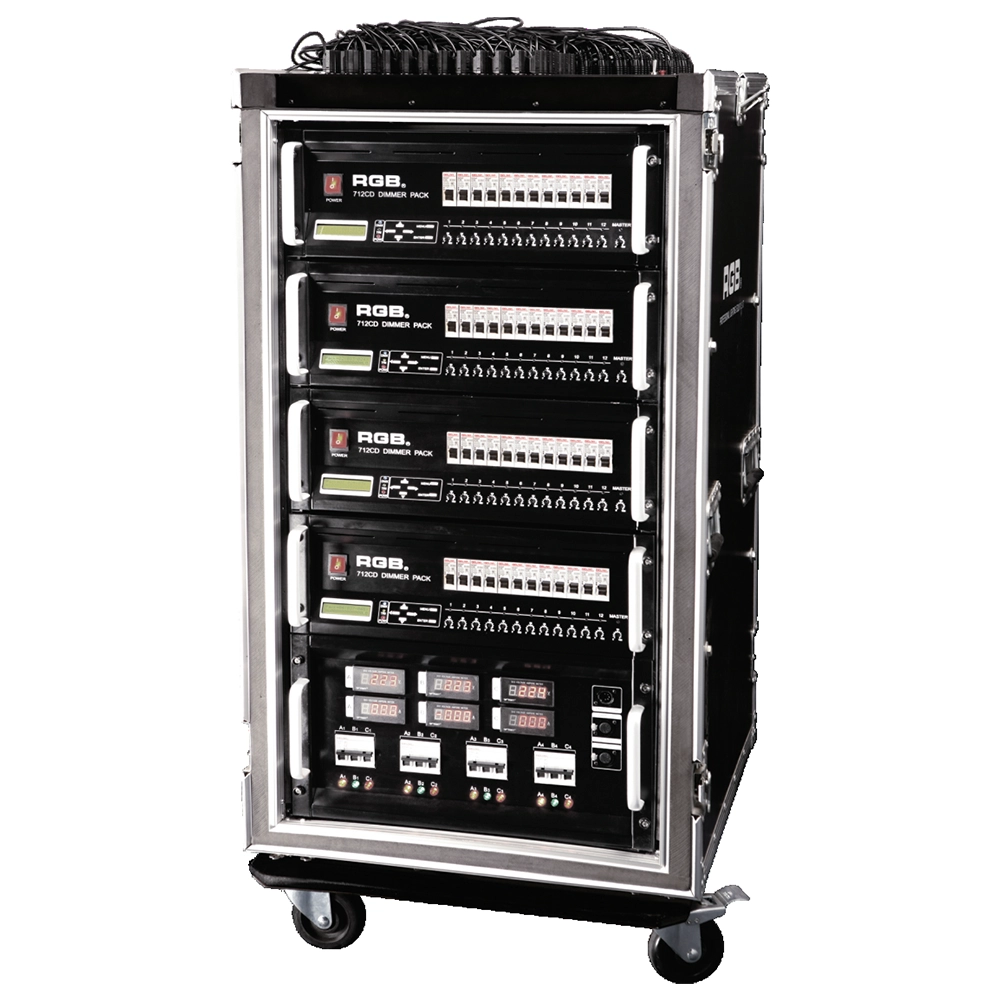
Intelligent Network Touring Dimmer Racks
RGB intelligent network touring dimmer racks can be assembledinto many types of dimmer racks by taking 7 series dimmer
packs as the unit. They are widely used in the entertainment fortheir convenience and practicabillity,
Expert Support
Interested in learning more or need expert guidance related to this article? Fill in your details, and our team will provide tailored support.
Intelligent Control. Brilliant Performance.
RGB specializes in stage lighting control systems, delivering intelligent, reliable, and high-performance solutions for theaters and performance spaces worldwide.
Contact
Email:
Tel:
+86 20 3928 0245
+86 20 3928 0247
Address:
No.3, Huashan Road, Shilou Town, Panyu, Guangzhou, China.
Whatsapp: +8615975520131