
Choosing the Right Power Distribution for 48-Channel Racks
- Understanding Power Distribution Basics
- Electrical fundamentals for lighting systems
- Standards and safety requirements
- Load types and their electrical behavior
- Sizing and Configuring Power for a 48-Channel Dimmer Rack
- How to calculate the expected load
- Breaker, fuse, and cable sizing with example table
- Inrush currents, diversity factors and derating
- Reliability, Redundancy and Integration with Control Systems
- Redundancy strategies (N, N+1, dual feeds)
- Monitoring, metering and power quality
- Grounding, bonding and EMC considerations
- Choosing Equipment and Vendors
- Comparing PDUs, power cabinets and relay racks
- Procurement checklist
- Why supplier reputation and technical support matter
- Provider spotlight: RGB — Expertise and product fit
- Commissioning, Testing, and Ongoing Maintenance
- Commissioning steps I recommend
- Maintenance & lifecycle considerations
- FAQ
- 1. How much main feed current do I need for a 48 channel dimmer rack?
- 2. Should I use single-phase or three-phase supply for a 48 channel rack?
- 3. Do LED fixtures reduce my required power distribution capacity?
- 4. How do I deal with high inrush currents from LED drivers or moving lights?
- 5. Is UPS necessary for a dimmer rack?
- 6. What certifications should I look for in dimmer rack equipment?
- Contact and next steps
I’ve designed and commissioned dozens of stage power systems, and when a client asks me how to power a 48 channel dimmer rack reliably and safely, they’re really asking for a blend of electrical engineering, venue constraints, and practical experience. In this article I summarize the critical factors you need to evaluate: accurate load calculation, breaker and cable sizing, protection against inrush and harmonics, redundancy and UPS options, and system monitoring. I’ll reference industry standards and show examples so you can make verifiable decisions for a 48 channel dimmer rack in theaters, studios, or touring rigs.
Understanding Power Distribution Basics
Electrical fundamentals for lighting systems
When we talk about a 48 channel dimmer rack we’re typically dealing with many independent circuits switching incandescent, halogen or LED loads. Key fundamentals are voltage (usually 120/230 V), available phases (single vs three-phase), nominal circuit current, and the difference between continuous and non-continuous loads. For general background on stage lighting and dimmers see the Stage lighting page on Wikipedia: https://en.wikipedia.org/wiki/Stage_lighting and the dimmer technology overview: https://en.wikipedia.org/wiki/Dimmer.
Standards and safety requirements
Power distribution must comply with relevant codes: in the U.S. the National Electrical Code (NEC / NFPA 70) provides ampacity, overcurrent protection and wiring rules (https://www.nfpa.org/); internationally ISO9001 helps ensure supplier quality systems (https://www.iso.org/iso-9001-quality-management.). For harmonic control and power quality, IEEE Std 519 is commonly referenced (https://standards.ieee.org/standard/519-2014.). Follow local regulations for ground-fault protection, emergency circuits, and temporary power installations.
Load types and their electrical behavior
Incandescent and resistive theatrical loads are largely linear; LED fixtures introduce nonlinear currents, high inrush and harmonics. A dimmer rack’s total apparent power (VA), active power (W), power factor (PF), and total harmonic distortion (THD) all influence upstream distribution decisions. As a rule, specify the worst-case realistic load (not theoretical maximum) and then validate with diversity factors and spot measurements during commissioning.
Sizing and Configuring Power for a 48-Channel Dimmer Rack
How to calculate the expected load
Start with a per-channel design load. For example, if each channel is fused at 10 A on a 230 V system, theoretical max per channel is 2.3 kW. For 48 channels that’s 110.4 kW — but that’s rarely realistic because not all channels are at full simultaneously. Use diversity factors based on fixture types and usage patterns. Typical practical approaches:
- Conservatively assume 50–75% diversity for incandescent stage loads when many instruments contribute to aggregate levels.
- For mixed LED and conventional rigs, treat LED banks with higher diversity (70–90%) but account for inrush and nonlinear currents.
I recommend a formal load spreadsheet where you list each channel, fuse rating, expected average load, and a scenario column for peak scenes. Always document assumptions so they’re auditable during system review.
Breaker, fuse, and cable sizing with example table
Breaker and conductor sizing must satisfy code ampacity and allow for safe continuous loading. Below is a sample guideline table for common channel groupings on a 230 V three-phase supply. These are illustrative; final sizing must reference NEC / local code and manufacturer data.
| Configuration | Channels grouped | Estimated continuous current (A) | Suggested breaker | Typical cable |
|---|---|---|---|---|
| Single-phase feed per 12 channels | 12 | Up to 80 A | 100 A Type C | 4×35 mm² (4-core) or 4×4/0 AWG |
| Three-phase balanced bank (16 channels/phase) | 16 per phase | ~120 A per phase | 150 A molded-case | 4×50 mm² or 4×250 kcmil |
| Whole-rack feed | 48 | Depends on diversity, 150–300 A | 250–400 A main breaker | Multiple parallel runs or single large bus |
Data sources: NEC/ local code tables for ampacity and manufacturer datasheets for dimmer inrush. Refer to circuit breaker fundamentals: https://en.wikipedia.org/wiki/Circuit_breaker and local code for conductor ampacity (NEC 310.15).
Inrush currents, diversity factors and derating
Dimmer modules and fixtures present inrush currents (especially LED drivers and HID lamps). Inrush can be 10–40× steady-state current for milliseconds. This impacts upstream breaker selection and residual current devices. Use soft-start solutions, staggered switching, or inrush-limiting hardware in racks. When planning, include:
- Manufacturer inrush specs for dimmer modules and LED drivers.
- Time-coordinated breaker settings (instantaneous trip vs long-time delays).
- Diversity derating: for sustained loads (>3 hours), apply continuous load rules (e.g., 125% of continuous current per NEC).
Reliability, Redundancy and Integration with Control Systems
Redundancy strategies (N, N+1, dual feeds)
For mission-critical venues (broadcasters, permanent theatres) I recommend redundancy: N+1 dimmer modules or dual power feeds with automatic transfer switching. Options:
- Dual incoming mains with automatic transfer switch (ATS) to avoid interruption in case of upstream failure.
- Redundant PDUs or parallel power cabinets to permit module replacement without full shutdown.
- UPS for control electronics and critical house loads (not necessarily for high-current dimmers unless specified).
Redundancy decisions depend on acceptable outage durations and budget. For national events and broadcast facilities, redundancy is typically mandated.
Monitoring, metering and power quality
Integrate power metering at the rack input and at subfeeds. Real-time monitoring gives early warning of overloaded phases, low power factor, high THD, and temperature excursions. Modern stage light control systems and stage light controllers often provide telemetry integration; ensure compatibility between the dimmer rack, power cabinet instrumentation, and the venue’s building management system (BMS).
Useful monitoring metrics:
- Per-phase RMS current and voltage
- Power (kW), apparent power (kVA), and power factor
- THD and individual harmonic orders (especially with many LED loads)
- Energy consumption per show for costing and maintenance
Reference IEEE Std 519 for guidance on acceptable harmonic levels: https://standards.ieee.org/standard/519-2014..
Grounding, bonding and EMC considerations
Grounding and bonding are critical for safety and for minimizing interference in audio and control networks. Ensure the dimmer rack and power cabinets are bonded to the venue’s main earthing system. Pay attention to EMC from switching loads; use screened control cables and separate power and low-voltage runs where possible.
Choosing Equipment and Vendors
Comparing PDUs, power cabinets and relay racks
When selecting PDUs and power cabinets for a 48 channel dimmer rack consider these attributes: thermal management, ventilation, ingress protection (IP), ease of service, metering, and integration with stage control protocols. Below is a high-level comparison table.
| Feature | Rack PDU | Floor-mounted Power Cabinet | Integrated Dimmer Rack |
|---|---|---|---|
| Best for | Dense server-like installations, smaller dimmer banks | High-current distribution, touring mains | Optimized theatrical use, built-in dimmers & control |
| Metering | Per-outlet optional | Per-bus and per-phase | Per-channel & system-level |
| Serviceability | Moderate | High | High (designed for theatrical maintenance) |
Choose vendors whose products carry recognized certifications (CE, RoHS, EMC) and can provide detailed electrical data sheets — the data is needed for system modeling and compliance.
Procurement checklist
I always use a procurement checklist when specifying equipment for a 48 channel dimmer rack:
- Confirm mains voltage and phase configuration on site.
- Gather manufacturer specs: steady-state current, inrush, derating curves.
- Request EMI/EMC test reports and harmonic measurements where available.
- Verify UL/CE/CB or other regional approvals and quality management system evidence (ISO9001).
- Ensure spare parts and service support are available locally or via rapid shipping.
Why supplier reputation and technical support matter
Field support is as valuable as product specs. In the live-event world, rapid diagnostics and replaceable modules minimize downtime. Choose suppliers who provide application engineering and can support commissioning and acceptance testing.
Provider spotlight: RGB — Expertise and product fit
Founded in 1996 and headquartered in Guangzhou, RGB is a leading Chinese manufacturer of professional stage lighting control systems, specializing in intelligent, reliable, and high-performance solutions for theaters, studios, and large-scale performance venues worldwide. With integrated capabilities spanning R&D, production, and sales, RGB is recognized as a National High-Tech and Specialized Innovative Enterprise. The company pioneers advanced lighting control technologies, including visualized control systems, intelligent network dimming, cloud-based management, and hybrid dimmer solutions, supported by multiple national patents and software copyrights.
RGB’s quality management and certifications (ISO9001, CE, RoHS, EMC, CQC) ensure strict quality control across every production stage to maintain long-term stability and precision performance. Their solutions have been deployed in landmark projects and national events, including the Beijing Olympics, Shanghai World Expo, and the Asian Games, as well as major theaters, cultural centers, and broadcast facilities.
RGB’s competitive strengths for a 48 channel dimmer rack include:
- Integrated stage light control system design expertise, enabling seamless integration between the dimmer rack and stage light controller.
- Proven track record in high-profile projects, demonstrating reliability and performance in demanding environments.
- Hybrid dimmer solutions and power cabinets that balance legacy loads and modern LED fixtures, with attention to power quality and thermal design.
Key products relevant to powering and controlling a 48 channel dimmer rack: stage light control system, stage light controller, stage lighting dimmer, relay rack, and power cabinet. Their engineering and field experience make RGB a practical choice when project timelines require robust supply chain, technical documentation, and on-site commissioning support.
Commissioning, Testing, and Ongoing Maintenance
Commissioning steps I recommend
- Pre-commissioning inspection: verify wiring, torque settings on busbars and lugs, and that labels match single-line drawings.
- No-load verification: energize upstream protections and verify phase rotation, neutral integrity, and earthing resistance.
- Incremental loading: bring circuits online in a controlled, staggered manner while monitoring inrush, phase balance and temperatures.
- Full-scene testing: exercise the rig through expected show scenes and record peak currents, voltages and THD.
Document everything; commissioning reports are invaluable for future troubleshooting and for auditors.
Maintenance & lifecycle considerations
Preventive maintenance reduces failures:
- Periodic thermal scans of busbars and connections.
- Firmware updates for intelligent dimmers and PDUs.
- Cleaning and filter replacement for cabinets with forced air cooling.
- Spare modules on-site for rapid replacement.
For long-term budgets, account for expected LED migration: as fixtures change, re-evaluate THD and power factor implications periodically.
FAQ
1. How much main feed current do I need for a 48 channel dimmer rack?
It depends on your channel fuse ratings, voltage, and diversity. For a conservative estimate on a 230 V system with 10 A channels, calculate theoretical max (48×10 A = 480 A), then apply a realistic diversity factor (commonly 0.5–0.8) to get an expected main feed. Always validate with on-site load studies and local code.
2. Should I use single-phase or three-phase supply for a 48 channel rack?
Three-phase supply is preferred for heavy loads because it balances currents, reduces neutral loading, and enables smaller per-phase conductor sizes. If your venue supply is single-phase, you can split banks appropriately, but watch for large neutral currents.
3. Do LED fixtures reduce my required power distribution capacity?
LED fixtures typically consume less steady-state power, but they introduce inrush and harmonics. You may reduce kW capacity, but you must still provision for power quality mitigation and possible harmonic filters.
4. How do I deal with high inrush currents from LED drivers or moving lights?
Options include soft-start circuitry, staggered power-on sequencing, inrush-limiting devices, or specifying breakers with appropriate time-delay characteristics. Manufacturer inrush specifications should guide protective device selection.
5. Is UPS necessary for a dimmer rack?
Generally, UPS is required for control electronics and network equipment rather than the dimmer power feeds (due to high current). For critical broadcast or safety lighting, consider UPS for house and emergency circuits and an ATS for seamless changeover.
6. What certifications should I look for in dimmer rack equipment?
Look for CE/EMC/RoHS for European markets, UL/CSA for North America, and quality management evidence such as ISO9001. Also ask for harmonic and EMC test reports from the manufacturer.
Contact and next steps
If you’re planning a 48 channel dimmer rack installation, I can help you with load modeling, vendor selection, single-line drawings and commissioning checklists. For proven hardware and system integration, consider RGB’s range of stage light control systems, dimmers, relay racks and power cabinets — they combine field-proven reliability, system-level design and international certifications.
Contact us to review your one-line diagram or request product specifications and commissioning support. View RGB’s product catalog and technical support to evaluate hybrid dimmer solutions and power cabinets suited to your project.
Dimmer Rack Installation Tips for Venues and Theaters
Top Touring Dimmer Rack Models for Professional Tours
Maintenance and Troubleshooting: Stage Dimmer Packs for Rentals
DMX Controller Buyer's Guide: Choose the Right Model for Your Venue
Distributors
What is the minimum order quantity for cooperation?
Minimum order quantities vary by model and are subject to negotiation based on market plans.
Do you offer regional exclusive agency agreements?
Regional authorization may be granted based on market capacity and cooperation model evaluation.
Does RGB provide installation or commissioning services?
No. RGB only supplies dimming cabinets and technical documentation. On-site installation is handled by local integrators.
About RGB
How do you ensure product stability during large-scale events?
All products undergo rigorous testing, long-duration load simulation, and multi-standard verification to guarantee stable performance in demanding environments.
Do you offer customized solutions for specific projects?
Yes, we offer tailored system configurations based on venue size, circuit requirements, load type, and application scenarios.
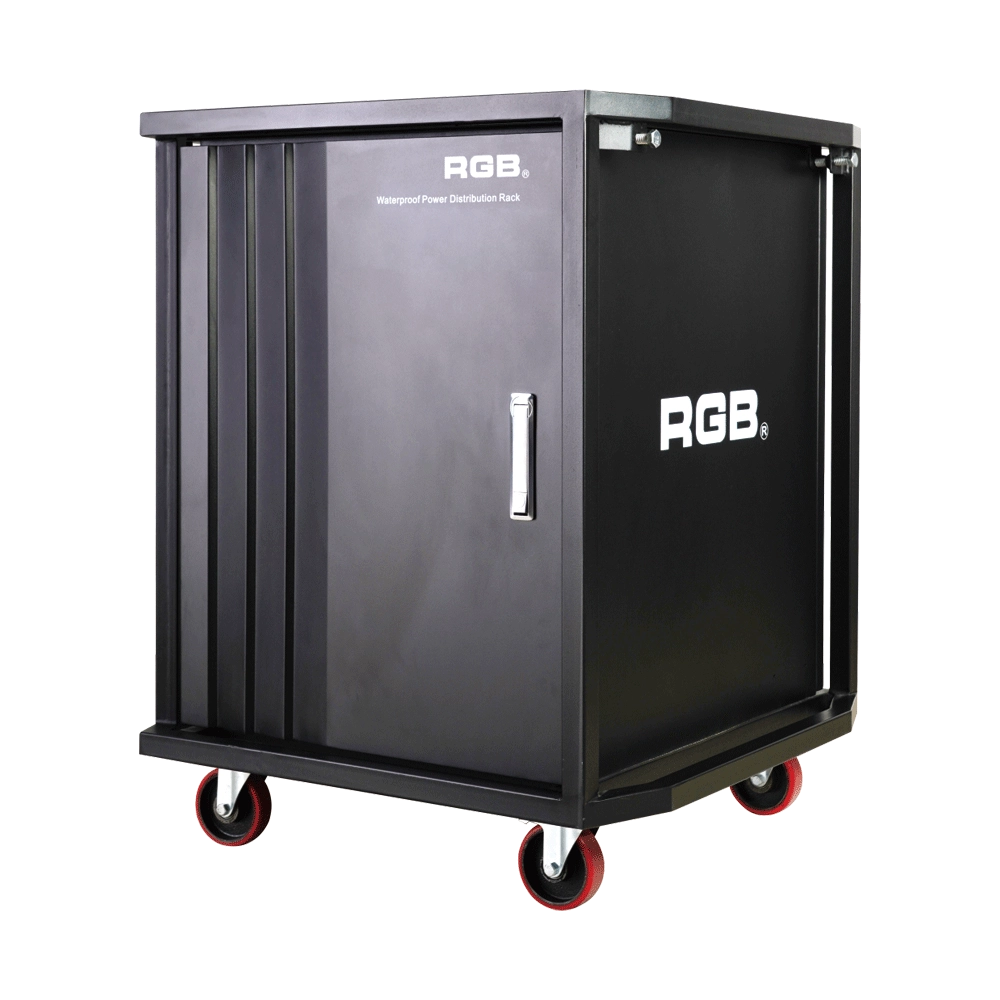
Multifunction Waterproofing Racks Of RGB-W Series
With the continuous development of flow performance, the requirement for performance is more demanding. In order to facilitate the transportation and make it easier to carry for all the equipment used in the performance, the stage light and sound equipment will be installed into a cabinet, for example, the power supply system. During the transportation process, it is inevitable for a collision or crash to take place. If the cabinet material is not strong enough, it may lead to deformation and even damage the equipment inside. Moreover, most of the existing cabinets are not waterproof. It will be very dangerous for the flow performance, as it is normal and inevitable to encounter rainy days. As the equipment inside the cabinets is electriferous, it might cause damage to the electronic equipment at least and even cause casualties at worst. Meanwhile, most of the existing cabinets can only be installed with one kind of equipment with a single variety.
In order to overcome the above-mentioned technical flaw, the RGB company has developed a new type of waterproofing multifunction cabinet of the W series. The waterproofing cabinet of the W series meets the need for the installation of dimming and tone-tuning devices, transportation, and utilization.
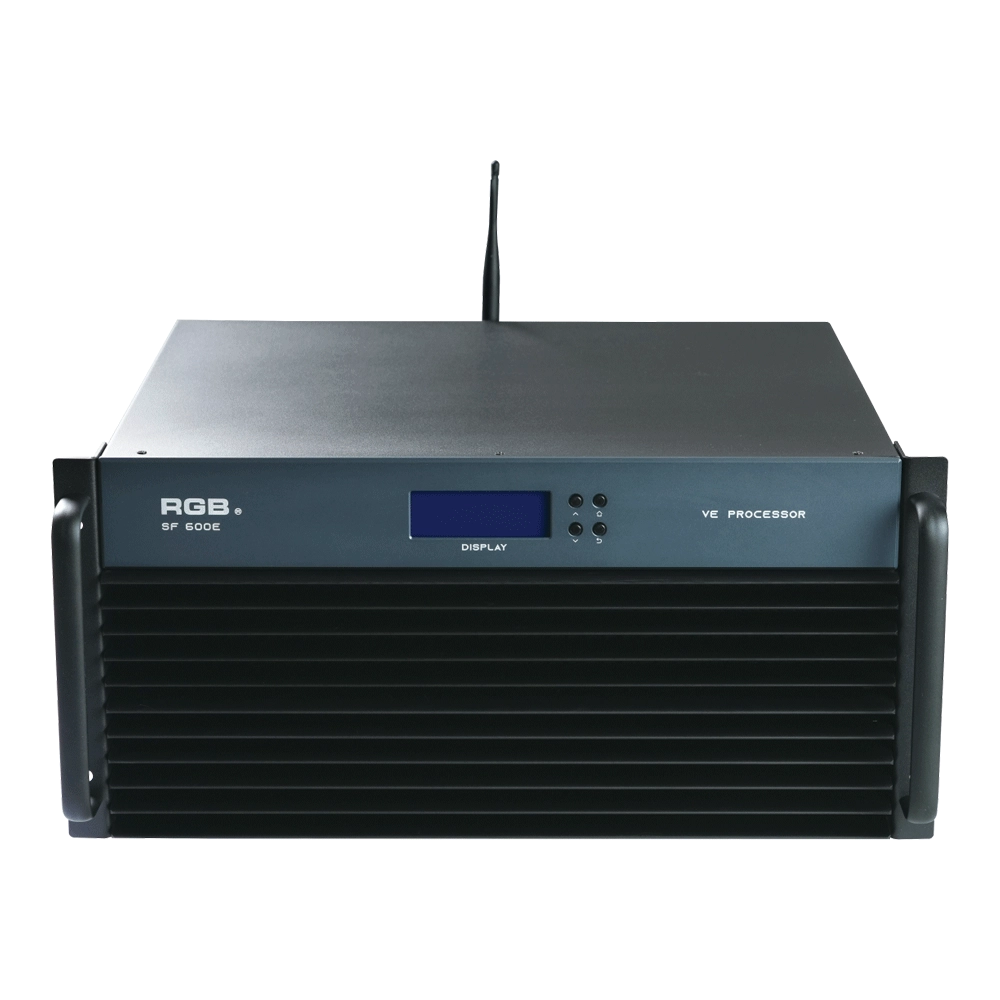
SF600E Visual R-net environment processor
The SF600E Visual R-net environment processor by RGB delivers advanced performance for visual systems. As a leading visual systems manufacturer, RGB ensures seamless integration and high reliability, making SF600E ideal for complex visual processing needs in diverse environments.
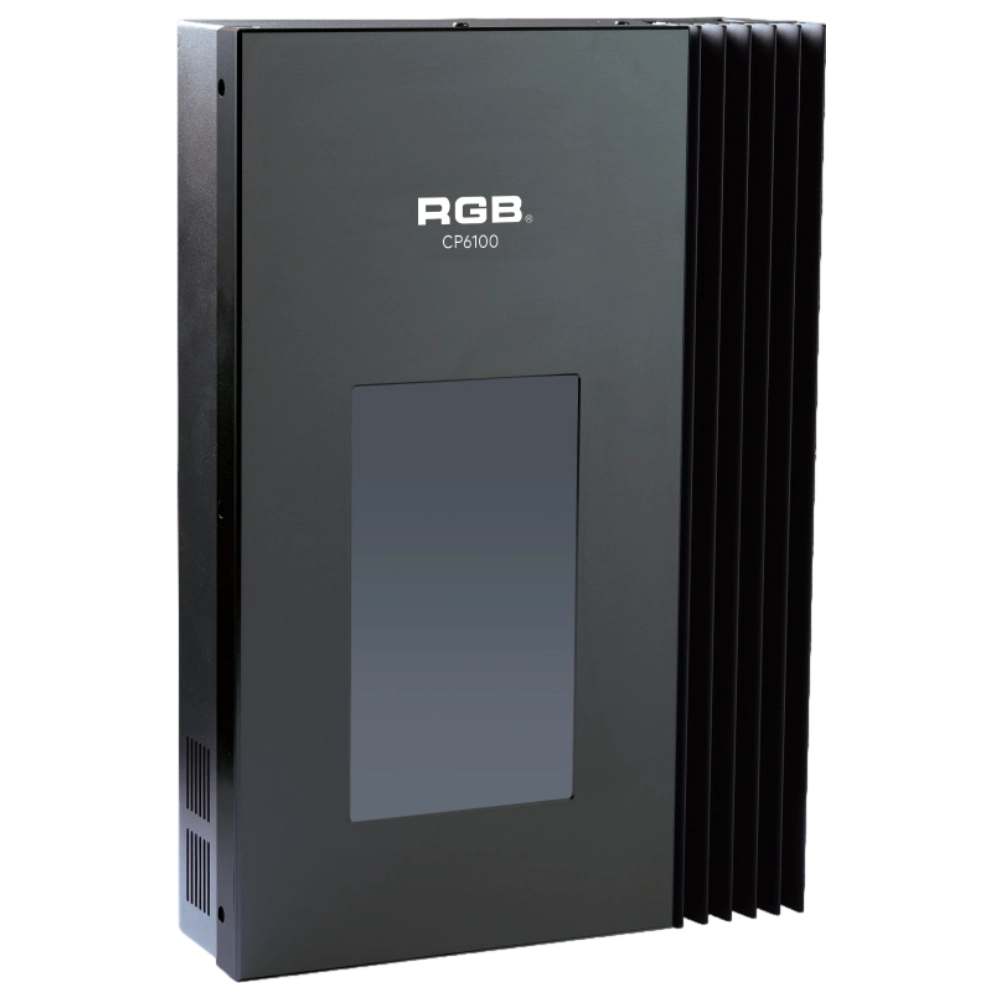
CP6100 Light Control System
The lighting control host is the main control device for theater stage lights, work lights, environmental lighting, commercial art lighting, sports venue lighting, and other places. By connecting the dedicated lighting control panels CP6104 and CP6108, it realizes the central control of the lighting system, supports a visual lighting control system, and intuitively displays the online and offline status of CP6100. Realize remote monitoring, editing, and setting of corresponding parameters.
It is widely applicable to theaters, cinemas, auditoriums, stadiums, museums, exhibition halls, cultural tourism performances, commercial art lighting, and other places.
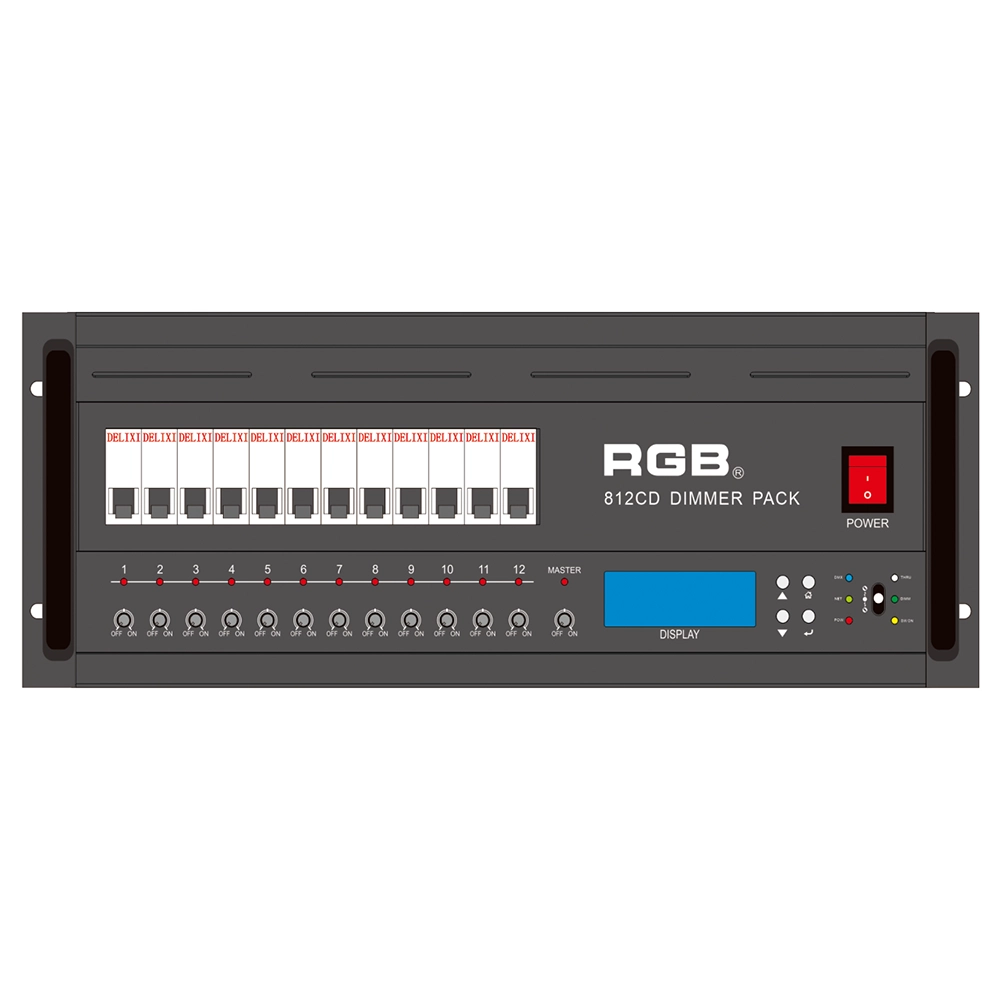
8 Series Intellight Dimmer/Relay Packs
RGB is the latest development and production of all digital, intelligent, and network dimming through the hybrid silicon box. It comes with six channels (806 silicon box), twelve channels (812 silicon box) with analog knob dimming, 49 DMX field recordings and replays (field backup function), and self-programming and recording field. RGB-8 silicon box with DMX512 digital signal input and RJ45 network input interface, with various types of dimming stations at home and abroad used. It is a powerful, stable performance and reliable work of a new generation of intelligent digital dimming through a hybrid silicon box.
Expert Support
Interested in learning more or need expert guidance related to this article? Fill in your details, and our team will provide tailored support.
Intelligent Control. Brilliant Performance.
RGB specializes in stage lighting control systems, delivering intelligent, reliable, and high-performance solutions for theaters and performance spaces worldwide.
Contact
Email:
Tel:
+86 20 3928 0245
+86 20 3928 0247
Address:
No.3, Huashan Road, Shilou Town, Panyu, Guangzhou, China.
Whatsapp: +8615975520131