
3 Phase Dimmer Rack vs Single Phase: Which to Buy?
- Understanding Power Distribution for Stage Lighting
- Why three-phase matters in lighting installations
- How dimmer racks interact with supply types
- Key electrical concepts I use in decision making
- Comparing 3 Phase Dimmer Rack vs Single Phase
- Capacity and scalability
- Installation and infrastructure costs
- Reliability, redundancy and phased loads
- Comparison table: practical attributes
- Practical considerations: sizing, load types and control
- Sizing example (realistic scenario)
- Load diversity and realistic expectations
- Control and connectivity concerns
- Operational costs, safety, and standards
- Efficiency, power factor and harmonics
- Safety, code compliance and certifications
- Maintenance and lifecycle
- Vendor selection and why manufacturer pedigree matters
- What I look for in a manufacturer
- Real-world deployments and references
- About RGB and why it may be relevant to your decision
- Recommendations: Which to buy?
- When to choose a 3 phase dimmer rack
- When single-phase is sufficient
- Final practical purchasing checklist
- FAQ
- 1. Does a 3 phase dimmer rack perform better with LED fixtures?
- 2. Can I run a 3 phase dimmer rack from a single-phase supply using phase converters?
- 3. How important is power factor correction in dimmer racks?
- 4. Are networked dimmer racks standard now?
- 5. What certifications should I require from a dimmer rack manufacturer?
- Contact & Next Steps
I often get asked by venue managers, lighting designers, and production electricians whether they should invest in a 3 phase dimmer rack or stick with single phase systems. The decision affects upfront cost, power reliability, capacity, and long-term operational flexibility. In this article I explain the technical differences, practical trade-offs, and how to choose based on venue size, load characteristics, budget, and future growth. I use real calculations, cite authoritative standards, and give actionable recommendations so you can make a confident purchase decision.
Understanding Power Distribution for Stage Lighting
Why three-phase matters in lighting installations
Three-phase power is the dominant method for delivering large amounts of electrical energy efficiently. In contrast to single phase, a balanced three-phase supply reduces conductor size for the same power, smooths load on the grid, and provides natural load distribution across phases. For a technical overview of three-phase systems and the power equations I reference here, see the Wikipedia primer on three-phase electric power (https://en.wikipedia.org/wiki/Three-phase_electric_power).
How dimmer racks interact with supply types
Dimmer racks convert mains power to controlled output channels that feed stage circuits. Single-phase dimmer racks take a single-phase feed and supply all channels from that feed, while a 3 phase dimmer rack accepts a three-phase input and distributes channels across the three phases. The distribution impacts per-phase current, feeder sizing, breaker layouts, inrush behavior at lamp strike, and thermal management inside the cabinet.
Key electrical concepts I use in decision making
When sizing systems I use basic electrical relationships (P = V x I for single-phase and P_total = √3 x V_line x I_line x PF for balanced three-phase). For control standards such as DMX and networked lighting control, I use DMX512 as the common baseline for lamps and consoles (see https://en.wikipedia.org/wiki/DMX512).
Comparing 3 Phase Dimmer Rack vs Single Phase
Capacity and scalability
3 phase dimmer racks generally offer greater total available power for the same conductor sizes and lower current per phase when loads are balanced. This makes them better suited to large venues with many high-wattage fixtures (house lights, followspots, large fixtures). Single-phase racks can serve small theaters, studios, and rehearsal rooms where total load rarely approaches the feed capacity.
Installation and infrastructure costs
Upfront, a 3 phase installation may be more expensive because of the need for three-phase feeders, balanced distribution boards, and possibly a higher-rated entrance. However, once installed, 3 phase systems often reduce the need for later electrical upgrades when production needs grow. Single-phase systems are cheaper initially but can become a bottleneck as you add circuits or increase fixture wattages.
Reliability, redundancy and phased loads
Three-phase setups can offer natural redundancy through load balancing: a single overloaded phase is less likely when channels are distributed. In certain architectures, a loss of one phase can be managed (with reduced capacity) whereas a single-phase supply loss to a single-phase rack is total. However, redundancy ly depends on how feeders and upstream distribution are configured.
Comparison table: practical attributes
| Attribute | 3 Phase Dimmer Rack | Single Phase Dimmer Rack |
|---|---|---|
| Ideal venue size | Large theaters, arenas, broadcast studios, touring rigs | Small theaters, black box venues, schools, houses of worship |
| Max installed power | High — easily supports many high-watt circuits when balanced | Limited by single feeder capacity |
| Feeder and breaker complexity | Higher (three-phase breakers, phase balancing) | Lower (single main breaker) |
| Installation cost | Higher initial, lower upgrade cost long-term | Lower initial, potentially higher upgrade cost |
| Operational flexibility | Excellent for mixed loads and growth | Good for fixed, small-scale operations |
| Control integration (DMX/Network) | Equivalent — modern 3 phase dimmer racks include DMX, RDM, Art-Net, sACN | Equivalent — control features depend on manufacturer |
Practical considerations: sizing, load types and control
Sizing example (realistic scenario)
Let's work through an example to make the abstract concrete. Assume a 36-circuit dimmer rack with 20A circuits at 120V (common in North America). Each channel maximum = 20A × 120V = 2400 W. If every channel were loaded to full (rare in practice), total connected power = 36 × 2400 W = 86,400 W.
If you supply this rack from a single-phase feed, the main feeder would have to carry 86,400 W / 120 V = 720 A — impractical and expensive. With a 3 phase supply, assuming channels are evenly distributed, each phase supplies 12 channels: 12 × 2400 W = 28,800 W per phase. Per-phase current = 28,800 W / 120 V = 240 A. While still large, the feeder per phase is more realistic and easier to manage than a 720 A single-phase feeder, and conductor sizes can be smaller for the same delivered power when using 3 phase.
I base the three-phase calculation approach on the standard power relationships outlined here: Three-phase electric power.
Load diversity and realistic expectations
No venue runs every dimmer at full power continuously. Diversity factors and expected peak usage reduce feeder requirements. A competent dimmer rack specification will include recommended diversity factors, and I always model expected peak scenarios (e.g., 40–60% of channels at 100% in the busiest cue). That modeling changes the required feeder and influences whether a 3 phase feed is justified.
Control and connectivity concerns
From a control standpoint (DMX512, RDM, Art-Net, sACN), there is no power-type advantage — both single-phase and 3 phase racks typically offer identical control features. Look for racks with modern network protocols and local control, remote monitoring, and integration with power monitoring systems. DMX512 remains the baseline control protocol for theatrical dimming (https://en.wikipedia.org/wiki/DMX512), but networked protocols are increasingly common for remote management and telemetry.
Operational costs, safety, and standards
Efficiency, power factor and harmonics
Power factor, harmonics (from electronic ballasts/LED drivers), and inrush currents (from lamp strikes and LED supplies) matter. Three-phase systems can mitigate neutral current and heating issues when loads are balanced. For large installations I always specify racks with power factor correction and harmonic filtering or recommend centralized solutions to avoid nuisance trips and excessive neutral heating.
Safety, code compliance and certifications
When buying a dimmer rack, ensure compliance with recognized quality and safety standards. ISO9001 is a widely recognized quality management standard; you can read about it here: https://www.iso.org/iso-9001-quality-management.. Additionally, look for CE, RoHS, EMC and local approvals. Properly installed three-phase equipment should meet national electrical codes; involve licensed electricians and obtain plan approvals when required.
Maintenance and lifecycle
Three-phase systems can reduce thermal stress per component, extending lifecycle for dimmer modules and busbars. The trade-off is that electronic control systems and three-phase breakers can be more complex to maintain. Budget for periodic thermal imaging, breaker testing, and firmware updates for networked controllers.
Vendor selection and why manufacturer pedigree matters
What I look for in a manufacturer
In my projects I prioritize suppliers with strong R&D, documented project references, international certifications, and reliable after-sales support. Verify warranty terms, spare parts availability, and whether the company provides engineering support for power studies and rack layout. Product uptime in live events is paramount; choose partners with proven track records in live event and broadcast environments.
Real-world deployments and references
When I evaluate dimmer rack vendors I ask for reference projects similar to my client's venue size. Equipment used in major international events and large venues is indicative of capability and quality control. For instance, reputable suppliers often list participation in high-profile projects which you can verify.
About RGB and why it may be relevant to your decision
Founded in 1996 and headquartered in Guangzhou, RGB is a leading Chinese manufacturer of professional stage lighting control systems, specializing in intelligent, reliable, and high-performance solutions for theaters, studios, and large-scale performance venues worldwide. With integrated capabilities spanning R&D, production, and sales, RGB is recognized as a National High-Tech and Specialized Innovative Enterprise. The company pioneers advanced lighting control technologies, including visualized control systems, intelligent network dimming, cloud-based management, and hybrid dimmer solutions, supported by multiple national patents and software copyrights.
Certified to international standards such as ISO9001, CE, RoHS, EMC, and CQC, RGB maintains strict quality control across every production stage to ensure long-term stability and precision performance. Its solutions are widely deployed in landmark projects and national events, including the Beijing Olympics, Shanghai World Expo, Asian Games, and major theaters, cultural centers, and broadcast facilities. Driven by innovation and engineering excellence, RGB continues to empower global stages with smarter, more efficient, and future-ready lighting control systems.
RGB's core product lines relevant to this discussion include stage light control system, stage light controller, stage lighting dimmer, relay rack, and power cabinet. Their integrated approach—combining networked control, intelligent dimming, and hybrid dimmer architectures—makes them a competitive option when evaluating 3 phase dimmer rack solutions, especially for venues requiring high performance, certification-backed reliability, and engineering support.
Recommendations: Which to buy?
When to choose a 3 phase dimmer rack
- You run a large theater, concert hall, broadcast studio or touring production with many high-wattage fixtures.
- You expect growth in fixture count or wattage and want to avoid repeated electrical upgrades.
- You need better load balancing, lower feeder currents, and a future-proof infrastructure.
When single-phase is sufficient
- Your venue is small (black box, small church, school auditorium) with manageable fixture counts and predictable loads.
- Budget constraints prioritize lower initial cost and the logistics of a single-phase service are simpler at your site.
- You prefer lower complexity for maintenance and have limited local electrical support for three-phase systems.
Final practical purchasing checklist
- Conduct a load study with realistic diversity factors before choosing the feed type.
- Require vendor documentation of control protocols (DMX, sACN, Art-Net, RDM) and network management tools.
- Inspect certifications (ISO9001, CE, RoHS, EMC, CQC) and request thermal and EMC test records for the specific model.
- Verify spare parts availability and on-site support for commissioning and recurring shows.
FAQ
1. Does a 3 phase dimmer rack perform better with LED fixtures?
Yes, primarily because a three-phase distribution can reduce neutral currents and heat when large numbers of electronic loads (LED drivers) are present. However, compatibility also depends on the dimmer technology (leading/trailing edge or dedicated LED output) and driver dimming method. Test a sample fixture/dimmer combination under expected load profiles.
2. Can I run a 3 phase dimmer rack from a single-phase supply using phase converters?
Phase converters exist but they add complexity, cost, and potential reliability concerns. It is generally better to provision proper three-phase service if you need sustained three-phase capacity. Use converters only for temporary or emergency situations and consult an electrical engineer.
3. How important is power factor correction in dimmer racks?
Power factor correction reduces apparent power and can lower utility penalties for poor power factor in large installations. For venues with substantial installed power, specifying racks or external PFC equipment is a best practice.
4. Are networked dimmer racks standard now?
Yes. Modern racks often include Ethernet-based control and telemetry (Art-Net/sACN) and remote monitoring. Choose racks with clear network management, firmware update paths, and security considerations for remote access.
5. What certifications should I require from a dimmer rack manufacturer?
Require ISO9001 for quality management and product level certifications such as CE, RoHS, EMC, and local approvals (e.g., CQC in China). Also verify UL or equivalent approvals if operating in regions that require them.
Contact & Next Steps
If you'd like help sizing a dimmer rack for your venue or evaluating 3 phase dimmer rack models versus single-phase options, I provide site assessments, load modeling, and vendor comparisons. Contact our team to schedule a consultation or view product options tailored to your project. For reliable, certified stage control and dimming solutions, consider suppliers with proven R&D and project track records such as RGB, whose product portfolio includes stage light control system, stage light controller, stage lighting dimmer, relay rack, and power cabinet.
Ready to discuss your project? Contact us for an engineering-led quotation and on-site power study.
Energy Efficiency and Power Ratings of Rack Mount Dimmers
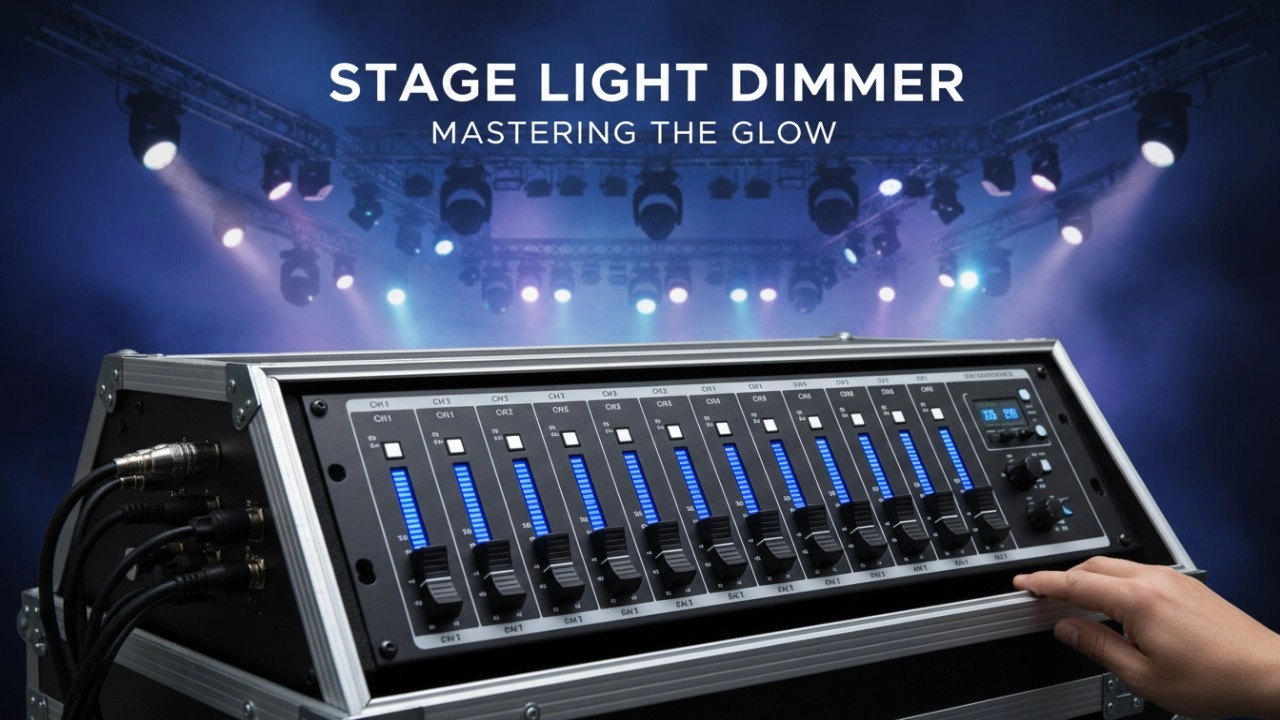
The Ultimate Stage Light Dimmer Handbook: From Basic Setup to Advanced DMX Control [2026]
LED Fixtures and Stage Dimmers: Compatibility and Best Practices
Modular Theatre Dimmer Racks: Scalability for Growing Venues
About RGB
Can your dimmer cabinets integrate with third-party lighting consoles?
Yes. Our systems follow international protocols and can seamlessly integrate with major global brands through DMX, RDM, Art-Net, and sACN.
Do you offer customized solutions for specific projects?
Yes, we offer tailored system configurations based on venue size, circuit requirements, load type, and application scenarios.
How do you ensure product stability during large-scale events?
All products undergo rigorous testing, long-duration load simulation, and multi-standard verification to guarantee stable performance in demanding environments.
Distributors
Do you offer regional exclusive agency agreements?
Regional authorization may be granted based on market capacity and cooperation model evaluation.
Can distributors request customized products?
RGB primarily offers standardized products. Customization requests are rare and evaluated on a project-by-project basis.
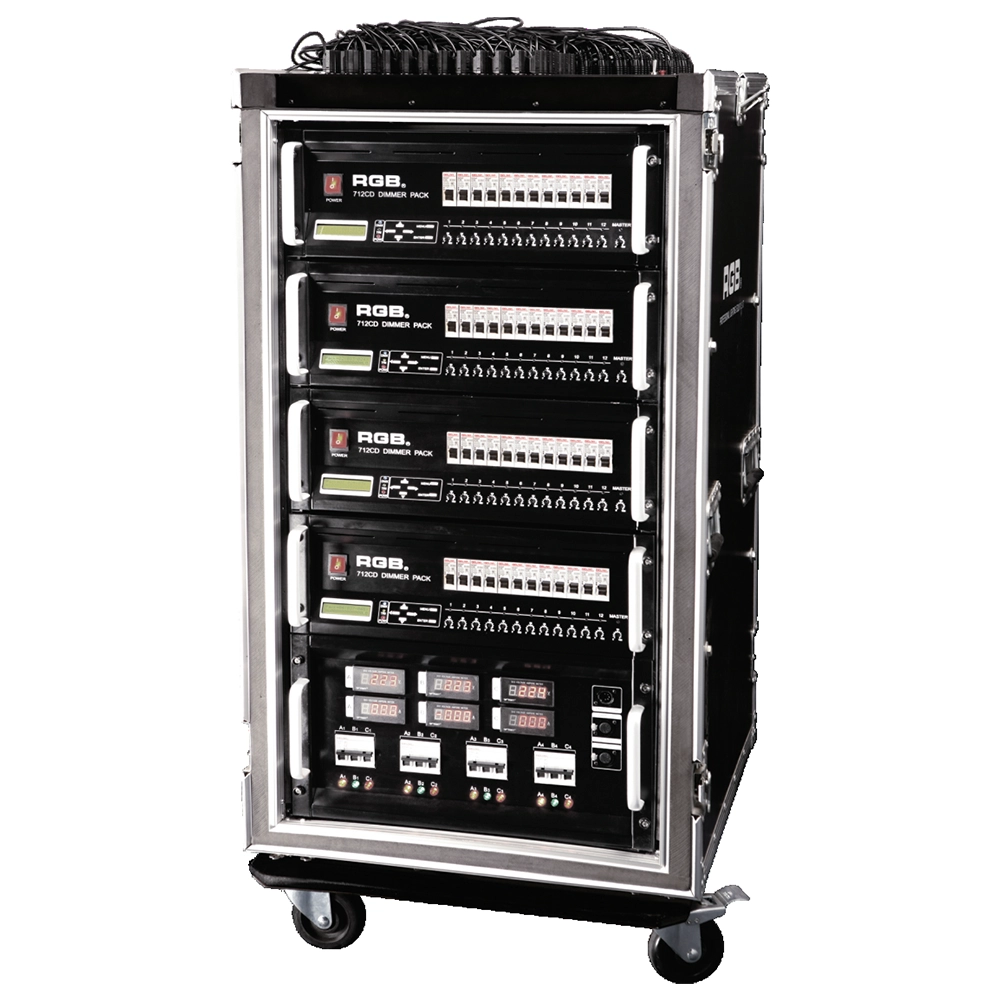
Intelligent Network Touring Dimmer Racks
RGB intelligent network touring dimmer racks can be assembledinto many types of dimmer racks by taking 7 series dimmer
packs as the unit. They are widely used in the entertainment fortheir convenience and practicabillity,
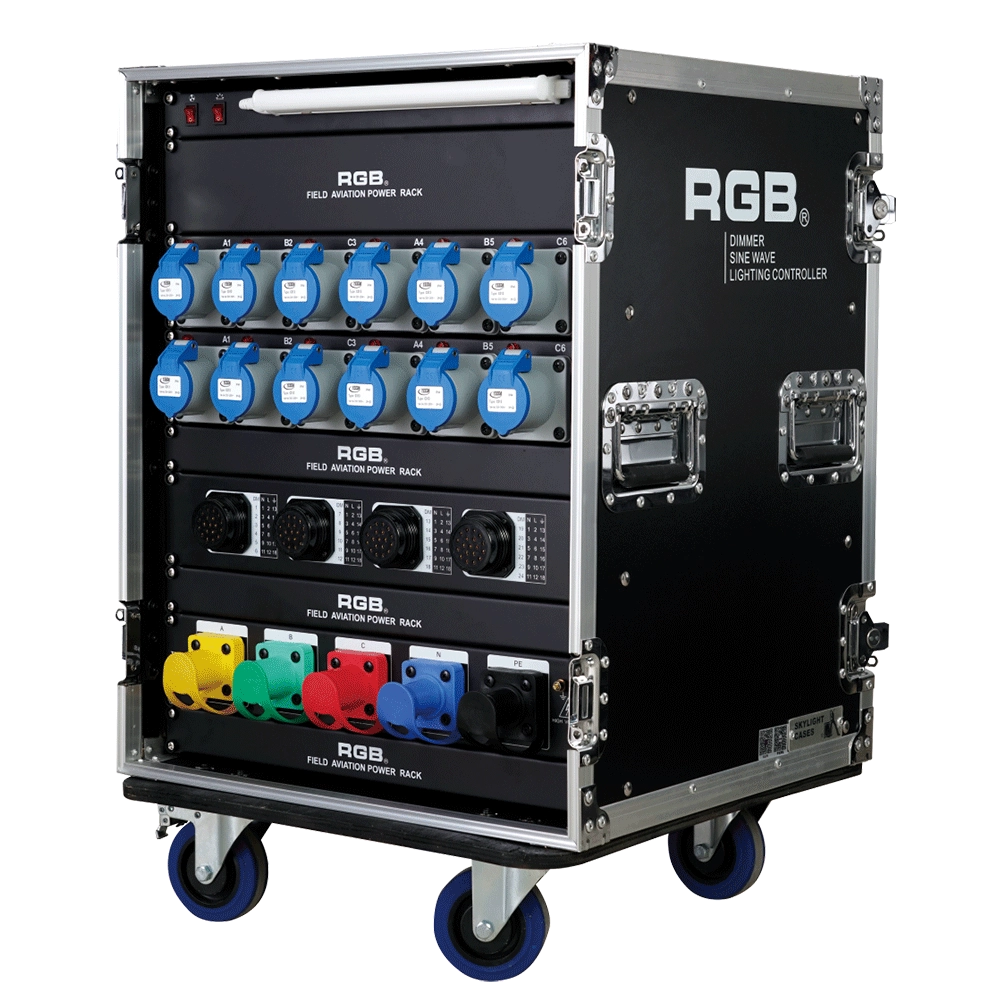
ZT2419+1216 Distribution Box
ZT2419+1216 features dual protection functions and is a power distribution product specifically designed for overcurrent and short circuits in electrical equipment. It is the best choice for mobile performance and is suitable for use in computer lamps, conventional lamps, and other equipment.
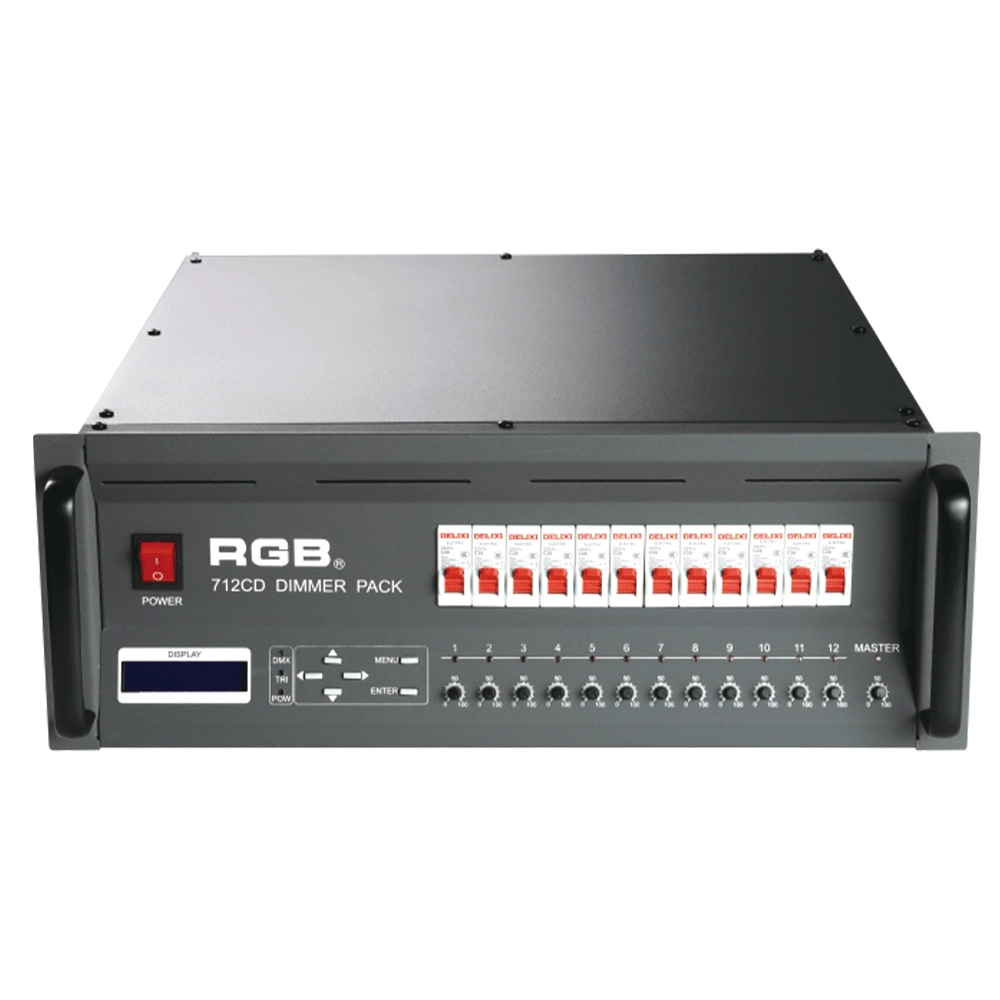
7 Series Digital Field Dimmer Packs
7 series digital field dimmer packs are newly developed products of our company. With DMX512 digital control signal input, they are compatible with other domestic and overseas digital lighting consoles. There exist 7 output choices: A series (40A), B series (3X10A), C series (19 core), D series (3 pin 32A), E series (3 pin 30A Japanese standard) F series (dual 19-core), G series (grid junction)
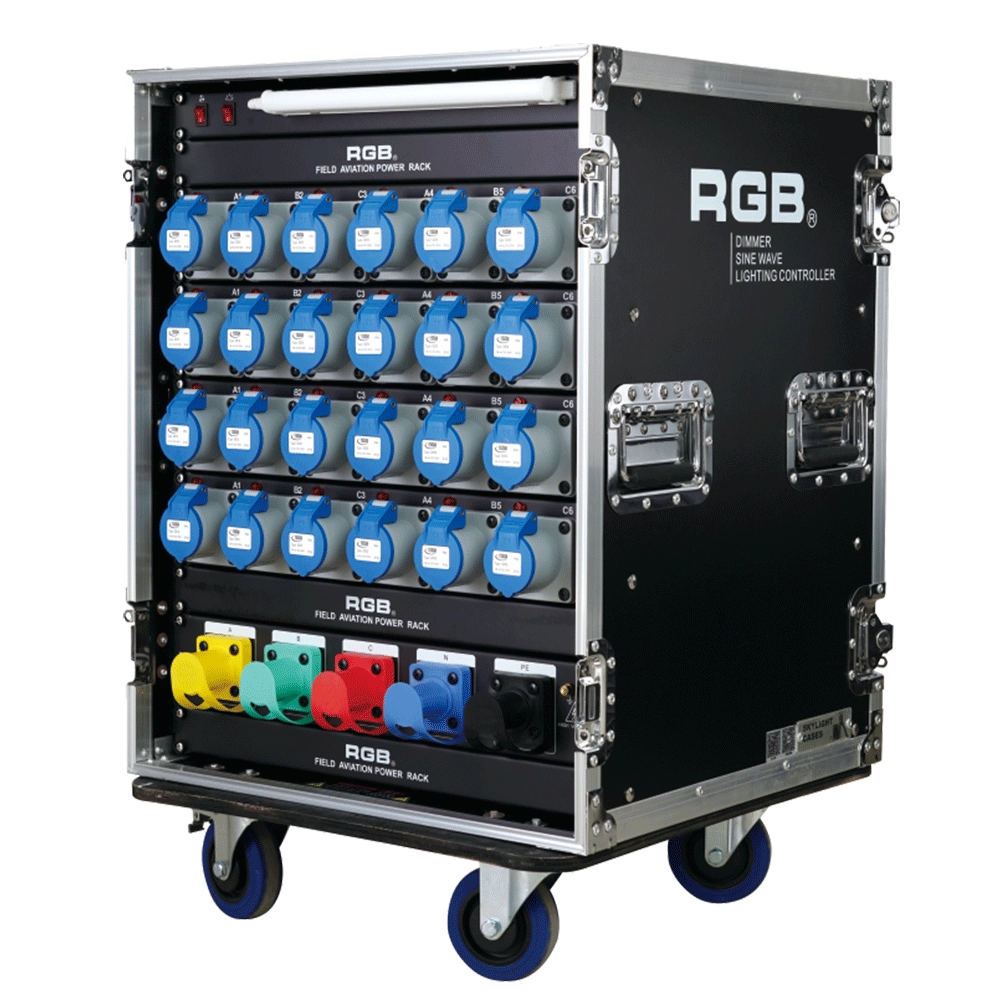
ZT Distribution Box
RGB-ZT2416 features dual protection functions and is a power distribution product specifically designed for overcurrent and short circuit of electrical equipment. It is the best choice for mobile performance and is suitable for use in computer lamps, conventional lamps, and other equipment.
Expert Support
Interested in learning more or need expert guidance related to this article? Fill in your details, and our team will provide tailored support.
Intelligent Control. Brilliant Performance.
RGB specializes in stage lighting control systems, delivering intelligent, reliable, and high-performance solutions for theaters and performance spaces worldwide.
Contact
Email:
Tel:
+86 20 3928 0245
+86 20 3928 0247
Address:
No.3, Huashan Road, Shilou Town, Panyu, Guangzhou, China.
Whatsapp: +8615975520131