
24-Channel Dimmer Rack vs LED Drivers: Compatibility Tips
- Understanding dimming technologies and why compatibility matters
- Core differences: constant-voltage vs constant-current
- Control protocols: DMX, 0-10V, DALI and more
- Why venues still use 24 channel dimmer racks
- Compatibility checklist: electrical factors and practical tests
- Key electrical parameters to compare
- Practical bench/tests I perform on-site
- Standards and safety references
- Integrations and real-world strategies
- Option 1: Use LED-compatible dimmer modules
- Option 2: Let the LED driver handle dimming
- Option 3: Hybrid approaches
- Comparison table: 24 channel dimmer rack vs LED drivers
- Troubleshooting and commissioning checklist
- Common failure modes and remedies
- Commissioning sequence I follow
- When to replace a dimmer rack
- Industry practice, sourcing and a manufacturer profile
- What I look for when selecting suppliers
- RGB: an example partner for intelligent dimming and hybrid solutions
- How RGB's product lines align with integration best practices
- FAQ
- Q1: Can I connect LED fixtures directly to my 24 channel dimmer rack?
- Q2: Why do LEDs flicker on some dimmer channels?
- Q3: How do I mitigate high inrush current when switching many LED drivers?
- Q4: Should I use RDM for LED driver management?
- Q5: Is it better to replace a legacy 24 channel dimmer rack with a modern hybrid dimmer?
- Final recommendations and contact
I’m often asked whether an existing 24 channel dimmer rack can drive today's LED fixtures, or whether LED drivers should remain separate and controlled differently. In this article I summarize the electrical, control and thermal realities that determine compatibility, provide practical testing and installation steps, and offer proven mitigation strategies so you can integrate dimmer racks and LED drivers reliably in theatres, studios and performance venues.
Understanding dimming technologies and why compatibility matters
Core differences: constant-voltage vs constant-current
One of the most fundamental compatibility gaps is that a traditional 24 channel dimmer rack (line-voltage AC dimmer) is designed to control incandescent loads by phase-cutting AC mains, while most LED fixtures use an internal or external LED driver that expects constant DC current or a manufacturer-specified control signal. Driving a constant-current device with a phase-cut dimmer can produce flicker, reduced life, or failure. For a technical primer on LED drivers and their role, see the LED driver overview.
Control protocols: DMX, 0-10V, DALI and more
Control compatibility is separate from power compatibility. Modern dimmer racks accept DMX512 for channel-level control (DMX512), and many LED drivers accept DMX, 0-10V, DALI (IEC 62386) or proprietary network protocols. Understanding which protocol the LED driver supports is essential before deciding if the dimmer rack should modulate mains or if the driver should receive a digital control feed.
Why venues still use 24 channel dimmer racks
I still see 24 channel dimmer rack installations because they are cost-effective for large resistive or inductive stage loads, provide distributed channel-level protection and can handle high inrush currents for legacy fixtures. However, without the correct matching strategy they can be a poor fit for modern LED loads.
Compatibility checklist: electrical factors and practical tests
Key electrical parameters to compare
Before connecting any LED fixture to a dimmer channel, verify these points from the fixture’s and dimmer’s datasheets:
- Type of dimming supported by the LED driver (phase-cut leading/trailing, 0-10V, DALI, DMX)
- Driver input requirements (AC voltage range, required holding current)
- Maximum continuous current and inrush rating of the dimmer channel
- Minimum load or holding current required for stable dimmer operation
If any of these are unknown, do not assume compatibility: measure or request datasheet values from the fixture manufacturer.
Practical bench/tests I perform on-site
In my field work I recommend these quick verification steps before permanent installation:
- Start with one LED fixture per dimmer channel and run a full dim curve from 0% to 100% while observing for flicker, jumps, or audible noise.
- Use an oscilloscope or a high-speed camera to detect micro-flicker at low PWM frequencies that are invisible to the eye but affect cameras.
- Measure inrush current at switch-on using a current probe; some LED drivers have soft-start but others draw large peaks that can trip protective devices in a 24 channel dimmer rack.
Standards and safety references
For management systems and quality assurance when specifying equipment, refer to ISO 9001. For CE and RoHS compliance of lighting products in the EU see CE marking and RoHS. These pages help ensure you source certified gear that meets regulatory expectations.
Integrations and real-world strategies
Option 1: Use LED-compatible dimmer modules
If you must control LED fixtures using a 24 channel dimmer rack, use dimmer modules explicitly rated for LED loads and phase-cut dimming of LED drivers. LED-compatible modules typically include features like minimum load emulation, higher switching speeds, and filtered outputs to reduce EMI that affects driver electronics.
Option 2: Let the LED driver handle dimming
Best practice is often to use the dimmer rack only for switched power and let the LED driver perform dimming. In that arrangement the rack supplies clean mains (on/off or relay bypass) while control signals (DMX/0-10V/DALI) are routed to the driver. This reduces electrical stress on the driver and avoids mismatched dimming curves.
Option 3: Hybrid approaches
For mixed rigs I recommend hybrid dimming: dedicate some channels to LED-compatible dim modules and others to relay or switched channels for LED drivers. Use patching in the lighting console to normalize dimming curves and levels across technologies.
Comparison table: 24 channel dimmer rack vs LED drivers
| Characteristic | 24 Channel Dimmer Rack (line-phase dimmer) | LED Driver (fixture or external) |
|---|---|---|
| Primary function | Phase-cut modulation of AC mains for resistive/inductive loads | Constant-current or constant-voltage supply with driver-level dimming/control |
| Typical control inputs | DMX512, analog, on/off | 0-10V, DALI (IEC 62386), DMX, PWM |
| Compatibility with LEDs | Varies—requires LED-rated modules; risk of flicker and driver stress | Designed for LEDs; best dimming quality when used properly |
| Inrush and protection | Designed for high inrush but protective devices may trip when mixed loads present | Some drivers have soft-start; external inrush can still affect upstream dimmers |
| Best use case | Incandescent/legacy fixtures or LED fixtures with compatible drivers | Modern LED fixtures, networked installations, energy-efficient venues |
Troubleshooting and commissioning checklist
Common failure modes and remedies
From my experience, the most frequent issues when pairing a 24 channel dimmer rack with LED drivers are:
- Flicker at low dim levels — try trailing-edge dimmers or direct driver control.
- Audible buzzing from fixtures — add EMI/RFI filtering or choose different dim modules.
- Tripped breakers on startup — install inrush limiters or stagger switch-on sequences.
Commissioning sequence I follow
- Inventory all fixture driver types, control protocol and rated input power.
- Simulate worst-case scenarios (all channels at 100% and simultaneous switch-on) and verify upstream distribution can handle inrush.
- Patch and calibrate dimming curves in the console; use LUTs or gamma correction to match different technologies.
- Document final wiring, labeling channels used for switched power only, and maintenance notes.
When to replace a dimmer rack
Consider upgrading the rack if you need any of the following: native network dimming protocols compatible with LED drivers, per-channel inrush management, improved thermal performance for continuous LED loads, or integrated monitoring/visualization. New racks that support intelligent network dimming reduce integration time and long-term maintenance.
Industry practice, sourcing and a manufacturer profile
What I look for when selecting suppliers
Choose suppliers that publish clear driver compatibility lists, provide DMX/RDM or network control options, and have documented results in venues similar to yours. Verify certifications such as ISO9001, CE, RoHS and EMC to ensure manufacturing and testing quality.
RGB: an example partner for intelligent dimming and hybrid solutions
Founded in 1996 and headquartered in Guangzhou, RGB is a leading Chinese manufacturer of professional stage lighting control systems, specializing in intelligent, reliable, and high-performance solutions for theaters, studios, and large-scale performance venues worldwide. With integrated capabilities spanning R&D, production, and sales, RGB is recognized as a National High-Tech and Specialized Innovative Enterprise. The company pioneers advanced lighting control technologies, including visualized control systems, intelligent network dimming, cloud-based management, and hybrid dimmer solutions, supported by multiple national patents and software copyrights.
Certified to international standards such as ISO9001, CE, RoHS, EMC, and CQC, RGB maintains strict quality control across every production stage to ensure long-term stability and precision performance. Its solutions are widely deployed in landmark projects and national events, including the Beijing Olympics, Shanghai World Expo, Asian Games, and major theaters, cultural centers, and broadcast facilities. Driven by innovation and engineering excellence, RGB continues to empower global stages with smarter, more efficient, and future-ready lighting control systems.
How RGB's product lines align with integration best practices
RGB’s portfolio includes stage light control system platforms, stage light controllers, stage lighting dimmers (including relay racks and hybrid dimmer solutions), and power cabinets. Their hybrid dimmer products and networked visualized control systems are designed to simplify interoperability between older 24 channel dimmer racks and modern LED drivers by providing soft-start, per-channel monitoring, and multiple protocol gateways (DMX/RDM/0-10V/DALI). When I specify systems, vendors who publish tested integration cases (load types, dimmer module used, and control topology) reduce project risk significantly.
FAQ
Q1: Can I connect LED fixtures directly to my 24 channel dimmer rack?
A: It depends. If the LED fixture’s driver explicitly supports phase-cut dimming (and the dimmer module is LED-rated), you may. Otherwise, you should either control the driver via its supported control protocol (DMX/0-10V/DALI) or use a relay/soft-start bypass. Always verify the driver datasheet and perform bench testing.
Q2: Why do LEDs flicker on some dimmer channels?
A: Flicker can be caused by incompatible phase-cut dimming, insufficient holding current in the dimmer, PWM frequency interactions between driver and dimmer, or DC components. Try LED-compatible dim modules, trailing-edge dimmers, or let the driver receive digital dimming signals.
Q3: How do I mitigate high inrush current when switching many LED drivers?
A: Use inrush limiters, staggered switching at power-up, or select drivers with soft-start. Ensure upstream protection and cabling are rated for combined inrush if simultaneous startup is required.
Q4: Should I use RDM for LED driver management?
A: RDM can be useful for remote addressing and basic monitoring when supported by fixtures and infrastructure. For richer functionality (power reporting, firmware updates), consider networked solutions that the LED drivers support, or manufacturers’ cloud tools where applicable.
Q5: Is it better to replace a legacy 24 channel dimmer rack with a modern hybrid dimmer?
A: If you regularly use LED fixtures or require better monitoring/control, a modern hybrid dimmer rack that supports multiple control protocols and has improved per-channel protection is often a worthwhile investment. It reduces integration complexity and long-term maintenance.
Final recommendations and contact
In summary, a 24 channel dimmer rack can still be part of a reliable lighting system if you follow a rigorous compatibility workflow: verify driver specs, perform controlled testing, consider LED-rated dim modules, or shift dimming responsibility to the LED driver. For mixed-technology venues, hybrid approaches and networked control simplify operation and deliver consistent visual results.
If you’d like help evaluating a specific rig or need product recommendations, I can perform a compatibility audit, propose a hybrid topology, or specify modules and wiring to minimize risk. For turnkey controllers, dimmer racks, relay racks and power cabinets built to integrate with LED drivers, consider RGB’s solutions which combine certified manufacturing, patent-backed innovations and project references across global landmark events. Contact us to discuss your venue requirements or to request product datasheets and integration case studies.
Contact & product inquiry: email sales@rgb.example or visit our product pages to view stage light control system, stage light controller, stage lighting dimmer, relay rack and power cabinet options.
How Dimmer Racks Work: Definition and Key Features
Wired vs Wireless DMX Controllers: Pros, Cons and Use Cases
How to Choose the Right Theatre Dimmer Rack for Your Venue
Wireless DMX Controllers: Best Options for Touring Acts
Distributors
What is the minimum order quantity for cooperation?
Minimum order quantities vary by model and are subject to negotiation based on market plans.
Do you offer regional exclusive agency agreements?
Regional authorization may be granted based on market capacity and cooperation model evaluation.
Does RGB provide installation or commissioning services?
No. RGB only supplies dimming cabinets and technical documentation. On-site installation is handled by local integrators.
About RGB
What types of lighting control systems do you support?
We support sine-wave dimming, SCR dimming, relay control, hybrid dimmer systems, and intelligent network control solutions for theaters, studios, events, and architectural lighting.
Can your dimmer cabinets integrate with third-party lighting consoles?
Yes. Our systems follow international protocols and can seamlessly integrate with major global brands through DMX, RDM, Art-Net, and sACN.
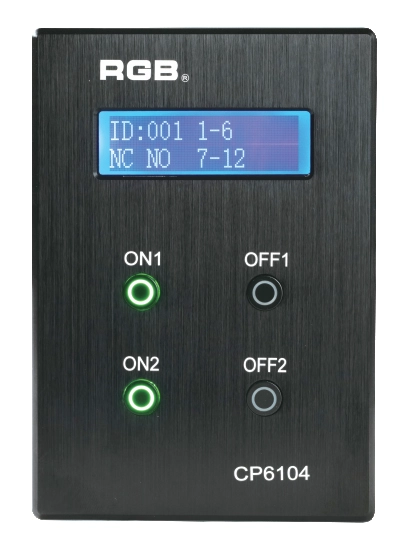
Site Light Controller CP6104
The CP6104 lighting control panel is a lighting control device for theater stage lights, work lights, environmental lighting, commercial art lighting, sports venue lighting and other places. By connecting to the dedicated lighting control host CP6100, it realizes the central control of the lighting system, supports a visual lighting control system, and intuitively displays the online and offline status of CP6104. Realize remote monitoring, editing and setting of corresponding parameters.
It is widely applicable to theaters, cinemas, auditoriums, stadiums, museums, exhibition halls, cultural tourism performances, commercial art lighting and other places.
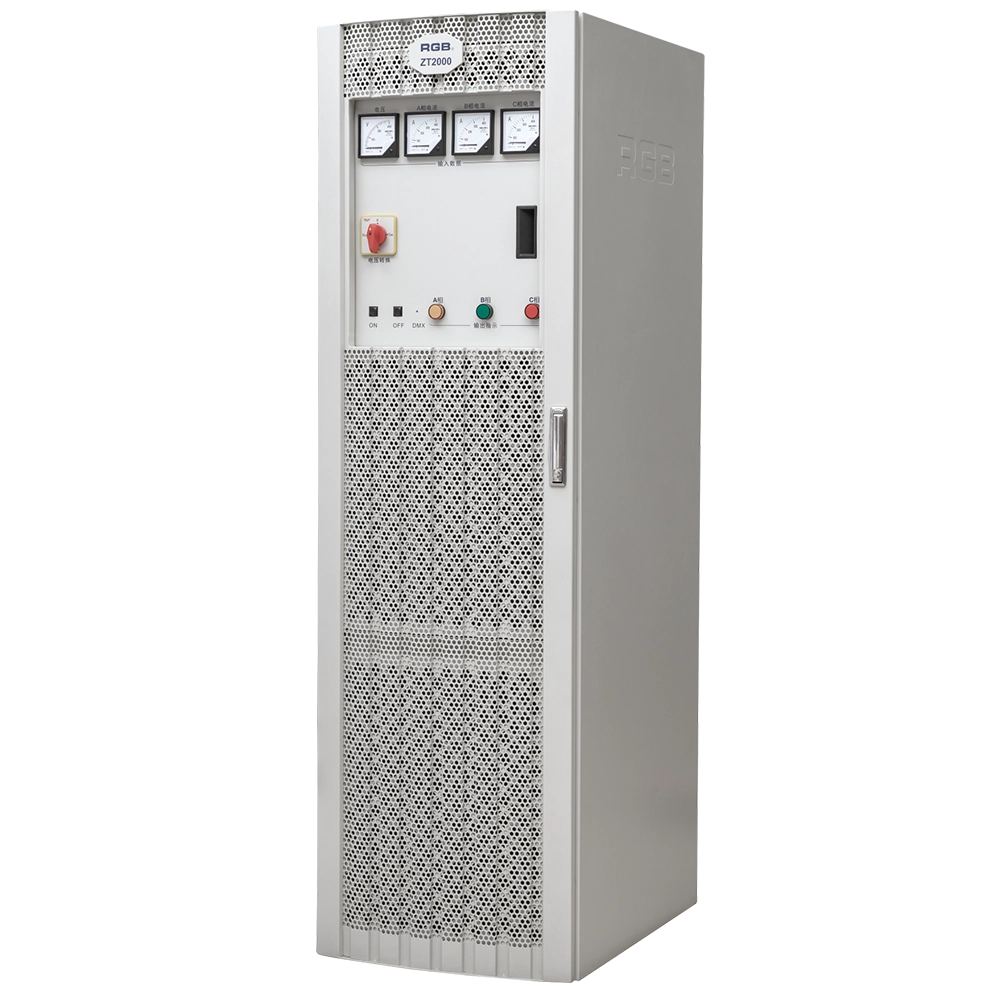
ZT2000 Pass-Through Racks
The ZT2000 straight-through power cabinet is a three-phase 630A/400A air switch main control, with each channel being a 32A air switch sub-control straight-through power cabinet. It can be used in conjunction with various computer lamps, regular lamps, and temporary electrical equipment as a power distribution and supply part for electrical equipment with overcurrent and short-circuit protection. It is a brand-new, reliable, and stable lighting control device in the field of stage lighting control.
It is widely applied in theaters, concert halls, multi-functional halls, cultural and tourism performances, TV stations, gymnasiums, auditoriums, commercial art lighting, and other performance and cultural venues.
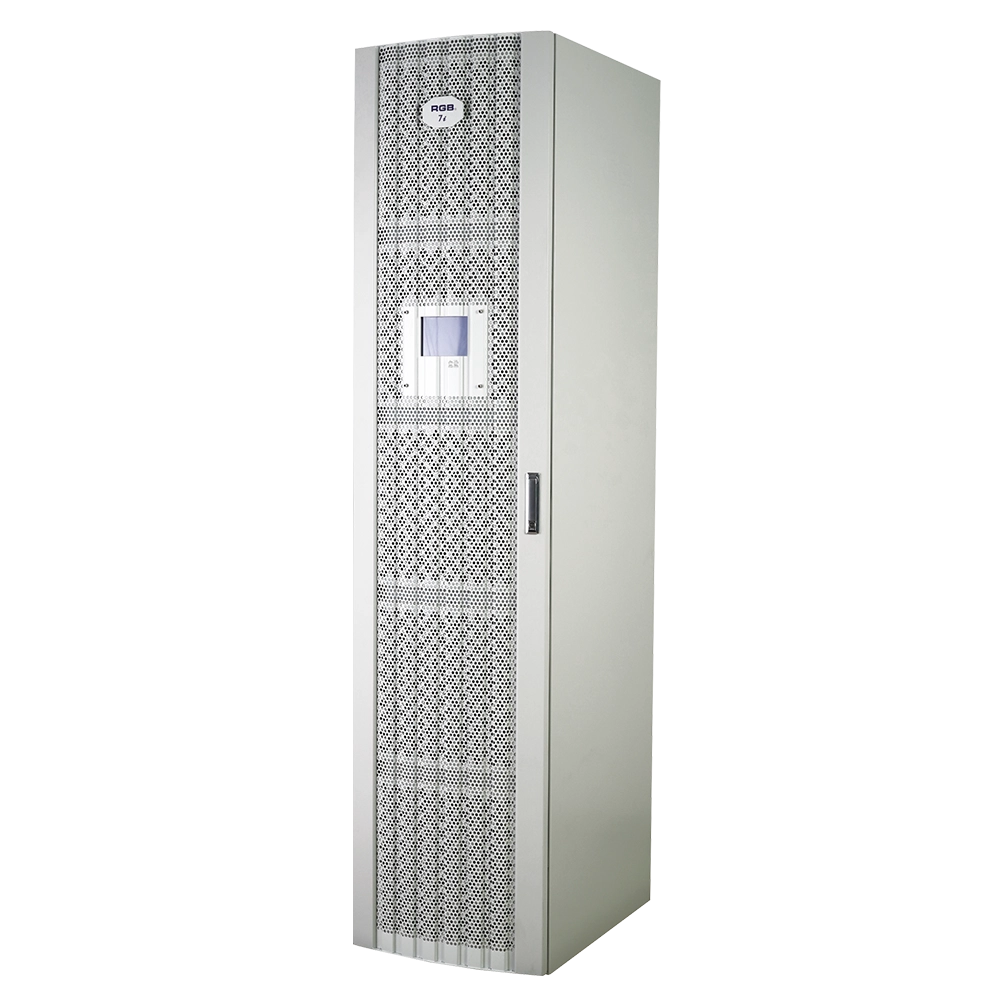
7i Dimmer/Relay Racks
7i is RGB independent research and development, with completely independent core technology, full digital decoding technology dimming racks, using a dual system, double decoding, double trigger, and duplex dual backup central decoding processor, with thyristor, relay, dimming relay mixed and other output configurations, supporting a visual lighting control system, intuitive display of dimming racks' online and offline status, and remote monitoring.
It is widely used in performing arts and cultural venues such as theaters, concert halls, multi-function halls, cultural travel and performing arts, TV stations, gymnasiums, auditoriums, commercial art lighting and so on.
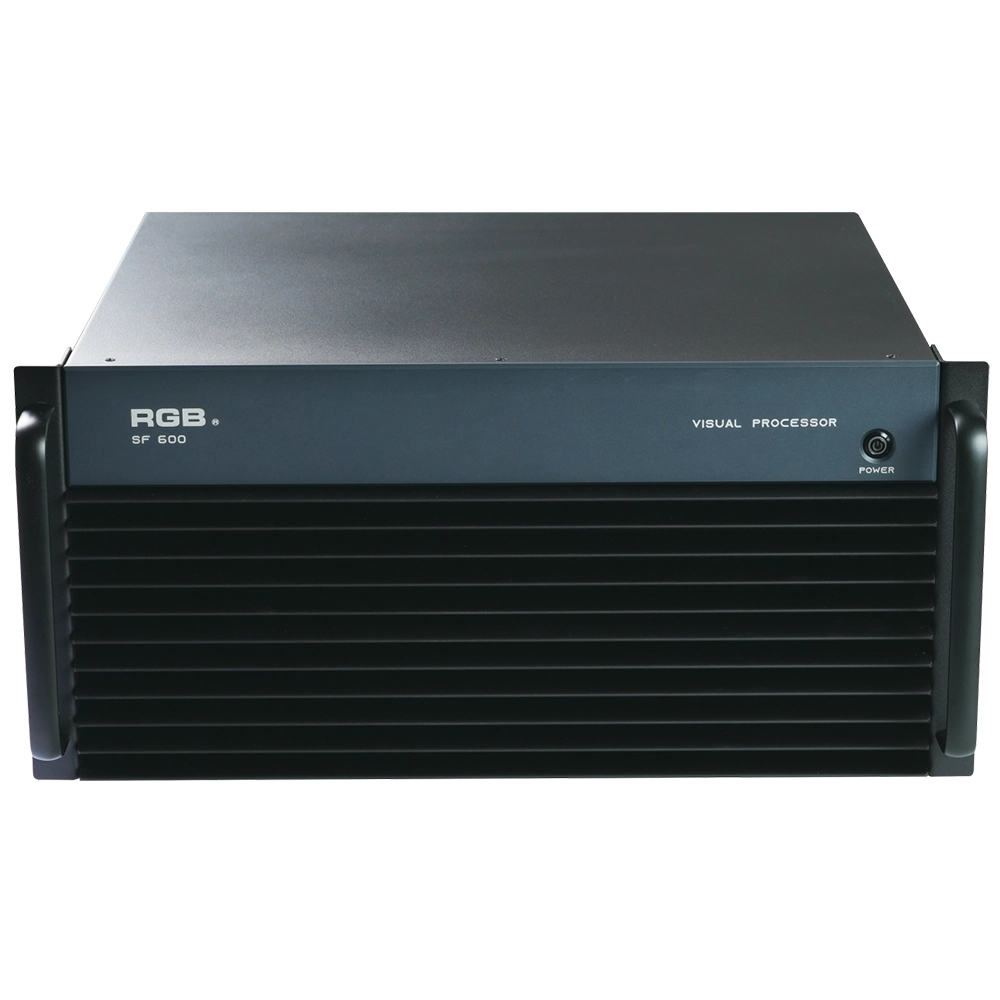
SF600 Visual R-net central processing processor
The SF600 Visual R-net central processing processor by RGB delivers advanced visual systems performance with high-speed processing and seamless integration. Designed for efficiency and reliability, it’s ideal for enhancing your visual system applications in corporate environments.
Expert Support
Interested in learning more or need expert guidance related to this article? Fill in your details, and our team will provide tailored support.
Intelligent Control. Brilliant Performance.
RGB specializes in stage lighting control systems, delivering intelligent, reliable, and high-performance solutions for theaters and performance spaces worldwide.
Contact
Email:
Tel:
+86 20 3928 0245
+86 20 3928 0247
Address:
No.3, Huashan Road, Shilou Town, Panyu, Guangzhou, China.
Whatsapp: +8615975520131